
The key points
- Safety switches at the switchboard are the most important electrical protection for children. They cut the power in a fraction of a second when current leaks through a person.
- Check that every circuit, not just the power points, is behind a working safety switch, and press each test button every three months.
- Plug-in covers help with toddlers but are easy to pull out and small ones can be a choking risk. Furniture placement and tidy cords do a lot of the work.
- Keep cords, chargers and power boards out of reach, and keep hair dryers, straighteners and heaters away from baths and beds.
- Teach older children a few simple rules: dry hands, switch off before unplugging, and tell an adult about anything damaged or warm.
Start at the switchboard
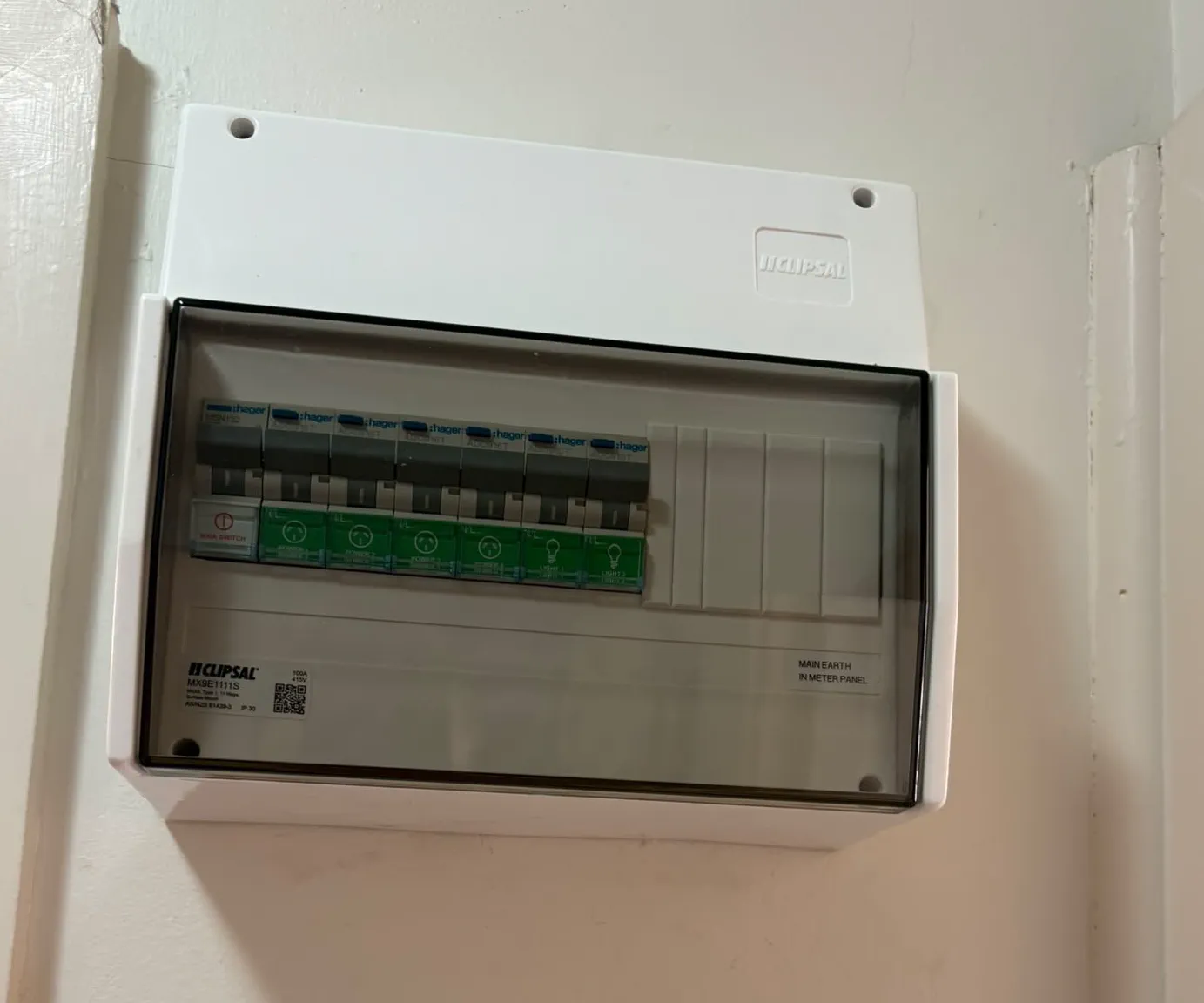
Plug covers and cord tidies are the visible part of childproofing, but the protection that matters most sits in the switchboard. Energy Safe Victoria describes a safety switch as a device that monitors the flow of electricity through a circuit, detects a problem that may put people at risk and turns the power off within 0.03 of a second. A child touching something live is exactly the situation it's for.
Not every home has full coverage. Energy Safe Victoria says safety switches are now compulsory in new homes, but older boards often have one covering the power points and nothing on the other circuits, and it notes that safety switches may not protect all wiring and appliances. Open the switchboard door and look for devices with a test button and '30mA' printed on them. If there are none, or you can't tell what they cover, have an electrician check.
Then test them. Energy Safe Victoria asks householders to press the test button on each safety switch every three months. Our guide to testing your safety switches walks through how.
Power points and plug covers
Toddlers explore at power point height, and keys, hairpins and cutlery fit into socket slots. Plug-in covers are a common first step and they help, but they have limits. Many are easy for a determined three-year-old to remove, a small or loose one can be a choking hazard, and they tend not to go back in after the vacuum is unplugged.
Sturdier options exist. Some power points have built-in shutters behind the slots that only open when both pins of a plug push in together, and an electrician can fit them in the rooms where small children spend the most time. Furniture helps too: a couch or bookcase in front of unused points removes the temptation, as long as cords behind it aren't crushed.
Damaged points are a separate problem. Energy Safe Victoria says not to touch or try to repair a loose, cracked or broken power point, but to cover it and have a licensed electrician replace it. A broken cover with parts showing is easy for small fingers to reach.
Cords, chargers and power boards
Cords are the bigger day-to-day risk. Toddlers pull on anything that dangles, bringing kettles, irons and hair straighteners down with it, and babies chew whatever they can reach. Keep appliance cords back from the bench edge, put hot appliances away once they've cooled, and unplug chargers at the wall when they're not in use.
Power boards on the floor are within easy reach of crawling babies, and their switches and sockets invite poking. Mount them off the floor or tuck them behind furniture, and don't overload them. If a room needs a string of power boards, it needs more power points.
Check cords regularly for nicks, kinks and exposed wire, especially where they run under rugs or get shut in doors. Replace anything damaged rather than taping it.
Bathrooms and water
Wet skin makes any shock more dangerous. Keep hair dryers, straighteners, shavers on charge and phones away from the bath, and never leave them plugged in where a child could pull them into water. Store them unplugged and up high.
Portable heaters don't belong in a bathroom at bath time. If the room is cold, a ceiling-mounted heat lamp or 3-in-1 unit wired in by an electrician keeps the heat up and out of reach.
Heaters, electric blankets and bedrooms
Portable heaters are a double risk for children: hot surfaces to touch, and fire when bedding, clothes or toys end up against them. Keep heaters well clear of beds, curtains and play areas, on a stable surface where they can't be knocked over, and turn them off when no adult is in the room. Choose models that switch off if tipped over.
Electric blankets and heated throws aren't for babies or young children, who can't tell you they're too hot or switch them off. For older children, check the blanket each winter for scorch marks and worn cords, and turn it off before they get into bed.
Night lights and baby monitors add more cords to the bedroom. Run them where they're well out of reach of the cot, and never drape a cord over or along the cot rails.
Outside, the garden and the pool
Outdoor power points and garden lights get wet and get forgotten. Weatherproof covers should close properly, and any point within reach of the lawn or sandpit should be behind a working safety switch. Pack extension leads and power tools away after use, and never leave a mower or hedge trimmer plugged in with children nearby.
Pool and spa equipment sits right beside water. Pumps, heaters, lights and chlorinators should be fixed in place, on circuits with safety switch protection and installed by a licensed electrician. Keep the equipment area closed off so children can't play with the switches and timers.
Rules worth teaching early
As children grow, the job shifts from keeping things out of reach to building good habits. A handful of rules covers most situations, and they're easy to repeat until they stick.
The same rules apply at grandparents' homes and holiday rentals, where power points and switchboards may be older and less protected than at home.
- Dry your hands before touching switches, plugs or appliances.
- Switch off at the wall, then pull the plug, never the cord.
- Never poke anything into a power point, toaster or appliance.
- Keep drinks away from laptops, chargers and power boards.
- Tell an adult about anything cracked, sparking, smelly or warm.
- Stay well away from fallen powerlines and anything they touch.
Common questions
Quick answers
- Do power point covers protect children?They help a little, but they're not the main protection.
- Why does my washing machine or dishwasher trip the safety switch?Water and worn heating elements are the usual causes.
- Why does the kettle or toaster trip the safety switch?Usually the appliance has a fault that lets a little current leak to earth.
- Is a safety switch power point the same as a safety switch on the board?No.
Sources for this guide
4 sources, with the date each was checked
- 1.Energy Safe Victoria: monitors the flow of electricity through a circuit detects a problem that may pose a risk to personal safety turns the power off within 0.03 of a second always has a test button and '30ma' printed on them. Accessed 30 September 2026.
- 2.Energy Safe Victoria: Having a safety switch installed is now compulsory on new residential installations and a great step to electrical safety in your home, if you are unsure if a safety switch is installed at your property, contact a… Accessed 30 September 2026.
- 3.Energy Safe Victoria: Follow these steps to check your safety switch every three months: Press in the test buttons on each safety switch which will cut the power and trip the switch into the off position. You may hear a clunking sound. If… Accessed 30 September 2026.
- 4.Energy Safe Victoria: Do not touch or attempt to repair a loose, cracked or broken power point switch – cover it immediately and arrange for a licensed electrician to replace it. Accessed 30 September 2026.
Planning advice for homeowners. Installation requirements depend on the property and equipment. Where this guide refers to Victorian safety or rental rules, use the linked official guidance for the current requirements.