A heater producing warm air is not proof that it is operating safely. Gas appliance service work needs an appropriately qualified gasfitter, including the relevant endorsement for the work being done. When you enquire, share the appliance details so the scope and required trade can be confirmed. We can also discuss the electrical controls, ductwork and alternatives if an ageing heater is becoming expensive to maintain.
When to get it checked
Two years have passed, or nobody knows
Energy Safe Victoria recommends a service at least every two years. No sticker, report or invoice to prove otherwise? Treat it as overdue.
The flame or the sound has changed
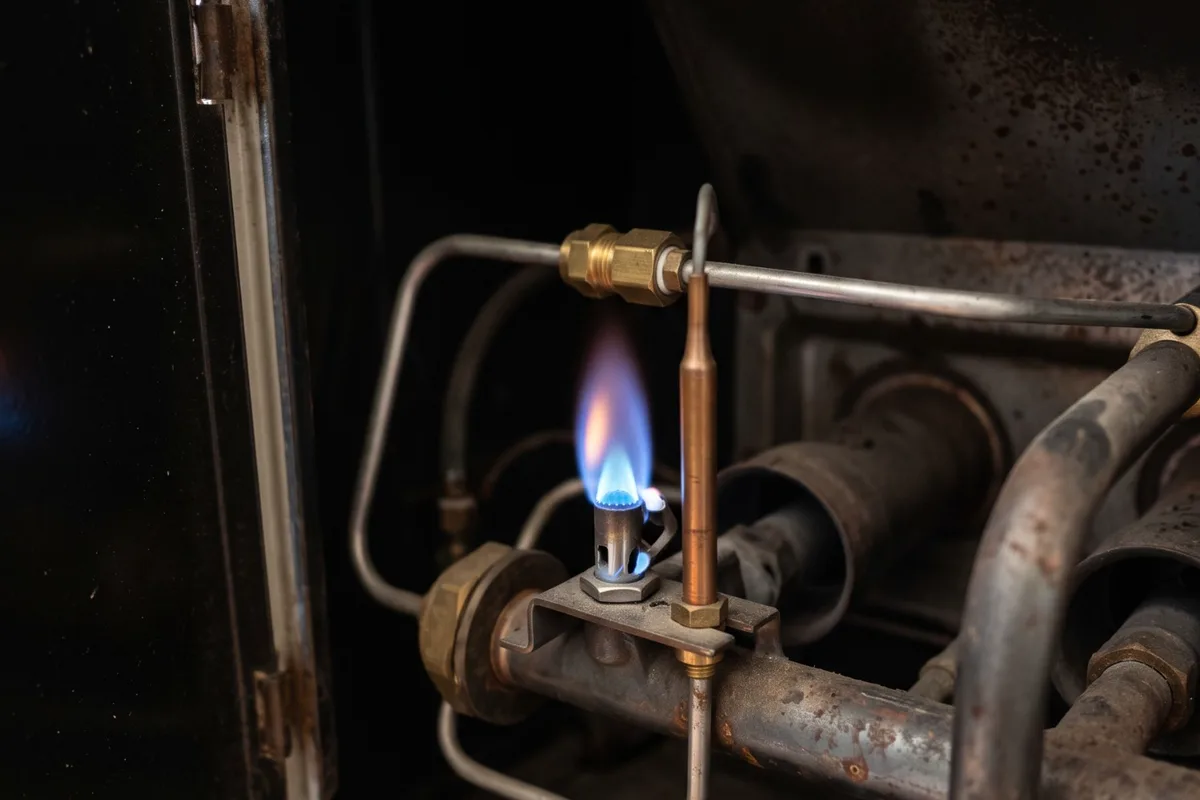
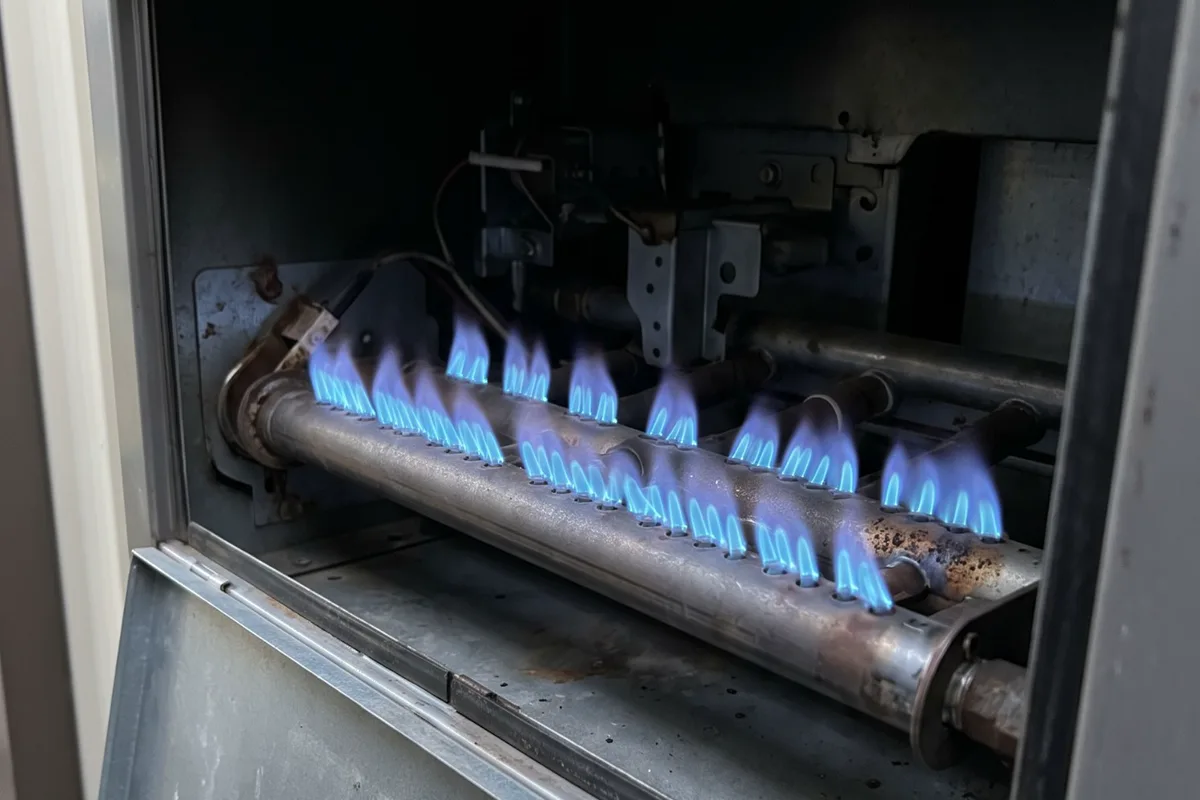
A different flame colour, a louder whoomp as it lights, or a new rattle. Energy Safe Victoria says any change like this needs a qualified gasfitter to check for carbon monoxide leakage.
Slower and weaker than last winter
Warm air takes longer to arrive, or the far rooms never quite get there. Dust on the burner, a clogged filter or a tiring fan all show up this way.
Soot, staining or a lingering smell
A brief dusty smell on the season’s first run is common. Soot near the heater or flue, or dark marks around outlets, are not; leave it off until it’s checked.
Renovations since the last service
New windows, draught sealing or extra exhaust fans change how air moves through the house, so the heater’s ventilation needs reassessing.
Why it happens
5 common causes
Dust in the works
The return air drags household dust towards the heater every season. Some settles on the burner, fan and sensors, affecting how cleanly the gas burns.
A tired heat exchanger
It heats and cools every cycle for years, and fatigue or corrosion can open cracks. A cracked heat exchanger or a blocked flue can let combustion gases into the house.
Flue and terminal problems
Flues collect nests and debris, and terminals get boxed in by later building work. A flue that can’t clear combustion products is a carbon monoxide risk.
A choked return-air filter
A clogged filter starves the heater of air. Output drops, and it can overheat and shut itself down.
Worn ignition and safety parts
Igniters, flame sensors and pressure switches wear gradually. Caught at a service, a weak part is replaced before it fails on the coldest night.
What the job covers
What we usually do on this job. Your quote confirms it for your place.
- Heater make, model and installation location recorded
- Required gasfitter qualification confirmed for gas service work
- Previous service history and reported symptoms reviewed
- Access and service scope agreed
- Gas appliance checks arranged within the qualified trade’s scope
- Controls and air distribution concerns discussed
- Findings and any unsafe-condition advice explained
- Repair and replacement options considered when relevant
Your options, explained
Routine two-yearly service
Low disruption- Best for
- A heater that runs normally and is due or overdue
- How it works
- Heater and flue inspection, spillage testing, internal cleaning, a carbon monoxide test at every outlet and a full test run.
- Worth knowing
- Autumn suits it: the heater is checked before months of heavy use.
Service with the rental gas safety check
Low disruption- Best for
- Rental providers and their agents
- How it works
- A gasfitter endorsed for Type A servicing does the two-yearly gas safety check, which must confirm Type A appliances are serviced in line with AS 4575.
- Worth knowing
- Repairs it finds are the rental provider’s to organise and pay for if they aren’t the renter’s fault.
Service plus electrical and airflow check
Low disruption- Best for
- Uneven heating, an old controller or a circuit that trips
- How it works
- Our electricians test the supply, isolator, controller and control wiring alongside the gas service, and check the return air and reachable ducts.
- Worth knowing
- Both sides on one visit, so a fault isn’t passed back and forth between trades.
The people behind the work
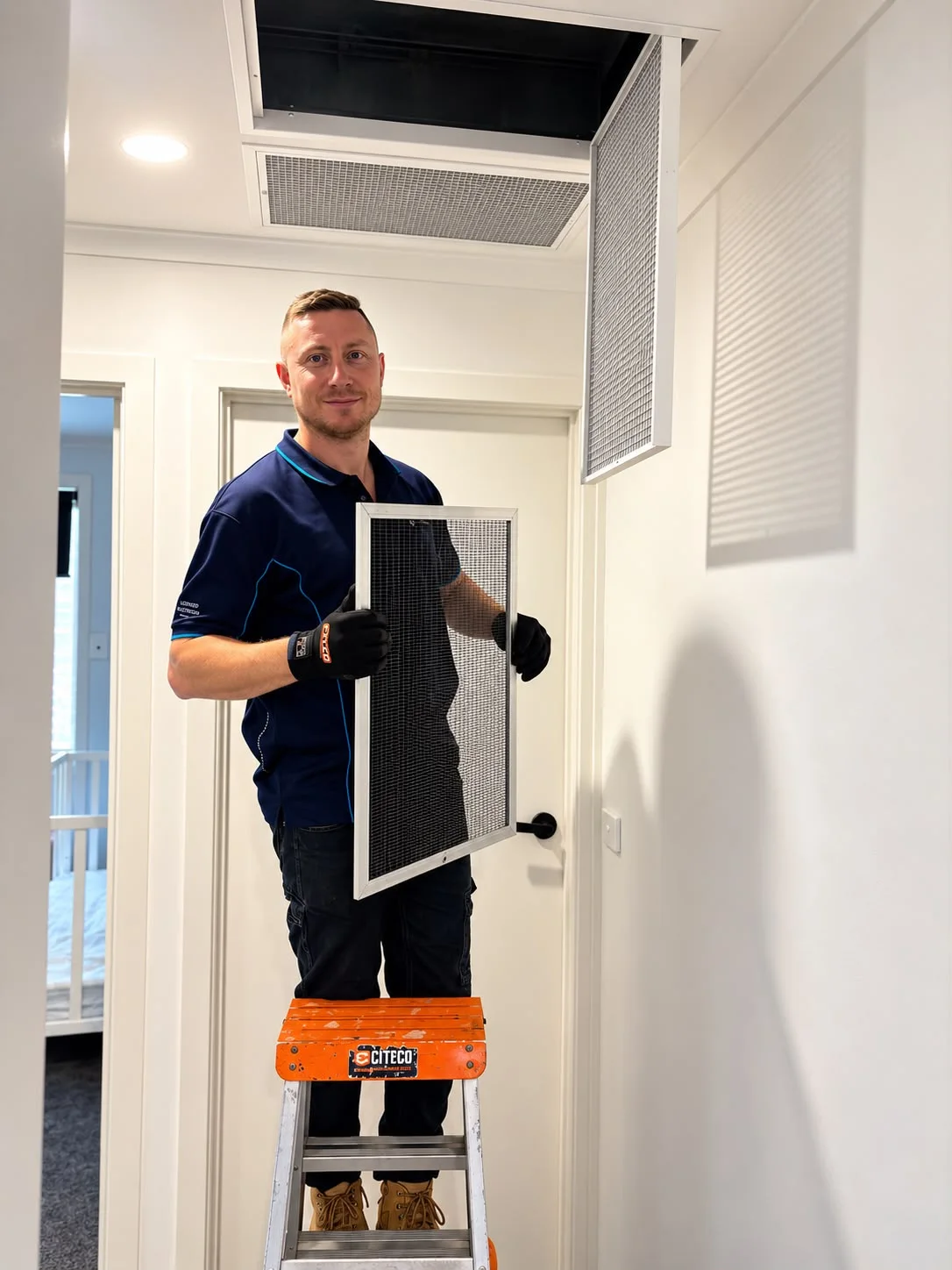
Our own photos from jobs like this one. Family-run, based in Altona Meadows, with 19 years in the industry.
Licensed electrical contractor (REC 38187)See more team photos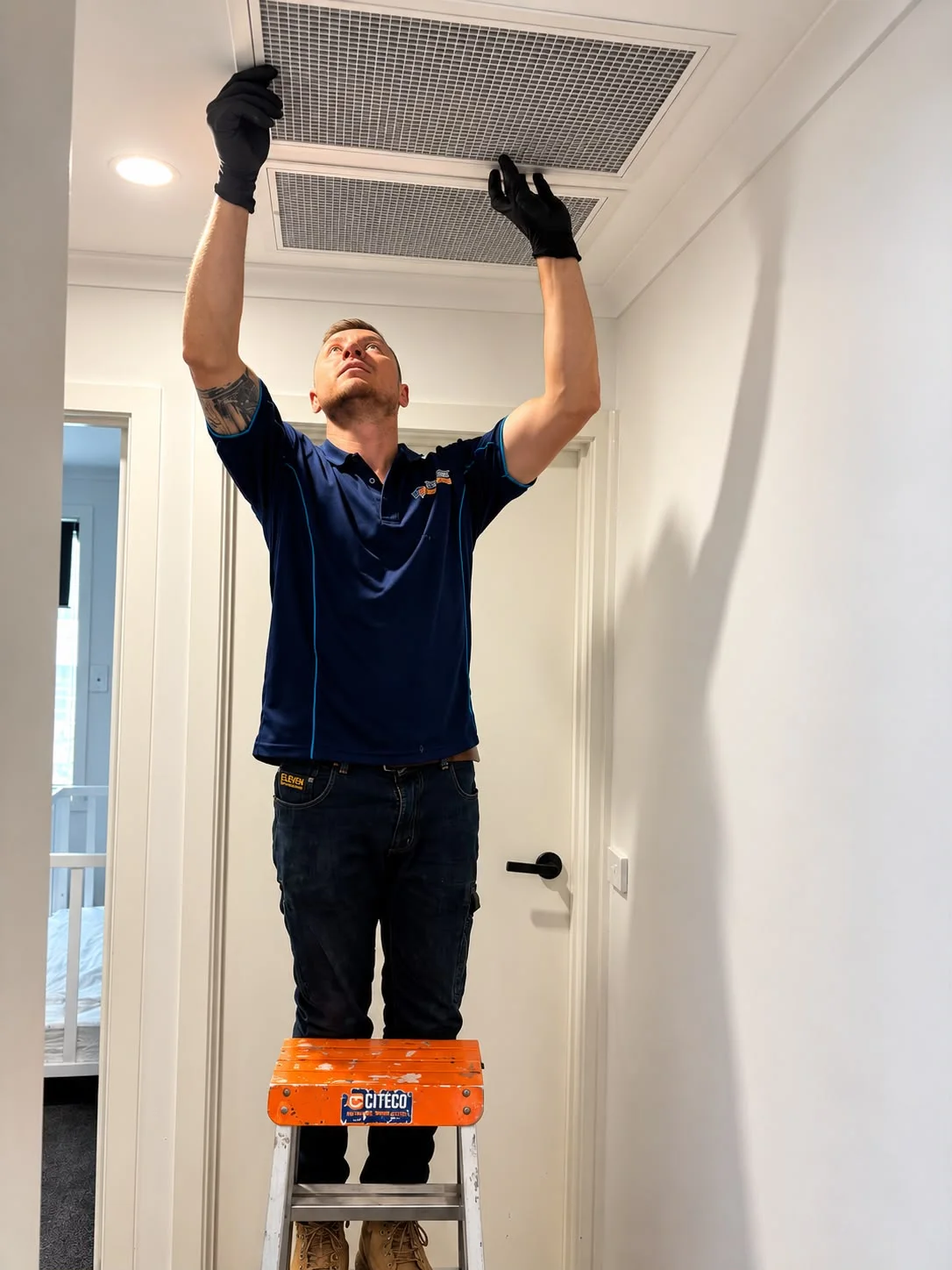
Worth knowing before you book
- Regular servicing matters
- Energy Safe Victoria recommends gas heaters are serviced at least every two years by a qualified gasfitter. Check the appliance instructions as well.
- A CO alarm does not replace servicing
- Carbon monoxide alarms are a backup precaution. They do not establish that the appliance, flue or ventilation is safe.
- Do not alter permanent ventilation
- If you are sealing drafts or renovating around a gas heater, have its ventilation needs assessed before closing openings.
What affects the price?
The right scope depends on your installation. These are the details we check so your quote is useful, with any additional work explained before it proceeds.
Where the heater sits
An outside-wall unit is quicker to reach than one in a tight roof space or under a low floor.
Time since the last service
A heater serviced two years ago usually needs less cleaning than one left for many seasons.
Number of outlets
The carbon monoxide test is done at the outlets in every room, so more outlets take longer to test.
Parts found worn
Filters, igniters, sensors and seals are common. Anything beyond routine parts is explained and priced before it’s fitted.
What else joins the visit
A rental gas safety check, controller or supply work, or a hardwired carbon monoxide alarm each add to the scope.
Before the visit
- Find the last service report and appliance model.
- Explain any changed ventilation or extraction equipment.
- Stop using an appliance suspected to be unsafe and obtain appropriate urgent advice.
How it runs
- 1
Send the appliance details
Share the model, installation location and last service record.
- 2
Confirm the qualified trade
Agree the service scope and the appropriately qualified gasfitter required.
- 3
Assess and explain
The service findings and any work required are explained clearly.
- 4
Plan the next step
Compare repair, routine upkeep and electric replacement where useful.
Step by step, in more detail
5 steps
Send the heater details
A photo of the model label, where the heater sits (roof space, subfloor or outside wall) and when it was last serviced. Mention renovations or new exhaust fans.
Agree the scope and the trade
The gas side goes to a gasfitter licensed for Type A appliance servicing; our electricians cover the supply and controls. You get a fixed price for the agreed scope before we start.
Service the gas appliance
The gasfitter inspects the heater and flue, runs a negative pressure and spillage test with a carbon monoxide analyser, and tests at the outlets in every room. The inside is cleaned and agreed parts replaced.
Check power, controls and airflow
We test the supply, controller and control cable, clean or replace the return-air filter, and look over the outlets and reachable ducts.
Run it and explain
The heater runs a full cycle. You hear what was found, what was done and what can wait, with a written record.
What is safe to do, and what to leave to us
Safe for you to do
- Keep the return-air grille and outlets clear of furniture, rugs and curtains.
- Don’t run the rangehood or bathroom exhaust fans while the heater is on.
- If you smell gas or anyone feels unwell with the heating on, turn it off, get everyone into fresh air and seek medical help.
Leave these to us
- Removing panels, relighting, or adjusting the burner or gas valve. Energy Safe Victoria says unlicensed gasfitting is illegal and potentially fatal.
- Treating warm air, or a silent carbon monoxide alarm, as proof the heater is safe.
- Blocking vents or sealing up around a gas appliance before its ventilation needs are checked.
When to get us in
- The last service was two or more years ago, or there’s no record
- The flame, noise or start-up has changed
- Soot, staining or scorching near the heater, flue or outlets
- You’ve renovated or added exhaust fans since the last service
- A rental gas safety check is coming up
More detail
What a proper service covers
Energy Safe Victoria lists five parts: a visual inspection of the appliance and flue, a negative pressure and combustion spillage test, internal cleaning, repair or replacement of parts, and running the appliance to confirm it works correctly and safely. The spillage test must use a carbon monoxide analyser. A quick vacuum and a check that it lights is not a service.
Where our electricians come in
Plenty of what keeps a ducted heater running is electrical: the circuit, the power point or isolator feeding it, the wall controller and the cable between them. Our licensed electricians test that side and fix faults in the supply or control wiring, while the gas work stays with the Type A gasfitter.
Carbon monoxide alarms are a backup
A heater can spill carbon monoxide while still blowing warm air. An alarm adds a warning, but Energy Safe Victoria says it should never be a substitute for regular servicing. A hardwired alarm must be installed by a licensed electrician, and our team can fit one on the same visit. Headaches, dizziness, nausea or tiredness that ease away from home are possible carbon monoxide symptoms; turn the heater off and seek medical help.
Local rules and conditions
Victorian requirements and local conditions that shape this job, with the sources listed at the foot of the page.
A long run of cold nights
At Laverton, July’s mean minimum is 5.2 °C, with June at 5.9 °C and August at 5.7 °C. A heater that runs night after night through that stretch is best serviced before it starts.
Rental gas safety checks
Rental providers on agreements entered into after 29 March 2021 must have a gas safety check every two years by a gasfitter endorsed for Type A appliance servicing. Consumer Affairs Victoria lists the two-yearly check for all rental agreements from 13 October 2026.
Who licenses gasfitters
The Building and Plumbing Commission, which took over the Victorian Building Authority’s functions on 1 July 2025, registers and licenses Victoria’s gasfitters. Anyone servicing your heater must hold the specialised Type A appliance servicing class.
Useful reading
Guides to read before you decide, with checklists and questions to bring to the quote.
- An ageing gas heater: service, repair or plan an electric replacement?Separate immediate safety needs from a considered comparison of repair and reverse-cycle heating.
- Gas ducted heater: repair or replace?How to weigh a ducted gas heater fault against the heater's condition, the ducts and the electric option, once the safety checks are done.
- Landlords: heating, cooling and electrical obligations in VictoriaA rental provider's map of the heating, switchboard, safety check and repair duties on a Victorian rental, and what the 2027 energy standards change.
- Reverse-cycle air conditioning or gas heating?How each one makes heat, how it feels on a cold night in Melbourne's west, what Victoria's gas rules mean for you and what switching really involves.
Common questions
Questions people ask about this
- Does my gas ducted heater have a filter I can clean?Many do.
- My gas heater flame looks different. Is that a problem?Yes, treat it as one.
- What should I do if my carbon monoxide alarm goes off?Treat it as real.
- Who is qualified to do a rental gas safety check?A licensed or registered gasfitter endorsed for Type A gas appliance servicing.
- Why does my heater smell when I turn it on for the first time in winter?A dusty, slightly burnt smell on the first run of the season is usually dust burning off the heat exchanger, coil or element, and it fades.
From the blog
- How often should a gas heater be serviced, and what should I ask?Use the Victorian safety recommendation, identify the installed appliance and ask for a qualified assessment of the heater and its installation.
- Are old gas space heaters still safe to use?Older open-flued gas wall and space heaters can spill carbon monoxide. Why some can no longer be sold, what servicing should cover and when reverse-cycle makes sense.
- Is your rental heater inefficient? What renters can ask forIf your agreement started on or after 29 March 2023, the fixed heater in the living area must be energy efficient. Here's how to check yours and ask in writing.
Sources for the rules and local facts on this page
14 sources, with the date each was checked
- 1.Bureau of Meteorology: Mean minimum temperature (°C) 14.0 14.4 12.7 10.0 7.8 5.9 5.2 5.7 6.8 8.4 10.3 12.2 9.5 81 1943 2026 Accessed 30 September 2026.
- 2.Consumer Affairs Victoria: Rental providers who enter into a new agreement after 29 March 2021, must have gas safety checks conducted every 2 years by a licensed or registered gasfitter. Accessed 30 September 2026.
- 3.Consumer Affairs Victoria: Mandatory gas and electrical safety checks every 2 years for all rental properties Rental providers and their agents must arrange gas and electrical safety checks by a qualified tradesperson every 2 years for all… Accessed 30 September 2026.
- 4.Energy Safe Victoria: The Building and Plumbing Commission (BPC) is responsible for registering, licensing and disciplining plumbers and gasfitters in Victoria. Accessed 30 September 2026.
- 5.Department of Transport and Planning (Victoria): The Act brought together the functions of the VBA, DBDRV and the domestic building insurance arm of the VMIA into the Building and Plumbing Commission (BPC) - a single, integrated regulator for the building system… Accessed 30 September 2026.
- 6.Building and Plumbing Commission: The gasfitter doing the servicing work must be registered or licensed in the specialised class of Type A appliance servicing. Accessed 30 September 2026.
- 7.Energy Safe Victoria: To avoid the risk, we recommend that all gas heaters are serviced at least every two years by a qualified gasfitter. A qualified gasfitter will inspect your heater and check its installation, including testing for CO… Accessed 30 September 2026.
- 8.Energy Safe Victoria: It is recommended that ducted heaters are serviced every two years and during this service a CO test should be conducted at the heating vent outlets in all rooms. Accessed 30 September 2026.
- 9.Energy Safe Victoria: As part of a comprehensive service, a gasfitter must use a Carbon Monoxide (CO) analyser to test for carbon monoxide spillage. Only use a registered or licensed gas fitter who has completed the BPC / Master Plumbers CO… Accessed 30 September 2026.
- 10.Energy Safe Victoria: All gas heaters can spill carbon monoxide (CO) – a gas you can’t see or smell that can make you seriously unwell or kill you. Accessed 30 September 2026.
- 11.Department of Health (Victoria): When carbon monoxide is inhaled, it replaces oxygen in the blood, which may cause symptoms including tiredness, shortness of breath, headaches, dizziness, nausea, weakness, confusion or chest pain. Accessed 30 September 2026.
- 12.Consumer Affairs Victoria: The rental provider must organise and pay for all repairs if they are not the renter’s fault. Accessed 30 September 2026.
- 13.Department of Energy, Environment and Climate Action (Victoria): From 1 March 2027, if a gas hot water appliance breaks and cannot be repaired, it must be replaced with an electric alternative. No requirement to upgrade gas space heating or stovetop gas cooking to electric, however… Accessed 30 September 2026.
- 14.Energy Safe Victoria: Whenever a licensed electrician completes any electrical installation work, they must provide a Certificate of Electrical Safety (COES). Accessed 30 September 2026.