
The key points
- Look outside before you look at the switchboard. A dark street is a network outage, and only your distributor can fix it.
- Just your home? Check the main switch and reset a tripped safety switch once. If it won't hold, leave it off and call an electrician.
- Everything on and still no power means the fault is between the street and your main switch. Ring the distributor first.
- Dull or flickering lights are a supply problem: unplug what's easy to reach and call your distributor.
- Fallen lines are never a diagnosis job. Treat them as live, keep well clear and report them to your distributor.
Rule out danger before you start checking
Before working out whose problem it is, make sure nobody is in danger. Smoke, flames, sparking or a burning smell at the switchboard, or someone who has had a shock, all come ahead of any detective work. If there's smoke or fire, get everyone out.
Storm outages need extra care. Treat fallen powerlines as live, even when broken, and keep well clear of them and anything they're touching. Energy Safe Victoria says to contact your local electricity distribution company about fallen or unsafe powerlines; its faults number is on your bill.
Look outside before you touch anything
Grab a torch rather than candles and start next door. At night, check the streetlights and the neighbours' windows. In daylight, listen for their air conditioner's outdoor unit, or ask over the fence.
Check a few houses, not just one. Homes on opposite sides of the road, or at either end of a long court, can sit on different parts of the network, so half the street can be dark and it is still a network fault. A lit house next door narrows things down, but it doesn't prove the problem is inside your walls.
- Streetlights out and neighbours dark: most likely a network outage.
- Neighbours lit, your whole home dark: go to the switchboard.
- Some rooms dead, others working: a tripped circuit, or a supply problem.
- Lights dull or flickering through the house: a supply problem.
The street is dark: it's your distributor's job
A network outage is fixed by your electricity distributor, the company that runs the poles, wires and substations. That's a different business from the retailer that bills you, although the distributor's name and faults number are usually on the bill. An electrician can't restore a network outage, so calling one for a dark street only adds a visit.
In our part of Melbourne, the names you'll see include Powercor, Jemena and CitiPower. Powercor's Altona Terminal Station (West) supplies areas including Laverton, Altona Meadows, Point Cook, Hoppers Crossing, Werribee and Tarneit. Jemena's supply area reaches Williamstown and Footscray in the south and Brooklyn and Sydenham in the west, and CitiPower supplies parts of Port Melbourne. Network boundaries don't follow suburb lines, so go by your bill.
Check the distributor's outage information online before ringing; if your street is already listed, there's nothing to add. While you wait, Energy Safe Victoria recommends unplugging appliances at the power point to help prevent damage from a surge. Leave one light switched on so you know when supply is back, and keep the fridge and freezer shut.
Only your home is out: check the switchboard
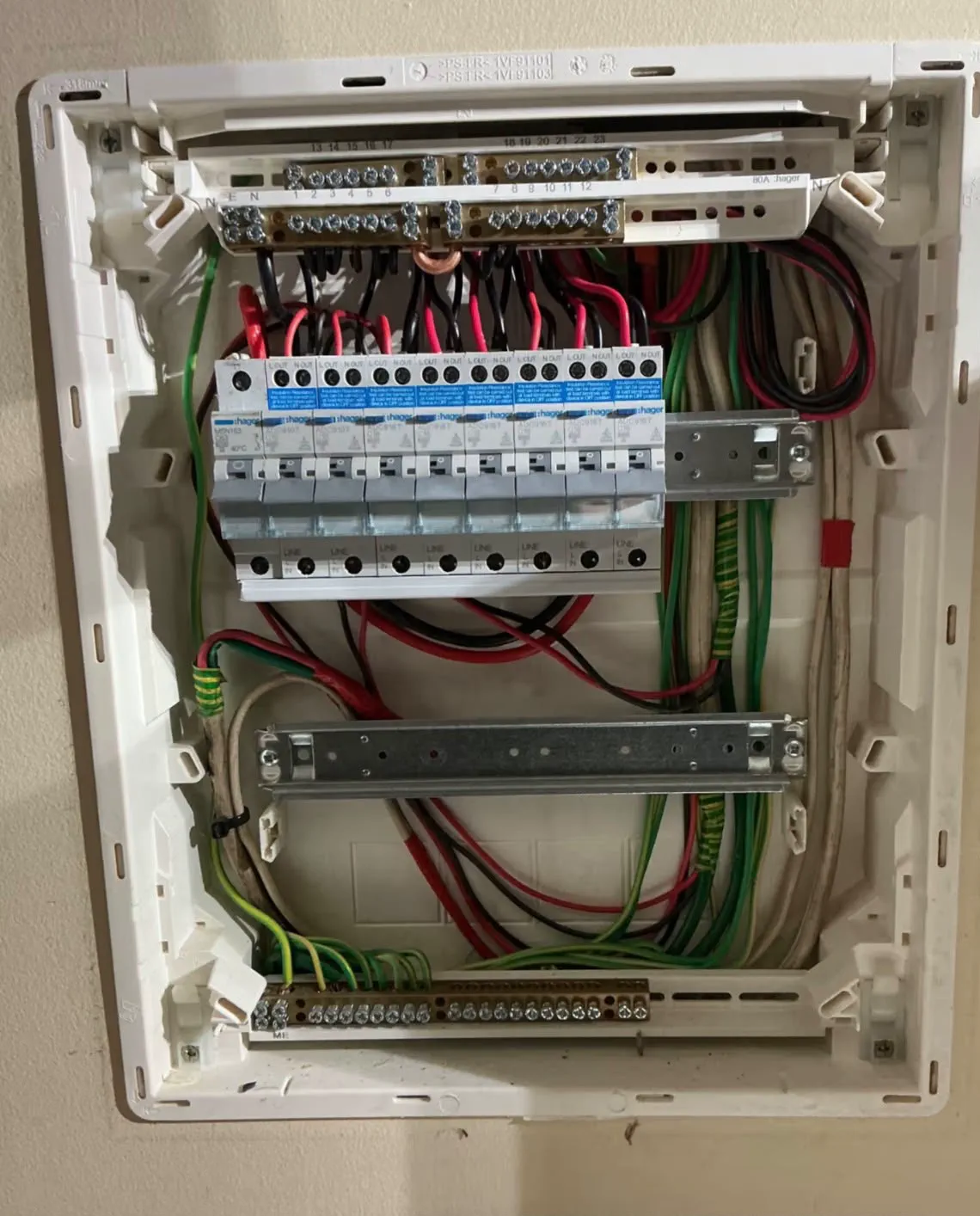
If the neighbours have power and you don't, go to the board. Energy Safe Victoria's outage advice is to find the electricity box outside your home, check whether the safety switch has tripped, reset it if it has, and call a licensed electrician if it won't reset. In an apartment the board is often inside the unit instead.
You're looking, not fixing. Open the meter box door, but never remove the switchboard cover or anything held on with screws. Safety switches have a test button and '30mA' printed on them. The main switch is usually the largest and should be labelled. Look for anything sitting off or halfway.
Reset a tripped safety switch once, pushing it firmly to on. If it holds, note what was running when it went. If it drops straight back or won't stay up, leave it off. Trying again and again sends power back into whatever caused the trip, which is exactly what the switch is there to stop.
Older homes, like the post-war houses of Altona and Laverton, can still have ceramic fuses. WorkSafe Victoria lists ceramic fuses among its examples of asbestos-containing materials, and Energy Safe Victoria says electrical work isn't a DIY job, even small ones. Leave a blown fuse alone.
Everything's on and the house is still dead
This is the one that catches people out. Neighbours lit, main switch on, nothing tripped, and not a light in the house. The fault then sits between the street and your main switch: the line from the pole or pit, the connection at the house, the meter, or the cables into the board.
Energy Safe Victoria calls the changeover from the network to your installation the point of supply. From there in, the property owner is responsible for maintenance and repair, including private lines on the property. Unsafe powerlines and damaged or leaning poles go to the distributor. Powercor lists a missing or loose service hook and a defective meter box as customer installation defects, which are the customer's to fix.
So ring the distributor first. If the fault is theirs, they fix it; if it's on your side, you need a licensed electrician. Don't go near the meter or the cables feeding the board. Energy Safe Victoria describes the wiring up to the switchboard, which can include the line from the street and the meter, as equipment where the electricity can't be switched off. Your main switch doesn't make it safe.
Dim lights, half the house, or a tingle from a tap
Not every outage is all or nothing. One switch down on the board with some rooms dark is a circuit in your home. Nothing tripped, but lights glowing dull or flickering, motors humming and straining, or rooms working at random, points to the supply itself, such as a damaged neutral or a lost phase.
For dull or flickering lights, a brownout, low voltage or partial supply, don't touch your switchboard or anything metal in the home. Turn off power points that are easy to reach, unplug appliances and contact your distributor. Switch the air conditioner off too; compressors don't cope well with low voltage.
Tingles from an appliance or a water tap are more serious than they feel. Stop using the tap or appliance, keep others away from it and have a licensed electrician check the wiring.
When it makes sense to get Total Comfort in
Once the network is ruled out or restored, the rest is ours: a safety switch that won't reset or keeps tripping, rooms still dead after the street comes back, a board that's all on with no power once the distributor has cleared their side, heat or a burning smell at the board, or an old fuse board. Renters should tell their rental provider too.
Our electricians start where the power stops. We test from the main switch outwards to find the circuit, connection or device at fault, tell you which side of the point of supply it's on, and make it safe. You get the price before we start, and if a new board is the sensible fix we'll explain why rather than patch around it.
If outages keep happening only at your place, note the dates, the weather and what was running. That record makes the first visit far more useful than a description from memory.
- Whether all or part of the home is out.
- What you saw at the board, and whether a switch reset.
- Whether the neighbours have power.
- Any smell, heat, sparking, water or tingles.
- Anyone at home relying on powered medical equipment.
Common questions
Quick answers
- Why didn't everything come back on after a power outage?When the power comes back, some things need help to restart.
- My air conditioner won't restart after a power outage. What now?Give it a few minutes first.
- I felt a tingle from a tap or appliance. What should I do?Treat it as a warning.
- An appliance stopped working after a storm. Was it a surge?It may have been.
Sources for this guide
14 sources, with the date each was checked
- 1.Powercor Australia, Project Assessment Draft Report: Altona Terminal Station (West) (June 2025): It supplies part of Melbourne’s western growth corridor. This includes the areas of Laverton, Laverton North, Altona Meadows, Werribee, Wyndham Vale, Mount Cottrell, Eynesbury, Tarneit, Hoppers Crossing and Point Cook… Accessed 30 September 2026.
- 2.Jemena Electricity Networks (Vic) Ltd, 2025 Distribution Annual Planning Report (2 December 2025): Figure 1-1 shows the JEN supply area, which ranges from Gisborne South, Clarkefield and Mickleham in the north to Williamstown and Footscray in the south, and from Hillside, Sydenham and Brooklyn in the west to… Accessed 30 September 2026.
- 3.CitiPower, Distribution Annual Planning Report December 2024 (hosted by the Australian Energy Regulator): The zone substation in Fisherman’s Bend (E) is served by two sub-transmission lines from Fisherman Bend Terminal station (FBTS). The zone substation supplies areas of Fisherman’s Bend and Port Melbourne. Accessed 30 September 2026.
- 4.Energy Safe Victoria: In the event of a power failure turn off and unplug all electrical appliances at the powerpoint. This will help to prevent equipment damage in the event of a power surge. Accessed 30 September 2026.
- 5.Energy Safe Victoria: Locate your electricity box outside your home and check whether the safety switch has tripped. If it has tripped, reset the switch. If the switch won’t reset, call a licensed electrician. Accessed 30 September 2026.
- 6.Energy Safe Victoria: monitors the flow of electricity through a circuit detects a problem that may pose a risk to personal safety turns the power off within 0.03 of a second always has a test button and '30ma' printed on them. Accessed 30 September 2026.
- 7.WorkSafe Victoria: Fuse blankets and ceramic fuses in switchboards Pitch-based (eg Zelemite, Ausbestos, Lebah) electrical switchboards Accessed 30 September 2026.
- 8.Energy Safe Victoria: Electrical work isn’t a DIY job, even for small jobs such as changing power points or light switches. Accessed 30 September 2026.
- 9.Victorian Government, Hobsons Bay Planning Scheme (PDF snapshot, last updated by VC292 on 11/09/2025): The heritage places of Hobsons Bay reflect the key themes that have shaped the development of the city since the establishment of Williamstown in the 1840s as the first port of Melbourne, through the development of… Accessed 30 September 2026.
- 10.Energy Safe Victoria: The point of supply is the changeover point from the electricity distribution network to the electrical installation, where the property owner becomes responsible for the maintenance and repair of the electrical… Accessed 30 September 2026.
- 11.Energy Safe Victoria: Who do I contact to fix fallen or unsafe powerlines, a rotting or damaged power pole, or a leaning pole? Contact your local power company, also known as the electricity distribution company Accessed 30 September 2026.
- 12.CitiPower & Powercor: Customer installation defects fall under customer responsibility and require prompt rectifications to ensure either the safety of the electrical installation, unhindered access to our assets by our employees or that our… Accessed 30 September 2026.
- 13.Energy Safe Victoria: A prescribed certificate is for all major electrical wiring work in all types of premises. In a domestic property this covers all work done on wiring and equipment where the electricity cannot be switched off. This… Accessed 30 September 2026.
- 14.Consumer Affairs Victoria: Anything on this list is legally defined as an urgent repair: burst water service blocked or broken toilet system serious roof leak gas leak dangerous electrical fault flooding or serious flood damage serious… Accessed 30 September 2026.
Planning advice for homeowners. Installation requirements depend on the property and equipment. Where this guide refers to Victorian safety or rental rules, use the linked official guidance for the current requirements.