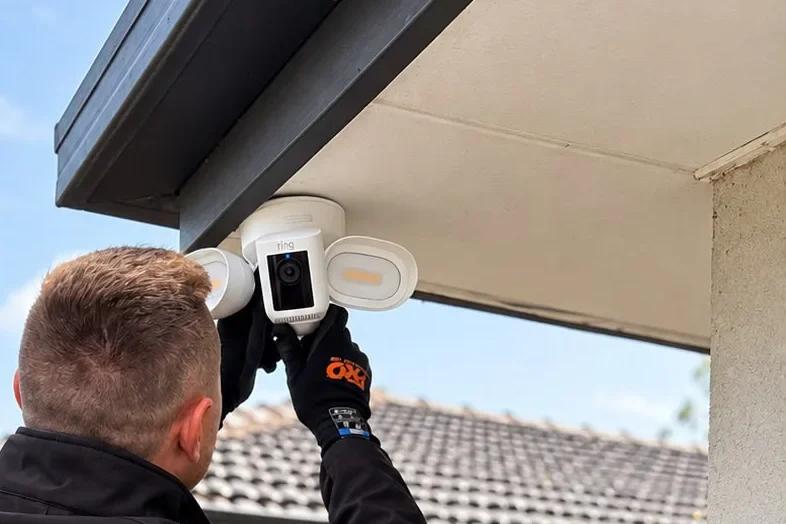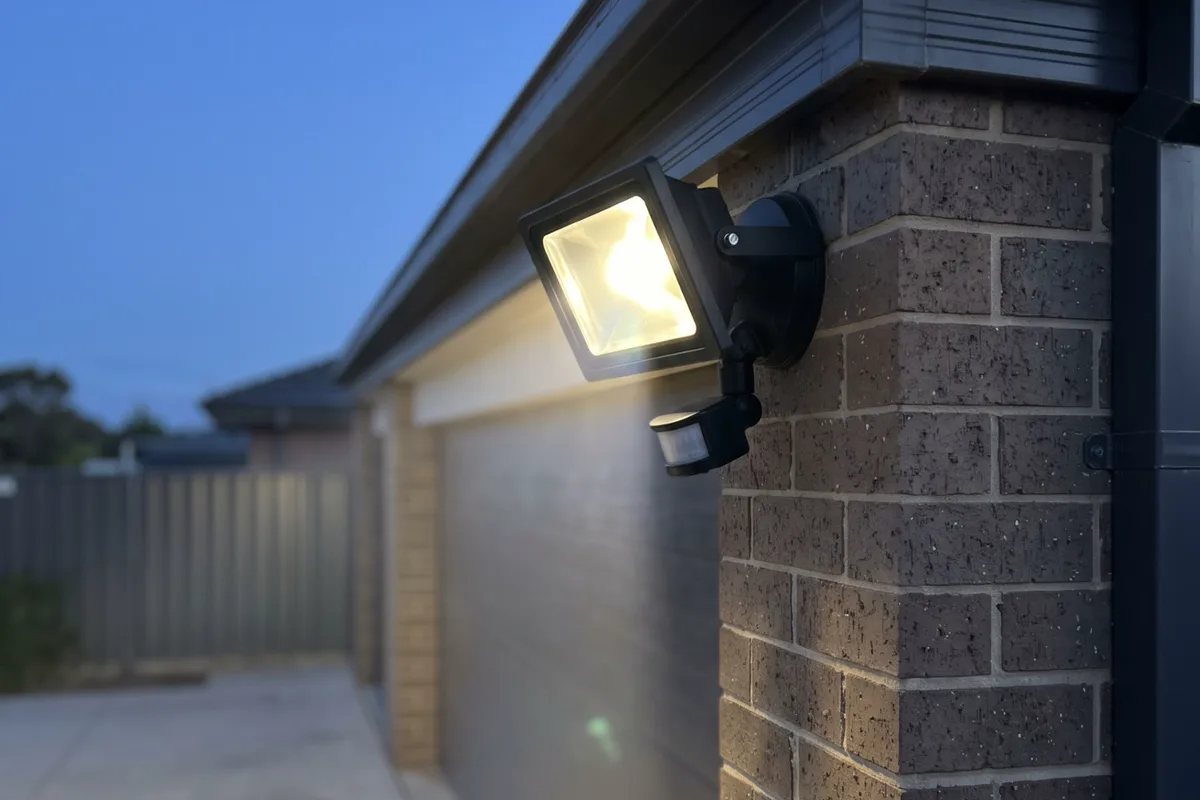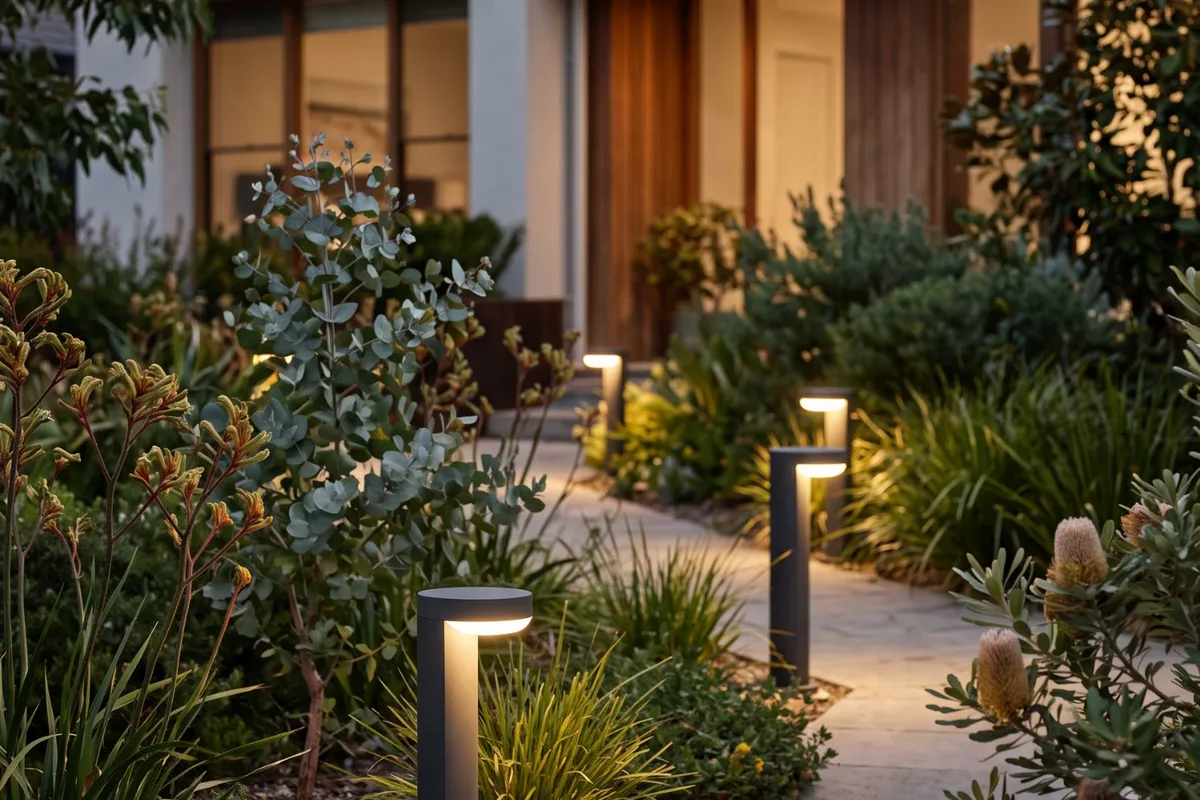
Outdoor lighting has to cope with rain, sprinklers, sun and the odd whipper snipper. We use outdoor-rated fittings, suitable cable routes and weatherproof connections. We also check safety-switch protection for the circuit, so the installation is protected if an electrical fault occurs. Lights can go on timers, sensors or their own switch inside, and we can add weatherproof power points while we're out there.
When to get it checked
Steps and paths you can't see
Paths, step edges and the side gate disappear after sunset. If you need a phone torch to find the keyhole, or guests misjudge the step off the deck, the yard needs light where feet go.
Garden lights that trip the safety switch
The safety switch drops after rain or when the sprinklers run, then resets fine the next day. That pattern nearly always means water is getting into a fitting or joint on the outdoor run.
Fittings that are cloudy, cracked or rusting
Milky lenses, perished seals, rust streaks under a spike light or a fitting that holds water. Once the seal fails, moisture works into the lampholder and the joint behind it.
Lights that work some nights and not others
Intermittent garden lights usually point to a corroded connection, a tired transformer or a cable nicked by a spade. A new globe rarely fixes it for long.
Landscaping about to start
New paving, decking or garden beds are on the way. That's the easiest moment to lay conduit, before the surface goes down and every cable route means lifting something.
Why it happens
5 common causes
Water finds the weak point
Rain, sprinkler spray and damp soil keep outdoor fittings wet for much of the year. If a cable entry isn't sealed or a joint sits in a puddle, water wicks in and the safety switch does its job.
Indoor-grade gear used outside
Older alterations often used batten holders, indoor junction boxes and plain cable clipped along a fence. None of it was built for sun, frost or water.
Sun, heat and cold
Western sun makes plastic housings brittle and lenses cloudy. Hot north-wind days followed by cold, still nights work the seals until they stop sealing.
Shallow or unprotected cable
Cable laid straight in the soil or just under the mulch gets hit by spades, edgers, tent pegs and tree roots. Cable in conduit, at a proper depth and on a known route, survives the garden changing around it.
Transformers stretched too far
A 12 volt system loses brightness over long runs, and when more lights are added than the transformer was sized for. The far lights glow dimly and the transformer runs hot.
What the job covers
What we usually do on this job. Your quote confirms it for your place.
- Lighting layout planned for paths, steps, garden beds and entertaining areas
- Weatherproof, outdoor-rated fittings
- Cable run underground in conduit
- Safety switch protection on outdoor circuits
- Sensor and security floodlights
- Timers, dusk-to-dawn sensors or separate switches set up
- Low voltage transformers mounted and wired
- Weatherproof power points if you want them
- Lights tested and aimed before we leave
Your options, explained
Hardwired 240 volt lighting
Medium disruption- Best for
- Wall lights, step lights, bollards and driveway lighting on longer runs
- How it works
- Fittings run from a lighting circuit on your house wiring, with cable in conduit to each point.
- Worth knowing
- Strong, even light over distance. Every connection is at mains voltage, so fittings and junction boxes must be outdoor-rated and properly sealed.
12 volt system from a transformer
Low disruption- Best for
- Garden beds, tree uplights and path spikes you may move as plants grow
- How it works
- A hardwired transformer in a dry, protected spot steps the supply down to 12 volts and feeds a run of small garden fittings.
- Worth knowing
- Lighter cable and easy to adjust. Too many fittings on one transformer leave the far end dim. The transformer and the circuit feeding it are licensed work.
Lights built into decks, steps and walls
Medium disruption- Best for
- New decks, stairs and retaining walls
- How it works
- Small recessed lights are set into deck boards, stair risers or walls, with cable run through the frame before it's closed up.
- Worth knowing
- Simplest while the deck or wall is being built. On an existing deck it can mean lifting boards or working underneath.
Solar and plug-in kits
Low disruption- Best for
- Accent lighting in one corner of the garden
- How it works
- Solar lights charge from their own small panel. Plug-in kits run from their own plug-in transformer.
- Worth knowing
- Fine as accents. Solar output drops in winter and after cloudy days, so for steps and paths you rely on, wired lighting is the better choice.
The people behind the work
One local team for electrical, heating and cooling. Family-run, based in Altona Meadows, with 19 years in the industry.
Licensed electrical contractor (REC 38187)See more team photos
Worth knowing before you book
- 12 volt or 240 volt
- Plug-in 12 volt garden kits are fine to set up yourself. Anything wired to 240 volts, including the circuit feeding a transformer, needs a licensed electrician.
- Water finds a way
- Most outdoor tripping comes from water getting into fittings or joints. Good fittings, sealed joints and keeping lights out of sprinkler spray make a big difference.
- Tell us what's underground
- Point out irrigation lines, gas pipes and anything else you know is buried before we start digging.
What affects the price?
The right scope depends on your installation. These are the details we check so your quote is useful, with any additional work explained before it proceeds.
Number and type of fittings
Spike lights, bollards, step lights and wall lights each take different time to fit. Housings built for in-ground use or salt air cost more, and usually last longer.
Distance and what the cable crosses
Trenching through lawn is straightforward. Getting under a driveway, concrete path or existing paving takes more time and equipment.
Finished landscaping
Mature gardens, established roots and new paving slow the cable route down. Before landscaping starts, conduit goes into open ground far more quickly.
Controls and zones
A single switch inside is the simplest setup. Timers, dusk sensors and separately switched zones for the path, deck and garden each add hardware and wiring.
The switchboard and old outdoor wiring
A new circuit or safety switch may be needed at the board, and old outdoor wiring sometimes has to be made safe or removed first.
Before the visit
- Mark paths, planted areas, irrigation and known underground services.
- Tell us about pets, garden maintenance and planned landscape changes.
- Share evening photos from safe positions showing the areas you want lit.
How it runs
- 1
Walk the yard
We look at where you want light and where the cable can run.
- 2
Plan and quote
You get a layout and an upfront price before we start.
- 3
Install
Cable in, fittings mounted, controls set up.
- 4
Test and aim
Lights are tested and adjusted so they light what you want lit.
Step by step, in more detail
5 steps
Walk the yard with you
We look at where you walk, sit and park after dark, and what you'd like to see from inside. We also ask about pets, the mower and any landscaping you have planned.
Check the supply and plan the route
At the switchboard we check which circuit can take the lights and how it's protected. Outside, we plan routes along paths, walls and bed edges, and ask you to point out irrigation, gas pipes and anything else buried.
Agree the layout and the price
You get a layout and the price before we start: which fittings, where they go, how they switch and where the cable runs. It's a fixed price for the agreed scope.
Install cable, fittings and controls
With the circuit isolated, cable goes into conduit, fittings are mounted and sealed, and any transformer goes where it stays dry and reachable. Timers, sensors or switches go in last.
Test, aim and certify
We test the safety switch protection and every light, then aim spikes and uplights at what you want lit. Trenches are backfilled, and you get a Certificate of Electrical Safety for the work.
What is safe to do, and what to leave to us
Safe for you to do
- If the safety switch trips after rain or when the sprinklers run, reset it once. If it trips again, leave it off and call us.
- Turn the garden lights off at their switch or timer if a fitting is cracked, full of water or smells hot, and keep children and pets away.
- Point out irrigation lines, gas pipes and anything else you know is buried before any digging starts.
- Keep sprinklers aimed away from light fittings.
Leave these to us
- Wiring lights, transformers or outdoor outlets into the house wiring yourself. Energy Safe Victoria says electrical work isn't a DIY job, even for small jobs like changing light switches.
- Handling a garden light, junction box or transformer that's wet, cracked or damaged.
- Running indoor extension leads and power boards outside.
- Digging or edging along existing garden light cable when you don't know how deep it sits.
When to get us in
- The safety switch trips after rain or when the sprinklers run
- A garden light is cracked, full of water, scorched or flickering
- Paths, steps or the side gate are hard to see after dark
- You're building a deck, laying paving or redoing the garden
- Indoor fittings or fence-mounted cable are being used outside
More detail
Light where you walk, not everywhere
Good outdoor lighting is mostly about the ground. Low, shielded light along a path shows the edges without glare, a light on each step shows where the tread ends, and a wall light by the door lets you find the lock. One big floodlight flattens the garden, throws hard shadows and often ends up in a neighbour's window.
Getting cable to the back of the yard
Most of the work in garden lighting happens underground. We run cable in conduit at a proper depth, kept along paths, fences and bed edges where a spade is less likely to find it. Where paving is in the way, we look at fixing conduit along a wall or boring under a path before anyone lifts a paver. A spare conduit laid now saves digging the same trench twice.
Safety switches on outdoor circuits
Outdoor fittings live with rain, sprinklers and wet soil, so safety switch protection matters more outside than almost anywhere. Energy Safe Victoria's guidance says the Wiring Rules require every final sub-circuit in a home to be protected by an RCD, and additional RCD protection when an existing installation is altered. In an older home, adding garden lights can mean safety switch work at the board too, and we'll tell you when we quote.
Fittings and joints that last outside
Every outdoor fitting is rated for how well it keeps out dust and water, and in-ground lights near sprinklers need a higher rating than a wall light under the eaves. The weak point is usually the connection rather than the fitting. We keep joints above ground in sealed enclosures, because a well-rated light on a poorly sealed joint will still trip the safety switch.
Local rules and conditions
Victorian requirements and local conditions that shape this job, with the sources listed at the foot of the page.
Salt air along the Hobsons Bay coast
Hobsons Bay has more than 20 kilometres of bay frontage. Close to the water, salt air is harder on outdoor fittings and fixings, so we lean towards brass, copper or good stainless housings.
Established gardens in Altona
The Hobsons Bay planning scheme aims to preserve Altona's special character areas of post-war brick and weatherboard homes with established gardens and generous setbacks. Lighting them means working around mature roots and planning longer runs to the front of the block.
Plan it early in Wyndham's new estates
New housing developments are planned in Wyndham's growth areas, including Truganina, Tarneit, Wyndham Vale and Manor Lakes. If you're landscaping a new home there, lay conduit to paths, beds and the deck before the paving goes down.
Warm evenings outside
The Bureau of Meteorology's Laverton station averages 27 days a year at or above 30 °C, mostly between December and February. Plan light for sitting and eating on the deck, not just for finding the back door.
Useful reading
Guides to read before you decide, with checklists and questions to bring to the quote.
- A room-by-room lighting plan that goes beyond more downlightsPlan task lighting, comfortable evening light and outdoor coverage around how each space is used.
- A safety switch keeps tripping: what to record and when to callUnderstand the difference between a protective device doing its job and a fault that needs investigation.
- Planning the electrical in a new build or extensionMark up the power and lighting plan, decide the dedicated circuits, pre-wire air conditioning and EV charging, then walk the frame before plaster.
- What electrical work you can and can't do yourself in VictoriaWhere Victorian law draws the line on home electrical work, the short list of jobs that are yours, and what to do when a job goes past it.
Common questions
Questions people ask about this
- Why is there water inside my outdoor light?Water gets into outdoor lights through perished seals, cracked lenses, unsealed cable entries or a fitting that isn't rated for where it's mounted.
- Why does my sensor light stay on or keep turning on all night?A sensor light that stays on or keeps triggering all night is usually seeing something: swaying plants, pets, possums, insects drawn to the light, or warm air from an…
From the blog
- Why do garden lights keep failing, and how do you make them last?Water in fittings, corroded joints, cheap lights, nicked cable and tired transformers cause most garden lighting failures. Here's how to choose lights that last.
- Are outdoor Christmas lights safe on your power points?Outdoor Christmas lights need outdoor-rated lights and leads, a safety switch and a dry spot for the plug. How to set them up, and why a trip means stop.
Sources for the rules and local facts on this page
10 sources, with the date each was checked
- 1.Hobsons Bay City Council: Hobsons Bay has more than 20 kilometres of bay frontage, quality residential areas, a huge expanse of environmentally significant open space and a range of major industrial complexes, which contribute significantly to… Accessed 30 September 2026.
- 2.Victorian Government, Hobsons Bay Planning Scheme (PDF snapshot, last updated by VC292 on 11/09/2025): SPECIAL CHARACTER AREAS, ALTONA 1.0 24/02/2022 C131hbay Neighbourhood character objectives To preserve the characteristics of the neighbourhood, comprising intact post-war brick and weatherboard dwellings with… Accessed 30 September 2026.
- 3.Victorian Electoral Commission (2023 electoral structure review fact sheet): New housing developments are planned in residential growth areas including Truganina, Tarneit, Wyndham Vale and Manor Lakes, as well as near activity centres and public transport. Accessed 30 September 2026.
- 4.Bureau of Meteorology: Mean number of days ≥ 30 °C 6.9 6.0 4.5 0.7 0.0 0.0 0.0 0.0 0.1 0.9 2.8 5.1 27.0 82 1943 2026 Mean number of days ≥ 35 °C 3.6 2.4 0.9 0.0 0.0 0.0 0.0 0.0 0.0 0.1 0.5 1.9 9.4 Accessed 30 September 2026.
- 5.Energy Safe Victoria: Electrical work isn’t a DIY job, even for small jobs such as changing power points or light switches. Accessed 30 September 2026.
- 6.Energy Safe Victoria: Locate your electricity box outside your home and check whether the safety switch has tripped. If it has tripped, reset the switch. If the switch won’t reset, call a licensed electrician. Accessed 30 September 2026.
- 7.Energy Safe Victoria: Whenever a licensed electrician completes any electrical installation work, they must provide a Certificate of Electrical Safety (COES). Accessed 30 September 2026.
- 8.Energy Safe Victoria: For electrical installation work performed within your electrical installation including but not limited to lights, power points, air conditioning, hot water service etc. Accessed 30 September 2026.
- 9.Energy Safe Victoria: Clause 2.6.3.2.2 requires all final sub-circuits in a domestic installation be protected by a residual current device (RCD). A hot water service is included in this requirement Accessed 30 September 2026.
- 10.Energy Safe Victoria: Clause 2.6.3.2.5 of the Wiring Rules states: Additional protection by RCDs shall be provided in existing electrical installations where alterations or a switchboard replacement is completed. Accessed 30 September 2026.