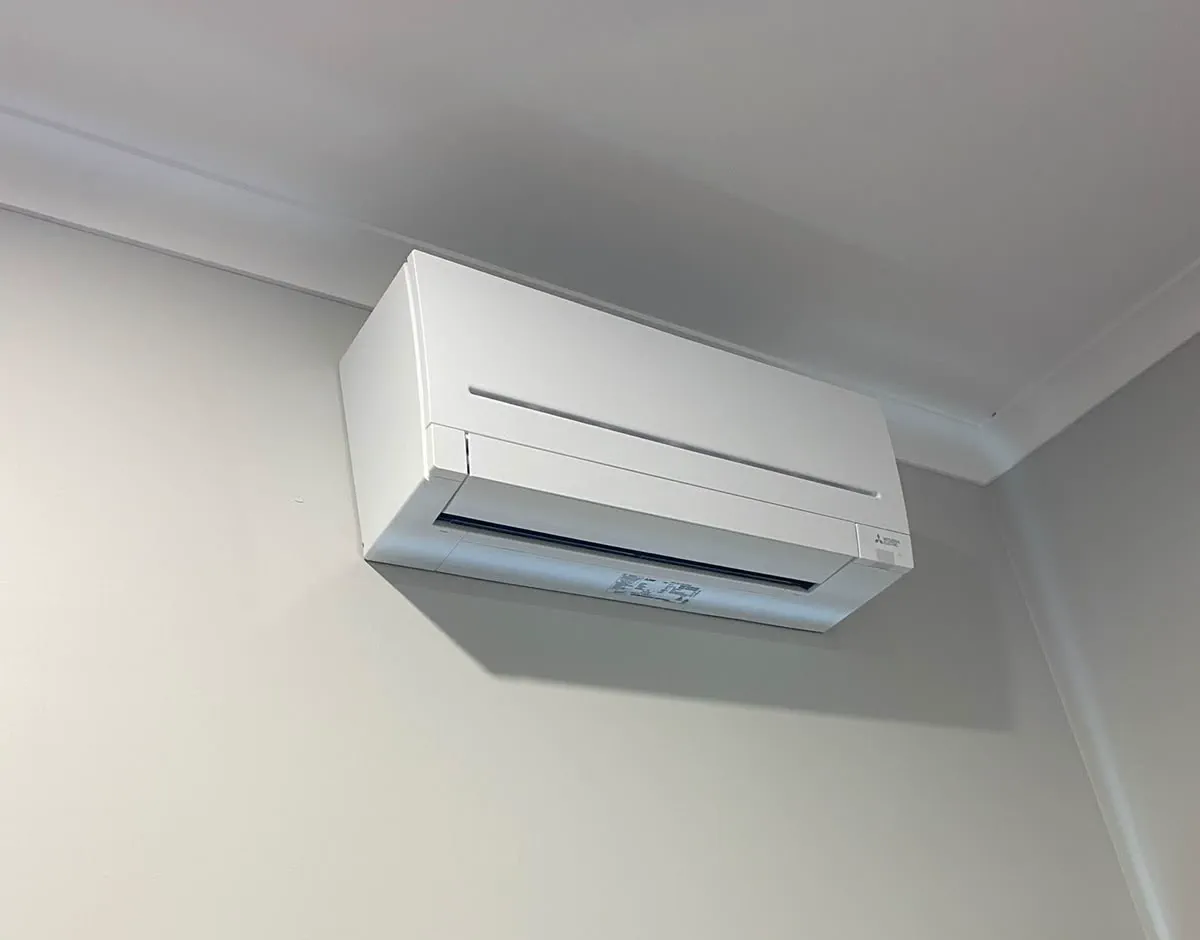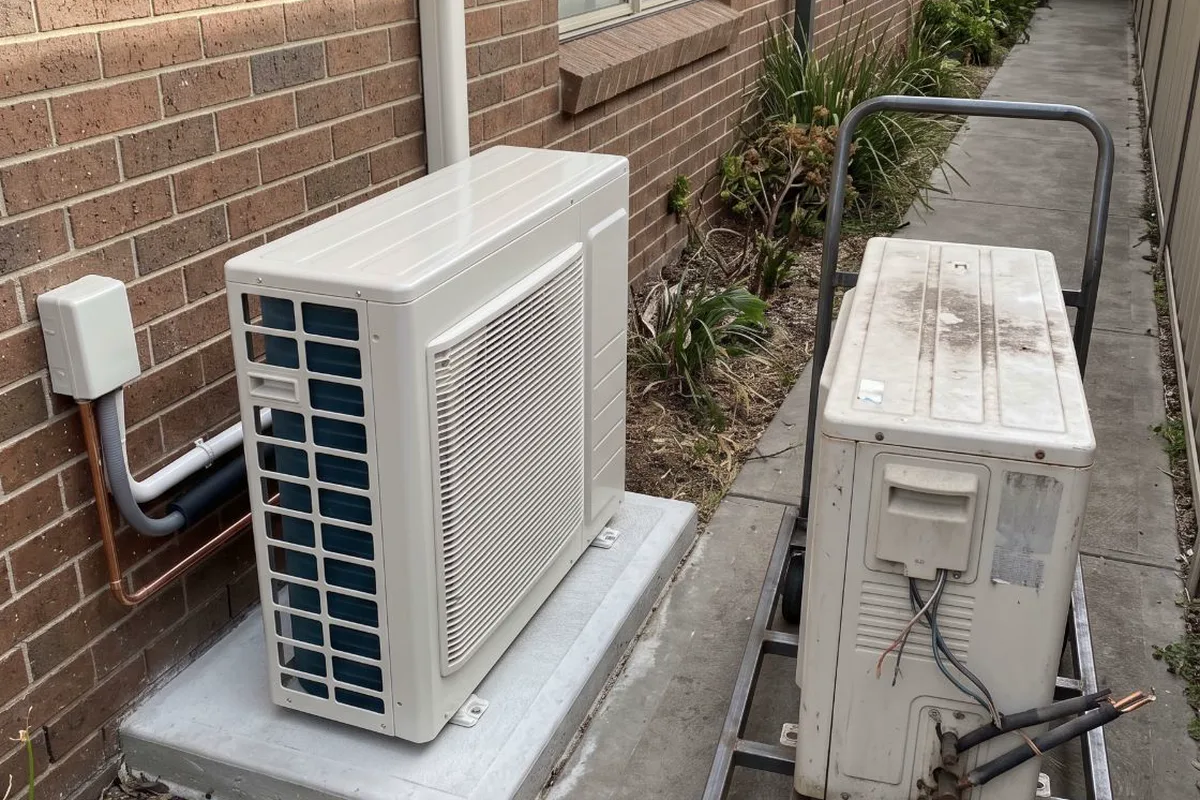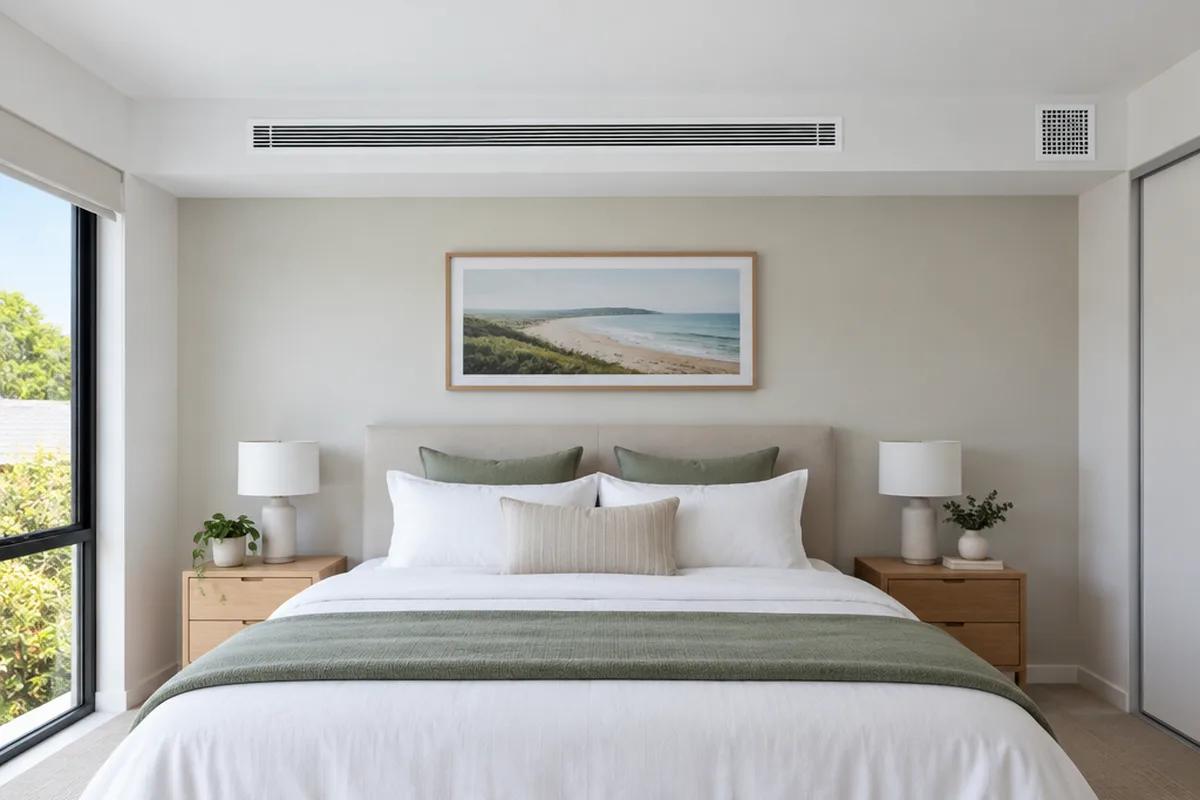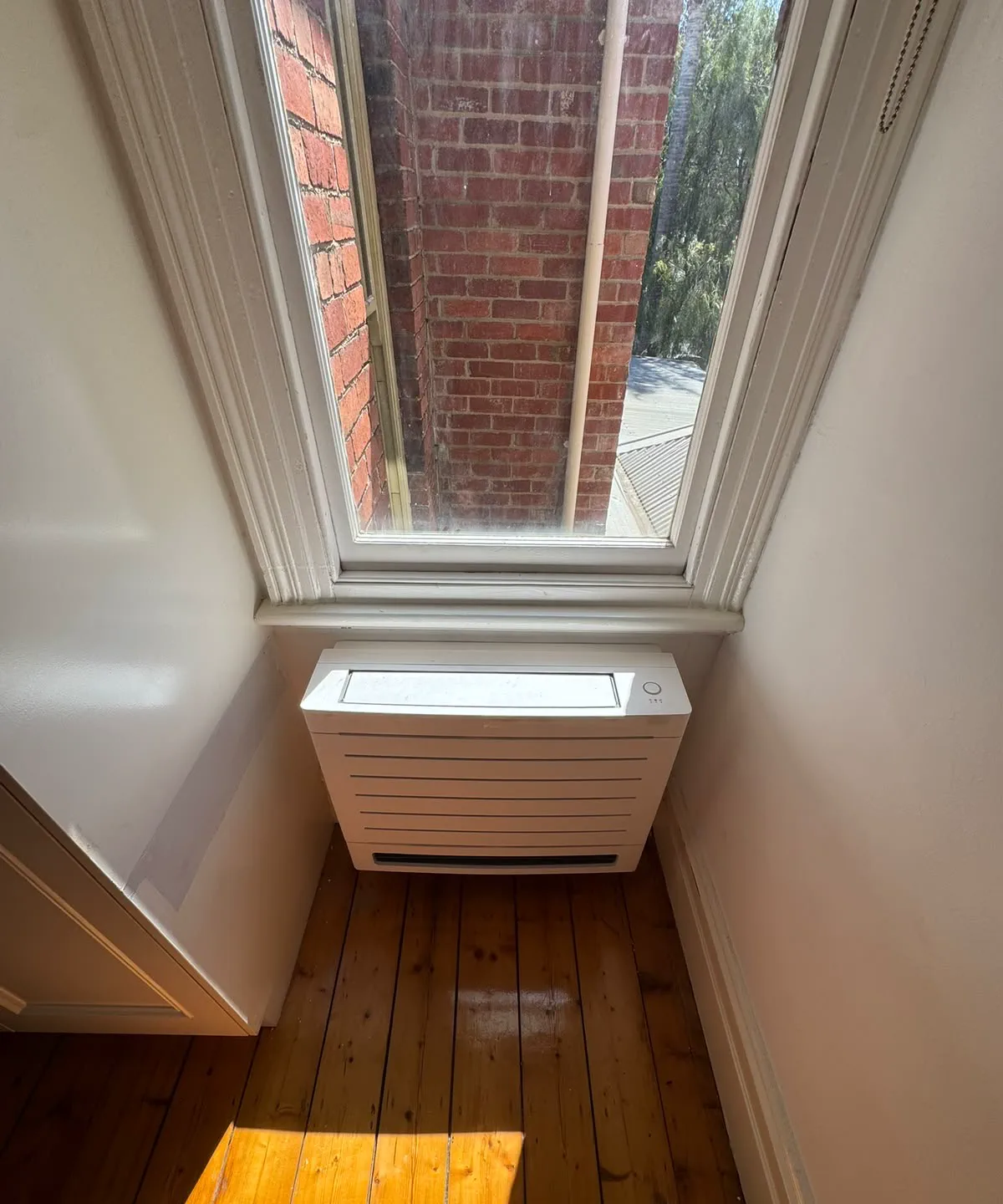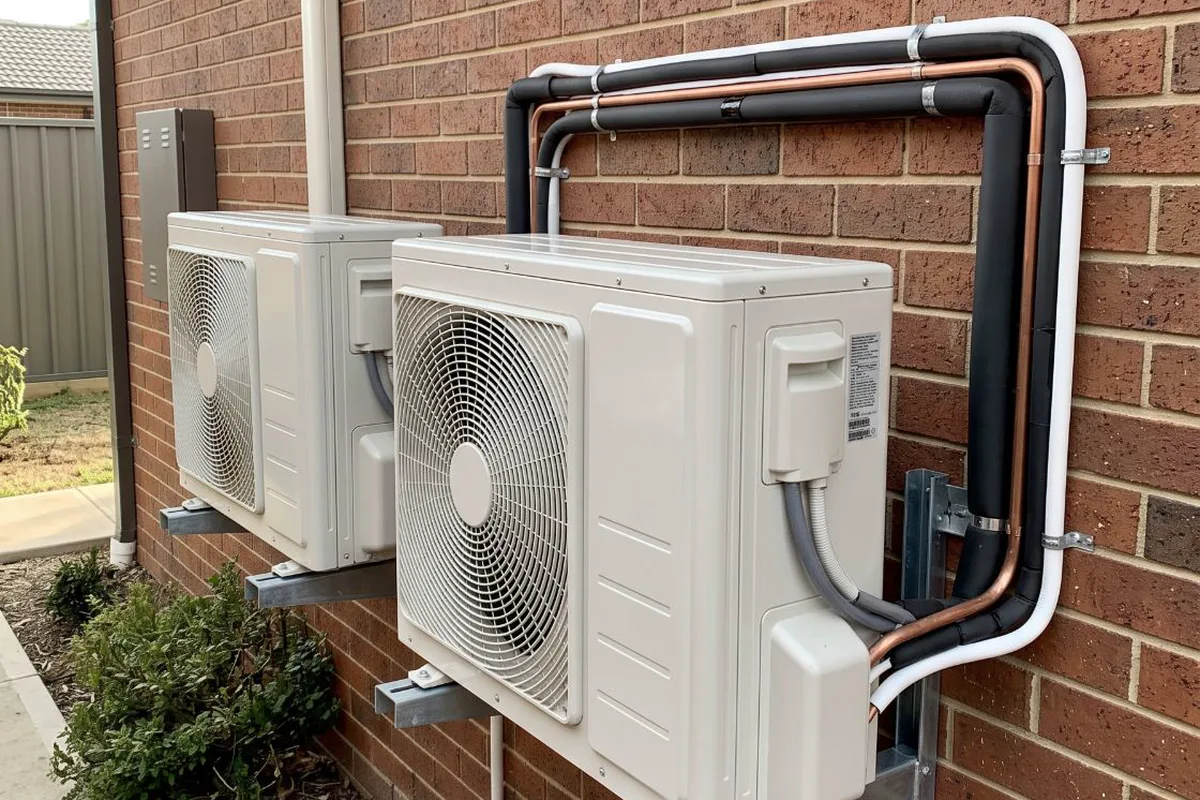
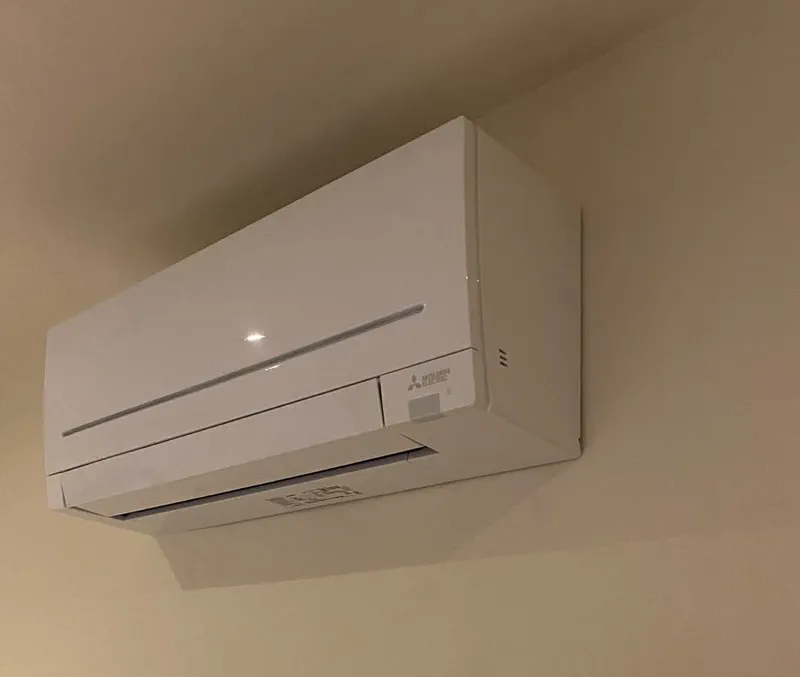
A multi-head split system runs two or more wall heads from one outdoor unit, giving several rooms reverse-cycle heating and cooling where there’s space outside for only one unit. We plan it room by room and do the pipework, drains, circuit and isolator on the same job.
When to get it checked
Room outside for one unit, not three
A narrow side path, small courtyard or single balcony leaves space for one outdoor unit with clear air around it.
A frontage you'd rather keep plain
On a period cottage or street-facing brick veneer, a row of outdoor units and pipe covers looks cluttered. One unit down the side keeps it tidy.
Rooms used at different times
Lounge in the evening, bedrooms overnight, study by day. A multi-head works best when the outdoor unit rarely drives every head flat out at once.
Several rooms, not the whole house
You want heating and cooling in three or four rooms without the roof work and ceiling outlets of a ducted system.
Why it happens
4 common causes
An outdoor unit sized to the brochure
The heads often add up to more than the outdoor unit delivers at once, because rooms rarely peak together. Run everything on a hot evening and each head gets a share, not its full output.
Pipe runs past their limits
Each head usually has its own pipe pair to the outdoor unit, and manufacturers cap each run and the total. Exceed them, or kink a pipe at a tight bend, and the far rooms suffer.
Drains without enough fall
Every head makes water in cooling mode and needs a drain that runs steadily downhill. A head on an internal wall may need a condensate pump.
A switchboard with no spare space
The outdoor unit needs its own circuit, so we check the switchboard has room before a new reverse-cycle system goes in.
What the job covers
What we usually do on this job. Your quote confirms it for your place.
- Each room measured for head size and position
- Outdoor unit location checked for airflow and access
- Pipe and drain routes planned for every head
- Each pipe run pressure tested and vacuumed
- Dedicated circuit and lockable outdoor isolator
- Switchboard checked for space
- Every head tested in heating and cooling
Your options, explained
Multi-head split system
Medium disruption- Best for
- Two to five rooms, with space outside for one unit
- How it works
- One outdoor unit feeds several wall heads, each with its own pipe pair and controller.
- Worth knowing
- Shared mode and one point of failure. One small head running alone can be less efficient than a matched single split.
Separate single splits
Medium disruption- Best for
- Rooms needing opposite modes at once
- How it works
- Each room gets its own indoor and outdoor pair and runs independently.
- Worth knowing
- More outdoor units to place, but a fault only takes out one room.
Ducted reverse cycle
High disruption- Best for
- Most of the house, with roof space for the unit and ducts
- How it works
- One roof-space unit sends air through ducts to ceiling outlets, controlled by zones.
- Worth knowing
- No wall heads, but zones share one set of settings.
The people behind the work
Our own photos from jobs like this one. Family-run, based in Altona Meadows, with 19 years in the industry.
Licensed electrical contractor (REC 38187)See more team photos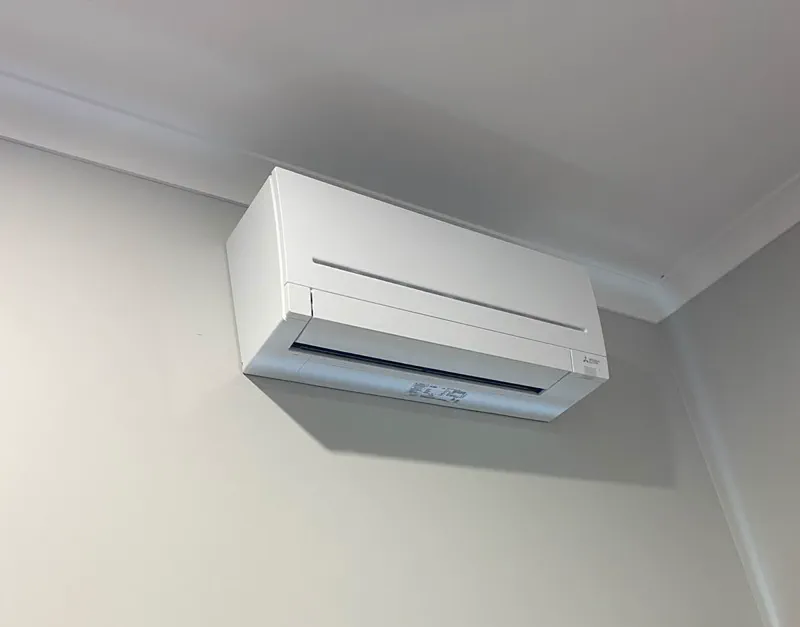
Worth knowing before you book
- One mode at a time
- All heads heat or all heads cool, never a mix.
- A shared outdoor unit
- Less clutter outside, but if it stops, every room stops.
- Plan later rooms now
- A spare connection has to be designed in from the start.
What affects the price?
The right scope depends on your installation. These are the details we check so your quote is useful, with any additional work explained before it proceeds.
Number and size of heads
Each head brings its own unit, pipe run, drain and wall work, and bigger rooms can push the outdoor unit up a size.
Pipe routes
A far room, a second storey or a slab with no underfloor access takes more pipe and labour than heads near the outdoor unit.
Outdoor unit position
A ground pad beside the house is simpler than a high wall bracket or a roof mount, and removing old units adds time.
Drainage and the switchboard
Condensate pumps for internal walls, and board work if there's no free space or safety switch protection.
How it runs
- 1
Tell us about the rooms
Which rooms, how you use them, and photos.
- 2
Design and quote
Heads, outdoor unit and pipe routes, priced before we start.
- 3
Install and wire in
Units, pipework, circuit and isolator on one job.
- 4
Test every room
Both modes on every head, controllers set up.
Step by step, in more detail
4 steps
Walk the rooms with you
Each room's size, windows and aspect, where a head can sit, and where the outdoor unit can breathe and be serviced.
Size the combination
Heads are sized room by room, then the outdoor unit is matched to how many rooms you really run together.
Install and wire in
Heads, outdoor unit, pipework, drains, dedicated circuit and isolator on one job. Each pipe run is pressure tested and vacuumed before refrigerant is released into it.
Commission and certify
Every head is run in both modes, alone and together. The electrical side is non-prescribed work, and the electrician must give you a copy of the Certificate of Electrical Safety within 30 days.
What is safe to do, and what to leave to us
Safe for you to do
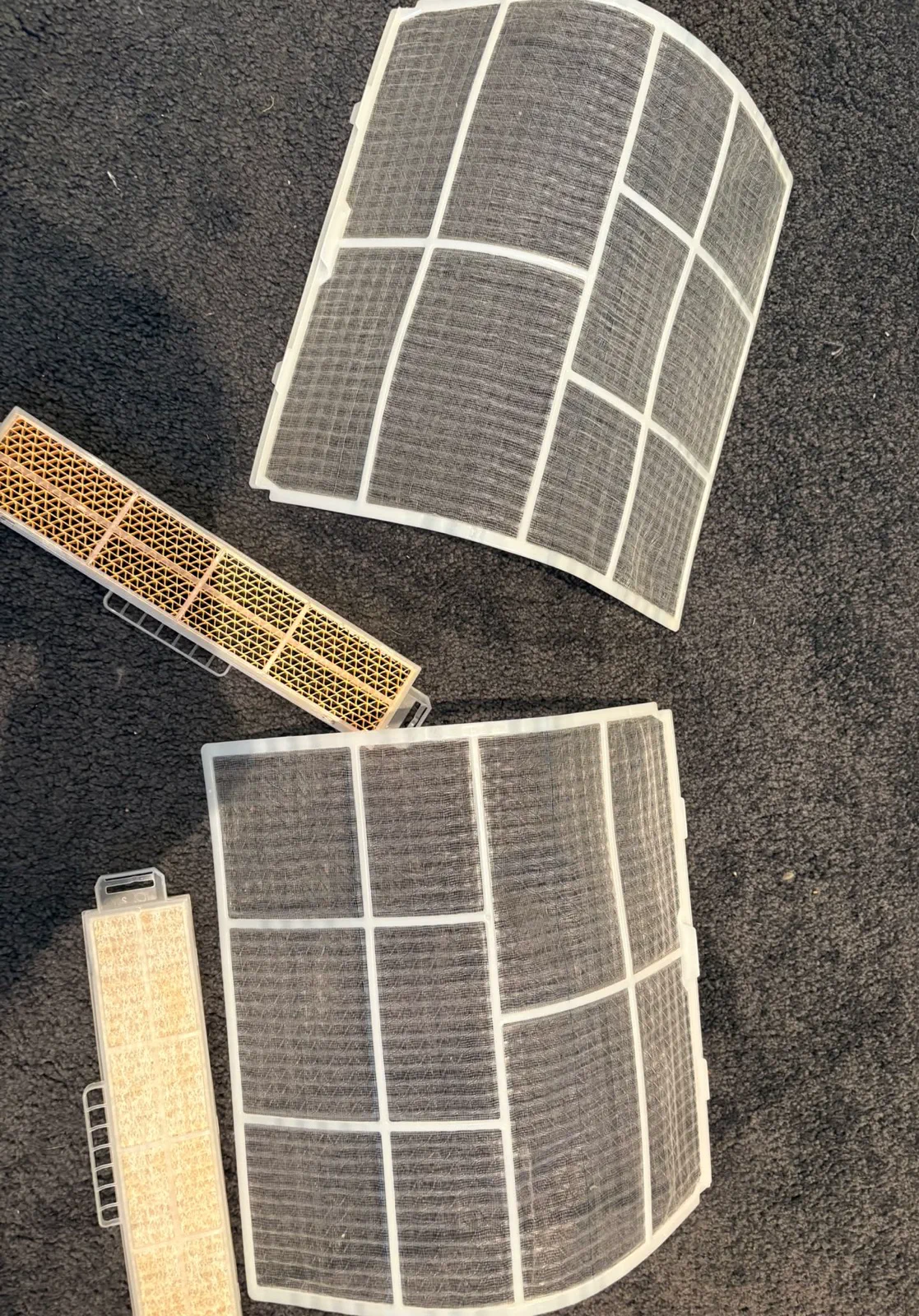
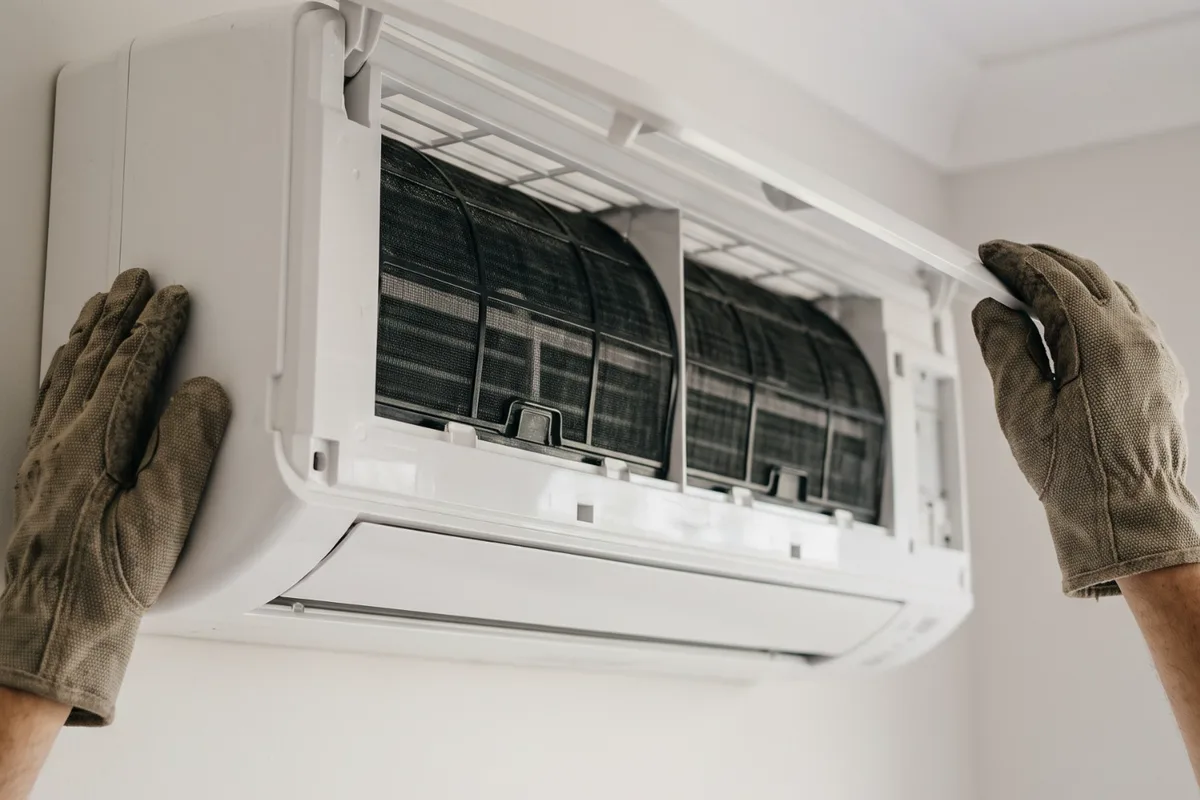
- Clean each head’s dust filters about twice a year, more often with heavy use.
- If a warning light appears, check every controller is in the same mode.
- If a head smells hot, switch it off and, if safe, turn off its circuit at the switchboard.
Leave these to us
- Opening either unit or touching wiring. Electrical work isn’t DIY, even small jobs.
- Letting anyone top up refrigerant before every leak is found and repaired. It’s illegal, and only licensed technicians can handle refrigerant.
- Resetting a tripped safety switch more than once. If it won’t hold, call a licensed electrician.
When to get us in
- Several rooms to cover, but space outside for only one unit
- You’re renovating and want pipe routes planned before walls close up
- An existing multi-head can’t keep up once two rooms are running
- A burning smell from any unit: switch off at the switchboard if it's safe to reach, and leave it off until it's checked
More detail
One mode for the whole system
A single outdoor unit heats or cools, never both at once. In spring and autumn that bites: a sunny west-facing lounge wants cooling while a shaded bedroom wants heat. If your house pulls both ways, a separate split for the odd room out, beside a smaller multi-head, often works better.
Comparing combinations, not single units
Melbourne sits in the Cold zone of the Zoned Energy Rating Label, so read the Cold ratings. In stores the label is mandatory on unitary and single-split units; multi-head combinations aren’t named in that rule, so ask for the manufacturer’s figures for your exact set of heads.
One isolator for every room
The Wiring Rules call for a lockable isolating switch next to the outdoor unit, not on it, that isolates the whole system, heads included. On a multi-head, that one switch shuts down every room before anyone works on it.
Local rules and conditions
Victorian requirements and local conditions that shape this job, with the sources listed at the foot of the page.
Sized for cold nights as well as hot days
Laverton averages 27 days a year at or above 30 °C, mostly December to February, and July’s average minimum is 5.2 °C. Victorians typically use more energy heating than cooling, so weigh each head’s heating output.
Not every licence covers a multi-head
The Australian Refrigeration Council says a holder of only a restricted 'Splits' licence may not install multi-head split systems; a full RAC licence covers any system. Ask whoever quotes which licence they hold.
Rentals and the cooling standard
From 1 March 2027, rental providers must install energy-efficient fixed cooling with an outlet in the main living area when a new agreement starts; for a non-ducted system that means a GEMS cooling rating of 3 stars or more for the property’s climate area. Consumer Affairs Victoria notes one reverse-cycle system can meet the heating and cooling standards.
Useful reading
Guides to read before you decide, with checklists and questions to bring to the quote.
- What size split system do you need?What a split system's kW rating measures, why floor area alone gets it wrong, and how glass, ceilings and afternoon sun change the size a room needs.
- Split system or ducted: choose around the rooms you useCompare layouts, zoning, installation work and quote details before choosing equipment for your home.
- Reading the Zoned Energy Rating LabelWhich zone to read in Melbourne, why the red heating stars matter most, what the kWh and noise figures mean, and how to compare two units fairly.
- Reverse-cycle air conditioning or gas heating?How each one makes heat, how it feels on a cold night in Melbourne's west, what Victoria's gas rules mean for you and what switching really involves.
Common questions
From the blog
- Multi-head split or ducted: which suits a single-storey home?In a single-storey home with workable roof space, zoned ducted usually wins for whole-house comfort. A multi-head wins when only a few rooms matter or the roof is tight.
- Installing a split system upstairs: pipe runs, drains and outdoor unitsBack-to-back or a long pipe run, a drain that needs fall, an outdoor unit on the ground or a bracket, and safe access: what decides how an upstairs split goes in.
- Installing air conditioning in a heritage weatherboard homeOutdoor unit visibility, pipe routes through old walls, tight roof spaces and overlay checks: how to air condition a period home without spoiling it.
Sources for the rules and local facts on this page
14 sources, with the date each was checked
- 1.Bureau of Meteorology: Mean number of days ≥ 30 °C 6.9 6.0 4.5 0.7 0.0 0.0 0.0 0.0 0.1 0.9 2.8 5.1 27.0 82 1943 2026 Mean number of days ≥ 35 °C 3.6 2.4 0.9 0.0 0.0 0.0 0.0 0.0 0.0 0.1 0.5 1.9 9.4 Accessed 30 September 2026.
- 2.Department of Energy, Environment and Climate Action (energy.vic.gov.au), page last updated 14/04/25: Victorians typically use more energy for heating than cooling, so look for a unit with a higher heating efficiency. Accessed 30 September 2026.
- 3.Australian Refrigeration Council (ARC), Fact Sheet 13 (ARC5225, 11/22): The holder of a restricted ‘Splits’ licence is not qualified and not permitted to: ✗ Work with any split system air conditioner of more than 18kW cooling capacity ✗ Install multi head split system air conditioning… Accessed 30 September 2026.
- 4.Consumer Affairs Victoria: From 1 March 2027, rental providers must install an energy-efficient, fixed cooling system with an outlet in the main living area. This applies at the start of a new rental agreement. All rental properties must have… Accessed 30 September 2026.
- 5.Consumer Affairs Victoria: Definition: From 1 March 2027, energy efficient fixed cooling means: (a) a non-portable, non-ducted electric air conditioner or heat pump capable of cooling, with a GEMS 3-star or above cooling rating (for the climate… Accessed 30 September 2026.
- 6.Consumer Affairs Victoria: Tip: A reverse-cycle air conditioner can satisfy both the heating and cooling standards. Accessed 30 September 2026.
- 7.Energy Safe Victoria: 'Prescribed' certificates are for electrical installation work that requires inspection by a Licensed Electrical inspector. This includes (but is not limited to): Consumer mains cables, main switchboard, meter box and… Accessed 30 September 2026.
- 8.Commonwealth of Australia (2019), 'The new zoned energy rating label for air conditioners—What installers and retailers need to know', hosted on energyrating.gov.au: Melbourne is in a black ‘COLD’ area—read the black Cold ratings. Accessed 30 September 2026.
- 9.Energy Rating (GEMS Regulator / DCCEEW): In stores, it’s mandatory for the Zoned Energy Rating Label to be displayed on single-phase, non-ducted, and unitary or single-split air conditioners up to 30 kW. ... Where products are sold online, it’s not mandatory… Accessed 30 September 2026.
- 10.Access Canberra Electrical Inspections (ACT Government), Electrical Fact Sheet, updated September 2019: Air-conditioning and heat pump systems incorporating a compressor shall be provided with an isolating switch (lockable) in accordance with Clause 2.3.2.2, installed adjacent to but not on the unit, which isolates all… Accessed 30 September 2026.
- 11.Solar Victoria (updated 20 November 2025): To heat a room, try setting the temperature between 18°C to 20°C. Every 1°C higher will add around 10% to your heating bill. Set your air conditioner thermostat for cooling between 24°C and 26°C for living areas – every… Accessed 30 September 2026.
- 12.Energy Safe Victoria: Electrical work isn’t a DIY job, even for small jobs such as changing power points or light switches. Accessed 30 September 2026.
- 13.Department of Climate Change, Energy, the Environment and Water (DCCEEW): It's illegal to release regulated refrigerants into the air. This is because some refrigerants can stay in the atmosphere for decades or more and can be thousands of times worse for climate change than carbon dioxide… Accessed 30 September 2026.
- 14.Energy Safe Victoria: Locate your electricity box outside your home and check whether the safety switch has tripped. If it has tripped, reset the switch. If the switch won’t reset, call a licensed electrician. Accessed 30 September 2026.