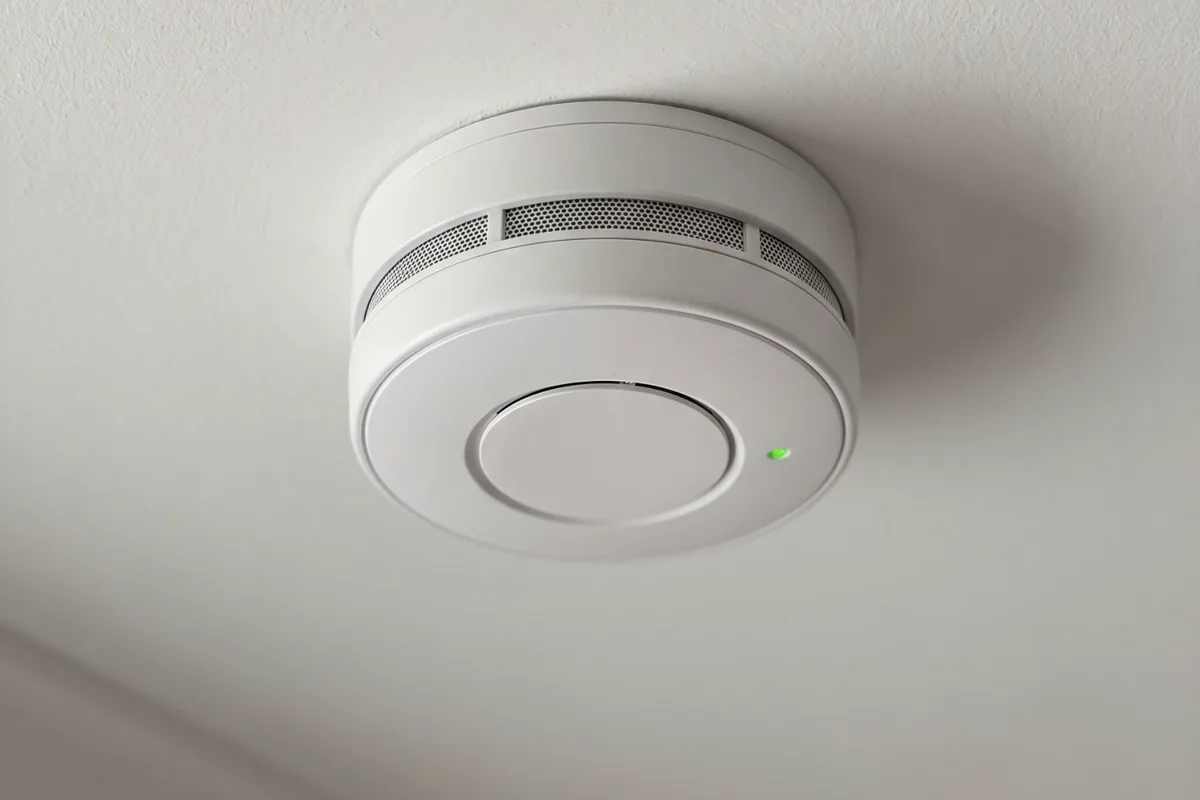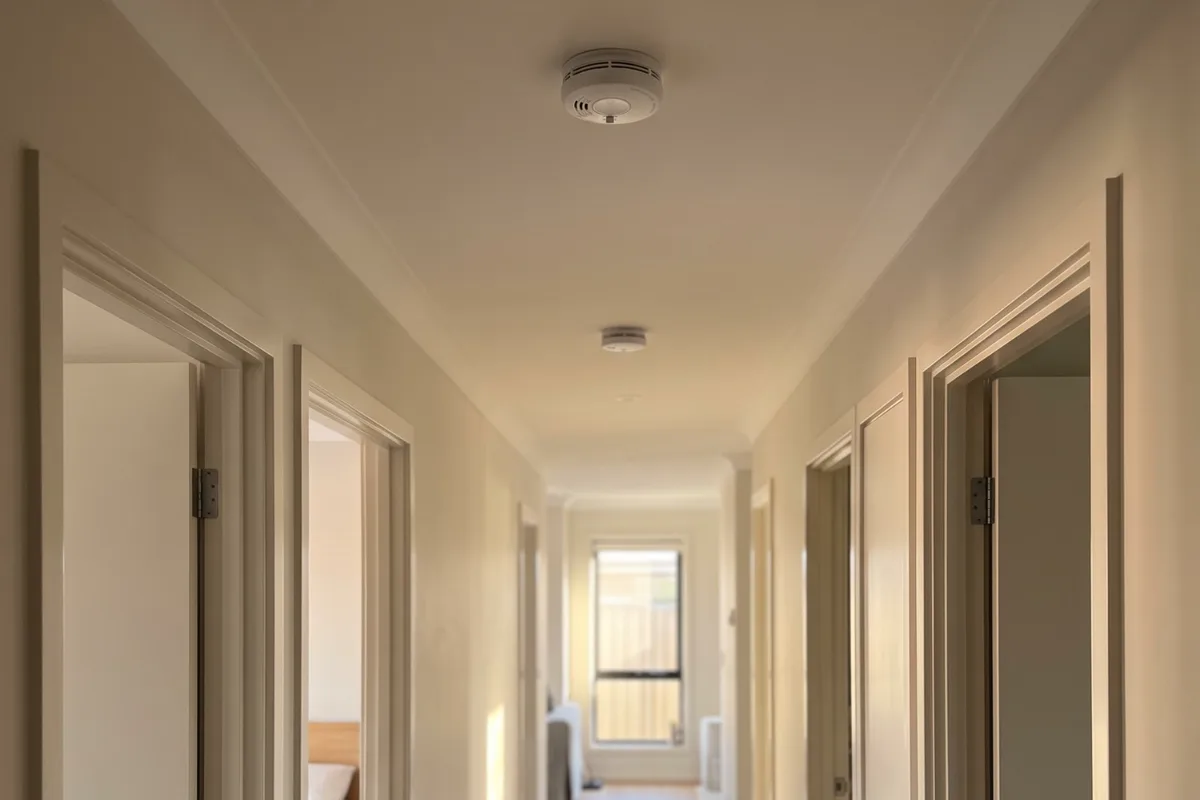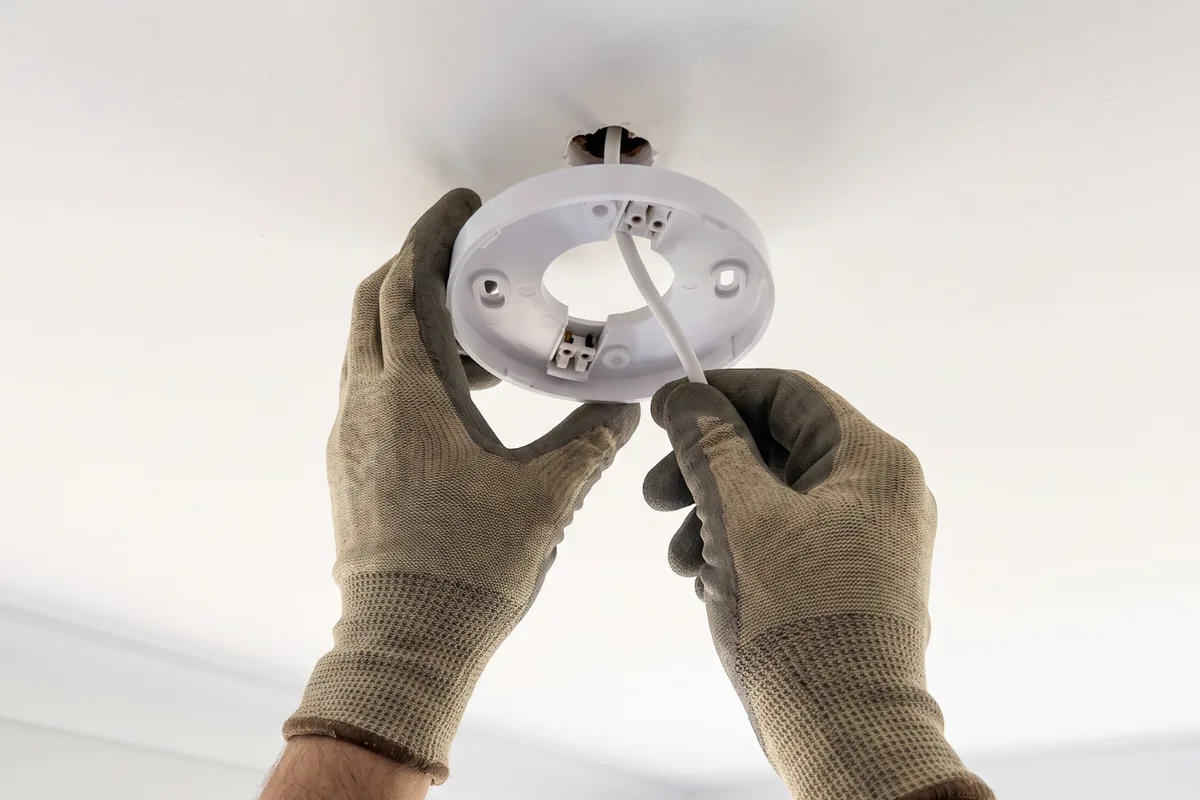
When a mains alarm reaches its date, the replacement has to suit the base and wiring already in your ceiling. We check both, fit new bases where needed, and run cable to homes that only have battery units.
When to get it checked
Original alarms, never changed
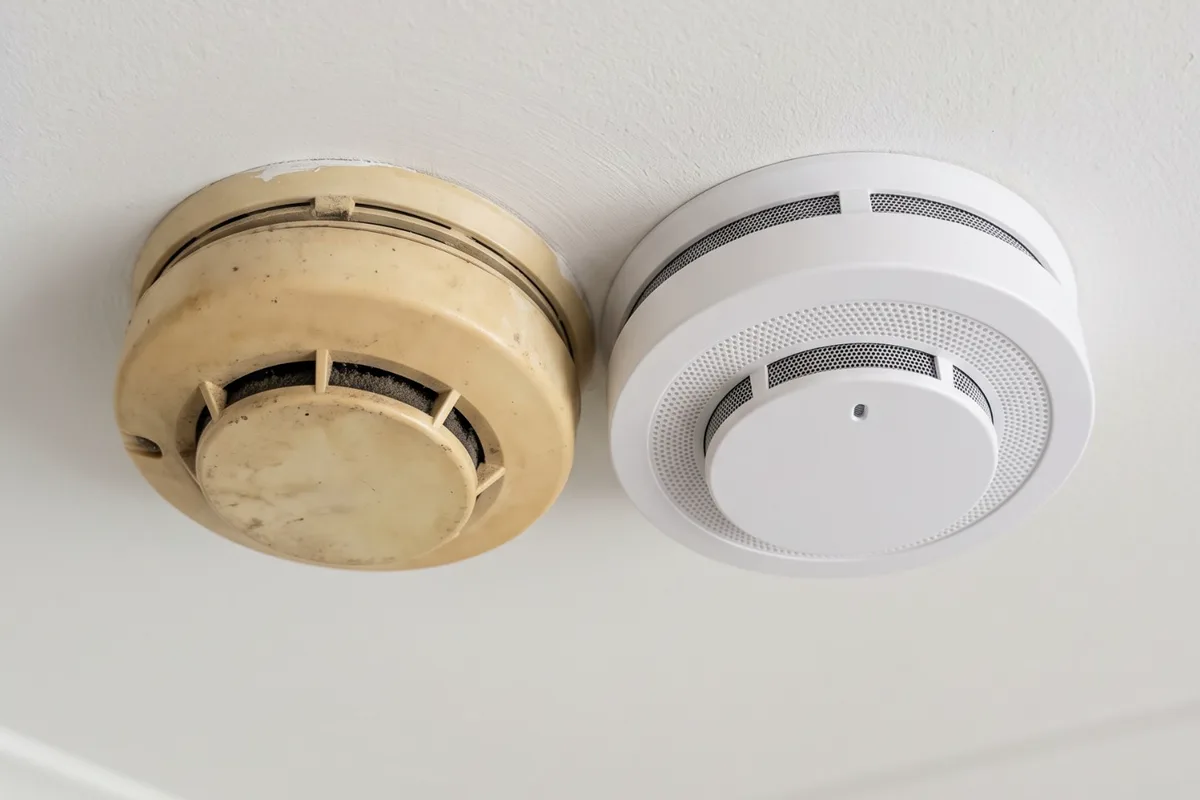
Alarms that went in with a house built in the 2000s are likely due by now. The Building and Plumbing Commission says to replace them as the maker specifies, generally after ten years.
A new battery doesn’t stop the chirp
A fresh backup battery should silence a low-battery chirp. If it doesn’t, the alarm may have lost mains or be giving its end-of-life warning.
The power light has gone dark
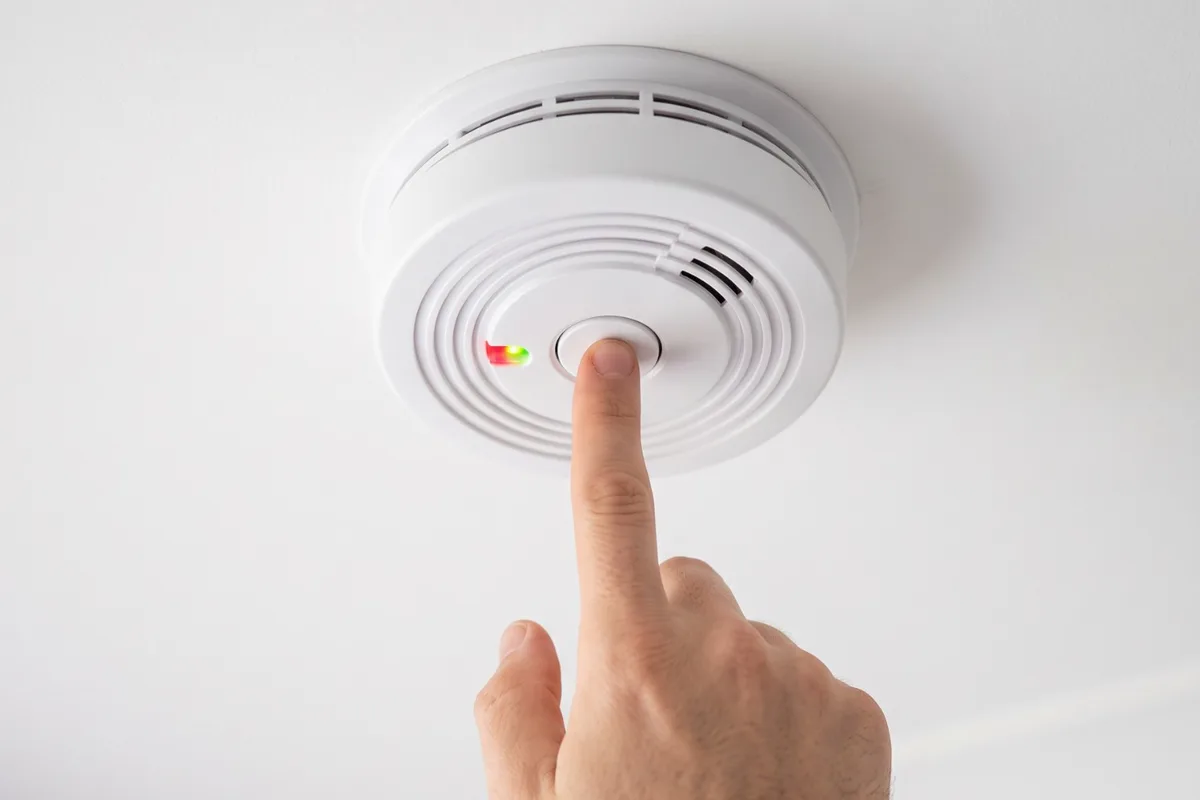
The small light on a mains alarm should glow steadily. If it went out after a breaker tripped or work in the ceiling, the alarm is probably on battery alone.
A stick-on unit beside a blank base
A mains alarm has been swapped for a battery one, or a capped base sits empty on the ceiling. In a home that must have 240V alarms, that doesn’t meet the requirements.
Why it happens
4 common causes
A set that ages together
Alarms fitted with the house are all the same age. Dust builds up in the sensing chambers, the electronics wear, and the whole set comes due at once.
Lost supply on a shared circuit
Hardwired alarms usually share a lighting circuit. A tripped breaker, a loose connector in a base or cable knocked during downlight work leaves them on battery until it runs flat.
Replacements that didn’t fit
Bases differ between makers. An off-the-shelf alarm often won’t fit the old one, so a battery unit goes up and the mains base is capped and forgotten.
A new bedroom with no cable to it
An extension or converted garage moves where people sleep. Alarms must be located between each bedroom area and the rest of the house, so the new position needs cable.
What the job covers
What we usually do on this job. Your quote confirms it for your place.
- Each alarm checked for date, power and position
- Old alarms and unsuitable bases removed
- Photoelectric 240V alarms with backup batteries
- New bases where the old ones don’t suit
- Existing cable checked, or new cable run
- Alarms between bedrooms and the rest of the house, on every storey
- Each alarm tested on mains and battery
- Certificate of Electrical Safety
Your options, explained
Replacement on the existing cable
Low disruption- Best for
- Expired, chirping or faulty hardwired alarms
- How it works
- New 240V alarms go on the cable already there, with new bases if needed.
- Worth knowing
- Usually the simplest job. Linked alarms change as a set.
New cable to a battery-only home
Medium disruption- Best for
- Older homes on stick-on alarms, and new bedrooms
- How it works
- Cable runs from a suitable circuit through the roof space to each position.
- Worth knowing
- Easiest with good roof access.
Sealed-battery alarms, no wiring
Low disruption- Best for
- Homes built before August 1997 where cabling isn’t practical
- How it works
- Photoelectric alarms with a sealed long-life battery fix straight to the ceiling.
- Worth knowing
- Not allowed where 240V alarms are required. The whole alarm goes when the battery ends.
The people behind the work
Our own photos from jobs like this one. Family-run, based in Altona Meadows, with 19 years in the industry.
Licensed electrical contractor (REC 38187)See more team photos
Worth knowing before you book
- The date is under the battery
- New units have an expiry date there. Replace by it, generally after ten years.
- Bases aren’t universal
- Changing make usually means changing the base too.
- Built after August 1997
- Those homes need 240V alarms with a backup battery, so a stick-on unit won’t do.
What affects the price?
The right scope depends on your installation. These are the details we check so your quote is useful, with any additional work explained before it proceeds.
Reusing cable or running new
Sound cable makes it a straight swap. No cable to the positions, or old cable that fails its checks, adds work.
Roof space and ceilings
An open roof space is simple. Low-pitched roofs, raked ceilings, slabs and the floor between storeys take longer to cable.
Whether the bases suit
Alarms that fit the existing bases go up quickly. A change of make usually means new bases.
Replaceable or sealed backup
A sealed long-life backup battery costs more up front than a replaceable one, but there’s no battery to change.
How it runs
- 1
Send us a photo
The front of one alarm, plus bedrooms and levels. Leave hardwired alarms on their bases.
- 2
Check and quote
We check alarms, wiring and roof access, then give you an upfront price.
- 3
Install, test and certify
New alarms go up, each is tested, and you get your certificate.
Step by step, in more detail
4 steps
Check each alarm and base
Each alarm’s date, power light, base and link, where it sits relative to the bedrooms, and which circuit feeds it.
Agree the plan and the price
Replace on the existing cable, move badly placed alarms, or wire in a battery-only home. You get a fixed price for the agreed scope before we start.
Isolate and wire
The alarm circuit goes off at the switchboard. Sound cable is reused, damaged runs are replaced through the roof, and new bases go on where needed.
Test, date and certify
Each alarm is tested on mains, then on battery with the circuit off. We note the install date and issue your Certificate of Electrical Safety.
What is safe to do, and what to leave to us
Safe for you to do
- Test each alarm monthly: press and hold the test button until it beeps three times, and check its power light.
- Change a replaceable backup battery when it chirps. Anyone can do that.
- If the lights and alarms on one circuit drop out, reset a tripped safety switch once.
- If there’s smoke or fire, get everyone out of the house.
Leave these to us
- Connecting a new alarm to the old base yourself, even if it clips on.
- Touching base wiring, or disconnecting an alarm to stop the noise.
- Swapping a mains alarm for a stick-on battery unit.
- Painting over an alarm or leaving a dust cover on after renovations.
When to get us in
- Alarms ten or more years old, or undated
- Chirping after a new battery
- A power light that stays out
- The safety switch trips again after one reset
- A stick-on unit where a 240V alarm was
- A new bedroom, extension or storey
More detail
Why the base matters when you replace
A hardwired alarm clips or twists onto a base carrying the 240V supply and, in a linked set, the interconnect wire. Bases and connectors differ between makers. A new alarm that suits the old base is a quick swap; otherwise a new base goes on the existing cable.
Which homes must have mains alarms
The Building and Plumbing Commission says homes built after 1 August 1997 must have alarms on 240V mains with a backup battery; older homes may have battery alarms. Fire Rescue Victoria’s summary adds that a home built, largely renovated or extended after 1 May 2014 needs them interconnected. Consumer Affairs Victoria says all alarms must meet AS 3786, and the Commission notes an owner who doesn’t comply can be fined.
The old spot isn’t always the right spot
Alarms go on or near the ceiling, clear of the dead air where wall meets ceiling. When we replace, we check the old position still works: a ducted outlet, split system or new ensuite nearby can push smoke away or cause false alarms. Moving a mains alarm means extending its cable and blanking the old hole.
Local rules and conditions
Victorian requirements and local conditions that shape this job, with the sources listed at the foot of the page.
Cottages and post-war homes
Yarraville’s heritage precinct is mostly small single-storey Victorian and Edwardian houses, and post-war growth transformed Altona and Laverton. Homes built before 1 August 1997 may have battery alarms. Hardwiring a single-storey home means cabling through one roof space.
Estate homes stay on mains
Wyndham is planning new housing in growth areas including Truganina, Tarneit, Wyndham Vale and Manor Lakes. Fire Rescue Victoria’s summary says homes built after 1 May 2014 need interconnected alarms on 240-volt mains with a backup battery, so replacements stay wired and linked.
Useful reading
Guides to read before you decide, with checklists and questions to bring to the quote.
- Smoke alarm rules for Victorian homesWhat Victoria expects of the alarms in the home you own: the type your build date calls for, where they go, interconnection and when to replace them.
- Rental electrical and smoke alarm checks in VictoriaKnow which records to gather, how to arrange access and where to verify the current Victorian requirements.
- Certificates of Electrical Safety explainedWhat a Victorian COES records, how prescribed and non-prescribed work differ, when your copy should arrive and why it belongs in your house file.
- What electrical work you can and can't do yourself in VictoriaWhere Victorian law draws the line on home electrical work, the short list of jobs that are yours, and what to do when a job goes past it.
Common questions
Questions people ask about this
More in the Help centreFrom the blog
Sources for the rules and local facts on this page
7 sources, with the date each was checked
- 1.Victorian Heritage Database (Heritage Council Victoria); entry maintained by Maribyrnong City Council: The general character of the Yarraville Residential Precinct is that of small Victorian & Edwardian single-storey detached housing with mainly weatherboard and some brick wall cladding, corrugated iron roofing, front… Accessed 30 September 2026.
- 2.Victorian Government, Hobsons Bay Planning Scheme (PDF snapshot, last updated by VC292 on 11/09/2025): The heritage places of Hobsons Bay reflect the key themes that have shaped the development of the city since the establishment of Williamstown in the 1840s as the first port of Melbourne, through the development of… Accessed 30 September 2026.
- 3.Building and Plumbing Commission (formerly Victorian Building Authority): Homes constructed after 1st August 1997 must have smoke alarms connected to 240V mains power and have a backup battery. Homes constructed before 1st August 1997 may have smoke alarms powered by a battery. Accessed 30 September 2026.
- 4.Victorian Electoral Commission (2023 electoral structure review fact sheet): New housing developments are planned in residential growth areas including Truganina, Tarneit, Wyndham Vale and Manor Lakes, as well as near activity centres and public transport. Accessed 30 September 2026.
- 5.Fire Rescue Victoria: Residential home constructed, largely renovated, or extended after 1 May 2014 Interconnected, hard wired smoke alarms that are connected to 240 volt mains power and have a back-up battery. Accessed 30 September 2026.
- 6.Consumer Affairs Victoria: A hard-wired smoke alarm must be installed by a qualified electrician, but anyone can change a smoke alarm battery. Accessed 30 September 2026.
- 7.Energy Safe Victoria: Whenever a licensed electrician completes any electrical installation work, they must provide a Certificate of Electrical Safety (COES). Accessed 30 September 2026.