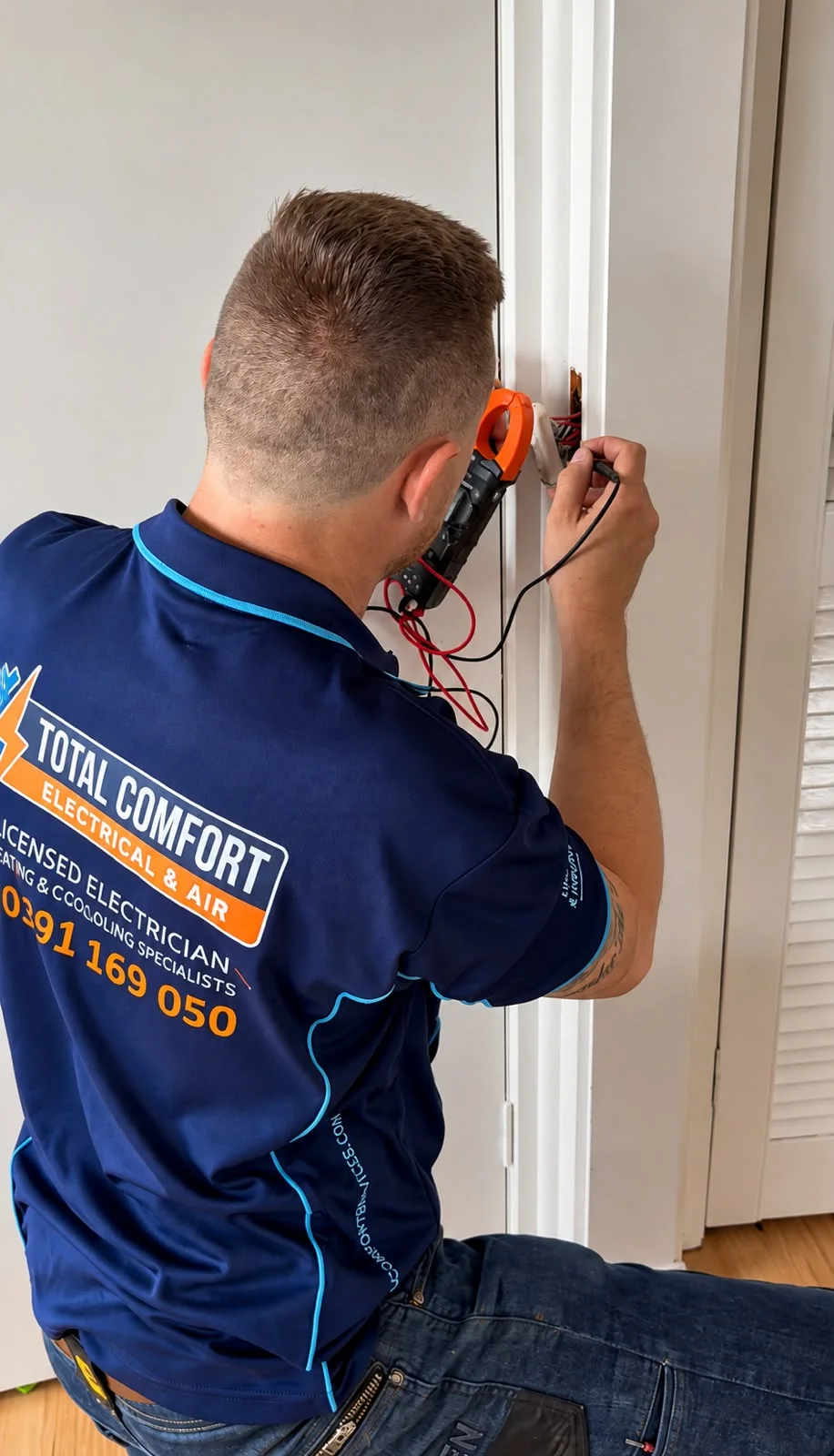
Intermittent faults are frustrating because they rarely happen while an electrician is standing there. A safety switch that trips overnight, a light that flickers when the kettle goes on, a power point that works some days and not others. We start with what you've noticed and when, then test each circuit to narrow it down. Once we know the cause we repair it, instead of swapping parts until the problem goes quiet for a while.
When to get it checked
A safety switch that trips for no clear reason
It drops out overnight, or when nothing new has been switched on. Usually current is leaking to earth somewhere, through an appliance or damp in a fitting.
Trips tied to rain or one appliance
The power goes off after a wet night, or every time the dryer or heater runs. A pattern like that is a strong clue to where the fault sits.
Lights that still flicker with a new globe
When the flicker survives a new globe, or spreads across several rooms, a loose connection is a likely suspect and it needs testing.
Outlets that work some days and not others
A power point, or a run of them, cuts in and out. That usually means a connection has loosened and is starting to heat up.
Warm, marked or crackling fittings
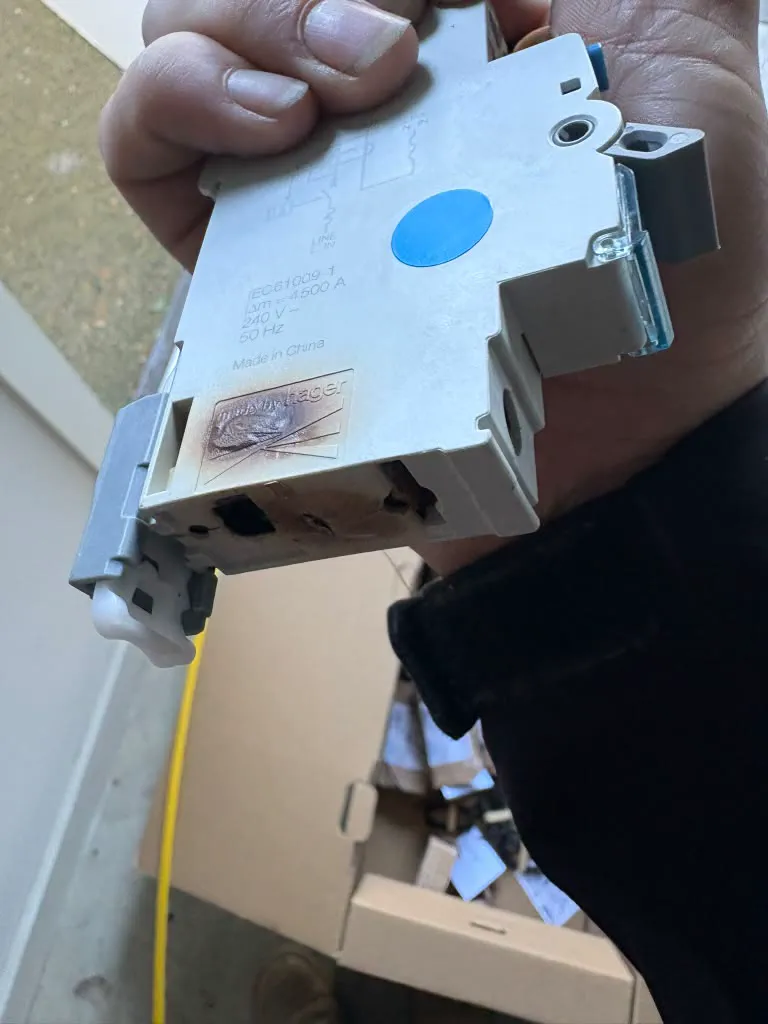
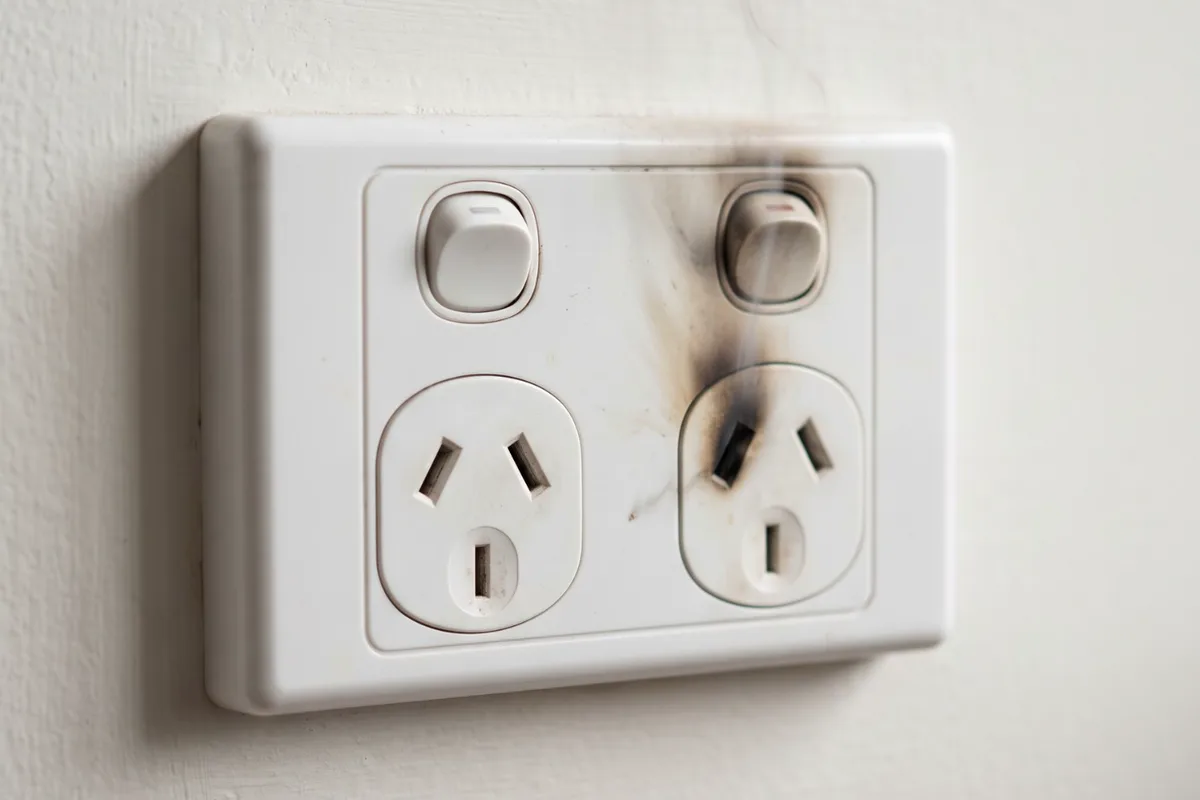
A plate that feels warm, has brown marks around it or crackles in use has a poor connection behind it. Leave it switched off until it's checked.
Why it happens
6 common causes
Loose and worn connections
Terminals at switches, power points, light fittings and the switchboard loosen over years of warming up and cooling down. A loose joint runs hot, which shows up as flicker, dead outlets and, left long enough, scorching.
An appliance with a fault
A worn kettle element or a damp fridge compressor can leak enough current to trip a safety switch while the house wiring is perfectly sound.
Water where it shouldn't be
Uncovered outdoor points, garden lights, sheds and underground joints take in water over time. Inside, a roof leak near a light fitting can do the same.
Damaged cable
Rodents chew cable in roof spaces, and a nail through a wall can nick a cable years after it went in. Renovations and roof work can crush wiring that was fine before.
More load than the circuit was meant for
A heater, kettle and toaster on one circuit can push a breaker past its rating. The breaker is doing its job, and the fix is spreading the load or adding a circuit.
Old alterations and tired switchgear
Additions tapped into the wrong circuit, joints buried in the ceiling and ageing breakers make faults hard to pin down. Often the circuit no longer runs the way the board labels suggest.
What the job covers
What we usually do on this job. Your quote confirms it for your place.
- A run-through of what you've noticed, when it happens and what was running
- Switchboard inspected for loose connections, heat marks and failed breakers
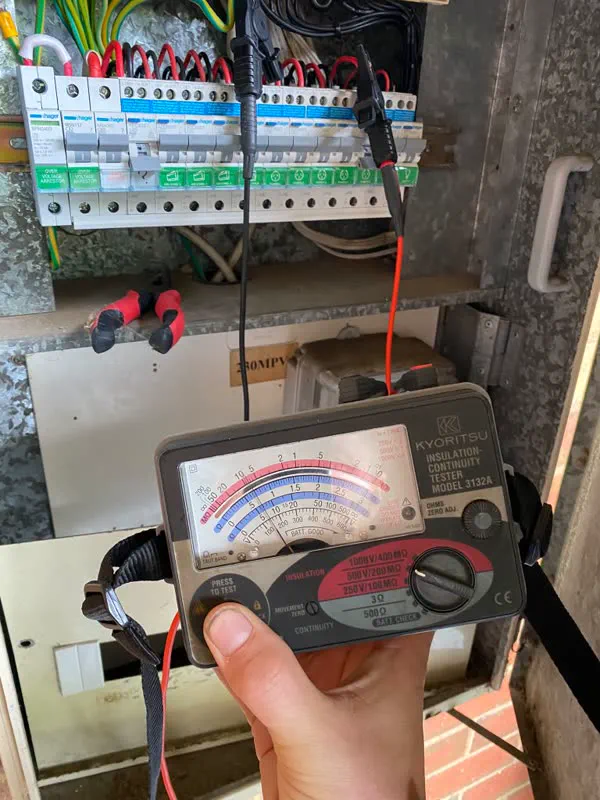
- Insulation resistance testing on the affected circuits
- Appliances disconnected one at a time to rule them in or out
- Loose or burnt connections at switches, power points and lights remade
- Faulty breakers, safety switches, switches and outlets replaced
- Water-damaged outdoor fittings and cable joints repaired or replaced
- Circuits retested after the repair
- A clear explanation of what was wrong
Your options, explained
Targeted repair
Low disruption- Best for
- A fault showing now, or a clear pattern pointing at one circuit
- How it works
- We find the faulty point, connection, appliance or cable section and repair that part only.
- Worth knowing
- We quote the repair rather than replacing unrelated equipment, and the rest of the house usually stays on.
Wider circuit investigation
Medium disruption- Best for
- Intermittent faults, several symptoms at once, or a house with years of alterations
- How it works
- Every circuit at the board is tested, and junctions and fittings along suspect runs are opened and checked.
- Worth knowing
- Power goes off one circuit at a time. It's also a chance to find out which rooms each breaker really covers.
Replacing a damaged cable run
Medium disruption- Best for
- Cable that fails testing, or has been chewed, crushed or overheated
- How it works
- New cable replaces the damaged section or the whole circuit, following the old route where it's sound.
- Worth knowing
- Roof and subfloor access decide the size of the job. If several circuits show the same ageing, we'll talk through a wider rewire.
The people behind the work
Our own photos from jobs like this one. Family-run, based in Altona Meadows, with 19 years in the industry.
Licensed electrical contractor (REC 38187)See more team photos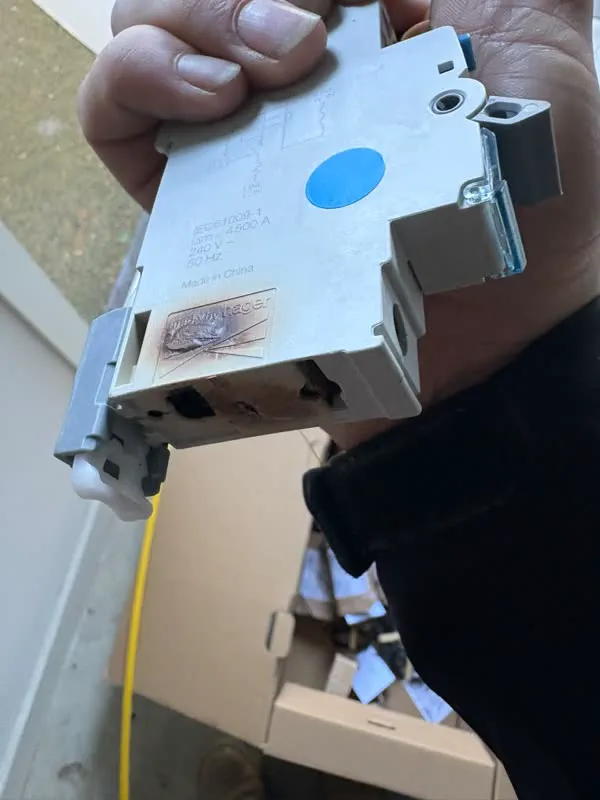
Worth knowing before you book
- Write down when it happens
- Note the time, what was switched on and whether it had been raining. A pattern like "only after rain" or "only when the dryer runs" can save a lot of testing time.
- Appliances are often the cause
- A worn kettle element or a damp fridge compressor can trip a safety switch. Part of the job is working out whether the problem is in the house wiring or in something plugged into it.
- Flickering isn't always the globe
- If one light flickers, it may be the globe or its driver. If lights flicker across the house, especially when big appliances start, get it checked. It can mean a loose connection somewhere.
What affects the price?
The right scope depends on your installation. These are the details we check so your quote is useful, with any additional work explained before it proceeds.
Whether the fault shows up
A fault that is present while we're there is quicker to trace. Intermittent ones can need more testing, or a return visit once the pattern is clearer.
How many circuits are involved
One dead power point is a smaller job than symptoms spread across several rooms.
Getting to the cable
Roof space height, subfloor access, double-storey walls and ceilings without a manhole all change how long it takes to reach hidden wiring.
What the repair needs
Remaking a connection is simpler than replacing a breaker or a length of cable. A failed Type AC safety switch can't be swapped like for like, because Energy Safe Victoria says Type AC units must not be installed.
Whether your wiring is at fault at all
Sometimes testing clears the wiring and points to an appliance. Then there's no wiring repair to price, and we tell you which appliance needs repair or replacing.
Before the visit
- Note the time, weather and appliances in use when the issue occurs.
- Keep photos of error messages or visible damage taken from a safe position.
- Leave a circuit off if it repeatedly trips and avoid using damaged fittings.
How it runs
- 1
Tell us the symptoms
What happens, how often, and what was running at the time. Photos of the switchboard help too.
- 2
Test and isolate
We test the circuits and appliances involved and rule things out until the fault is pinned down.
- 3
Repair
We fix the cause, whether that's a connection, a fitting, a breaker or a length of damaged cable.
- 4
Retest and explain
The circuit is tested again, and we tell you what we found and what, if anything, to keep an eye on.
Step by step, in more detail
6 steps
Start with the pattern
We ask what happens, how often, what was running and what the weather was doing. Your notes often point us to the right circuit before a tool comes out.
Check the switchboard
We look for heat marks, loose connections and failed breakers, and confirm which device operated. A safety switch and a breaker send us in different directions.
Test the circuits
With the power off, we test the suspect circuits. Then we split a circuit into sections to narrow the fault to one point, fitting or length of cable.
Rule appliances in or out
Appliances are disconnected one at a time, including hard-wired ovens, hot water units and air conditioners where needed.
Repair and retest
You get the price for the repair before we start it. We fix the cause, then test the circuit again.
Explain what we found
You hear what failed, where it was and what, if anything, to watch for from here.
What is safe to do, and what to leave to us
Safe for you to do
- Reset a tripped safety switch once. If it trips again or won't reset, leave it off and call a licensed electrician.
- Switch off and unplug appliances on that circuit that are easy to reach.
- Stop using any fitting that is warm, marked or damaged.
- Note the time, the weather and what was running each time it happens.
- If there's smoke, fire or immediate danger, get everyone out of the house.
Leave these to us
- Holding or taping a breaker or safety switch on so it can't trip.
- Opening the switchboard or removing a power point, switch or fitting. Energy Safe Victoria says electrical work isn't a DIY job, even changing power points or light switches.
- Touching a loose, cracked or broken power point. Cover it and have a licensed electrician replace it.
- Running extension leads from another room to get around a dead circuit.
When to get us in
- A safety switch trips again after one reset, or won't reset
- Lights flicker or dim in several rooms
- A power point or switch is warm, marked or crackling
- Outlets or lights work some days and not others
- A breaker trips with one appliance, or after rain
- A tingle from an appliance or tap: stop using it, let your electricity distributor know and have a licensed electrician check the wiring
More detail
The tests behind the answer
Most answers come from a few standard tests done with the power off. An insulation resistance test shows whether cable, fittings or a connected appliance are breaking down, often before anything trips, and continuity tests find broken or high-resistance joints and check the earth. With the power back on, we trip-test the safety switch, which Energy Safe Victoria says turns the power off within 0.03 of a second. They're readings rather than hunches, and we'll show you what they say.
When the fault won't show itself
Intermittent faults come and go with heat, moisture and load, so a circuit can behave on a dry morning and trip on a wet night. Testing with the power off doesn't need the fault to be active, so it often catches the breakdown anyway, and opening junctions along a suspect run turns up connections that only fail once they warm up. If it still hides, a short log of when it happens gives the next visit a clear starting point.
The repair and the paperwork
We fix the cause, whether that's a burnt terminal, a failed breaker or a length of chewed cable, and our work carries a lifetime workmanship guarantee. In Victoria a repair counts as electrical installation work, so it comes with a Certificate of Electrical Safety. For work on things like lights and power points, Energy Safe Victoria says you should get your copy within 30 days.
When testing finds more than the fault
Testing sometimes turns up more than the problem you called about, such as ageing insulation across several circuits or an old board with no safety switch. We make things safe first. The rest comes as honest advice, priced separately and done only with your go-ahead.
Local rules and conditions
Victorian requirements and local conditions that shape this job, with the sources listed at the foot of the page.
Rain-related trips aren't only a winter problem
The Laverton weather station averages 532.6 mm of rain a year, and no month averages less than 34 mm. October and November are the wettest. Trips after rain can happen in any season, so note each one, whatever the month.
Older homes with solid walls
Energy Safe Victoria says a house built more than 30 years ago should have its wiring checked. That takes in the West Newport estate, built by the Housing Commission between 1945 and 1960 as its first estate using prefabricated concrete products, and the early basalt houses of Williamstown's Government Survey precinct. Where walls are concrete or stone, cable can't be pulled through the way it can in a stud wall, so tracing and replacing it takes more planning.
Dull lights across the house may be the network
Dull or flickering lights across the whole house, or a brownout, can start on the network rather than in your wiring. Keep away from the switchboard, unplug what's easy to reach and check with your electricity distributor. Powercor's Altona Terminal Station (West) supplies areas including Laverton, Altona Meadows, Point Cook, Hoppers Crossing, Tarneit and Werribee, and Jemena's supply area reaches Williamstown and Footscray.
Renting? A dangerous fault is an urgent repair
Consumer Affairs Victoria lists a dangerous electrical fault, and electricity supply that isn't working, as urgent repairs that rental providers must make immediately. The rental provider pays for repairs the renter didn't cause, so tell your agent or rental provider straight away.
Useful reading
Guides to read before you decide, with checklists and questions to bring to the quote.
- A safety switch keeps tripping: what to record and when to callUnderstand the difference between a protective device doing its job and a fault that needs investigation.
- Power out? How to tell if it's the network or your houseDark street or just your place? A few checks from the front window to the meter box tell you who to contact first, without opening anything.
- How and when to test your safety switchesHow to run the push-button test at home, what an electrician’s trip-time test measures that the button can’t, and what to do when a switch fails.
- What electrical work you can and can't do yourself in VictoriaWhere Victorian law draws the line on home electrical work, the short list of jobs that are yours, and what to do when a job goes past it.
Common questions
Questions people ask about this
- Why can I hear crackling in my walls or ceiling?Most creaks and ticks in walls and ceilings come from timber, roofing and pipes expanding and contracting, or from animals.
- I felt a tingle from a tap or appliance. What should I do?Treat it as a warning.
- Water is dripping from a light fitting. What should I do?Don't touch the light switch, on or off.
- How do I describe an electrical fault in my enquiry?Tell us what stopped working, when it started, what was running at the time and what the switchboard shows.
- Something seems unsafe while I wait for the visit. What should I do?Stop using whatever seems unsafe, switch it off at the switchboard if it's safe to reach, and keep people and pets away from it.
From the blog
- What affects the cost of electrical fault finding?Intermittent faults, access, wiring age and the number of circuits all change how long a fault takes to trace. Here's why, and how you can shorten the hunt.
- Rats in the roof: can they damage wiring and ducts?Rats chew cable sheathing and flexible duct, and possums flatten insulation and nest near warm fittings. Here are the warning signs, and why to check after pest control.
Sources for the rules and local facts on this page
16 sources, with the date each was checked
- 1.Bureau of Meteorology: Mean rainfall (mm) 40.8 43.2 34.2 45.4 45.2 38.1 37.8 43.9 47.2 56.1 54.5 46.1 532.6 85 1941 2026 Accessed 30 September 2026.
- 2.Energy Safe Victoria: Old switchboards, particularly those without a safety switch Old power switches or power points, particularly broken ones Flickering lights Sparks from switchboards, switches or power points. If your house is over 30… Accessed 30 September 2026.
- 3.Victorian Heritage Database (Heritage Council Victoria); entry maintained by Hobsons Bay City Council: The Housing Commission of Victoria (HCV) West Newport Estate Residential Heritage Precinct, designed and constructed by the HCV between 1945 and 1960 ... is notable as the first HCV estate to use the Fowler… Accessed 30 September 2026.
- 4.Victorian Heritage Database (Heritage Council Victoria); entry maintained by Hobsons Bay City Council from the Hobsons Bay Heritage Study 2006: Unusual or rare early building styles and types such as the basalt houses and the timber duplex houses with no dividing wall that are characteristic of this part of Williamstown but less common elsewhere in the… Accessed 30 September 2026.
- 5.Powercor Australia, Project Assessment Draft Report: Altona Terminal Station (West) (June 2025): It supplies part of Melbourne’s western growth corridor. This includes the areas of Laverton, Laverton North, Altona Meadows, Werribee, Wyndham Vale, Mount Cottrell, Eynesbury, Tarneit, Hoppers Crossing and Point Cook… Accessed 30 September 2026.
- 6.Jemena Electricity Networks (Vic) Ltd, 2025 Distribution Annual Planning Report (2 December 2025): Figure 1-1 shows the JEN supply area, which ranges from Gisborne South, Clarkefield and Mickleham in the north to Williamstown and Footscray in the south, and from Hillside, Sydenham and Brooklyn in the west to… Accessed 30 September 2026.
- 7.Consumer Affairs Victoria: Anything on this list is legally defined as an urgent repair: burst water service blocked or broken toilet system serious roof leak gas leak dangerous electrical fault flooding or serious flood damage serious… Accessed 30 September 2026.
- 8.Energy Safe Victoria: Electrical work isn’t a DIY job, even for small jobs such as changing power points or light switches. Accessed 30 September 2026.
- 9.Energy Safe Victoria: Locate your electricity box outside your home and check whether the safety switch has tripped. If it has tripped, reset the switch. If the switch won’t reset, call a licensed electrician. Accessed 30 September 2026.
- 10.Energy Safe Victoria: Do not touch or attempt to repair a loose, cracked or broken power point switch – cover it immediately and arrange for a licensed electrician to replace it. Accessed 30 September 2026.
- 11.Energy Safe Victoria: monitors the flow of electricity through a circuit detects a problem that may pose a risk to personal safety turns the power off within 0.03 of a second always has a test button and '30ma' printed on them. Accessed 30 September 2026.
- 12.Energy Safe Victoria: Type AC RCDs must not be installed in Australia. This includes like for like replacement. We recommend that electrical contractors advise customers of the new requirements. However, it is not mandatory to replace… Accessed 30 September 2026.
- 13.Consumer Affairs Victoria: Rental providers who enter into a new agreement after 29 March 2021, must have all electrical installations and fittings checked by a licensed electrician at least once every 2 years. Accessed 30 September 2026.
- 14.Victorian Legislation (legislation.vic.gov.au) - Electricity Safety Act 1998, authorised version 089 (effective 8 Sep 2026): electrical installation work means installation, alteration, repair or maintenance of an electrical installation; Accessed 30 September 2026.
- 15.Energy Safe Victoria: Whenever a licensed electrician completes any electrical installation work, they must provide a Certificate of Electrical Safety (COES). Accessed 30 September 2026.
- 16.Energy Safe Victoria: For electrical installation work performed within your electrical installation including but not limited to lights, power points, air conditioning, hot water service etc. Accessed 30 September 2026.