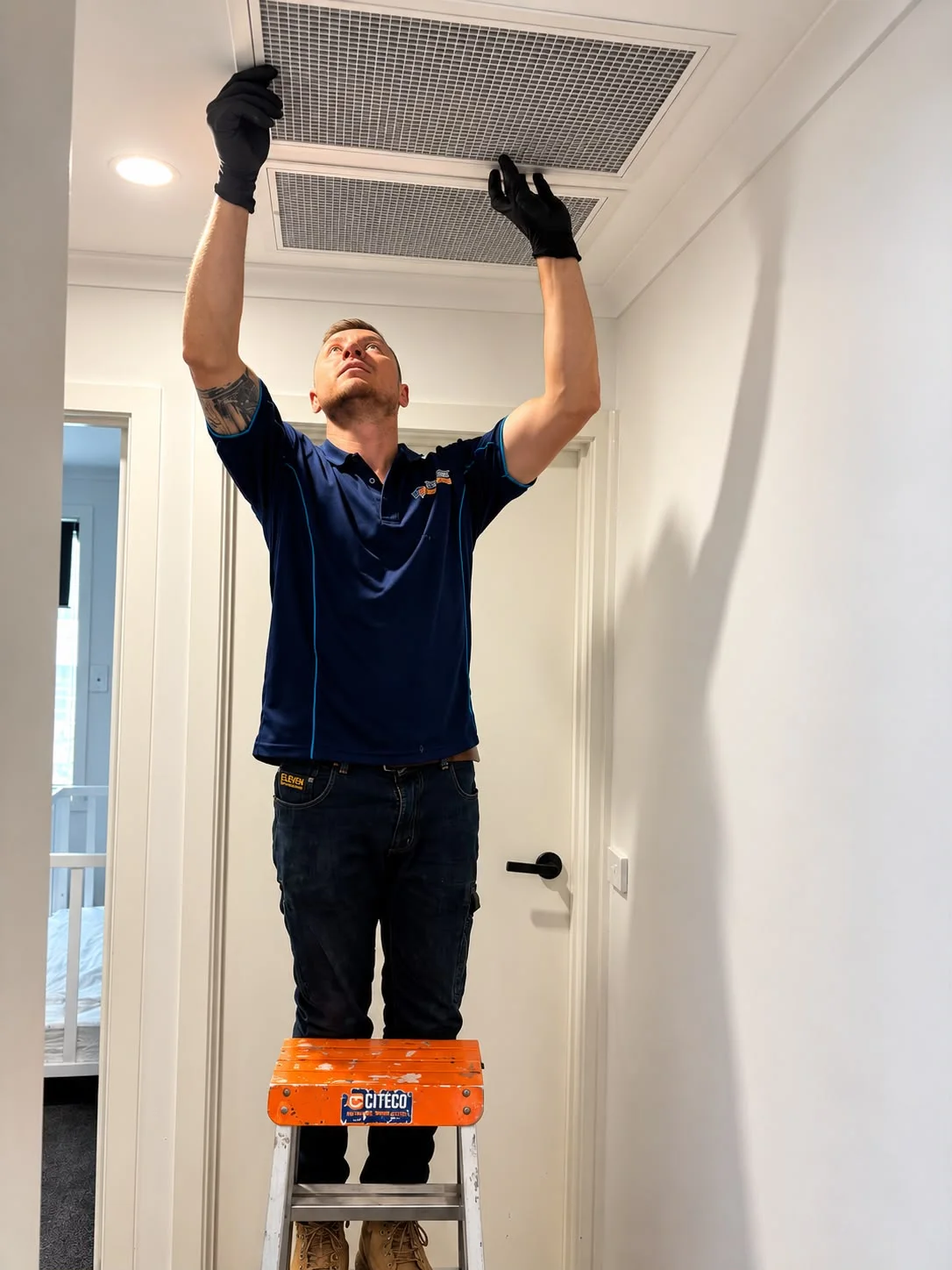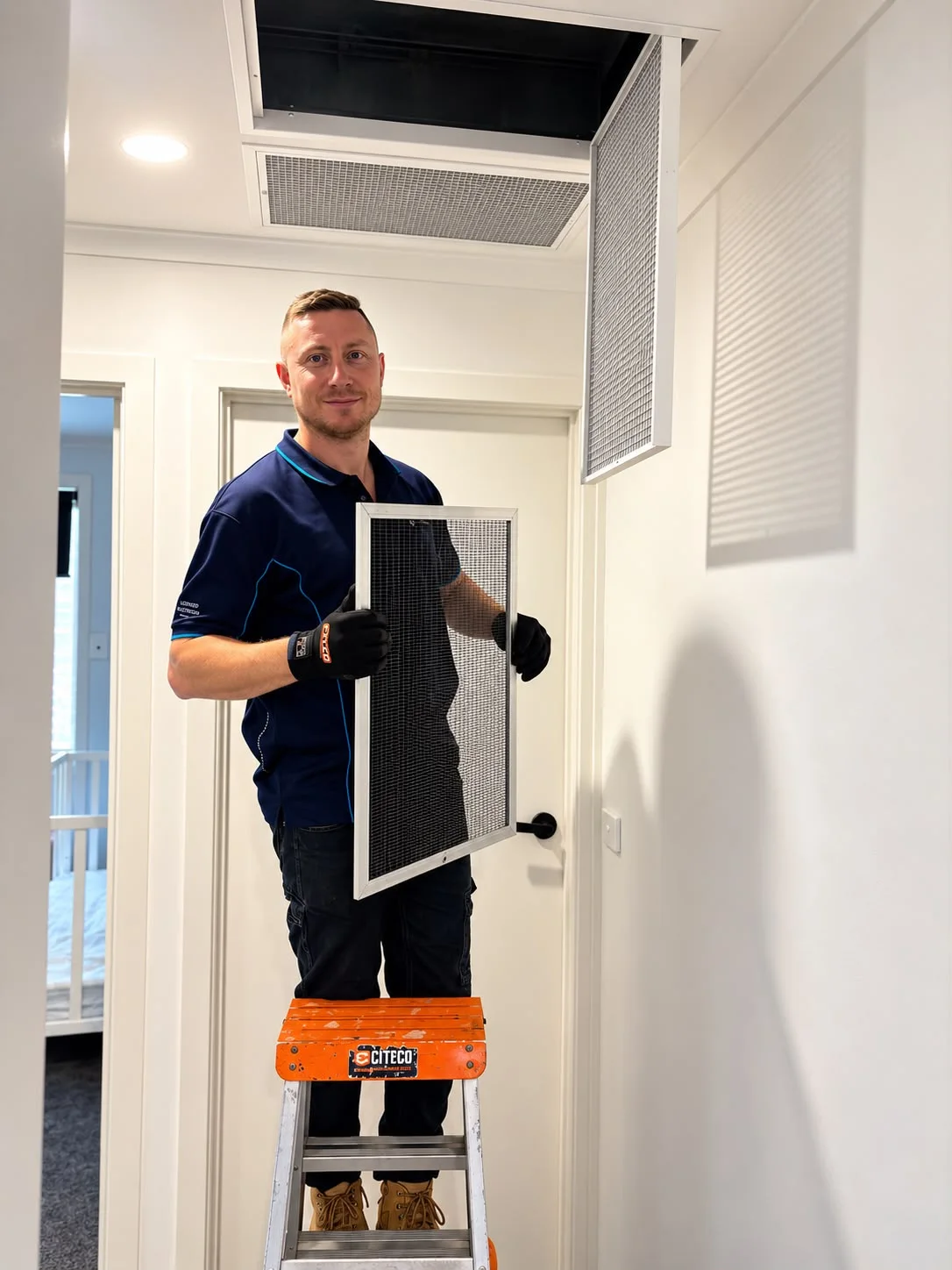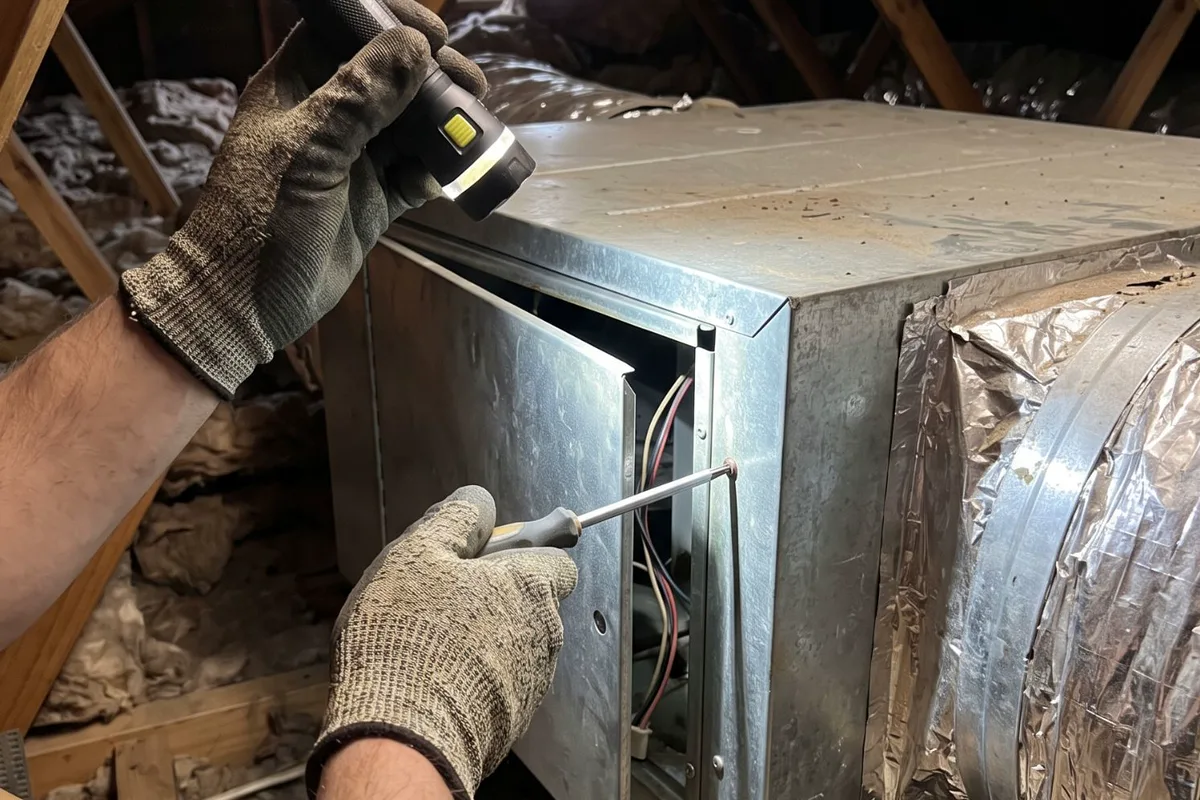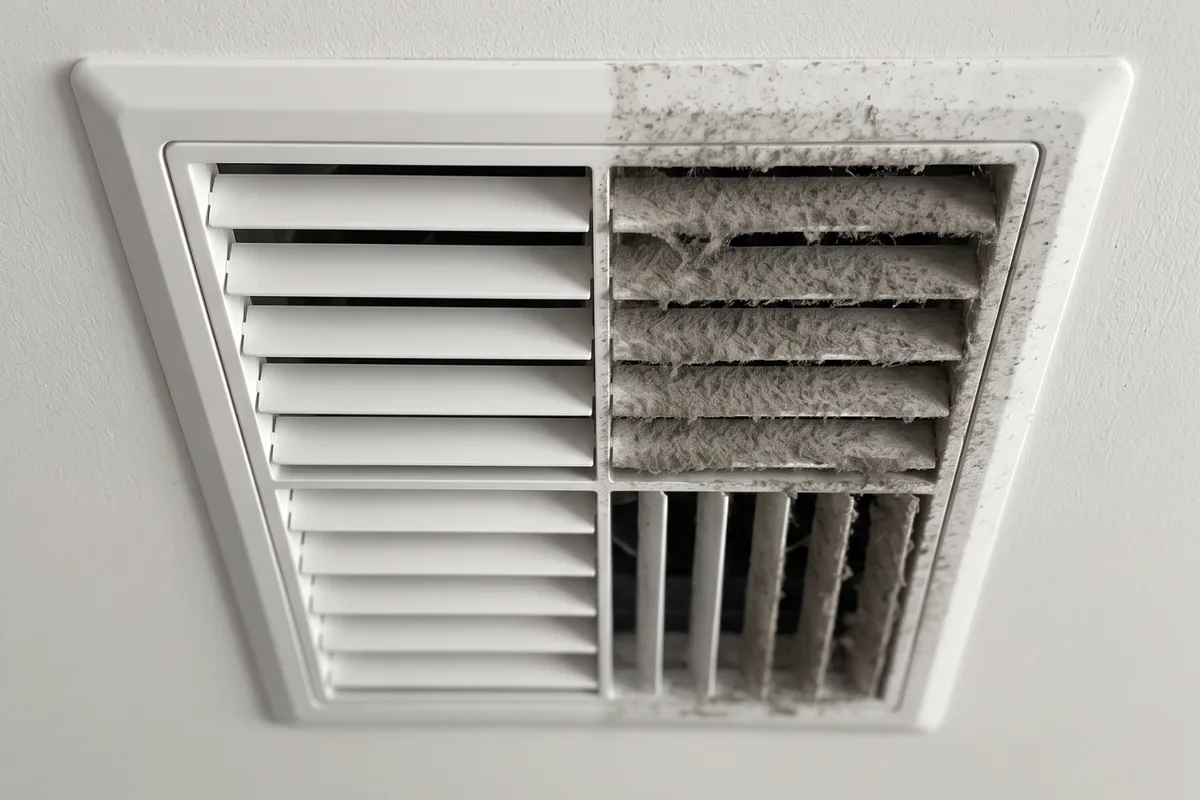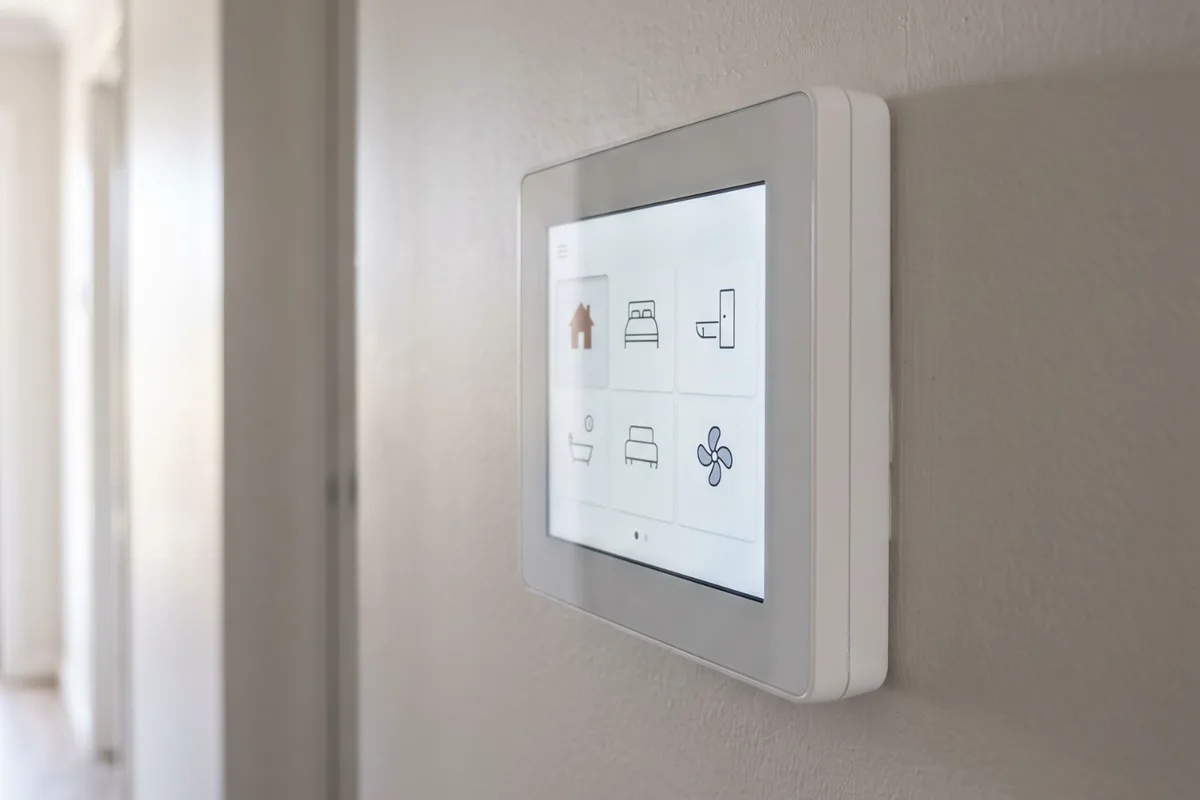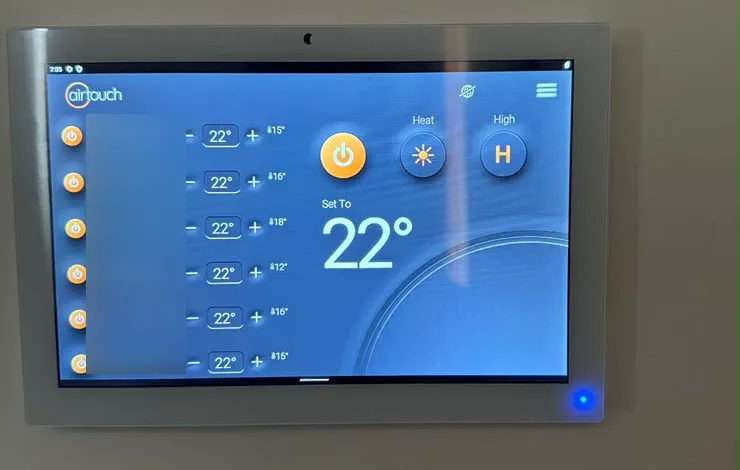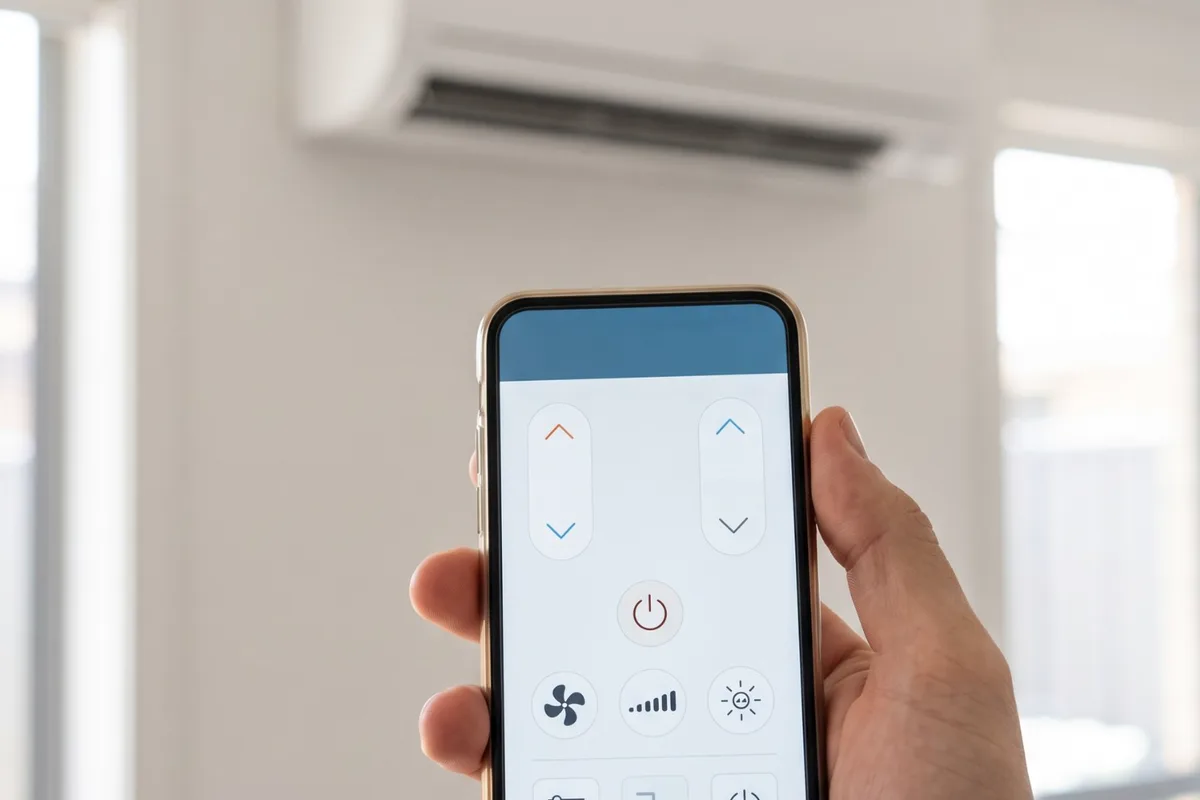
Old ducts lose their insulation, crack and come apart, and the rooms at the end of the line feel it first. Our team assesses every run, replaces what needs replacing and fixes layout problems while we're up there. Then we rebalance the system so every room gets its share.
When to get it checked
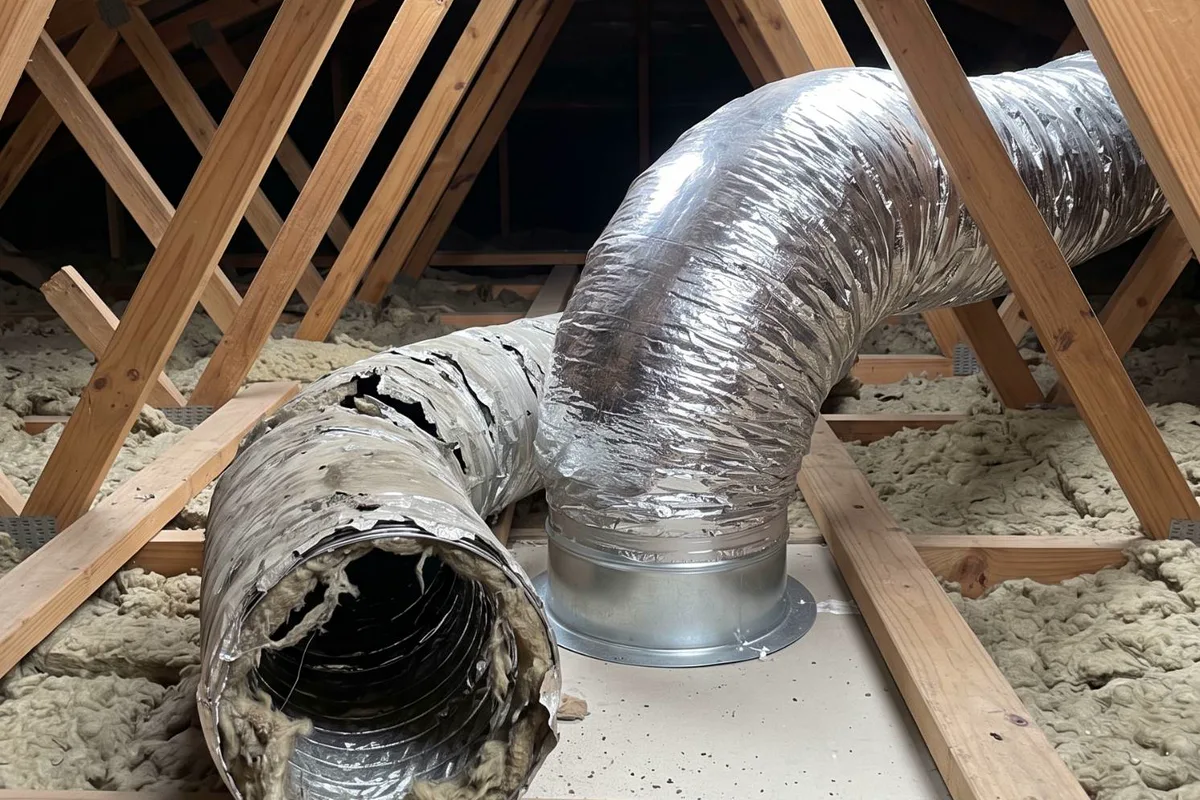
Splits and tears you can see
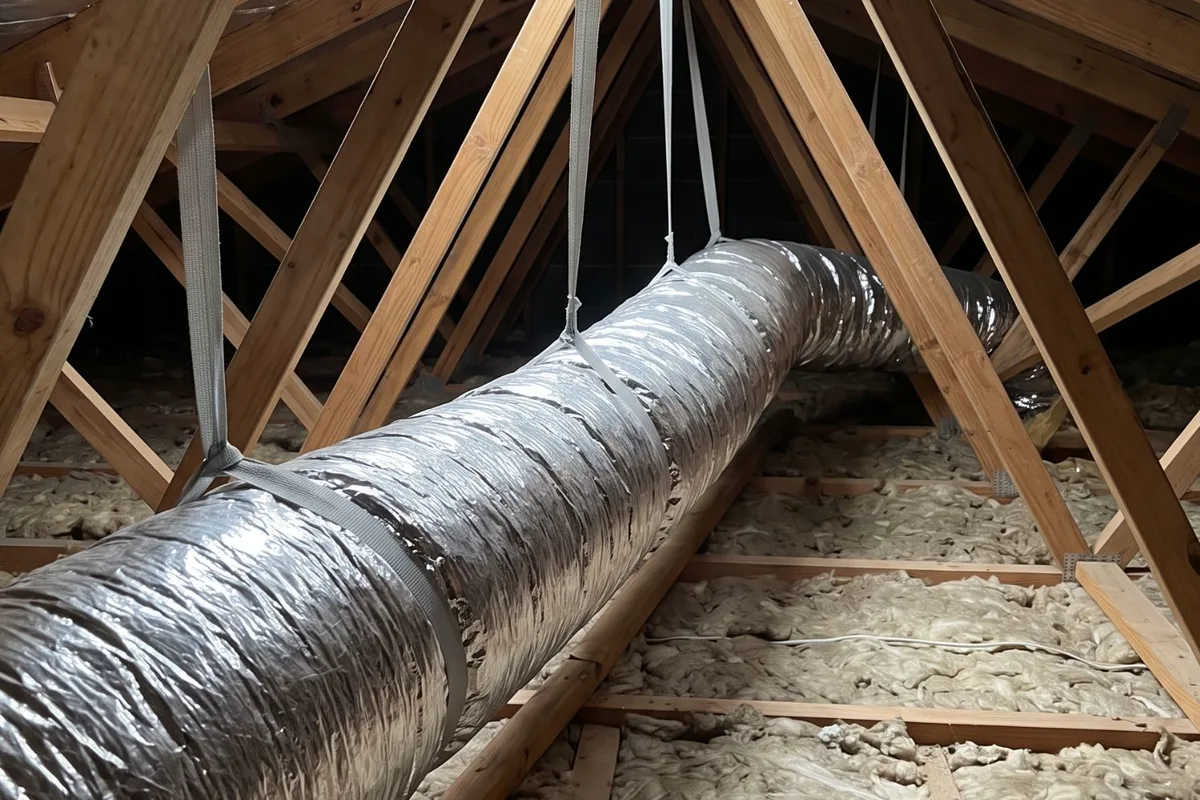
Through the manhole, the outer sleeve is cracked, torn or hanging off, with insulation showing or missing.
Repairs keep coming back
One joint gets fixed and another lets go a few months later. Once the duct is brittle, patching becomes a running cost.
Several rooms lost comfort over the years
It isn't one room but many that have slowly weakened. That points to the whole network ageing rather than a single fault.
Ceiling stains in cooling season
Thin or torn insulation lets ducts sweat in a hot roof, leaving water marks around outlets after summer use.
The unit is being replaced
A new indoor unit, or a switch from gas ducted heating to reverse cycle, is when old ducts are most likely to hold the new system back.
Pests or other trades got there first
Rats or possums have chewed through runs, or ducts were crushed during roof, solar or insulation work.
Why it happens
5 common causes
Roof heat and age
A roof space swings from cold winter nights to summer afternoons far hotter than outside. Over the years that dries out the plastic liner and sleeve until they crack.
Thin insulation from the start
Older ducts often carry less insulation than current guidance, which calls for ducts insulated to at least R1.5 with sealed joints. Heat moves through them on the way to the room.
Undersized or overlong runs
Ducts sized for an old heater, or stretched to an extension without a redesign, may never have delivered enough air.
Poor support
Ducts laid hard across trusses, or left sagging between them, kink and crush, cutting airflow to the room at the end.
Physical damage
Possums, rats, foot traffic and other trades all take their toll on soft flexible duct.
What the job covers
What we usually do on this job. Your quote confirms it for your place.
- Every duct run assessed and airflow measured
- Part or full replacement options priced
- Old duct removed from the roof and taken away
- New insulated flexible duct fitted
- Sealed joints, collars and take-offs
- Runs supported so they don't sag or crush
- Return air duct checked or replaced
- Every outlet rebalanced and re-measured
- Heating and cooling tested
Your options, explained
Replace the worst runs
Low disruption- Best for
- A network that's mostly sound, with a few torn, crushed or brittle lengths
- How it works
- The damaged runs are replaced with new insulated duct and fittings; the rest stays.
- Worth knowing
- Fixes the problem rooms for less, but the older runs left in place keep ageing.
Full duct replacement
Medium disruption- Best for
- Old ducts throughout, or repeat failures
- How it works
- Every supply run and the return are replaced, with new connections at the plenum, new take-offs, supports and outlet collars.
- Worth knowing
- Most of the work is in the roof. Inside, you'll see us at the manhole and each outlet.
New ducts with a new unit
High disruption- Best for
- An older unit due for replacement, or a gas ducted heater coming out
- How it works
- The duct network is redesigned and replaced alongside the new unit, sized for the house.
- Worth knowing
- Avoids putting a new unit on tired ducts. Our ducted replacement page covers the unit side.
The people behind the work
One local team for electrical, heating and cooling, based in Altona Meadows, with 19 years in the industry.
Licensed electrical contractor (REC 38187)See more team photos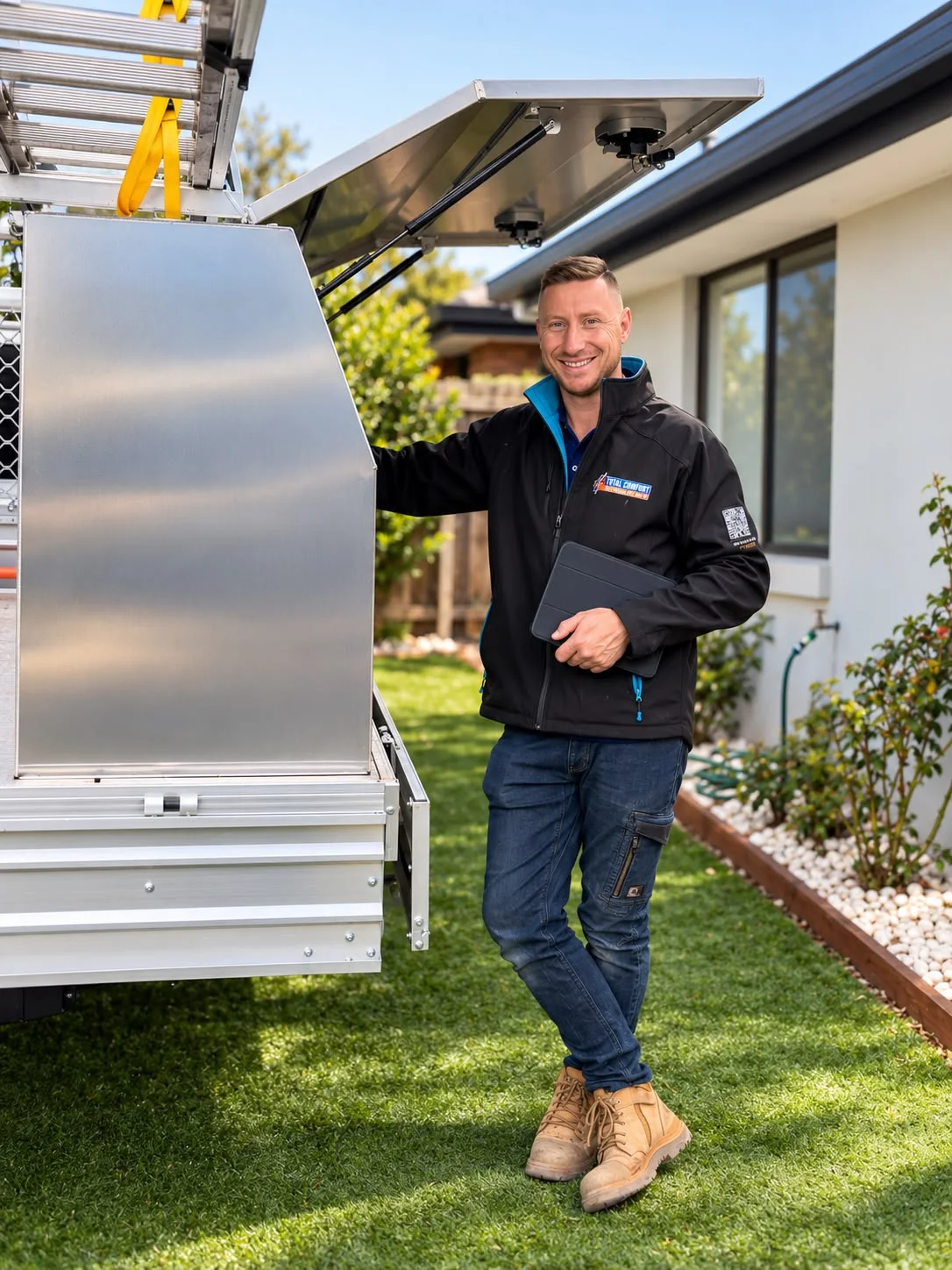
Worth knowing before you book
- System off while we work
- Ducts are disconnected during replacement.
- Clear the manhole
- We need a clear path into the roof.
- Unit getting old?
- Plan new ducts and a new unit together.
What affects the price?
The right scope depends on your installation. These are the details we check so your quote is useful, with any additional work explained before it proceeds.
How much duct is replaced
A couple of runs near the manhole is a small job. A full network with a new return and plenum takes much more time and material.
Roof access and space
Low-pitched roofs, tight edges, deep insulation and double storeys all slow the work.
Duct size and insulation rating
Larger diameters and higher insulation ratings cost more in material, but deliver more air with less heat lost on the way.
Layout changes
Moving or adding outlets means cutting new ceiling holes and patching or covering the old ones.
Removal and disposal
Old duct has to come out of the roof and be taken away.
Zones and dampers
Zoned systems need dampers reconnected or replaced, and every zone rebalanced afterwards.
How it runs
- 1
Assess
Every run traced and every outlet measured.
- 2
Recommend and price
What stays, what goes and why.
- 3
Replace
New insulated duct, sealed and supported.
- 4
Rebalance
Every outlet adjusted and tested.
Step by step, in more detail
5 steps
Assess the whole network
We follow every run from the unit or heater to each outlet and the return, measure airflow at each outlet and note duct size, insulation and condition.
Recommend what to replace
You get a plain recommendation: which runs can stay, which should go and why, with a price for each option.
Fix the layout while we're there
Replacement is the chance to fix what never worked: shorter runs, fewer bends, the right sizes, outlets in better positions and a proper return path.
Out with the old, in with the new
Old duct is removed from the roof and taken away. New insulated duct goes in with sealed joints, new collars and fittings, and supports so runs don't sag or crush.
Rebalance and test
We rebalance every outlet, run heating and cooling, and measure airflow again so you can see the difference. Any electrical installation work comes with a Certificate of Electrical Safety.
What is safe to do, and what to leave to us
Safe for you to do
- Clear the area under the manhole and around each outlet before the visit.
- Check the zone is on and the outlet open before assuming a duct has failed.
- If water drips near a light or power point, turn the system off and keep clear.
- Tell us about possums or rats in the roof, so we can plan around them.
Leave these to us
- Going into the roof space to inspect ducts yourself. Live cables, narrow joists and summer heat make it dangerous.
- Taping over torn ducts or pushing loose ones back on yourself.
- Closing most outlets to force air into the rooms that struggle. Ducted systems need a minimum airflow.
- Removing panels from a gas ducted heater. That's work for a licensed Type A gasfitter.
When to get us in
- Duct sleeves are split, torn or hanging in the roof
- Duct repairs keep failing
- Several rooms have lost airflow over time
- Ceiling stains appear around outlets after cooling
- You're replacing the unit or switching from gas ducted heating
More detail
What new ductwork looks like
Most replacement duct is flexible: a plastic liner on a wire coil, wrapped in insulation and a protective outer sleeve. Federal guidance says ducts should be insulated to at least R1.5, with joints sealed to prevent condensation and leakage.
Good installation matters as much as the duct itself. Runs are kept as short and straight as the roof allows, supported so they don't sag or rest hard on trusses, and sealed at the plenum, take-offs and outlet collars.
Replace part of it, or all of it?
If most of the network is sound and one or two runs are damaged, replacing those runs makes sense. If the sleeve is brittle throughout, the insulation is flattened and joints keep letting go, part-replacement just moves the next failure somewhere else.
We explain what we found in the roof and price both ways where it's a close call, so the choice is yours.
Ducts, the unit and the switch from gas
When a unit is replaced, the ducts decide how much of its output reaches the rooms. Reverse-cycle systems are 300% to 600% efficient because they move heat rather than make it, but ducted systems lose some of that through the ductwork.
Ducts that suited a gas heater with floor outlets may not suit reverse-cycle cooling, which works better from the ceiling. That's why we assess the ducts before quoting any unit replacement or gas-to-electric switch.
Local rules and conditions
Victorian requirements and local conditions that shape this job, with the sources listed at the foot of the page.
Older homes, ducts added later
Housing in Hobsons Bay ranges from historic Williamstown and Newport to newer Altona Meadows and Seabrook, and pre-war and post-war homes characterise older Brimbank suburbs such as Sunshine. In homes like these, ducted systems arrived long after the house did, so duct routes and roof access vary a lot. We check every run before quoting.
Hot roofs test old ducts
Laverton averages 9.4 days a year at or above 35 °C, and its record is 47.5 °C, set on 7 February 2009. Roof spaces run hotter still, so cooled air in a thin or torn duct warms before it reaches the room.
Rental ceiling insulation
Victoria's rental energy standards start in phases from 1 March 2027 and include ceiling insulation. A licensed electrician must complete an electrical safety checklist, and fix any issues, within 30 days before it goes in. If the ducts are due for replacement, doing it before new insulation goes in saves disturbing it later.
Useful reading
Guides to read before you decide, with checklists and questions to bring to the quote.
- Ducted zoning explainedZones, dampers, controllers and room sensors in plain terms, plus the airflow limits that decide whether zoning will fix your comfort problem.
- Split system or ducted: choose around the rooms you useCompare layouts, zoning, installation work and quote details before choosing equipment for your home.
- Gas ducted heater: repair or replace?How to weigh a ducted gas heater fault against the heater's condition, the ducts and the electric option, once the safety checks are done.
- Reverse-cycle air conditioning or gas heating?How each one makes heat, how it feels on a cold night in Melbourne's west, what Victoria's gas rules mean for you and what switching really involves.
Common questions
Questions people ask about this
More in the Help centreFrom the blog
Sources for the rules and local facts on this page
9 sources, with the date each was checked
- 1.Victorian Electoral Commission (2023 electoral structure review fact sheet): Its residential areas are diverse, ranging from historic Williamstown and Newport in the east to the newer Altona Meadows and Seabrook in the west. Accessed 30 September 2026.
- 2.Victorian Electoral Commission (2023 electoral structure review fact sheet): Pre- and post-war homes characterise the established suburbs of Sunshine, St Albans and Deer Park. The more recently developed suburbs of Cairnlea, Sydenham, Hillside, and Derrimut feature more contemporary housing. Accessed 30 September 2026.
- 3.Bureau of Meteorology: Mean number of days ≥ 30 °C 6.9 6.0 4.5 0.7 0.0 0.0 0.0 0.0 0.1 0.9 2.8 5.1 27.0 82 1943 2026 Mean number of days ≥ 35 °C 3.6 2.4 0.9 0.0 0.0 0.0 0.0 0.0 0.0 0.1 0.5 1.9 9.4 Accessed 30 September 2026.
- 4.Consumer Affairs Victoria: New minimum energy efficiency standards for residential rental properties come into effect in phases from 1 March 2027. The new standards cover 6 areas: heating cooling hot water shower heads ceiling insulation… Accessed 30 September 2026.
- 5.Consumer Affairs Victoria: The standard also requires an electrical safety checklist to be completed and any electrical issues to be addressed by a licensed electrician within 30 days before the installation of insulation. If the insulation… Accessed 30 September 2026.
- 6.YourHome (Australian Government): Ducts must be well insulated, to at least R1.5, and joints sealed to prevent condensation and leakage. The roof should have reflective foil insulation installed and be vented to dispel hot air. Zoned systems cool only… Accessed 30 September 2026.
- 7.energy.gov.au (Australian Government, DCCEEW): The energy efficiency of reverse-cycle air conditioners on the Australian market ranges between 300% to 600% efficient. Air conditioners can achieve such high rates of energy efficiency because they do not use… Accessed 30 September 2026.
- 8.Energy Safe Victoria: Type A appliances include domestic and light commercial type appliances such cookers, space heaters, central heaters, water heaters, catering equipment and leisure appliances. So, when looking to service and repair your… Accessed 30 September 2026.
- 9.Energy Safe Victoria: Whenever a licensed electrician completes any electrical installation work, they must provide a Certificate of Electrical Safety (COES). Accessed 30 September 2026.