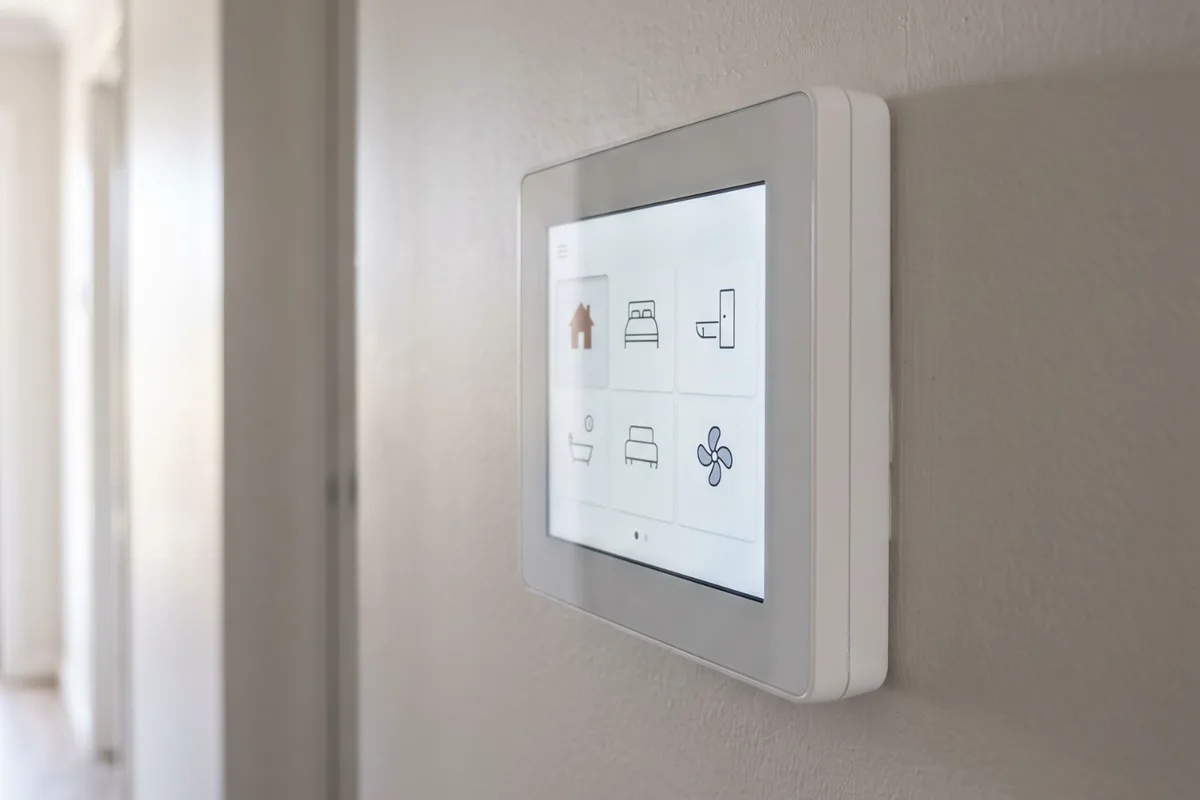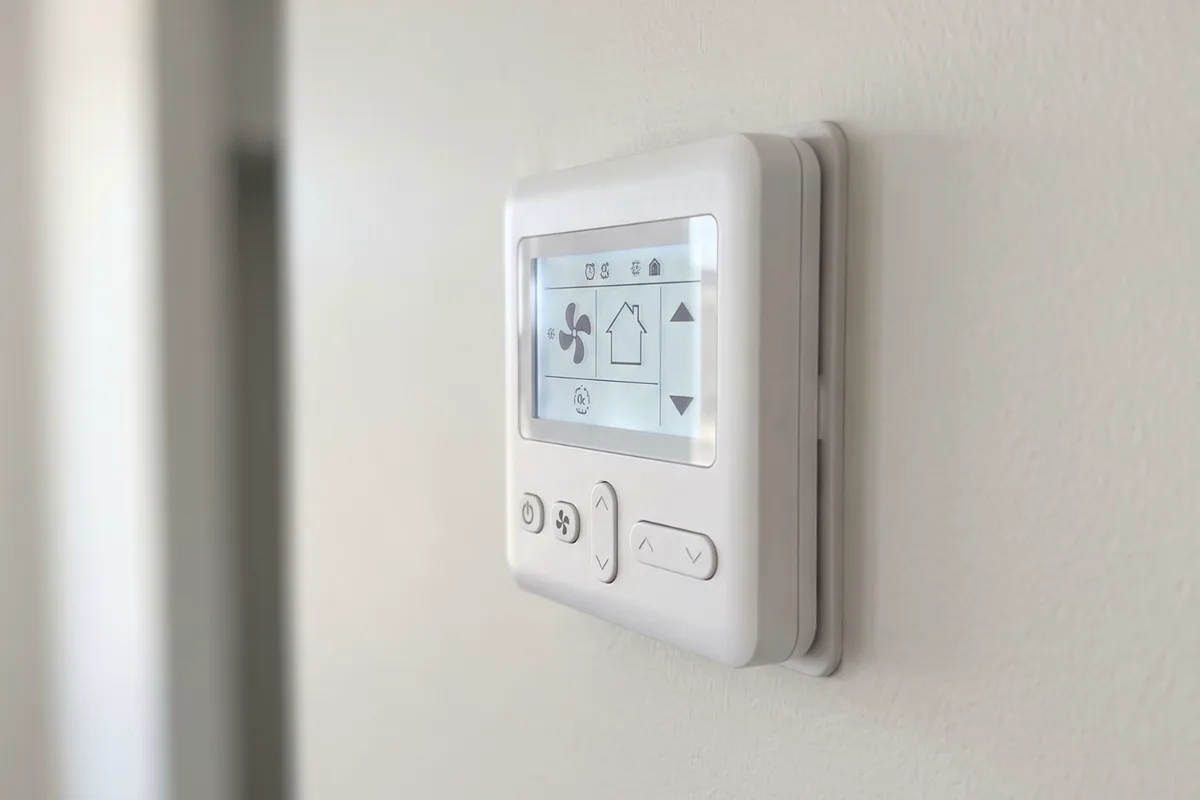
When a wall controller fails, the whole system can stop. Our team checks whether it really is the controller, then fits a like-for-like or newer compatible model, in a better spot if the old one was badly placed. We set it up and show you how to use it.
When to get it checked
A blank or flickering screen
The display has gone dark, flickers or shows only part of each number. The controller, its cable or the power to the unit could be the cause.
Buttons that don't respond
You press a button and nothing changes, or it takes several goes. Worn button membranes and failing boards are common on older controllers.
The room never matches the setting
The controller says 21 °C, but the room feels much colder or warmer. A failing sensor, or one in the wrong spot, runs the system to the wrong number.
Settings and schedules keep resetting
The clock, timers or zones reset after a power cut, or for no obvious reason. That usually points to the controller itself.
A communication error code
An error saying the controller and indoor unit can't talk to each other. Often it's the cable, sometimes the controller, occasionally the board in the unit.
Faded, cracked or hard to use
It still works, but the screen is yellowed or hard to read, and setting a schedule is so fiddly nobody bothers.
Why it happens
5 common causes
Age and light
Controllers on hallway walls get years of daylight and handling. Screens fade, plastics yellow and buttons wear out.
A damaged control cable
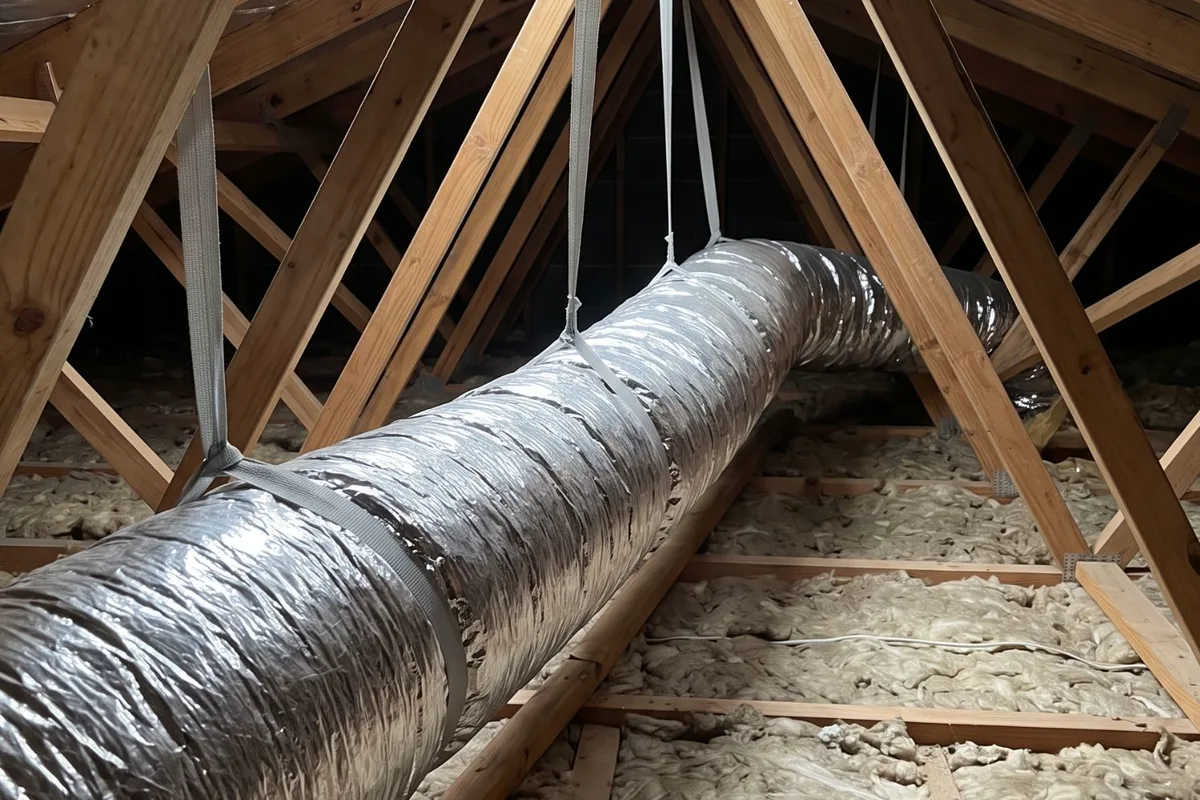
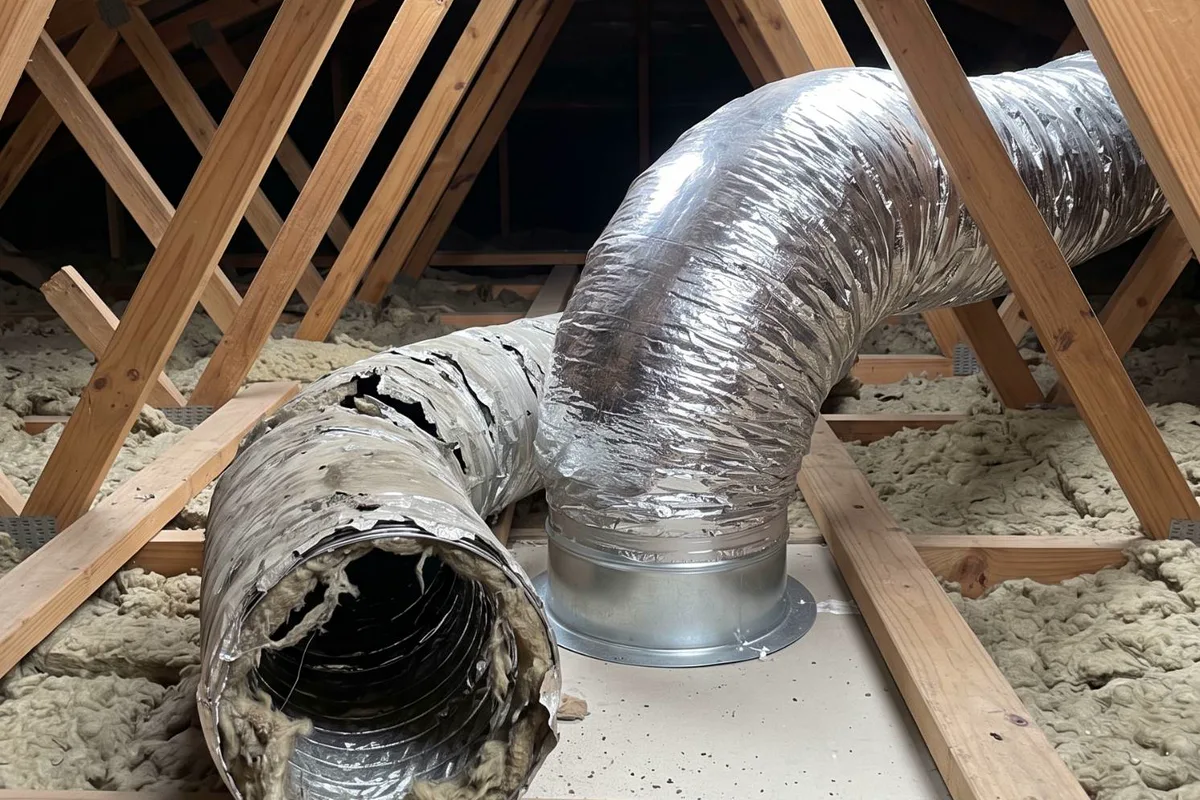
The thin cable from the controller to the roof unit can be crushed, chewed or cut when others work in the roof or the walls.
Surges and power cuts
A surge or brownout can damage the controller's electronics, or the board it talks to in the indoor unit.
A sensor in the wrong place
A controller near a sunny window, an outlet, a heater or an outside wall reads its own little climate, not the room's.
Parts no longer made
Older models get discontinued, so a failed controller sometimes means fitting a newer compatible model rather than the original part.
What the job covers
What we usually do on this job. Your quote confirms it for your place.
- Controller, cable and power tested first
- Indoor unit model checked for compatibility
- Like-for-like or compatible controller fitted
- Cable reused or replaced as needed
- Controller moved if it was badly placed
- Modes, schedules and zones set up
- Temperature sensor source checked
- Heating and cooling tested from the new controller
Your options, explained
Like-for-like replacement
Low disruption- Best for
- A failed controller on a system that otherwise works well
- How it works
- The same model, or the maker's direct replacement, goes in on the existing cable.
- Worth knowing
- The quickest option when the part is still available.
Newer compatible controller
Low disruption- Best for
- Discontinued controllers, or ones that are hard to use
- How it works
- A current controller from the unit's maker, compatible with your indoor unit, replaces the old one.
- Worth knowing
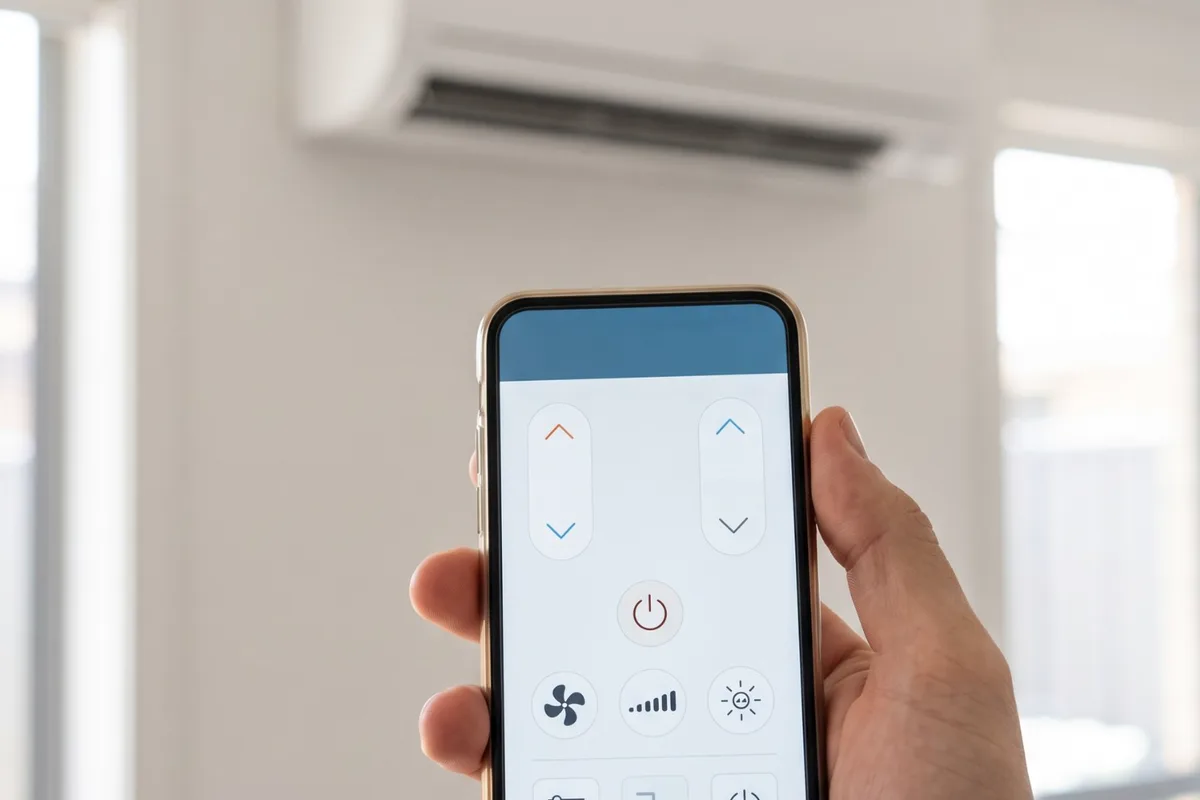
- Often brings a clearer screen, easier schedules and a Wi-Fi option.
Zone controller with app control
Medium disruption- Best for
- Zoned systems where you also want phone control or per-zone temperatures
- How it works
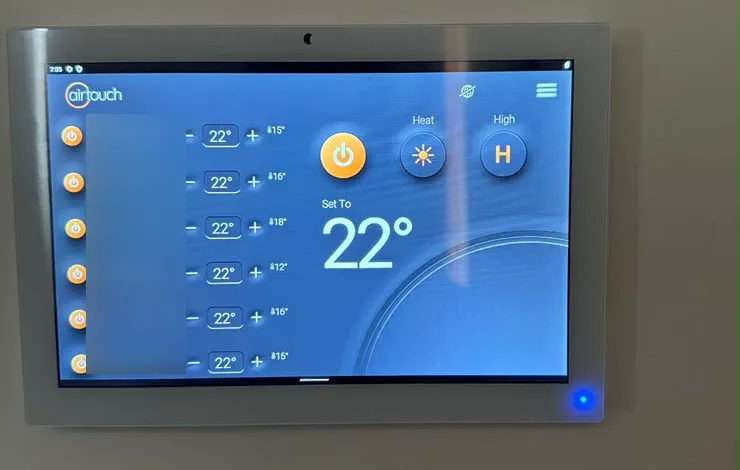
- A system such as AirTouch 5 replaces the old controller and zone module.
- Worth knowing
- Involves roof work at the zone module and dampers. Our AirTouch 5 page explains it.
Move the controller
Medium disruption- Best for
- Controllers in sunny spots, beside outlets or on outside walls
- How it works
- The controller moves to an inside wall at a sensible height, with new cable run through the wall and roof.
- Worth knowing
- Sometimes a remote sensor does the same job with less patching.
The people behind the work
One local team for electrical, heating and cooling, based in Altona Meadows, with 19 years in the industry.
Licensed electrical contractor (REC 38187)See more team photos
Worth knowing before you book
- Note your settings
- A new controller starts from scratch.
- Not every thermostat fits
- Ducted controllers must match the unit.
- Gas ducted too
- We do the controls; gas work is a gasfitter's.
What affects the price?
The right scope depends on your installation. These are the details we check so your quote is useful, with any additional work explained before it proceeds.
Your unit and what it accepts
Ducted controllers are usually specific to the maker and model. Some units have several compatible choices, others only one.
Cable condition
A sound cable can be reused. A damaged one needs replacing, which means work in the roof and wall cavity.
Moving the controller
A new position means running cable and patching the old spot, or covering it with a blank plate.
Zones and sensors
Zoned systems need their zone settings rebuilt, and extra remote sensors add parts.
Gas ducted heating
Gas ducted heater controllers are matched to the heater. The controller and its wiring are ours; anything on the gas side is for a licensed Type A gasfitter.
How it runs
- 1
Test
Controller, cable and supply checked.
- 2
Choose
Compatible options and price explained.
- 3
Fit and set up
New controller fitted and programmed.
Step by step, in more detail
5 steps
Photos first
Send a photo of the controller, the indoor unit label and any error code. It tells us which replacements will work with your system.
Test before replacing
We check power to the unit, the controller cable and the controller. A cable fault or a failed board in the unit can look exactly like a dead controller.
Choose the replacement
A like-for-like controller where it's still made, a newer compatible model from the same maker, or a zone controller with app control. You get the options and the price before we start.
Fit and set up
The new controller goes on the wall, in a better spot if the old one was badly placed, and we set the modes, schedules, zones and which sensor the system follows.
Test and show you
We run heating and cooling from the new controller, check each zone responds and show you the settings you'll actually use.
What is safe to do, and what to leave to us
Safe for you to do
- Check the controller's mode, set temperature and any timer or schedule before assuming it has failed.
- If the screen is blank, check whether a breaker or safety switch has tripped. Reset a safety switch once only, and call a licensed electrician if it won't stay on.
- Photograph error codes and your current settings before the visit.
- Keep heaters, lamps and direct sun away from the controller where you can.
Leave these to us
- Taking the controller off the wall or disconnecting its cable yourself. Electrical work isn't a DIY job, even for small jobs.
- Fitting a generic smart thermostat to an inverter ducted system. Most can't control it properly.
- Climbing into the roof to trace the controller cable.
- Removing panels from a gas ducted heater. That's work for a licensed Type A gasfitter.
When to get us in
- The controller screen is blank or flickering
- Buttons no longer respond, or settings keep resetting
- The system shows a communication error
- The room temperature never matches the setting
- You want a controller that's easier to use or works with an app
More detail
Why ducted controllers aren't universal
On most modern ducted systems, the wall controller is part of the unit's own control system. It talks to the indoor unit over a dedicated cable using the maker's own signals, and the unit won't respond to a controller that doesn't speak them.
That's why we start with the model label. A generic thermostat from a hardware shop usually can't run an inverter ducted unit, even if it fits the wall plate.
When it isn't the controller
A blank screen can be a tripped breaker, a failed fuse or board inside the indoor unit, or a damaged cable in the roof. A communication error can be any of those too.
We test the supply, the cable and the indoor unit before ordering a controller, because a new controller on a damaged cable shows the same fault. If the problem is in the unit, we explain the repair instead.
Gas ducted heater controllers
Gas ducted heaters have their own wall controllers, matched to the heater. Replacing one is control wiring and setup, and a newer model can bring easier schedules and zone control where the heater supports it.
The controller doesn't touch the gas side. Burner, gas valve and flue faults are for a licensed Type A gasfitter, and Energy Safe Victoria says gas heater servicing and repair should be done by one.
Local rules and conditions
Victorian requirements and local conditions that shape this job, with the sources listed at the foot of the page.
Setting it up to Victorian advice
The Victorian Government suggests 18 to 20 °C for heating and 24 to 26 °C for cooling living areas, and says each degree beyond that adds around 10% to running costs. When we set up a new controller, the schedules start inside those ranges unless you ask otherwise.
Renters and a dead controller
Every Victorian rental must have a working fixed heater in the main living area, and a failed heating appliance is on the legal list of urgent repairs. If a dead controller leaves the heating unusable, renters should report it to their rental provider or agent straight away.
Older gas ducted heaters
Energy Safe Victoria recommends servicing ducted gas heaters every two years, with a carbon monoxide test at the vent outlets in every room, by a licensed Type A gasfitter. If the controller on an older gas ducted heater is being replaced, it's a good moment to check when the heater was last serviced.
Useful reading
Guides to read before you decide, with checklists and questions to bring to the quote.
- Ducted zoning explainedZones, dampers, controllers and room sensors in plain terms, plus the airflow limits that decide whether zoning will fix your comfort problem.
- Air conditioner maintenance: what to watch between servicesKeep useful records, follow model-specific filter care and recognise symptoms that need a repair visit.
- Renting and the power or heating has failed: what to doNo power or a dead heater in a Victorian rental? What to check safely, what counts as urgent, how to report it, and what to do if nobody responds.
- An ageing gas heater: service, repair or plan an electric replacement?Separate immediate safety needs from a considered comparison of repair and reverse-cycle heating.
Common questions
Questions people ask about this
More in the Help centreFrom the blog
Sources for the rules and local facts on this page
8 sources, with the date each was checked
- 1.Solar Victoria (updated 20 November 2025): To heat a room, try setting the temperature between 18°C to 20°C. Every 1°C higher will add around 10% to your heating bill. Set your air conditioner thermostat for cooling between 24°C and 26°C for living areas – every… Accessed 30 September 2026.
- 2.Consumer Affairs Victoria: All rental properties must have a fixed heater (not portable) in good working order in the main living area. For rental agreements entered into from 29 March 2023, this must be an energy efficient fixed heater in the… Accessed 30 September 2026.
- 3.Consumer Affairs Victoria: Anything on this list is legally defined as an urgent repair: burst water service blocked or broken toilet system serious roof leak gas leak dangerous electrical fault flooding or serious flood damage serious… Accessed 30 September 2026.
- 4.Energy Safe Victoria: It is recommended that ducted heaters are serviced every two years and during this service a CO test should be conducted at the heating vent outlets in all rooms. Accessed 30 September 2026.
- 5.Energy Safe Victoria: Type A appliances include domestic and light commercial type appliances such cookers, space heaters, central heaters, water heaters, catering equipment and leisure appliances. So, when looking to service and repair your… Accessed 30 September 2026.
- 6.Energy Safe Victoria: Electrical work isn’t a DIY job, even for small jobs such as changing power points or light switches. Accessed 30 September 2026.
- 7.Energy Safe Victoria: Locate your electricity box outside your home and check whether the safety switch has tripped. If it has tripped, reset the switch. If the switch won’t reset, call a licensed electrician. Accessed 30 September 2026.
- 8.Energy Safe Victoria: Whenever a licensed electrician completes any electrical installation work, they must provide a Certificate of Electrical Safety (COES). Accessed 30 September 2026.