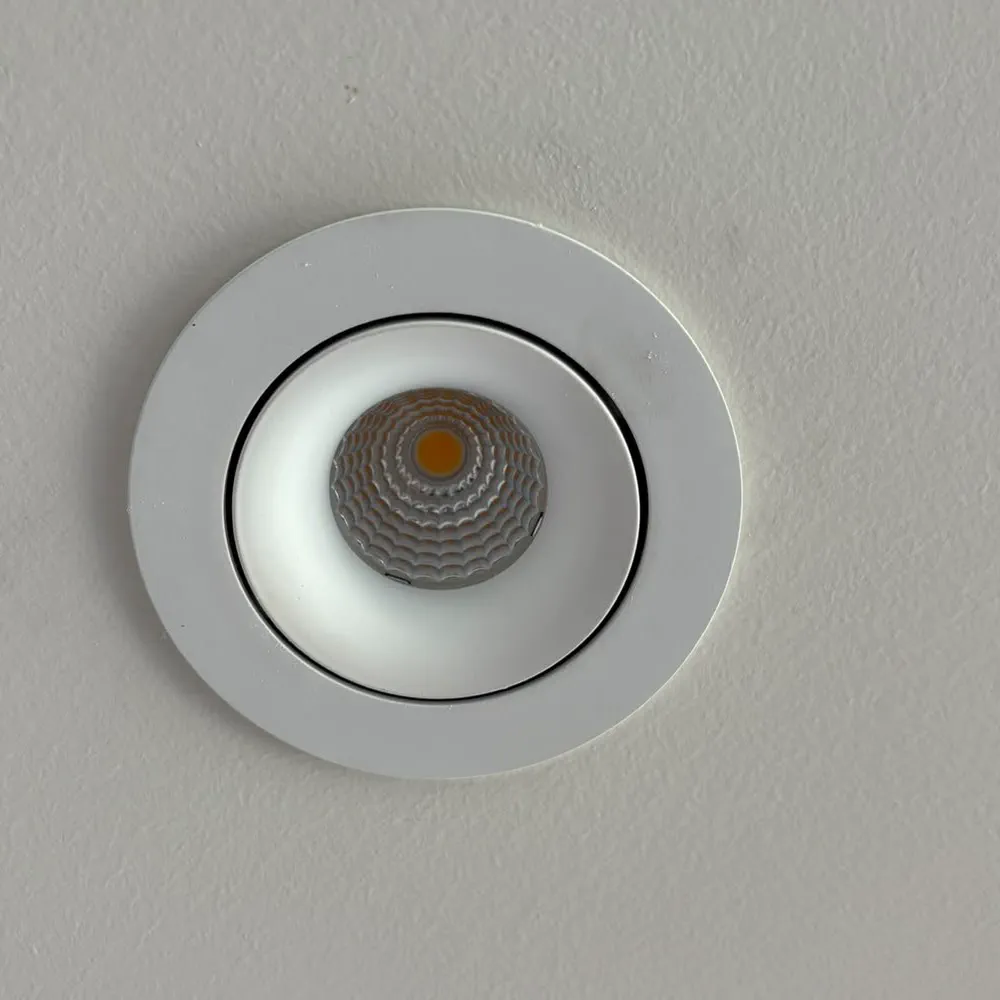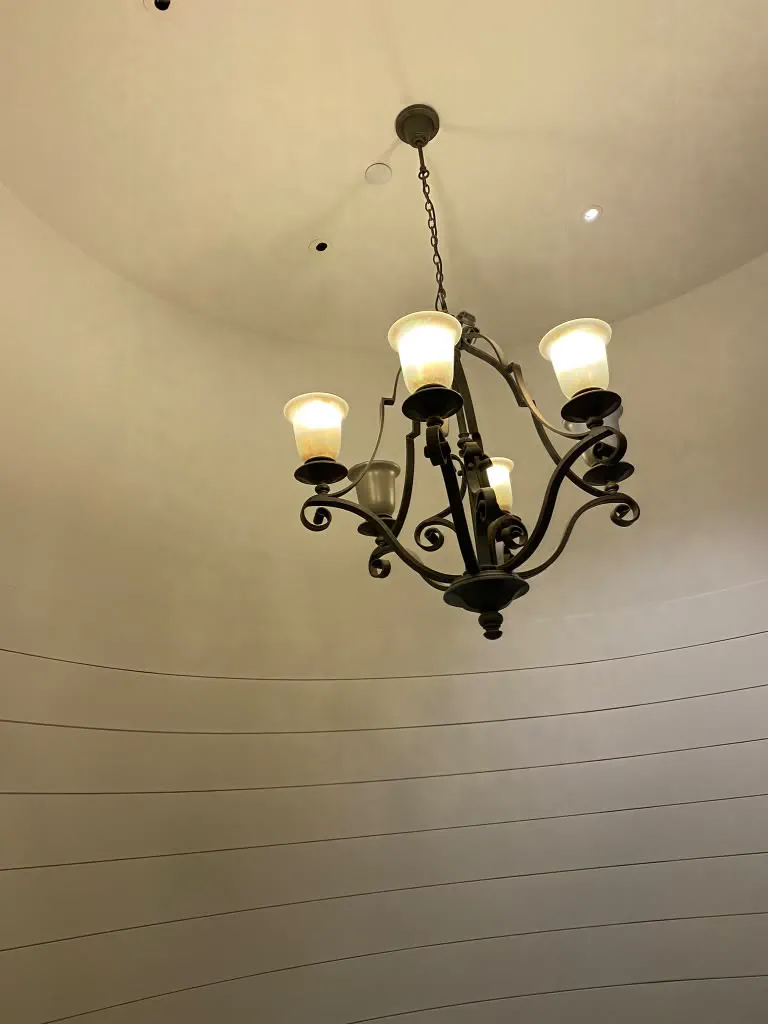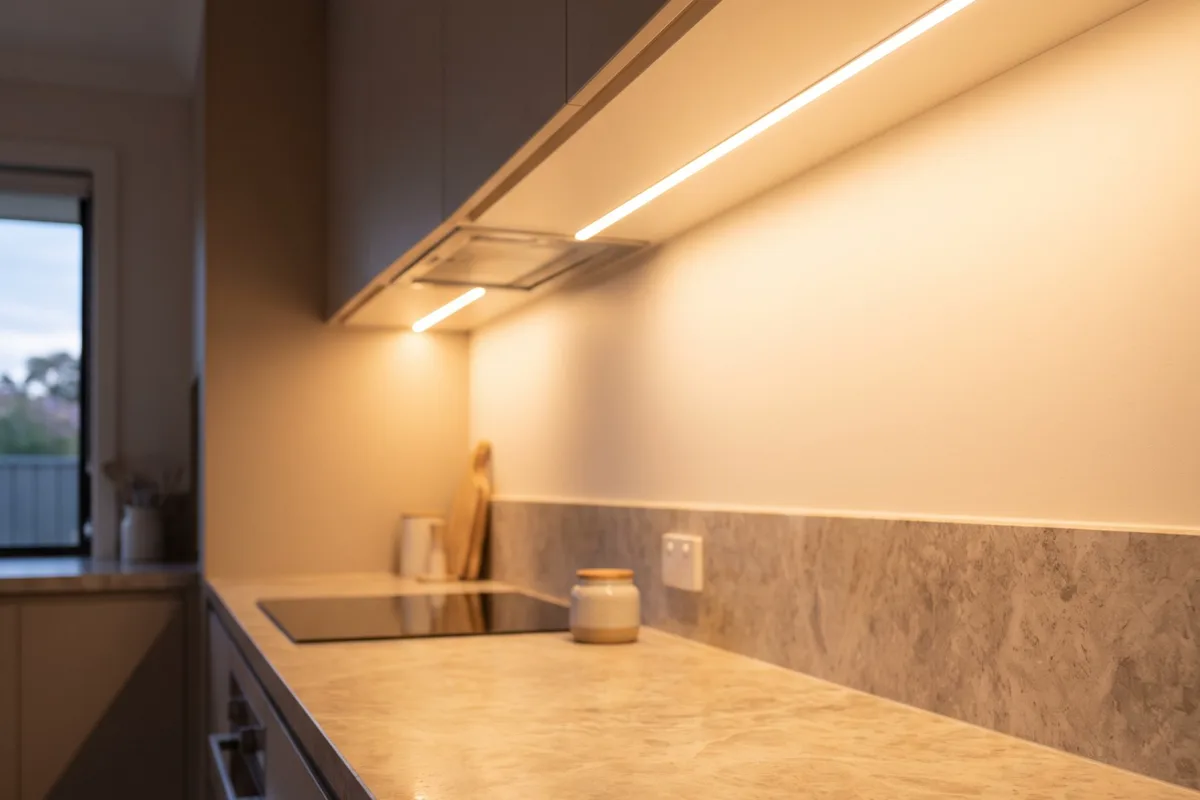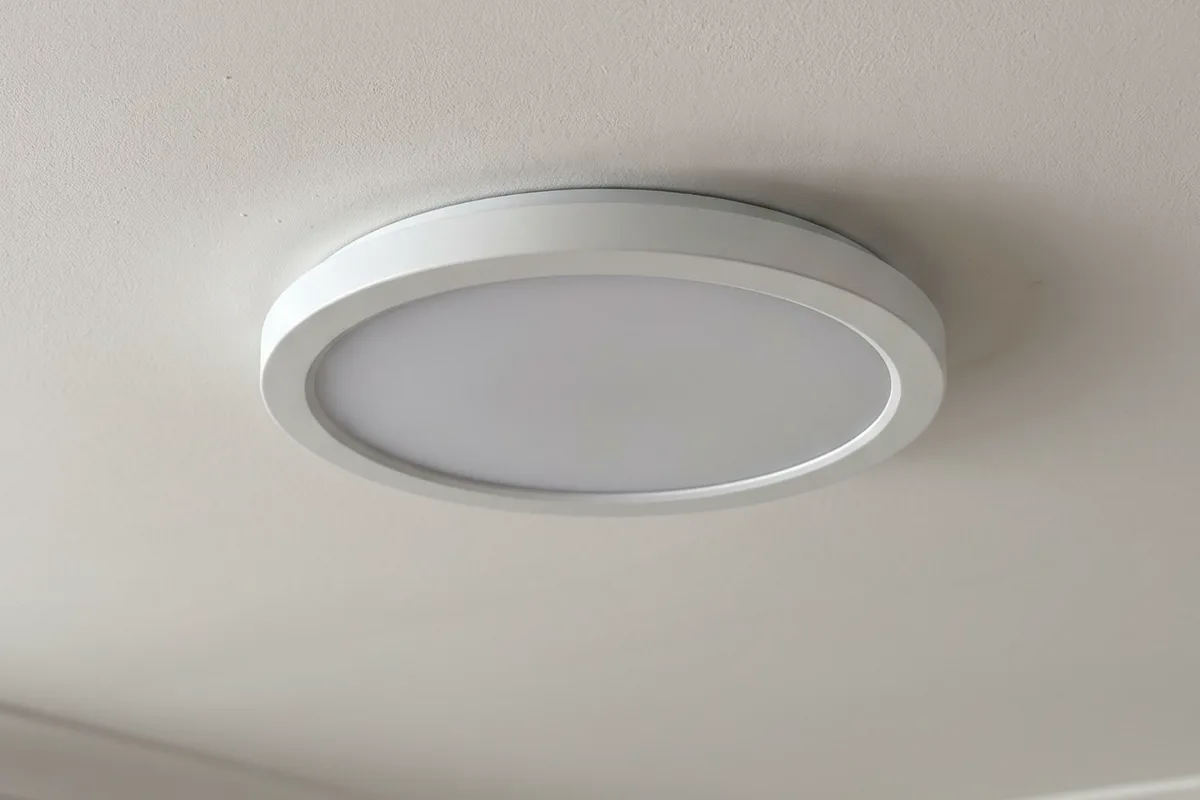
Old ceiling fittings go yellow, collect insects and blow globes. We replace them with slim LED oyster lights chosen for the size of the room and the white you want, with sensor and dimmable options for halls and bedrooms. Each point is checked as the old fitting comes down, then tested and certified.
When to get it checked
Yellowed or brittle shades
Old glass and plastic diffusers go yellow, fill with dead insects and crack when you try to take them down to change a globe.
Globes that keep blowing
A globe that fails every few months in the same fitting often points to a worn lampholder or a loose connection, not bad luck with globes.
A round fluoro that flickers or hums
Circular fluorescent oysters were common in kitchens and laundries. When the tube flickers, starts slowly or the fitting hums, the gear inside is wearing out.
A dim, patchy hallway
One small light in a long hall leaves the ends in shadow. A single-globe fitting can't spread light the way a wide LED diffuser can.
A different white in every room
Cool white in one bedroom, warm in the next and a yellow glow in the hall. Years of one-off replacements leave the house looking patchy.
Why it happens
4 common causes
Fittings past their working life
Years of heat from incandescent and halogen globes dry out lampholders and plastic parts. They crack, lose their grip on the globe and can loosen the connections behind them.
Old fluorescent gear
Circular fluoros rely on a ballast and starter that wear out. New tubes keep them limping along, but the fitting itself is often done.
The wrong size for the room
A small single-globe light in a big bedroom or a long hall was never going to light it evenly. A larger oyster or a second point usually fixes that.
Steam in laundries and bathrooms
Moisture gets into fittings that aren't sealed for it, fogging the diffuser and corroding the terminals over time.
What the job covers
What we usually do on this job. Your quote confirms it for your place.
- Rooms and existing fittings assessed
- Size and colour of light chosen for each room
- Old fitting, batten holder or fluoro removed
- Cable and connections checked at each point
- LED oyster fixed securely to the ceiling
- Sensor, dimmer or colour setting configured
- Moisture-rated fittings for laundries and bathrooms
- Every light tested and the work area tidied
- Certificate of Electrical Safety issued
Your options, explained
Like-for-like oyster swap
Low disruption- Best for
- Bedrooms, halls and laundries with a working light point
- How it works
- The old fitting comes off and a new LED oyster goes on the same point, using the same wall switch.
- Worth knowing
- The quickest option. A slightly larger oyster can cover the mark the old base left on the ceiling.
Oyster with a built-in sensor
Low disruption- Best for
- Hallways, garages, walk-in robes and laundries
- How it works
- A sensor in the fitting turns the light on when someone walks in and off after a set time. The wall switch stays on.
- Worth knowing
- Handy for night trips down the hall or walking into the garage with full hands.
Tri-colour or dimmable oyster
Low disruption- Best for
- Bedrooms, and rooms where you haven't settled on a white
- How it works
- A switch on the fitting sets warm, neutral or cool white. Dimmable models pair with an LED-rated dimmer at the wall.
- Worth knowing
- We set the white at install so every room matches. Dimming only works well with a dimmer matched to the fitting.
New or extra light point
Medium disruption- Best for
- Long halls, big rooms and garages with one weak light
- How it works
- New cable runs from the lighting circuit to a second oyster or a better-placed point, switched together or separately.
- Worth knowing
- Needs access above the ceiling. Altering a circuit can bring safety switch work at the board.
The people behind the work
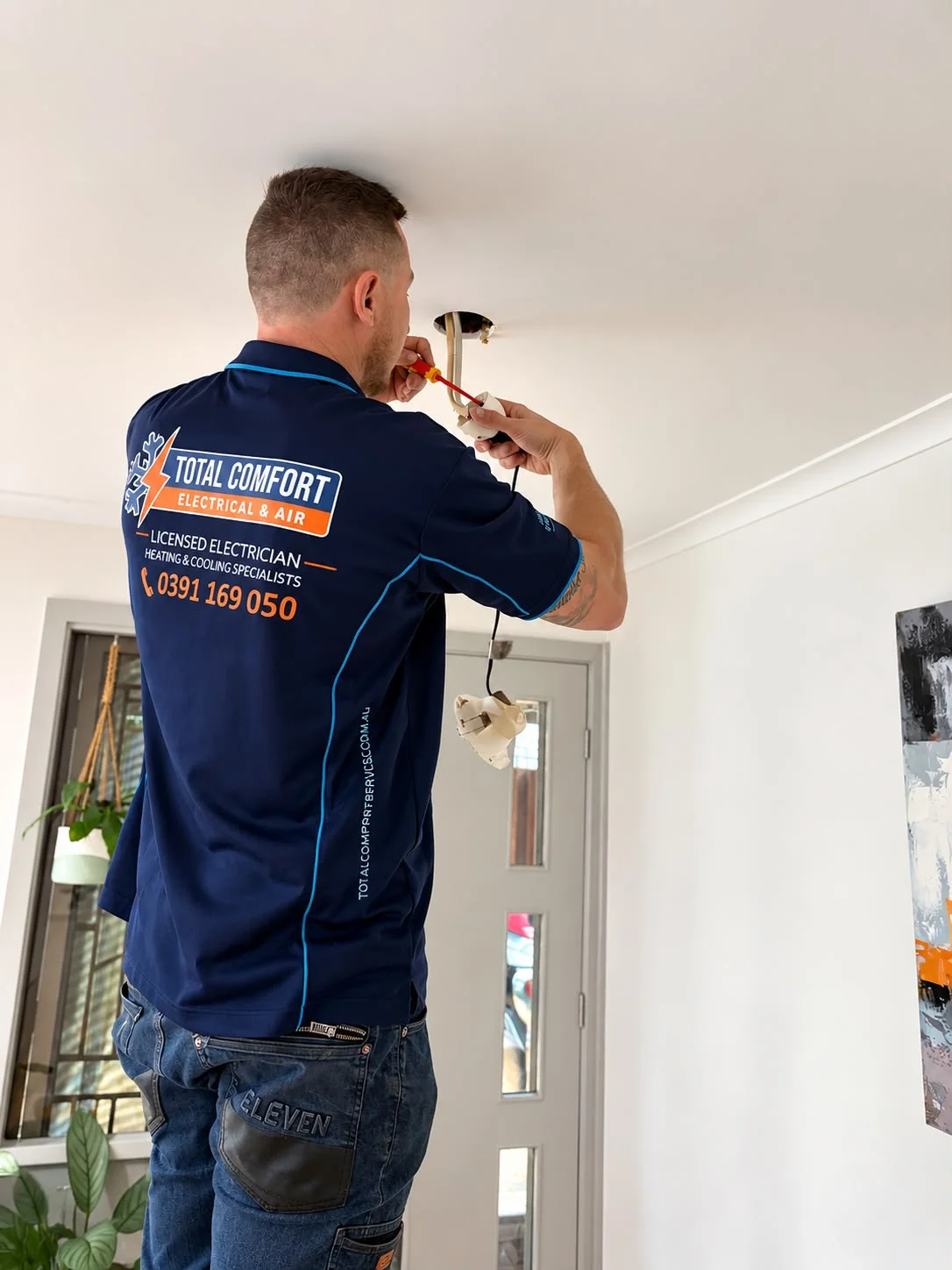
Our own photos from jobs like this one. Based in Altona Meadows, with 19 years in the industry.
Licensed electrical contractor (REC 38187)See more team photos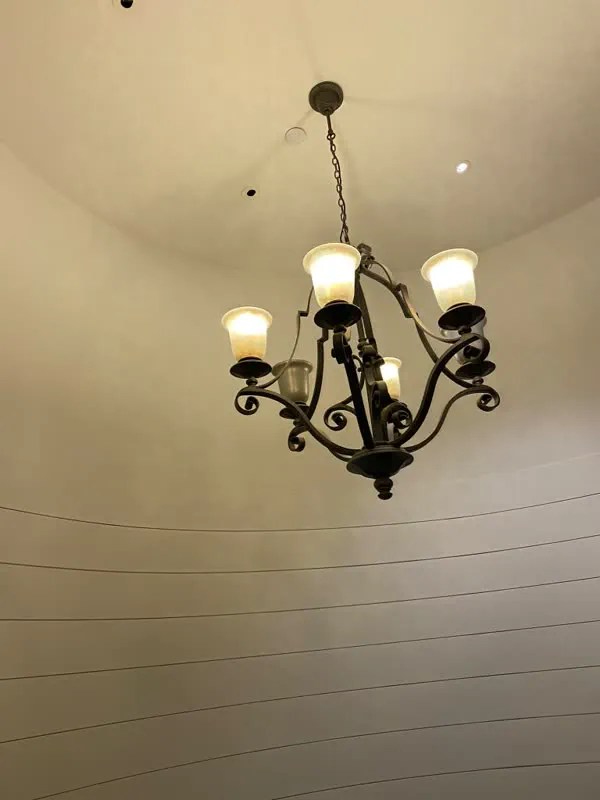
Worth knowing before you book
- Photograph the old base
- It shows us what the new oyster needs to cover.
- One range, one white
- Mixing brands rarely gives matching whites from room to room.
- Already bought them?
- Send the model first so we can check it suits the room and any dimmer.
What affects the price?
The right scope depends on your installation. These are the details we check so your quote is useful, with any additional work explained before it proceeds.
How many fittings
Several oysters in one visit are more efficient than one at a time, and most homes have a few rooms worth doing together.
The fitting you choose
Size, brightness, a built-in sensor, dimming, a colour switch and a moisture rating for wet areas all change what the fitting costs.
What's behind the old light
Brittle cable, an old batten holder screwed straight to the plaster or no solid fixing point all take more time at that fitting.
Ceiling height and access
A standard ceiling is quick ladder work. Stairwells, raked ceilings and high voids need more set-up.
New points and switching
Adding a light or splitting a room into separately switched groups means new cable, and work at the switchboard if the circuit has no safety switch.
How it runs
- 1
Send photos
The fittings, the rooms and anything that bothers you now.
- 2
Choose and price
Size, white and features agreed, with the price before we start.
- 3
Swap and check
Old fittings down, each point checked, new oysters up.
- 4
Test and certify
Every light tested, and a certificate issued.
Step by step, in more detail
5 steps
Count the fittings and rooms
Tell us how many lights, which rooms and what bothers you now: glare, dim corners or a fitting that keeps failing. Photos of the current fittings help.
Choose size, white and features
We suggest a size and colour of light for each room, plus extras such as a built-in sensor for a hallway or garage, or a dimmable model for bedrooms. SAL and Brilliant Lighting are two brands we like to work with.
Price before we start
You get the price before any work begins, with the fittings and rooms written down.
Swap and check each point
The lighting circuit is switched off before each old fitting comes down. We check the cable and connections at the point, then fix the new oyster securely. If we find a problem, we show you and explain the options before going further.
Test and certify
Every light is switched, dimmed or walk-tested, and the work area is tidied. You get a Certificate of Electrical Safety, and Energy Safe Victoria says your copy must reach you within 30 days.
What is safe to do, and what to leave to us
Safe for you to do
- Switch a light off at the wall and leave it off if it flickers, buzzes, smells hot or the shade looks scorched.
- Let a fitting cool before you touch the shade or globe.
- If a safety switch trips when a light comes on, reset it once. Energy Safe Victoria says to call a licensed electrician if it won't reset.
Leave these to us
- Changing a light fitting or switch yourself. Energy Safe Victoria says electrical work isn't a DIY job, even small jobs like changing light switches.
- Fitting a globe with a higher wattage than the fitting is labelled for.
- Using a fitting in a steamy bathroom or laundry that isn't rated for moisture.
- Hanging a heavy fitting from plasterboard alone.
When to get us in
- A shade has gone yellow or brittle, or keeps filling with insects
- Globes keep blowing in the same fitting
- An old circular fluoro flickers, hums or is slow to start
- A light smells hot or the ceiling around it is marked
- You want brighter, more even light in a hall, bedroom or garage
More detail
Why most LED oysters have no globe
Integrated LED oysters have the LEDs and driver built into the fitting. They're slimmer, spread light more evenly across the diffuser and run cooler than an old globe fitting. The trade-off is that when the LEDs eventually fail, the whole fitting is replaced rather than a globe.
If you'd rather keep a replaceable globe, globe-type oysters are still made and suit some rooms. We'll talk through both before you choose.
Choosing the size and the white
Size the oyster to the room. A small fitting in a large bedroom leaves the corners dull, and an oversized one in a narrow hall looks heavy. Warm white suits bedrooms and living spaces, while neutral or cool white suits laundries, garages and work areas.
Tri-colour oysters let us set the white on the fitting at install, which helps when you want every room to match. Keep to one range across the house so the whites line up side by side.
Laundries, bathrooms and garages
Wet and steamy rooms need a fitting with a moisture rating, sealed so steam can't fog the diffuser or reach the terminals. In bathrooms, where a light can go also depends on how close it is to the shower and bath, so we check the position as well as the rating.
In garages, a sensor oyster saves hunting for the switch with your hands full. For a workshop that needs strong, even light over a bench, an LED batten may suit better, and we'll say so.
A good time to look behind the light
Taking down an old fitting shows us the cable behind it. Brittle rubber or fabric insulation, scorched terminals and joints wrapped in tape are signs the wiring needs attention.
Energy Safe Victoria lists old or broken switches and flickering lights among the tell-tale signs of faulty wiring, and suggests a wiring check for any house over 30 years old. If we see those signs, you'll hear about it before the new light goes up.
Local rules and conditions
Victorian requirements and local conditions that shape this job, with the sources listed at the foot of the page.
Light in rental homes
Victoria's rental minimum standards say rooms, corridors and hallways must have enough light to be usable, with artificial light at night. Since 29 March 2023, every lighting circuit in a rental must also connect to a switchboard-type circuit breaker and safety switch.
Older fittings in Hobsons Bay homes
Housing in Hobsons Bay runs from historic Williamstown and Newport in the east to newer Altona Meadows and Seabrook in the west, and Altona's planning scheme aims to keep its intact post-war brick and weatherboard homes. In older homes we often find original batten holders, so we check the cable at each point as the old light comes down.
Useful reading
Guides to read before you decide, with checklists and questions to bring to the quote.
- A room-by-room lighting plan that goes beyond more downlightsPlan task lighting, comfortable evening light and outdoor coverage around how each space is used.
- What electrical work you can and can't do yourself in VictoriaWhere Victorian law draws the line on home electrical work, the short list of jobs that are yours, and what to do when a job goes past it.
- Certificates of Electrical Safety explainedWhat a Victorian COES records, how prescribed and non-prescribed work differ, when your copy should arrive and why it belongs in your house file.
- Cutting lighting energy: LEDs, sensors, timers and dimmersWhere lighting energy goes in a home and how LED changeovers, sensors, timers and dimmers cut it, room by room, without leaving anyone in the dark.
Common questions
Questions people ask about this
More in the Help centreFrom the blog
Sources for the rules and local facts on this page
11 sources, with the date each was checked
- 1.Consumer Affairs Victoria: Inside rooms, corridors and hallways must have access to light to make the areas functional. During the day, natural light can include light borrowed from an adjoining room. At night, renters should have access to… Accessed 30 September 2026.
- 2.Consumer Affairs Victoria: From 29 March 2023 all power outlets and lighting circuits in a rental premises must connect to both a switchboard-type circuit breaker that complies with AS/NZS 3000 and a switchboard-type residual current device that… Accessed 30 September 2026.
- 3.Victorian Electoral Commission (2023 electoral structure review fact sheet): Its residential areas are diverse, ranging from historic Williamstown and Newport in the east to the newer Altona Meadows and Seabrook in the west. Accessed 30 September 2026.
- 4.Victorian Government, Hobsons Bay Planning Scheme (PDF snapshot, last updated by VC292 on 11/09/2025): SPECIAL CHARACTER AREAS, ALTONA 1.0 24/02/2022 C131hbay Neighbourhood character objectives To preserve the characteristics of the neighbourhood, comprising intact post-war brick and weatherboard dwellings with… Accessed 30 September 2026.
- 5.Energy Safe Victoria: Electrical work isn’t a DIY job, even for small jobs such as changing power points or light switches. Accessed 30 September 2026.
- 6.Energy Safe Victoria: Locate your electricity box outside your home and check whether the safety switch has tripped. If it has tripped, reset the switch. If the switch won’t reset, call a licensed electrician. Accessed 30 September 2026.
- 7.Victorian Legislation (legislation.vic.gov.au) - Electricity Safety Act 1998, authorised version 089 (effective 8 Sep 2026): electrical installation work means installation, alteration, repair or maintenance of an electrical installation; Accessed 30 September 2026.
- 8.Energy Safe Victoria: Whenever a licensed electrician completes any electrical installation work, they must provide a Certificate of Electrical Safety (COES). Accessed 30 September 2026.
- 9.Energy Safe Victoria: For electrical installation work performed within your electrical installation including but not limited to lights, power points, air conditioning, hot water service etc. Accessed 30 September 2026.
- 10.Energy Safe Victoria: Clause 2.6.3.2.5 of the Wiring Rules states: Additional protection by RCDs shall be provided in existing electrical installations where alterations or a switchboard replacement is completed. Accessed 30 September 2026.
- 11.Energy Safe Victoria: Old switchboards, particularly those without a safety switch Old power switches or power points, particularly broken ones Flickering lights Sparks from switchboards, switches or power points. If your house is over 30… Accessed 30 September 2026.