Most LED dimming problems come from a dimmer built for halogen, or fittings never meant to dim. We check your drivers and switch wiring, then fit dimmers, timers or smart switches that suit them and still work by hand.
When to get it checked
LEDs that flicker or buzz on the dimmer
The lights shimmer at low settings or the dimmer hums. The dimmer was probably made for halogen globes, not LED drivers.
Lights that jump on at half brightness
Nothing happens for the first part of the turn, then the lights snap on or cut out near the bottom. The dimmer's range was never set.
A glow after a smart switch went in
A faint glow with the switch off often follows a smart switch fitted without a neutral. It powers itself by leaking a trickle of current through the lights.
Old, loose or warm switches
Energy Safe Victoria lists old power switches, flickering lights and sparks from switches among the tell-tale signs of faulty wiring. A warm or crackling plate needs checking first.
Why it happens
4 common causes
Dimmers built for halogen
Older dimmers were designed for filament globes and iron-core transformers. Most LED drivers want a trailing-edge dimmer, and the wrong type means flicker, hum and early failure.
Fittings that were never dimmable
Some LED fittings have drivers that aren't built to dim. On a dimmer they strobe or buzz, and only a different fitting or driver fixes it.
Too little load, or mixed fittings
A few LEDs can fall below a dimmer's minimum load, so it can't regulate. Mixed makes of downlight on one dimmer pulse and dim unevenly.
No neutral at the switch
Many homes, older ones especially, have only the active and switched wire at the switch. Smart switches often need a neutral too, and without one they borrow current through the lights.
What the job covers
What we usually do on this job. Your quote confirms it for your place.
- Fittings checked for dimmable drivers
- Each switch checked for a neutral
- Old dimmers and switches removed
- LED-compatible dimmers fitted and range set
- Smart switches or relays installed and paired
- Scenes, schedules and timers set up
- Every switch tested by hand
- Certificate of Electrical Safety
Your options, explained
LED-compatible dimmer
Low disruption- Best for
- Living rooms, dining areas and bedrooms
- How it works
- A trailing-edge or universal dimmer replaces the old one, with its range set to the fittings.
- Worth knowing
- Only works with dimmable fittings.
Smart switch or smart dimmer
Low disruption- Best for
- Scenes, schedules and phone control
- How it works
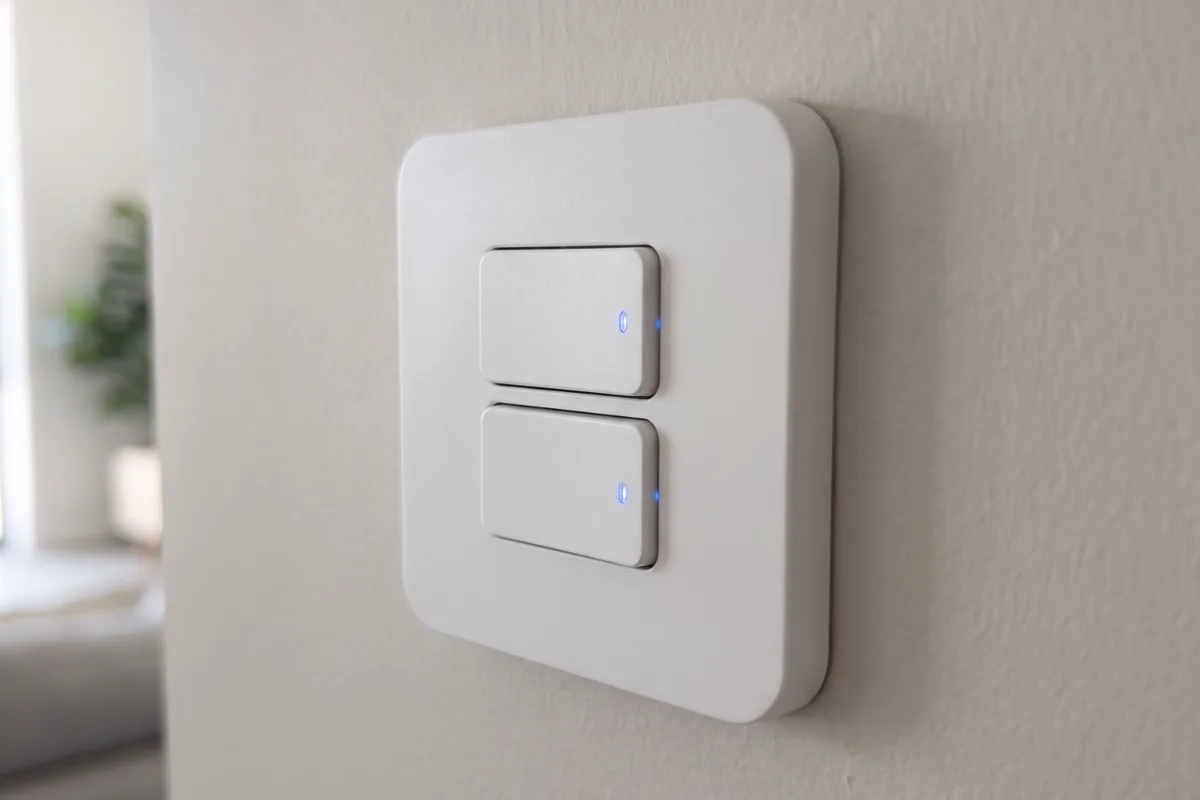
- An app-connected mechanism replaces the switch and works by hand or by app.
- Worth knowing
- Many need a neutral at the switch, or a model built to manage without one.
Smart relay at the light
Medium disruption- Best for
- Keeping existing or heritage switch plates
- How it works
- A small module sits in the ceiling beside the light, and your existing switch becomes its input.
- Worth knowing
- Needs roof access. Nothing changes on the wall.
In-wall timer switch
Low disruption- Best for
- Porch, driveway and garden lights
- How it works
- A programmable timer replaces the switch and runs the light at set times.
- Worth knowing
- No app needed. For movement, see sensor lights.
The people behind the work
One local team for electrical, heating and cooling. Family-run, based in Altona Meadows, with 19 years in the industry.
Licensed electrical contractor (REC 38187)See more team photos
Worth knowing before you book
- Not every LED dims
- Non-dimmable fittings flicker on any dimmer, so we check them first.
- Smart may need a neutral
- Many older switch positions lack one. We run one or pick a model that manages without it.
- One fitting type per dimmer
- Mixed downlights on one dimmer rarely dim evenly.
What affects the price?
The right scope depends on your installation. These are the details we check so your quote is useful, with any additional work explained before it proceeds.
Switch positions
Each one is a mechanism, set-up and test. A bank of four at the kitchen doorway is more work than one bedroom dimmer.
What's behind the plate
A neutral, wall depth and sound cable make a quick swap. Otherwise new cable is needed, and brick walls or a flat roof slow that.
Fittings that won't dim
Non-dimmable or mixed fittings may need replacing before dimming works. We point them out at the check.
Safety switch protection
Energy Safe Victoria notes the Wiring Rules call for additional RCD protection when an existing installation is altered. If the job alters yours and the lighting circuit lacks it, it's in the quote.
How it runs
- 1
Tell us what to control
Which lights should dim, run on a timer or work from your phone.
- 2
We check fittings and wiring
Drivers, neutrals, wall depth and two-way switching, then you get the price.
- 3
Fit, set up and test
Mechanisms fitted, ranges set, scenes paired and every switch tested by hand.
Step by step, in more detail
5 steps
Talk through what you want
Which rooms dim, which lights come on together, what runs on a timer and whether you want app control. A switch everyone can use beats a clever one nobody understands.
Check fittings and wiring
We identify the drivers in your lights and whether they dim. At each switch we look for a neutral, wall depth and any two-way switching.
Price the agreed scope
You get the price before we start, covering each switch, the hardware and any cable. It's a fixed price for the agreed scope.
Fit with the circuit isolated
The lighting circuit is switched off and proved dead first. Mechanisms go in and neutrals are run where needed.
Set up, test and certify
Dimming ranges are trimmed, scenes paired and every switch tested by hand with the app closed. You get a Certificate of Electrical Safety.
What is safe to do, and what to leave to us
Safe for you to do
- Switch a light off at the wall if its dimmer hums loudly, feels hot or the lights strobe.
- If a safety switch trips when a light goes on, reset it once. If it trips again, leave it off and call us.
- Send us the product details before buying dimmers, smart switches or fittings.
Leave these to us
- Changing a switch or dimmer yourself. Energy Safe Victoria says electrical work isn't a DIY job, even for small jobs like changing light switches.
- Running a ceiling or exhaust fan from a light dimmer.
- Using a switch that's cracked, loose, sparking or warm.
- Relying on lights that only work from an app.
When to get us in
- LEDs flicker, hum or cut out on a dimmer
- A switch plate feels warm, crackles or smells hot
- Lights glow when off after a smart switch went in
- You're building or renovating and want switching planned
- A failed switch has left a rental room dark at night
More detail
Leading edge or trailing edge
A dimmer works by cutting away part of each wave of mains power. Leading-edge dimmers cut the front and suit old halogen transformers. Trailing-edge dimmers cut the back, which most LED drivers prefer, and they run quieter and cooler.
The neutral question
Before quoting a smart switch, we open a plate or two. With a neutral there, almost any smart mechanism works. Without one, we run a neutral from the ceiling, use a model built to manage without it, or put a relay at the light.
Smart globes, scenes and schedules
A smart globe needs the wall switch left on, so the first habitual flick sends it offline. It suits a lamp, not a room of downlights. Keep scenes few and plainly named. The ones everyone remembers get used.
Local rules and conditions
Victorian requirements and local conditions that shape this job, with the sources listed at the foot of the page.
Older switch wiring in Hobsons Bay
The Hobsons Bay planning scheme links Newport and Spotswood to Federation and Interwar growth, and Altona and Laverton to post-war expansion. Energy Safe Victoria says wiring should be checked in houses built more than 30 years ago, so we check each switch's cable before fitting anything smart.
Growth estates: plan before plaster
Truganina, Tarneit, Wyndham Vale and Manor Lakes are named as Wyndham's residential growth areas for new housing. Building there? Ask for a neutral and a deeper wall box at every switch where smart control might go.
Rentals need working light
Consumer Affairs Victoria's minimum standards say renters should have access to artificial light at night, and rental lighting circuits must connect to a switchboard-type circuit breaker and safety switch. Landlords do better with switches that work by hand, not an app.
Useful reading
Guides to read before you decide, with checklists and questions to bring to the quote.
- A room-by-room lighting plan that goes beyond more downlightsPlan task lighting, comfortable evening light and outdoor coverage around how each space is used.
- What electrical work you can and can't do yourself in VictoriaWhere Victorian law draws the line on home electrical work, the short list of jobs that are yours, and what to do when a job goes past it.
- Certificates of Electrical Safety explainedWhat a Victorian COES records, how prescribed and non-prescribed work differ, when your copy should arrive and why it belongs in your house file.
- Planning the electrical in a new build or extensionMark up the power and lighting plan, decide the dedicated circuits, pre-wire air conditioning and EV charging, then walk the frame before plaster.
Common questions
Questions people ask about this
- Why does my light switch buzz or feel warm?A dimmer can hum faintly and feel a little warm, because it is an electronic device that sheds some heat while it works.
- Why do my lights turn on or off by themselves?Lights that switch on or off by themselves are usually following instructions you've forgotten: a smart switch schedule, a routine in an app, a motion or daylight…
- Why does my two-way light switch only work from one end?A light switched from two places relies on two switches joined by a pair of wires, so either switch can redirect the power.
- Why do my LED lights buzz or hum?Most buzzing LEDs come from a mismatch rather than a fault: a dimmer built for old halogen globes, an LED driver that doesn't suit the dimmer, an old transformer left in…
- Why do my light globes keep blowing?Globes that fail early usually have help.
From the blog
- Smart switches or smart globes: which is better?Smart globes are easy and renter-friendly, but go offline the moment someone flicks the wall switch. For whole rooms, smart switches are usually the better choice.
- Adding ceiling fans to an older home: what's involved?Yes, in most rooms. Roof access, a solid fixing to the joists, the switching you want and the cable route decide how simple it is in an older home.
- Electrical upgrades that make a home safer for older parentsBetter lighting on paths and stairs, sensor lights, interconnected smoke alarms, easier switches and safer heating: practical upgrades that help with ageing in place.
Sources for the rules and local facts on this page
10 sources, with the date each was checked
- 1.Victorian Government, Hobsons Bay Planning Scheme (PDF snapshot, last updated by VC292 on 11/09/2025): The heritage places of Hobsons Bay reflect the key themes that have shaped the development of the city since the establishment of Williamstown in the 1840s as the first port of Melbourne, through the development of… Accessed 30 September 2026.
- 2.Energy Safe Victoria: Old switchboards, particularly those without a safety switch Old power switches or power points, particularly broken ones Flickering lights Sparks from switchboards, switches or power points. If your house is over 30… Accessed 30 September 2026.
- 3.Victorian Electoral Commission (2023 electoral structure review fact sheet): New housing developments are planned in residential growth areas including Truganina, Tarneit, Wyndham Vale and Manor Lakes, as well as near activity centres and public transport. Accessed 30 September 2026.
- 4.Consumer Affairs Victoria: Inside rooms, corridors and hallways must have access to light to make the areas functional. During the day, natural light can include light borrowed from an adjoining room. At night, renters should have access to… Accessed 30 September 2026.
- 5.Consumer Affairs Victoria: From 29 March 2023 all power outlets and lighting circuits in a rental premises must connect to both a switchboard-type circuit breaker that complies with AS/NZS 3000 and a switchboard-type residual current device that… Accessed 30 September 2026.
- 6.Energy Safe Victoria: Electrical work isn’t a DIY job, even for small jobs such as changing power points or light switches. Accessed 30 September 2026.
- 7.Energy Safe Victoria: Whenever a licensed electrician completes any electrical installation work, they must provide a Certificate of Electrical Safety (COES). Accessed 30 September 2026.
- 8.Energy Safe Victoria: For electrical installation work performed within your electrical installation including but not limited to lights, power points, air conditioning, hot water service etc. Accessed 30 September 2026.
- 9.Energy Safe Victoria: Locate your electricity box outside your home and check whether the safety switch has tripped. If it has tripped, reset the switch. If the switch won’t reset, call a licensed electrician. Accessed 30 September 2026.
- 10.Energy Safe Victoria: Clause 2.6.3.2.5 of the Wiring Rules states: Additional protection by RCDs shall be provided in existing electrical installations where alterations or a switchboard replacement is completed. Accessed 30 September 2026.