
What electrical changes make a home safer for elderly parents?
- Good lighting helps prevent falls. Light paths, steps, hallways and the route from bed to bathroom, with switches where they're needed.
- Sensor lights and night lights mean nobody has to find a switch in the dark.
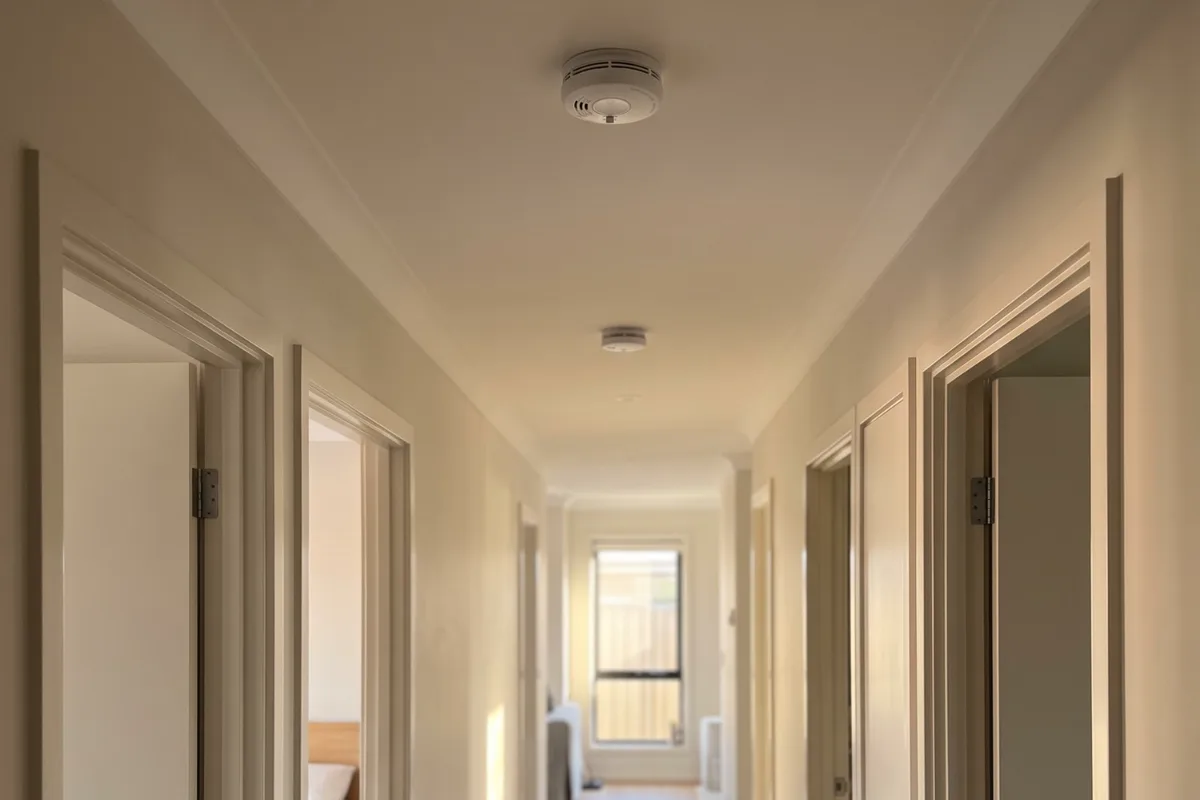
- Interconnected smoke alarms sound through the whole house, which matters for anyone hard of hearing or sleeping with the door shut.
- Easier switches, power points at a comfortable height and fewer extension leads make daily life safer.
- Fixed reverse-cycle heating on a timer is safer than portable heaters beside beds and chairs.
Lighting that helps prevent falls
Falls are one of the biggest risks for older people at home, and poor lighting plays a part in many. Eyes need more light with age and take longer to adjust between bright and dark. A hallway lit by one old globe, front steps in shadow or a dark route to the toilet at 2am are where trouble starts.
Start with the routes used every day and night: the front path and steps, the garage to the kitchen, the hallway, and bed to bathroom. Brighter LED fittings with warm, even light cut glare and shadow. On stairs, light the top and bottom with switches at each end so nobody crosses in the dark, and do the same in long hallways.
- Switches at both ends of stairs and long hallways
- Brighter, even LED light in hallways, kitchens and bathrooms
- Low-level night lights between bedroom and bathroom
- A light over the front door lock
Sensor lights inside and out
Outside, sensor lights over the front door, driveway and side path come on as someone approaches, so arriving home after dark or putting the bins out doesn't mean fumbling for a switch. Aim them at the path rather than the street, and set the run time long enough to get inside with the shopping.
Inside, motion-activated night lights or low step lights can show the way to the bathroom without waking a partner or switching on a glaring ceiling light. Smart switches can bring the hallway light on at a low level at night, or let family check from their phone that the lights came on in the evening.
Interconnected smoke alarms
With interconnected smoke alarms, one alarm detecting smoke sets them all off. For someone who sleeps with the door shut or is hard of hearing, that can be the difference between hearing an alarm at the far end of the house and not. The Building and Plumbing Commission says smoke alarms must be on or near the ceiling of every storey and between each bedroom area and the rest of the house.
Many older homes still have standalone battery alarms, which means a ladder for testing and battery changes. Fire Rescue Victoria says to test smoke alarms monthly by holding the test button until the alarm beeps three times, and the Building and Plumbing Commission advises replacing them generally after ten years. Hardwired, interconnected alarms with battery backup must be installed by an electrician and cut down on battery changes.
For people with significant hearing loss, ask about alarms that add strobe lights or bed shakers. They need to be compatible with the rest of the interconnected set.
Easier switches and power points
Small switches and power points just above the skirting are fine at 30 and harder at 80. Wide rocker switches suit arthritic hands, illuminated switches are easy to find at night, and points moved up the wall mean less bending to plug in a heater, vacuum or lamp.
Extension leads across the floor are a trip hazard as well as an electrical one. If a bedroom or lounge relies on leads and power boards, an extra point where the lamp, phone charger and recliner actually sit removes both risks. While you're at it, check the safety switches: Energy Safe Victoria says a safety switch cuts the power within 0.03 of a second when it detects a problem that may put people at risk, and some older homes have none.
Safer heating for cold nights
Portable heaters near beds, armchairs and curtains are a common winter fire risk, and figures compiled by CFA and Fire Rescue Victoria show winter had the highest number of preventable residential fire deaths in Victoria in 2025. A fixed reverse-cycle air conditioner takes the heater off the floor, and moves three to five units of heat for each unit of electricity, where a standard electric heater produces about one.
Set it on a timer so the room is warm before getting up, and keep the remote in one spot or use a simple wall controller. If the home has an old gas space heater, Energy Safe Victoria recommends servicing gas heaters at least every two years, and says a carbon monoxide alarm helps but never replaces that service.
Questions that come next
Sources for this article
8 sources, with the date each was checked
- 1.Building and Plumbing Commission (formerly Victorian Building Authority): Smoke alarms are compulsory and must be installed in every residential building, on or near the ceiling of every storey. Smoke alarms need to be positioned to wake sleeping occupants. They must be located between each… Accessed 30 September 2026.
- 2.Fire Rescue Victoria: TEST your smoke alarm batteries Every month Press and hold the test button until the smoke alarm beeps three times. Accessed 30 September 2026.
- 3.Consumer Affairs Victoria: A hard-wired smoke alarm must be installed by a qualified electrician, but anyone can change a smoke alarm battery. Accessed 30 September 2026.
- 4.Energy Safe Victoria: monitors the flow of electricity through a circuit detects a problem that may pose a risk to personal safety turns the power off within 0.03 of a second always has a test button and '30ma' printed on them. Accessed 30 September 2026.
- 5.Fire Rescue Victoria: Across Victoria, in figures compiled by CFA and FRV, there were a total of 21 preventable residential fire fatalities in 2025. This compares to 18 equivalent fatalities in 2024, with the highest number of deaths… Accessed 30 September 2026.
- 6.Energy Rating (GEMS Regulator / DCCEEW): Reverse cycle air conditioners are much more efficient at heating than standard electric heaters (bar heaters, convection, or radiant heaters). ... During the normal operating range in Australia for every unit of… Accessed 30 September 2026.
- 7.Solar Victoria (updated 28 August 2026): Calculations from Choice found that a reverse-cycle air conditioner is about a third of the cost of an electric heater to run in the same space. Accessed 30 September 2026.
- 8.Energy Safe Victoria: To avoid the risk, we recommend that all gas heaters are serviced at least every two years by a qualified gasfitter. A qualified gasfitter will inspect your heater and check its installation, including testing for CO… Accessed 30 September 2026.