Most ducted systems don’t fail all at once. The outdoor unit gets louder, a room stops keeping up and repair quotes add up. We check which ducts and wiring can stay, size the new unit for the house as it is now, and do the electrical ourselves.
When to get it checked
A big part has failed
The compressor, indoor coil or main board has gone on an older unit. A major part on a system near the end of its life is money you may not get back.
It’s more than 15 years old
Age alone isn’t a fault, but the Victorian Government says a reverse-cycle system over 15 years old typically uses more than three times the energy of a modern one.
It can’t keep up on the hard days
It’s serviced and the filter is clean, yet it can’t hold temperature on a still winter morning or a hot northerly afternoon. It may be worn, undersized, or both.
The house has grown around it
An extension or converted garage adds area the unit was never sized for. Rooms at the end of the longest duct runs suffer first.
Why it happens
4 common causes
Compressor wear
The compressor does the heavy lifting in heating and cooling, and every start wears it. On an older unit, a failed compressor usually means replacement.
Refrigerant leaks
Corroded coils and tired joints let refrigerant escape, and capacity drops with it. A system can’t legally be topped up until it’s tested and every leak found is repaired.
Years of starved airflow
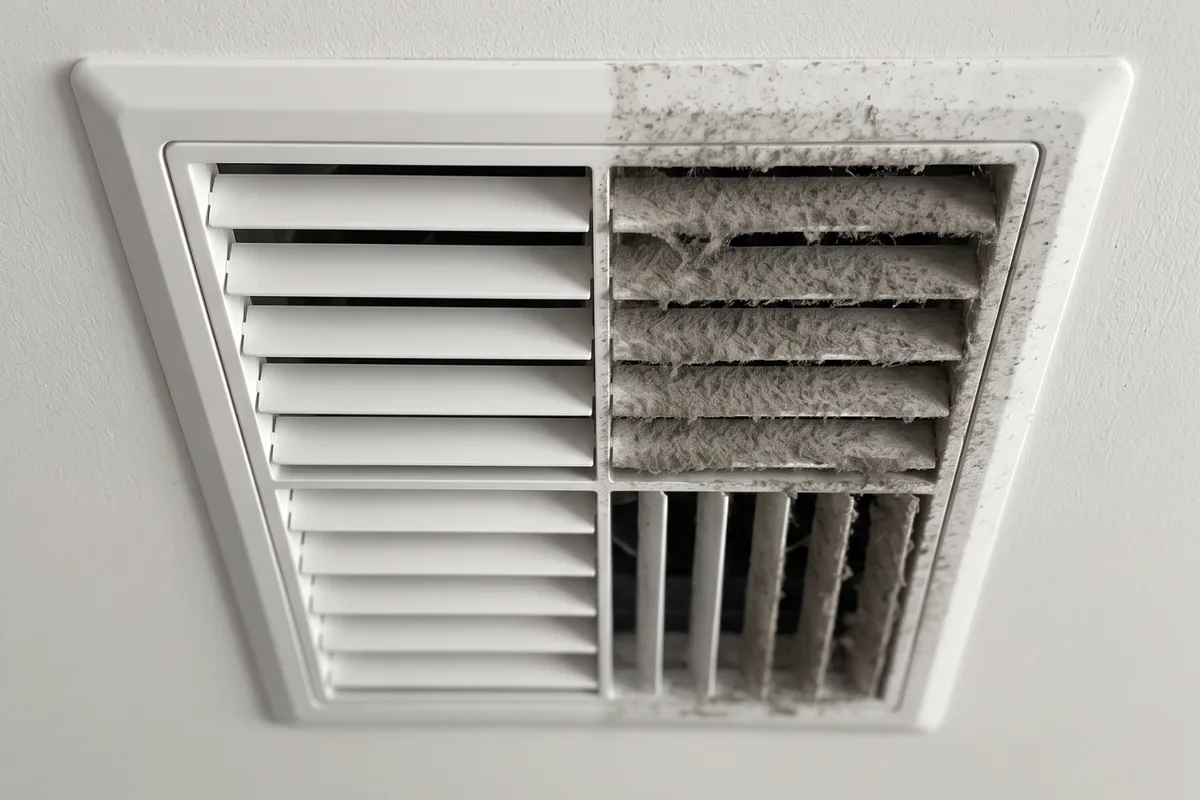
Blocked filters, crushed ducts and closed-off outlets make the fan and compressor work harder. Dirty filters cut airflow and efficiency, and the strain adds up.
Wrong size from day one
An undersized unit runs flat out; an oversized one switches on and off constantly. Both wear parts faster and leave some rooms uncomfortable.
What the job covers
What we usually do on this job. Your quote confirms it for your place.
- Old unit, ducts and outlets inspected
- Heat load worked out for the rooms served
- Old refrigerant recovered by a licensed technician
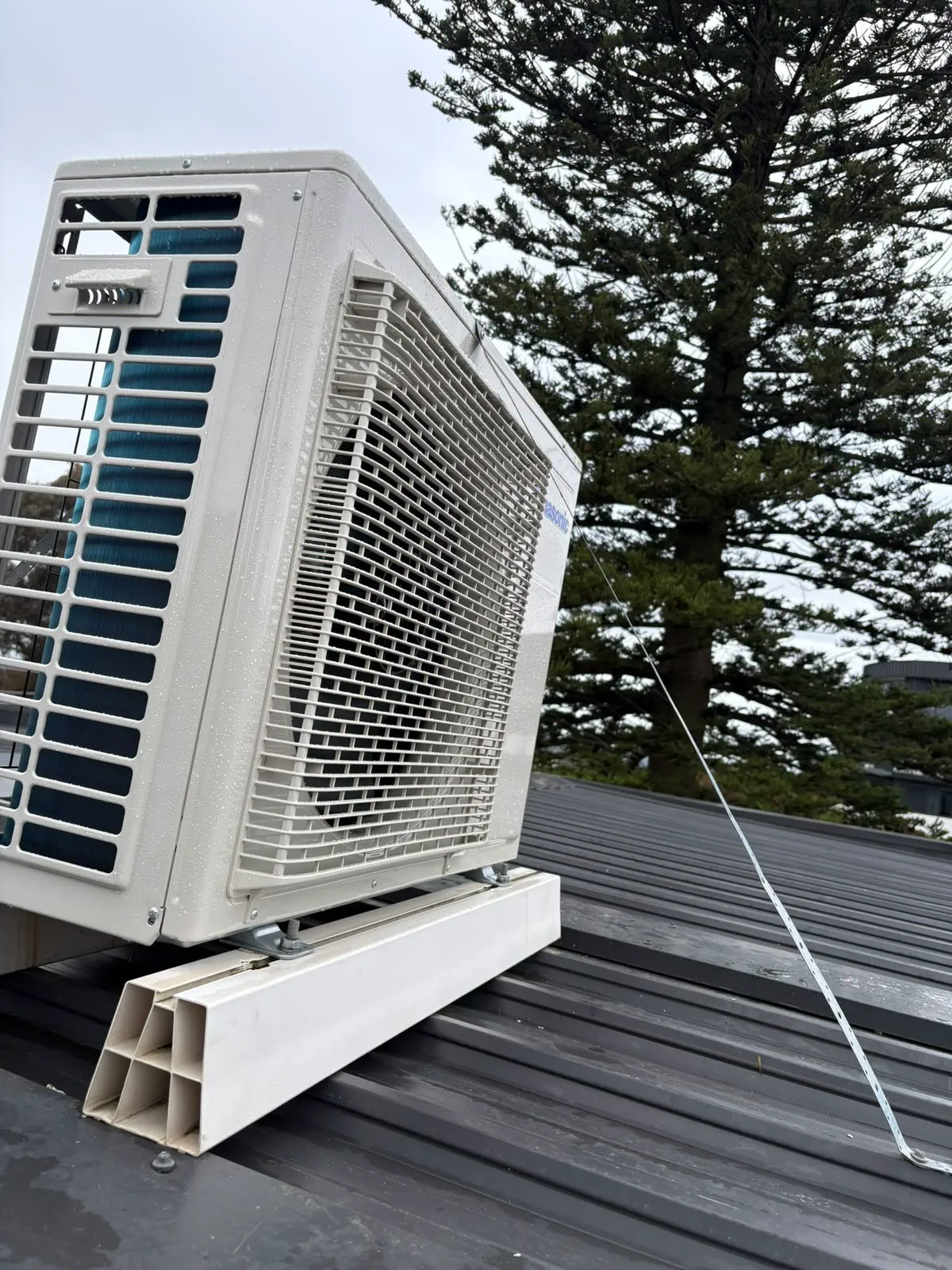
- Old indoor and outdoor units removed
- New matched indoor and outdoor units installed
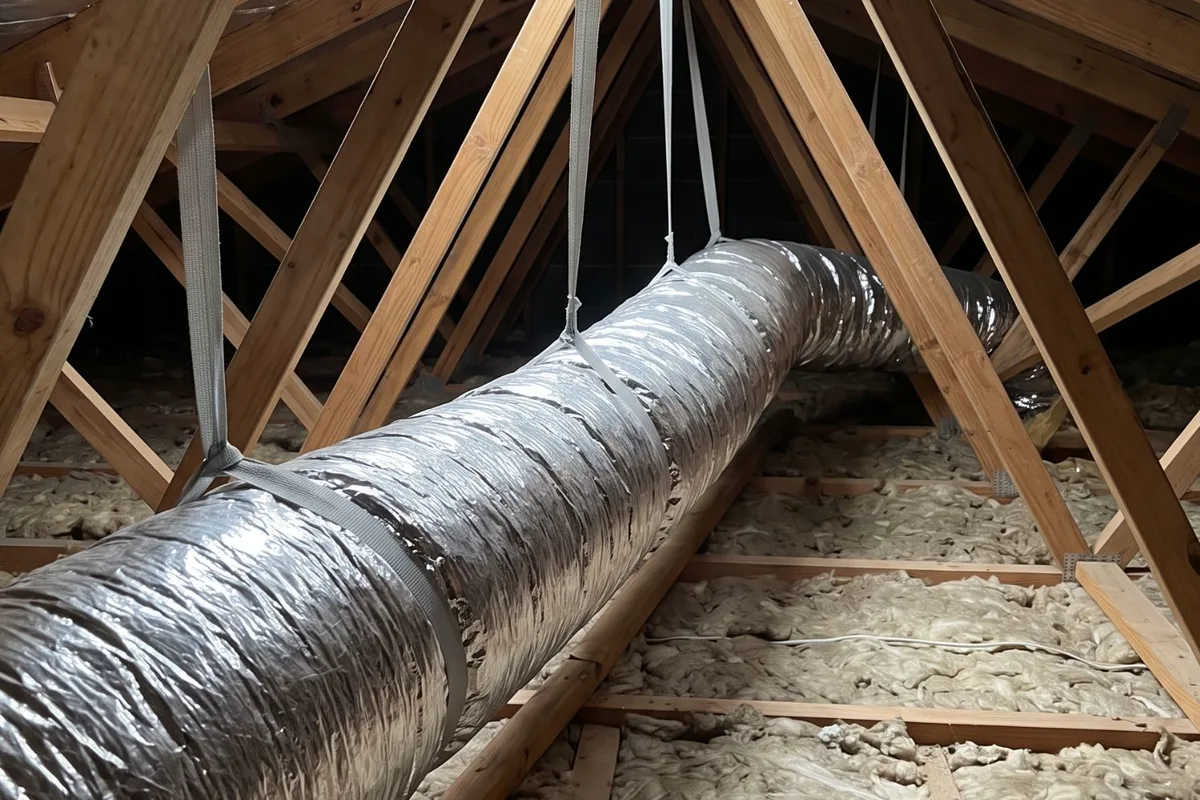
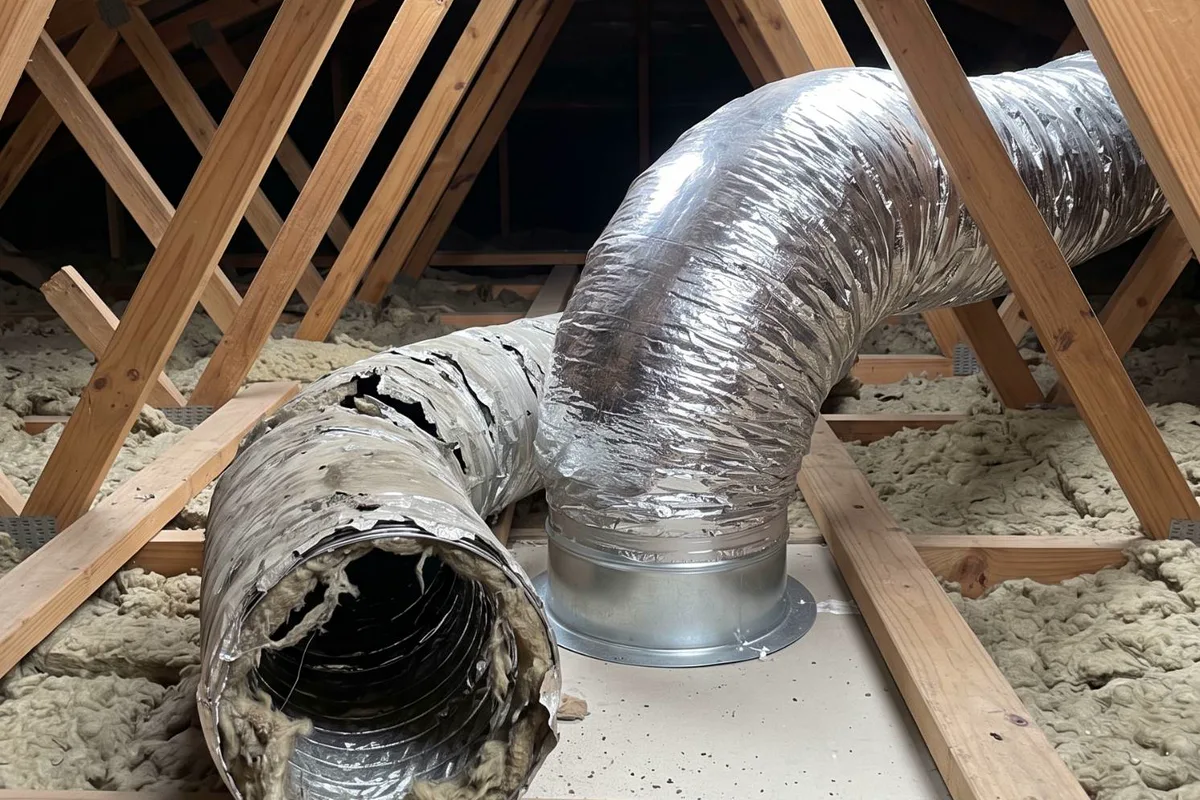
- Damaged duct runs replaced and joints sealed
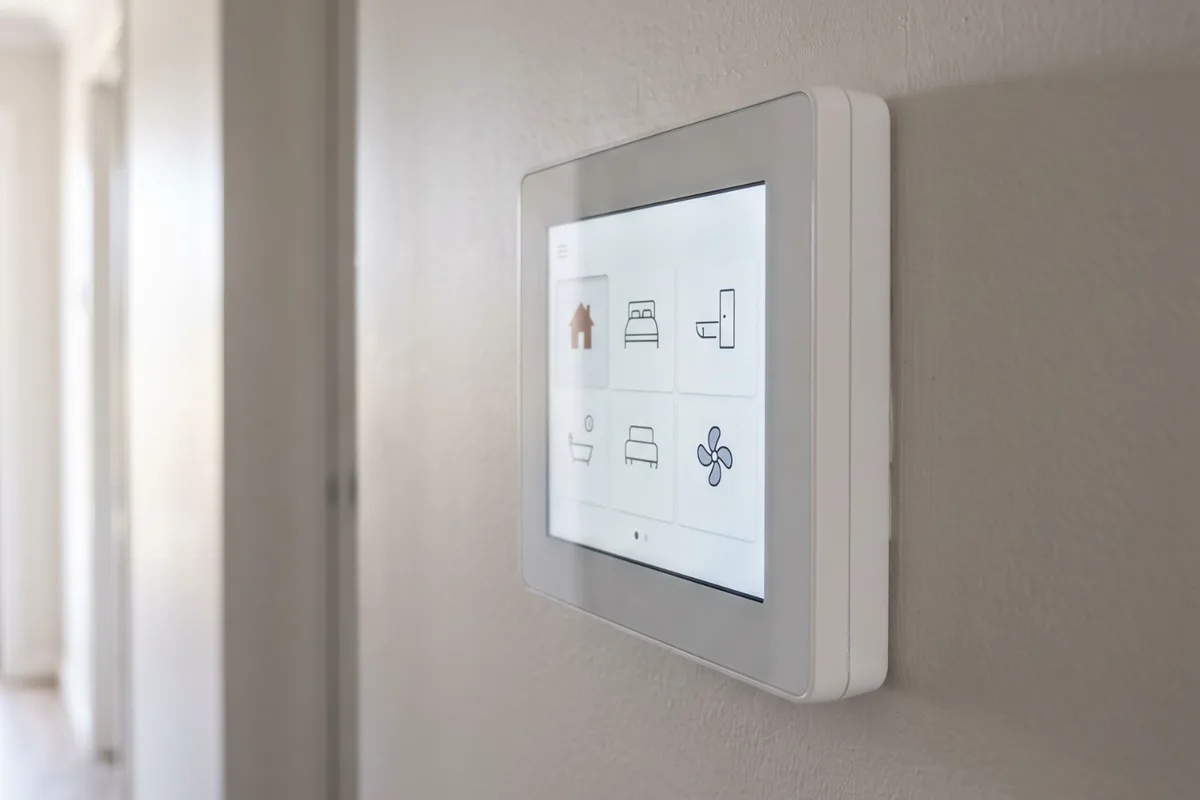
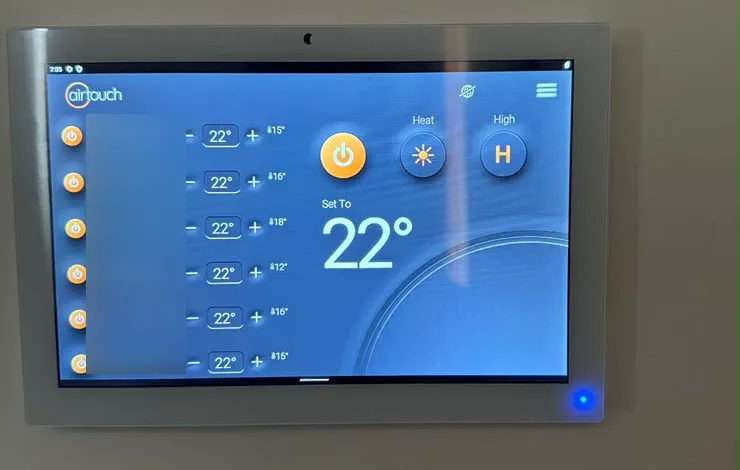
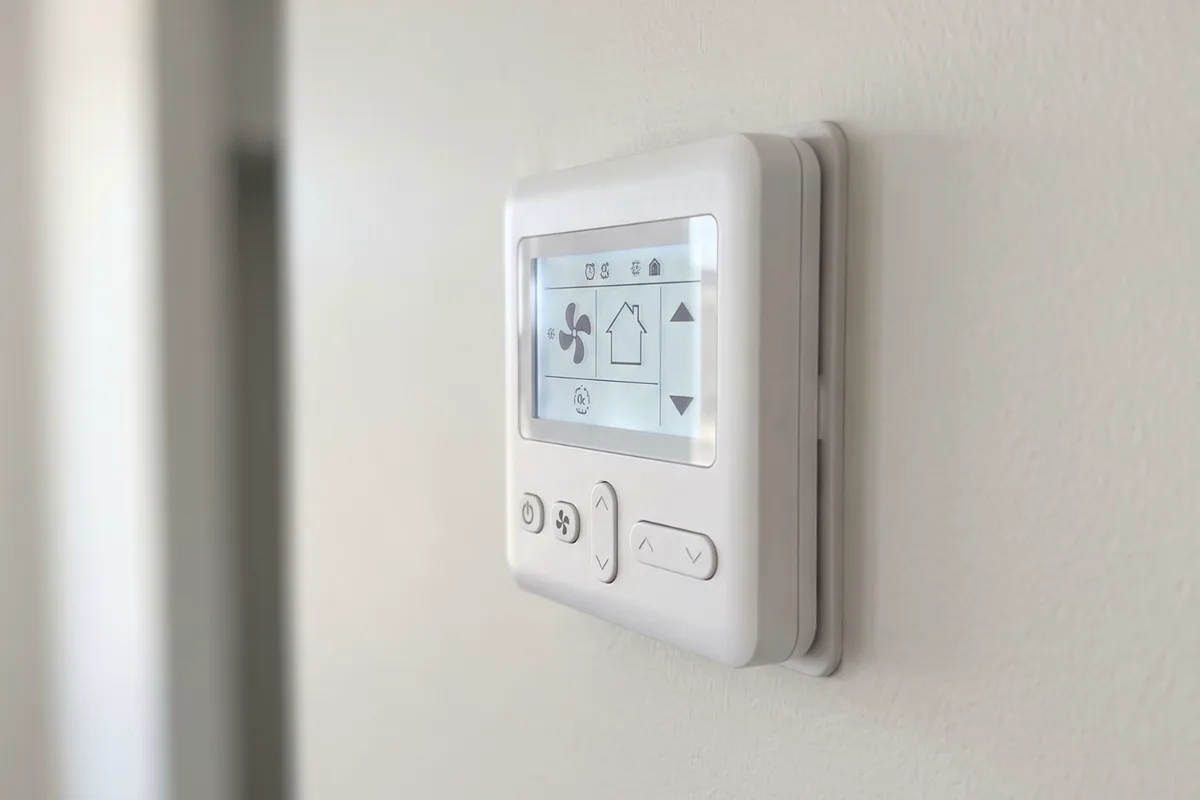
- New wall controller fitted
- Circuit, isolator and switchboard capacity checked
- Airflow checked at every outlet
- Certificate of Electrical Safety issued
Your options, explained
New units on the existing ducts
Medium disruption- Best for
- Intact, insulated ducts big enough for the new unit
- How it works
- Indoor unit, outdoor unit and controller are replaced as a matched set on the existing ducts.
- Worth knowing
- Only worth it if the ducts will outlast the new unit.
New units plus partial duct renewal
Medium disruption- Best for
- Most older systems with some crushed, bare or undersized runs
- How it works
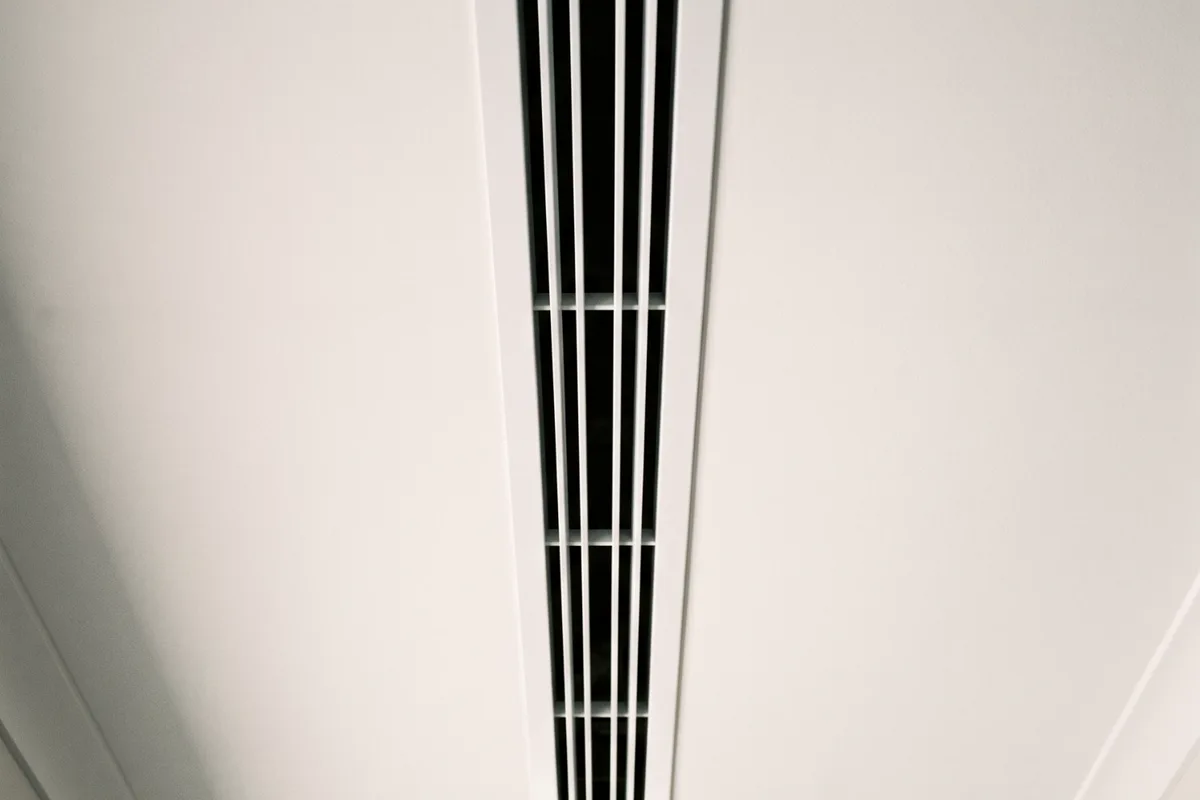
- Failed runs are replaced with insulated ducting, and outlets are moved or added where needed.
- Worth knowing
- A good time to add zones while the ducts are open.
Full system renewal
High disruption- Best for
- Very old or badly laid ducts, or a major renovation
- How it works
- Units, ducts, outlets, return-air grille and controller are all replaced together.
- Worth knowing
- Ceilings may need patching where outlets move.
Change to split or multi-head systems
Medium disruption- Best for
- Homes that only heat or cool a few rooms
- How it works
- Wall-mounted or multi-head units go in the rooms you use instead.
- Worth knowing
- Ducted systems use a larger fan and lose energy through the ducts, so they cost more to run than wall units.
The people behind the work
One local team for electrical, heating and cooling. Family-run, based in Altona Meadows, with 19 years in the industry.
Licensed electrical contractor (REC 38187)See more team photos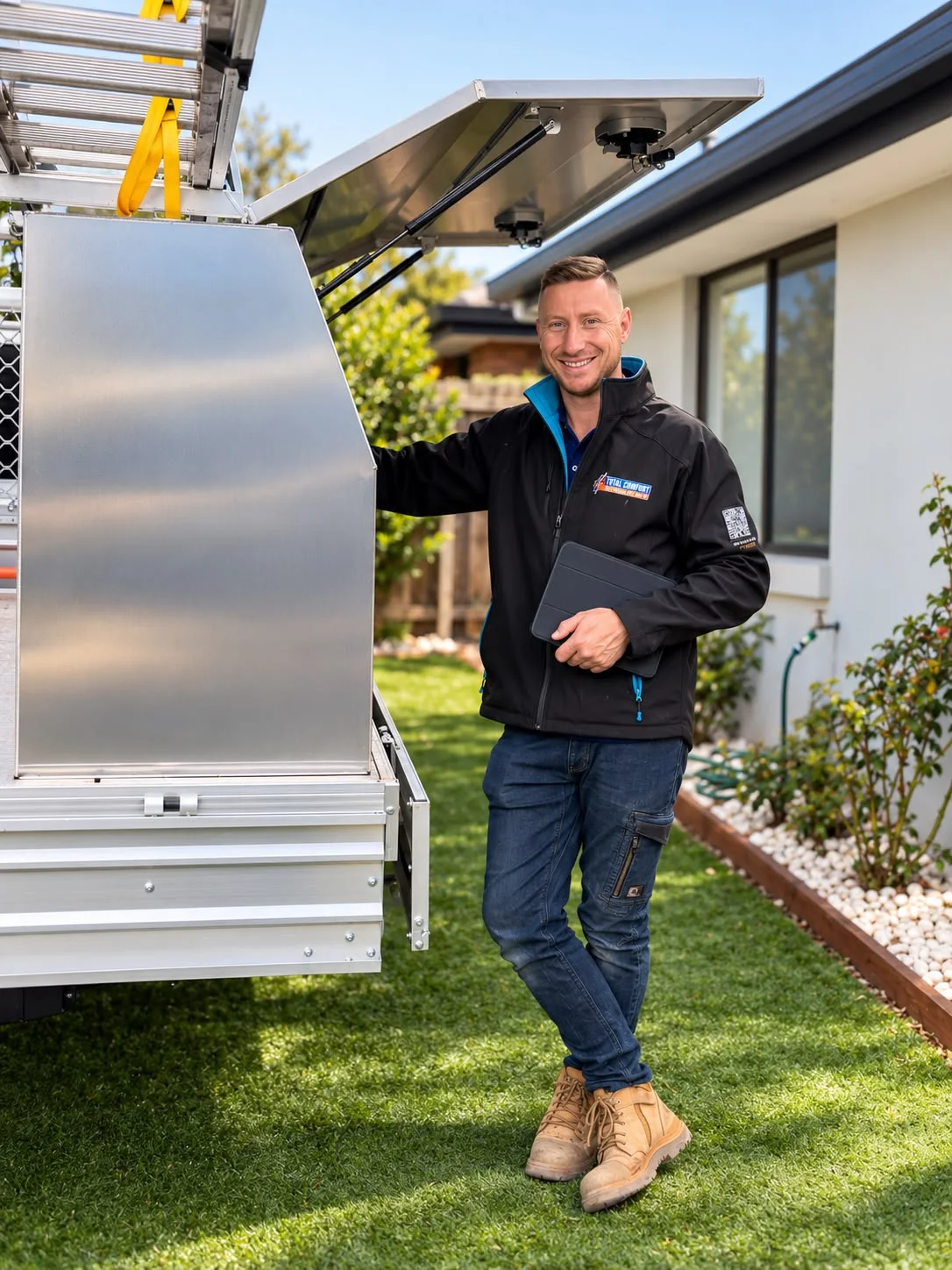
Worth knowing before you book
- Sound ducts can stay
- Intact, insulated ducts of the right size can often be reused. Crushed or bare runs are best replaced now.
- Don’t copy the old size
- The old unit may have been undersized, or the house may have grown. We size it again.
- Check the switchboard first
- We check the switchboard before a new reverse cycle system goes in, so any upgrade it needs is priced up front.
What affects the price?
The right scope depends on your installation. These are the details we check so your quote is useful, with any additional work explained before it proceeds.
Capacity and supply
Bigger houses sometimes need a three-phase unit or two separate systems.
How much ductwork stays
Every run replaced adds materials and roof time.
Roof access
A low-pitched roof, small manhole or second storey makes the swap slower.
Outdoor unit position
Moving it, or running longer pipework, adds labour.
Electrical and extras
Circuit, isolator or switchboard work, zoning and new outlets each add to the scope.
How it runs
- 1
Site visit
Old unit, ducts, roof access and switchboard checked.
- 2
Plan and quote
Unit size, what’s reused and a fixed price.
- 3
Swap over
Refrigerant recovered, units replaced, ducts and electrical done.
- 4
Commission
Airflow balanced, heating and cooling tested, controller explained.
Step by step, in more detail
4 steps
Inspect the system and ducts
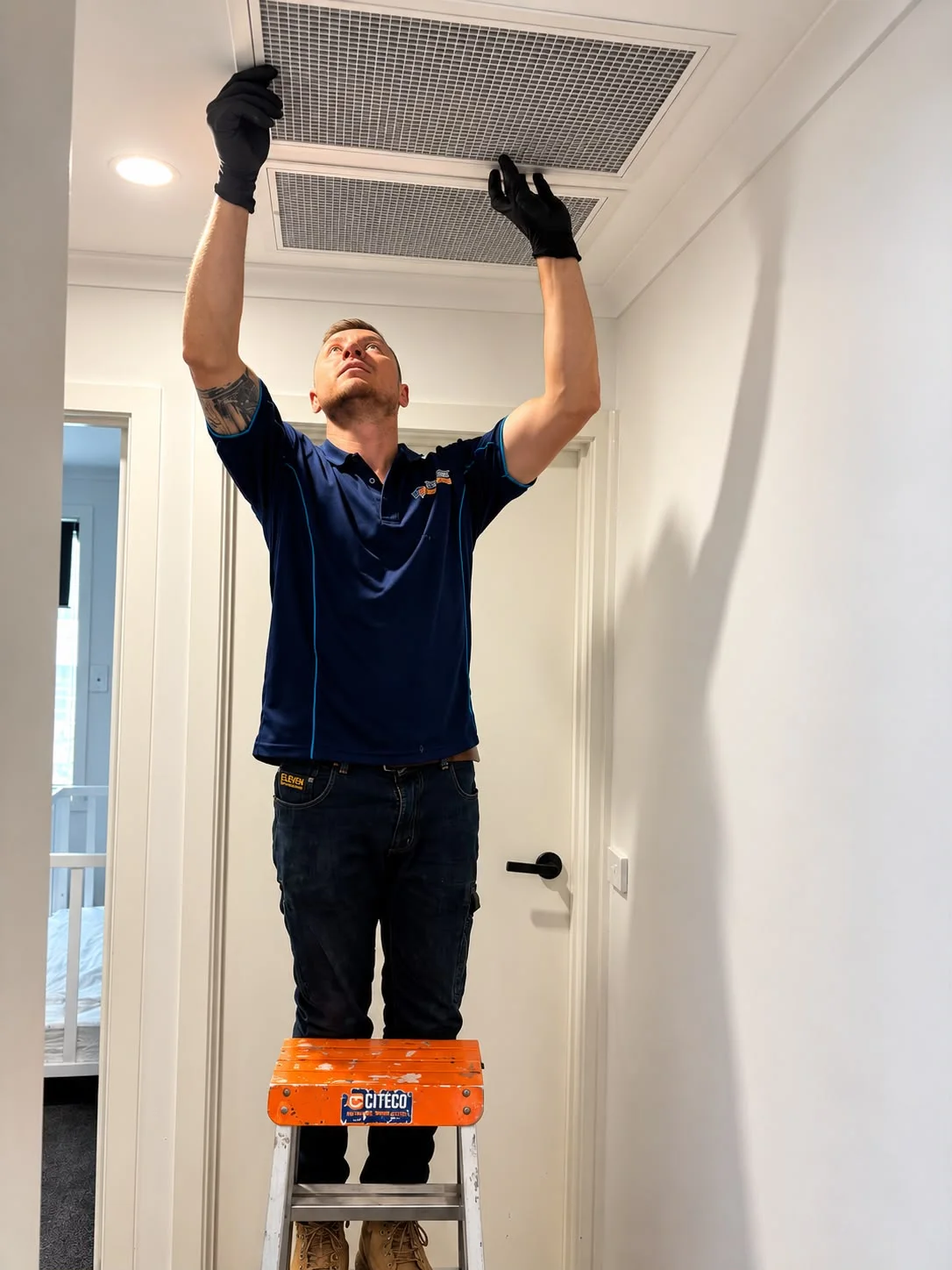
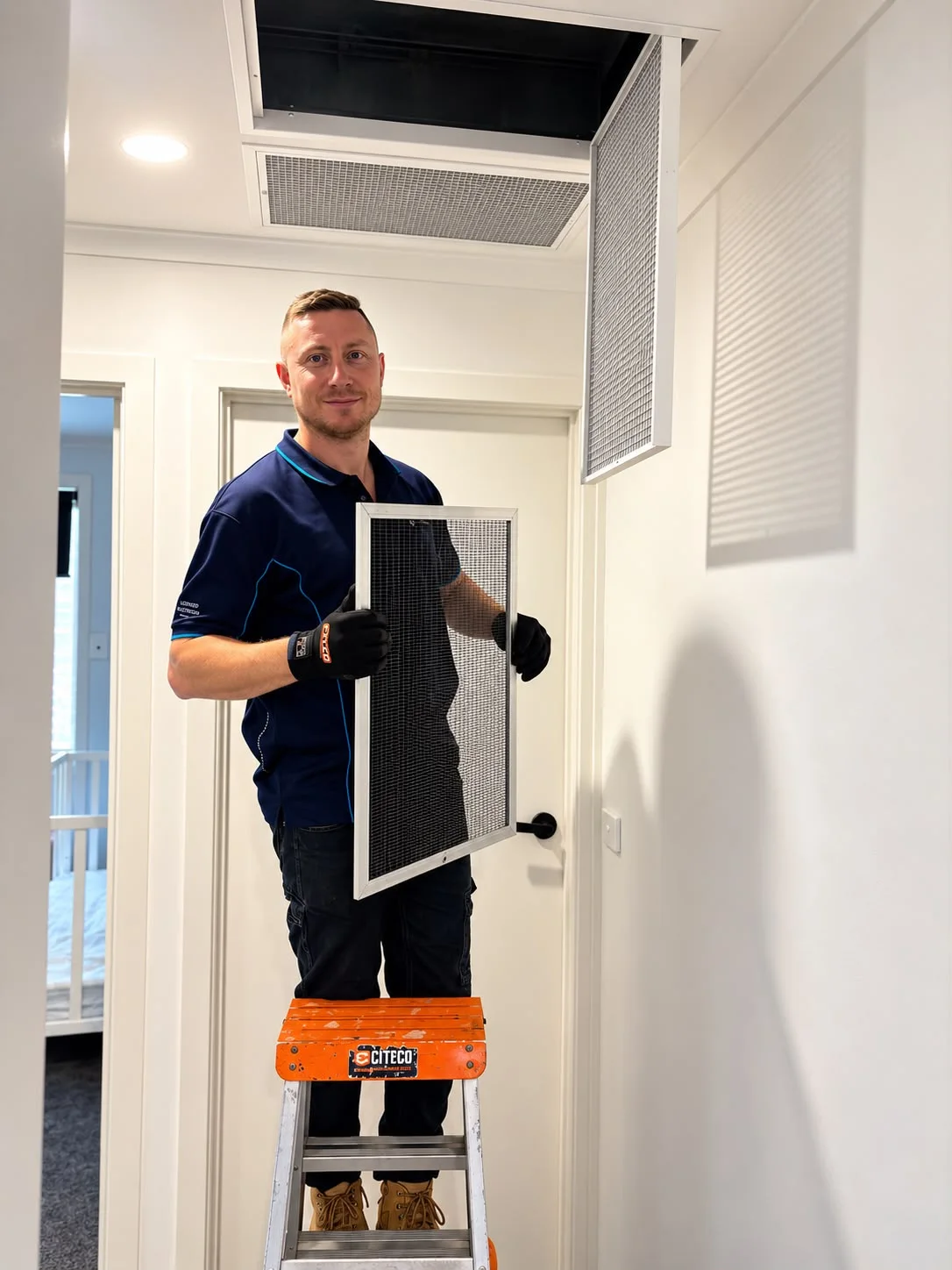
We check the indoor and outdoor units, controller and switchboard, then trace each duct run to its outlet for crushing, bare sections and loose joints. That decides what stays.
Size and price it
We work out the heat load for the rooms served. As a guide, the Victorian Government suggests 1.1 to 1.4 kW of heating output per 10 m² a ducted system covers. You get a fixed price for the agreed scope.
Swap it over
A licensed technician recovers the old refrigerant before the old units come out. New units, pipework, duct connections, controller, circuit and isolator go in.
Commission and hand over
The system is pressure-tested and evacuated before it’s charged, and airflow is checked at every outlet. We run heating and cooling, show you the controller and issue your Certificate of Electrical Safety.
What is safe to do, and what to leave to us
Safe for you to do
- Turn the system off at the controller if it’s noisy, smells of burning or keeps faulting.
- Reset a tripped safety switch once. If it trips again, leave it off.
- Photograph any controller code and the outdoor unit’s label.
- Keep the return-air grille, outlets and outdoor unit clear.
Leave these to us
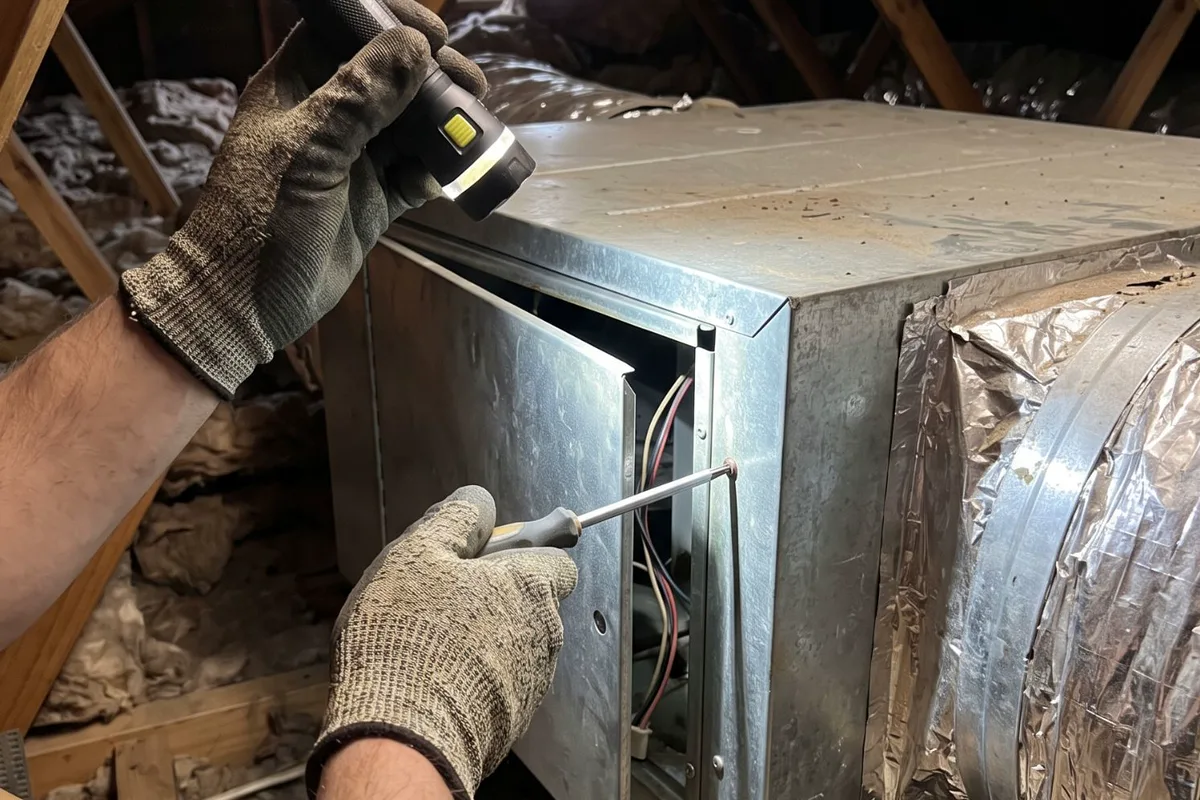
- Climbing into the roof space to look at the unit or ducts.
- Opening the outdoor unit or touching refrigerant pipework; that needs a refrigerant handling licence.
- Moving or rewiring the isolator or controller. Electrical work isn’t a DIY job.
- Letting anyone vent the old refrigerant, which is illegal.
When to get us in
- A major part has failed on an older system
- Repair quotes keep adding up
- Rooms at the end of the duct runs never get comfortable
- The safety switch trips when the system starts
- An extension is planned
More detail
Which ducts can stay
Ducts that are intact, insulated and sized for the new unit’s airflow can usually be reused. Government guidance calls for duct insulation of at least R1.5 with sealed joints, so bare, brittle or patched runs should go.
Comparing units without a star label
In stores, the Zoned Energy Rating Label only has to appear on non-ducted and single-split units up to 30 kW, so a ducted unit may not carry one. Ask for its seasonal heating and cooling figures, and weigh heating more heavily.
Who does which part
In Victoria, refrigerated air conditioning work, including an add-on condenser for a ducted system, is plumbing work, and handling refrigerant needs a refrigerant handling licence. The circuit, isolator and controller wiring are electrical work, and you must get your Certificate of Electrical Safety within 30 days.
Local rules and conditions
Victorian requirements and local conditions that shape this job, with the sources listed at the foot of the page.
Size it for winter first
At the Laverton weather station, July’s mean minimum is 5.2 °C. Victorians typically use more energy heating than cooling, so the Victorian Government suggests choosing a unit with higher heating efficiency.
Then plan for the heat
Laverton averages 27.0 days a year at or above 30 °C, mostly December to February. The health department advises checking your air conditioner works before extreme heat, so replace a failing system before summer.
Rental ducted systems from March 2027
From 1 March 2027, rental heating that fails and can’t be repaired must be replaced with energy-efficient fixed electric heating with an outlet in the main living area. For a ducted system, that means a GEMS Heating Seasonal Performance Factor of 3.2 or above.
Useful reading
Guides to read before you decide, with checklists and questions to bring to the quote.
- Split system or ducted: choose around the rooms you useCompare layouts, zoning, installation work and quote details before choosing equipment for your home.
- Ducted zoning explainedZones, dampers, controllers and room sensors in plain terms, plus the airflow limits that decide whether zoning will fix your comfort problem.
- Reading the Zoned Energy Rating LabelWhich zone to read in Melbourne, why the red heating stars matter most, what the kWh and noise figures mean, and how to compare two units fairly.
- Landlords: heating, cooling and electrical obligations in VictoriaA rental provider's map of the heating, switchboard, safety check and repair duties on a Victorian rental, and what the 2027 energy standards change.
Common questions
From the blog
- What affects the cost of ducted air conditioning?Capacity, zones, outlets, roof access, storeys, duct reuse and the electrical supply all shape a ducted install. Here's how to compare quotes on the same basis.
- When is the best time of year to install air conditioning?Spring and autumn give you time to choose well, sort the switchboard and test the system before it's needed. Here's why, and what to do if one fails mid-season.
Sources for the rules and local facts on this page
19 sources, with the date each was checked
- 1.Bureau of Meteorology: Mean minimum temperature (°C) 14.0 14.4 12.7 10.0 7.8 5.9 5.2 5.7 6.8 8.4 10.3 12.2 9.5 81 1943 2026 Accessed 30 September 2026.
- 2.Department of Energy, Environment and Climate Action (energy.vic.gov.au), page last updated 14/04/25: Victorians typically use more energy for heating than cooling, so look for a unit with a higher heating efficiency. Accessed 30 September 2026.
- 3.Better Health Channel (Department of Health, Victoria): Check that your fan and air-conditioner works well. Have your air-conditioner serviced if needed. Ensure the filters, pads and air vents are clean. Accessed 30 September 2026.
- 4.Consumer Affairs Victoria: From 1 March 2027, when an existing fixed heating system fails and can't be repaired ,it must be replaced with an energy-efficient fixed electric heating system with an outlet in the main living area. You do not need to… Accessed 30 September 2026.
- 5.Consumer Affairs Victoria: Definition: From 1 March 2027, ‘energy efficient fixed heater’ means: (a) an electric, non-portable, non-ducted air conditioner or heat pump capable of heating with a 2 star or above Greenhouse and Energy Minimum… Accessed 30 September 2026.
- 6.Solar Victoria (updated 2 October 2025): A system that is more than 15 years old for example will typically use more than three times the amount of energy than a modern reverse-cycle air conditioner. Accessed 30 September 2026.
- 7.Australian Refrigeration Council (ARC), Fact Sheet 13 (ARC5225, 11/22): ‘Topping-up’ a system before the system has been fully tested and all identified leaks repaired by any individual is illegal. Accessed 30 September 2026.
- 8.Energy Rating (GEMS Regulator / DCCEEW): Dirty filters significantly reduce the amount of airflow and the energy efficiency of the unit. It can also impact the effectiveness of its heating. Cleaning clogged filters, or replacing a worn one, can lower the… Accessed 30 September 2026.
- 9.energy.gov.au (Australian Government, DCCEEW): The energy efficiency of reverse-cycle air conditioners on the Australian market ranges between 300% to 600% efficient. Air conditioners can achieve such high rates of energy efficiency because they do not use… Accessed 30 September 2026.
- 10.Energy Safe Victoria: Locate your electricity box outside your home and check whether the safety switch has tripped. If it has tripped, reset the switch. If the switch won’t reset, call a licensed electrician. Accessed 30 September 2026.
- 11.Australian Refrigeration Council (ARC): A Refrigerant Handling Licence must be held by any person who carries out work in relation to refrigeration and air conditioning (RAC) equipment. Carrying out work in relation to RAC equipment means to do anything with… Accessed 30 September 2026.
- 12.Energy Safe Victoria: Electrical work isn’t a DIY job, even for small jobs such as changing power points or light switches. Accessed 30 September 2026.
- 13.Department of Climate Change, Energy, the Environment and Water (DCCEEW): It's illegal to release regulated refrigerants into the air. This is because some refrigerants can stay in the atmosphere for decades or more and can be thousands of times worse for climate change than carbon dioxide… Accessed 30 September 2026.
- 14.YourHome (Australian Government): Ducts must be well insulated, to at least R1.5, and joints sealed to prevent condensation and leakage. The roof should have reflective foil insulation installed and be vented to dispel hot air. Zoned systems cool only… Accessed 30 September 2026.
- 15.Energy Rating (GEMS Regulator / DCCEEW): In stores, it’s mandatory for the Zoned Energy Rating Label to be displayed on single-phase, non-ducted, and unitary or single-split air conditioners up to 30 kW. ... Where products are sold online, it’s not mandatory… Accessed 30 September 2026.
- 16.Building and Plumbing Commission (Victorian Building Authority, trading as the Building and Plumbing Commission): Under Part 4 of the Plumbing Regulations 2018, Refrigerated Air-conditioning work is: The construction, installation, replacement, repair, alteration, maintenance, testing or commissioning of refrigerated… Accessed 30 September 2026.
- 17.Energy Safe Victoria: 'Prescribed' certificates are for electrical installation work that requires inspection by a Licensed Electrical inspector. This includes (but is not limited to): Consumer mains cables, main switchboard, meter box and… Accessed 30 September 2026.
- 18.Energy Safe Victoria: Whenever a licensed electrician completes any electrical installation work, they must provide a Certificate of Electrical Safety (COES). Accessed 30 September 2026.
- 19.Department of Climate Change, Energy, the Environment and Water (DCCEEW): Australia’s HFC phase-down started on 1 January 2018. The HFC phase-down is a gradual reduction in the total amount of HFCs allowed into Australia. The amount will be reduced to 15% of baseline level by 1 January 2036… Accessed 30 September 2026.