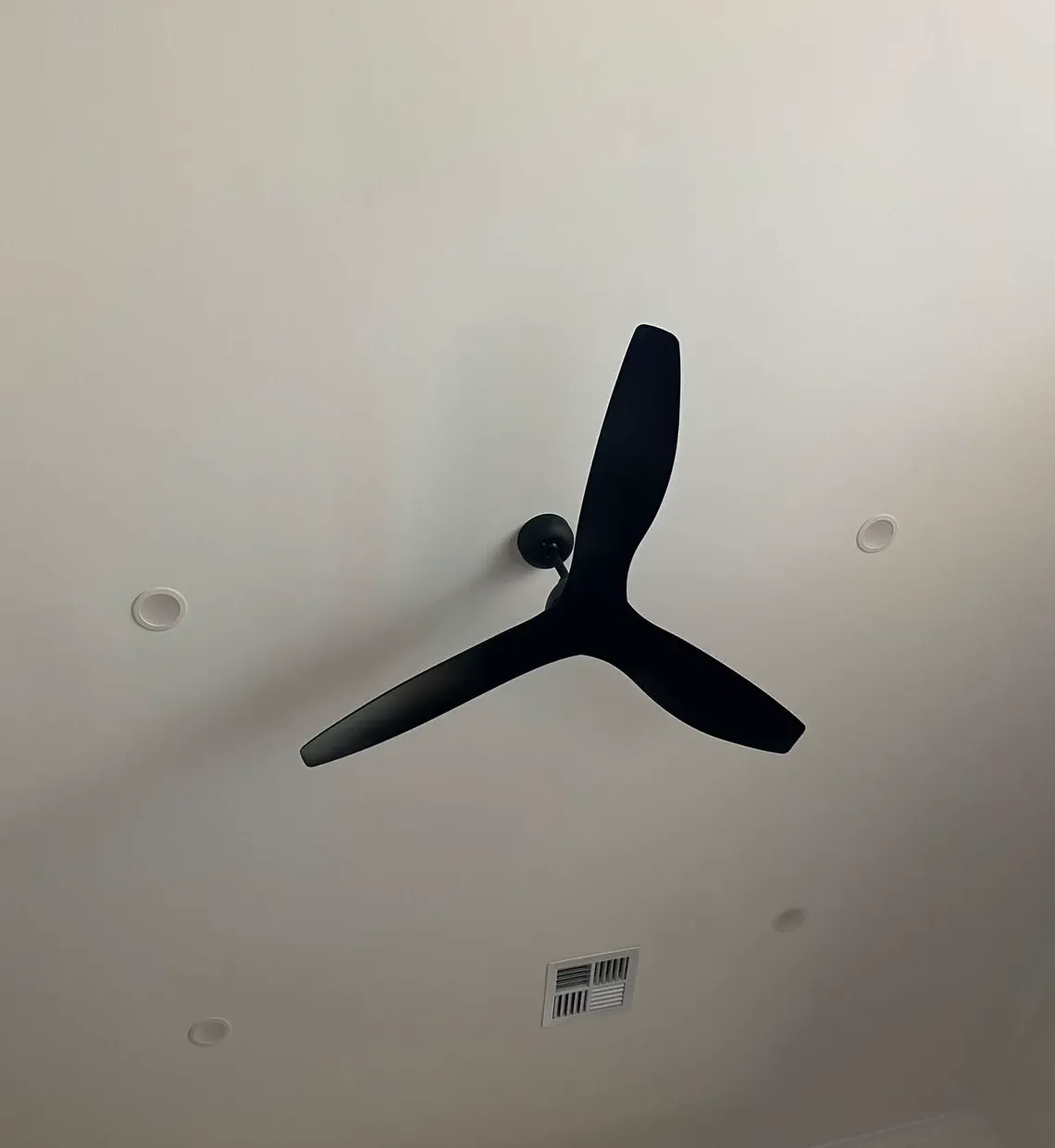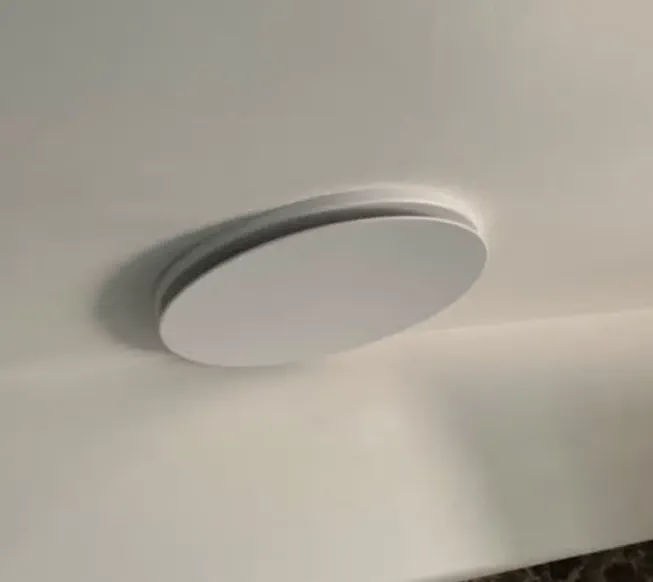
An exhaust fan is only as good as the path the air takes. We choose a fan for the room, run a short sealed duct outside and set up switching that keeps it running after the shower. Fans that vent into the roof space get ducted out.
When to get it checked
The mirror stays fogged
Long after the shower the mirror is fogged and the walls are wet. The fan isn’t moving enough air, or it stops too soon.
Mould keeps coming back
Black spots above the shower or along the silicone return a few weeks after cleaning. Paint peeling over the shower is the same problem.
Loud, rattling or slow
Grinding, humming or a slow start usually means worn bearings or a motor choked with lint. They rarely recover.
The tissue won’t stick
Hold toilet paper near the grille with the fan on. If it isn’t pulled flat against it, little air is getting through.
Why it happens
4 common causes
Venting into the roof space
Many older fans blow straight into the roof, or the duct has dropped off. The wet air settles on timber and insulation instead of leaving the house.
A squashed or sagging duct
Crushed, kinked or drooping flexible duct chokes the airflow. Every extra metre and bend takes away from what the fan can do.
The wrong fan for the room
A small fan meant for a toilet can’t keep up with a large ensuite and a double shower. Grille size tells you nothing about airflow.
No air getting in or out
A door with no gap underneath starves the fan of replacement air. Outside, a jammed flap or painted-over vent leaves the air nowhere to go.
What the job covers
What we usually do on this job. Your quote confirms it for your place.
- Existing fan, duct and outlet checked
- Fan chosen for the room and the duct run
- Opening cut between joists, or the old one reused
- Old fan removed and the opening tidied
- Sealed duct to an eave, wall or roof outlet
- Outside vent with a backdraft flap
- Switch, run-on timer or humidity sensor as agreed
- Airflow checked and a Certificate of Electrical Safety issued
Your options, explained
Ceiling fan ducted outside
Low disruption- Best for
- Most bathrooms with roof space above
- How it works
- A ceiling-mounted fan is ducted to an eave vent, wall vent or roof outlet.
- Worth knowing
- The usual choice. Cut-out sizes vary, so the opening may need adjusting.
Inline fan in the roof
Medium disruption- Best for
- Ensuites beside bedrooms, big bathrooms and long duct runs
- How it works
- The motor sits in the roof space and pulls air through a plain ceiling grille.
- Worth knowing
- Much quieter in the room. Needs decent roof access to install and service.
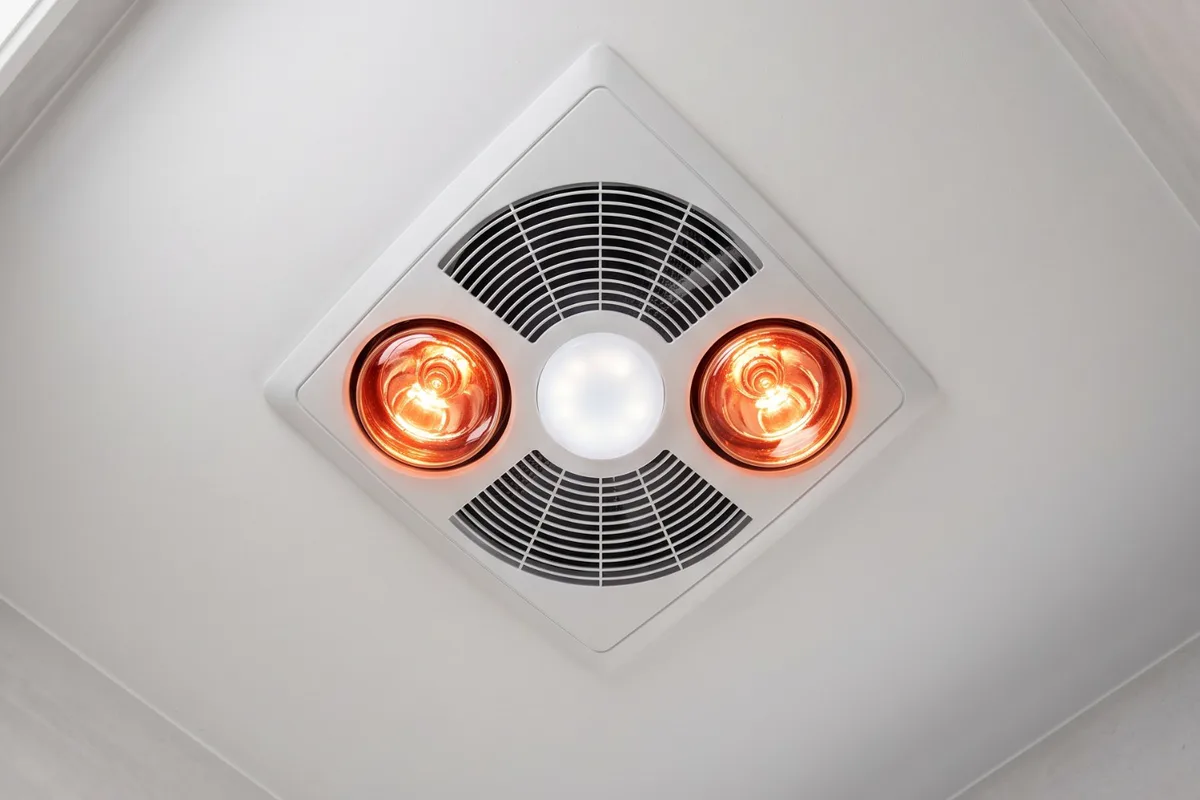
Three-in-one heat, light and fan
Medium disruption- Best for
- Cold bathrooms that need warmth as well as extraction
- How it works
- One ceiling unit with heat lamps, a light and a fan, each on its own switch.
- Worth knowing
- Draws more power than a plain fan, so we check the circuit. Still ducted outside.
The people behind the work
One local team for electrical, heating and cooling. Family-run, based in Altona Meadows, with 19 years in the industry.
Licensed electrical contractor (REC 38187)See more team photos
Worth knowing before you book
- The roof isn’t outside
- A fan blowing into the roof space moves the moisture without removing it.
- Air has to get in
- A gap under the bathroom door lets the fan do its job.
- Gas heater on, fan off
- Energy Safe Victoria advises against running an exhaust fan with your gas heater on, as it can draw carbon monoxide into living spaces.
What affects the price?
The right scope depends on your installation. These are the details we check so your quote is useful, with any additional work explained before it proceeds.
Replacing or starting fresh
A swap into the same opening on sound wiring is simpler than a new position that needs a cut-out, new cable and a switch.
The duct route
A short run to a nearby eave is straightforward. Low-pitched roofs, long runs and bathrooms with a floor above take more work.
Where it vents
Eave vents are simplest. Cutting through brick or fitting a roof outlet adds work, and we’ll tell you if yours needs a roofer.
The fan, controls and ceiling
Inline fans, heat units, timers and humidity sensors add parts. A different cut-out may mean patching, and in older homes we check the ceiling lining before cutting.
How it runs
- 1
Tell us about the room
A photo of the fan, and what’s above the bathroom.
- 2
Check and quote
We check the roof space, duct route and wiring, then give you an upfront price.
- 3
Install, duct and test
Fan fitted, ducted outside, wired to the agreed switching, tested and certified.
Step by step, in more detail
5 steps
Check the room and the roof
Where the fan really vents, where the joists and wiring run, and the shortest route outside.
Agree the fan and the price
Fan, outlet and switching to suit the room, at a fixed price for the agreed scope.
Isolate and fit
Circuit off at the switchboard, drop sheets down, and the fan fixed between joists, reusing the old opening where it suits.
Duct it outside
Short, straight, sealed at each joint and supported so it can’t sag, ending at a vent with a backdraft flap.
Wire, test and certify
Switching as agreed, with RCD protection where the altered circuit needs it. Airflow checked, then your Certificate of Electrical Safety.
What is safe to do, and what to leave to us
Safe for you to do
- Try the tissue test with the fan running.
- Leave the door ajar, or a gap under it, while the fan runs.
- Turn your gas heater off before using the exhaust fan.
- If the fan smells hot, switch it off and leave it off. Switch off at the switchboard if it is safe to do so.
Leave these to us
- Unclipping, rewiring or swapping the fan yourself.
- Climbing into the roof to refit a loose duct. There is live cabling up there.
- Painting over the grille or blocking the outside vent.
- Using a fan that sparks, smokes or trips the safety switch.
When to get us in
- The mirror stays fogged long after a shower
- Mould returns soon after cleaning
- The fan is loud, slow or has stopped
- It vents into the roof, or you don’t know where
- It smells hot, sparks or trips the safety switch
More detail
The duct matters as much as the fan
A good fan on a poor duct performs like a cheap one. Flexible duct should be pulled taut, run with few bends and supported so it can’t sag and hold water. At the outside end, a backdraft flap keeps draughts out when the fan is off.
Why we don’t vent into the roof
It’s quicker, which is why so many older fans went in that way. But warm, wet air meets cold tiles, sarking and timber and condenses, leaving damp insulation and mould you can’t see from below. Ducting it outside means the moisture actually leaves the house.
Switching that suits the room
A fan on the light switch stops the moment you leave, just when it’s needed. A separate switch, run-on timer or humidity sensor keeps it going until the room clears. For an ensuite beside a bedroom, a quiet inline fan on a timer is often the neatest answer.
Local rules and conditions
Victorian requirements and local conditions that shape this job, with the sources listed at the foot of the page.
Gas heaters and exhaust fans
Energy Safe Victoria advises against running a bathroom exhaust fan or rangehood at the same time as your gas heater, because it can create negative pressure that draws carbon monoxide into living spaces. ESV also warns that weather-sealing a home that kept its open-flued gas heater may alter the ventilation the heater needs.
Cold mornings, wet ceilings
July is Laverton’s coldest month, with a mean minimum of 5.2 °C. On mornings like that, steam condenses fast on cold glass and ceilings, and a fan venting into the roof soaks the timber above.
Rentals are checked every two years
Rental providers who entered a new agreement after 29 March 2021 must have all electrical installations and fittings checked by a licensed electrician at least once every two years. Renters with a dead fan should tell their rental provider.
Useful reading
Guides to read before you decide, with checklists and questions to bring to the quote.
- The electrical decisions to make before your renovation walls closePlan appliances, lighting, outlets and future upgrades while access and options are still available.
- An ageing gas heater: service, repair or plan an electric replacement?Separate immediate safety needs from a considered comparison of repair and reverse-cycle heating.
- What electrical work you can and can't do yourself in VictoriaWhere Victorian law draws the line on home electrical work, the short list of jobs that are yours, and what to do when a job goes past it.
- Certificates of Electrical Safety explainedWhat a Victorian COES records, how prescribed and non-prescribed work differ, when your copy should arrive and why it belongs in your house file.
Common questions
Questions people ask about this
- Why isn't my bathroom exhaust fan clearing the steam?When the fan runs but the mirror still fogs, the air isn't getting out.
- Why does my bathroom heat lamp turn itself off?Most heat lamp and 3-in-1 units have a thermal cut-out that switches the heat off when the unit gets too hot, then lets it come back once it cools.
From the blog
- How to look after exhaust fans and ceiling fansA few minutes of cleaning keeps exhaust and ceiling fans quiet and working. Here's what owners can do, the signs of wear, and when a fan needs repair or replacing.
- Why are my windows dripping every winter morning?Winter condensation comes from moisture made indoors meeting cold glass. Where it comes from, and how fans, rangehoods and steady heating cut it back.
- Heat lamp, 3-in-1 or heated towel rail: what actually warms a cold bathroom?Heat lamps warm you, fan heaters warm the room and towel rails warm the towels. Here's which one suits each bathroom on a cold July morning.
Sources for the rules and local facts on this page
9 sources, with the date each was checked
- 1.Energy Safe Victoria: Don’t use kitchen rangehoods or bathroom exhaust fans at the same time as your heater. It can create a negative pressure environment, drawing carbon monoxide into living spaces. Accessed 30 September 2026.
- 2.Energy Safe Victoria: If you have renovated or weather-sealed your home and kept your open-flued gas heater, you may have inadvertently altered the ventilation your home needs to clear carbon monoxide from your gas heater. This might be… Accessed 30 September 2026.
- 3.Bureau of Meteorology: Mean minimum temperature (°C) 14.0 14.4 12.7 10.0 7.8 5.9 5.2 5.7 6.8 8.4 10.3 12.2 9.5 81 1943 2026 Accessed 30 September 2026.
- 4.Consumer Affairs Victoria: Rental providers who enter into a new agreement after 29 March 2021, must have all electrical installations and fittings checked by a licensed electrician at least once every 2 years. Accessed 30 September 2026.
- 5.Energy Safe Victoria: Electrical work isn’t a DIY job, even for small jobs such as changing power points or light switches. Accessed 30 September 2026.
- 6.Energy Safe Victoria: Gas and electricity are inherently dangerous and it’s illegal and potentially fatal for unlicensed and unqualified people to undertake any electrical or gasfitting work. Homeowners and consumers must always use… Accessed 30 September 2026.
- 7.Energy Safe Victoria: Whenever a licensed electrician completes any electrical installation work, they must provide a Certificate of Electrical Safety (COES). Accessed 30 September 2026.
- 8.Energy Safe Victoria: For electrical installation work performed within your electrical installation including but not limited to lights, power points, air conditioning, hot water service etc. Accessed 30 September 2026.
- 9.Energy Safe Victoria: Clause 2.6.3.2.5 of the Wiring Rules states: Additional protection by RCDs shall be provided in existing electrical installations where alterations or a switchboard replacement is completed. Accessed 30 September 2026.