Plenty of older homes in Melbourne's west still have rubber, cloth-covered or early plastic cable, often on lighting circuits in the roof. We test each circuit, replace the ones that have failed and certify the work.
When to get it checked
Crumbling cable behind a fitting
A light or switch comes down and the cable behind it is rubber or fabric that flakes when moved. The rest of that circuit is usually the same.
No earth at the light
Behind some old ceiling roses there are only two wires. A metal fitting on that circuit has no earth path if something inside it fails.
Original switches and round-pin points
Round-pin outlets and dolly switches usually date from the first wiring. Energy Safe Victoria lists old or broken switches and power points, and flickering lights, among the signs wiring may be faulty.
One circuit won't hold on a safety switch
A safety switch trips when one set of lights goes on, or after a wet night. Old insulation leaking current to earth is a common reason.
Why it happens
4 common causes
Heat hardens rubber
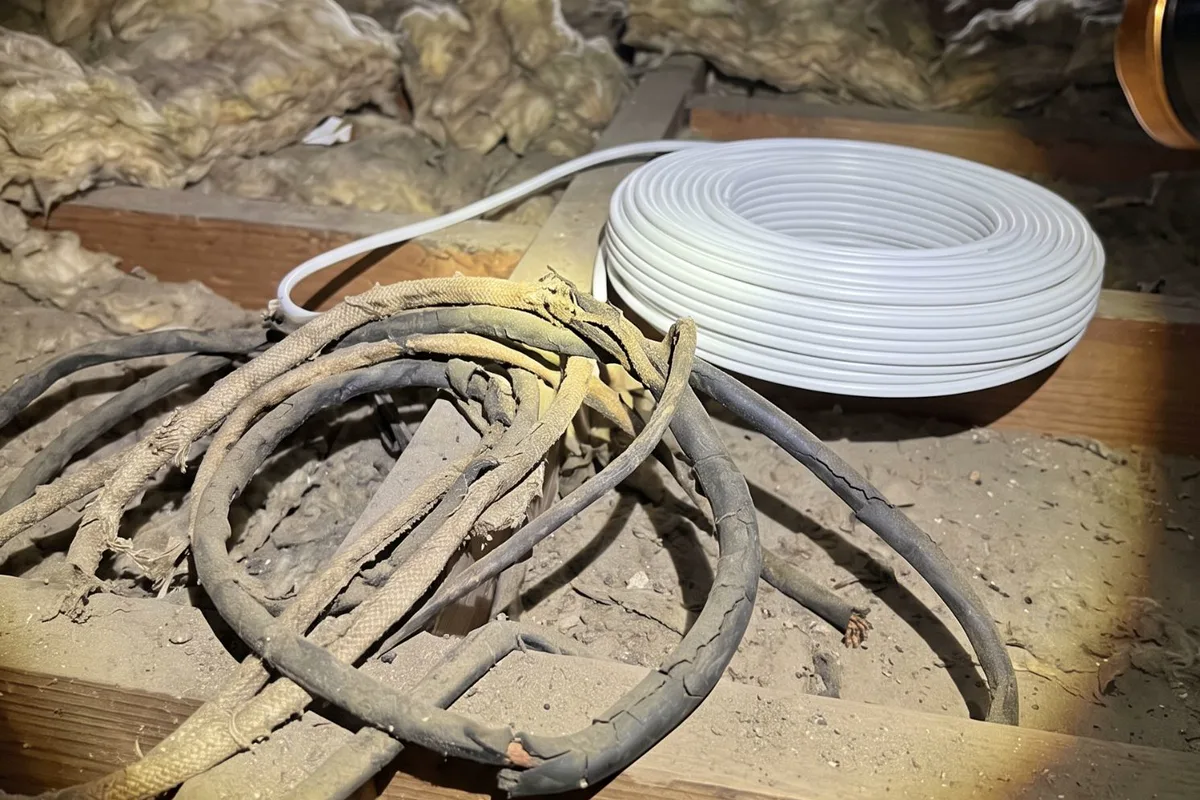
Rubber-insulated cable, often called VIR, goes hard, cracks and falls away from the copper. It goes fastest where it's hottest: under a metal roof, beside old light fittings and at joins that have run warm.
Cloth braid hides the damage
Fabric-covered cable has rubber under the braid, which can look intact while the insulation inside has turned to crumbs.
Early TPS is better, not always fine
Early plastic cable outlasts rubber, but some lighting runs have no earth wire, and the sheath goes brittle where old halogen downlights baked it.
Brittle cable doesn't like being moved
Old rubber cracks wherever it's disturbed: a plumber under the floor, a downlight cut in, batts dragged across the roof or a rat's teeth.
What the job covers
What we usually do on this job. Your quote confirms it for your place.
- Cable traced at the board, in the roof and underfloor
- Insulation resistance and earth continuity tested per circuit
- Written list of circuits replaced and kept
- Failed circuits rewired with new TPS
- Old cable removed or disconnected at both ends
- Fittings with no earth replaced
- Safety switch protection on rewired circuits
- Certificate of Electrical Safety issued
Your options, explained
Replace the failed circuits
Low disruption- Best for
- One or two bad circuits among sound ones
- How it works
- Only circuits that fail testing, or are plainly rubber or cloth, are rewired end to end.
- Worth knowing
- Circuits that pass are worth retesting down the track.
Replace all the old cable
Medium disruption- Best for
- Original lighting circuits alongside later power circuits
- How it works
- Every run of old cable is replaced, and newer circuits that test well stay.
- Worth knowing
- Common where the kitchen is new but the lights aren't.
Make safe now, replace later
Low disruption- Best for
- A dangerous circuit found before a sale or renovation
- How it works
- The unsafe circuit is disconnected and its replacement folded into the coming work.
- Worth knowing
- A stopgap. Those rooms go without that circuit until then.
The people behind the work
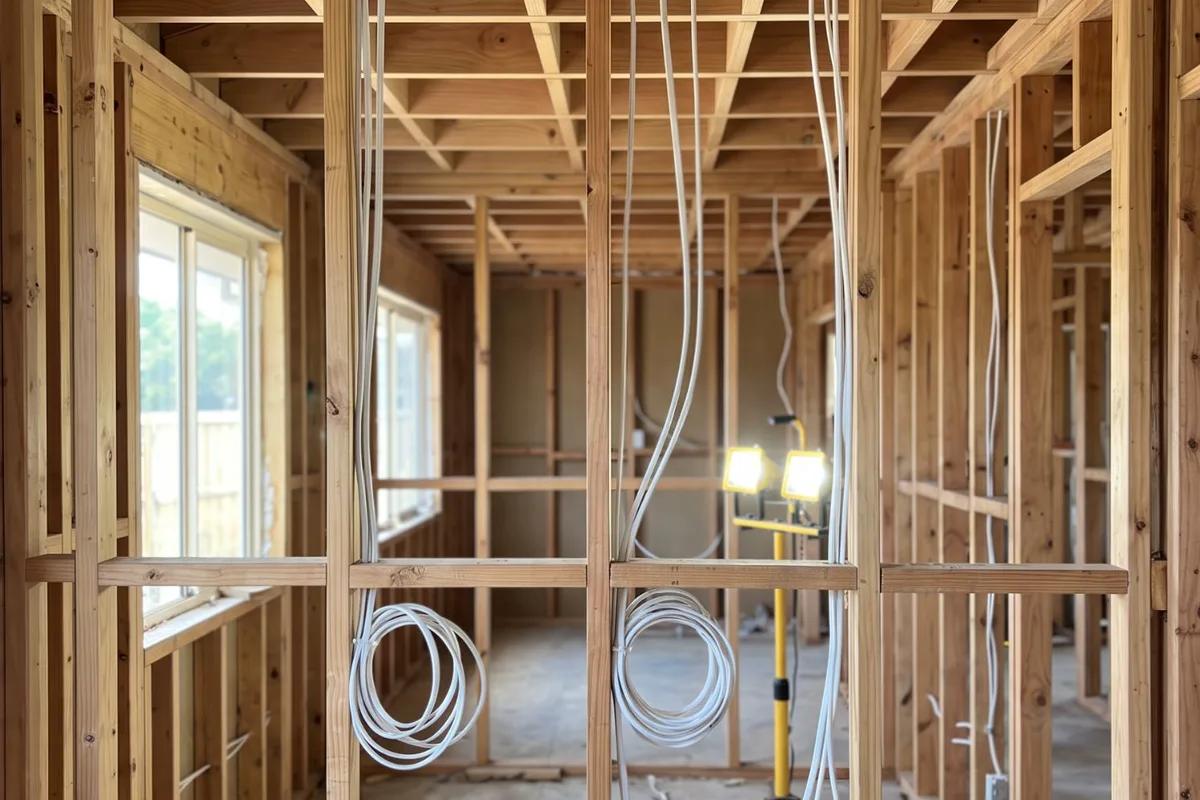
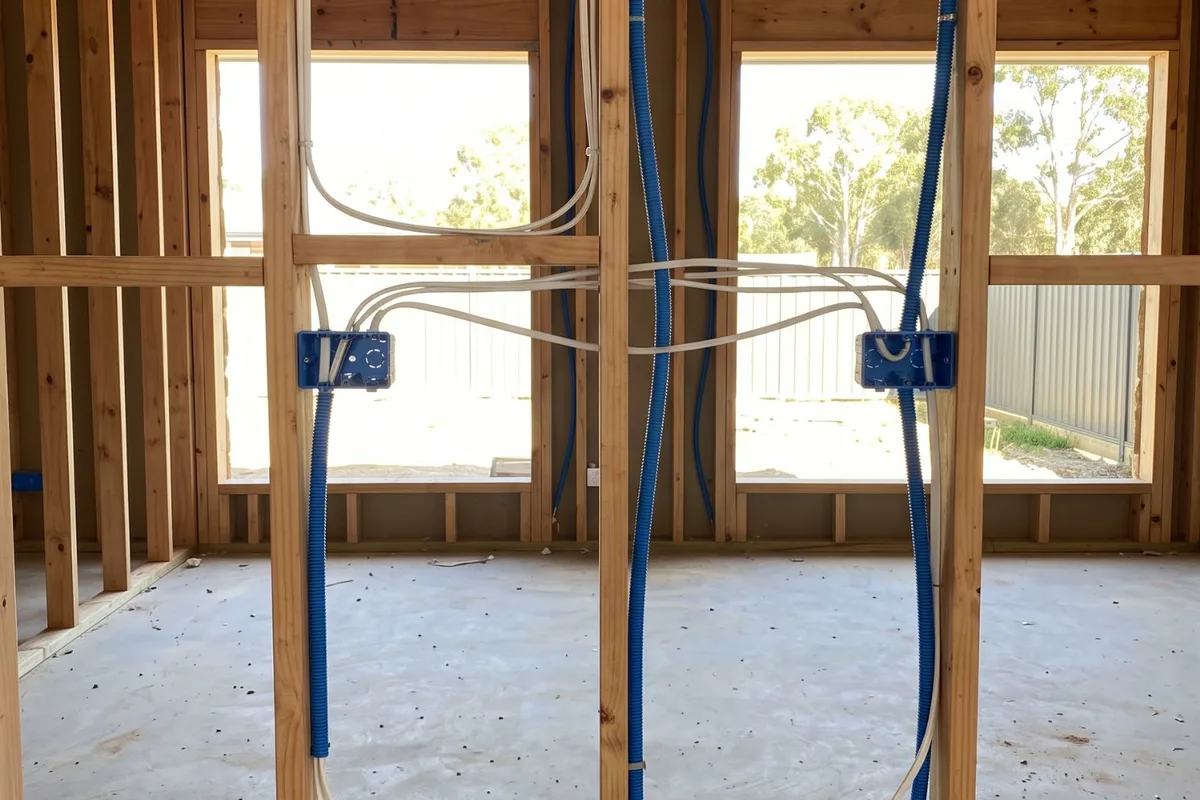
Our own photos from jobs like this one. Family-run, based in Altona Meadows, with 19 years in the industry.
Licensed electrical contractor (REC 38187)See more team photos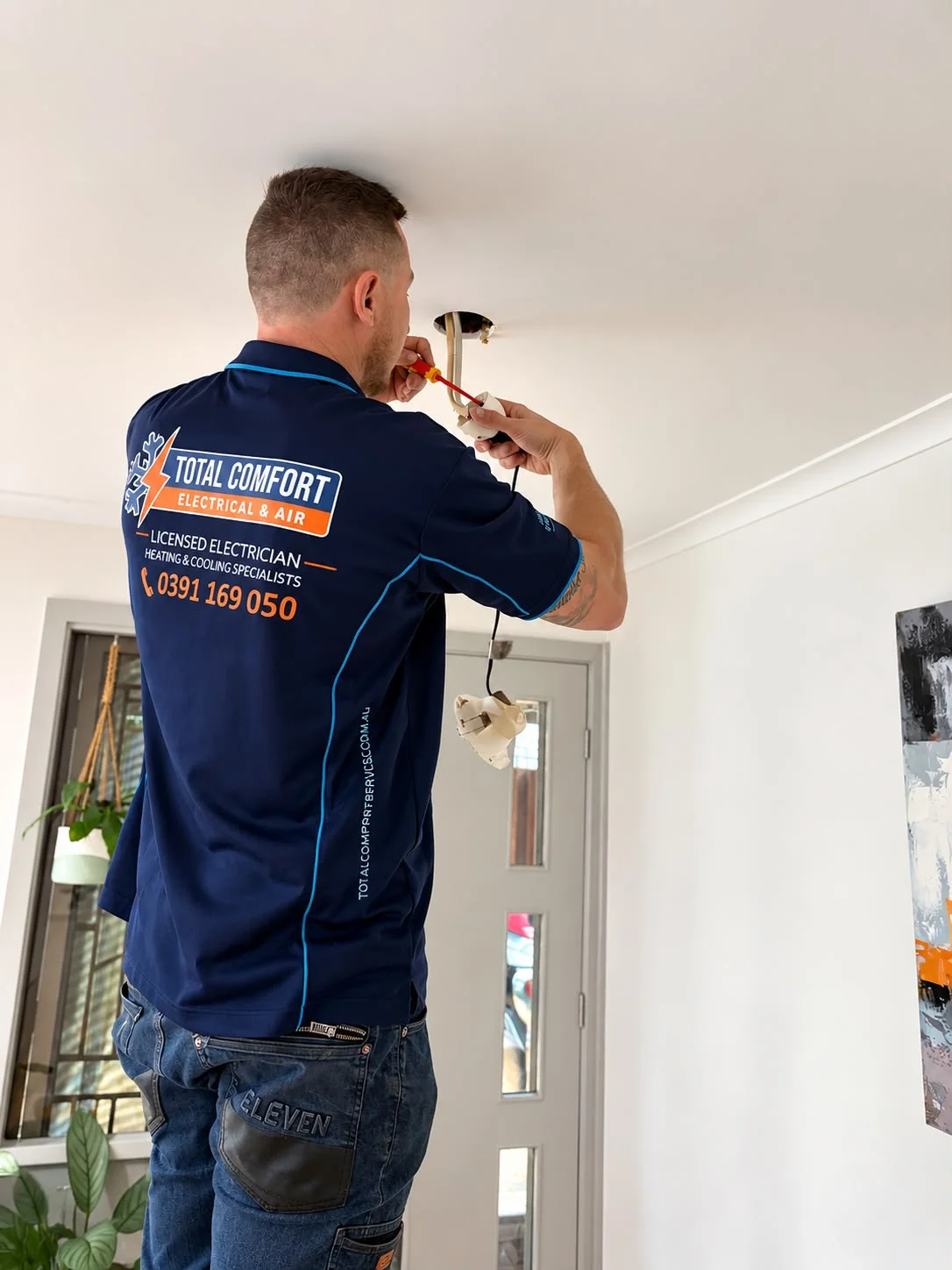
Worth knowing before you book
- Testing decides, not age
- An old house may already be partly rewired. Readings show what needs replacing.
- Check before insulating
- Old roof cable is far easier to reach before the batts go down.
- The board may need work
- A fuse board, or one with no room for safety switches, is quoted alongside.
What affects the price?
The right scope depends on your installation. These are the details we check so your quote is useful, with any additional work explained before it proceeds.
How many circuits fail
Each replaced circuit means new cable, fittings, testing and a label, so testing sets the scope.
Getting cable in
Low roofs, slab extensions, second storeys, lath and plaster and solid walls all take longer to run cable through.
What's already in the roof
Ducted heating or cooling, deep batts and a ceiling full of downlights all have to be worked around.
The switchboard
A board with fuses, no room for safety switches or a backing panel that may contain asbestos is quoted alongside.
How it runs
- 1
Trace and test
Cable identified and every circuit tested.
- 2
Scope and price
What's replaced, what stays, and a fixed price.
- 3
Replace
New cable run circuit by circuit.
- 4
Test and certify
Retested, labelled and certified.
Step by step, in more detail
4 steps
Trace and test every circuit
We trace each circuit at the switchboard, in the roof and under the floor, then test insulation resistance and earth continuity. The readings decide what's replaced.
Scope and fixed price
You get a written list of circuits replaced and kept, with reasons, and a fixed price for the agreed scope before we start.
Replace circuit by circuit
New TPS runs through the roof and subfloor, usually down the same wall cavity as the old cable. Metal fittings with no earth and perished switches and points are replaced too.
Protect, test and certify
The Wiring Rules call for additional safety switch protection when an installation is altered, so rewired circuits go onto one. Each is retested, labelled and certified.
What is safe to do, and what to leave to us
Safe for you to do
- If a switch or point is warm or smells hot, switch that circuit off at the switchboard if it's safe to reach.
- Reset a tripped safety switch once. If it won't reset or trips again, leave it off and call us.
- Tell anyone working in the roof or under the floor that the wiring is old.
- If there's smoke or fire, get everyone out, and never put water on an electrical fire.
Leave these to us
- Going into the roof or subfloor to check, tape or move old cable. Crumbling insulation can leave live copper exposed.
- Swapping a switch, light or point yourself. Energy Safe Victoria says electrical work isn't a DIY job, even small ones.
- Laying batts or stacking boxes over old cable.
When to get us in
- You've seen rubber, cloth-covered or crumbling cable
- A switch or point is warm, discoloured or smells of hot rubber
- The house is over 30 years old and the wiring hasn't been checked
- Tingles from a tap or appliance
More detail
Board first or cable first
When a switchboard is replaced, the Wiring Rules require safety switch protection on every final sub-circuit. An old circuit leaking to earth will trip it, so the cable has to be sorted with the board. We test the wiring before quoting the board, so both happen in one shutdown.
What happens to the old cable
Old cable we can reach in the roof or subfloor comes out. Cable buried in a wall is disconnected at both ends and left dead, so the next person up a ladder never has to guess what's live.
Old cable and ceiling insulation
Cable under batts runs warmer than cable in open air, and old rubber has no heat to spare, so have roof wiring checked before insulation goes in. For rentals, Victoria's energy efficiency standards, phasing in from 1 March 2027, include ceiling insulation, and a licensed electrician must complete an electrical safety checklist and fix any issues within 30 days before it goes in.
Local rules and conditions
Victorian requirements and local conditions that shape this job, with the sources listed at the foot of the page.
Weatherboard cottages under iron roofs
Heritage precincts in Yarraville, Seddon and Upper Footscray are mostly small single-storey Victorian and Edwardian houses, mainly weatherboard, many under corrugated iron. Those roof spaces bake in summer, and heat is what breaks old rubber down, so lighting cable up there is often the first to fail testing.
Stone and concrete in Williamstown and West Newport
Williamstown's Government Survey precinct includes early basalt houses, and the Housing Commission built its West Newport estate between 1945 and 1960 using prefabricated concrete products. New cable can't drop down a cavity in a solid wall, so we agree routes with you before pricing.
Old wiring in a rental
Rental providers must have switchboards, wiring and fittings checked by a licensed electrician every two years, and from 13 October 2026 that covers every rental agreement. Fixing perished cable the check finds is the rental provider's to organise and pay for, unless the renter caused the damage.
Useful reading
Guides to read before you decide, with checklists and questions to bring to the quote.
- Ceramic fuses and old switchboards: what to look forA look-but-don't-touch guide to old switchboards: rewireable fuses, a missing safety switch, suspect backing panels, heat marks and what replacement involves.
- Downlights, ceiling insulation and fire riskWhy old halogen downlights and their transformers need space in the roof, what IC-rated LED fittings change, and why the lights come before the insulation.
- The electrical decisions to make before your renovation walls closePlan appliances, lighting, outlets and future upgrades while access and options are still available.
- Certificates of Electrical Safety explainedWhat a Victorian COES records, how prescribed and non-prescribed work differ, when your copy should arrive and why it belongs in your house file.
Common questions
Questions people ask about this
- Are old round or Bakelite light switches safe?Many still work, but age is the concern, not the shape.
- What happens if extra work is found during the job?We stop and tell you.
From the blog
- Upgrading the electrical in a heritage home in Williamstown or YarravilleFront-wall meter boxes, lath and plaster, basalt walls and period fittings all shape how a heritage home in Melbourne's inner west gets rewired.
- Renovating yourself? The electrical risks behind walls and ceilingsCables hide where you least expect them. The electrical risks DIY renovators meet removing walls, cabinets, tiles and ceilings, and when to bring an electrician in.
- Rewire before you renovate, or during?Unsafe circuits get fixed now. Otherwise, rewire during the renovation, after framing and before plaster, and bring the rest of the house into the same window.
Sources for the rules and local facts on this page
19 sources, with the date each was checked
- 1.Victorian Heritage Database (Heritage Council Victoria); entry maintained by Maribyrnong City Council: The general character of the Yarraville Residential Precinct is that of small Victorian & Edwardian single-storey detached housing with mainly weatherboard and some brick wall cladding, corrugated iron roofing, front… Accessed 30 September 2026.
- 2.Victorian Heritage Database (Heritage Council Victoria); entry maintained by Maribyrnong City Council: The general character of the Seddon Residential and Commercial Precinct is of small Edwardian and Victorian period single-storey detached and some attached housing, with a dominance of weatherboard walling and… Accessed 30 September 2026.
- 3.Victorian Heritage Database (Heritage Council Victoria); entry maintained by Maribyrnong City Council: The general character of the Precinct is one of small Edwardian single-storey detached housing with mainly weatherboard wall cladding, corrugated iron roofing, similar front and side setbacks and narrow block frontages… Accessed 30 September 2026.
- 4.Victorian Heritage Database (Heritage Council Victoria); entry maintained by Hobsons Bay City Council from the Hobsons Bay Heritage Study 2006: Unusual or rare early building styles and types such as the basalt houses and the timber duplex houses with no dividing wall that are characteristic of this part of Williamstown but less common elsewhere in the… Accessed 30 September 2026.
- 5.Victorian Heritage Database (Heritage Council Victoria); entry maintained by Hobsons Bay City Council: The Housing Commission of Victoria (HCV) West Newport Estate Residential Heritage Precinct, designed and constructed by the HCV between 1945 and 1960 ... is notable as the first HCV estate to use the Fowler… Accessed 30 September 2026.
- 6.Energy Safe Victoria: Rental providers must ensure an electrical safety check of all electrical switchboards, wiring and fittings in the premises is conducted every two years by a licensed electrician. The safety check must be conducted in… Accessed 30 September 2026.
- 7.Consumer Affairs Victoria: Mandatory gas and electrical safety checks every 2 years for all rental properties Rental providers and their agents must arrange gas and electrical safety checks by a qualified tradesperson every 2 years for all… Accessed 30 September 2026.
- 8.Consumer Affairs Victoria: The rental provider must organise and pay for all repairs if they are not the renter’s fault. Accessed 30 September 2026.
- 9.Energy Safe Victoria: Old switchboards, particularly those without a safety switch Old power switches or power points, particularly broken ones Flickering lights Sparks from switchboards, switches or power points. If your house is over 30… Accessed 30 September 2026.
- 10.Energy Safe Victoria: Whenever a licensed electrician completes any electrical installation work, they must provide a Certificate of Electrical Safety (COES). Accessed 30 September 2026.
- 11.Energy Safe Victoria: A Registered Electrical Contractor or Licensed Electrical Worker cannot refuse to issue a COES for any reason including payment issues or contract disputes. Accessed 30 September 2026.
- 12.Energy Safe Victoria: Clause 2.6.3.2.5 of the Wiring Rules states: Additional protection by RCDs shall be provided in existing electrical installations where alterations or a switchboard replacement is completed. Accessed 30 September 2026.
- 13.Energy Safe Victoria: If a switchboard is required to be replaced then as per clause 2.6.3.2.5 (Alterations to installations and replacement of switchboards) of AS/NZS 3000: RCD’s are required on all final sub-circuits. Accessed 30 September 2026.
- 14.WorkSafe Victoria: A person who has management or control of a workplace, and employers or self-employed persons and employees should be aware of the typical uses and applications of ACMs, particularly in buildings constructed or… Accessed 30 September 2026.
- 15.Energy Safe Victoria: Locate your electricity box outside your home and check whether the safety switch has tripped. If it has tripped, reset the switch. If the switch won’t reset, call a licensed electrician. Accessed 30 September 2026.
- 16.Energy Safe Victoria: Safety switches are an additional form of protection to be used with circuit breakers and fuses. They may not protect all wiring and electrical appliances and will not prevent all electric shocks. Accessed 30 September 2026.
- 17.Energy Safe Victoria: Electrical work isn’t a DIY job, even for small jobs such as changing power points or light switches. Accessed 30 September 2026.
- 18.Consumer Affairs Victoria: New minimum energy efficiency standards for residential rental properties come into effect in phases from 1 March 2027. The new standards cover 6 areas: heating cooling hot water shower heads ceiling insulation… Accessed 30 September 2026.
- 19.Consumer Affairs Victoria: The standard also requires an electrical safety checklist to be completed and any electrical issues to be addressed by a licensed electrician within 30 days before the installation of insulation. If the insulation… Accessed 30 September 2026.