
What electrical risks should I watch for when doing my own renovation?
- Assume a cable could be anywhere in a wall, ceiling or floor until it's been ruled out, especially in older homes.
- Switching off a circuit helps, but old switchboard labels are often wrong and some wiring can't be switched off from inside the house.
- Roof spaces combine old cable, hidden fittings and ceilings that won't hold your weight. Stay on the joists and leave cables where they are.
- Electrical work is licensed in Victoria, even small jobs like moving a power point.
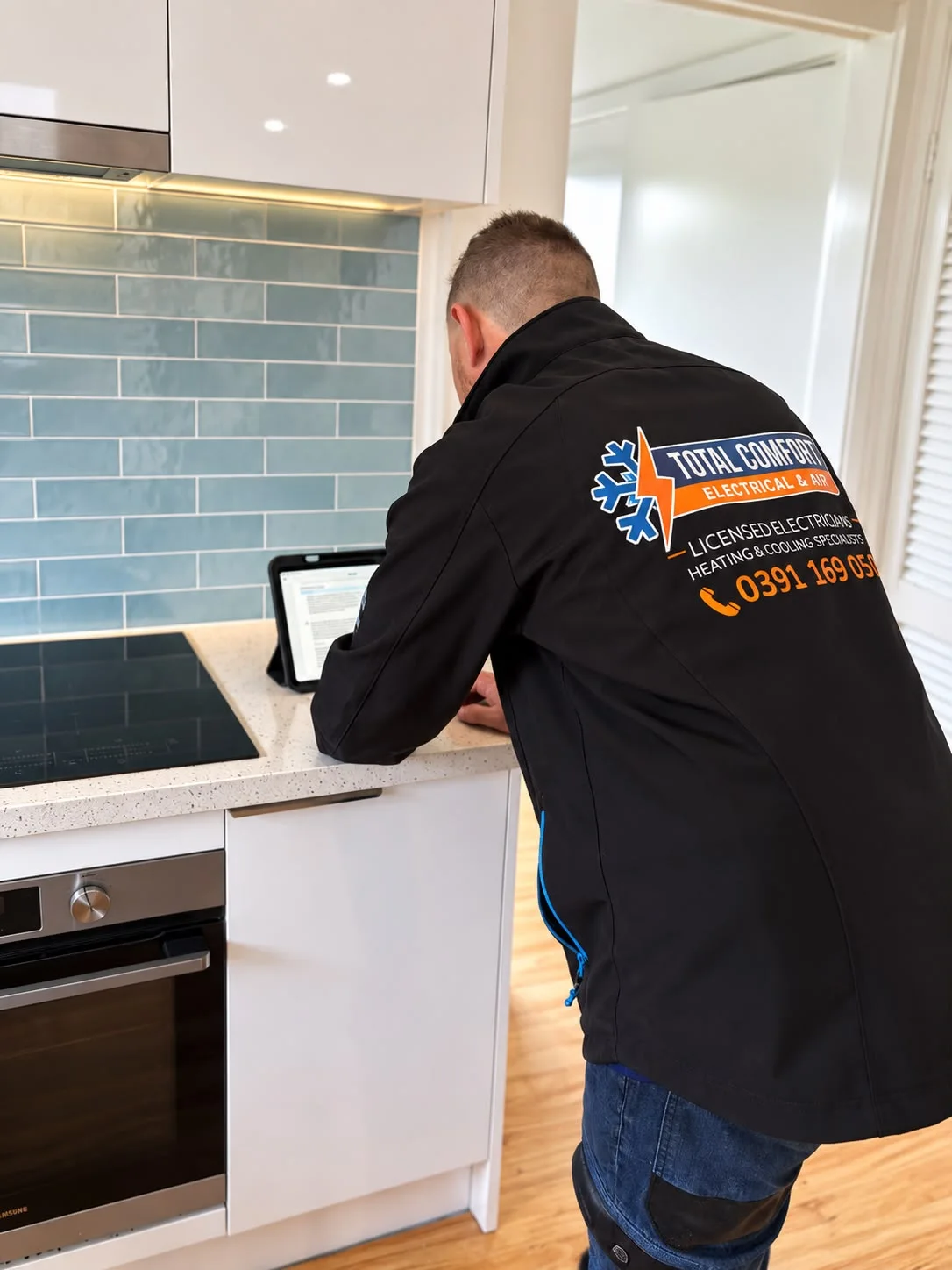
- Bring an electrician in before demolition, at rough-in while the frame is open, and at fit-off.
Where cables hide in walls and ceilings
In a tidy modern build, cables usually run straight up or down from switches and power points to the ceiling or floor. In homes altered over the decades they can go anywhere: diagonally across a stud bay, along a skirting, through an old chimney breast or looped behind a kitchen cabinet. A cable finder helps but can miss cable that sits deep or behind foil.
Removing a wall, pulling out cabinets or taking down a ceiling are when people meet cable unexpectedly. Cabinets often hide the oldest wiring in the house, feeding points that were later covered over. Tiles can conceal the cable to a bathroom heater or light. And a wall that isn't structural can still carry the circuit for half the house's lights.
- Directly above and below switches and power points
- Along the top of walls and across ceiling spaces
- Behind kitchen cabinets, rangehoods and splashbacks
- Under floors, especially in weatherboard homes on stumps
- Around old chimneys, wall heaters and former doorways
Why switching off isn't the whole answer
Switching the circuit off at the switchboard before demolition is a good habit, but it isn't proof a cable is dead. Labels on older boards are often missing or wrong, circuits get altered without the labels being updated, and one wall can carry cables from two or three circuits.
Some wiring can't be switched off from inside the house at all. In a home, the cables up to the switchboard generally can't be switched off, and in older houses they may run through walls or the roof space. Treat every cable as live unless an electrician has isolated it and made it safe.
The roof space and the switchboard
Roof spaces combine heat, old cable and a ceiling that won't hold your weight between the joists. Insulation hides cables and old downlight transformers, and rubber-insulated cable from the 1950s and 60s can crumble when it's moved. Stay on the joists, use a proper light and mask, and don't drag, cut or bury cables, or cover old downlights with insulation without checking they're rated for it.
Keep your hands off the switchboard and meter box: no removing covers, moving equipment or drilling nearby. WorkSafe Victoria lists switchboards and their backing boards as a typical location for asbestos-containing materials in buildings built or renovated before the late 1980s. Older ceilings and wall linings can contain asbestos too, so have suspect materials checked before you cut or sand.
What you can and can't do yourself
Energy Safe Victoria says it is illegal, and potentially fatal, for unlicensed and unqualified people to do any electrical or gasfitting work. Its 'Don't do it yourself' campaign says even small jobs like changing power points or light switches aren't DIY. That includes capping a cable so you can remove a wall, moving a point a few centimetres or reconnecting a light after painting.
There's still plenty you can do. Removing linings once cables are made safe, patching and painting, marking where you want points and lights, and keeping the site clear for the trades all save time. Our guide to electrical work you can and can't do yourself sets out the line in more detail.
When to bring an electrician in
The best time is before the first wall comes down. An electrician can identify which circuits run through the area, disconnect and make safe what's going, keep the rest of the house running and leave temporary power for your tools. That's far better than discovering a cable with a saw blade.
The next visit is rough-in, when the frame is open and new cable can go exactly where you want it before plaster goes up. Energy Safe Victoria notes the Wiring Rules require extra safety switch protection when existing installations are altered, so plan for that early. At fit-off, after painting, everything is installed and tested and a Certificate of Electrical Safety is issued.
If you hit a cable, smell burning or see sparks at any stage, stop. Switch off at the switchboard if it's safe to reach, keep everyone clear and get an electrician to make it safe before carrying on.
Questions that come next
Sources for this article
5 sources, with the date each was checked
- 1.Energy Safe Victoria: Gas and electricity are inherently dangerous and it’s illegal and potentially fatal for unlicensed and unqualified people to undertake any electrical or gasfitting work. Homeowners and consumers must always use… Accessed 30 September 2026.
- 2.Energy Safe Victoria: Electrical work isn’t a DIY job, even for small jobs such as changing power points or light switches. Accessed 30 September 2026.
- 3.Energy Safe Victoria: A prescribed certificate is for all major electrical wiring work in all types of premises. In a domestic property this covers all work done on wiring and equipment where the electricity cannot be switched off. This… Accessed 30 September 2026.
- 4.WorkSafe Victoria: A person who has management or control of a workplace, and employers or self-employed persons and employees should be aware of the typical uses and applications of ACMs, particularly in buildings constructed or… Accessed 30 September 2026.
- 5.Energy Safe Victoria: Clause 2.6.3.2.5 of the Wiring Rules states: Additional protection by RCDs shall be provided in existing electrical installations where alterations or a switchboard replacement is completed. Accessed 30 September 2026.