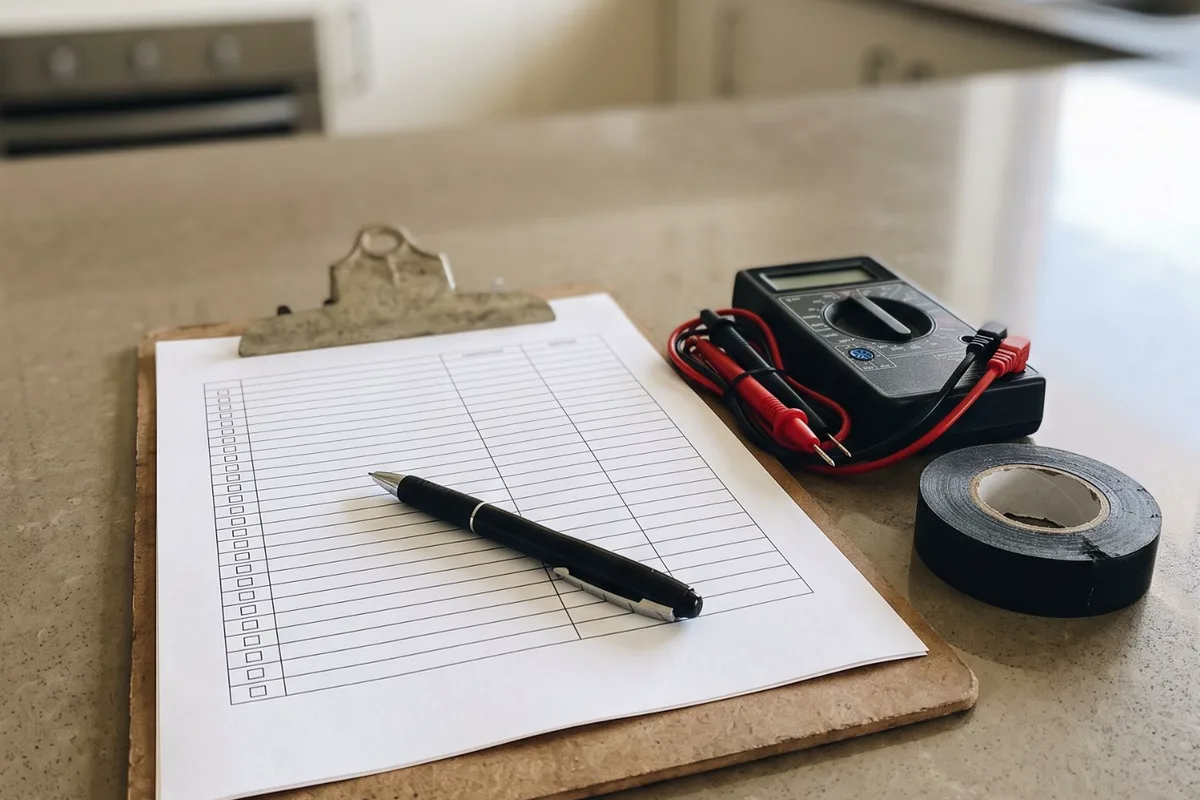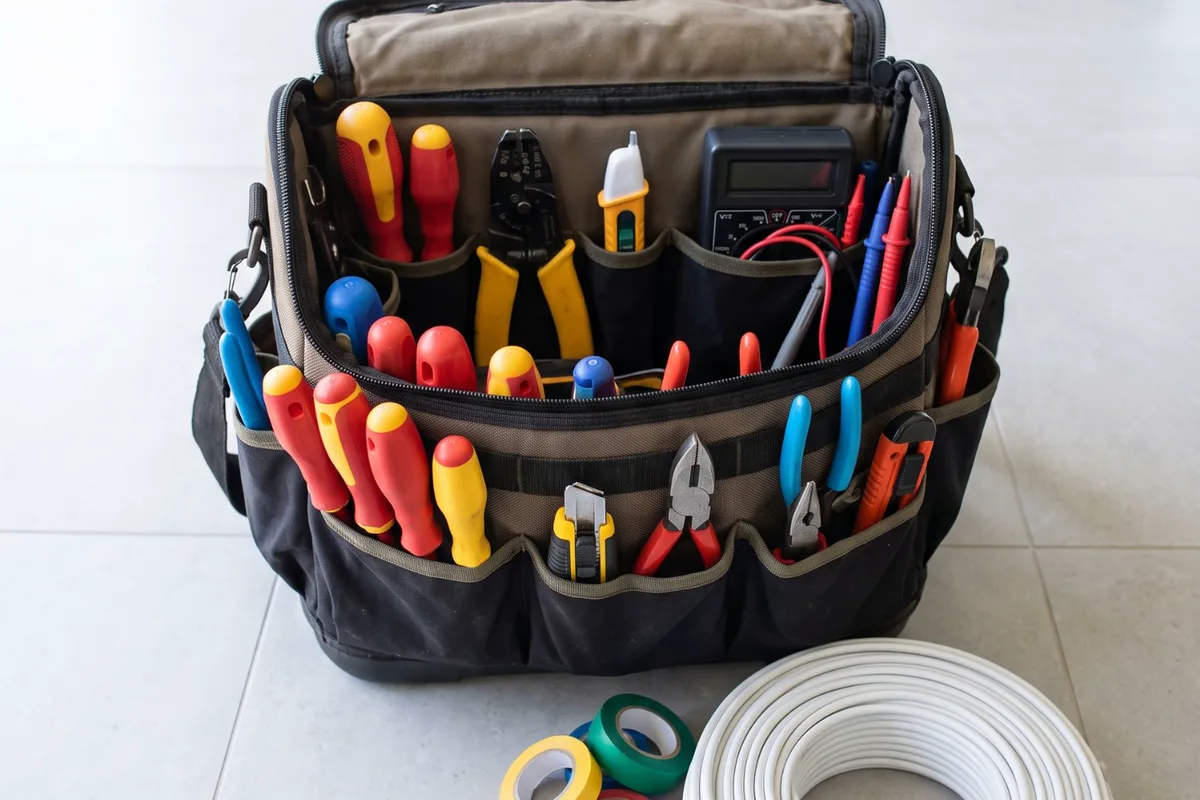
A house can have working lights and still have electrical defects that need attention. An inspection looks beyond whether an appliance turns on, assessing the fixed installation and its protective measures. Tell us whether you need a rental safety check, a check before renovating or an investigation of a particular concern so the correct scope is booked. The resulting report records findings; any installation work and its certificate are a separate part of the job.
When to get it checked
No record of the last check
You can't find a report, or the one in the drawer is more than two years old. Without it, nobody can say what was tested, what failed or whether anything was fixed.
A house more than 30 years old
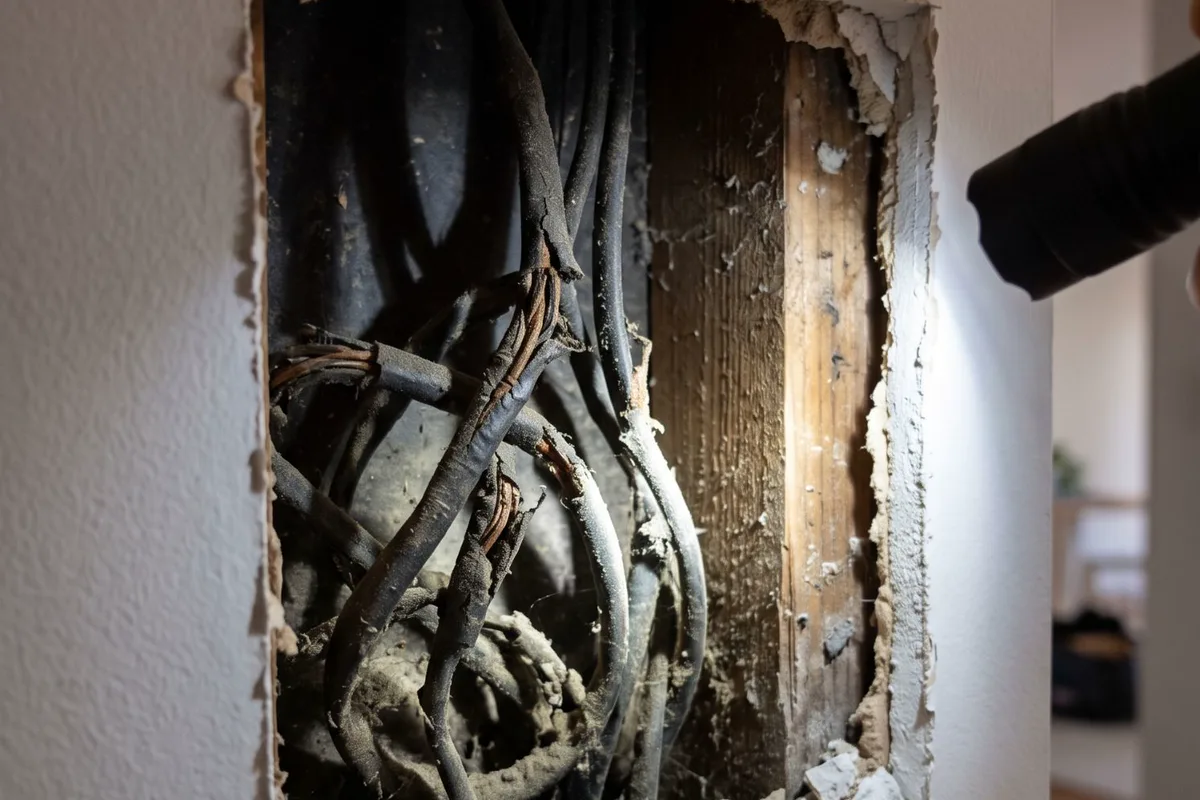
Energy Safe Victoria tells owners of houses over 30 years old to consider what could be behind the walls and get the wiring checked by a licensed electrician. Many homes that age still run on cable nobody has looked at since it went in.
An old board with few safety switches
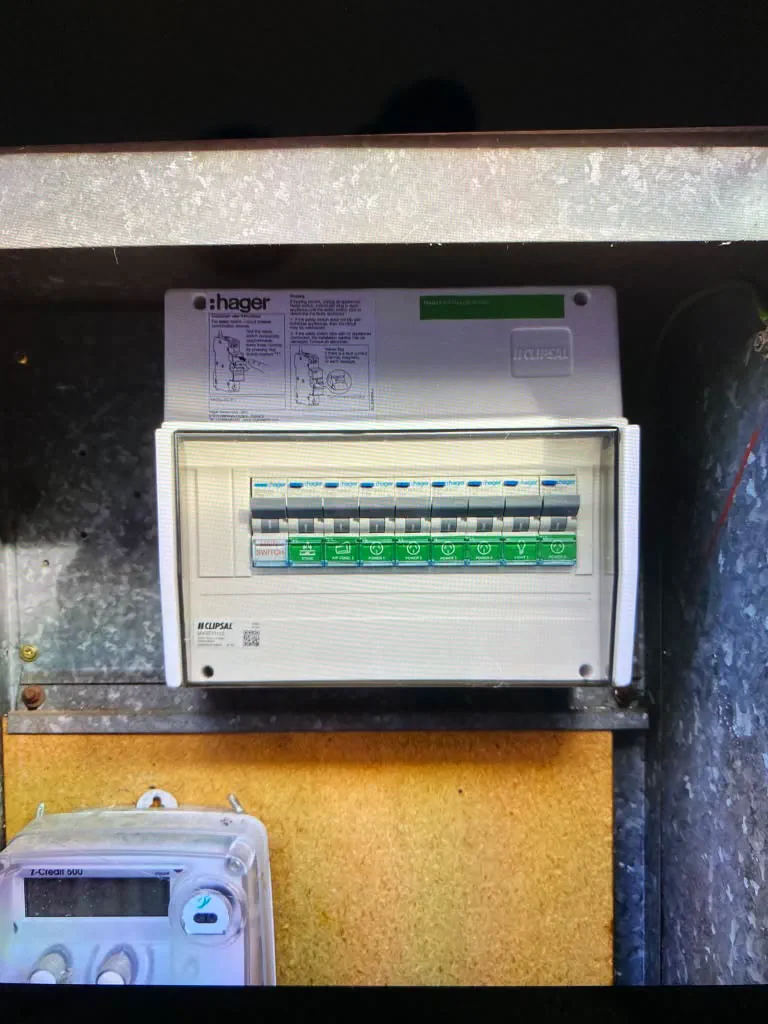
Ceramic fuses, one safety switch covering only the power points, or none. Energy Safe Victoria lists old switchboards, particularly those without a safety switch, among the tell-tale signs of faulty wiring.
Additions nobody can vouch for
A shed fed by an extension lead, power points added in a past renovation, a patio light with no switch you can find. Work with no paperwork behind it deserves a proper look.
Renovations or big appliances coming
Before walls open up, or a new cooktop, air conditioner or charger goes on the list, a check tells you whether the existing board and circuits are fit to build on or need work first.
Why it happens
4 common causes
Age and heat
Connections warm and cool with every load, and over decades terminals loosen and old insulation hardens and cracks. None of it shows from the room, which is why testing matters more than looking.
Work done without a licence
Swapped switches, extra points and garden lights added by a handy previous owner are where many defects sit. Energy Safe Victoria says electrical work isn't a DIY job, even small jobs such as changing power points or light switches.
Protection that hasn't kept up
Plenty of older boards put some circuits behind a safety switch and leave the rest on fuses or breakers alone. Energy Safe Victoria says circuit breakers don't act as safety switches for personal protection against electric shock.
Weather, water and roof spaces
Outdoor points, garden lights and meter boxes take years of sun and rain. In the roof, cables get stepped on, buried under insulation or chewed by rodents.
What the job covers
What we usually do on this job. Your quote confirms it for your place.
- Reason for the inspection and required scope confirmed
- Access arranged with the owner, tenant or manager
- Switchboard and protective devices assessed
- Accessible installation and fittings inspected
- Relevant electrical testing performed
- Defects and limitations documented
- Urgent issues explained promptly
- Repair options and follow-up work clearly separated
Your options, explained
Rental electrical safety check
Low disruption- Best for
- Rental providers and property managers
- How it works
- Switchboards, wiring and fittings are inspected and tested to the periodic assessment standard, with the record the rental rules ask for.
- Worth knowing
- Due at least every two years. Our rental check page covers the rules in detail.
Whole-home assessment
Medium disruption- Best for
- Owners of older homes, or anyone who has never had the wiring checked
- How it works
- A room-by-room inspection with every circuit tested, and a report that ranks what we find by urgency.
- Worth knowing
- Circuits go off in turn during testing.
Pre-purchase inspection
Low disruption- Best for
- Buyers before they commit
- How it works
- The board, visible wiring and fittings are inspected, with access arranged through the selling agent.
- Worth knowing
- How much testing is possible depends on what the seller allows. See the pre-purchase page.
Targeted check before work
Low disruption- Best for
- A renovation, a new appliance or one specific worry
- How it works
- We inspect and test the board and the circuits the planned work or the concern affects.
- Worth knowing
- It isn't a whole-house check, and the report says so.
The people behind the work
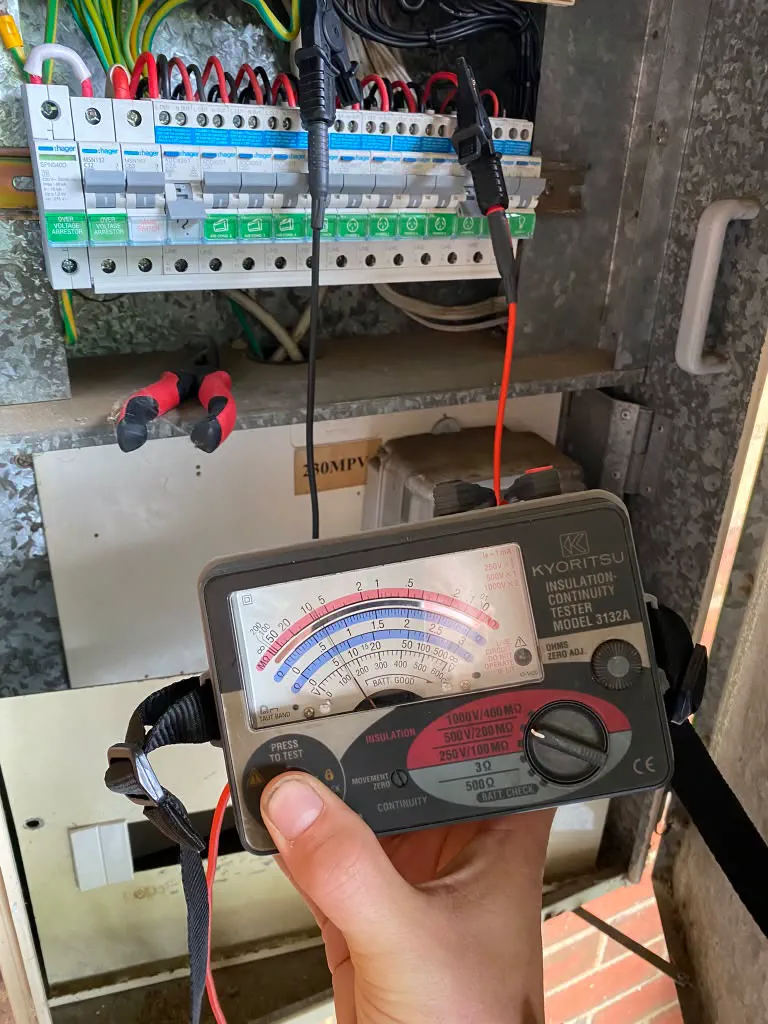
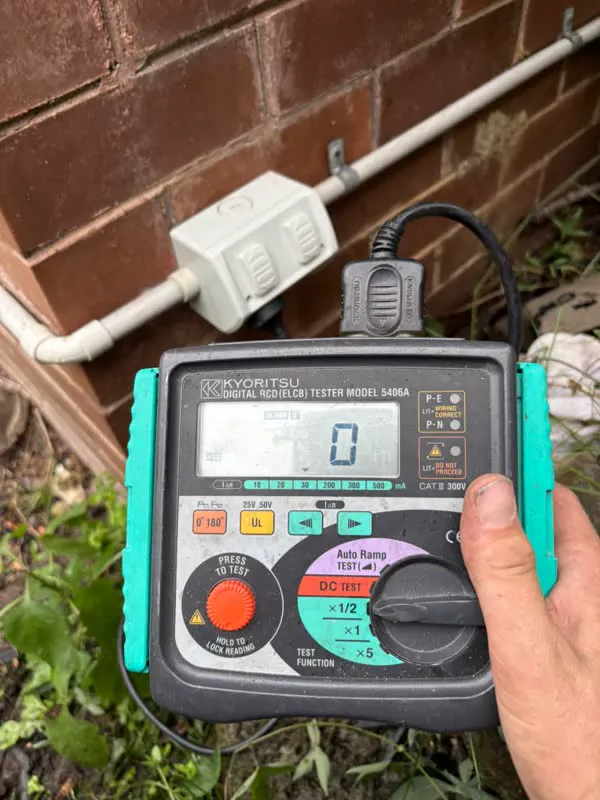
Our own photos from jobs like this one. Family-run, based in Altona Meadows, with 19 years in the industry.
Licensed electrical contractor (REC 38187)See more team photos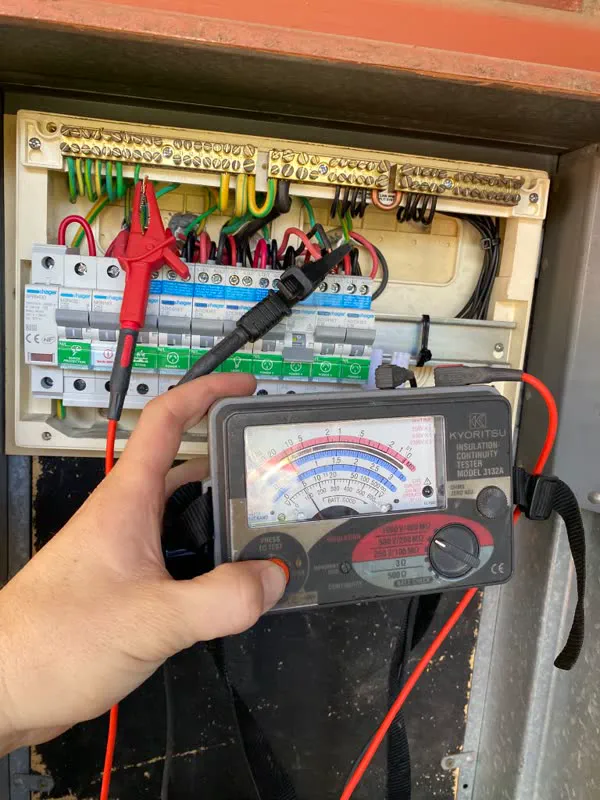
Worth knowing before you book
- Allow access and power interruptions
- Testing may interrupt supply. Tell us about working-from-home needs, medical equipment and appliances that need special shutdown arrangements.
- A check and a certificate differ
- The inspection report documents an assessment. A Certificate of Electrical Safety relates to electrical installation work actually carried out.
- Rental obligations depend on the tenancy
- Consumer Affairs Victoria explains the applicable electrical check rules and record-keeping requirements. Our rental guide links directly to that guidance.
What affects the price?
The right scope depends on your installation. These are the details we check so your quote is useful, with any additional work explained before it proceeds.
Size and number of circuits
More rooms and circuits mean more points to inspect and more tests to run. A two-storey house with a sub-board takes longer than a unit.
Outbuildings and sub-boards
A granny flat, shed, workshop or pool pump on its own sub-board is part of the installation, so it gets checked too.
Access on the day
A locked meter box, a roof with no manhole or a renter who can only be home for part of the day can stretch or split the visit.
Age and past alterations
Older and heavily altered installations take longer to trace. A failed test needs more work to pin down before it goes in the report.
The type of check you book
A targeted check of the board and a couple of circuits is a smaller job than testing a whole house, and a rental check has a set scope. Repairs sit outside all of them: you get the price before we start.
Before the visit
- Gather the previous report and outstanding repair list.
- Arrange access to the switchboard and relevant rooms.
- Advise about essential medical equipment or systems sensitive to power interruption.
How it runs
- 1
Confirm the purpose
Share the property type, previous report and any urgent concerns.
- 2
Arrange access
Book a suitable visit and discuss interruptions with the occupants.
- 3
Inspect and test
The agreed installation checks are carried out and findings recorded.
- 4
Explain the report
Review any defects, immediate action and the price of remedial work.
Step by step, in more detail
6 steps
Confirm why you want the check
A rental check, a whole-house assessment, a check before renovating and a look at one concern each need a different scope. Tell us the property type, any previous report and anything already worrying you.
Arrange access
We agree a time with the owner, renter or property manager. Testing turns circuits off for short periods, so we ask about home offices, freezers and powered medical equipment first.
Look over the installation
We start at the meter box and switchboard, then go room by room: power points, switches, light fittings, fixed appliances and any outdoor or shed wiring. Where it's safe to get into, we check the roof space for damaged cable and buried fittings.
Test what can't be seen
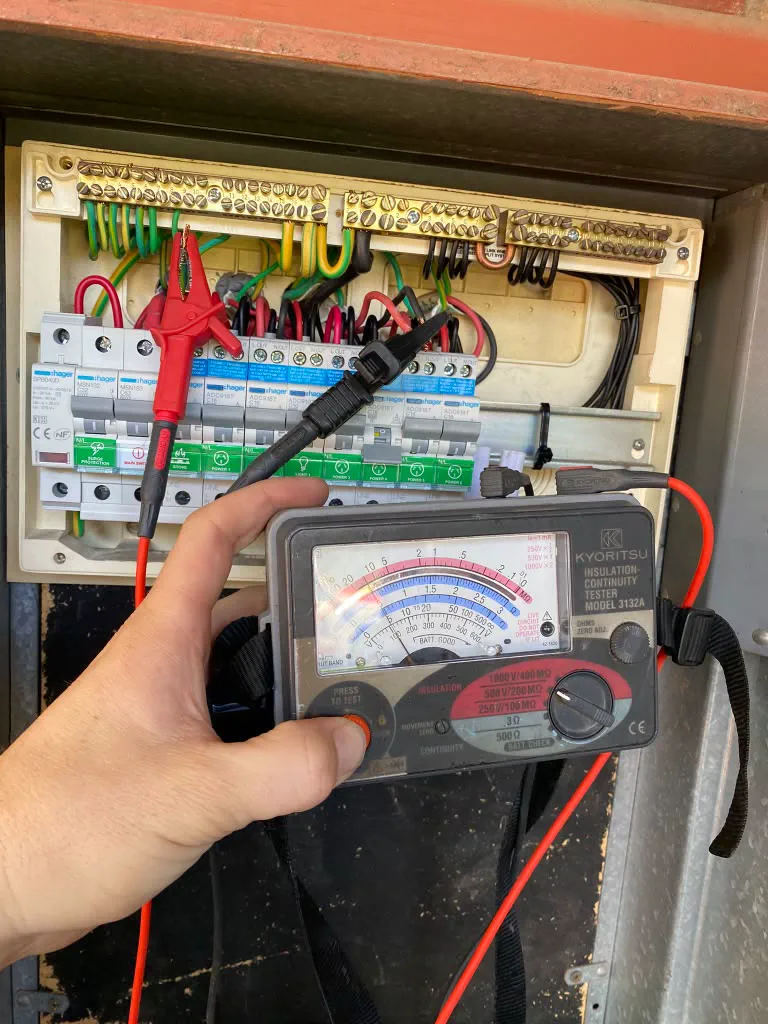
Each safety switch is trip-tested, and circuits are tested for earth continuity, insulation resistance and correct polarity to suit the agreed scope. A rental check follows the periodic assessment standard the rules name.
Make anything dangerous safe
If we find something that could hurt someone, we tell you on the spot. With your okay we make it safe before we leave, which might mean isolating one circuit.
Report and walk-through
You get a written report of what was inspected, what was found and anything we couldn't reach. We go through it with you, so you decide what happens next.
What is safe to do, and what to leave to us
Safe for you to do
- Press the test button on each safety switch every three months. If the power doesn't go off, call a licensed electrician.
- Reset a tripped safety switch once. If it won't reset, leave it off and call a licensed electrician.
- Don't touch or try to fix a loose, cracked or broken power point. Cover it and have a licensed electrician replace it.
- Keep your last report and any Certificates of Electrical Safety together, ready for the next check.
Leave these to us
- Taking off switchboard covers or opening fittings to have a look inside.
- Replacing a switch, power point or light fitting yourself. Energy Safe Victoria says it's illegal and potentially fatal for unlicensed people to do electrical work.
- Drilling or sanding near an old switchboard backing board, which may contain asbestos.
- Living with tingles from taps or appliances until the next check is due.
When to get us in
- Tingles or shocks from a tap or appliance: stop using it, let your electricity distributor know and have a licensed electrician check the wiring
- Sparks, heat or a burning smell at the switchboard, a switch or a power point. If there's smoke, fire or immediate danger, get everyone out first
- A safety switch that won't reset, or doesn't trip when you press its test button
- A rental check is due, or none was done in the two years before a new renter moved in
- Before renovating, adding a big appliance or having ceiling insulation installed
More detail
What a check covers, and what it can't
A check covers the fixed installation: the meter box and switchboard, safety switches, circuits, power points, switches, light fittings and hard-wired appliances. It doesn't open up walls, so cable hidden in a cavity is judged by testing rather than by sight, and the report lists anything we couldn't get to. Portable appliances aren't part of it.
A report is not a certificate
A Certificate of Electrical Safety is a legal document recording electrical work an electrician has done, and one must be provided whenever a licensed electrician completes electrical installation work. A check on its own ends with a report instead. Energy Safe Victoria says a COES isn't the correct form to record a rental safety check, although one must be issued if repairs are carried out.
How we sort what we find
Findings are grouped by urgency: dangerous now, needs repair, and worth planning for. In an older home the last group is often the longest. Circuit labels that no longer match the rooms, a board with no spare room for the air conditioner you're planning, a garage that runs everything off one power point: we explain each item and leave the timing to you.
Why older wiring gets a closer look
Energy Safe Victoria says fire brigades respond to more than 300 domestic electrical fires each year, many caused by old wiring that has degraded or can't cope with modern equipment. Rubber-insulated cable, a fuse board with no safety switches and decades of add-ons are what we look at hardest. WorkSafe Victoria lists switchboards and their backing boards among typical asbestos locations in buildings built or renovated before the late 1980s, so an old backing board is noted in the report and left undisturbed.
Local rules and conditions
Victorian requirements and local conditions that shape this job, with the sources listed at the foot of the page.
Two-yearly rental checks
For rental agreements entered into after 29 March 2021, the rental provider must have all electrical installations and fittings checked by a licensed electrician at least once every two years. Consumer Affairs Victoria lists 13 October 2026 as the date two-yearly gas and electrical checks extend to all rental agreements, whenever they began. Energy Safe Victoria says the electrical check must follow section 4 of AS/NZS 3019:2022.
Older homes across the west
Pre- and post-war homes characterise established Sunshine, and the Yarraville Residential Precinct has the general character of small single-storey Victorian and Edwardian houses. In Hobsons Bay, the planning scheme credits post-war expansion with transforming Altona and Laverton. Energy Safe Victoria says a house built more than 30 years ago should have its wiring checked.
A check before rental ceiling insulation
Victoria's new minimum energy efficiency standards for rentals come into effect in phases from 1 March 2027, and they cover ceiling insulation. The ceiling insulation standard requires an electrical safety checklist to be completed, and any electrical issues addressed by a licensed electrician, within 30 days before the insulation goes in.
Useful reading
Guides to read before you decide, with checklists and questions to bring to the quote.
- Rental electrical and smoke alarm checks in VictoriaKnow which records to gather, how to arrange access and where to verify the current Victorian requirements.
- Certificates of Electrical Safety explainedWhat a Victorian COES records, how prescribed and non-prescribed work differ, when your copy should arrive and why it belongs in your house file.
- How and when to test your safety switchesHow to run the push-button test at home, what an electrician’s trip-time test measures that the button can’t, and what to do when a switch fails.
- What electrical work you can and can't do yourself in VictoriaWhere Victorian law draws the line on home electrical work, the short list of jobs that are yours, and what to do when a job goes past it.
Common questions
Questions people ask about this
- How do I avoid cables when drilling or hanging pictures?Assume a cable could be anywhere until you've ruled it out.
- Do I need to be home for the visit?Not always, but someone needs to give us access to everything the job involves.
- What happens after I send an enquiry?Once you send it, you'll see a reference on screen.
- When will I know the price?Before any work starts.
- Which suburbs do you work in?We currently cover 24 suburbs across Melbourne's west, worked from our base in Altona Meadows.
From the blog
- Is a pre-purchase electrical inspection worth it on a newer home?A newer home won't have crumbling cable, but uncertified additions, doubled-up circuits and expired smoke alarms are common finds. Here's when an inspection pays off.
- Rats in the roof: can they damage wiring and ducts?Rats chew cable sheathing and flexible duct, and possums flatten insulation and nest near warm fittings. Here are the warning signs, and why to check after pest control.
- Renovating yourself? The electrical risks behind walls and ceilingsCables hide where you least expect them. The electrical risks DIY renovators meet removing walls, cabinets, tiles and ceilings, and when to bring an electrician in.
Sources for the rules and local facts on this page
20 sources, with the date each was checked
- 1.Consumer Affairs Victoria: Rental providers who enter into a new agreement after 29 March 2021, must have all electrical installations and fittings checked by a licensed electrician at least once every 2 years. This also applies to rental… Accessed 30 September 2026.
- 2.Consumer Affairs Victoria: Mandatory gas and electrical safety checks every 2 years for all rental properties Rental providers and their agents must arrange gas and electrical safety checks by a qualified tradesperson every 2 years for all… Accessed 30 September 2026.
- 3.Energy Safe Victoria: Rental providers must ensure an electrical safety check of all electrical switchboards, wiring and fittings in the premises is conducted every two years by a licensed electrician. The safety check must be conducted in… Accessed 30 September 2026.
- 4.Victorian Electoral Commission (2023 electoral structure review fact sheet): Pre- and post-war homes characterise the established suburbs of Sunshine, St Albans and Deer Park. The more recently developed suburbs of Cairnlea, Sydenham, Hillside, and Derrimut feature more contemporary housing. Accessed 30 September 2026.
- 5.Victorian Heritage Database (Heritage Council Victoria); entry maintained by Maribyrnong City Council: The general character of the Yarraville Residential Precinct is that of small Victorian & Edwardian single-storey detached housing with mainly weatherboard and some brick wall cladding, corrugated iron roofing, front… Accessed 30 September 2026.
- 6.Victorian Government, Hobsons Bay Planning Scheme (PDF snapshot, last updated by VC292 on 11/09/2025): The heritage places of Hobsons Bay reflect the key themes that have shaped the development of the city since the establishment of Williamstown in the 1840s as the first port of Melbourne, through the development of… Accessed 30 September 2026.
- 7.Energy Safe Victoria: Old switchboards, particularly those without a safety switch Old power switches or power points, particularly broken ones Flickering lights Sparks from switchboards, switches or power points. If your house is over 30… Accessed 30 September 2026.
- 8.Consumer Affairs Victoria: New minimum energy efficiency standards for residential rental properties come into effect in phases from 1 March 2027. The new standards cover 6 areas: heating cooling hot water shower heads ceiling insulation… Accessed 30 September 2026.
- 9.Consumer Affairs Victoria: The standard also requires an electrical safety checklist to be completed and any electrical issues to be addressed by a licensed electrician within 30 days before the installation of insulation. If the insulation… Accessed 30 September 2026.
- 10.Energy Safe Victoria: Electrical work isn’t a DIY job, even for small jobs such as changing power points or light switches. Accessed 30 September 2026.
- 11.Energy Safe Victoria: Gas and electricity are inherently dangerous and it’s illegal and potentially fatal for unlicensed and unqualified people to undertake any electrical or gasfitting work. Homeowners and consumers must always use… Accessed 30 September 2026.
- 12.Energy Safe Victoria: Do not touch or attempt to repair a loose, cracked or broken power point switch – cover it immediately and arrange for a licensed electrician to replace it. Accessed 30 September 2026.
- 13.Energy Safe Victoria: Surge diverters protect the property from voltage surges such as those resulting from a lightning strike. The surge diverter captures the voltage spikes in the wiring that would otherwise be transferred into the… Accessed 30 September 2026.
- 14.Energy Safe Victoria: Locate your electricity box outside your home and check whether the safety switch has tripped. If it has tripped, reset the switch. If the switch won’t reset, call a licensed electrician. Accessed 30 September 2026.
- 15.Energy Safe Victoria: A Certificate of Electrical Safety (COES) – is a legal document issued by a Registered Electrical Contractor or licensed electrician to record the details of the electrical work they have performed. Accessed 30 September 2026.
- 16.Energy Safe Victoria: Whenever a licensed electrician completes any electrical installation work, they must provide a Certificate of Electrical Safety (COES). Accessed 30 September 2026.
- 17.WorkSafe Victoria: A person who has management or control of a workplace, and employers or self-employed persons and employees should be aware of the typical uses and applications of ACMs, particularly in buildings constructed or… Accessed 30 September 2026.
- 18.Energy Safe Victoria: Only an A grade electrician is qualified to inspect and install household wiring. Accessed 30 September 2026.
- 19.Consumer Affairs Victoria: From 25 November 2025, it will be mandatory for all rental properties to have annual smoke alarm safety checks to ensure they are correctly installed and in working condition. Accessed 30 September 2026.
- 20.Consumer Affairs Victoria: Anything on this list is legally defined as an urgent repair: burst water service blocked or broken toilet system serious roof leak gas leak dangerous electrical fault flooding or serious flood damage serious… Accessed 30 September 2026.