
Do I need a pre-purchase electrical inspection if the house is only a few years old?
- On a newer home, an inspection is about what happened after the builder left, not the age of the cable.
- Ask for Certificates of Electrical Safety for every addition, from garage points to the split system.
- Smoke alarms generally need replacing after about ten years, so a 2010s home may be due.
- A home with no additions may only need a visual check; renovations and big plans justify testing.
The short answer
Energy Safe Victoria's advice to have the wiring checked before moving in is aimed at homes built before the 1980s. A house built in the 2000s or 2010s won't have rubber cable crumbling in the roof, so the case for an inspection is different. It's not about the age of the wiring. It's about what has happened to the house since handover.
A home that's five or fifteen years old has usually had a couple of owners, perhaps tenants, and a few rounds of home improvements. Most of what an electrician finds in a newer home comes from those years rather than the original build.
Additions nobody certified
The most common find is work that doesn't look like an electrician did it: an extra garage point on the wrong kind of cable, downlights cut in by a previous owner, a shed fed by an extension lead buried in the garden, pergola lights wired off a nearby outdoor point. Energy Safe Victoria says it's illegal for unlicensed people to do electrical work, and only an A grade electrician is qualified to install household wiring.
Ask the agent for Certificates of Electrical Safety for any additions: pergola lighting, extra points, the split system, the solar. A licensed electrician must provide one whenever they complete electrical installation work, so a recent addition with no paperwork is worth a question.
Loads the builder didn't plan for
A builder's electrical package is sized for the house as handed over. Since then, owners often add a split system or two, an induction cooktop, a spa, a home office and sometimes an EV charger. Each may be fine on its own. Together they can leave circuits doubled up, a full switchboard or a supply that's tight on a winter evening.
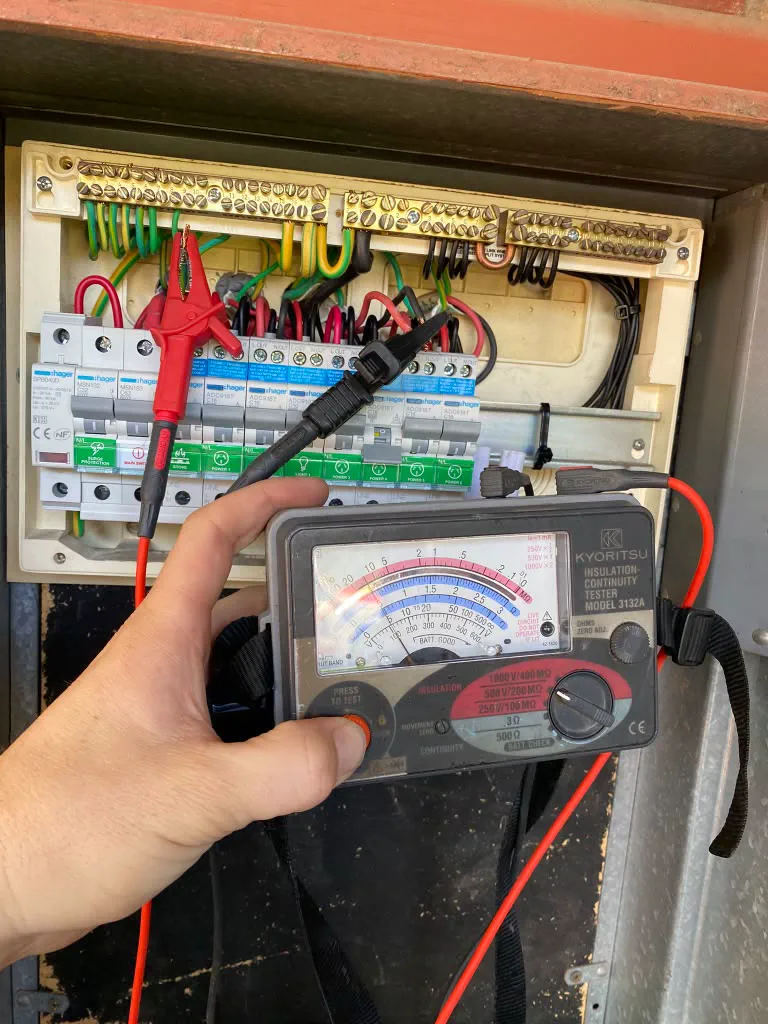
An inspection shows what's on each circuit, whether the board has room for what you plan to add, and whether an appliance has been connected somewhere it shouldn't be. That matters before you buy, because it tells you whether your own plans need switchboard work first.
Smoke alarms with a use-by date
Homes built after 1 August 1997 must have mains-powered smoke alarms with battery back-up, and homes built, largely renovated or extended after 1 May 2014 need them interconnected. Newer homes usually start out right. The catch is age: the Building and Plumbing Commission advises replacing smoke alarms generally after ten years, and new units show an expiry date.
A house built in the early 2010s can be due for a full set of new alarms by the time you buy it. Mains alarms swapped for battery-only units, alarms painted over and alarms missing from a renovated room are also common finds.
Safety switches and everyday defects
Energy Safe Victoria says a safety switch is compulsory on new residential installations, and newer homes generally have them. An inspection checks that they trip when tested and that every circuit is covered, which isn't always so if a later addition went onto a sub-board. Type AC safety switches can no longer be installed, but existing ones certified before 1 May 2023 don't have to be replaced.
The rest is ordinary wear and workmanship. None of it alone should stop a purchase, but it adds up, and it's better on a list before you sign than discovered after you move in.
- Loose or cracked power points and switches
- Outdoor lights and points letting water in
- Downlights hard against ceiling insulation
- Air conditioners without an isolator beside the outdoor unit
- Unlabelled circuits or a meter box door that won't close
Matching the inspection to the house
For a home built in the last few years with no additions, a visual inspection may be all you need. If the house has had renovations, a granny flat, a pool or solar, or you're planning big electrical changes yourself, an inspection with testing and some upgrade planning makes more sense.
Book it before you're committed, so the findings can still shape your offer. Ask for a written report that ranks each finding by urgency.
Questions that come next
Sources for this article
9 sources, with the date each was checked
- 1.Energy Safe Victoria: When buying a home built before the 1980s it is imperative the wiring is checked by a licensed electrical inspector or registered electrical contractor prior to moving in. Accessed 30 September 2026.
- 2.Energy Safe Victoria: Gas and electricity are inherently dangerous and it’s illegal and potentially fatal for unlicensed and unqualified people to undertake any electrical or gasfitting work. Homeowners and consumers must always use… Accessed 30 September 2026.
- 3.Energy Safe Victoria: Only an A grade electrician is qualified to inspect and install household wiring. Accessed 30 September 2026.
- 4.Energy Safe Victoria: A Certificate of Electrical Safety (COES) – is a legal document issued by a Registered Electrical Contractor or licensed electrician to record the details of the electrical work they have performed. Accessed 30 September 2026.
- 5.Energy Safe Victoria: Whenever a licensed electrician completes any electrical installation work, they must provide a Certificate of Electrical Safety (COES). Accessed 30 September 2026.
- 6.Building and Plumbing Commission (formerly Victorian Building Authority): Homes constructed after 1st August 1997 must have smoke alarms connected to 240V mains power and have a backup battery. Homes constructed before 1st August 1997 may have smoke alarms powered by a battery. Accessed 30 September 2026.
- 7.Fire Rescue Victoria: Residential home constructed, largely renovated, or extended after 1 May 2014 Interconnected, hard wired smoke alarms that are connected to 240 volt mains power and have a back-up battery. Accessed 30 September 2026.
- 8.Energy Safe Victoria: Having a safety switch installed is now compulsory on new residential installations and a great step to electrical safety in your home, if you are unsure if a safety switch is installed at your property, contact a… Accessed 30 September 2026.
- 9.Energy Safe Victoria: Type AC RCDs must not be installed in Australia. This includes like for like replacement. We recommend that electrical contractors advise customers of the new requirements. However, it is not mandatory to replace… Accessed 30 September 2026.