Wiring in older homes around Williamstown, Yarraville, Kingsville and Spotswood can be many decades old, and some of it was never meant to carry modern loads. We rewire whole houses or just the parts that need it, and we work with renovators and builders to wire kitchens, bathrooms and extensions while walls and ceilings are open. Power points, lights and circuits are planned with you room by room, so you don't end up running extension leads behind the couch.
When to get it checked
Faults in more than one room
A safety switch that trips on wet nights, a dead point in the lounge, lights at the back of the house that flicker. One fault usually means one circuit. Faults spread across the house usually mean cable of the same age giving out in several places.
An old board and tired fittings
Ceramic fuses, round-pin sockets, loose or scorched switches. Energy Safe Victoria's tell-tale signs of faulty wiring include old switchboards, particularly those without a safety switch, old or broken switches and power points, flickering lights and sparks. Several at once calls for a full test, not a single repair.
Leads and adaptors in every room
Double adaptors behind the TV, a power board running the kettle and microwave, a lead across the hallway to the study. Many older homes had one or two points per room, and daily life has outgrown that.
Nobody knows what's on which circuit
A breaker marked for the lights that also cuts the kitchen points, or a board with no labels at all. After decades of extensions and rearranging, every fault takes longer to find and every addition is harder to plan.
One room renovated, the rest original
A new kitchen on new cable still runs from the old board, and the rooms beside it are on circuits as old as the house. If walls are opening anyway, that's the easiest time to decide about the rest.
Why it happens
4 common causes
Original cable wears out together
Most of a house's first wiring went in at once. When testing finds one circuit's insulation breaking down, the others from that year are rarely far behind, and that's usually what turns a repair into a rewire.
Loads it was never laid out for
Air conditioning, a dryer, a home office and a second fridge land on circuits planned for a very different household. Energy Safe Victoria says many domestic electrical fires are caused by old wiring that has degraded or can't cope with the demands of modern equipment.
Decades of alterations
Each owner adds something: a point behind the TV, a shed fed from the laundry, a light switched from the wrong end of the hall. None of it goes on a plan, and after enough rounds the installation is a patchwork of cable types and buried joins.
Hot roofs and damp subfloors
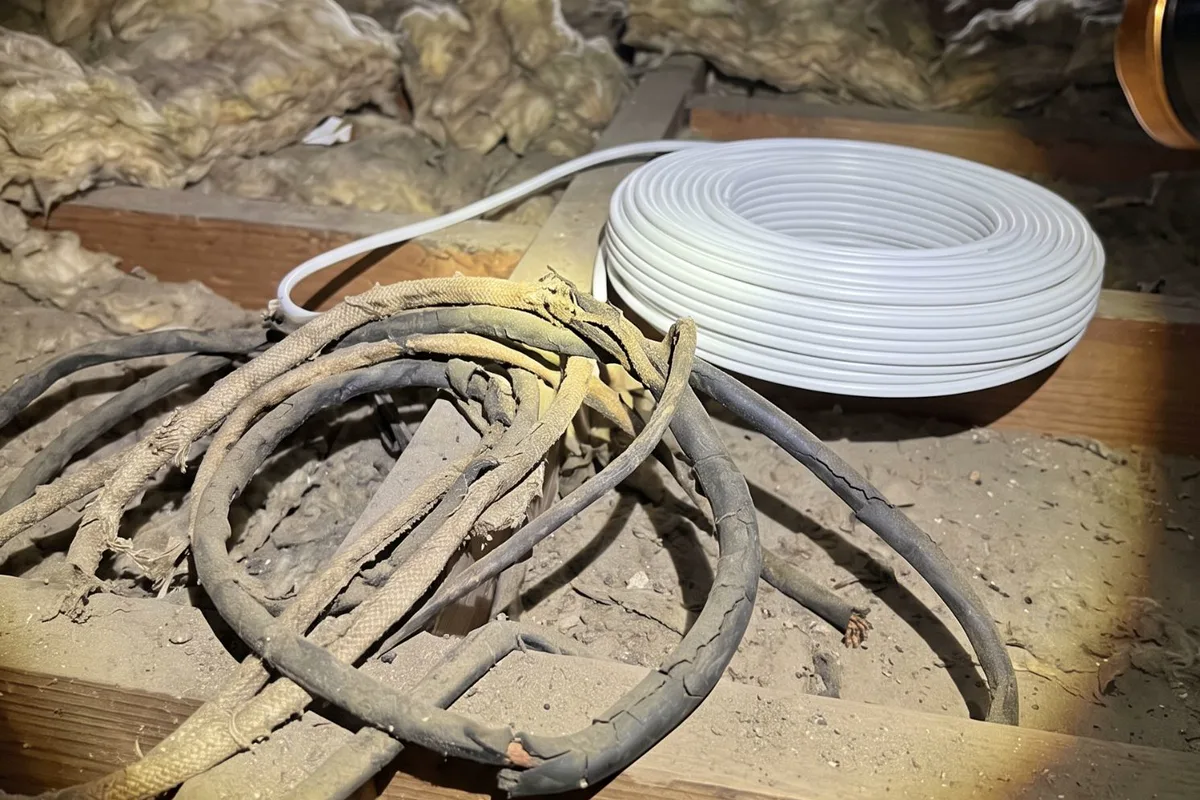
Roof spaces bake on hot north-wind days and subfloors stay damp through winter. Both are hard on old insulation, and batts laid straight over old cable stop it shedding heat.
What the job covers
What we usually do on this job. Your quote confirms it for your place.
- Existing wiring inspected and tested before we quote
- Room-by-room plan for power points, lights and switches
- Old cabling replaced with new TPS cable
- New circuits for kitchen appliances, air conditioning and other big loads
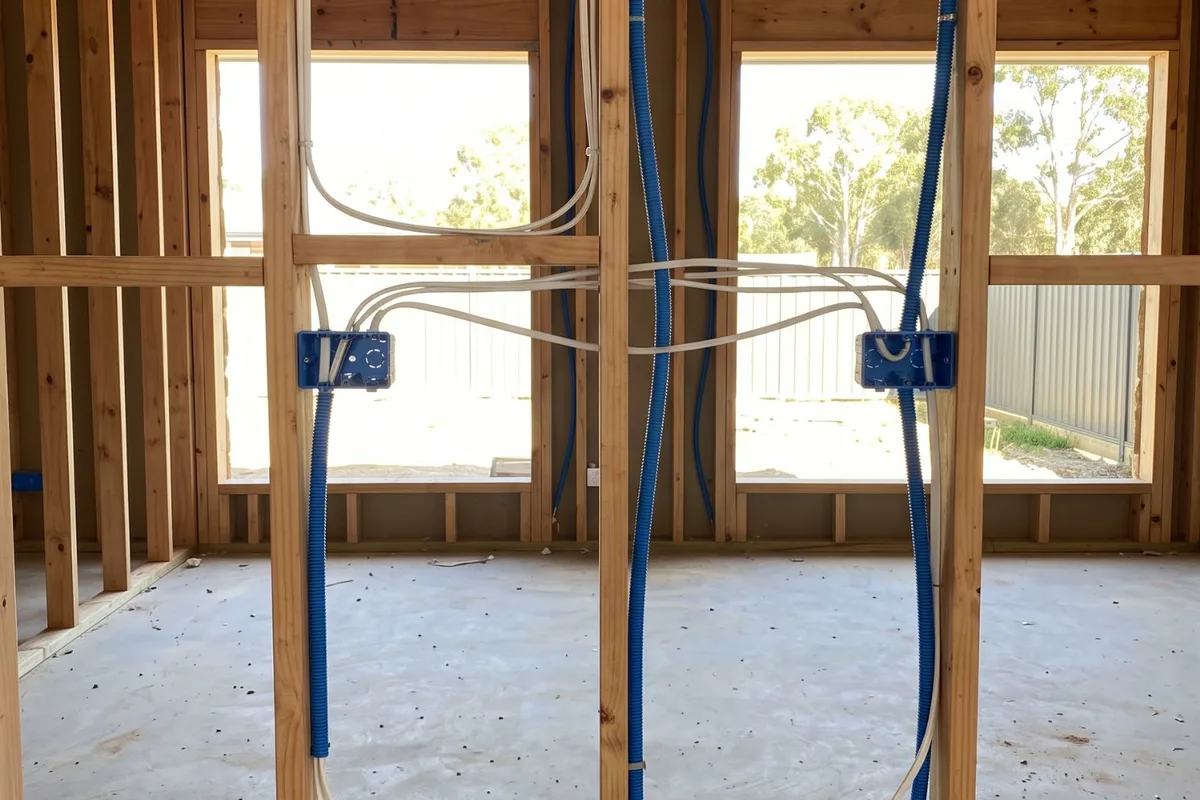
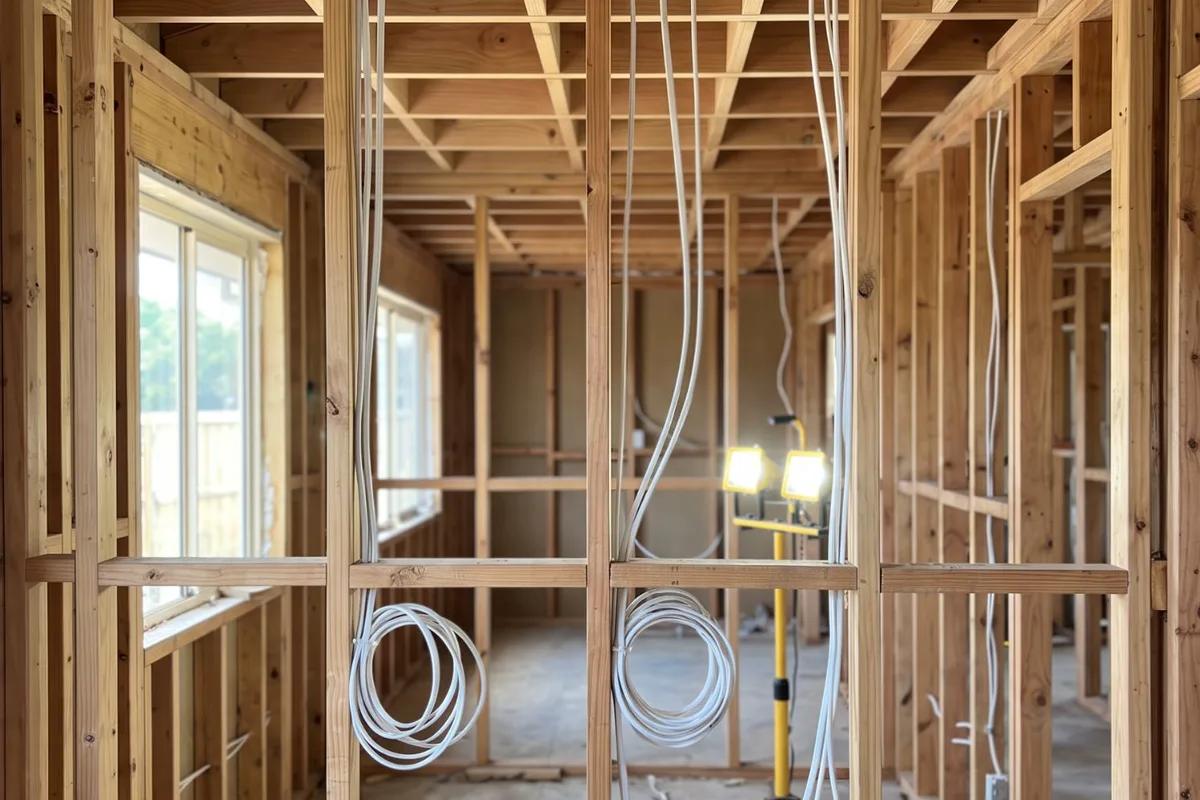
- Rough-in done while walls and ceilings are open
- Power points, switches and light fittings fitted off
- Switchboard upgraded where the new circuits need it
- Hardwired smoke alarms included in the plan
- Testing and a Certificate of Electrical Safety on completion
- Work areas cleaned up at the end of each day
Your options, explained
Repair the failing circuits
Low disruption- Best for
- Homes where one or two circuits fail testing and the rest are sound
- How it works
- Only the failing circuits are rewired, or have a damaged section replaced, and each is put on safety switch protection.
- Worth knowing
- Only sensible when the rest of the installation tests well. We show you the readings.
Partial rewire
Medium disruption- Best for
- Older homes where one part is still original, such as the lighting circuits or the back half of the house
- How it works
- A defined group of rooms or circuits is rewired end to end, with new points and fittings where you want them.
- Worth knowing
- The quote lists every circuit included, so there's no grey area about what's new.
Whole-home rewire
High disruption- Best for
- Houses that fail testing across the board, or where all the cable is the same age
- How it works
- Every circuit is replaced in stages, room by room, often alongside a new switchboard.
- Worth knowing
- The roof, subfloor and board are opened once, rather than again every few years as more circuits fail.
Wiring during a renovation or extension
Medium disruption- Best for
- Kitchens, bathrooms and extensions with linings off or framing going up
- How it works
- Cable is roughed in before plaster and cabinetry and fitted off once surfaces are finished, and the rest of the house can be tested at the same time.
- Worth knowing
- Fire Rescue Victoria's summary says homes extended or largely renovated after 1 May 2014 need interconnected, hard-wired smoke alarms, so they go on the plan.
The people behind the work
Our own photos from jobs like this one. Family-run, based in Altona Meadows, with 19 years in the industry.
Licensed electrical contractor (REC 38187)See more team photos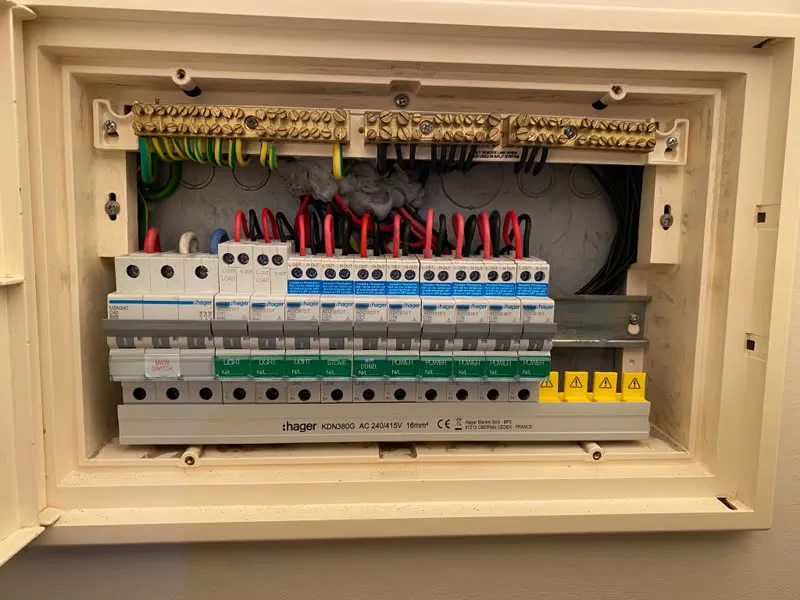
Worth knowing before you book
- Signs of old wiring
- Rubber or cloth-covered cables, ceramic fuses, round-pin power points, lights that dim or flicker, and power points that feel warm. If you're not sure, testing will show what condition it's in.
- Get the electrician in early
- On a renovation, talk to us before the plasterer arrives. Adding wiring runs is far easier with the frame exposed than after the walls are sheeted.
- Plan for what's coming
- Think about what you might add later, like an EV charger, ducted heating and cooling or a heat pump. A spare circuit or conduit now saves opening walls again.
What affects the price?
The right scope depends on your installation. These are the details we check so your quote is useful, with any additional work explained before it proceeds.
How much fails testing
The number of circuits that need replacing is the biggest variable, and testing sets it. That's why we test before we price.
Getting cable in
A roomy roof and a timber floor with a crawl space are straightforward. Low roofs, slabs, solid brick or stone walls and second storeys take longer and can need more access holes.
What you add
Every extra point, switch, light and dedicated appliance circuit adds parts and labour, and the fittings you choose change the fit-off time.
The switchboard
New circuits and safety switches may not fit the old board. WorkSafe Victoria's asbestos guidance lists switchboards and their backing among typical uses of asbestos, particularly in buildings built or renovated before the late 1980s, so an old panel is assessed before it comes off the wall.
Staging and making good
Working around a family at home takes more setting up each day than an empty house. The quote says how the work is staged, and who patches and paints once we're done.
Before the visit
- Prepare a floor plan with furniture, outlets, lighting and appliance positions.
- Agree rough-in dates with the builder before plastering or cabinetry.
- Ask which rooms will be out of service and who handles patching and painting.
How it runs
- 1
Inspect and test
We look at the existing wiring and switchboard and talk through what you want from each room.
- 2
Plan and quote
You get a room-by-room plan and an upfront price before any work starts.
- 3
Rough-in and fit-off
Cabling goes in first, then power points, switches and lights once walls are finished.
- 4
Test and certify
Every circuit is tested and you receive the compliance paperwork for the work.
Step by step, in more detail
6 steps
Walk through the house with you
We start with how you use each room, what you plan to add and any trouble you've noticed. A floor plan, even a sketch, lets us mark where beds, desks, the TV and appliances will sit.
Test before we quote
Each circuit is tested for insulation resistance, earth continuity and polarity, and we look through the roof space, subfloor and switchboard. The recommendation rests on readings, not the age of the house.
Plan and price room by room
You get a marked-up plan for points, lights, switches and appliance circuits, and a fixed price for the agreed scope. It names which circuits are replaced, what stays and who handles patching and painting.
Rough-in
New TPS cable goes in through the roof and subfloor wherever we can reach, dropped down existing wall cavities, with any access holes kept small. Old cable is pulled out where it's reachable, or disconnected at both ends and left dead where it isn't. Cable for hard-wired smoke alarms goes in at this stage too.
Fit-off and the switchboard
Points, switches and fittings go on once walls are finished. If the board can't take the new circuits and their safety switches, it's replaced, and a new main switchboard stays off until a Licensed Electrical Inspector has checked it.
Test, certify, hand over
Every circuit is tested again before it's switched on. You get the Certificate of Electrical Safety, a labelled board and a walk-through of what runs where.
What is safe to do, and what to leave to us
Safe for you to do
- Press each safety switch's test button every three months, as Energy Safe Victoria suggests. If the power doesn't go off, call a licensed electrician.
- Reset a tripped safety switch once. If it won't reset, leave it off and call a licensed electrician.
- Leave a loose, cracked or broken power point or switch alone. Cover it, stop using it and have a licensed electrician replace it.
- Note which rooms lose power when something trips, and photograph the board with the door open, covers left on.
Leave these to us
- Swapping switches, points or fittings yourself. Energy Safe Victoria says electrical work isn't a DIY job, even the small jobs.
- Handling, pulling or cutting old cable in the roof or under the floor.
- Drilling, nailing or cutting into walls where cable may run, especially during demolition.
- Stacking double adaptors and power boards to make up for missing points.
When to get us in
- You've bought an older home, or nobody knows when the wiring was last tested
- You've seen rubber or cloth-covered cable in the roof, under the floor or at the board
- A switch or power point is warm, discoloured, crackling or smells hot
- A safety switch keeps tripping and you can't pin it to one appliance
- You're drawing up plans for a renovation or extension
More detail
Rewire or repair: what testing decides
Two houses built the same year can test very differently, depending on the heat, damp and alterations their cable has seen. If one or two circuits fail and the rest read well, a repair makes sense. If failures are scattered through the house, or every circuit is the same rubber or fabric cable, patching one now means opening the roof again later. We show you the readings behind whichever we recommend.
Living in the house during a rewire
You can usually stay put. We work through the house in sections, starting in the roof and subfloor, and aim to have power back on in finished areas each evening. Expect furniture pulled from walls, some dust and short stretches with the fridge, modem and alarm off. If anyone relies on powered medical equipment, tell us first so the staging works around it.
Rewiring alongside a renovation
If a kitchen or extension is going ahead, the rest of the house can often be rewired in the same window: after framing and plumbing, before insulation and linings. Old and new rooms share one rough-in and one switchboard plan, and the builder schedules the electrical stages once. Miss that window and cable has to be fished through finished walls or run in surface conduit.
Wiring for what the house will run next
Induction cooking, reverse-cycle heating and cooling, heat pump hot water and an EV charger each usually want their own circuit. From 1 March 2027, a gas hot water system in an existing home that breaks and can't be repaired will have to be replaced with an electric alternative, with some exemptions. Spare space on the board and an empty conduit to the roof, added during a rewire, save opening walls again.
Local rules and conditions
Victorian requirements and local conditions that shape this job, with the sources listed at the foot of the page.
Basalt and timber duplexes in Williamstown
Williamstown's Government Survey heritage precinct includes basalt houses and timber duplex houses with no dividing wall, types its heritage statement says are less common elsewhere in Melbourne. Solid stone walls have no cavity to drop cable down, so a rewire in a house like this leans on the roof space, the subfloor and carefully placed surface runs.
Post-war homes in Altona and Sunshine
The Hobsons Bay Planning Scheme sets out to preserve intact post-war brick and weatherboard homes in Altona's Special Character Areas, and pre- and post-war homes characterise established Brimbank suburbs such as Sunshine. Energy Safe Victoria says wiring in a house built more than 30 years ago should be checked, and homes from those years are well past that mark.
Supply size in older homes
Jemena's electricity supply area reaches Williamstown and Footscray in the south and Brooklyn in the west. Older homes can have a small supply between the pole and the switchboard. A rewire planned around induction, heat pumps or an EV charger is the time to check it, and to work out whether a bigger single-phase supply will do or three-phase makes sense.
Useful reading
Guides to read before you decide, with checklists and questions to bring to the quote.
- The electrical decisions to make before your renovation walls closePlan appliances, lighting, outlets and future upgrades while access and options are still available.
- Planning a switchboard upgrade without surprisesWhat the electrician needs to check, how to compare the scope and what to organise before the power goes off.
- Certificates of Electrical Safety explainedWhat a Victorian COES records, how prescribed and non-prescribed work differ, when your copy should arrive and why it belongs in your house file.
- Going all-electric in a Melbourne homeHot water, heating and cooking don't have to go electric at once. How to stage the move off gas, check the switchboard once and time each step.
Common questions
From the blog
- Rewire before you renovate, or during?Unsafe circuits get fixed now. Otherwise, rewire during the renovation, after framing and before plaster, and bring the rest of the house into the same window.
- What affects the cost of rewiring a house?Testing, storeys, roof and subfloor access, wall types, added points, the switchboard and making good decide what a rewire involves. Here's how to compare quotes.
- Upgrading the electrical in a heritage home in Williamstown or YarravilleFront-wall meter boxes, lath and plaster, basalt walls and period fittings all shape how a heritage home in Melbourne's inner west gets rewired.
Sources for the rules and local facts on this page
20 sources, with the date each was checked
- 1.Victorian Heritage Database (Heritage Council Victoria); entry maintained by Hobsons Bay City Council from the Hobsons Bay Heritage Study 2006: Unusual or rare early building styles and types such as the basalt houses and the timber duplex houses with no dividing wall that are characteristic of this part of Williamstown but less common elsewhere in the… Accessed 30 September 2026.
- 2.Victorian Government, Hobsons Bay Planning Scheme (PDF snapshot, last updated by VC292 on 11/09/2025): SPECIAL CHARACTER AREAS, ALTONA 1.0 24/02/2022 C131hbay Neighbourhood character objectives To preserve the characteristics of the neighbourhood, comprising intact post-war brick and weatherboard dwellings with… Accessed 30 September 2026.
- 3.Victorian Electoral Commission (2023 electoral structure review fact sheet): Pre- and post-war homes characterise the established suburbs of Sunshine, St Albans and Deer Park. The more recently developed suburbs of Cairnlea, Sydenham, Hillside, and Derrimut feature more contemporary housing. Accessed 30 September 2026.
- 4.Energy Safe Victoria: Old switchboards, particularly those without a safety switch Old power switches or power points, particularly broken ones Flickering lights Sparks from switchboards, switches or power points. If your house is over 30… Accessed 30 September 2026.
- 5.Jemena Electricity Networks (Vic) Ltd, 2025 Distribution Annual Planning Report (2 December 2025): Figure 1-1 shows the JEN supply area, which ranges from Gisborne South, Clarkefield and Mickleham in the north to Williamstown and Footscray in the south, and from Hillside, Sydenham and Brooklyn in the west to… Accessed 30 September 2026.
- 6.Energy Safe Victoria: Whenever a licensed electrician completes any electrical installation work, they must provide a Certificate of Electrical Safety (COES). Accessed 30 September 2026.
- 7.Energy Safe Victoria: Fire brigades respond to more than 300 domestic electrical fires each year. Many of these fires are caused by old wiring that has degraded or is unable to cope with the demands of modern electrical equipment. Accessed 30 September 2026.
- 8.Energy Safe Victoria: The electrician has eight business days after the work is completed to have that work inspected by a licensed electrical inspector (LEI). If an electrician replaces a main switchboard at a property, power cannot go back… Accessed 30 September 2026.
- 9.Fire Rescue Victoria: Residential home constructed, largely renovated, or extended after 1 May 2014 Interconnected, hard wired smoke alarms that are connected to 240 volt mains power and have a back-up battery. Accessed 30 September 2026.
- 10.WorkSafe Victoria: A person who has management or control of a workplace, and employers or self-employed persons and employees should be aware of the typical uses and applications of ACMs, particularly in buildings constructed or… Accessed 30 September 2026.
- 11.Energy Safe Victoria: Locate your electricity box outside your home and check whether the safety switch has tripped. If it has tripped, reset the switch. If the switch won’t reset, call a licensed electrician. Accessed 30 September 2026.
- 12.Energy Safe Victoria: Do not touch or attempt to repair a loose, cracked or broken power point switch – cover it immediately and arrange for a licensed electrician to replace it. Accessed 30 September 2026.
- 13.Energy Safe Victoria: Electrical work isn’t a DIY job, even for small jobs such as changing power points or light switches. Accessed 30 September 2026.
- 14.Department of Transport and Planning (Victoria): Victoria’s new Building and Plumbing Amendment Regulations 2025 have been finalised, advancing Victoria’s shift toward all-electric buildings. From 1 January 2027, all new homes and most new commercial buildings will be… Accessed 30 September 2026.
- 15.Energy Safe Victoria: If a switchboard is required to be replaced then as per clause 2.6.3.2.5 (Alterations to installations and replacement of switchboards) of AS/NZS 3000: RCD’s are required on all final sub-circuits. Accessed 30 September 2026.
- 16.Energy Safe Victoria: Clause 2.6.3.2.5 of the Wiring Rules states: Additional protection by RCDs shall be provided in existing electrical installations where alterations or a switchboard replacement is completed. Accessed 30 September 2026.
- 17.Electrical Regulatory Authorities Council (ERAC): An existing final sub-circuit for socket outlets is extended and an additional socket outlet is installed. Only that circuit that is altered is required to have a RCD fitted. Accessed 30 September 2026.
- 18.Energy Safe Victoria: Only an A grade electrician is qualified to inspect and install household wiring. Accessed 30 September 2026.
- 19.Energy Safe Victoria: Gas and electricity are inherently dangerous and it’s illegal and potentially fatal for unlicensed and unqualified people to undertake any electrical or gasfitting work. Homeowners and consumers must always use… Accessed 30 September 2026.
- 20.Chief Parliamentary Counsel Victoria (Victorian Legislation): (3) Subregulations (1) and (2) do not apply to a person if— (a) there is insufficient space available in the building or no suitable outdoor space associated with the building to install or replace the reticulated gas… Accessed 30 September 2026.