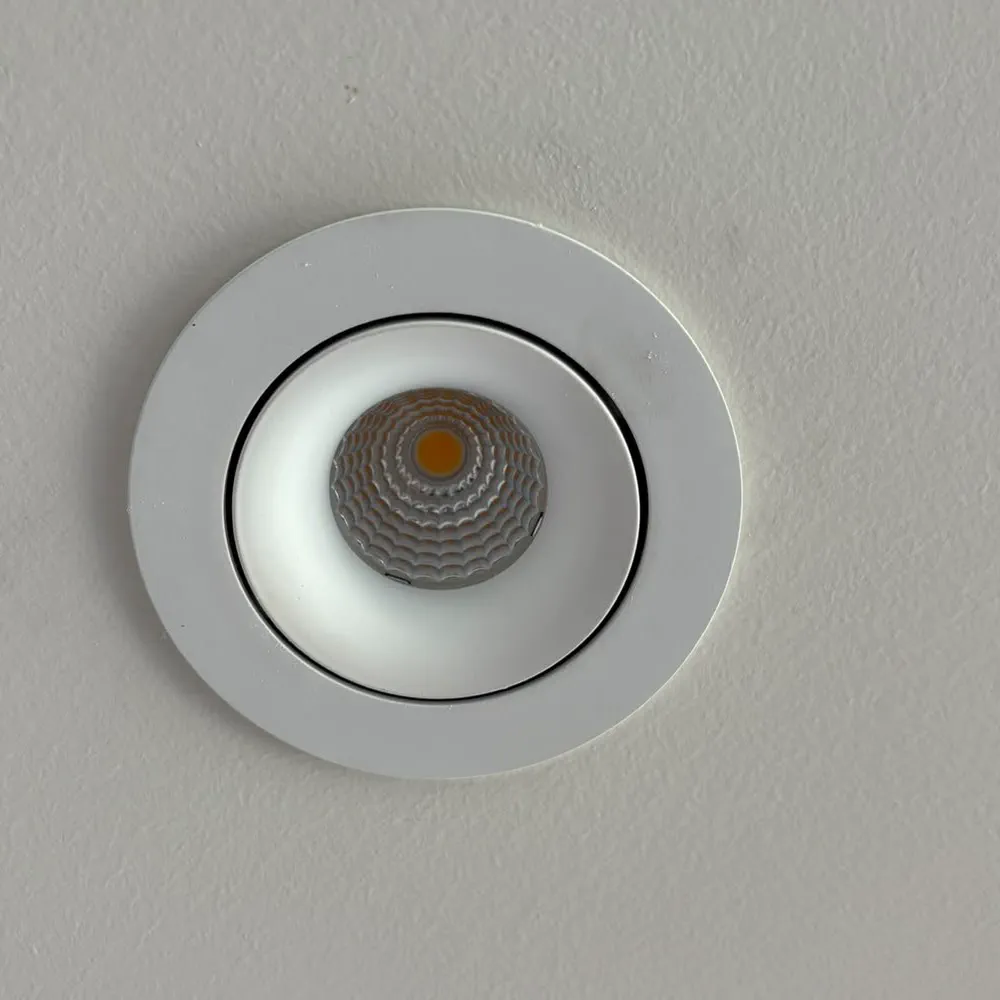
Downlight placement matters as much as the light itself. A regular grid can leave a kitchen worktop in shadow or put a bright fitting directly over the sofa. We start with how the room is used, then consider beam spread, colour temperature, glare and switching. When replacing old fittings, we check the existing cut-outs, wiring, transformers and insulation conditions so the new light is compatible with the ceiling it goes into.
When to get it checked
Benches and desks in shadow
The lights sit in a neat grid, yet you still chop vegetables in your own shadow. The fittings are behind where you stand, not above the work.
Glare where you sit or lie
A bright fitting sits right over the sofa or the bed head, so you look straight into it. Moving or aiming the light fixes that better than dimming it.
Browned plaster around old fittings
The ceiling has gone brown around a few halogen trims, globes keep blowing, and one or two lights have stayed dead since the last one went.
One switch for the whole room
Every downlight in the open-plan area comes on at once. Watching TV means the kitchen blazes too, so most nights you sit by the rangehood light instead.
Why it happens
5 common causes
Grids drawn on a plan
Many layouts were set out as even rows on a drawing, before anyone knew where the island bench or the couch would go. The light ends up where the furniture isn't.
Halogen heat and tired transformers
Low-voltage halogens rely on a transformer above each light, and both run warm for years. That heat dries out lampholders and nearby cable until something gives.
Gaps left in the insulation
Older halogen fittings weren't made to be covered, so the batts were cut back in a ring around each one. Every ring leaks warmth in winter and lets heat in during summer.
Wired for convenience
Running a whole living area off one switch was the quickest way to wire it. Nobody planned for lighting the dining table while the lounge stays low.
Wrong beam for the ceiling
A narrow beam in a standard-height room makes pools of light with dark patches between. A high raked ceiling needs more output and careful aiming.
What the job covers
What we usually do on this job. Your quote confirms it for your place.
- Room layout and task areas discussed
- Existing ceiling cut-outs measured
- Fitting rating and insulation requirements checked
- Colour temperature and brightness options explained
- New lighting positions marked before cutting
- Wiring and protection assessed
- Compatible dimmers and switching installed where quoted
- Fittings tested and work area cleaned
Your options, explained
Replace in the existing holes
Low disruption- Best for
- Layouts that already light the room well
- How it works
- Each halogen and transformer comes out, and an IC-rated LED sized to cover the old cut-out goes in the same spot.
- Worth knowing
- The least ceiling work, but it keeps the old layout, dark patches and all.
Add or move lights
Medium disruption- Best for
- Kitchens and living areas with dark zones or glare
- How it works
- Good positions are reused, new fittings go over benches, desks and stairs, and lights are split into switch groups.
- Worth knowing
- Old holes that aren't reused need patching and painting, so it pairs well with a repaint.
Plan before the ceiling is lined
Low disruption- Best for
- New builds, extensions and gutted renovations
- How it works
- Cable and positions are roughed in while the frame is open, and fittings go in after painting.
- Worth knowing
- Works best once kitchen and furniture plans are settled.
The people behind the work
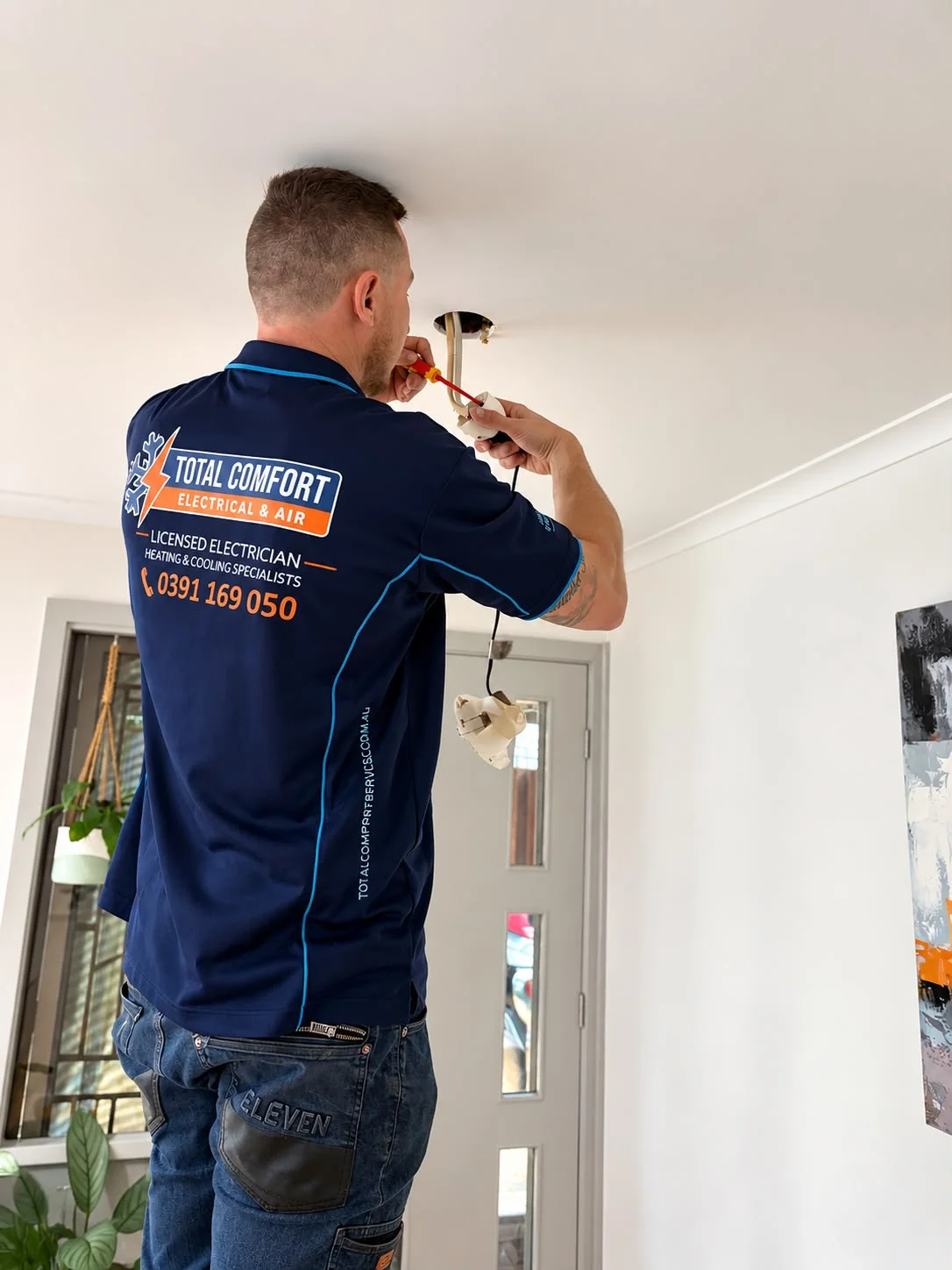
Our own photos from jobs like this one. Family-run, based in Altona Meadows, with 19 years in the industry.
Licensed electrical contractor (REC 38187)See more team photos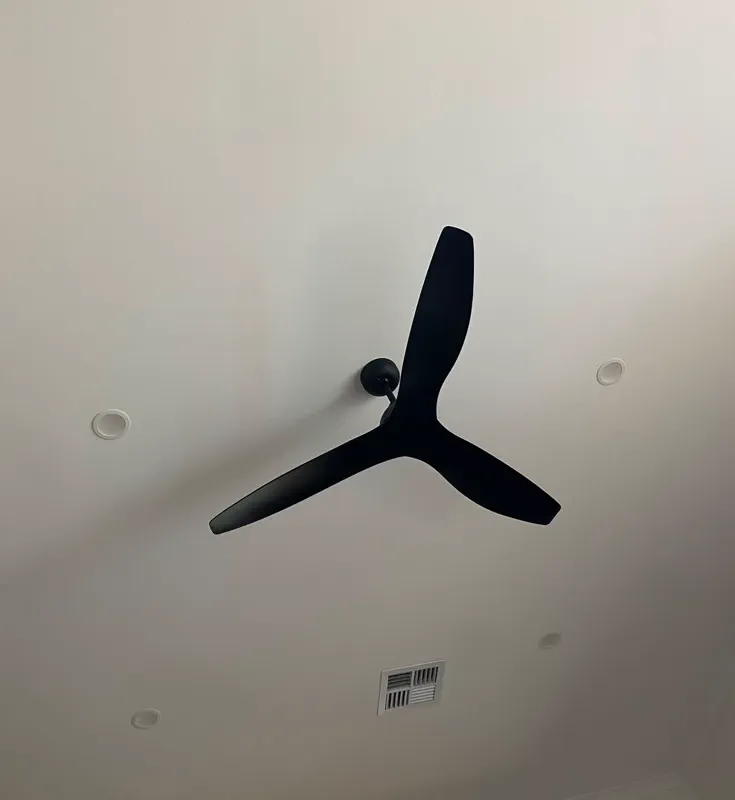
Worth knowing before you book
- Cut-out size affects the finish
- A smaller fitting may not cover the existing hole. We check dimensions before ordering and identify any plaster repairs separately.
- Dimming is a system
- The downlight, driver and dimmer must work together. Reusing an old dimmer can cause flicker even when the new fitting is fine.
- Choose colour in context
- Bring your wall, cabinetry and floor colours into the discussion. Matching the whole connected living area often matters more than a single room.
What affects the price?
The right scope depends on your installation. These are the details we check so your quote is useful, with any additional work explained before it proceeds.
Number and type of fittings
Fixed, tilting, colour-selectable and dimmable fittings differ, and the count depends on room size, ceiling height and output.
Access above the ceiling
A roomy single-storey roof space keeps things simple. Low-pitched roofs, flat ceilings and ceilings under an upper floor take longer.
Cut-out sizes and patching
If a new fitting won't cover the old hole, or positions are abandoned, the ceiling needs patching. We point that out before you commit.
Dimmers and switch groups
New dimmers, splitting a circuit into separately switched groups or moving a switch adds parts and time.
Altering the circuit
Adding or moving lights alters the lighting circuit. Energy Safe Victoria quotes the Wiring Rules as requiring additional RCD protection where an existing installation is altered, so a circuit with no safety switch can mean work at the board. Cable that has baked beside a halogen is replaced, not reused.
Before the visit
- Share room dimensions and ceiling height.
- Mark benches, desks, beds and sofas on the layout.
- Confirm whether the room needs dimming or separate light groups.
How it runs
- 1
Walk the room
Discuss dark areas, furniture and what you want to change.
- 2
Agree the layout
Confirm positions, fittings, dimming and the quote before any holes are cut.
- 3
Install
Run or adapt the wiring and fit the agreed lights.
- 4
Check the result
Test switching and dimming and talk through the finished layout.
Step by step, in more detail
5 steps
Walk the room with you
We look at how the room is used, where the dark spots and glare are, and where furniture will sit. We also ask which lights you'd like to dim and which should come on together.
Check above the ceiling
We measure the cut-outs, then go into the roof to look at transformers, cable condition, insulation and what's in the way. A look at the switchboard shows whether the lighting circuit has a safety switch.
Agree positions and price
You see the positions, fitting, colour and switching before anything is cut, and you get the price before we start.
Remove, wire and fit
Old fittings and transformers come out, new cable goes in where it's needed, and the insulation is laid back over the IC-rated lights.
Test with you in the room
We run every switch group and dimmer while you stand where you'd cook or sit, so you can judge the light and any glare. You get a Certificate of Electrical Safety, and the dust and offcuts leave with us.
What is safe to do, and what to leave to us
Safe for you to do
- Turn a downlight off at the wall and leave it off if it buzzes, smells hot or has scorching around it.
- If a fitting is on fire, get everyone out of the house. Never put water on an electrical fire.
- If a safety switch trips, reset it once. Energy Safe Victoria says to call a licensed electrician if it won't reset.
- Photograph the room at night and note where it's too dark or glary.
- Keep the model numbers of any lights or dimmers you've already bought.
Leave these to us
- Changing fittings, transformers or dimmers yourself. Energy Safe Victoria says electrical work isn't a DIY job, even small jobs such as changing light switches.
- Pushing insulation back over old halogen fittings or their transformers.
- Putting LED globes in halogen fittings and calling it done. They often flicker, and the insulation gap stays.
When to get us in
- A downlight buzzes, flickers, smells hot or has brown marks around it
- A light keeps tripping the safety switch
- Insulation is going into a roof that still has halogens
- Benches, desks or stairs are hard to see
- You're renovating or building and the ceiling isn't lined yet
More detail
Benches, walls and sightlines
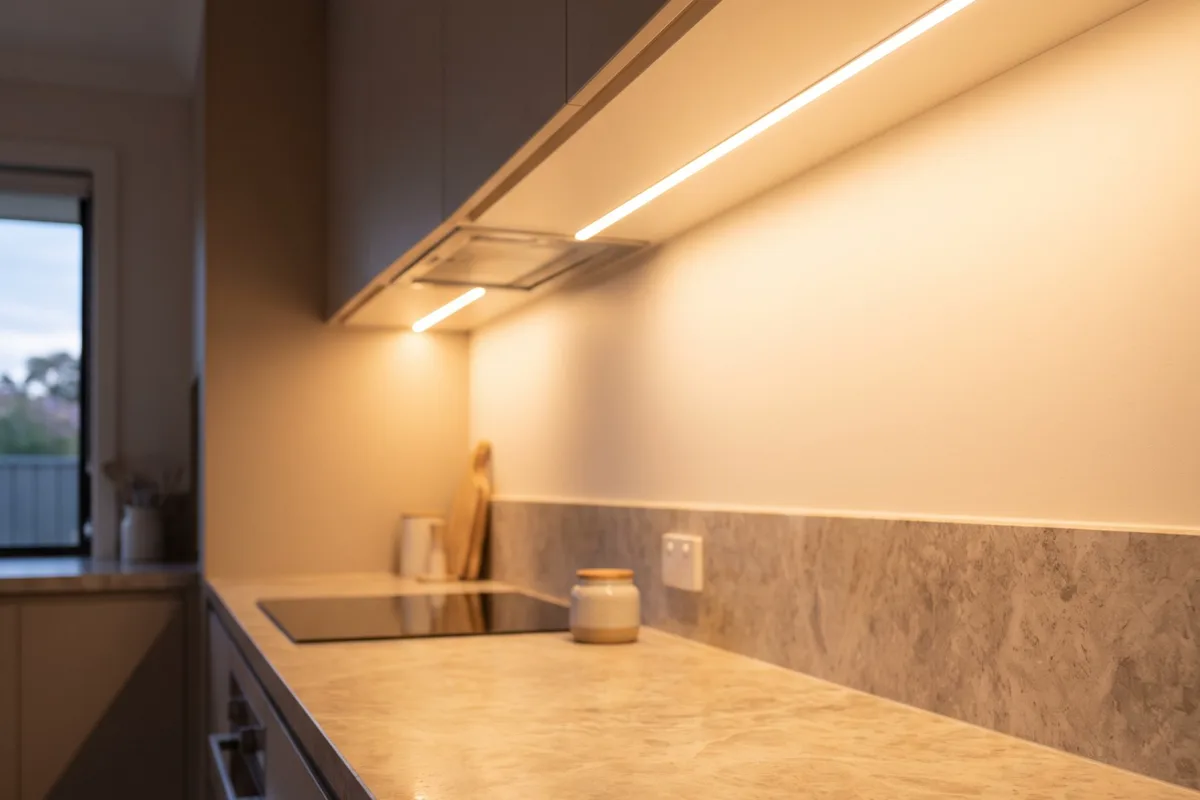
A downlight throws a cone of light, so a small shift in position changes a lot. Over a kitchen bench, the fitting should sit just in front of where you stand, not behind your head. Light on the walls makes a room feel bigger than a single row down the middle, and keeping fittings out of your line of sight from the sofa or pillow deals with most glare.
Switching that suits the room
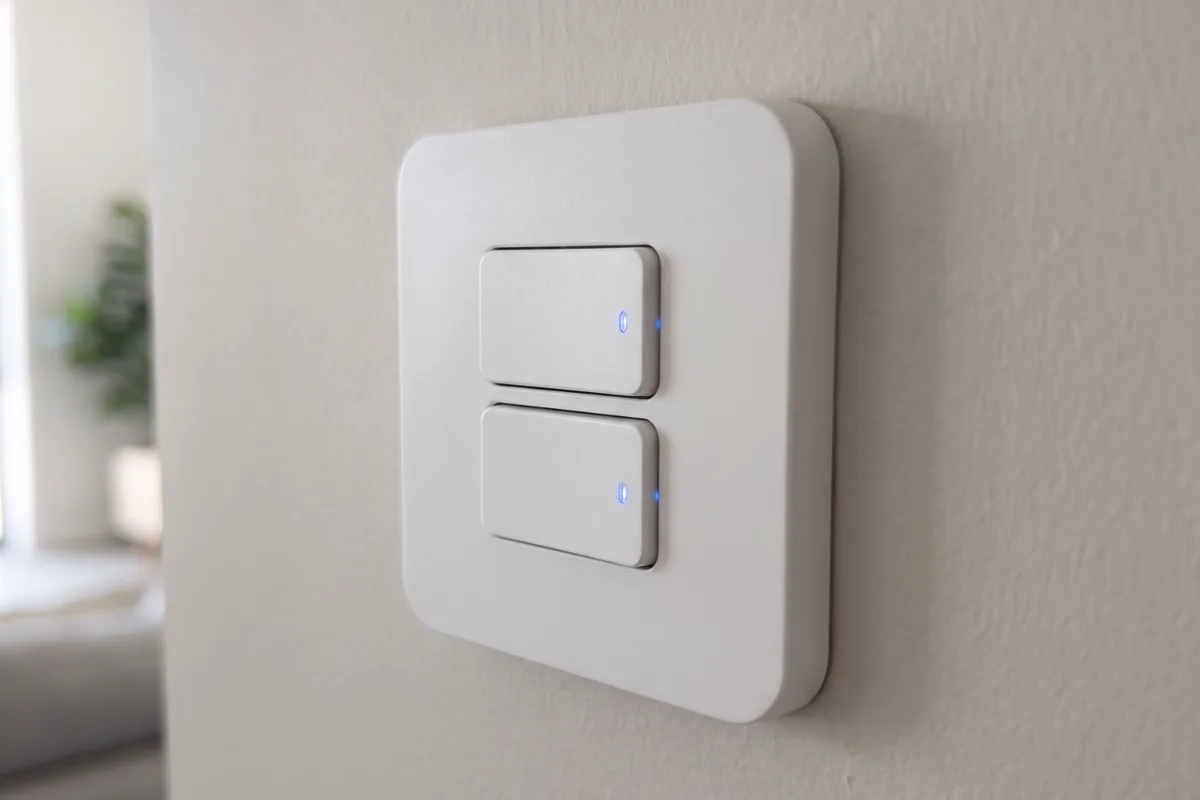
In an open-plan space, splitting the downlights into groups often does more than adding lights. Kitchen, dining and lounge lights on their own switches let you light the bench for cooking and keep the lounge soft. Put each group's switch where you walk in, and add a second switch at the far end of a hallway or stair.
Raked, high and hard-to-reach ceilings
A raked ceiling usually has no roof space above it, so cable has to be fed along the rafters or brought in from a wall. In a high room, the fitting you choose and how it's aimed matter more than adding extra lights. Low-pitched iron roofs and tight extensions leave little room to crawl, which slows the work but rarely rules it out.
Joists, ducts and the final position
A spot that looks right from below can land on a ceiling joist, a heating duct or an existing cable. We mark each position on the ceiling and check it from the roof space, then shift it slightly if needed before cutting. Ducted heating and cooling outlets need room too, so downlights are placed to keep clear of them.
Local rules and conditions
Victorian requirements and local conditions that shape this job, with the sources listed at the foot of the page.
Heat in, heat out through the gaps
Bureau of Meteorology records for Laverton average 27 days a year at or above 30 °C, and July's mean minimum there is 5.2 °C. Every clearance gap around an old halogen lets summer heat in and winter warmth out. IC-rated fittings let the insulation close back over the light.
Rentals getting ceiling insulation
New energy efficiency standards for Victorian rentals come into effect in phases from 1 March 2027, and ceiling insulation is one of the areas covered. That standard needs an electrical safety checklist completed, and any electrical issues fixed, by a licensed electrician within 30 days before the insulation goes in. Rental lighting circuits have also had to connect to a switchboard-type circuit breaker and safety switch since 29 March 2023.
Old cottages and new estates
The Yarraville Residential Precinct is generally small single-storey Victorian and Edwardian houses, while in Wyndham new housing is planned in growth areas including Truganina, Tarneit and Wyndham Vale. A single-storey cottage usually gives roof access above every room, though old plaster ceilings need a careful cut. In a new build, settle the positions before the plasterboard goes up.
Useful reading
Guides to read before you decide, with checklists and questions to bring to the quote.
- Downlights, ceiling insulation and fire riskWhy old halogen downlights and their transformers need space in the roof, what IC-rated LED fittings change, and why the lights come before the insulation.
- A room-by-room lighting plan that goes beyond more downlightsPlan task lighting, comfortable evening light and outdoor coverage around how each space is used.
- Planning the electrical in a new build or extensionMark up the power and lighting plan, decide the dedicated circuits, pre-wire air conditioning and EV charging, then walk the frame before plaster.
- The electrical decisions to make before your renovation walls closePlan appliances, lighting, outlets and future upgrades while access and options are still available.
Common questions
Questions people ask about this
- One downlight has stopped working. Is it the globe or the fitting?Check whether it has a removable globe.
- Why do my LED lights buzz or hum?Most buzzing LEDs come from a mismatch rather than a fault: a dimmer built for old halogen globes, an LED driver that doesn't suit the dimmer, an old transformer left in…
- Why has the ceiling around my light gone brown?A brown ring hugging the edge of a light is usually heat or dust.
From the blog
- What happens when you swap halogen downlights for LED?Transformers out, holes sized up, insulation sorted and dimmers matched: what a halogen to LED changeover looks like on the day, room by room.
- Builder-grade electrical in a new estate home: what owners upgrade firstExtra points, outdoor power, better lighting, data and a garage ready for an EV: the upgrades owners in Melbourne's western estates make after handover.
- Oyster lights or downlights for bedrooms and hallways?One good oyster often beats a row of downlights in a bedroom or short hall: no glare, fewer holes and no roof crawl. Downlights still win in some rooms.
Sources for the rules and local facts on this page
11 sources, with the date each was checked
- 1.Bureau of Meteorology: Mean number of days ≥ 30 °C 6.9 6.0 4.5 0.7 0.0 0.0 0.0 0.0 0.1 0.9 2.8 5.1 27.0 82 1943 2026 Mean number of days ≥ 35 °C 3.6 2.4 0.9 0.0 0.0 0.0 0.0 0.0 0.0 0.1 0.5 1.9 9.4 Accessed 30 September 2026.
- 2.Consumer Affairs Victoria: New minimum energy efficiency standards for residential rental properties come into effect in phases from 1 March 2027. The new standards cover 6 areas: heating cooling hot water shower heads ceiling insulation… Accessed 30 September 2026.
- 3.Consumer Affairs Victoria: The standard also requires an electrical safety checklist to be completed and any electrical issues to be addressed by a licensed electrician within 30 days before the installation of insulation. If the insulation… Accessed 30 September 2026.
- 4.Consumer Affairs Victoria: From 29 March 2023 all power outlets and lighting circuits in a rental premises must connect to both a switchboard-type circuit breaker that complies with AS/NZS 3000 and a switchboard-type residual current device that… Accessed 30 September 2026.
- 5.Victorian Heritage Database (Heritage Council Victoria); entry maintained by Maribyrnong City Council: The general character of the Yarraville Residential Precinct is that of small Victorian & Edwardian single-storey detached housing with mainly weatherboard and some brick wall cladding, corrugated iron roofing, front… Accessed 30 September 2026.
- 6.Victorian Electoral Commission (2023 electoral structure review fact sheet): New housing developments are planned in residential growth areas including Truganina, Tarneit, Wyndham Vale and Manor Lakes, as well as near activity centres and public transport. Accessed 30 September 2026.
- 7.Energy Safe Victoria: Electrical work isn’t a DIY job, even for small jobs such as changing power points or light switches. Accessed 30 September 2026.
- 8.Energy Safe Victoria: Locate your electricity box outside your home and check whether the safety switch has tripped. If it has tripped, reset the switch. If the switch won’t reset, call a licensed electrician. Accessed 30 September 2026.
- 9.Energy Safe Victoria: Whenever a licensed electrician completes any electrical installation work, they must provide a Certificate of Electrical Safety (COES). Accessed 30 September 2026.
- 10.Energy Safe Victoria: For electrical installation work performed within your electrical installation including but not limited to lights, power points, air conditioning, hot water service etc. Accessed 30 September 2026.
- 11.Energy Safe Victoria: Clause 2.6.3.2.5 of the Wiring Rules states: Additional protection by RCDs shall be provided in existing electrical installations where alterations or a switchboard replacement is completed. Accessed 30 September 2026.