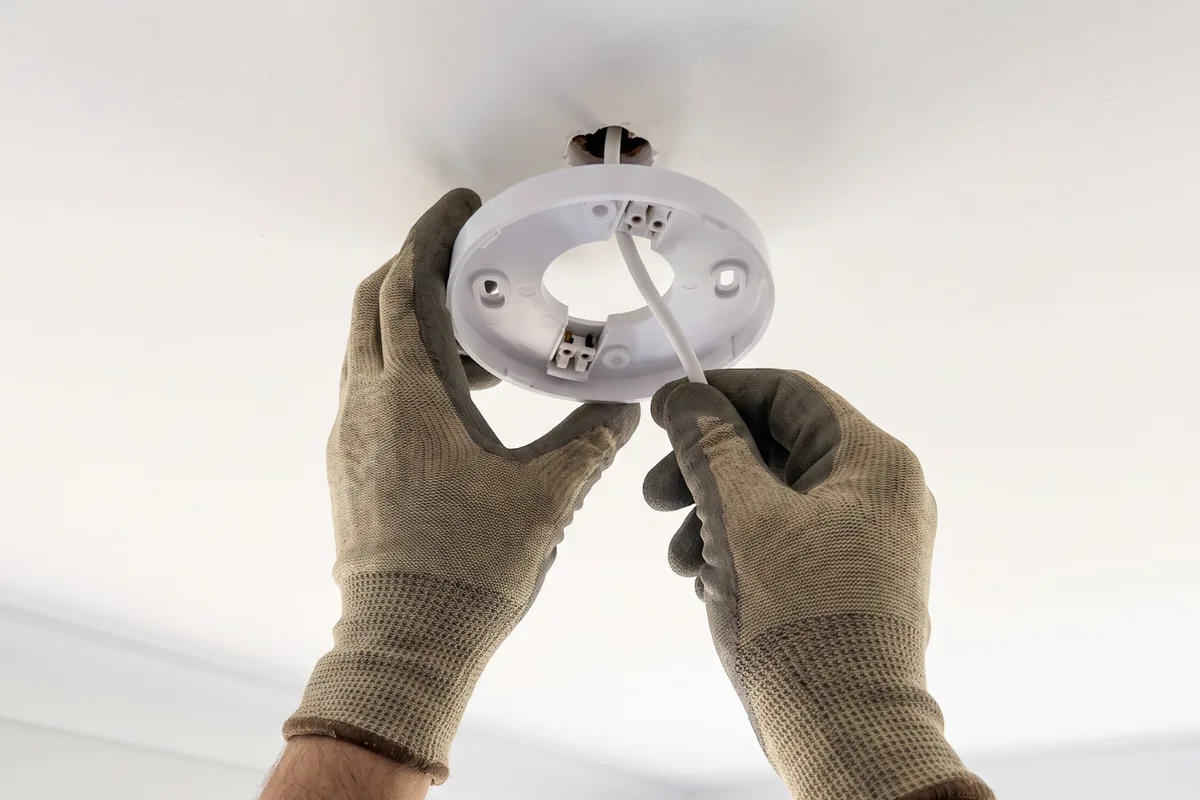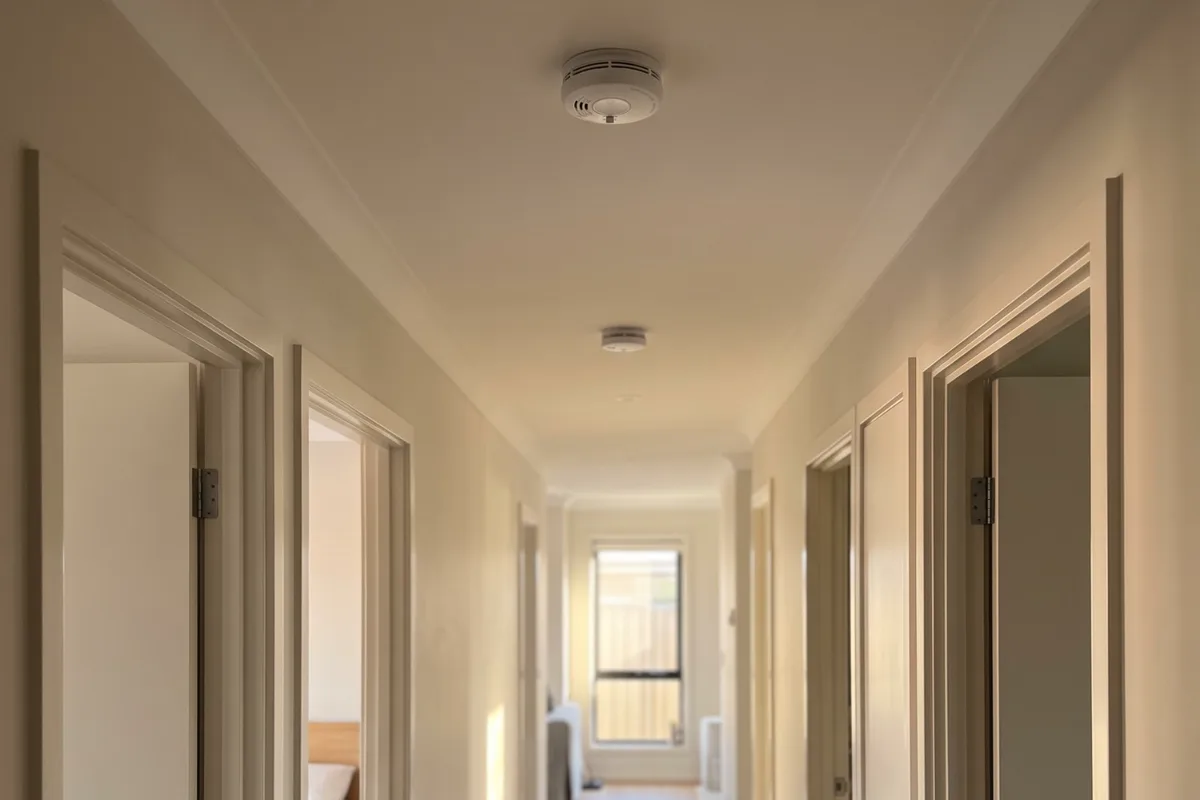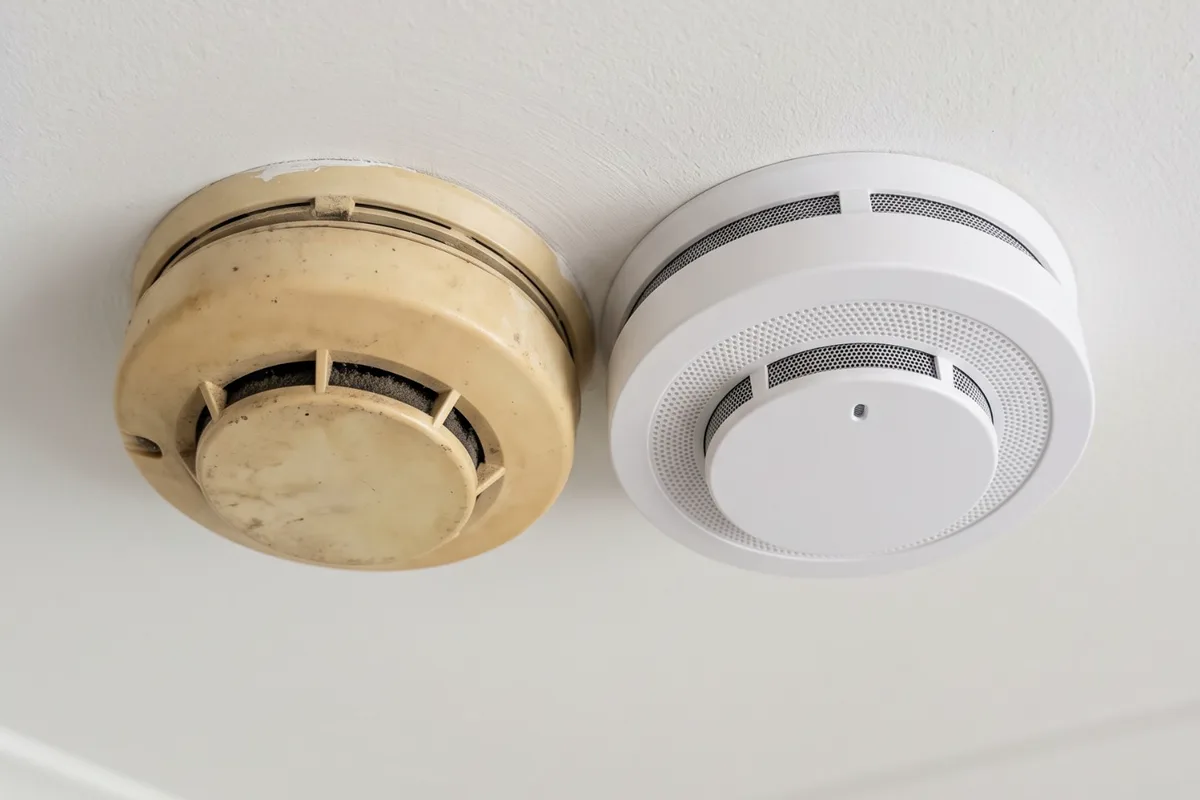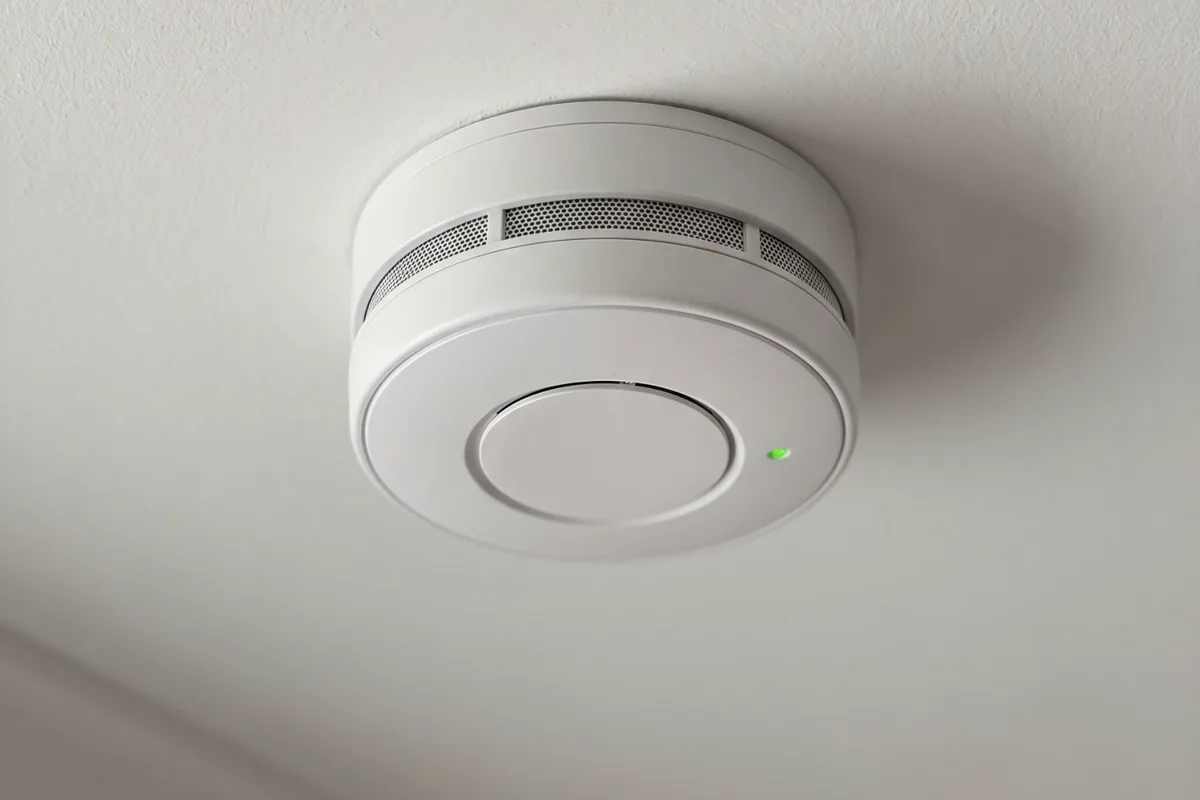
A smoke alarm outside the kitchen doesn't help much if a fire starts in a bedroom at the far end of the house while everyone's asleep. We place alarms where they give the earliest warning, usually in hallways outside bedrooms and on every level, and link them so they all sound together. Most alarms need replacing after about 10 years, so we check the dates on yours while we're there.
When to get it checked
Past its date, or no date at all
The Building and Plumbing Commission says new alarms carry an expiry date under the battery. If you can't find a date anywhere, or the casing has gone yellow, you're probably looking at an older alarm.
A chirp every minute or so
A short chirp on a steady loop usually means a low backup battery. If the battery is sealed in, or the chirp carries on after a fresh one, the alarm itself has reached the end of its life.
It fails the monthly test
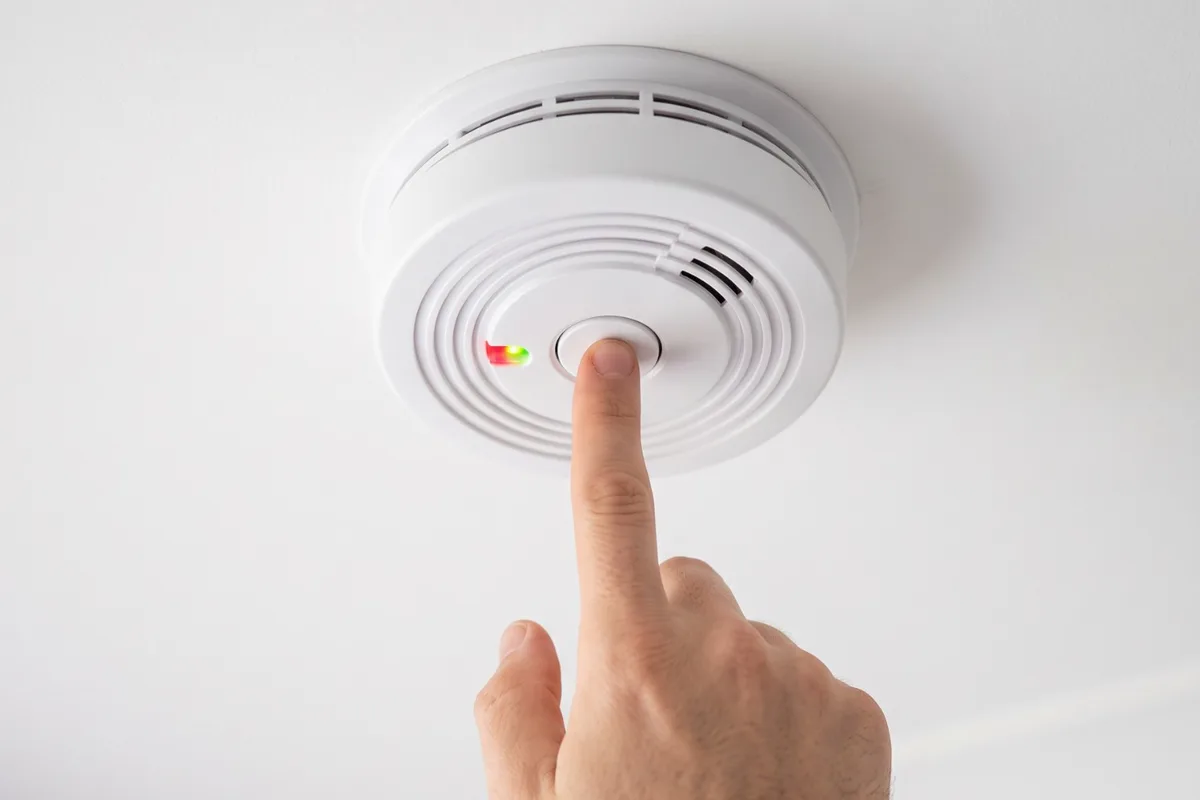
Press test and you should get a loud, clear beep. Silence, a weak squawk or a beep that cuts out means a flat battery or a failed alarm, and neither should wait for next month.
False alarms over toast or steam
An alarm that sounds whenever someone cooks or showers is usually too close to the kitchen or bathroom. The danger is what comes next: the battery comes out, and the house goes without.
Gaps in coverage
One alarm for a house with bedrooms at both ends, nothing upstairs, or a converted garage with no alarm between it and the living areas.
Why it happens
5 common causes
Sensors age
The sensing chamber collects dust and tiny insects, and the electronics age with it. On many alarms the test button proves the battery and horn more than the sensor, so the date matters more than the beep.
Backup batteries run down
Hardwired alarms switch to a backup battery in a power cut. A replaceable backup wears out on its own schedule, while a sealed lithium one is made to last as long as the alarm, so when it goes, the whole unit goes.
The house changed, the alarms didn't
An extension, a garage turned bedroom or a second storey can leave alarms in the wrong places. The alarm that once sat outside the bedrooms may now be guarding the laundry.
Put in the wrong spot
Some alarms went where the ceiling was easy to reach rather than where they work best, such as right beside the kitchen. Paint or renovation dust over the vents also slows smoke reaching the sensor.
Mixed makes in a linked set
Interconnected alarms generally only talk to compatible models. Swap one for whatever was on the shelf and the link can quietly break, leaving that alarm sounding on its own.
What the job covers
What we usually do on this job. Your quote confirms it for your place.
- Existing alarms checked for type, age and position
- Expired or faulty alarms replaced
- Photoelectric alarms fitted
- Hardwired alarms with battery backup where the wiring allows
- Long-life lithium battery alarms where hardwiring isn't needed or practical
- Alarms interconnected, wired or wireless
- Alarms placed in hallways outside bedrooms and on each level
- Every alarm tested once installed
- Install date noted so you know when they're next due
Your options, explained
Like-for-like replacement
Low disruption- Best for
- Hardwired alarms in the right places but past their date
- How it works
- The old alarm and base come down and a new alarm goes up on the existing cable, with a new base or adaptor to suit.
- Worth knowing
- Only right if the existing positions still suit the house, which an extension or new layout often changes.
Hardwired, cable-interconnected
Medium disruption- Best for
- Single-storey homes with good roof access, and extensions
- How it works
- Each alarm is wired to mains power, with an interconnect cable run between them through the roof space.
- Worth knowing
- The most permanent setup. A tight, low-pitched roof or a second storey takes more work than an open roof space.
Wireless-interconnected alarms
Low disruption- Best for
- Two-storey homes, raked ceilings and apartments where cable can't be run
- How it works
- Alarms link by radio, so when one detects smoke they all sound. They can be mains-powered or run on sealed long-life batteries.
- Worth knowing
- Every alarm must be a compatible model from the same range. Where hardwired alarms are needed, each still connects to mains power.
Long-life battery alarms
Low disruption- Best for
- Homes built before 1 August 1997 without hardwired alarms
- How it works
- Sealed-battery alarms are fixed to the ceiling with no wiring, and the battery is designed to last the life of the alarm.
- Worth knowing
- A real improvement on an expired or missing alarm, but not a stand-in where hardwired alarms are fitted or required.
The people behind the work
One local team for electrical, heating and cooling. Family-run, based in Altona Meadows, with 19 years in the industry.
Licensed electrical contractor (REC 38187)See more team photos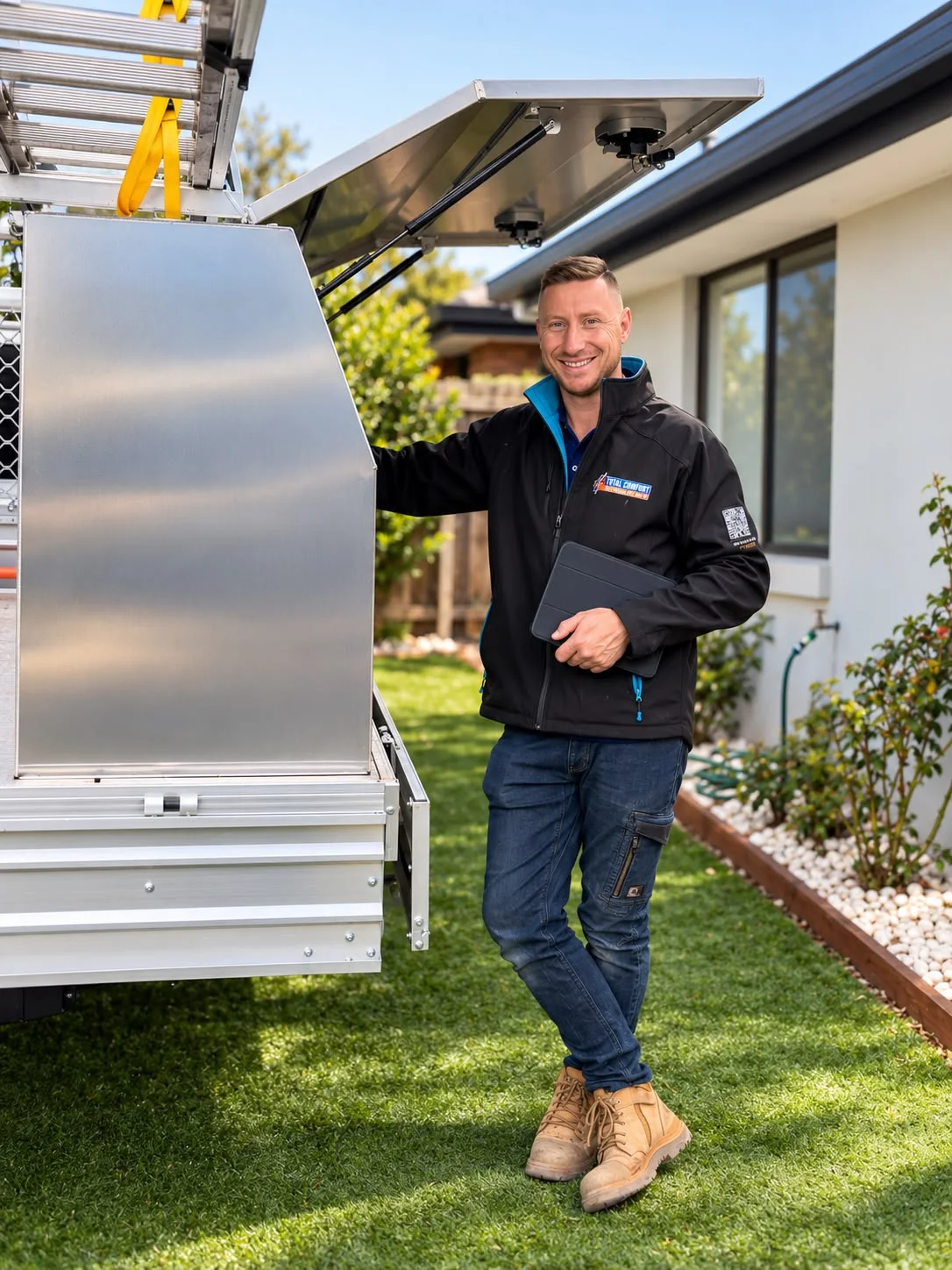
Worth knowing before you book
- Check the date on the back
- Smoke alarms have a manufacture or expiry date printed on them. Most are due for replacement after about 10 years, even if the test button still beeps.
- Hardwired stays hardwired
- If your home was built with hardwired alarms, replacements should be hardwired too, not stick-on battery units. Homes built in Victoria from the late 1990s onwards generally have them.
- Renting it out
- In Victoria, rental providers are responsible for keeping smoke alarms working and having them tested at least every 12 months. We can do the testing and replace any that fail.
What affects the price?
The right scope depends on your installation. These are the details we check so your quote is useful, with any additional work explained before it proceeds.
How many alarms the layout needs
Every storey and every bedroom area counts. A split-level home or a house with a separate parents' retreat needs more alarms than a compact single-storey with the bedrooms together.
Existing cable or starting fresh
Swapping alarms on existing cable is the simpler job. Hardwiring a house that has only ever had battery alarms means finding a supply and running cable to each new position.
Ceilings and roof access
Raked ceilings, stairwell voids, concrete ceilings and shallow roof spaces all make cable harder to run. Wireless linking can get around the worst of them.
What the check turns up
Damaged cabling, no supply near a new position or a fault on the alarm circuit is explained to you and priced separately before it goes ahead.
Before the visit
- Send photos of accessible alarm labels without disconnecting fixed wiring.
- Tell us the number of levels and where bedrooms are located.
- If renting, include previous alarm records and the property manager’s contact.
How it runs
- 1
Tell us about the home
Number of bedrooms and levels, and what alarms are there now. A photo of the back of one helps.
- 2
Check and plan
We check the existing alarms and agree where new ones should go.
- 3
Install and link
Old alarms come down, new ones go up and they're connected to each other.
- 4
Test
We set off each alarm to confirm they all sound together, and show you how to test them.
Step by step, in more detail
5 steps
Tell us about the house
How many bedrooms and levels, where the bedrooms sit, and roughly when the home was built or extended. A photo of each alarm helps us bring the right parts.
Check what's there
We check every alarm for type, age, power supply, backup battery and interconnection, and where each one sits against the bedrooms and each storey.
Agree the plan and the price
We explain what needs replacing, where new alarms should go and whether to link them by cable or wirelessly. You get a fixed price for the agreed scope before work starts.
Replace and add alarms
A hardwired alarm is replaced with a hardwired one, never a stick-on battery unit. New positions are cabled through the roof space where access allows, and linked wirelessly where it doesn't.
Test and hand over
We set off each alarm in turn to confirm the whole set sounds together, including between floors. We note the install dates so you know when they're next due, and show you the test and hush buttons.
What is safe to do, and what to leave to us
Safe for you to do
- Test each alarm monthly: press and hold the test button until it beeps three times, as Fire Rescue Victoria advises.
- Change a replaceable battery when an alarm chirps. Consumer Affairs Victoria says anyone can change a smoke alarm battery.
- Use the hush button for a cooking false alarm and open a window.
- Check alarms aren't painted over or left covered after renovation work.
- If there's a fire, get everyone out and stay out.
Leave these to us
- Installing, moving or replacing a hardwired alarm yourself.
- Twisting a chirping alarm off its base and leaving it off.
- Pulling the battery from an alarm that goes off while you cook.
- Adding a different make of alarm to a linked set.
- Letting anyone unlicensed work on alarm wiring. Energy Safe Victoria says unlicensed electrical work is illegal and potentially fatal.
When to get us in
- An alarm is past its date, or you can't find a date on it
- A hardwired alarm still chirps after a fresh battery
- An alarm fails its monthly test or sounds for no reason
- Pressing test on one alarm doesn't set off the others
- You're extending, converting a garage or adding a bedroom
- You rent the property out and the annual check is due
More detail
Photoelectric or ionisation
Photoelectric alarms respond well to the slow, smoky fires that start in smouldering bedding, furniture or wiring, and they're less prone to going off over cooking. Ionisation alarms react quickly to flaming fires but are more easily set off by toast. We fit photoelectric alarms, and Consumer Affairs Victoria says smoke alarms must meet Australian Standard AS 3786.
Where each alarm goes
The Building and Plumbing Commission says alarms go on or near the ceiling of every storey, between each bedroom area and the rest of the house, positioned to wake sleeping occupants. In practice that means the hallway outside the bedrooms, a second alarm where bedrooms sit at opposite ends, and one near the stairs on each level. We keep them clear of kitchen and bathroom doors, the airflow from ducted outlets, split systems and ceiling fans, and the dead air where wall meets ceiling.
Planning alarms into a renovation
Fire Rescue Victoria's summary says a home largely renovated or extended after 1 May 2014 needs interconnected, hardwired alarms on 240V power with a backup battery. That can mean new alarms in the original rooms too, so we set positions at rough-in, before the ceilings close up. The Building and Plumbing Commission also says an owner who fails to meet the smoke alarm requirements of the Building Regulations 2018 can be fined.
Local rules and conditions
Victorian requirements and local conditions that shape this job, with the sources listed at the foot of the page.
Older weatherboards in Newport and Seddon
Newport's heritage estate precinct is mostly single-storey weatherboard houses from the Victorian, Federation and Interwar periods, and Seddon's precinct is mainly small single-storey Edwardian and Victorian houses. Homes built before 1 August 1997 may have battery-powered alarms, so check each one's date and power source.
Townhouses and units in Williamstown
At the 2021 Census, 56.2% of Williamstown's occupied private dwellings were separate houses, well below the Victorian figure of 73.4%. A townhouse over two levels needs an alarm on or near the ceiling of each storey, and where cable can't get between floors, wireless linking does the job.
New homes in Wyndham's growth areas
Wyndham's new housing is planned for growth areas including Truganina, Tarneit, Wyndham Vale and Manor Lakes. A home built there now needs interconnected, hardwired alarms, so check the electrical plans show one on every storey between each bedroom area and the rest of the house before the plasterboard goes up.
Sort it before winter
CFA and Fire Rescue Victoria figures show 21 preventable residential fire deaths in Victoria in 2025, compared with 18 in 2024, with the most reported in winter. Heaters run longer on cold, still nights and bedroom doors stay shut, so sort out expired or missing alarms before the cold sets in.
Useful reading
Guides to read before you decide, with checklists and questions to bring to the quote.
- Smoke alarm rules for Victorian homesWhat Victoria expects of the alarms in the home you own: the type your build date calls for, where they go, interconnection and when to replace them.
- Rental electrical and smoke alarm checks in VictoriaKnow which records to gather, how to arrange access and where to verify the current Victorian requirements.
- What electrical work you can and can't do yourself in VictoriaWhere Victorian law draws the line on home electrical work, the short list of jobs that are yours, and what to do when a job goes past it.
- The electrical decisions to make before your renovation walls closePlan appliances, lighting, outlets and future upgrades while access and options are still available.
Common questions
Questions people ask about this
More in the Help centreSources for the rules and local facts on this page
11 sources, with the date each was checked
- 1.Victorian Heritage Database (Heritage Council Victoria); entry maintained by Hobsons Bay City Council from the Hobsons Bay Heritage Study 2006: Aesthetically, it is significant for the groups of relatively intact examples of representative housing, from the Victorian, Federation and Interwar periods. They are notable for their consistent character, which is… Accessed 30 September 2026.
- 2.Victorian Heritage Database (Heritage Council Victoria); entry maintained by Maribyrnong City Council: The general character of the Seddon Residential and Commercial Precinct is of small Edwardian and Victorian period single-storey detached and some attached housing, with a dominance of weatherboard walling and… Accessed 30 September 2026.
- 3.Building and Plumbing Commission (formerly Victorian Building Authority): Homes constructed after 1st August 1997 must have smoke alarms connected to 240V mains power and have a backup battery. Homes constructed before 1st August 1997 may have smoke alarms powered by a battery. Accessed 30 September 2026.
- 4.Australian Bureau of Statistics, 2021 Census QuickStats: Separate house 3,070 56.2 1,755,423 73.4 Accessed 30 September 2026.
- 5.Victorian Electoral Commission (2023 electoral structure review fact sheet): New housing developments are planned in residential growth areas including Truganina, Tarneit, Wyndham Vale and Manor Lakes, as well as near activity centres and public transport. Accessed 30 September 2026.
- 6.Fire Rescue Victoria: Residential home constructed, largely renovated, or extended after 1 May 2014 Interconnected, hard wired smoke alarms that are connected to 240 volt mains power and have a back-up battery. Accessed 30 September 2026.
- 7.Fire Rescue Victoria: Across Victoria, in figures compiled by CFA and FRV, there were a total of 21 preventable residential fire fatalities in 2025. This compares to 18 equivalent fatalities in 2024, with the highest number of deaths… Accessed 30 September 2026.
- 8.Consumer Affairs Victoria: A hard-wired smoke alarm must be installed by a qualified electrician, but anyone can change a smoke alarm battery. Accessed 30 September 2026.
- 9.Energy Safe Victoria: Gas and electricity are inherently dangerous and it’s illegal and potentially fatal for unlicensed and unqualified people to undertake any electrical or gasfitting work. Homeowners and consumers must always use… Accessed 30 September 2026.
- 10.Energy Safe Victoria: Electrical work isn’t a DIY job, even for small jobs such as changing power points or light switches. Accessed 30 September 2026.
- 11.Energy Safe Victoria: Whenever a licensed electrician completes any electrical installation work, they must provide a Certificate of Electrical Safety (COES). Accessed 30 September 2026.