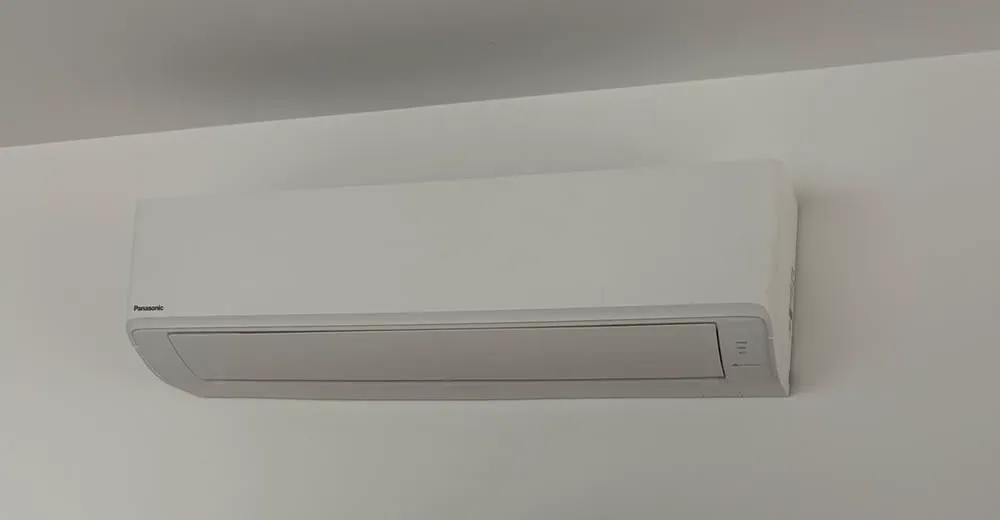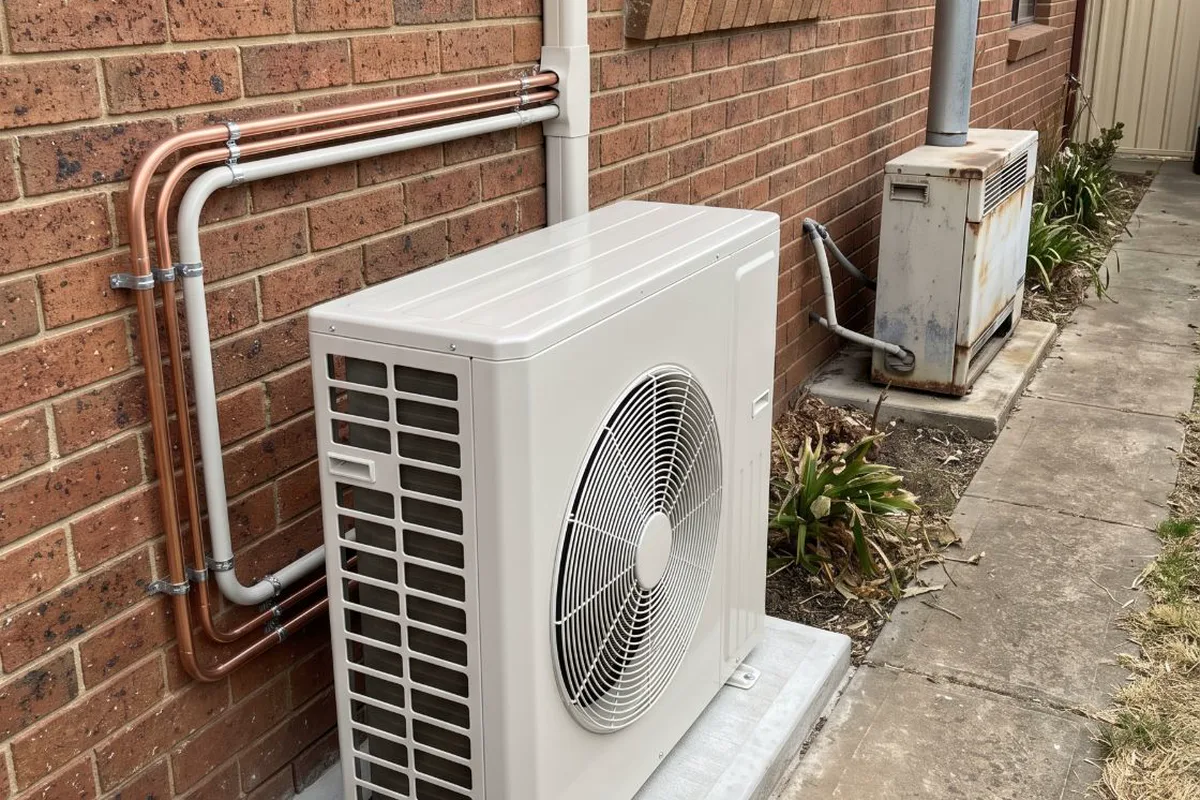
A reverse-cycle air conditioner is a heat pump that heats in winter and cools in summer. We size it for winter, check the switchboard can carry it and time the licensed gas disconnection with the install. You get the price before we start.
When to get it checked
The gas heater is getting old
It needs more attention each winter. Energy Safe Victoria suggests considering replacement when a gas heater is old or hasn’t been serviced for several years.
A big repair is on the table
A failed fan motor or heat exchanger on an ageing heater is money spent on a system you may replace anyway. Price reverse-cycle beside the repair.
You want cooling as well
Gas only heats. After a run of hot north-wind days, one system for both seasons starts to make sense.
The house has been sealed up
Draught-proofing, new windows or a renovation change how air moves through a home. Energy Safe Victoria warns this can alter the ventilation an open-flued gas heater needs to clear carbon monoxide.
Why it happens
4 common causes
A heat pump moves heat rather than making it
In heating mode it absorbs heat from the outside air and releases it indoors. Australian Government energy rating guidance says that’s three to five units of heat for every unit of electricity used.
One system for both seasons
The outdoor unit that heats in July cools in January. That’s one system to service instead of two.
Open-flued heaters carry more risk
Energy Safe Victoria says open-flued heaters can spill carbon monoxide more easily than other types. Replacing one takes combustion out of the living room altogether.
Gas servicing never stops
Energy Safe Victoria recommends a qualified gasfitter services gas heaters at least every two years. Reverse-cycle still needs clean filters and servicing, but there’s no flame or flue.
What the job covers
What we usually do on this job. Your quote confirms it for your place.
- Gas heater, ducts and rooms served inspected
- System sized room by room for heating
- Split, multi-head and ducted options compared
- Switchboard and supply capacity checked
- Dedicated circuit and isolator for each outdoor unit
- Gas disconnection timed with a licensed gasfitter
- Certificate of Electrical Safety for the electrical work
Your options, explained
Split systems room by room
Low disruption- Best for
- Replacing a gas wall or space heater in the living area, plus a bedroom or two
- How it works
- Each room gets a wall head with its own outdoor unit. Wall units run more efficiently than ducted systems.
- Worth knowing
- Each outdoor unit needs wall space and usually its own circuit and isolator.
Ducted reverse-cycle
High disruption- Best for
- Whole-house heating in place of gas ducted, with cooling added
- How it works
- An indoor unit in the roof feeds zoned ceiling outlets.
- Worth knowing
- Old gas ducts, especially underfloor runs, may not suit cooling.
Add reverse-cycle, keep gas for now
Low disruption- Best for
- A sound gas ducted heater in a home that needs cooling
- How it works
- A split in the living area does most of the heating, and the gas heater covers the rest until it’s due for replacement.
- Worth knowing
- It still needs regular gas servicing.
The people behind the work
One local team for electrical, heating and cooling. Family-run, based in Altona Meadows, with 19 years in the industry.
Licensed electrical contractor (REC 38187)See more team photos
Worth knowing before you book
- You don’t have to switch
- Owner-occupiers aren’t required to replace gas space heating with electric.
- Old ducts may not suit
- Underfloor gas ducts rarely serve cooling well. We check ducts before quoting.
- Plan the board once
- If hot water or cooking will go electric later, size the switchboard for all of it now.
What affects the price?
The right scope depends on your installation. These are the details we check so your quote is useful, with any additional work explained before it proceeds.
Rooms and system type
One split for the lounge is a different job from zoned ducted for four bedrooms. Heating output and the number of heads drive the price.
Switchboard and supply
A board with spare room needs only a new circuit. Ceramic fuses, a crowded board or a limited supply mean switchboard work first.
Ducts, access and pipe runs
Reusing sound ducts saves work; replacing them adds it. Low roof spaces, second storeys and long refrigerant runs take longer.
Getting the gas heater out
Disconnection, removal, sealing the flue opening and covering floor vents all count. The quote should say who does each.
How it runs
- 1
Show us what you have
Photos of the heater label, switchboard and outside walls get the quote started.
- 2
Options and a fixed price
We compare systems for your home and price the agreed scope.
- 3
Install and hand over
The gasfitter disconnects the old heater, the new system goes in and we run it through.
Step by step, in more detail
4 steps
Look at what’s there now
We note the gas heater type, where it sits and which rooms it serves. Then we check the switchboard, roof space and outside walls.
Choose and size the system
Split or ducted, sized for heating first. For ducted, the Victorian Government recommends 1.1 to 1.4 kW of heating output for every 10 m² covered, depending on the home.
Check the switchboard and supply
We check whether the switchboard needs an upgrade before a new reverse-cycle system goes in. Where the manufacturer calls for a dedicated circuit or safety switch, we fit it.
Disconnect, install and hand over
A licensed gasfitter disconnects and caps the old heater, timed with the install. We run the new system in heating mode, explain the controls and give you a Certificate of Electrical Safety.
What is safe to do, and what to leave to us
Safe for you to do
- If the gas heater’s flame changes colour, turn it off and have a qualified gasfitter check it.
- Photograph the heater label, the switchboard and where an outdoor unit could go.
- Clear the roof hatch and the area around the old heater before install day.
Leave these to us
- Disconnecting or capping a gas heater. Energy Safe Victoria says unlicensed gasfitting is illegal and potentially fatal.
- Adding a circuit or breaker yourself. That work needs a licensed electrician.
- Blocking the vents or flue of a gas heater that’s still in use.
When to get us in
- Your gas heater needs a major repair and you want reverse-cycle priced beside it
- You’re renovating and ducts or cables can go in while ceilings are open
- You own a rental with gas heating and want a plan before 1 March 2027
More detail
What happens to the old gas ducts
Older gas ducted systems often blow up through floor vents from under the house. That suits heating, but reverse-cycle ducted usually goes in the roof with ceiling outlets, because cool air falls. Sound roof ducts can sometimes be reused if they’re insulated to at least R1.5 with sealed joints.
Heat pump warmth feels different
A reverse-cycle system gives steadier warmth than a gas furnace and works best left at a sensible setting. The Victorian Government suggests 18°C to 20°C for heating, with each degree higher adding around 10% to the bill. On frosty mornings the outdoor unit pauses briefly to defrost.
Local rules and conditions
Victorian requirements and local conditions that shape this job, with the sources listed at the foot of the page.
Cold, still winter nights
At the Laverton weather station, July’s mean minimum is 5.2 °C, with June and August close behind. Victorians use more energy heating than cooling, so the Victorian Government suggests choosing a unit with higher heating efficiency.
Owner-occupiers can keep gas heating
From 1 March 2027, a gas hot water appliance in an existing home that breaks and can’t be repaired must be replaced with an electric one. There’s no requirement to switch gas space heating, though the Victorian Government encourages it.
Rental heaters from 1 March 2027
When a rental heater breaks and can’t be repaired, it must be replaced with an efficient electric reverse-cycle air conditioner in the main living area.
Useful reading
Guides to read before you decide, with checklists and questions to bring to the quote.
- Reverse-cycle air conditioning or gas heating?How each one makes heat, how it feels on a cold night in Melbourne's west, what Victoria's gas rules mean for you and what switching really involves.
- Going all-electric in a Melbourne homeHot water, heating and cooking don't have to go electric at once. How to stage the move off gas, check the switchboard once and time each step.
- What size split system do you need?What a split system's kW rating measures, why floor area alone gets it wrong, and how glass, ceilings and afternoon sun change the size a room needs.
- An ageing gas heater: service, repair or plan an electric replacement?Separate immediate safety needs from a considered comparison of repair and reverse-cycle heating.
Common questions
Questions people ask about this
More in the Help centreFrom the blog
- Are old gas space heaters still safe to use?Older open-flued gas wall and space heaters can spill carbon monoxide. Why some can no longer be sold, what servicing should cover and when reverse-cycle makes sense.
- Keep gas ducted heating and add splits, or go ducted reverse-cycle?Sound gas heater and only two rooms to cool? Keep it and add splits. Ageing heater, or cooling wanted throughout? Ducted reverse-cycle is usually the better move.
- Should landlords replace a working gas heater before 2027?No. A compliant working heater can stay. But for an old, open-flued or unreliable heater, or a property with no cooling, replacing early often makes sense.
Sources for the rules and local facts on this page
16 sources, with the date each was checked
- 1.Bureau of Meteorology: Mean minimum temperature (°C) 14.0 14.4 12.7 10.0 7.8 5.9 5.2 5.7 6.8 8.4 10.3 12.2 9.5 81 1943 2026 Accessed 30 September 2026.
- 2.Department of Energy, Environment and Climate Action (energy.vic.gov.au), page last updated 14/04/25: Victorians typically use more energy for heating than cooling, so look for a unit with a higher heating efficiency. Accessed 30 September 2026.
- 3.Department of Energy, Environment and Climate Action (Victoria): From 1 March 2027, if a gas hot water appliance breaks and cannot be repaired, it must be replaced with an electric alternative. No requirement to upgrade gas space heating or stovetop gas cooking to electric, however… Accessed 30 September 2026.
- 4.YourHome (Australian Government): A reverse cycle air-conditioner is a type of heat pump that uses electricity to warm your home in winter and cool it in summer (refer to Heat pumps below). In heating mode, the system absorbs heat from the outside air… Accessed 30 September 2026.
- 5.Energy Safe Victoria: Check for changes in how your gas heater operates. For example if the flame changes from its usual colour. If there is any change, you must get a qualified gasfitter to inspect your gas heater and check it for CO… Accessed 30 September 2026.
- 6.Energy Safe Victoria: If you have renovated or weather-sealed your home and kept your open-flued gas heater, you may have inadvertently altered the ventilation your home needs to clear carbon monoxide from your gas heater. This might be… Accessed 30 September 2026.
- 7.Energy Rating (GEMS Regulator / DCCEEW): Reverse cycle air conditioners are much more efficient at heating than standard electric heaters (bar heaters, convection, or radiant heaters). ... During the normal operating range in Australia for every unit of… Accessed 30 September 2026.
- 8.Energy Safe Victoria: This means that if the manufacturer’s specifications require an air conditioner to be installed on a dedicated circuit or protected by a residual current device then they must be adhered to. Accessed 30 September 2026.
- 9.Energy Safe Victoria: Whenever a licensed electrician completes any electrical installation work, they must provide a Certificate of Electrical Safety (COES). Accessed 30 September 2026.
- 10.energy.gov.au (Australian Government, DCCEEW): The energy efficiency of reverse-cycle air conditioners on the Australian market ranges between 300% to 600% efficient. Air conditioners can achieve such high rates of energy efficiency because they do not use… Accessed 30 September 2026.
- 11.Access Canberra Electrical Inspections (ACT Government), Electrical Fact Sheet, updated September 2019: Air-conditioning and heat pump systems incorporating a compressor shall be provided with an isolating switch (lockable) in accordance with Clause 2.3.2.2, installed adjacent to but not on the unit, which isolates all… Accessed 30 September 2026.
- 12.Energy Safe Victoria: Gas and electricity are inherently dangerous and it’s illegal and potentially fatal for unlicensed and unqualified people to undertake any gasfitting or electrical work. Accessed 30 September 2026.
- 13.Energy Safe Victoria: Gas and electricity are inherently dangerous and it’s illegal and potentially fatal for unlicensed and unqualified people to undertake any electrical or gasfitting work. Homeowners and consumers must always use… Accessed 30 September 2026.
- 14.Solar Victoria (updated 20 November 2025): To heat a room, try setting the temperature between 18°C to 20°C. Every 1°C higher will add around 10% to your heating bill. Set your air conditioner thermostat for cooling between 24°C and 26°C for living areas – every… Accessed 30 September 2026.
- 15.Commonwealth of Australia (2019), 'The new zoned energy rating label for air conditioners—What installers and retailers need to know', hosted on energyrating.gov.au: Melbourne is in a black ‘COLD’ area—read the black Cold ratings. Accessed 30 September 2026.
- 16.Energy Rating (GEMS Regulator / DCCEEW): On the right of the label after the stars, is the estimated annual energy use or power input in kilowatt hours (kWh) displaying cooling in blue (top number) and heating in red for each climate zone. ... Products are… Accessed 30 September 2026.