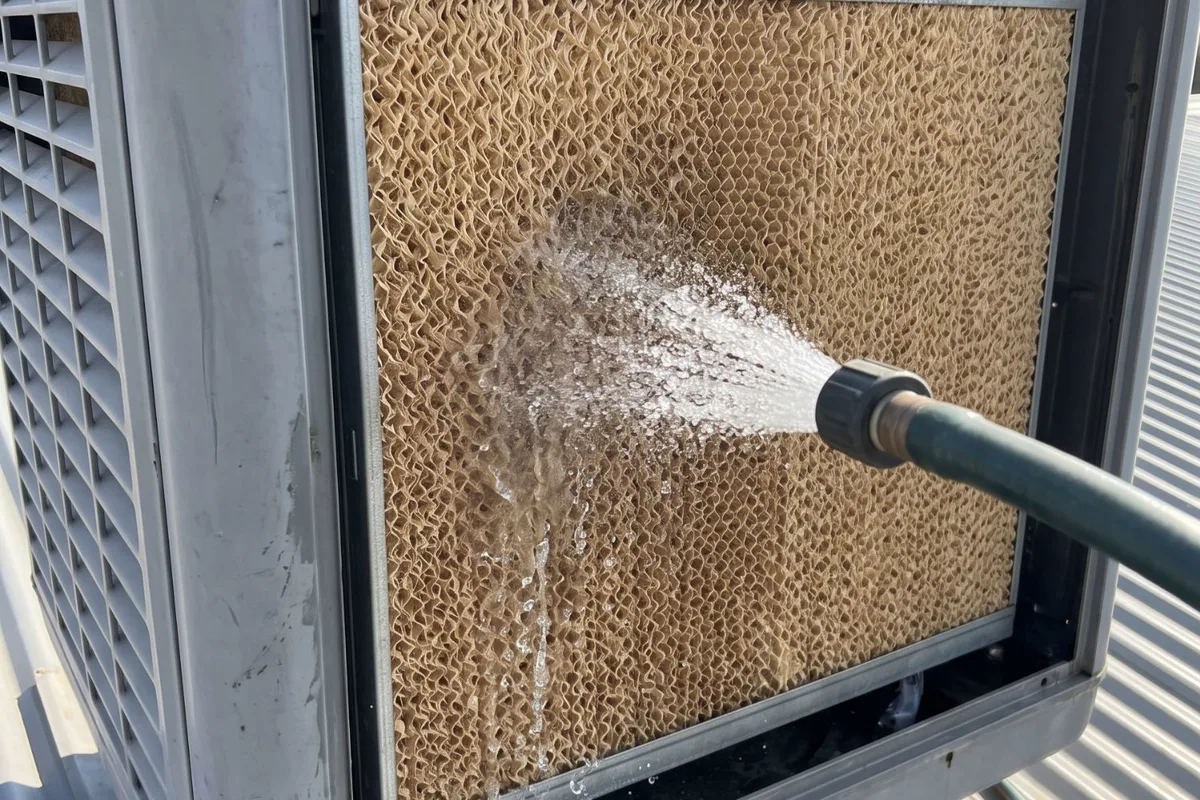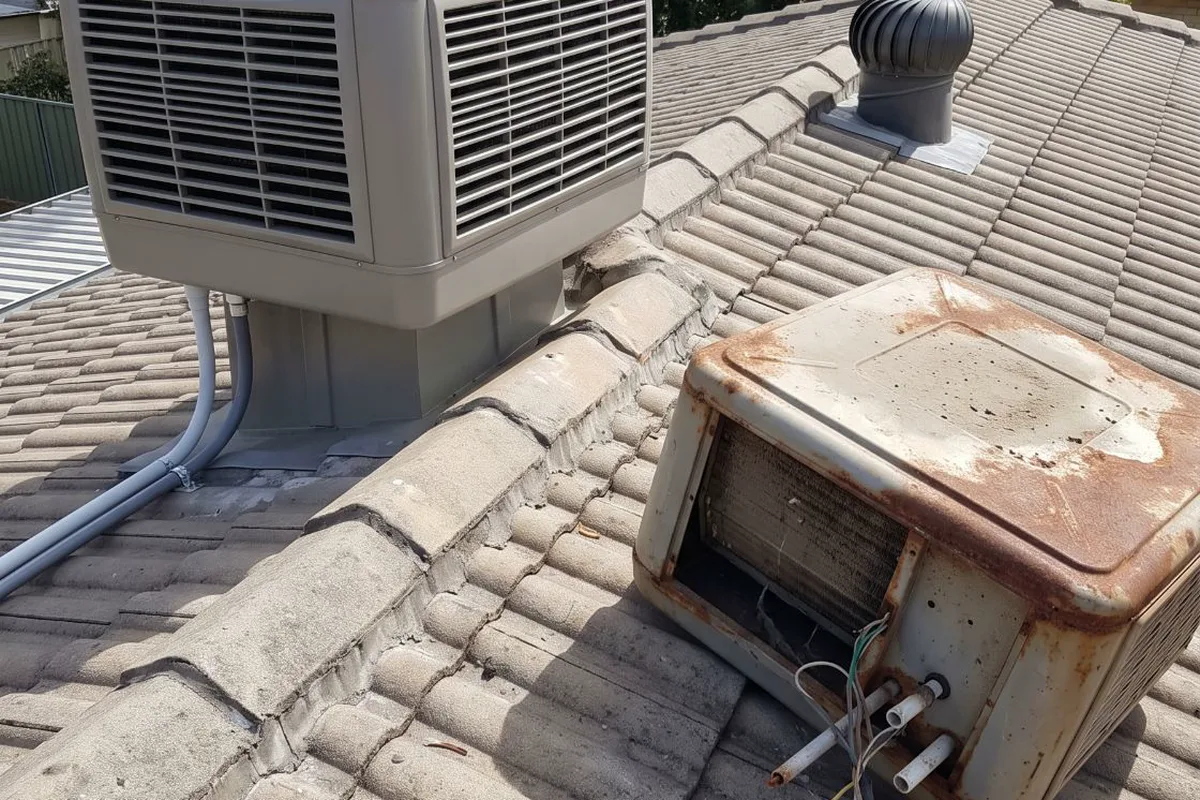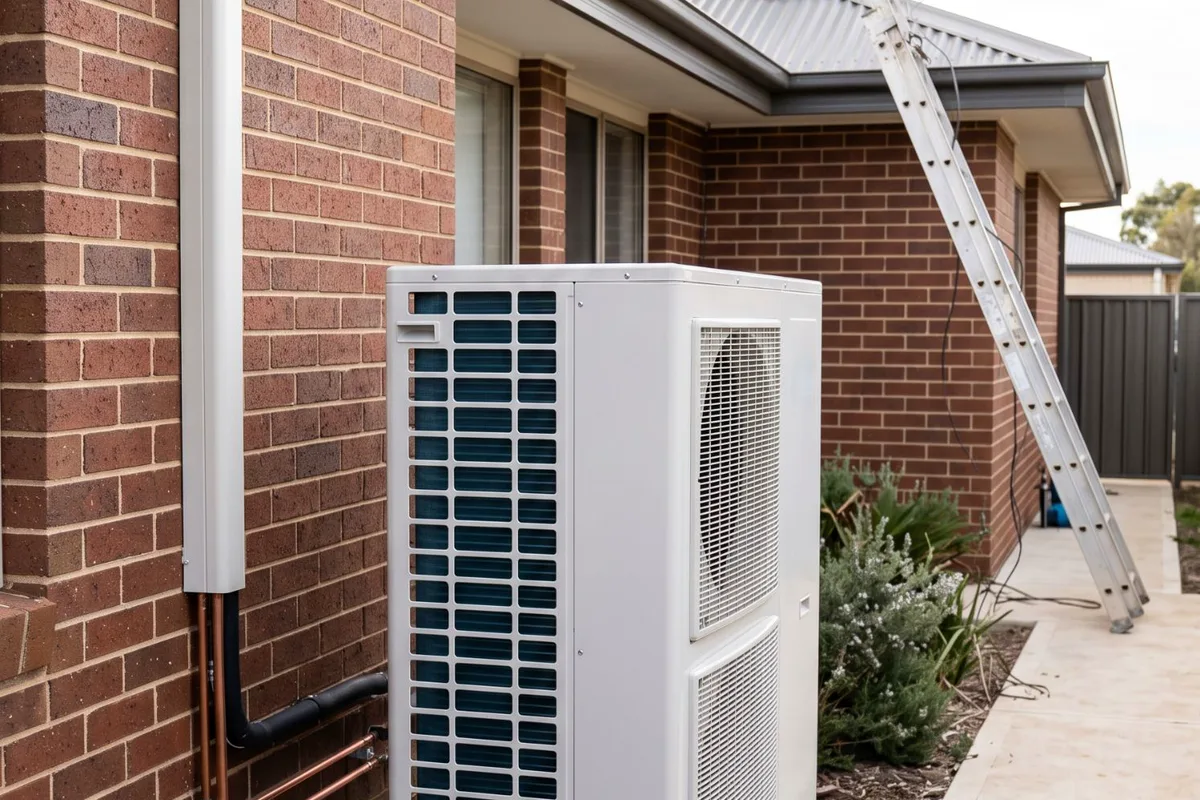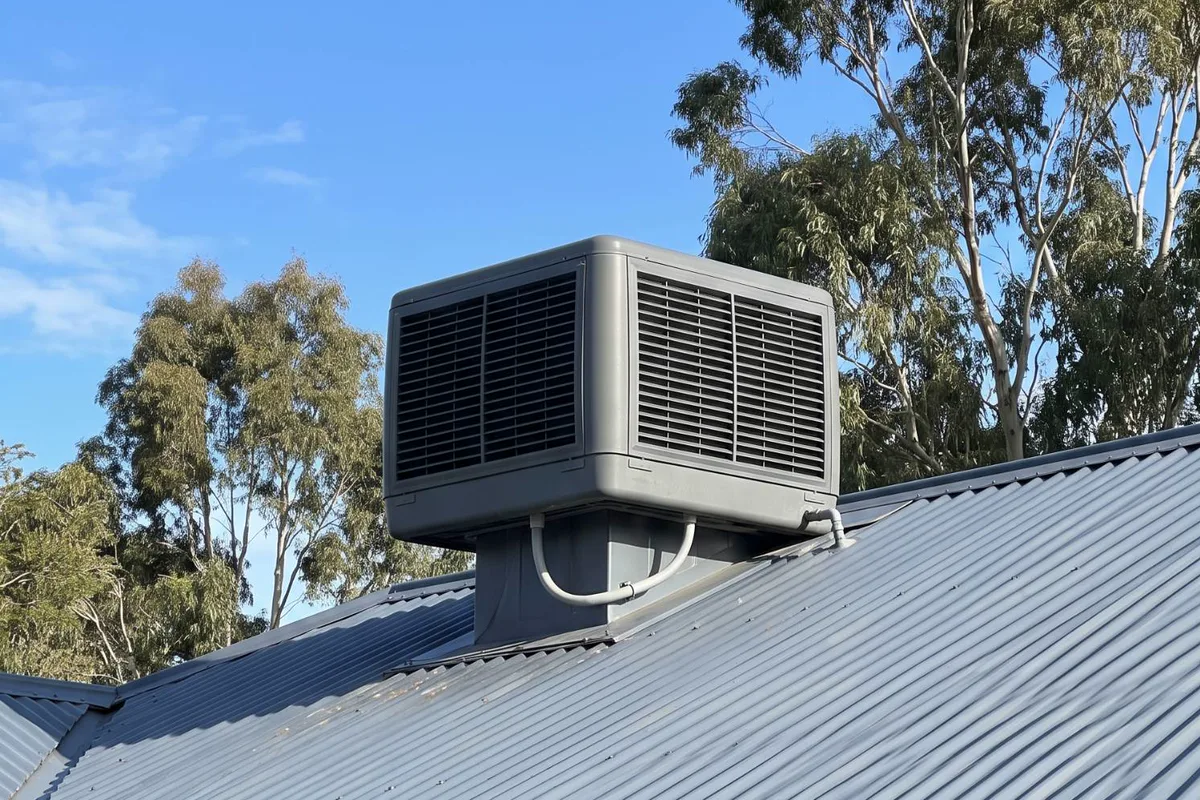
An evaporative cooler pulls outside air through wet pads on the roof and pushes the cooled air through ducts into the house. It works best on hot, dry days and needs some windows or doors open so the air has somewhere to go. It struggles on humid days, and it doesn't heat. If you already have one, the pads, pump and water supply need regular attention to keep it working. We install new systems, repair existing ones and replace old units that aren't worth fixing.
When to get it checked
Warm air from the outlets
Air moves but feels like the outside air pushed indoors. Usually the pads aren't getting wet because the pump has stopped or water isn't reaching them.
A musty or swampy smell
A stale smell on the first run of the season is common. One that doesn't clear points to stagnant water, old pads or algae.
Water where it shouldn't be
Drips from an outlet, a stain spreading across the ceiling, or water running off the roof while the cooler is switched off.
Some rooms miss out
The nearest outlet blows hard while the back bedrooms get a trickle. Suspect a sagging, split or loose duct in the roof space.
Squealing, rattling or grinding
A squeal at start-up is often the belt. Grinding usually means the motor or fan bearings are wearing out.
It won't start or trips the power
The controller is blank, or a safety switch drops the moment the cooler starts. That's an electrical fault to test, not something to keep resetting.
Why it happens
6 common causes
Pads past their best
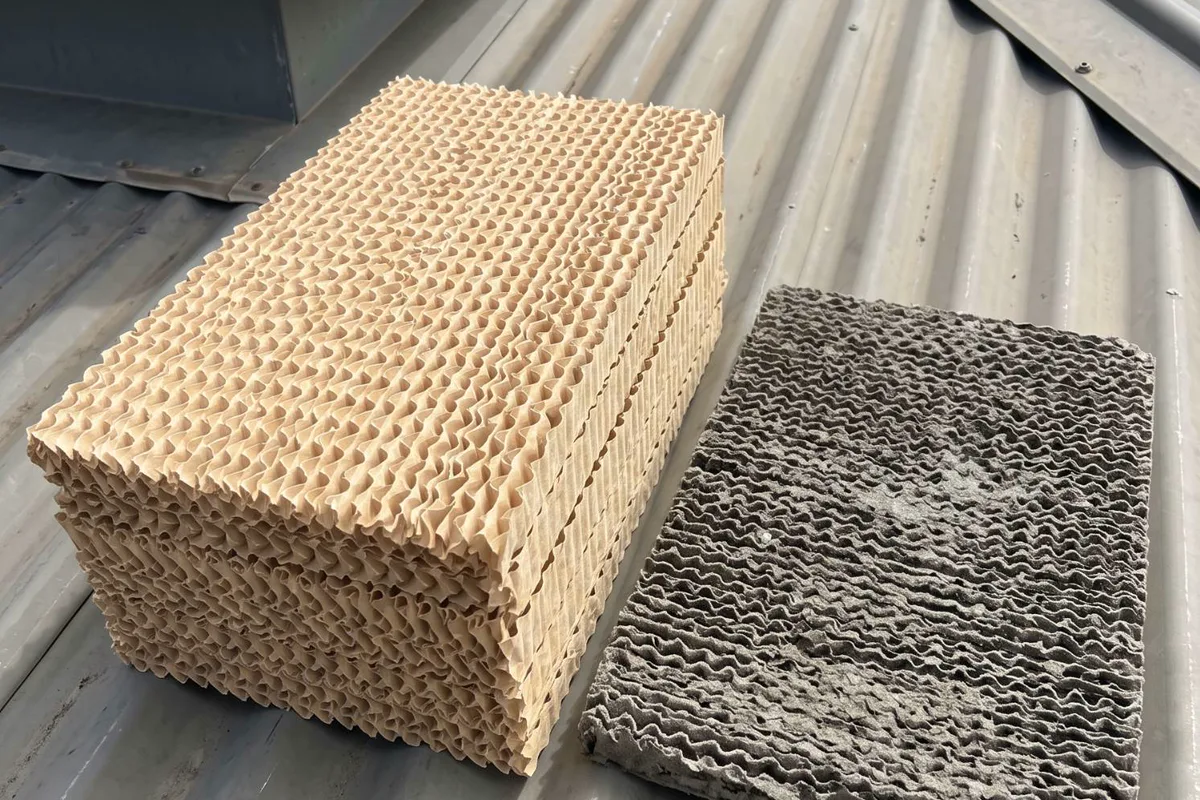
Minerals leave scale on the pads and dust clogs them. Tired pads harden, water runs down channels instead of soaking through, and less of the air gets cooled.
Pump and distributor
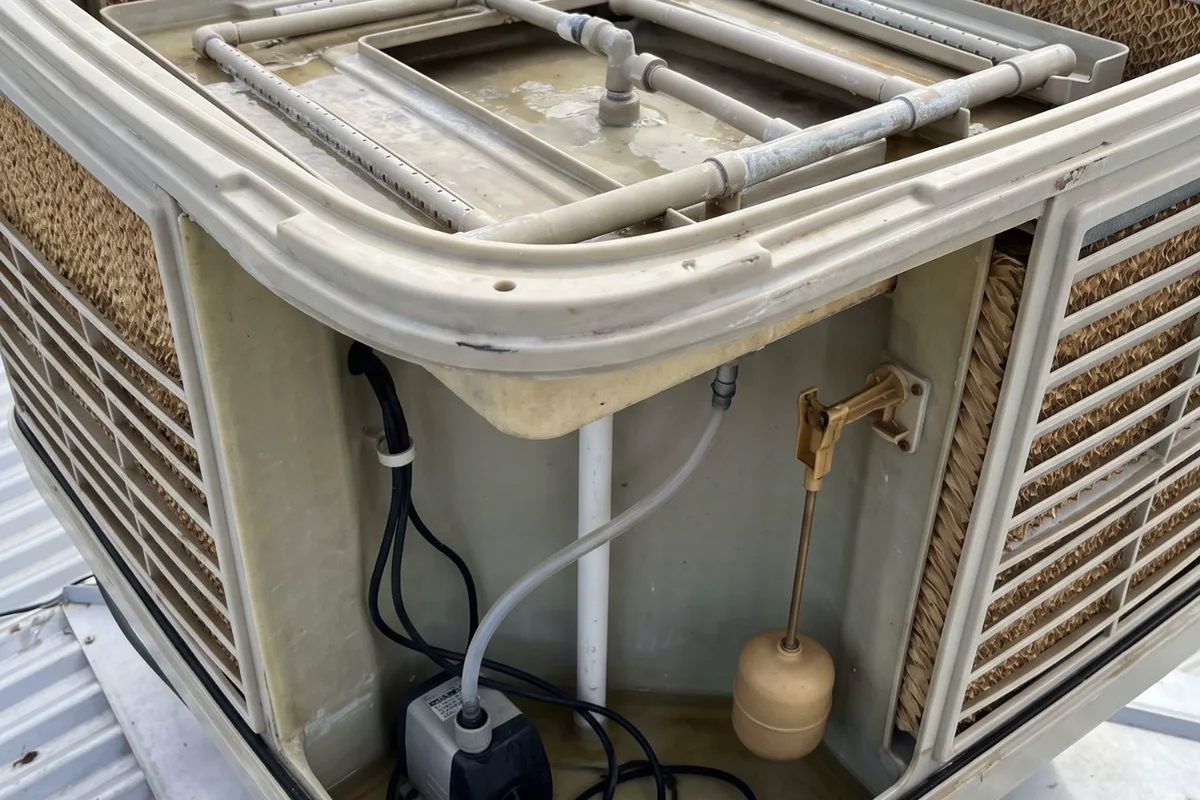
The pump lifts water to channels that spread it over the pads. Pumps can seize after a dry winter, and the small distributor lines block with scale.
Float valve and bleed
The float valve refills the tank and a bleed valve drains some water to keep salts down. When either sticks, the tank overflows, runs dry or goes stale.
Fan, belt and motor
Belts stretch and crack, and motor bearings wear. A roof unit cops full sun, wind and rain, which is hard on rubber, plastic and seals.
Ducts and outlets
Flexible ducts sag, crush, split or pull away from an outlet, often after other trades or rodents have been through the roof space.
Power and controls
Moisture in the roof isolator, a loose terminal or a failed wall controller can stop the whole system. Finding it takes a licensed electrician.
What the job covers
What we usually do on this job. Your quote confirms it for your place.
- Pads checked and replaced when worn or clogged
- Water tank drained, cleaned and refilled
- Pump, float valve and water distribution checked
- Fan, belt and motor inspected
- Water supply and drain connections checked for leaks
- Roof unit mounting and weather seals checked
- Electrical supply and isolator tested
- Ceiling outlets checked for airflow
- Written note of anything that needs attention
Your options, explained
Service and repair the existing cooler
Low disruption- Best for
- A sound unit with worn pads, a tired pump or one failed part
- How it works
- Worn parts are replaced, the tank is cleaned, and the water, drain and power are checked before a test run.
- Worth knowing
- The smallest outlay. On older models, parts supply can decide it.
Replace with a new evaporative unit
Medium disruption- Best for
- An old cooler with a cracked cabinet, a failed motor or parts no longer made
- How it works
- The new unit goes on the roof and reconnects to the ducts, water, drain and power where they're sound.
- Worth knowing
- Ducts and outlets in good order can often stay. We check them in the roof space first.
Convert to ducted reverse-cycle
High disruption- Best for
- Homes wanting heating too, or cooling on humid days with the windows shut
- How it works
- The roof unit comes off and the opening is sealed. A refrigerated system goes in with outdoor and indoor units, ducts and a return air grille.
- Worth knowing
- Existing ducts aren't automatically suitable. We check whether the switchboard needs an upgrade before a new reverse-cycle system goes in.
Keep the cooler, add a split system
Low disruption- Best for
- Households happy with evaporative on dry days who want one room they can close up and heat
- How it works
- The evaporative system stays, and a reverse-cycle split goes into the living area or main bedroom.
- Worth knowing
- Two systems to maintain, but the least change to the house.
The people behind the work
One local team for electrical, heating and cooling. Family-run, based in Altona Meadows, with 19 years in the industry.
Licensed electrical contractor (REC 38187)See more team photos
Worth knowing before you book
- Open a window or two
- Evaporative cooling pushes air into the house. Without somewhere for it to escape, the house gets humid and the system feels weak.
- Service it before summer
- Pads dry out and pumps seize over winter. A spring service means it works on the first hot day instead of failing on it.
- Winter covers help
- The roof unit is open to outside air, so warm air escapes through it in winter. Outlet covers or a roof unit cover cut the draught.
What affects the price?
The right scope depends on your installation. These are the details we check so your quote is useful, with any additional work explained before it proceeds.
What has failed
Pads, a pump or a belt are a different job from a fan motor or control board, and older models may need parts ordered in.
Roof access
Height, pitch, a second storey and tiles or steel change the time and equipment needed to work safely.
Unit size and outlets
Bigger coolers carry more pads, and more outlets mean more ducts to check and balance.
Ducts and water lines
Crushed ducts, brittle supply lines or a poorly placed drain add work, especially under a low-pitched roof.
Electrical work
A new install or replacement may need a new circuit, an isolator, controller wiring or room on the switchboard.
Before the visit
- Send the existing model and accessible controller photos.
- Tell us which rooms have poor airflow and in what weather.
- Identify roof type, height and access restrictions.
How it runs
- 1
Tell us the problem
Not cooling, leaking, noisy, or just due for a service. The make and age of the unit helps.
- 2
Inspect on the roof
We check the pads, pump, fan and water supply and find what's wrong.
- 3
Repair or advise
We fix what's fixable. If the unit is near the end of its life, we'll give you options.
- 4
Test run
We run it with you and check air is reaching each outlet.
Step by step, in more detail
5 steps
Start with what you've noticed
Tell us the make, rough age and the symptom. Photos of the wall controller and any label you can reach without climbing help us bring the likely parts.
Check the power first
We test the circuit at the switchboard, the isolator and the controller wiring. As licensed electricians, we can repair what we find there too.
Inspect the roof unit
Pads, tank, pump, float valve, distributor, drain, fan, belt, motor and seals are checked stopped and running, including how evenly water covers each pad.
Check the air inside
We check airflow at each ceiling outlet and the duct joints we can reach, so a split duct isn't blamed on the cooler.
Price, fix and test
You get a fixed price for the agreed scope before we start. After the work we run it with you, windows open, and leave a written note of anything to keep an eye on.
What is safe to do, and what to leave to us
Safe for you to do
- Open windows or doors in the rooms you want cooled before switching on.
- Switch the cooler off at the controller if it leaks, smells hot or keeps stopping.
- If water comes through the ceiling near a light, switch that circuit off at the switchboard if it's safe to.
- Reset a tripped safety switch once. If it trips again or won't reset, leave it off and call a licensed electrician.
Leave these to us
- Climbing onto the roof to inspect the unit.
- Opening the cooler's electrical panel, isolator or controller. Electrical work isn't a DIY job, even a small one.
- Tipping bleach or household cleaners into the tank. They can damage the pads and pump.
- Running it with every window shut, which leaves the house clammy.
When to get us in
- Warm air on a hot, dry day
- Water dripping from an outlet or staining the ceiling
- A smell that lingers after the first run of the season
- Grinding, squealing or new rattles from the roof
- It trips the power or the controller is dead
More detail
How it cools, and why windows matter
Outside air is drawn through the wet pads, cooled as the water evaporates, and pushed into the house while hot indoor air leaves through open windows and doors. Shut the house up and the air has nowhere to go, so rooms turn clammy and airflow drops. Open windows on the far side of the rooms you want cool, and close doors to rooms you aren't using.
Water: supply, drain and bleed
The Australian Government's YourHome advice says central systems can use 25 litres or more an hour on hot, dry days, which may matter during water restrictions. Some of that is drained off on purpose through a bleed valve so salts don't build up on the pads. A trickle from the drain while it runs is normal. A steady flow with the cooler off usually means a stuck float or drain valve.
Putting in a new evaporative system
A new install means a roof unit on a stand, a transition into the roof space, ducts to ceiling outlets, a water line, a drain, and a power circuit with a wall controller. Outlet placement matters as much as unit size, and every room with an outlet needs a way for air to leave. Federal energy advice notes purchase and installation can be expensive, so we plan the ducts, outlets and wiring together.
Why an electrician looks at your cooler
The pump, fan motor and controls run on a supply that lives on the roof with the heat, rain and dust. A cooler that seems dead is often a tripped circuit, a wet isolator or a loose terminal. Total Comfort is a licensed electrical contractor (REC 38187) with one local team for electrical, heating and cooling, and any electrical installation work comes with a Certificate of Electrical Safety.
Local rules and conditions
Victorian requirements and local conditions that shape this job, with the sources listed at the foot of the page.
Hot northerlies suit it best
Laverton averages 27 days a year at or above 30 °C and 9.4 at or above 35 °C, mostly December to February. The Bureau of Meteorology notes Melbourne has the hot, dry interior to its north, with warm northerlies often arriving first as a weather system crosses. Evaporative coolers work best in low humidity, so expect more from yours on dry days than muggy ones.
Get it checked before the heat
Victoria's health department advises checking your air conditioner works before extreme heat, servicing it if needed and keeping filters, pads and vents clean. Hobsons Bay, Wyndham, Brimbank, Maribyrnong and Port Phillip all sit in the Central district for heat health warnings.
Rental homes with evaporative cooling
From 1 March 2027, a Victorian rental needs energy-efficient cooling in the living area at the start of a new lease, and existing evaporative cooling meets that standard. By 1 July 2030, efficient electric cooling must be installed in the living area of every rental, whatever the lease status.
Cold nights and an open roof unit
Victorians typically use more energy for heating than cooling, and July at Laverton averages a 5.2 °C minimum. An evaporative cooler doesn't heat, and warm air escapes up through its outlets in winter. Outlet covers or a roof unit cover stop the draught.
Useful reading
Guides to read before you decide, with checklists and questions to bring to the quote.
- Evaporative or refrigerated cooling for Melbourne's west?How evaporative and refrigerated cooling handle dry northerly days, muggy nights and winter, and what switching from one to the other really involves.
- Air conditioner maintenance: what to watch between servicesKeep useful records, follow model-specific filter care and recognise symptoms that need a repair visit.
- Getting your air conditioning ready for a heatwaveA spring test run, clean filters, a clear outdoor unit and a backup plan: how to find a tired air conditioner before the first hot northerly does.
- Landlords: heating, cooling and electrical obligations in VictoriaA rental provider's map of the heating, switchboard, safety check and repair duties on a Victorian rental, and what the 2027 energy standards change.
Common questions
From the blog
- Keep the evaporative cooler in a rental, or replace it?An existing evaporative cooler meets the 2027 cooling standard. Whether to keep it comes down to the heater, renter comfort on muggy nights and upkeep.
- Should you run the evaporative cooler when there's smoke outside?Evaporative coolers pull outside air through the house, so on smoky days they bring the smoke in. What to do instead, and how refrigerated systems differ.
- Should you pre-cool the house before a hot northerly day?On a forecast hot northerly day, start cooling by mid-morning and close up early. Why it beats a late catch-up, and how it differs for evaporative systems.
Sources for the rules and local facts on this page
12 sources, with the date each was checked
- 1.Bureau of Meteorology: Mean number of days ≥ 30 °C 6.9 6.0 4.5 0.7 0.0 0.0 0.0 0.0 0.1 0.9 2.8 5.1 27.0 82 1943 2026 Mean number of days ≥ 35 °C 3.6 2.4 0.9 0.0 0.0 0.0 0.0 0.0 0.0 0.1 0.5 1.9 9.4 Accessed 30 September 2026.
- 2.Bureau of Meteorology (article issued 3 August 2026): To the north lies Australia's hot, dry interior, while to the south stretches the cold Southern Ocean. ... Warm northerly winds arrive first, bringing higher temperatures and clear skies. Then, as a cold front moves in… Accessed 30 September 2026.
- 3.energy.gov.au (Australian Government, DCCEEW): Evaporative coolers are not suitable for all regions. They work well in low-humidity inland regions. ... Purchase and installation can be expensive, but ducted evaporative coolers use less than half of the electricity… Accessed 30 September 2026.
- 4.Better Health Channel (Department of Health, Victoria): Check that your fan and air-conditioner works well. Have your air-conditioner serviced if needed. Ensure the filters, pads and air vents are clean. Accessed 30 September 2026.
- 5.Department of Health, Victoria: In response to a new Bureau severe or extreme heatwave warning, we will issue a heat health warning. ... The following list shows all the local government areas in Victoria and what forecast district they belong to… Accessed 30 September 2026.
- 6.Department of Energy, Environment and Climate Action (energy.vic.gov.au), page last updated 05/08/26: From 1 March 2027, at the start of a new lease, rental homes must include: energy-efficient cooling in the living area (noting that if evaporative cooling is already installed, it meets the standard) ... By 1 July 2030… Accessed 30 September 2026.
- 7.Department of Energy, Environment and Climate Action (energy.vic.gov.au), page last updated 14/04/25: Victorians typically use more energy for heating than cooling, so look for a unit with a higher heating efficiency. Accessed 30 September 2026.
- 8.YourHome (Australian Government): Evaporative coolers cool outside air and blow it into the house; some windows or doors will need to be left open when the cooler is in use to allow indoor air to exit. ... For central systems, water use can be 25 L or… Accessed 30 September 2026.
- 9.Energy Safe Victoria: Locate your electricity box outside your home and check whether the safety switch has tripped. If it has tripped, reset the switch. If the switch won’t reset, call a licensed electrician. Accessed 30 September 2026.
- 10.Energy Safe Victoria: Electrical work isn’t a DIY job, even for small jobs such as changing power points or light switches. Accessed 30 September 2026.
- 11.Energy Safe Victoria: Whenever a licensed electrician completes any electrical installation work, they must provide a Certificate of Electrical Safety (COES). Accessed 30 September 2026.
- 12.Consumer Affairs Victoria: a cooling appliance or service provided by the rental provider is not working the property does not meet minimum standards a safety-related device, such as a smoke alarm or pool fence, is not working Accessed 30 September 2026.