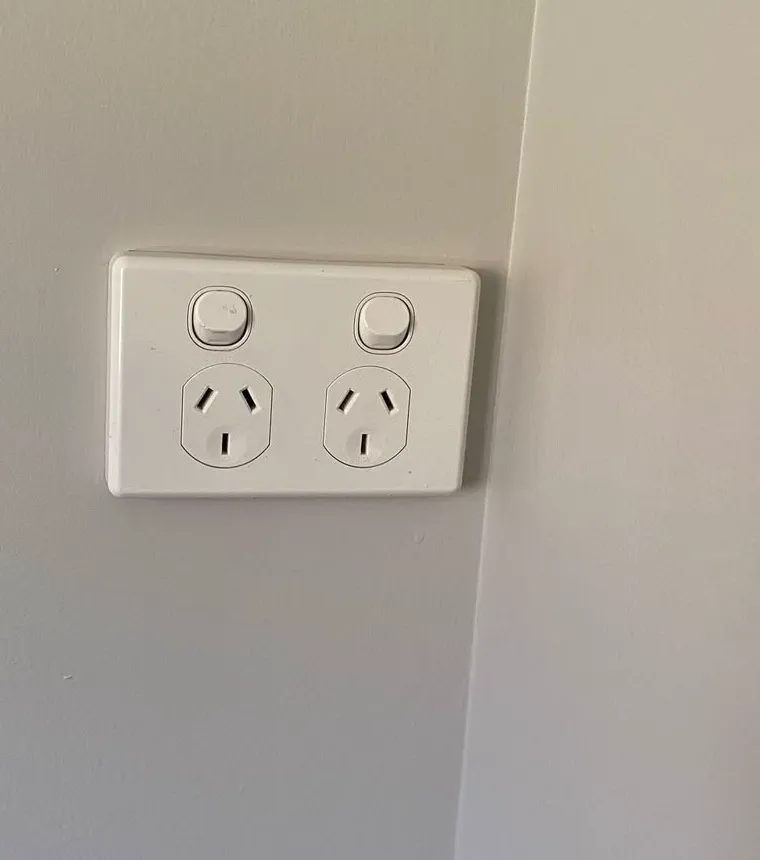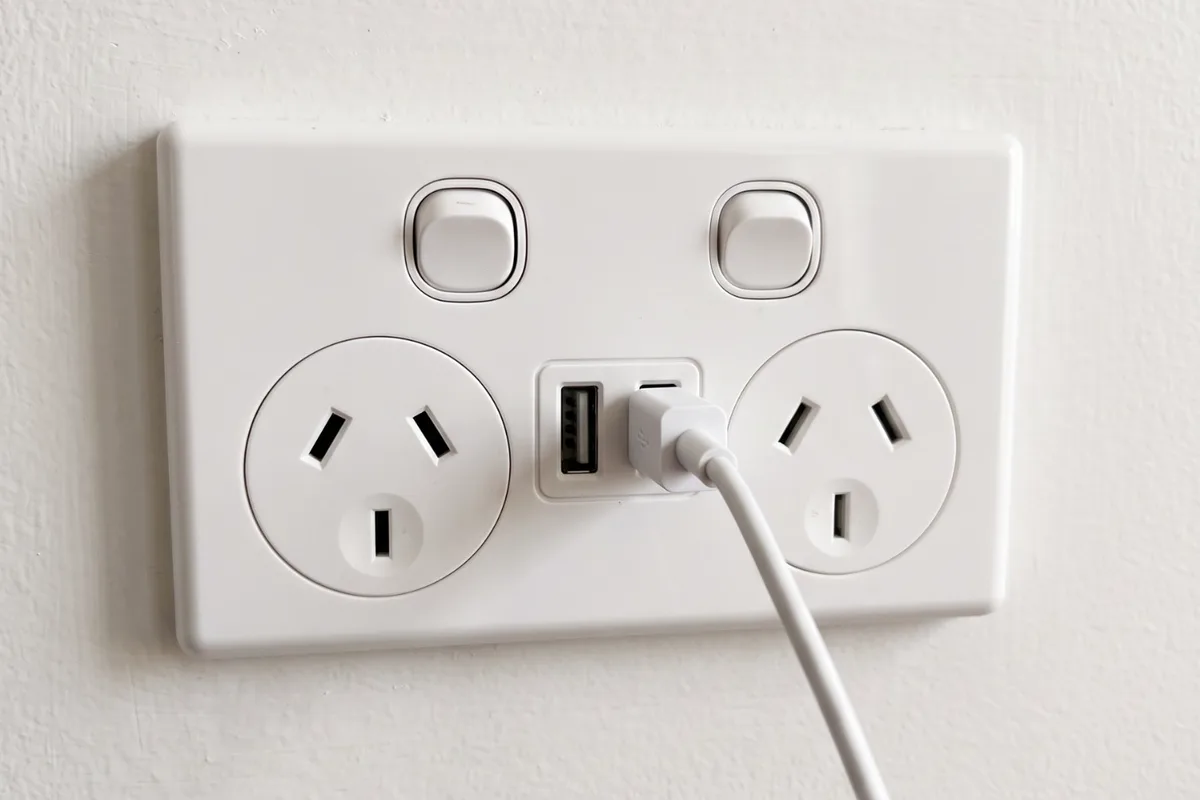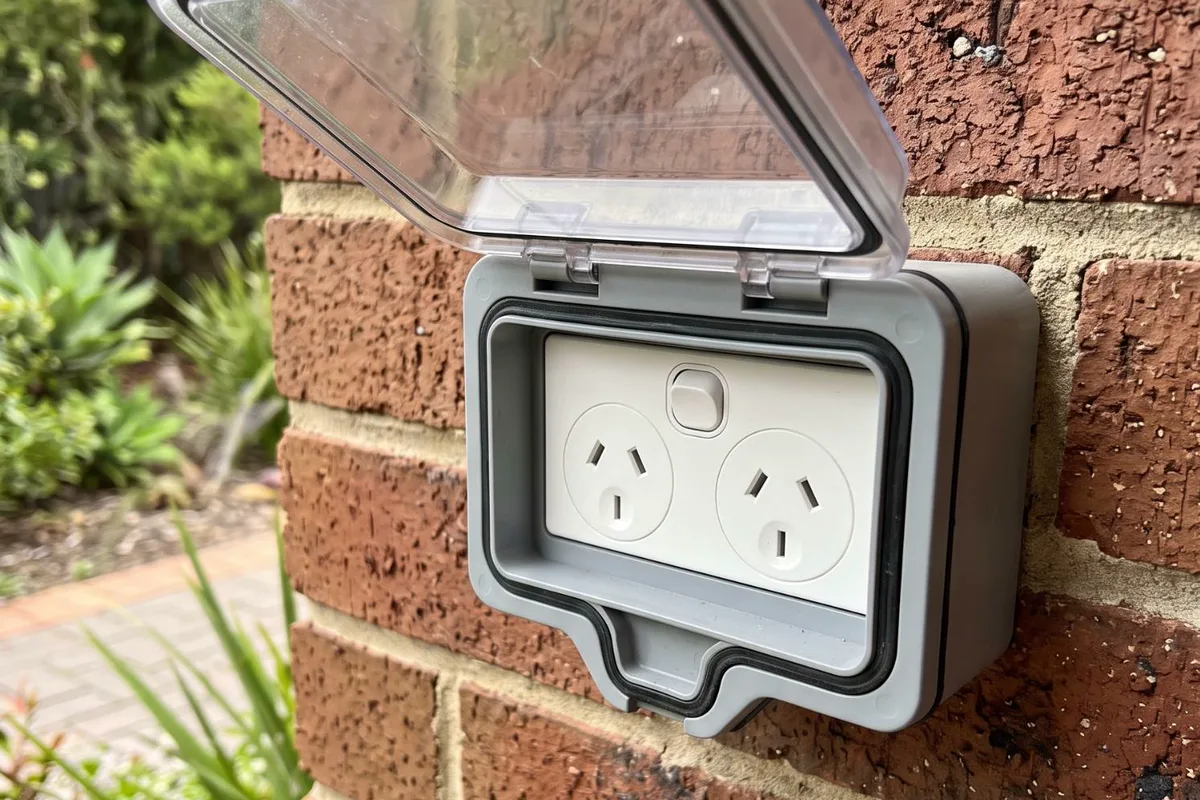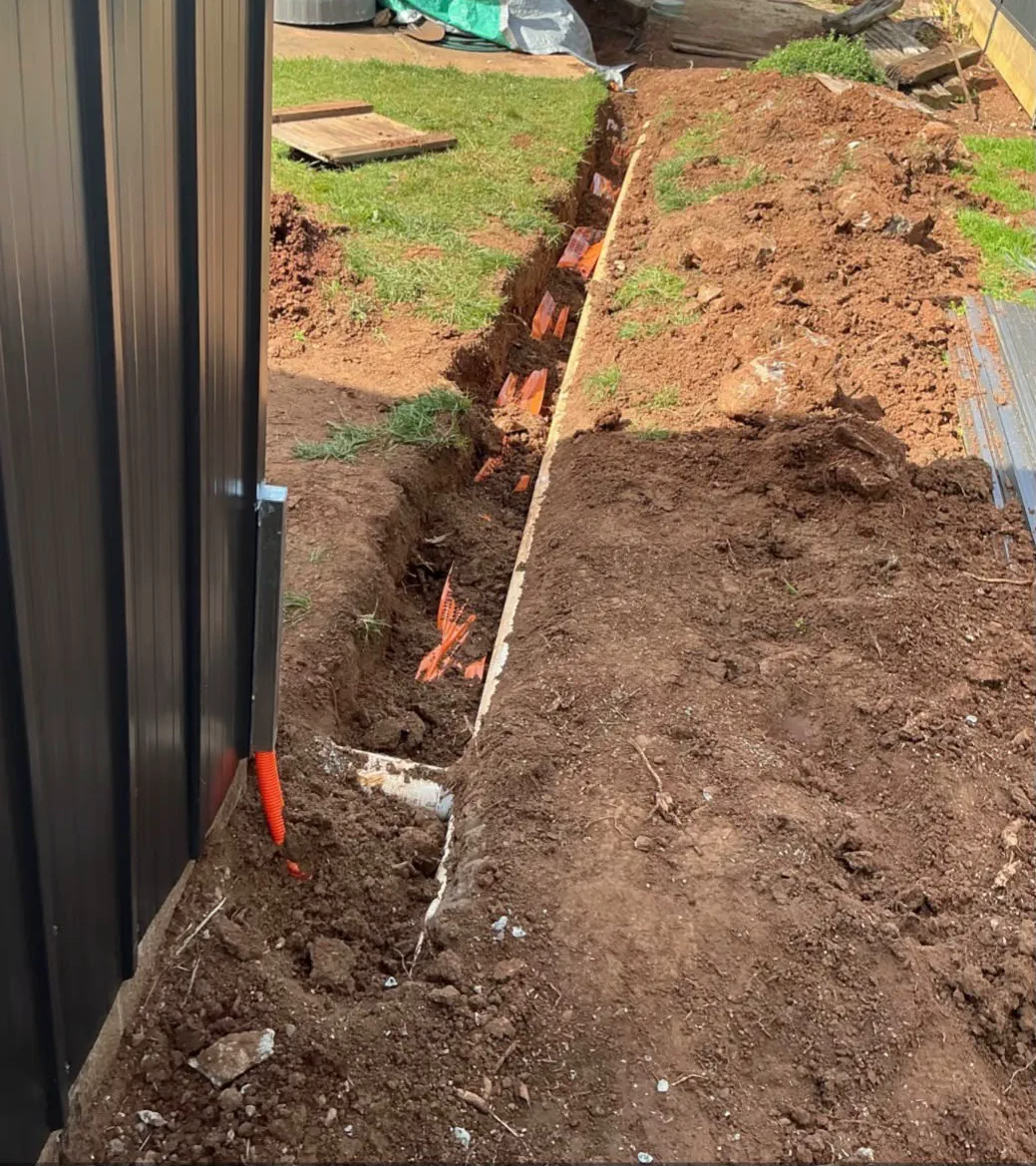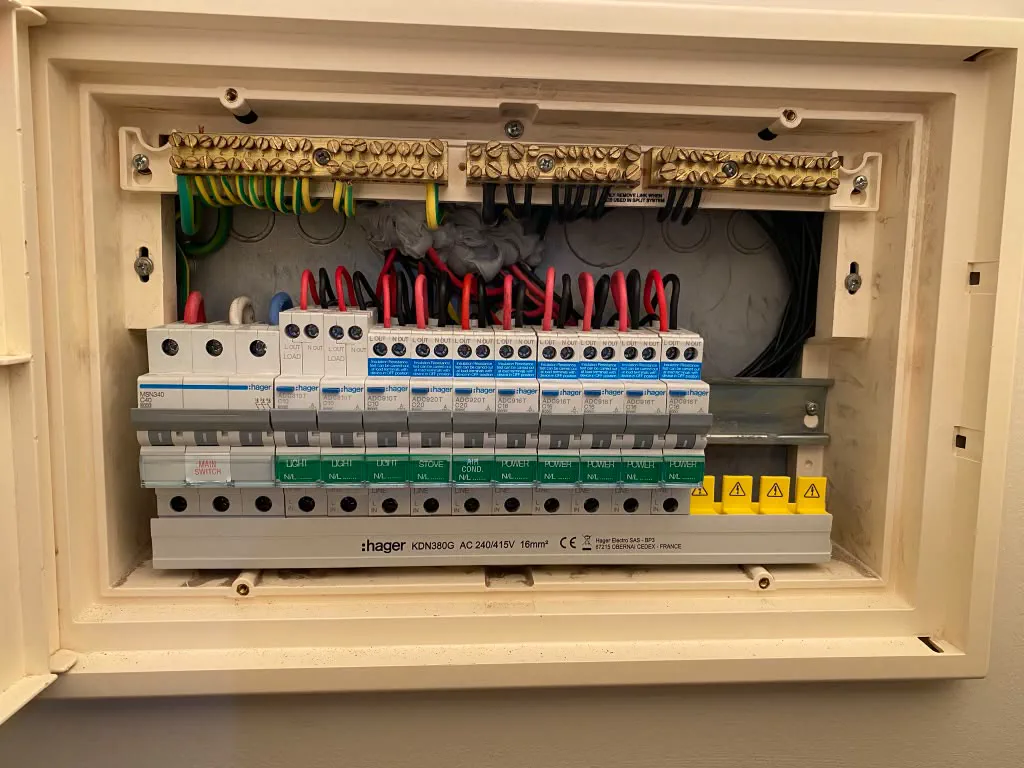
A spare socket does not tell you whether a circuit can supply a new appliance. Large cooking, heating, cooling and charging loads need a proper assessment of the whole installation. We check the equipment requirements, the existing protective devices, cable route and available supply before quoting. If several upgrades are on the horizon, planning them together can avoid opening the same walls or changing the board twice.
When to get it checked
The manual asks for its own circuit
Manuals for ovens, air conditioners, chargers and heat pump water heaters spell out the supply they need. If nothing in your home matches, the appliance needs a new circuit.
A breaker drops when two things run
The kettle and microwave trip the kitchen, or the dryer and a heater trip the laundry. Same pair, every time: the circuit is carrying more than it was laid out for.
A big appliance lives on a lead
A garage freezer or heater plugged permanently into a power board or extension lead. The stopgap has quietly become a fixture.
The appliance is moving
A cooktop heading to an island bench, an outdoor unit on the far side of the house, or power for a detached garage. A new position needs a planned route, not a tee-off from the nearest point.
Why it happens
4 common causes
Heavy loads that run for hours
An oven on a long roast, an air conditioner through a hot afternoon or a car charging overnight draws steady current for hours, leaving a shared circuit little headroom.
Wiring laid out for another era
Plenty of homes were wired when the kitchen had a kettle, a toaster and a gas stove. One power circuit might cover several rooms, and every appliance since has landed on it.
Going electric, one appliance at a time
Swapping gas cooking, heating or hot water for electric adds loads the gas versions never had. Each one needs a suitable circuit, and together they can stretch a small supply or a full switchboard.
What the manufacturer specifies
Energy Safe Victoria says that if an air conditioner’s manufacturer specifies a dedicated circuit or safety switch protection, that must be followed. Chargers, cooktops and water heaters set their own requirements.
What the job covers
What we usually do on this job. Your quote confirms it for your place.
- Appliance installation requirements reviewed
- Existing demand and supply capacity assessed
- Switchboard space and protection checked
- Cable route agreed with you
- Correct circuit protection selected
- New cable, connection point and isolation installed as quoted
- Circuit tested and labelled
- Certificate of Electrical Safety for installation work
Your options, explained
One circuit on the existing board
Low disruption- Best for
- A single appliance, a spare position and supply to spare
- How it works
- Protection goes into a spare position and the cable runs to the appliance or an isolator beside it.
- Worth knowing
- The simplest job, once the supply is checked.
Circuit plus board changes
Medium disruption- Best for
- Full boards or older protection
- How it works
- The board is extended or its safety switch layout reworked so the altered installation is properly protected.
- Worth knowing
- On an older board this can tip the decision towards replacement.
Supply to a garage or outbuilding
High disruption- Best for
- Detached garages, sheds, studios and workshops
- How it works
- A cable runs from the house to a small board in the outbuilding, feeding its own lights, points and machines.
- Worth knowing
- Trenching, paving and distance drive the scope.
Several circuits planned together
Medium disruption- Best for
- Renovations, going all-electric, or a charger plus air conditioning
- How it works
- Combined demand is worked out once, and the board, supply and routes planned for all of it.
- Worth knowing
- Saves opening the same walls, or changing the board, twice.
The people behind the work
One local team for electrical, heating and cooling. Family-run, based in Altona Meadows, with 19 years in the industry.
Licensed electrical contractor (REC 38187)See more team photos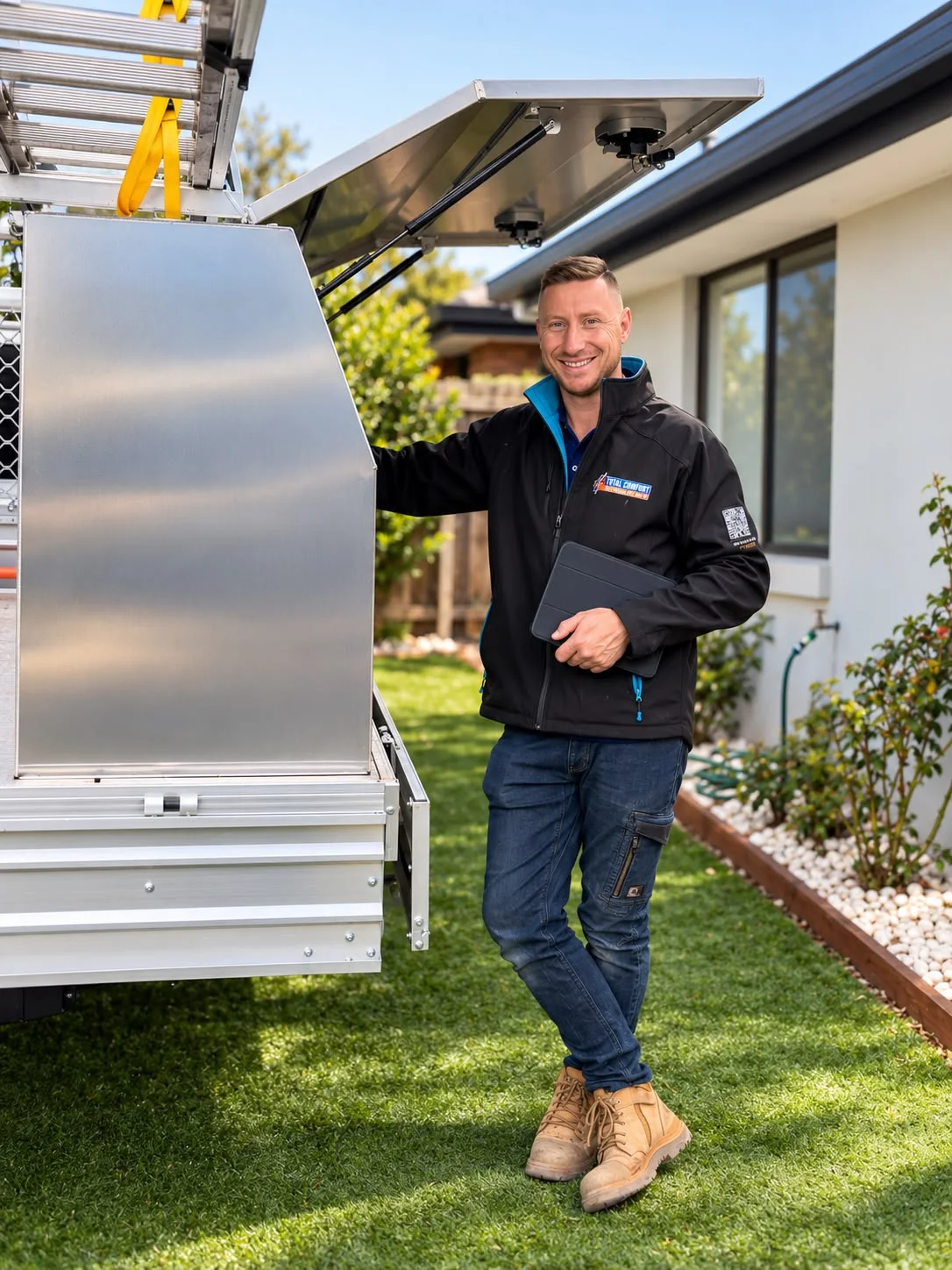
Worth knowing before you book
- Tell us what is coming next
- An EV, induction cooking and extra air conditioning all affect planning. Include future upgrades in the first conversation.
- A bigger breaker is not the fix
- Protection must match the wiring and installation. A regularly overloaded circuit needs investigation, not an unassessed breaker change.
- Cable access changes the quote
- Roof access, finished walls, concrete and detached garages all influence the installation route and finish.
What affects the price?
The right scope depends on your installation. These are the details we check so your quote is useful, with any additional work explained before it proceeds.
What the appliance draws
A heavier load needs heavier cable and larger protection. The rating in the manual sets both, so model numbers matter when we quote.
Distance and route
A short run through an open roof space is straightforward. Two storeys, a slab floor, finished walls or a tiled splashback take longer and need more making good.
Trenching to an outbuilding
A garage or studio supply may need a trench around paving, pipes and garden beds, with the right cable and mechanical protection underground.
Board space and protection
A spare position keeps things simple. A full board, or old protection that must change once the installation is altered, adds work.
The supply itself
If the connection cannot carry the added load, the supply may need upgrading, quoted as separate work. On a car charger, load management can sometimes avoid it.
Before the visit
- Provide final appliance models, not just product categories.
- Mark equipment positions and preferred cable routes.
- Tell us about future additions and critical power needs.
How it runs
- 1
List the equipment
Send model numbers and where the appliances will sit.
- 2
Check the installation
We assess supply, protection and the practical cable route.
- 3
Run the circuit
Arrange an agreed power interruption, then fit the cable and protection.
- 4
Test and label
Commission the circuit and explain its isolation point.
Step by step, in more detail
5 steps
Start with the model number
The installation manual tells us the circuit rating, cable, protection and isolation the appliance needs. Two ovens that look alike can ask for quite different supplies.
Check the board and the supply
Spare positions, the main switch, existing safety switches and what is already connected, weighed against what you are planning next.
Agree the cable route
Roof space, underfloor, conduit along an outside wall or a trench to the garage. We show you where the isolator or outlet will sit, then quote a fixed price for the agreed scope.
Install on an agreed shut-down
We fit the protection, run the cable and terminate it at the appliance position. Energy Safe Victoria notes the Wiring Rules call for additional safety switch protection when an existing installation is altered.
Test, label and certify
The circuit is tested before it goes live and labelled at the switchboard. You get a Certificate of Electrical Safety, which a licensed electrician must provide for any electrical installation work.
What is safe to do, and what to leave to us
Safe for you to do
- Note which appliances were running when a breaker tripped.
- Reset a tripped safety switch once. If it trips again, leave it off and call us.
- Stop using a plug or lead that feels hot, and switch it off at the switchboard if that is safe.
- Stagger heavy appliances until the new circuit is in.
Leave these to us
- Running a freezer, heater or car charging lead permanently off a power board or extension lead.
- Fitting a bigger breaker to stop the tripping. The breaker protects the cable behind it.
- Running new wiring yourself. Energy Safe Victoria says unlicensed electrical work is illegal and potentially fatal.
- Resetting a breaker over and over, or holding it on.
When to get us in
- Before you order an oven, air conditioner, charger or heat pump water heater
- When the manual calls for a circuit you don’t have
- When the same two appliances trip a breaker every time
- Straight away if a plug or lead feeding a heavy load gets hot
- When you want power in a detached garage, shed or studio
More detail
Which appliances usually get one
Fixed ovens and cooktops, air conditioning outdoor units, car chargers, heat pump water heaters, pool and spa equipment, and workshop machinery. A freezer doesn’t always need one but can be worth separating. The manual decides, not the size of the box.
Matching the safety switch to the load
Every new circuit gets safety switch protection chosen for what it feeds. Energy Safe Victoria says Type AC safety switches must not be installed, even like for like, and some chargers and inverter-driven appliances specify a particular type. We fit what the manual asks for.
The isolator beside the appliance
Outdoor units, water heaters and some cooktops have a local isolating switch so they can be made safe for servicing without a walk back to the board. Where one is called for, it goes in with the circuit.
Local rules and conditions
Victorian requirements and local conditions that shape this job, with the sources listed at the foot of the page.
Built for the hot afternoons
Laverton’s weather station averages 27 days a year at or above 30 °C and 9.4 at or above 35 °C, mostly December to February. That is when an air conditioner works hardest and a shared circuit shows its limits.
Gas hot water going electric
From 1 March 2027, a gas hot water system that breaks and can’t be repaired must be replaced with an electric alternative; rental providers must use a heat pump water heater. The old gas spot may have no suitable circuit, so plan early.
Rentals and the cooling rule
By 1 July 2030, Victorian rentals must have efficient electric cooling in the living area. In judging whether installing it is unreasonably costly, the electrical work and any switchboard upgrade for the extra load don’t count as installation costs.
Useful reading
Guides to read before you decide, with checklists and questions to bring to the quote.
- Planning a switchboard upgrade without surprisesWhat the electrician needs to check, how to compare the scope and what to organise before the power goes off.
- Home EV charging: a checklist before ordering a chargerMatch daily driving and parking to the supply, cable route and charger features that matter.
- Going all-electric in a Melbourne homeHot water, heating and cooking don't have to go electric at once. How to stage the move off gas, check the switchboard once and time each step.
- Certificates of Electrical Safety explainedWhat a Victorian COES records, how prescribed and non-prescribed work differ, when your copy should arrive and why it belongs in your house file.
Common questions
Questions people ask about this
- What is the switch next to my outdoor unit for?It's an isolating switch that cuts all power to the air conditioner, so a technician can work on the system safely without relying on the switchboard.
- Why does my electric heater trip the safety switch?A safety switch trips when it detects electricity leaking to earth, and portable heaters are a common cause.
- How many appliances can I plug into one power board?It's the total load that counts, not the number of sockets.
- Is it safe if my power board or extension lead gets warm?A power board or extension lead should stay at about room temperature.
From the blog
- Air fryers, kettles and toasters: is your kitchen circuit keeping up?Benchtop appliances draw a lot of power. How kitchen circuits share the load, the difference between a breaker trip and a hot power point, and when to add circuits.
- Does a home office need its own circuit?Most home offices run fine on a few extra points. A dedicated circuit earns its place when a heater, printer or shared circuit keeps cutting out your workday.
- Can renters install an EV charger?Yes, with the rental provider's written consent and a licensed electrician. Here's how to ask, who might pay, and how to charge safely in the meantime.
Sources for the rules and local facts on this page
11 sources, with the date each was checked
- 1.Bureau of Meteorology: Mean number of days ≥ 30 °C 6.9 6.0 4.5 0.7 0.0 0.0 0.0 0.0 0.1 0.9 2.8 5.1 27.0 82 1943 2026 Mean number of days ≥ 35 °C 3.6 2.4 0.9 0.0 0.0 0.0 0.0 0.0 0.0 0.1 0.5 1.9 9.4 Accessed 30 September 2026.
- 2.Department of Energy, Environment and Climate Action (Victoria): From 1 March 2027, if a gas hot water appliance breaks and cannot be repaired, it must be replaced with an electric alternative. No requirement to upgrade gas space heating or stovetop gas cooking to electric, however… Accessed 30 September 2026.
- 3.Victorian Legislation (Chief Parliamentary Counsel): (6) For the purposes of subclauses (4)(a) and (5)(a), the following is not part of the cost of installation— (a) the cost of electrical work required for the installation; (b) the cost of upgrading an electrical… Accessed 30 September 2026.
- 4.Energy Safe Victoria: This means that if the manufacturer’s specifications require an air conditioner to be installed on a dedicated circuit or protected by a residual current device then they must be adhered to. Accessed 30 September 2026.
- 5.Energy Safe Victoria: Clause 2.6.3.2.5 of the Wiring Rules states: Additional protection by RCDs shall be provided in existing electrical installations where alterations or a switchboard replacement is completed. Accessed 30 September 2026.
- 6.Energy Safe Victoria: Whenever a licensed electrician completes any electrical installation work, they must provide a Certificate of Electrical Safety (COES). Accessed 30 September 2026.
- 7.Energy Safe Victoria: Type AC RCDs must not be installed in Australia. This includes like for like replacement. We recommend that electrical contractors advise customers of the new requirements. However, it is not mandatory to replace… Accessed 30 September 2026.
- 8.Energy Safe Victoria: Locate your electricity box outside your home and check whether the safety switch has tripped. If it has tripped, reset the switch. If the switch won’t reset, call a licensed electrician. Accessed 30 September 2026.
- 9.Energy Safe Victoria: Gas and electricity are inherently dangerous and it’s illegal and potentially fatal for unlicensed and unqualified people to undertake any electrical or gasfitting work. Homeowners and consumers must always use… Accessed 30 September 2026.
- 10.Energy Safe Victoria: This licence type only allows the disconnection and reconnection of ‘like for like’ equipment, for the purposes of repair, replacement or maintenance. The Restricted Electrical Worker’s licence does not allow a person… Accessed 30 September 2026.
- 11.Energy Safe Victoria: 'Prescribed' certificates are for electrical installation work that requires inspection by a Licensed Electrical inspector. This includes (but is not limited to): Consumer mains cables, main switchboard, meter box and… Accessed 30 September 2026.