
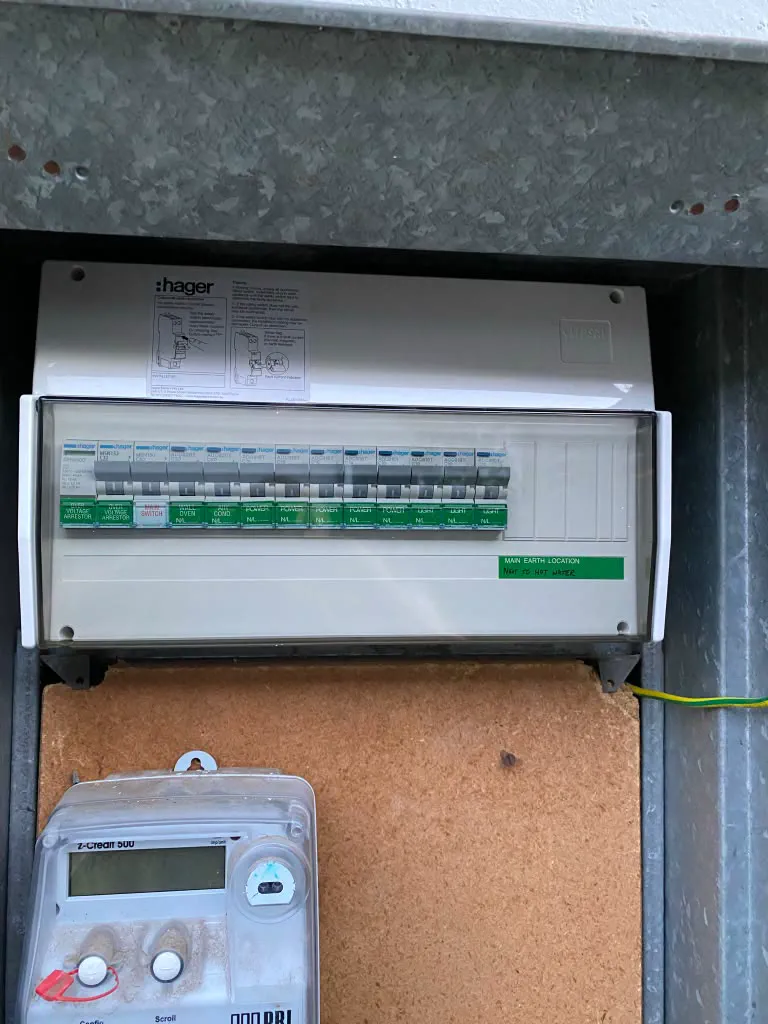
The key points
- Any electrical installation work, repairs included, should end with a Certificate of Electrical Safety.
- Main switchboard, mains, meter box, solar and battery work is usually prescribed, and it can't be switched on or left on until it's inspected.
- For lights, power points and air conditioning, Energy Safe Victoria says your copy is due within 30 days.
- A certificate can't be withheld over payment, and it records one job, not the condition of the whole house.
What the certificate actually records
A Certificate of Electrical Safety, or COES, is a legal document. It's the record a registered electrical contractor or licensed electrician issues to set out the details of the electrical work they performed.
It isn't only for big jobs. A licensed electrician must provide one whenever they complete any electrical installation work, which the Electricity Safety Act defines as installation, alteration, repair or maintenance. A new cooktop circuit gets one. So does replacing a damaged power point.
It also has limits. It describes that job and nothing more. It won't tell you whether the rest of the wiring in a post-war Altona weatherboard is sound; that takes a separate safety check with its own report.
Prescribed and non-prescribed work
There are two kinds of certificate. Non-prescribed certificates cover work within your installation, such as lights, power points, air conditioning and a hot water service. Most jobs inside the house land here.
Prescribed certificates are for the major wiring. In a home, Energy Safe Victoria says that generally means wiring and equipment where the electricity can't be switched off, usually the wires up to the switchboard, and possibly the wiring from the street and the meter. Its examples include consumer mains, the main switchboard, meter box and main earthing system, motor generators, solar PV and battery storage.
There's a narrow exception. Under regulation 249(4), repairing or replacing a single component part of prescribed work can sit outside the prescribed certificate and inspection requirement. Your electrician should explain which applies before starting.
- Usually non-prescribed: extra power points, new lights, a split system's electrical connection.
- Usually prescribed: a main switchboard replacement, new consumer mains, meter box or main earthing work.
- Prescribed: solar PV, and battery work beyond repairing or replacing a single part.
What the inspection means on switchboard day
Prescribed work has an extra step: a Licensed Electrical Inspector has to inspect it. It can't be turned on, or left on, until that happens, and Energy Safe Victoria says the inspection should be completed within 8 business days of the work being finished.
On a switchboard job that matters. Power can't go back onto a new main switchboard until the inspector has inspected the work, so the inspection belongs in the job plan, not in the paperwork afterwards. Ask how it's being arranged and what it means for the day your power is off.
In Melbourne's west it tends to come up in two ways: an old board coming out of a post-war brick veneer in Laverton or Altona, or solar or a battery going onto a newer home in Point Cook, Tarneit or Truganina. Both carry the inspection step.
When your copy should turn up
For non-prescribed work, Energy Safe Victoria tells consumers the contractor or electrician must give them a copy within 30 days. The Electricity Safety Act sets the deadline at one month after the certificate of compliance for the work is completed.
Prescribed work runs on a different clock because the inspection comes first. The Act sets it at 4 business days after the inspector's certificate of inspection is given, and Energy Safe Victoria's industry guidance says copies must reach the relevant parties within 16 calendar days of the work being completed.
A split system's electrical connection is non-prescribed, so the 30-day copy applies. The refrigerant side needs its own licence, and gas has separate paperwork: after servicing, a licensed gasfitter must provide a compliance certificate in certain cases, such as when the gas piping is modified.
How to read the one you're given
Give the certificate two minutes when it arrives. Check the address, the date and the contractor. In Victoria an electrician must work for a registered electrical contractor to do work for a customer, and that contractor must show its REC number on its advertising, so you can compare the two.
Then read the description. It should say plainly what was done: a new oven circuit, three kitchen power points, the main switchboard replaced. A line that just says ‘electrical work’ tells the next electrician very little, so ask for detail. A switchboard replacement should come with a prescribed certificate.
Landlords, note one distinction. Rental providers on a new agreement after 29 March 2021 must have all electrical installations and fittings checked by a licensed electrician at least once every 2 years. Energy Safe Victoria says a COES is not the correct form for recording that check, but one must be issued if repair or maintenance work is carried out.
Why it belongs in your house file
Kept together, certificates become a history of the installation. When you renovate, add an EV charger or replace the old board, the next electrician can see what changed and when, instead of tracing it behind the plaster. When you sell, they help answer a buyer's questions about recent work.
Energy Safe Victoria also audits work. Its auditors may make an appointment to view and test the installation work as described on a COES. The audit is free and you can refuse it at any time.
Some properties have a more direct need. If your supply comes in on a private aerial line, meaning low-voltage poles and wires on your land that form part of your installation, the distribution company will only reconnect power to it once a licensed electrician or REC has issued a COES.
- Each certificate, saved with the date and a short job name.
- The matching quote and invoice.
- Gas compliance certificates and safety check reports, filed separately.
If the certificate doesn't arrive
Start by asking; it may have gone to an old email address or the junk folder. But know where you stand. Energy Safe Victoria says a registered contractor or licensed electrical worker cannot refuse to issue a COES for any reason, including payment issues or contract disputes.
If the contractor still won't provide it, or won't arrange the inspection for prescribed work, and you were the customer, you can report it to Energy Safe. It deals with safety and technical compliance, not billing, quality-of-work or contract disputes, which are better taken to Consumer Affairs Victoria or VCAT.
Better still, settle it before work starts. Energy Safe Victoria says you must engage a registered electrical contractor for electrical installation work, and recommends asking to see a tradesperson's licence, as it shows they're qualified and gives you avenues for recourse. Unlicensed electrical work is illegal in Victoria, even small jobs like changing a light switch.
When it makes sense to get Total Comfort in
If you're planning work that needs a certificate, the useful conversation happens at the quote. We'll tell you whether the job is prescribed, how the inspection fits into a switchboard or mains job, and how the certificate will reach you. Total Comfort is a licensed electrical contractor (REC 38187), and our electrical installation work finishes with a COES, as the law requires.
We can also help when the paper trail has gone cold. If you've bought an older cottage in Williamstown or Yarraville with nothing on file, an electrical safety check gives you a written picture of where things stand, and any repairs we then carry out come with their own certificate.
Quotes are free and no-obligation, you get the price before we start, and you'll get honest advice about whether the work is needed at all. If your question is about a certificate another contractor issued, start with them. If it's about the work itself, we're glad to take a look.
Common questions
Quick answers
- Why does a Licensed Electrical Inspector need to check my new switchboard?Because replacing a main switchboard is prescribed work in Victoria.
- What happens after I send an enquiry?Once you send it, you'll see a reference on screen.
- What happens during an electrical or air conditioning visit?We arrive at the time we confirmed, look at the job with you, explain what we've found and your options, and give you the price before work starts.
- Which suburbs do you work in?We currently cover 24 suburbs across Melbourne's west, worked from our base in Altona Meadows.
Sources for this guide
14 sources, with the date each was checked
- 1.Energy Safe Victoria: A Certificate of Electrical Safety (COES) – is a legal document issued by a Registered Electrical Contractor or licensed electrician to record the details of the electrical work they have performed. Accessed 30 September 2026.
- 2.Energy Safe Victoria: Whenever a licensed electrician completes any electrical installation work, they must provide a Certificate of Electrical Safety (COES). Accessed 30 September 2026.
- 3.Victorian Legislation (legislation.vic.gov.au) - Electricity Safety Act 1998, authorised version 089 (effective 8 Sep 2026): electrical installation work means installation, alteration, repair or maintenance of an electrical installation; Accessed 30 September 2026.
- 4.Energy Safe Victoria: In effect, Regulation 249(4) allows the repair or maintenance (including replacement) of a single component part of an electrical installation that is classified as prescribed electrical installation work to be excluded… Accessed 30 September 2026.
- 5.Energy Safe Victoria: All electrical work on battery energy storage systems, with the exception of repairing or replacing a single component part, is prescribed electrical work and must be inspected by a licenced electrical inspector. Accessed 30 September 2026.
- 6.Australian Refrigeration Council (ARC): Under the regulations it is an offence of strict liability to handle fluorocarbon refrigerant without the appropriate ARC licence. Accessed 30 September 2026.
- 7.Building and Plumbing Commission: After they have done the servicing work, the gasfitter must provide you with a compliance certificate if the total value of the work is $750 or more or involves removing the appliance from its fixed location, or if they… Accessed 30 September 2026.
- 8.Energy Safe Victoria: An REC must display their REC number on any advertisements, notices or statements which indicate that the REC is conducting, or willing to conduct, electrical contracting work. Accessed 30 September 2026.
- 9.Consumer Affairs Victoria: Rental providers who enter into a new agreement after 29 March 2021, must have all electrical installations and fittings checked by a licensed electrician at least once every 2 years. Accessed 30 September 2026.
- 10.Energy Safe Victoria: An Energy Safe COES is not the correct form to be used as a record of the electrical safety check. However, a COES must be issued if any electrical repair or maintenance work is carried out. Accessed 30 September 2026.
- 11.Energy Safe Victoria: PALs are low voltage poles and wires (which can be bare or insulated), generally located on private properties which form part of the electrical installation of the property and carry the electricity supply from the… Accessed 30 September 2026.
- 12.Energy Safe Victoria: Energy Safe investigates reports about electrical installation work, electrical and gas appliances, electricity and gas infrastructure issues (and some gas installation matters), which are safety or technical compliance… Accessed 30 September 2026.
- 13.Energy Safe Victoria: Gas and electricity are inherently dangerous and it’s illegal and potentially fatal for unlicensed and unqualified people to undertake any electrical or gasfitting work. Homeowners and consumers must always use… Accessed 30 September 2026.
- 14.Energy Safe Victoria: Electrical work isn’t a DIY job, even for small jobs such as changing power points or light switches. Accessed 30 September 2026.
Planning advice for homeowners. Installation requirements depend on the property and equipment. Where this guide refers to Victorian safety or rental rules, use the linked official guidance for the current requirements.