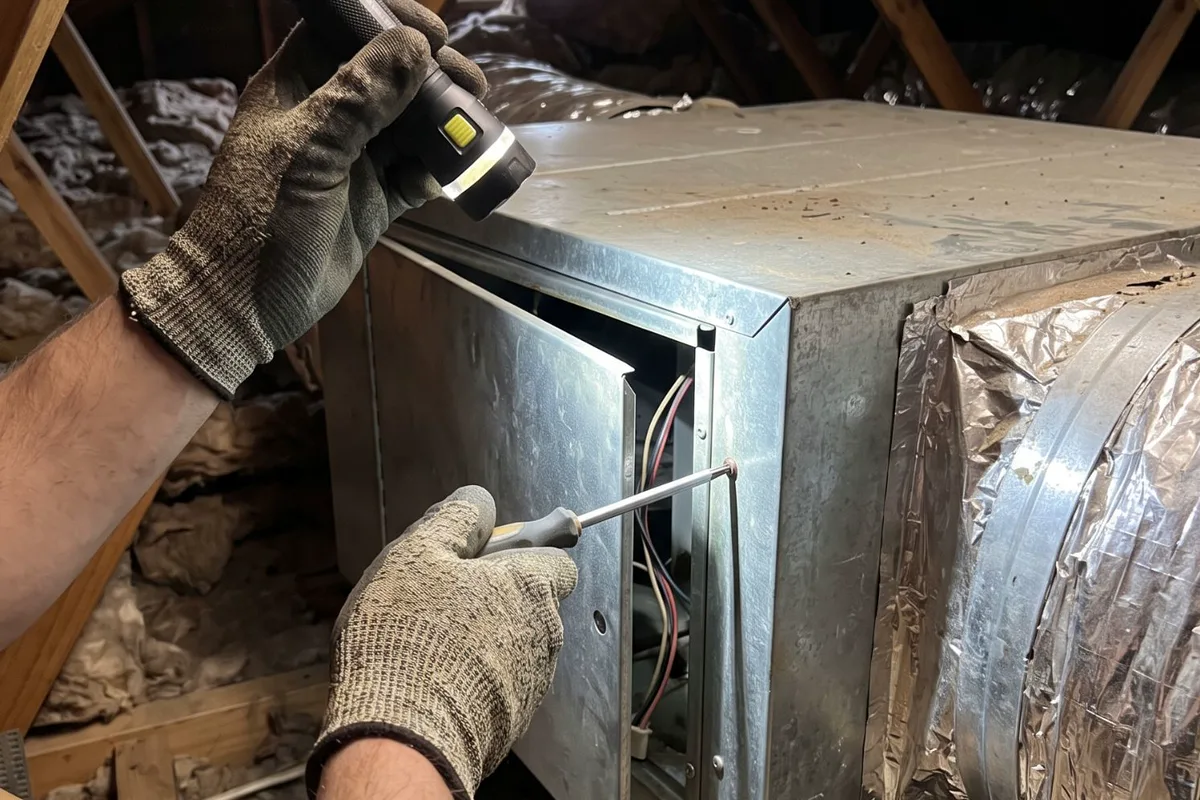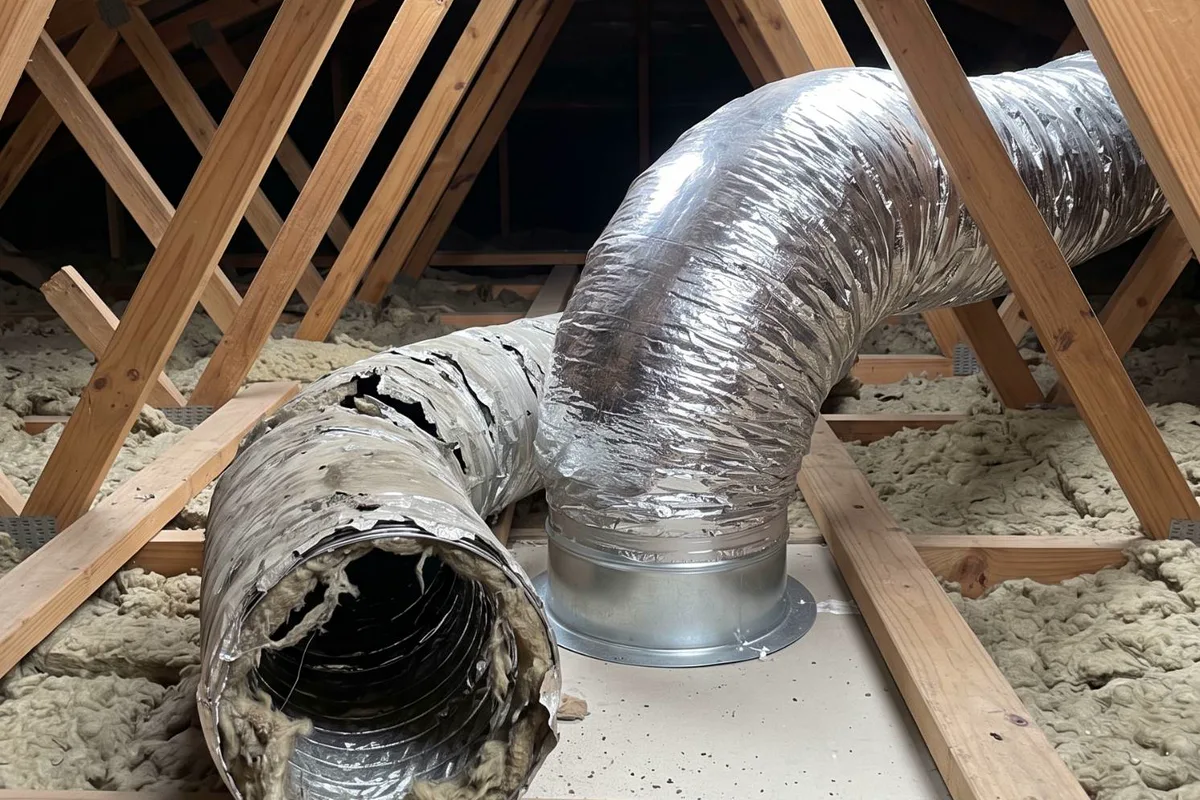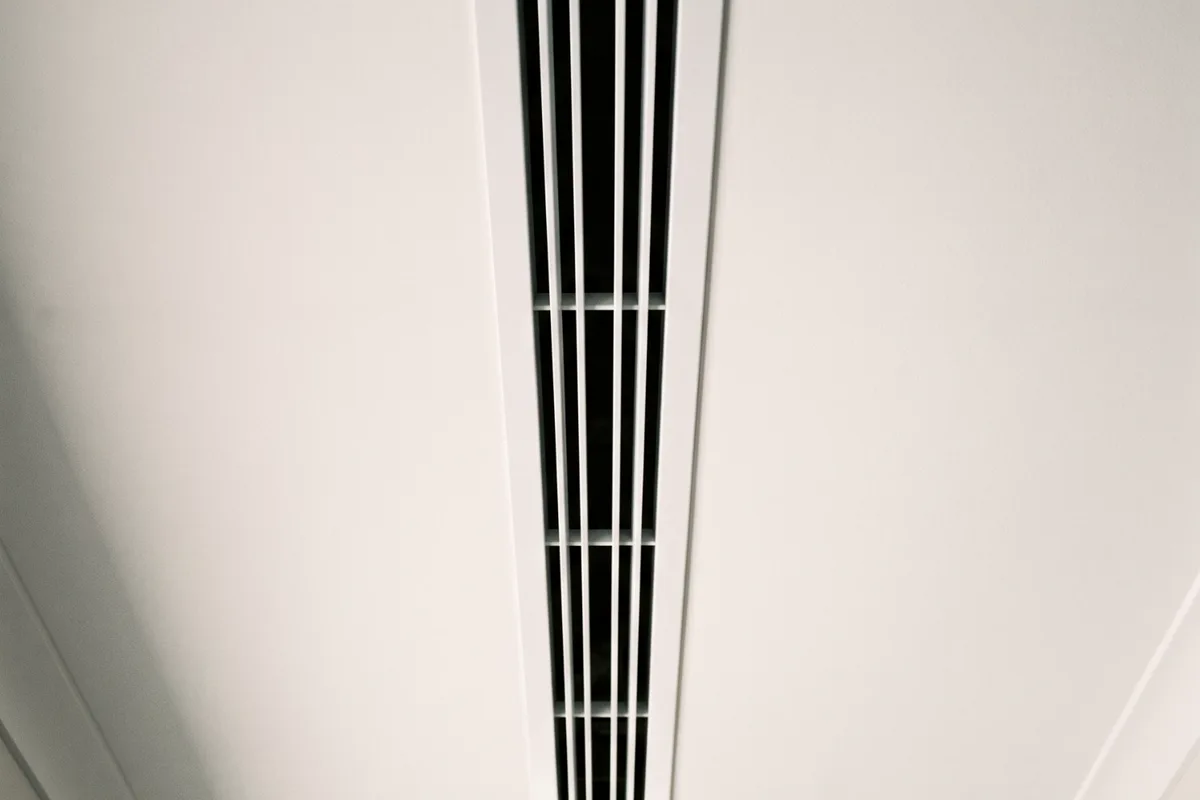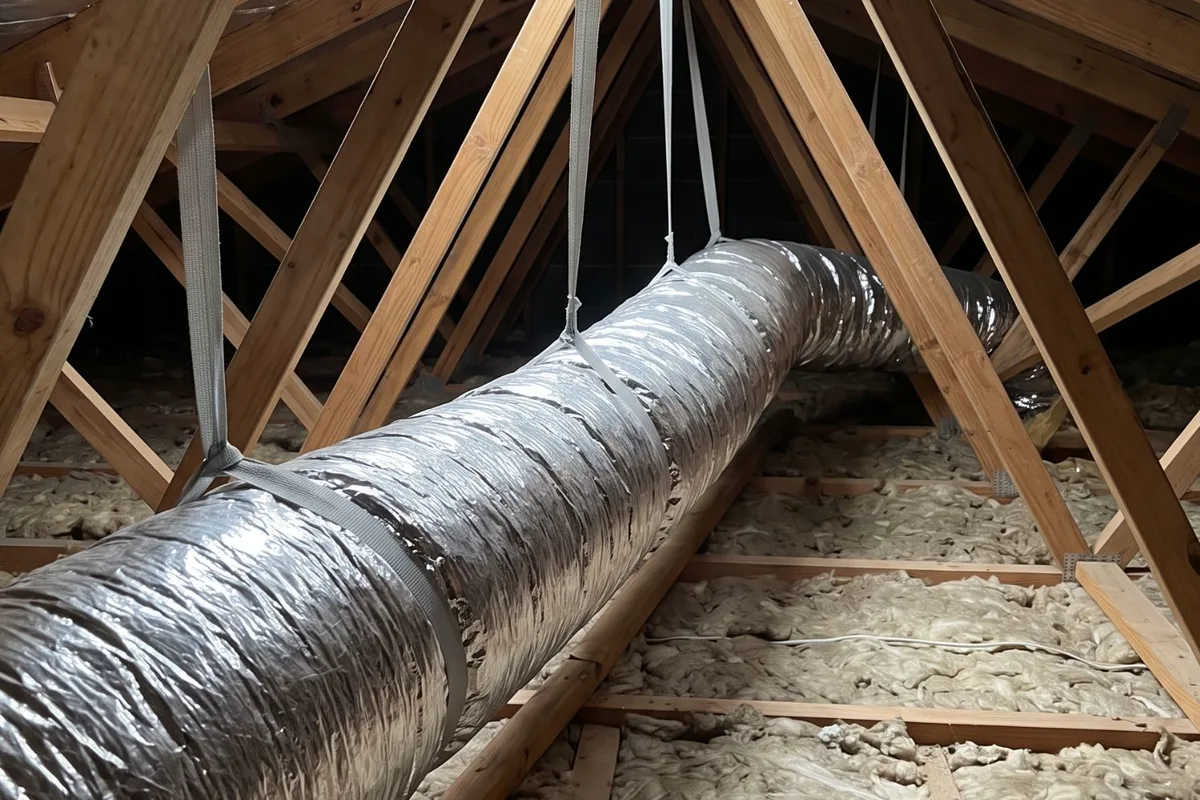
If one room never gets warm or cool, the problem is often the ducting rather than the unit. Ducts get crushed, come apart at joints, tear, or were run too long or with too many bends in the first place. Old ducts can also lose their insulation, so the air cools or warms before it reaches the room. We inspect the ductwork in the roof, repair or replace the damaged sections, and rebalance the system so air goes where it's needed.
When to get it checked
One room never gets comfortable
The rest of the house is fine, but one bedroom stays cold in winter and stuffy in summer. That points at the duct feeding it before it points at the unit.
Some outlets push, others barely breathe
With the zone on and the outlet open, a weak outlet means air is being lost or held back between the unit and the ceiling.
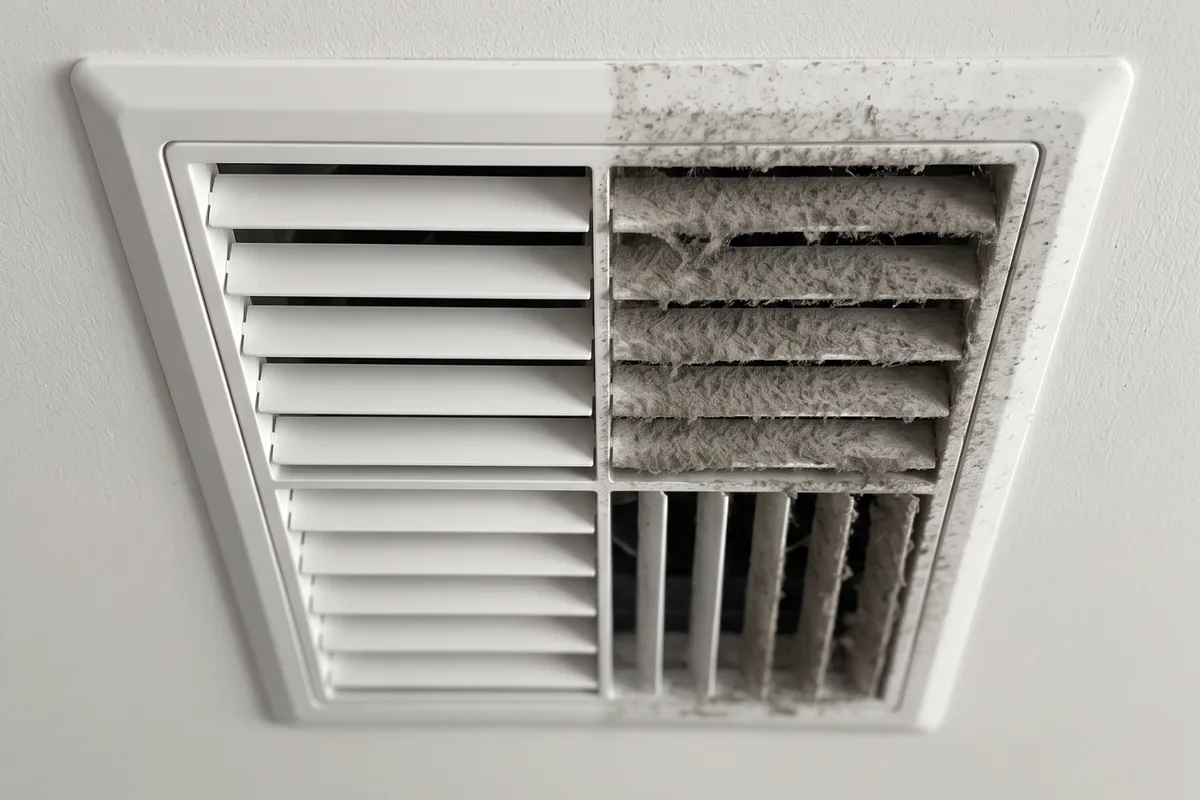
Dust or fibres from a vent
A puff of dust as the fan starts, or insulation on the floor under an outlet. A torn return duct can pull dusty roof-space air into the system.
Water marks around an outlet
In cooling mode, a duct with torn or thin insulation can sweat in a hot roof and stain the ceiling. Water near a light fitting means switching off and keeping clear.
It changed after work in the roof
Airflow dropped after solar, insulation, cabling or a renovation. Ducts are easy to step on or knock off a fitting.
Why it happens
5 common causes
Joints that have let go
Flexible duct is held on its fittings by tape and cable ties. Years of roof heat dry the tape and loosen the ties until the duct slides off and blows into the roof, sometimes with a whistle you can hear.
Crushed, kinked or sagging runs
A duct that's been stood on, bends hard around a truss or hangs in a long sag loses much of its airflow, even though the unit works just as hard.
Runs that were never right
Some ducts are too long, too small or have too many bends for the room they feed. Extensions are a common culprit, often tapped into the nearest duct.
Tired insulation
Older duct loses insulating value as the blanket compresses and the sleeve splits. Federal guidance says ducts should be insulated to at least R1.5, with joints sealed to prevent condensation and leakage.
A starved return
Furniture against the hallway return grille, a loaded filter or an undersized return limits air to every room. Dirty filters significantly cut airflow and efficiency.
What the job covers
What we usually do on this job. Your quote confirms it for your place.
- Roof space inspection of all ducts and connections
- Airflow measured at each outlet
- Disconnected or loose joints resealed
- Crushed, torn or kinked ducts replaced
- Duct runs rerouted where they're too long or bent
- Old uninsulated ductwork replaced
- Ceiling outlets and return air grille checked
- System rebalanced after repairs
Your options, explained
Repair isolated damage
Low disruption- Best for
- One or two rooms let down by a loose joint, a crushed section or a tear
- How it works
- The joint is refitted and sealed, or the damaged length is replaced with new insulated duct and properly supported.
- Worth knowing
- The work happens in the roof. Inside, you mostly see us at the manhole.
Reroute or resize problem runs
Medium disruption- Best for
- Rooms that have never been right, such as extensions
- How it works
- A shorter path, fewer bends, a larger duct or a better take-off point, with outlets moved or added if needed.
- Worth knowing
- Moving an outlet means a new hole in the ceiling and patching the old one.
Replace the duct network
Medium disruption- Best for
- Old, brittle or poorly insulated duct throughout the roof
- How it works
- The old ductwork comes out and a new insulated network goes in, with new fittings, supports and a sealed return.
- Worth knowing
- If the unit is also getting on, it often pays to plan new ducts and a new unit together.
The people behind the work
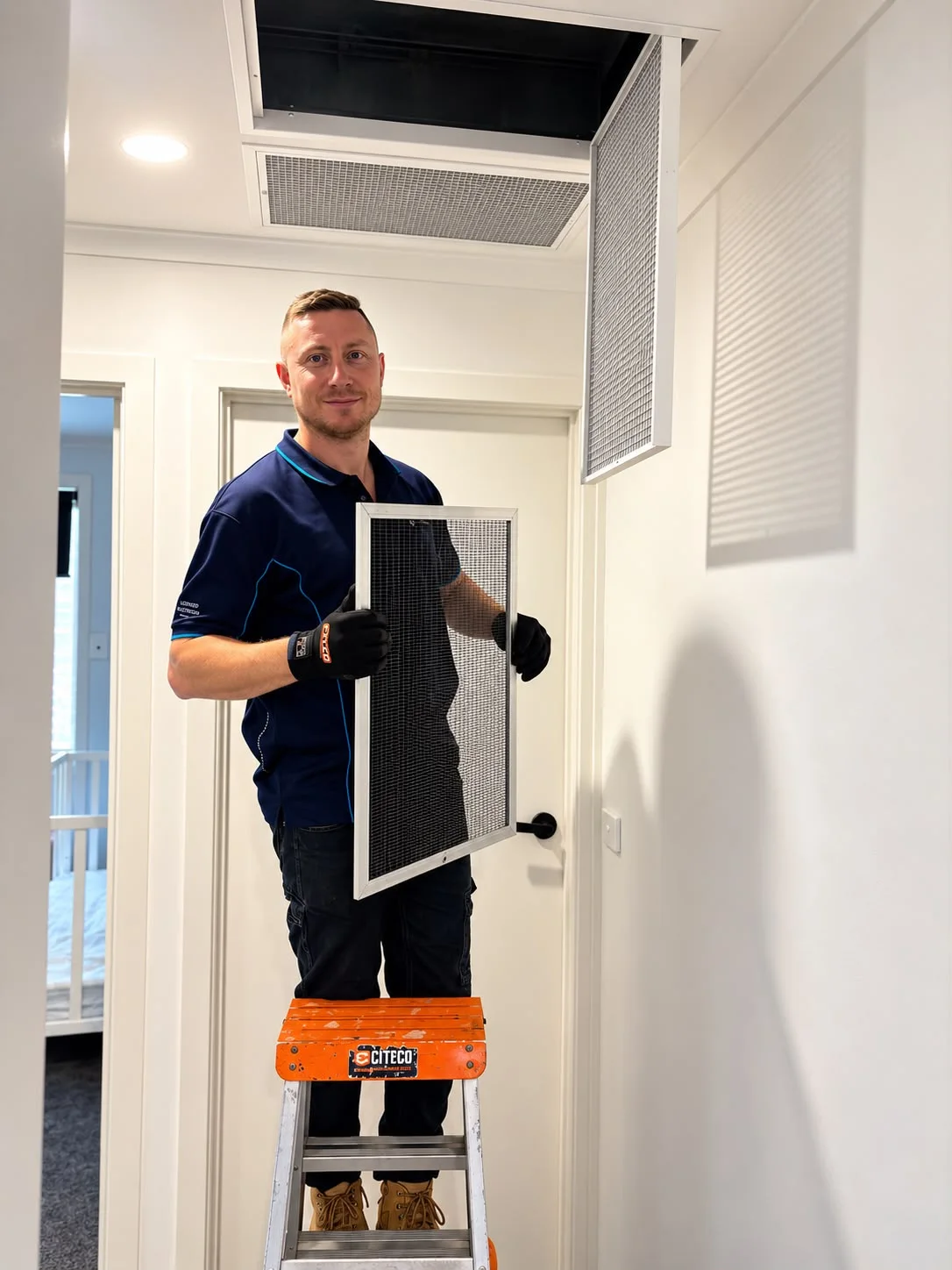
Our own photos from jobs like this one. Family-run, based in Altona Meadows, with 19 years in the industry.
Licensed electrical contractor (REC 38187)See more team photos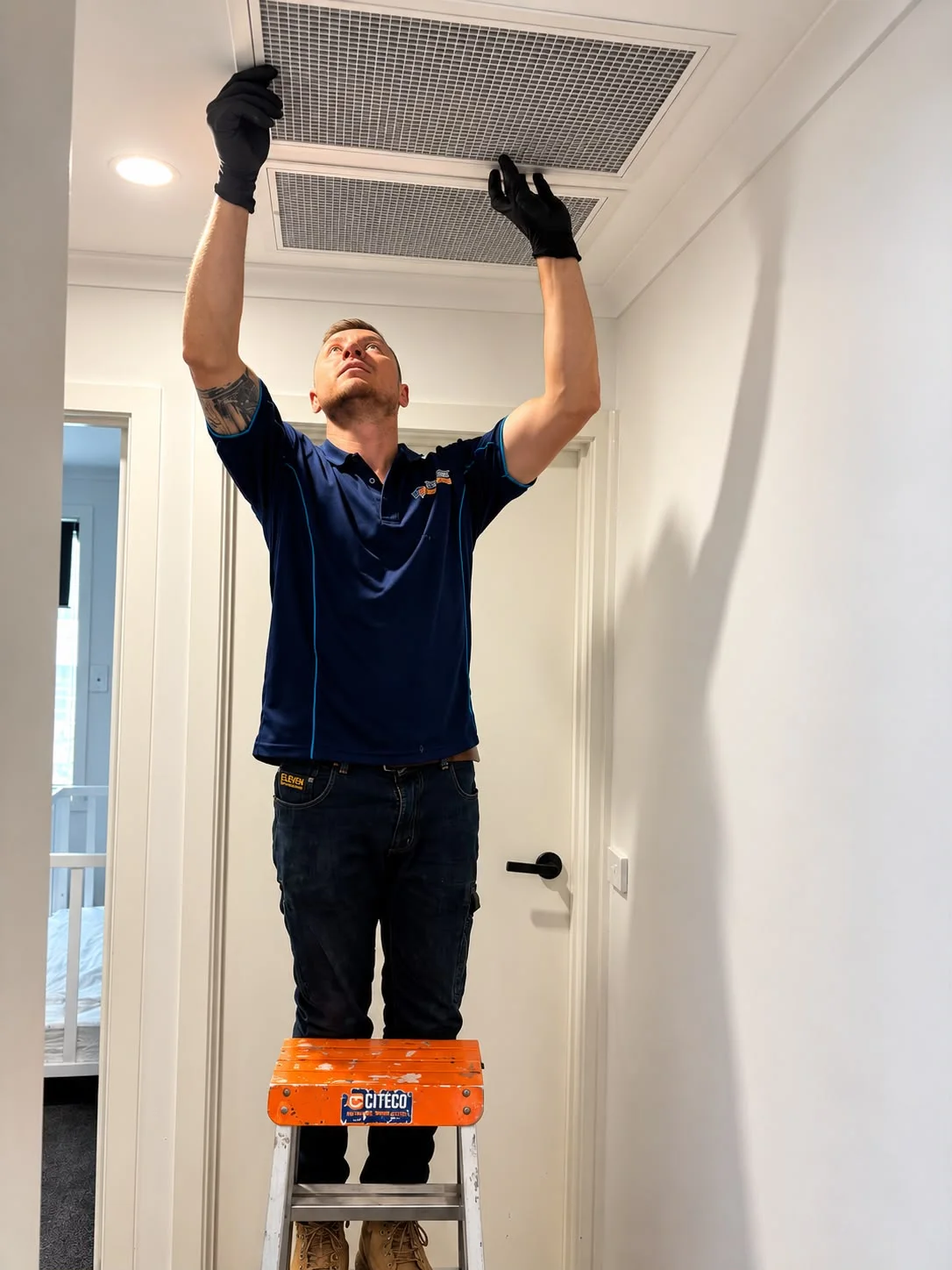
Worth knowing before you book
- Check after other trades
- Roof work, solar installs, insulation and renovations can knock ducts loose. If airflow drops after other trades were in the roof, get it checked.
- Old ducts may not be worth patching
- Very old ducts lose insulation and get brittle. Replacing them can make a big difference, especially with a new unit.
- Dust from outlets means something
- Dust blowing from vents can point to a torn duct pulling air from the roof space. It's worth an inspection.
What affects the price?
The right scope depends on your installation. These are the details we check so your quote is useful, with any additional work explained before it proceeds.
How much needs work
One loose joint near the manhole is a small job. Several damaged runs, or a full re-duct, takes far more time and material.
Roof access
Low-pitched roofs, tight edges, double storeys and deep insulation all slow the work.
Duct size and fittings
Larger duct, higher insulation ratings and new collars, junctions and outlets add to the materials.
Rerouting and ceiling work
Keeping the existing path is simpler. Moving or adding outlets means cutting and patching plaster.
Zones and extra finds
Zoned systems take longer to rebalance. A failed damper or damaged cable found along the way is priced separately.
Before the visit
- List affected rooms and any recent work in the roof.
- Make the access hatch area available; do not enter the roof to investigate yourself.
- Provide plans or previous duct reports if available.
How it runs
- 1
Tell us the symptoms
Which rooms, and whether it's weak air, no air, noise or dust.
- 2
Inspect
We check the ducting in the roof and measure airflow at each outlet.
- 3
Repair
Fix, replace or reroute what's needed.
- 4
Rebalance
Adjust the system so every room gets the air it should.
Step by step, in more detail
5 steps
Map it room by room
We ask which rooms struggle, in which mode and since when. Weak in both modes points somewhere different from weak only on hot afternoons.
Check the unit end first
The filter, return grille, zone settings and outlet positions are checked before anyone goes into the roof.
Follow every run
We trace each duct from the unit to its outlet, plus the return, including runs behind trusses where rats and possums chew. If access is unsafe, we tell you what couldn't be checked.
Measure and price
Airflow is measured at every outlet. You get a plain account of what we found and a fixed price for the agreed scope before we start.
Repair, rebalance, measure again
Joints are refitted and sealed, damaged lengths replaced with insulated duct and problem runs rerouted with proper support. Then we rebalance, re-measure every outlet and run heating and cooling. Any electrical installation work comes with a Certificate of Electrical Safety.
What is safe to do, and what to leave to us
Safe for you to do
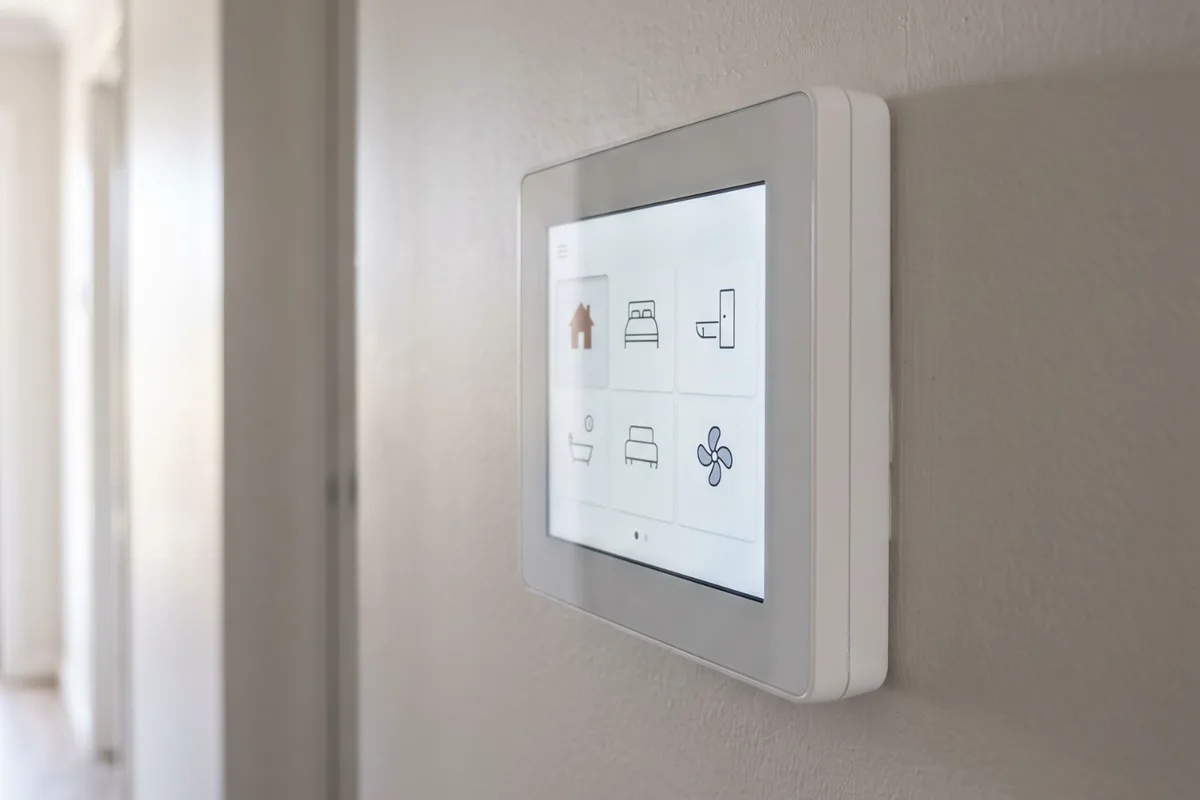
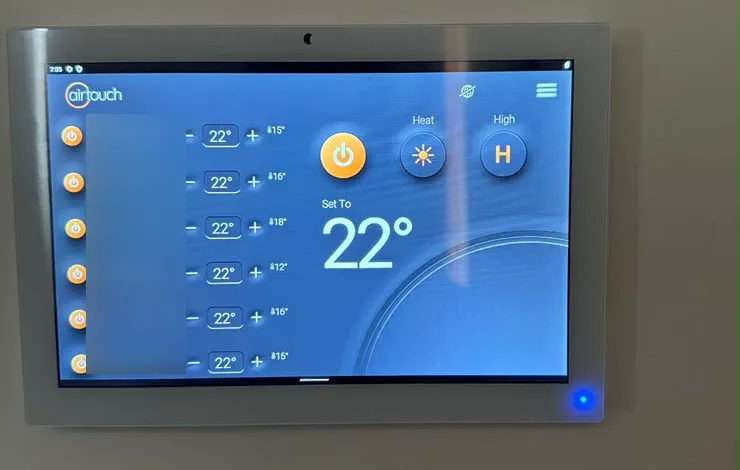
- Check the room's zone is on at the controller and its outlet is open.
- Keep the return grille clear and clean its filter as the owner's manual describes, with the system off.
- If water drips near a light or power point, switch the system off and keep clear. If a safety switch trips, reset it once only.
- Clear the area under the manhole before the visit.
Leave these to us
- Going into the roof to look. Live cables, narrow joists and summer heat make it dangerous.
- Closing most outlets to force air into one room. Ducted systems need a minimum airflow.
- Opening the indoor unit or touching its wiring or isolator. Electrical work isn't a DIY job.
- Removing panels from a gas ducted heater. That's work for a licensed Type A gasfitter.
When to get us in
- A room has lost airflow with its zone on and the filter clean
- Dust or insulation is coming out of an outlet
- Water stains or drips appear around an outlet
- Airflow changed after solar, insulation or renovation work
- You're replacing the unit and want the ducts assessed
More detail
What's up in your roof
Most ducted systems use flexible duct: a plastic liner on a wire coil, wrapped in insulation and an outer sleeve. Supply ducts feed the ceiling outlets, and a larger return duct brings air back from the hallway grille. Some older gas ducted systems use rigid metal trunks or floor outlets instead.
Why the whole system gets rebalanced
Fixing one duct changes where all the air goes. The starved room gets its share back and the others get less, so we measure and adjust every outlet, not just the one we worked on.
When the ducts aren't the problem
A damper stuck shut, a zone controller fault or a unit fan that won't reach full speed can all look like a duct problem. If that's the cause, we tell you and point you to the right repair instead of selling duct work that won't help.
Local rules and conditions
Victorian requirements and local conditions that shape this job, with the sources listed at the foot of the page.
Hot roofs on hot days
The Laverton weather station averages 27 days a year at or above 30 °C and 9.4 at or above 35 °C, mostly December to February, with a record of 47.5 °C. Roof spaces run hotter still, so cooled air in a torn or thin duct warms before it reaches the room. Victoria's health department advises checking your air conditioner works before extreme heat.
Ducts on gas heating
Energy Safe Victoria recommends servicing ducted gas heaters every two years, with a carbon monoxide test at the heating vent outlets in every room, and gas heater servicing is work for a licensed Type A gasfitter. If your ducts run from a gas heater, line that service up with any duct repairs.
Rental insulation and your ducts
Victoria's rental energy standards start in phases from 1 March 2027 and include ceiling insulation. A licensed electrician must complete an electrical safety checklist, and fix any issues, within 30 days before it goes in. With installers working around the ducts, check airflow room by room afterwards.
Useful reading
Guides to read before you decide, with checklists and questions to bring to the quote.
- Ducted zoning explainedZones, dampers, controllers and room sensors in plain terms, plus the airflow limits that decide whether zoning will fix your comfort problem.
- Air conditioner maintenance: what to watch between servicesKeep useful records, follow model-specific filter care and recognise symptoms that need a repair visit.
- Split system or ducted: choose around the rooms you useCompare layouts, zoning, installation work and quote details before choosing equipment for your home.
- Getting your air conditioning ready for a heatwaveA spring test run, clean filters, a clear outdoor unit and a backup plan: how to find a tired air conditioner before the first hot northerly does.
Common questions
Questions people ask about this
More in the Help centreFrom the blog
- Why is my ducted heating or cooling so noisy?Whistles, a booming return, rattles and a droning fan each point somewhere different. Here's how to tell ducts, outlets, the indoor unit and settings apart.
- What affects the cost of ducted air conditioning?Capacity, zones, outlets, roof access, storeys, duct reuse and the electrical supply all shape a ducted install. Here's how to compare quotes on the same basis.
- What's involved in adding ducted air conditioning to an existing home?Retrofitting ducted reverse-cycle to a lived-in home: roof space, return air, outlet layout, the outdoor unit, power supply and what the disruption looks like.
Sources for the rules and local facts on this page
12 sources, with the date each was checked
- 1.Bureau of Meteorology: Mean number of days ≥ 30 °C 6.9 6.0 4.5 0.7 0.0 0.0 0.0 0.0 0.1 0.9 2.8 5.1 27.0 82 1943 2026 Mean number of days ≥ 35 °C 3.6 2.4 0.9 0.0 0.0 0.0 0.0 0.0 0.0 0.1 0.5 1.9 9.4 Accessed 30 September 2026.
- 2.Better Health Channel (Department of Health, Victoria): Check that your fan and air-conditioner works well. Have your air-conditioner serviced if needed. Ensure the filters, pads and air vents are clean. Accessed 30 September 2026.
- 3.Energy Safe Victoria: It is recommended that ducted heaters are serviced every two years and during this service a CO test should be conducted at the heating vent outlets in all rooms. Accessed 30 September 2026.
- 4.Energy Safe Victoria: Type A appliances include domestic and light commercial type appliances such cookers, space heaters, central heaters, water heaters, catering equipment and leisure appliances. So, when looking to service and repair your… Accessed 30 September 2026.
- 5.Consumer Affairs Victoria: New minimum energy efficiency standards for residential rental properties come into effect in phases from 1 March 2027. The new standards cover 6 areas: heating cooling hot water shower heads ceiling insulation… Accessed 30 September 2026.
- 6.Consumer Affairs Victoria: The standard also requires an electrical safety checklist to be completed and any electrical issues to be addressed by a licensed electrician within 30 days before the installation of insulation. If the insulation… Accessed 30 September 2026.
- 7.YourHome (Australian Government): Ducts must be well insulated, to at least R1.5, and joints sealed to prevent condensation and leakage. The roof should have reflective foil insulation installed and be vented to dispel hot air. Zoned systems cool only… Accessed 30 September 2026.
- 8.Energy Rating (GEMS Regulator / DCCEEW): Dirty filters significantly reduce the amount of airflow and the energy efficiency of the unit. It can also impact the effectiveness of its heating. Cleaning clogged filters, or replacing a worn one, can lower the… Accessed 30 September 2026.
- 9.energy.gov.au (Australian Government, DCCEEW): The energy efficiency of reverse-cycle air conditioners on the Australian market ranges between 300% to 600% efficient. Air conditioners can achieve such high rates of energy efficiency because they do not use… Accessed 30 September 2026.
- 10.Energy Safe Victoria: Whenever a licensed electrician completes any electrical installation work, they must provide a Certificate of Electrical Safety (COES). Accessed 30 September 2026.
- 11.Energy Safe Victoria: Electrical work isn’t a DIY job, even for small jobs such as changing power points or light switches. Accessed 30 September 2026.
- 12.Energy Safe Victoria: Locate your electricity box outside your home and check whether the safety switch has tripped. If it has tripped, reset the switch. If the switch won’t reset, call a licensed electrician. Accessed 30 September 2026.