
Why is my ducted system noisy?
- Whistling at an outlet usually means too much air through too small a gap: an outlet nearly closed, an undersized duct or most zones shut.
- A roar at the return grille points to a clogged filter, an undersized return or a grille too small for the system.
- Rattles and flapping usually come from loose outlets, grilles, zone dampers or a duct moving against a roof timber.
- Grinding, squealing or a burning smell from the unit means switch it off and have it checked.
Work out where the noise is coming from
Ducted noise travels, so the room where you hear it isn't always where it starts. With the system running, walk the house: stand under each outlet, by the return air grille and under the spot where the indoor unit sits in the roof. Note whether the noise changes with fan speed, with zones opening and closing, or only at start-up.
That pattern tells a technician more than a description of the sound. A noise that only appears when two zones are closed is usually a balancing problem. One that's there on every speed in every zone usually lives in the unit or the main duct.
Whistles and hissing at the outlets
A ducted system is a loop: air leaves through supply ducts and outlets and returns through the return air grille. When too much air is forced through too small an opening, it whistles. The usual causes are an outlet turned nearly shut, a duct undersized for the outlet it feeds, or most zones closed so the air piles into the few that are open.
Try opening the outlet fully and running with more zones open. If the whistle drops away, the system needs rebalancing or a better way to handle closed zones, not new ducts. If one outlet whistles whatever you do, the duct behind it may be kinked, crushed or simply too small for the airflow.
A roar or boom at the return grille
The return grille draws air back to the unit, usually through one large duct. When the filter behind it clogs, the fan works harder and the grille starts to roar. Dirty filters cut airflow and efficiency, so check the filter first. Many ducted returns have one you can slide out and vacuum, as the system's manual explains.
If the noise persists with a clean filter, the return may be too small for the unit, which can happen when a bigger unit is fitted to an existing return, or the grille may sit right beside a bedroom. A larger grille, a second return or an acoustic duct section near the unit can quieten it.
Rattles, flapping and bangs
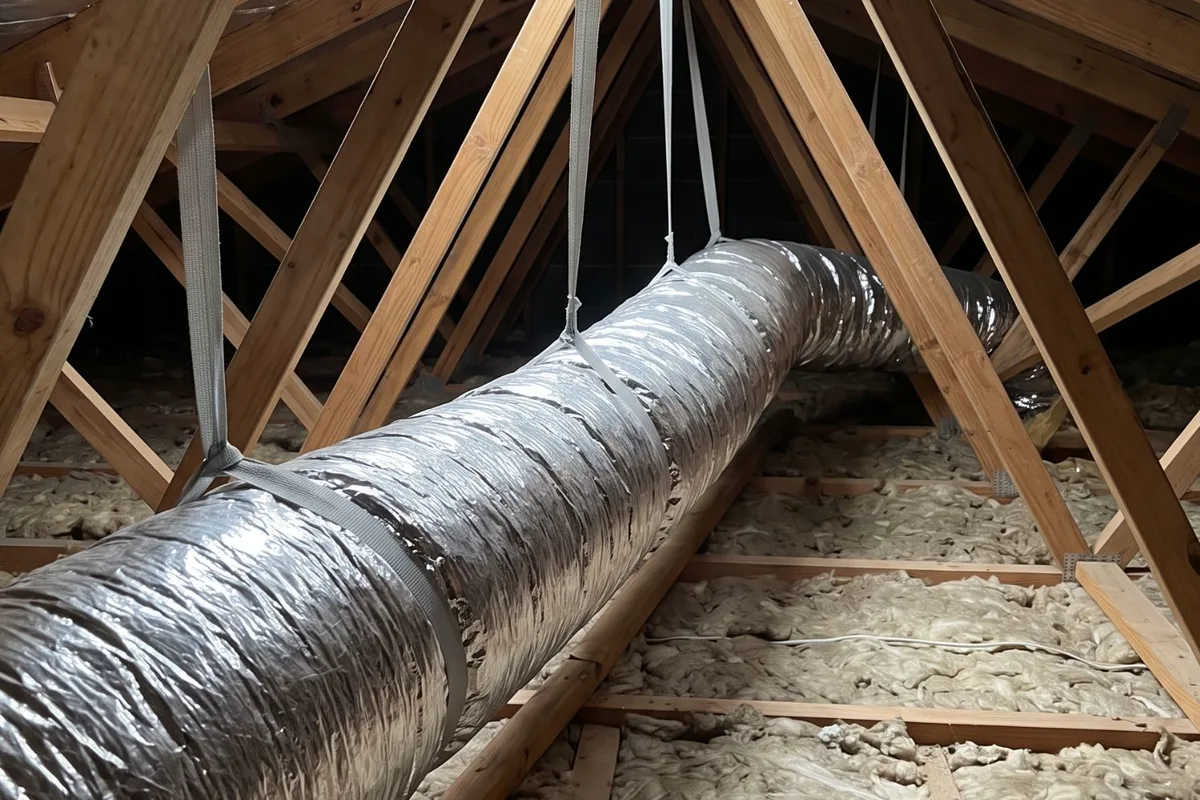
Rattles usually come from something loose: an outlet that has dropped from the ceiling, a grille vibrating in its frame, a zone damper motor or blade, or a duct swinging against a roof timber when the fan starts. Flexible duct also loses its shape with age, and a sagging run can flap or drum as air moves through it.
On gas ducted heating, a soft tick as the system warms up is usually metal expanding, and it settles once everything is warm. A loud bang from the heater as it lights is different: switch it off and have a licensed gasfitter check it before using it again.
Noise from the indoor unit and fan
A steady drone that rises with fan speed is often the indoor unit itself. Worn fan bearings hum or grind, a fan wheel caked with dust goes out of balance, and a unit that has shifted on its mounts passes vibration into the ceiling. On reverse-cycle systems, a whoosh and a pause on cold mornings can be a normal defrost cycle.
Settings matter too. A fan locked on high, or a controller set to run the fan constantly, can make a healthy system sound busy, so check the fan setting before booking. Grinding, squealing or a burning smell is different: switch the system off and have it checked before running it again.
What fixing it involves
Most ducted noise is fixed in the roof: reconnecting or replacing a crushed run, supporting a sagging duct, refitting an outlet or replacing a noisy damper, then rebalancing so each room gets its share. Fixing one duct changes where the rest of the air goes, which is why every outlet gets measured afterwards.
Ducts should be insulated to at least R1.5 with sealed joints, so a noisy, leaking run is worth replacing rather than taping. Where the cause is design, such as most zones closing at once, a spill arrangement or changes to the zone settings can help. Tell us when the noise happens and which zones are open, and we'll start there.
Questions that come next
Sources for this article
2 sources, with the date each was checked
- 1.Energy Rating (GEMS Regulator / DCCEEW): Dirty filters significantly reduce the amount of airflow and the energy efficiency of the unit. It can also impact the effectiveness of its heating. Cleaning clogged filters, or replacing a worn one, can lower the… Accessed 30 September 2026.
- 2.YourHome (Australian Government): Ducts must be well insulated, to at least R1.5, and joints sealed to prevent condensation and leakage. The roof should have reflective foil insulation installed and be vented to dispel hot air. Zoned systems cool only… Accessed 30 September 2026.