
How do I maintain a heat pump hot water system?
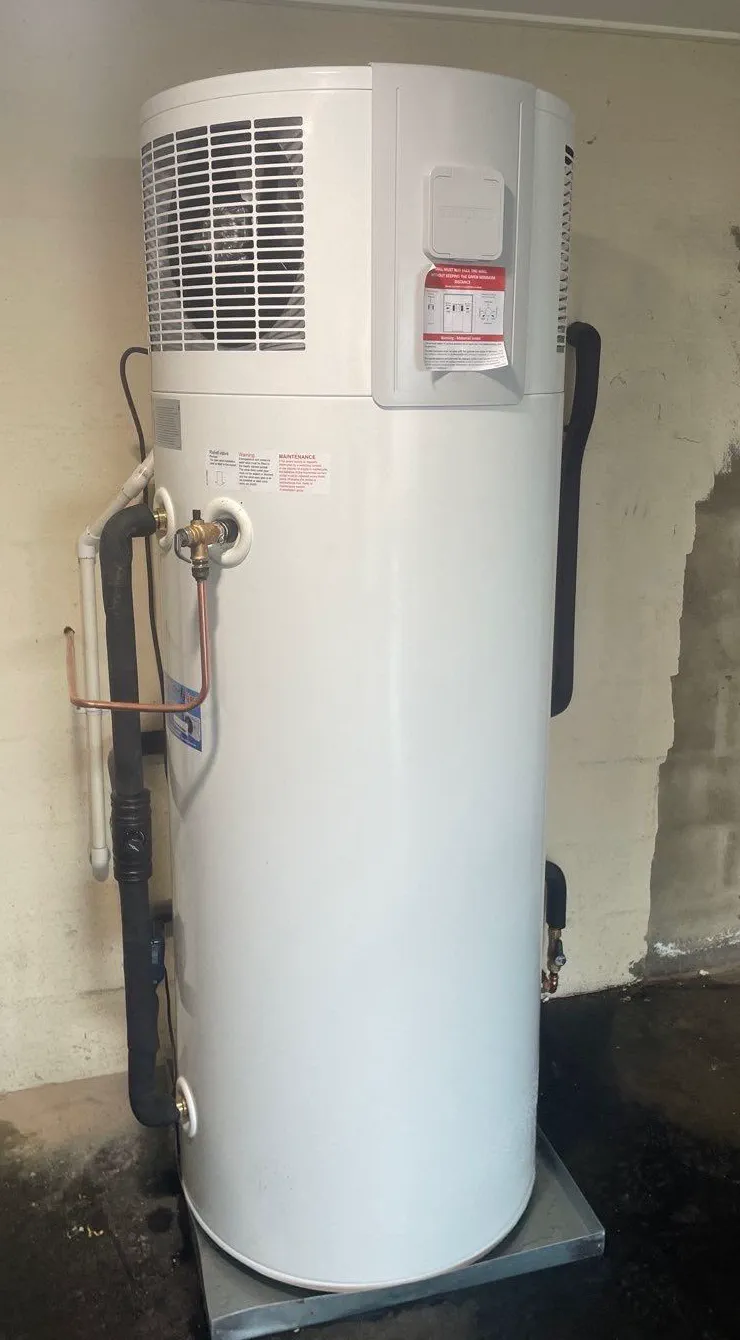
- Keep the air path clear. A heat pump pulls heat from the air around it, so plants, stored junk or a crowded side passage starve it.
- Condensate dripping from the drain is normal. Water from the tank, the fittings or a relief valve that drips all day is not.
- A new rattle, a louder hum or lukewarm water are early signs the heat pump side needs attention.
- Valves and the tank are a licensed plumber's work, the refrigerant circuit needs a licensed technician, and the circuit and isolator are an electrician's.
How a heat pump differs from an element tank
An element tank is little more than a heating element in an insulated cylinder. A heat pump water heater adds a fan, a coil, a compressor and a sealed refrigerant circuit, moving heat from the outside air into the water. That's why it uses less electricity, and also why it has a few more things to keep an eye on.
The refrigerant circuit is sealed and the gas isn't used up, so a healthy unit shouldn't need topping up. No-one is allowed to top up a system until it has been fully tested and every identified leak repaired, and releasing refrigerant into the air is illegal. If someone suggests a re-gas without finding a leak, ask why.
Checks you can do yourself
Most of the owner's job is looking and listening. A walk past the unit every month or so, and a closer look at each change of season, catches most problems early.
Don't remove covers or panels held on with screws. Behind them are live electrical parts, the compressor and refrigerant pipework, and none of that is owner territory.
- Keep plants, bins, timber and boxes well clear of the air intake and outlet
- Brush leaves and cobwebs off the outside of the grille
- Check the condensate drain runs clear and doesn't discharge against the footings
- Look for water from the tank, the fittings or a relief valve that drips all day
- Note any new noise, and whether the water is as hot as usual
Airflow and the condensate drain
A heat pump makes condensation as it pulls heat from the air, much like an air conditioner, and that water drains away through a hose or pipe. On a cold morning a light frost on the fins is normal and clears as the unit runs a defrost cycle. Heavy ice that covers the coil, builds up on the pipes or is still there in the afternoon suggests a fault.
Blocked airflow is the most common self-inflicted problem. A unit squeezed into a narrow side passage, or boxed in by a new garden bed or stored junk, breathes back its own chilled exhaust and works harder for less hot water. If yours has been crowded in over the years, clearing the space is the cheapest maintenance there is.
What a service looks at
Heat pumps differ between makers, so start with the servicing schedule in the manual. A service usually covers the fan and coil, the condensate drain, the controller and timer settings, the electrical connections and isolator, and a run test to check the unit heats as it should. Any work on the refrigerant circuit needs a technician licensed to handle refrigerant.
The circuit should have safety switch protection: Energy Safe Victoria guidance says the Wiring Rules require it on every final sub-circuit in a home, the hot water circuit included. The tank side has its own items. The relief valve, tempering valve and any sacrificial anode are plumbing parts, checked or replaced by a licensed plumber, and your quote names who does each part.
Signs it needs attention
The backup element is the clue many people miss. Most heat pump water heaters have one for cold snaps or heavy use, and when the heat pump side stops, the element quietly keeps the water warm. The first sign may be lukewarm showers or a higher power bill rather than cold water.
Timer settings can also go astray after a power cut, so check the timer before booking a repair. A burning smell, buzzing at the isolator or smoke is different: switch it off at the switchboard if it is safe to reach, and have it checked before using it again.
- Lukewarm water, or hot water running out sooner than it used to
- A louder hum, rattle or grinding from the fan
- Ice that won't clear by the afternoon
- The safety switch tripping when the unit runs
- Water pooling under the tank rather than at the drain
Questions that come next
Sources for this article
3 sources, with the date each was checked
- 1.Australian Refrigeration Council (ARC), Fact Sheet 13 (ARC5225, 11/22): ‘Topping-up’ a system before the system has been fully tested and all identified leaks repaired by any individual is illegal. Accessed 30 September 2026.
- 2.Department of Climate Change, Energy, the Environment and Water (DCCEEW): It's illegal to release regulated refrigerants into the air. This is because some refrigerants can stay in the atmosphere for decades or more and can be thousands of times worse for climate change than carbon dioxide… Accessed 30 September 2026.
- 3.Energy Safe Victoria: Clause 2.6.3.2.2 requires all final sub-circuits in a domestic installation be protected by a residual current device (RCD). A hot water service is included in this requirement Accessed 30 September 2026.