
How do I clean and maintain my bathroom exhaust fan and ceiling fans?
- Switch fans off before cleaning, and clean only what you can reach without removing screws or opening the fitting.
- A tissue held to the exhaust grille is a quick test: if it isn't drawn firmly against it, the fan or duct isn't moving enough air.
- New noises, wobble, weak extraction or a fan that runs hot are signs of wear. A burning smell means stop using it.
- Repairing or replacing a fan is electrical work for a licensed electrician.
Before you start
Turn the fan off at its wall switch or controller, and let a ceiling fan's blades stop completely. For a combined exhaust fan, heat lamp and light unit, give the lamps time to cool, because they stay hot for a while after use. For anything more than a wipe, switching the circuit off at the switchboard is safer still.
Stay on the outside of the fitting. Grilles that unclip by hand are fine to remove and wash. Anything held on with screws, or that exposes wiring when it comes off, is past owner maintenance. Energy Safe Victoria says electrical work isn't a DIY job, even small jobs like changing a light switch.
Cleaning a bathroom exhaust fan
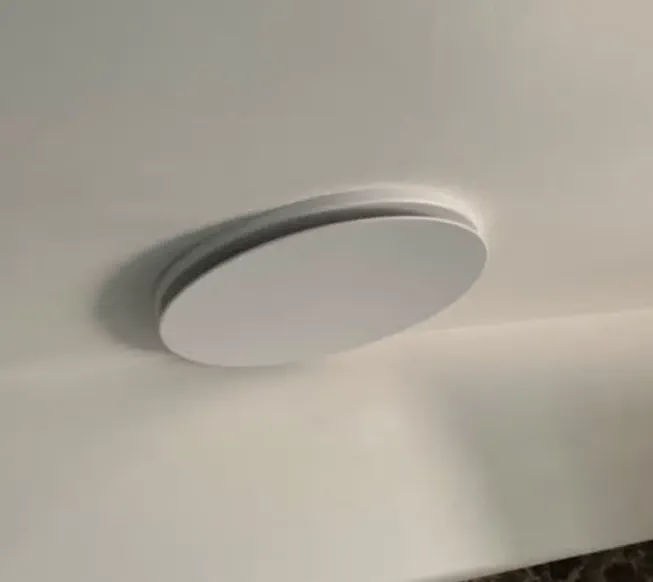
Exhaust fan grilles collect lint, dust and towel fluff, and in a bathroom that mixes with moisture into a grey coating that chokes airflow. Every few months, vacuum the grille with a brush attachment. If it unclips, wash it in warm soapy water and let it dry completely before refitting.
Then test it. With the fan running and the door slightly open, hold a single tissue against the grille. A healthy fan holds it firmly. If the tissue barely moves, the problem may be the duct rather than the fan: a squashed or disconnected run, a backdraft flap stuck shut, or no gap under the door for fresh air to come in.
If your home has a gas heater, don't run bathroom exhaust fans or the rangehood while it's on. Energy Safe Victoria warns this can create negative pressure that draws carbon monoxide into living spaces.
Cleaning a ceiling fan
Dust builds up on the leading edge of each blade and gets flung around the room when the fan starts. A pillowcase slipped over each blade and drawn back gently traps the dust instead of dropping it. Use a stable step ladder, not a chair, and don't push hard on the blades, which can bend the brackets and knock the fan out of balance.
Wipe the motor housing and light kit with a dry or barely damp cloth, and keep water and spray cleaners away from the motor, the light and the controller. On alfresco fans near the bay, a regular wipe-down also slows salt build-up on the blades and fixings.
Signs of wear to watch for
Fans give plenty of warning before they fail. Noise is the commonest: a rattle or tick that wasn't there before, a hum from the motor or a grinding sound as it spins up. In an exhaust fan, weak extraction and a mirror that stays fogged longer than it used to often mean worn bearings or a tired motor.
A burning smell, smoke or a fitting that's hot to the touch means stop using it. Switch it off at the switchboard if it is safe to reach, and have it checked before turning it back on.
- A ceiling fan that wobbles more than it used to, or a mount that looks loose
- Clicking, grinding or a humming wall controller
- An exhaust fan that's slow to start or stops partway through
- Water dripping from the exhaust grille
- A motor or housing that feels hot, or a burning smell
Repair or replace?
A ceiling fan wobble usually comes from blades out of balance or a loose mount, and tightening and balancing fixes most of them. A fan with a failing motor or a controller that can't be replaced is often better swapped for a new one, especially if a quieter, more efficient DC model would suit the room.
An exhaust fan with a worn-out motor is usually replaced rather than repaired, and that's a chance to fix how it's ducted and switched. A fan venting into the roof space leaves damp air condensing on cold timber and insulation, and one wired to the light switch stops just when it's needed. A run-on timer or humidity sensor keeps it going until the room clears.
Fitting a new fan is electrical installation work, so it needs a licensed electrician, who must provide a Certificate of Electrical Safety for the work.
Questions that come next
Sources for this article
3 sources, with the date each was checked
- 1.Energy Safe Victoria: Electrical work isn’t a DIY job, even for small jobs such as changing power points or light switches. Accessed 30 September 2026.
- 2.Energy Safe Victoria: Don’t use kitchen rangehoods or bathroom exhaust fans at the same time as your heater. It can create a negative pressure environment, drawing carbon monoxide into living spaces. Accessed 30 September 2026.
- 3.Energy Safe Victoria: Whenever a licensed electrician completes any electrical installation work, they must provide a Certificate of Electrical Safety (COES). Accessed 30 September 2026.