Gas ducted heating is common across Melbourne's west, and plenty of those heaters have been running for many years. When one stops lighting, blows cold air or makes a new noise, it's usually a part that has worn out, but older units reach a point where replacing makes more sense than repairing. All gas work is carried out by appropriately licensed technicians. We also handle the electrical side, like the heater's power supply and thermostat wiring, and we can talk you through reverse cycle if you're thinking about moving off gas.
When to get it checked
Cold or lukewarm air from the vents
The fan runs but the air never warms up, or it goes cold part-way through a cycle. Usually the burner isn't lighting, or isn't staying lit.
Several tries before it starts
Clicking, a pause, then another attempt. Ignition trouble tends to get worse as the nights get colder, not better.
A new noise from the roof or under the floor
Squealing, rattling or a thump when the burner lights. A worn fan bearing sounds different from delayed ignition, and a thump at start-up needs checking before the heater is used again.
Some rooms never warm up
The lounge is comfortable but the back bedroom stays cold. The heater may be fine; the air just isn't reaching that room because of a split duct, a crushed run or a blocked return air path.
Soot, stains or a smell that won't clear
A dusty smell on the first run of the season is normal and fades quickly. Soot near a vent, a lingering smell, or people feeling headachy or dizzy while it runs are reasons to switch it off.
Why it happens
5 common causes
Ignition and flame parts wear out
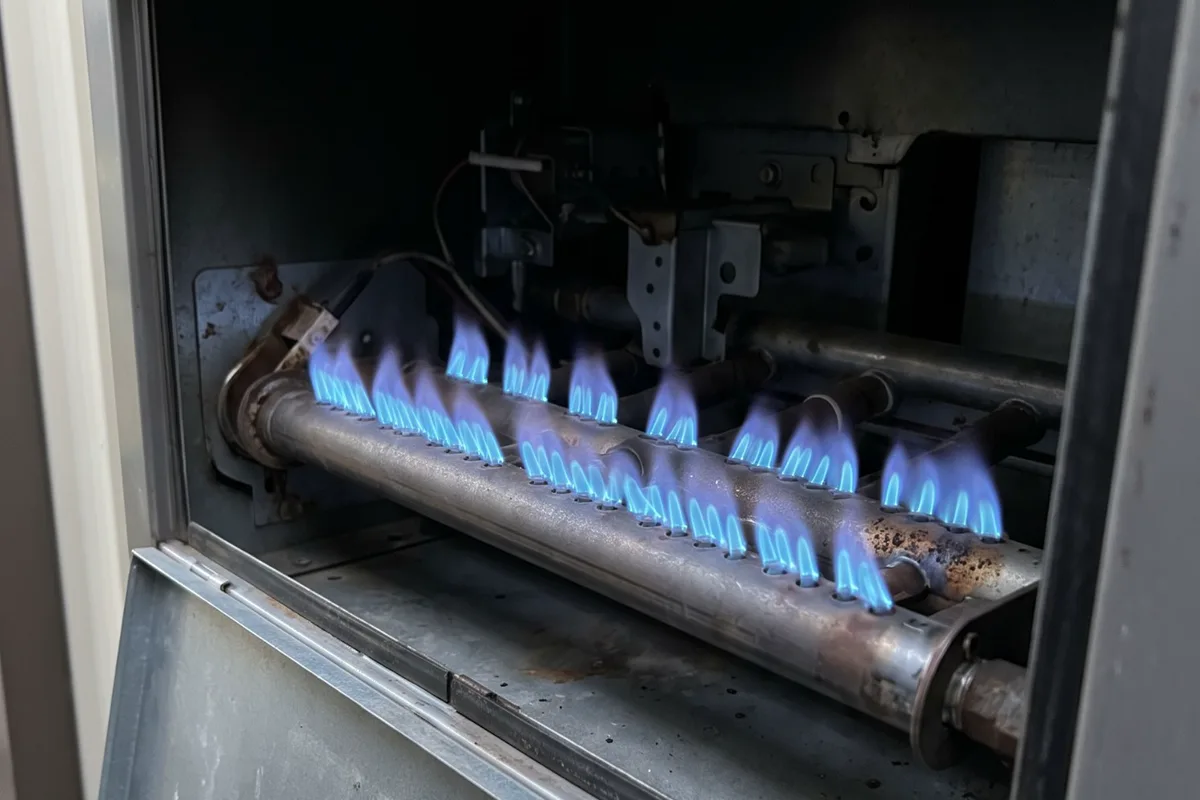
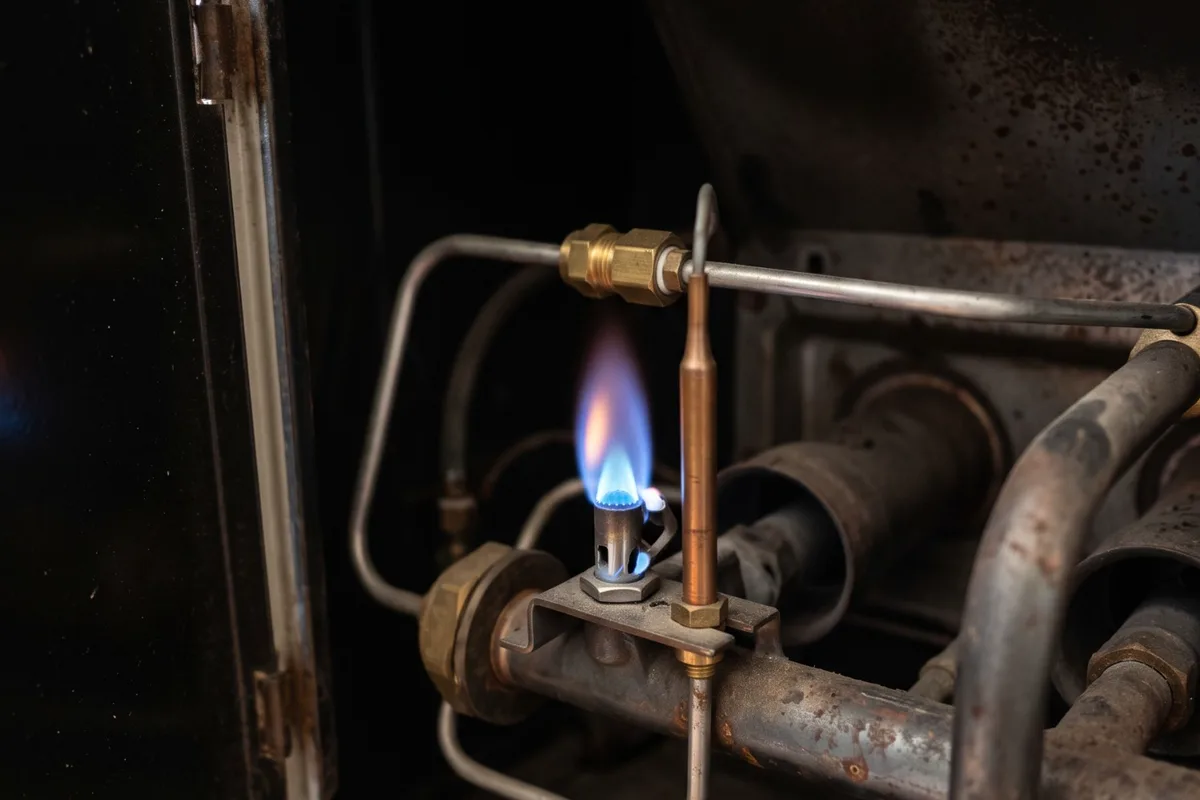
Igniters, flame sensors and gas valves go through a great many starts every winter. Dust and age catch up with them, often on the first cold morning of the season.
Not enough air through the heater
A clogged filter, a couch across the return grille or rugs over floor vents cut the air crossing the heat exchanger. The heater overheats, shuts down on a safety limit and restarts, which feels like it keeps cutting out.
Ducts that have aged or been knocked
Flexible duct sags and joints pull apart over the years. Other trades working in the roof can knock a run loose, and the heat ends up warming the roof space instead of the bedroom.
Heat exchanger and flue wear
The heat exchanger keeps the flame's exhaust out of the air you breathe, and the flue carries it outside. Metal can crack or corrode over years of use, which is why a proper service includes a combustion spillage test.
Power and control faults
A tripped circuit, a failed controller, a damaged thermostat cable or a loose connection at the heater's power point stops everything. The heater looks dead even though the gas side is fine.
What the job covers
What we usually do on this job. Your quote confirms it for your place.
- Burner, ignition and flame checked
- Heat exchanger inspected for cracks and corrosion
- Flue checked for blockages and correct venting
- Gas pressure and safety controls tested
- Fan, motor and belt checked
- Return air filter cleaned or replaced
- Ducts and outlets checked for leaks and damage
- Thermostat tested and calibrated
- Electrical supply to the heater checked
Your options, explained
Service and keep it running
Low disruption- Best for
- Sound heaters due for their two-yearly check
- How it works
- A gasfitter inspects, cleans and tests the heater and flue, including CO testing at the vents, while the filter, fan, ducts and controls are checked.
- Worth knowing
- Often finds a worn part before it leaves you without heat in July.
Repair the fault
Low disruption- Best for
- One clear fault on a well-kept heater
- How it works
- The failed igniter, sensor, fan motor, controller or duct is replaced, then the heater runs a full cycle.
- Worth knowing
- Good value on a heater with a service history. Less so when an old unit needs its third major part in as many winters.
New gas ducted heater
Medium disruption- Best for
- Owner-occupied homes staying on gas, with ducts worth keeping
- How it works
- A correctly sized heater replaces the old one, reusing sound ducts, with the flue, gas connection, power and controller redone to suit.
- Worth knowing
- Owner-occupiers aren't required to switch gas space heating to electric. Duct condition decides how much of the old system stays.
Change to ducted reverse cycle
High disruption- Best for
- Households that want cooling too, and rentals planning ahead
- How it works
- The gas heater comes out and a ducted heat pump goes in, with an outdoor unit, its own circuit, and ducts reused only where they suit.
- Worth knowing
- One system for summer and winter. Heating ducts and floor vents don't always suit cooling, so we check them first.
The people behind the work
Our own photos from jobs like this one. Family-run, based in Altona Meadows, with 19 years in the industry.
Licensed electrical contractor (REC 38187)See more team photos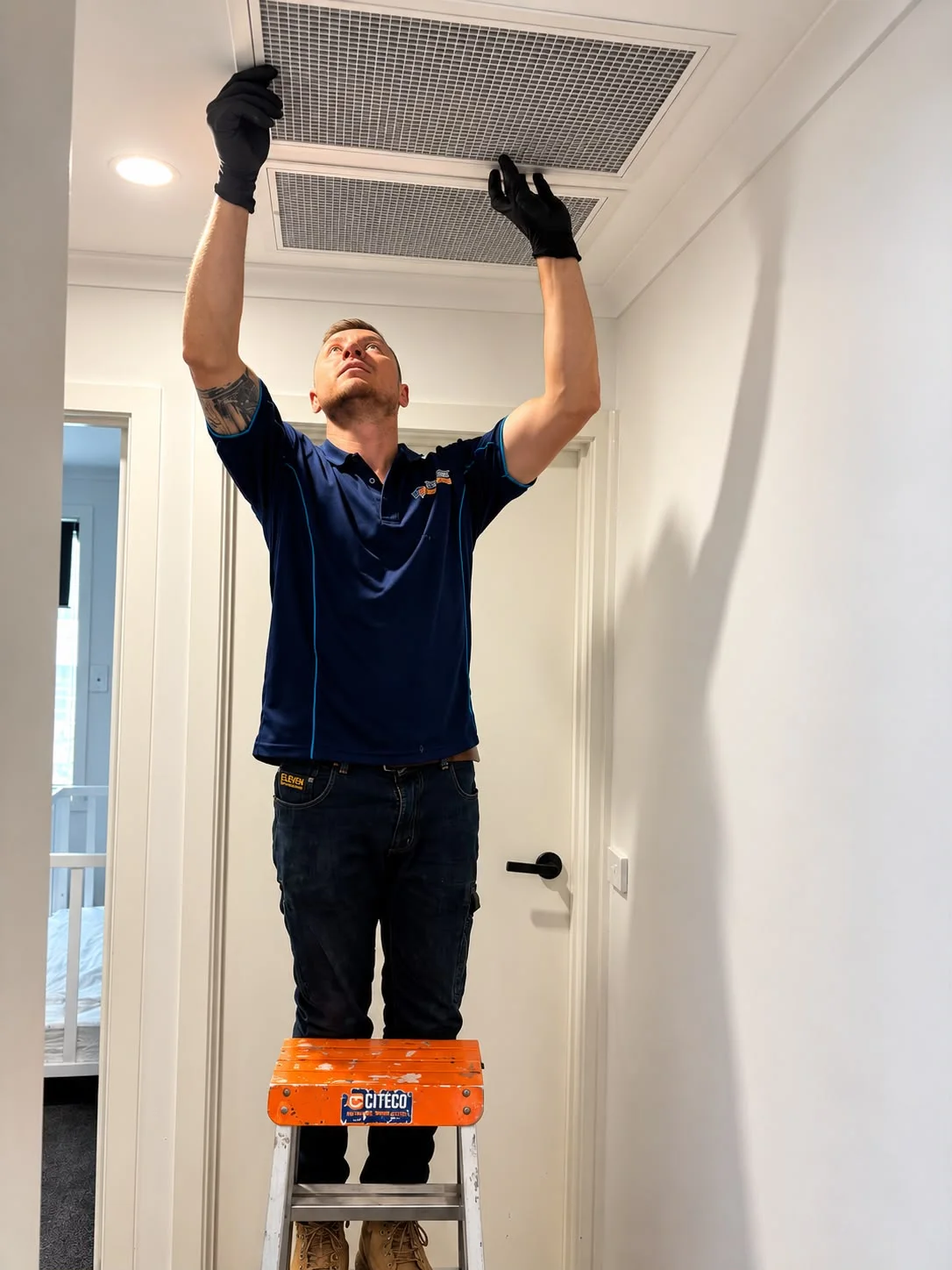
Worth knowing before you book
- Servicing is a safety check
- A cracked heat exchanger or a blocked flue can let combustion gases into the house. Energy Safe Victoria recommends gas heaters are serviced at least every two years.
- Age changes the advice
- On an older heater, one repair can lead to another. We'll tell you when the money is better put toward a new system.
- There's more than one replacement
- You can replace like for like with a new gas heater, or switch to ducted reverse cycle and gain cooling. We'll quote either.
What affects the price?
The right scope depends on your installation. These are the details we check so your quote is useful, with any additional work explained before it proceeds.
What's actually wrong
A controller or igniter is a small job; a fan motor or heat exchanger is a big one. Finding the real fault first means you don't pay for parts the heater didn't need.
Where the heater sits
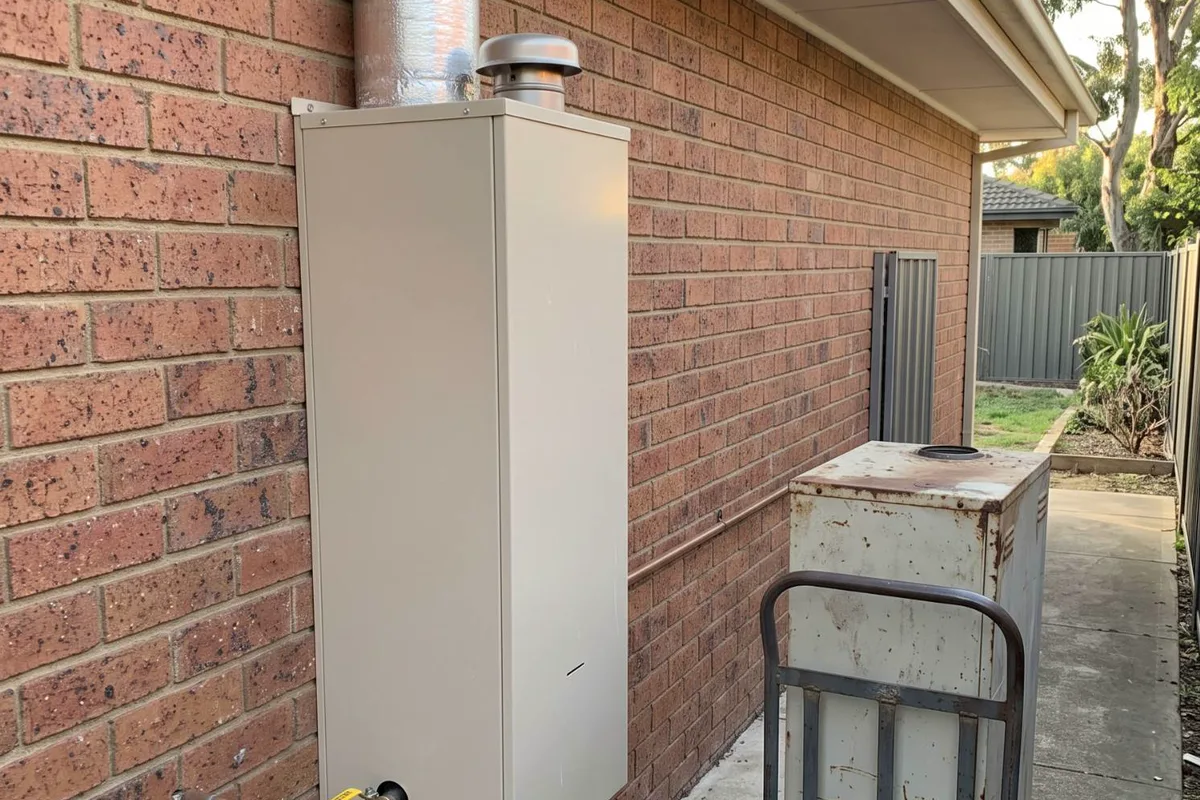
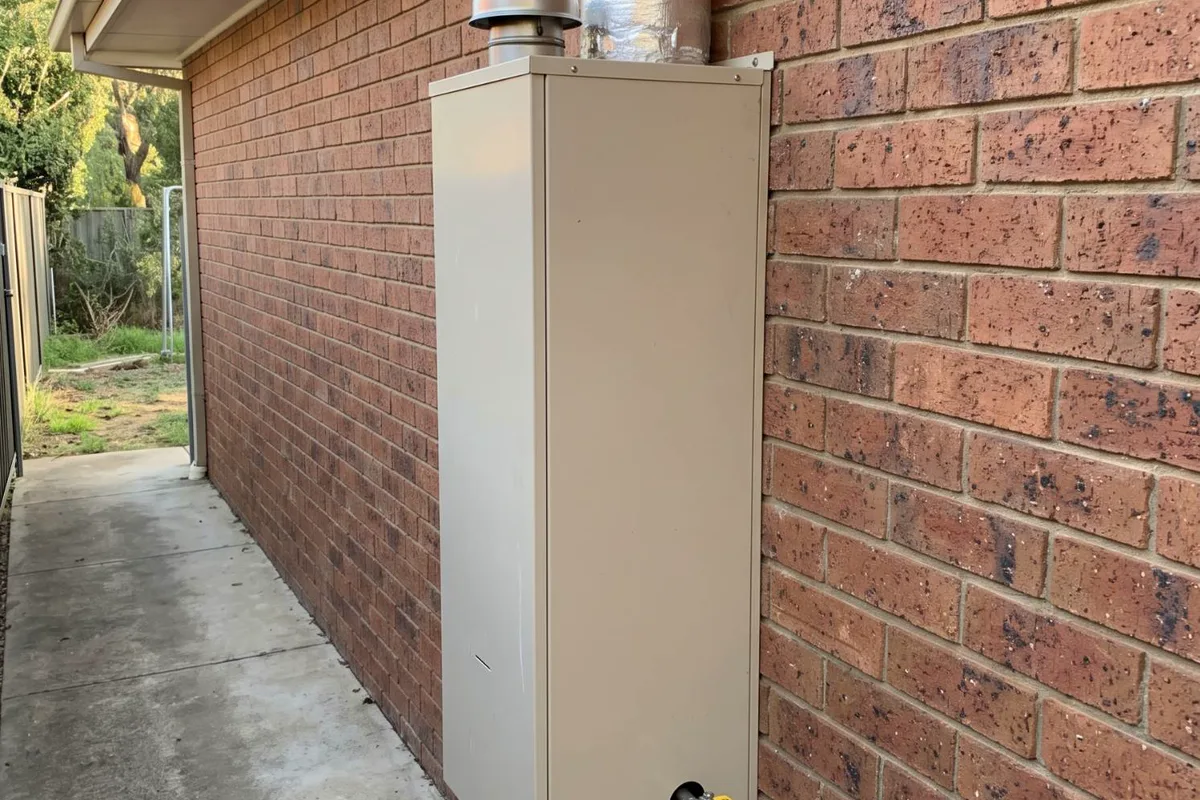
A heater on an outside wall is easy to reach. One in a low roof with a small manhole, or under the floor of an older house, adds time to every step.
Age and parts supply
Parts for current models are easy to get. Older heaters can need parts ordered in, and eventually there aren't any.
Condition of the ductwork
How many runs are torn, sagging or poorly insulated makes a real difference to a replacement quote.
Gas, flue, electrical and zones
A new heater may need its flue, gas connection or wiring changed, and zones are simplest to add at the same time. Reverse cycle adds an outdoor unit, a dedicated circuit and sometimes switchboard work.
Before the visit
- Send the heater model, location and previous service records.
- Tell us about recent renovations or altered ventilation.
- If you smell gas or suspect carbon monoxide, turn the heater off if it's safe to, get everyone outside and get help from a safe place.
How it runs
- 1
Book in
Tell us the brand, rough age and what it's doing, or not doing.
- 2
Inspect and test
An appropriately qualified gasfitter checks the gas appliance and flue; the agreed scope also covers controls and air distribution.
- 3
Repair or quote
We fix it on the spot where we can, or quote on the part or a replacement.
- 4
Confirm it's safe
The heater is tested and run before we leave, with notes on anything to watch.
Step by step, in more detail
5 steps
Get the heater's details
Brand, rough age, where it sits, what it's doing and when it was last serviced. A photo of the model label helps us come prepared.
Rule out power and controls
Our electricians test the supply at the heater, its power point or isolator, the controller and the cable between them. Plenty of dead-heater calls end right here.
Check the gas side properly
A licensed Type A gasfitter inspects the burner, ignition, heat exchanger and flue, and tests for carbon monoxide spillage. A service should include a CO test at the heating vents in every room.
Follow the air
We check the filter, fan and belt, then follow the ducts through the roof or under the floor, noting split joints, crushed runs and missing insulation.
Price, fix and run it through
You get the fault, the options and a fixed price for the agreed scope before we start. Afterwards the heater runs a full cycle while we check every outlet.
What is safe to do, and what to leave to us
Safe for you to do
- Switch the heater off at its controller if you hear a bang, notice a smell that won't clear or see soot around a vent.
- If anyone feels unwell while it runs, turn it off, get everyone into fresh air and seek medical help.
- Reset a tripped safety switch once. If it trips again, leave it off.
- Keep the return air grille, floor vents and the space around the heater clear.
Leave these to us
- Removing panels, relighting or adjusting the heater. Energy Safe Victoria says unlicensed gasfitting is illegal and potentially fatal.
- Using a heater whose flame or behaviour has changed. ESV says a qualified gasfitter should check it for CO leakage.
- Treating a carbon monoxide alarm as a replacement for servicing.
- Closing most outlets to push heat into one room, which chokes airflow through the heater.
When to get us in
- The heater blows cold, won't light or keeps cutting out
- There's a thump at start-up, a new noise or a smell that doesn't clear
- People feel headachy, dizzy or sick when it's on
- It hasn't been serviced in two years, or you don't know its history
- You're weighing a repair against a new heater or reverse cycle
- A rental's heater has failed or its gas safety check is due
More detail
How a gas ducted heater moves heat
The heater sits in the roof space, under the floor or on an outside wall. A fan draws air back through the return grille and filter, pushes it across the hot heat exchanger, and ducts carry it to each room. The flame's exhaust stays on the other side of the heat exchanger and leaves through the flue, which is why those two parts get the closest look at every service.
Who does which part
Our licensed electricians handle the heater's power supply, controller and thermostat cable, zone wiring and hard-wired carbon monoxide alarms, which ESV says must be installed by a licensed electrician. The gas side is done by a licensed Type A gasfitter; the Building and Plumbing Commission registers and licenses gasfitters in Victoria. Knowing which side a fault is on keeps the visit useful.
Repair, replace or change systems
Energy Safe Victoria suggests considering replacement if a gas heater is old or hasn't been serviced for several years. A worn igniter on a well-kept heater is a routine repair; a cracked heat exchanger or a string of breakdowns in one winter is the time to price a new system. The Australian Government's energy advice says ducted reverse cycle loses some efficiency through the ducts but is still more cost-efficient than gas heating, and it cools as well.
Sizing and zones when you replace
A new heater should be sized for the house, not copied from the old label. For ducted systems, the Victorian Government suggests 1.1 to 1.4 kW of heating output for every 10 m² covered, depending on the home, and recommends zones so each area can be heated on its own. We look at insulation, ceiling heights, glazing and how the house is used before settling on a size.
Local rules and conditions
Victorian requirements and local conditions that shape this job, with the sources listed at the foot of the page.
Long, cold nights in the west
Laverton's weather station records a July mean minimum of 5.2°C, with June and August not far behind. Victorians typically use more energy for heating than cooling, so a heater that starts reliably earns its keep here.
Two-yearly service, CO test in every room
Energy Safe Victoria recommends servicing ducted heaters every two years, with a carbon monoxide test at the heating vents in all rooms, done by a licensed Type A gasfitter.
Rental heaters and gas checks
From 13 October 2026, rental providers must arrange gas and electrical safety checks every 2 years for all rental agreements. From 1 March 2027, fixed heating that fails and can't be repaired must be replaced with an energy-efficient fixed electric system with an outlet in the main living area.
Owners can stay on gas; new homes can't
Owner-occupiers aren't required to switch gas space heating to electric. From 1 January 2027, all new homes must be built all-electric.
Useful reading
Guides to read before you decide, with checklists and questions to bring to the quote.
- An ageing gas heater: service, repair or plan an electric replacement?Separate immediate safety needs from a considered comparison of repair and reverse-cycle heating.
- Gas ducted heater: repair or replace?How to weigh a ducted gas heater fault against the heater's condition, the ducts and the electric option, once the safety checks are done.
- Reverse-cycle air conditioning or gas heating?How each one makes heat, how it feels on a cold night in Melbourne's west, what Victoria's gas rules mean for you and what switching really involves.
- Ducted zoning explainedZones, dampers, controllers and room sensors in plain terms, plus the airflow limits that decide whether zoning will fix your comfort problem.
Common questions
Questions people ask about this
- Does my gas ducted heater have a filter I can clean?Many do.
- Is it safe to leave the heating on overnight?It depends on the heater.
- Why do my heating ducts tick or bang when the heater starts?Light ticking, or a single soft pop as the heating starts or stops, is usually metal parts warming and expanding: the heater's plenum, the return air box, duct collars…
- Who is qualified to do a rental gas safety check?A licensed or registered gasfitter endorsed for Type A gas appliance servicing.
From the blog
- Why does heating make the air feel so dry?Heating doesn't remove water from the air, but it lowers the humidity you feel. Why winter air feels dry, and what actually helps, from airflow to filters.
- Heat the whole house or just the rooms you use?Heating only the rooms you use usually costs less, but taken too far it leaves cold, damp corners. How routine, layout and system type decide the balance.
- Keep gas ducted heating and add splits, or go ducted reverse-cycle?Sound gas heater and only two rooms to cool? Keep it and add splits. Ageing heater, or cooling wanted throughout? Ducted reverse-cycle is usually the better move.
Sources for the rules and local facts on this page
16 sources, with the date each was checked
- 1.Bureau of Meteorology: Mean minimum temperature (°C) 14.0 14.4 12.7 10.0 7.8 5.9 5.2 5.7 6.8 8.4 10.3 12.2 9.5 81 1943 2026 Accessed 30 September 2026.
- 2.Department of Energy, Environment and Climate Action (energy.vic.gov.au), page last updated 14/04/25: Victorians typically use more energy for heating than cooling, so look for a unit with a higher heating efficiency. Accessed 30 September 2026.
- 3.Energy Safe Victoria: It is recommended that ducted heaters are serviced every two years and during this service a CO test should be conducted at the heating vent outlets in all rooms. Accessed 30 September 2026.
- 4.Energy Safe Victoria: Type A appliances include domestic and light commercial type appliances such cookers, space heaters, central heaters, water heaters, catering equipment and leisure appliances. So, when looking to service and repair your… Accessed 30 September 2026.
- 5.Consumer Affairs Victoria: Mandatory gas and electrical safety checks every 2 years for all rental properties Rental providers and their agents must arrange gas and electrical safety checks by a qualified tradesperson every 2 years for all… Accessed 30 September 2026.
- 6.Consumer Affairs Victoria: From 1 March 2027, when an existing fixed heating system fails and can't be repaired ,it must be replaced with an energy-efficient fixed electric heating system with an outlet in the main living area. You do not need to… Accessed 30 September 2026.
- 7.Department of Energy, Environment and Climate Action (Victoria): From 1 March 2027, if a gas hot water appliance breaks and cannot be repaired, it must be replaced with an electric alternative. No requirement to upgrade gas space heating or stovetop gas cooking to electric, however… Accessed 30 September 2026.
- 8.Department of Transport and Planning (Victoria): Victoria’s new Building and Plumbing Amendment Regulations 2025 have been finalised, advancing Victoria’s shift toward all-electric buildings. From 1 January 2027, all new homes and most new commercial buildings will be… Accessed 30 September 2026.
- 9.Energy Safe Victoria: As part of a comprehensive service, a gasfitter must use a Carbon Monoxide (CO) analyser to test for carbon monoxide spillage. Only use a registered or licensed gas fitter who has completed the BPC / Master Plumbers CO… Accessed 30 September 2026.
- 10.Department of Health (Victoria): When carbon monoxide is inhaled, it replaces oxygen in the blood, which may cause symptoms including tiredness, shortness of breath, headaches, dizziness, nausea, weakness, confusion or chest pain. Accessed 30 September 2026.
- 11.Energy Safe Victoria: The Building and Plumbing Commission (BPC) is responsible for registering, licensing and disciplining plumbers and gasfitters in Victoria. Accessed 30 September 2026.
- 12.Building and Plumbing Commission: After they have done the servicing work, the gasfitter must provide you with a compliance certificate if the total value of the work is $750 or more or involves removing the appliance from its fixed location, or if they… Accessed 30 September 2026.
- 13.Energy Safe Victoria: Whenever a licensed electrician completes any electrical installation work, they must provide a Certificate of Electrical Safety (COES). Accessed 30 September 2026.
- 14.Energy Safe Victoria: Locate your electricity box outside your home and check whether the safety switch has tripped. If it has tripped, reset the switch. If the switch won’t reset, call a licensed electrician. Accessed 30 September 2026.
- 15.energy.gov.au (Australian Government, DCCEEW): The energy efficiency of reverse-cycle air conditioners on the Australian market ranges between 300% to 600% efficient. Air conditioners can achieve such high rates of energy efficiency because they do not use… Accessed 30 September 2026.
- 16.Solar Victoria (updated 20 November 2025): To heat a room, try setting the temperature between 18°C to 20°C. Every 1°C higher will add around 10% to your heating bill. Set your air conditioner thermostat for cooling between 24°C and 26°C for living areas – every… Accessed 30 September 2026.