
The key points
- Carbon monoxide warning signs mean switch off and get it checked first.
- One worn part on a heater with a sound heat exchanger is usually worth fixing.
- A damaged heat exchanger or repeat breakdowns shift the case towards replacement.
- Have every duct run checked before you compare quotes.
- Owner-occupiers needn't leave gas; rentals face new rules from 1 March 2027.
Rule out a safety problem before anything else
Some ducted heater faults are just inconvenient. Others mean the heater shouldn't run until it's been checked. Energy Safe Victoria warns that all gas heaters can spill carbon monoxide, a gas you can't see or smell that can make you seriously unwell or kill you. Victoria's Department of Health lists possible symptoms including headaches, dizziness, nausea, tiredness and confusion.
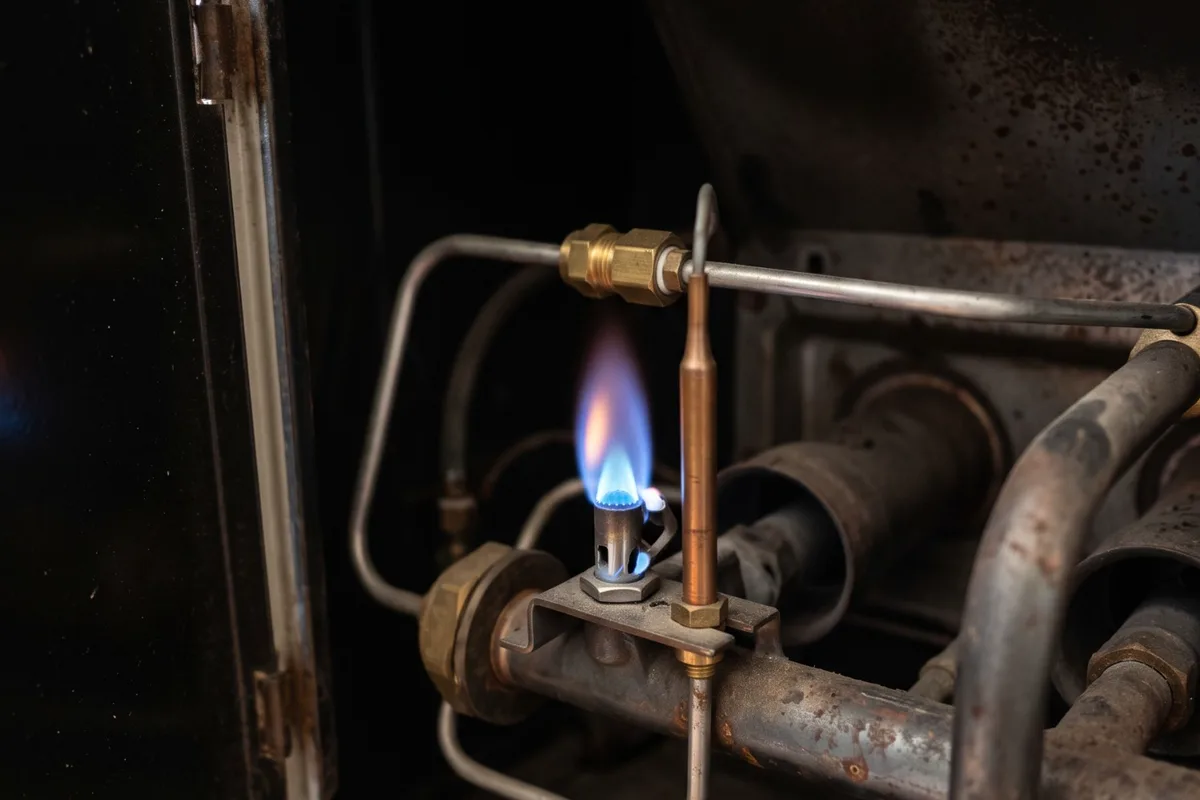
Energy Safe Victoria also says that if a heater's flame changes from its usual colour, or anything else about how it runs changes, a qualified gasfitter should inspect it and check for carbon monoxide leakage. Soot around the vents, a new smell, a bang at start-up or people feeling off are all reasons to turn it off at the controller.
If someone feels unwell, get them into fresh air and get medical help. If you smell gas, get everyone outside and ring your gas distributor on the number printed on your gas bill.
Work out which part has failed
A gas ducted heater works as a chain. The controller calls for heat, a small fan clears the flue, the igniter fires, the burner lights and a sensor proves the flame. Then the main fan pushes house air across the heat exchanger and into the ducts. Where it stops says a lot about the fix.
Plenty of no-heat calls end on the electrical side: a dead power point, a failed controller or a worn fan motor. Cold air usually points to ignition or flame sensing. A heater that runs for a while and then cuts out is often overheating, because a clogged filter, closed vents or a crushed duct is starving it of air.
These are different trades. Energy Safe Victoria counts central heaters as Type A gas appliances and says gas heater servicing and repair should be done by a licensed Type A gasfitter, while power and controller faults belong to a licensed electrician. It also says it's illegal and potentially fatal for unlicensed people to do any gasfitting or electrical work.
- What it does when asked for heat: nothing, fans only, or runs then stops.
- Any code on the controller, photographed.
- Brand, model and rough age, if visible without opening a panel or climbing into the roof.
- The date and report of the last service.
- Any extension or new insulation since it went in.
Faults that are usually worth repairing
Most breakdowns come down to one worn part on a heater that is otherwise sound. Igniters, flame sensors, pressure switches, fan motors and controllers all wear out. If the rest of the heater checks out, a single-part repair is normally the sensible call, even on an older heater.
The catch is knowing the rest is sound, and swapping a part isn't a service. Energy Safe Victoria says a service should include a visual inspection of the appliance and flue, a negative pressure and combustion spillage test, internal cleaning, any repair or replacement of parts, and running the appliance to confirm it works correctly and safely. For ducted heaters it recommends a service every two years, with a carbon monoxide test at the heating outlets in every room.
If yours is overdue, combine the repair with a full service. The report is your best evidence on whether the rest of the heater is worth keeping.
Findings that point towards replacement
The heat exchanger keeps the burner's flue gases out of the air blown through your house. If it's cracked or badly corroded, the conversation changes: it's one of the costliest parts, and a failure there is a safety problem, not a comfort one. On an older unit, replacement is usually the sensible path.
Other findings build the case more slowly. Breakdowns that keep returning, or different parts failing one after another, suggest the heater is wearing out as a whole, and parts get harder to find once a model is superseded. Energy Safe Victoria itself suggests considering replacement if a gas heater is old or hasn't been serviced for several years.
Then there's fit. A heater sized for the original house may struggle after an extension, and may be more than you need once ceiling insulation goes in. Size any replacement for the house you live in now, not the old label.
Check the ducts before you compare prices
Ducts get forgotten because they're out of sight. Older homes around Melbourne's west often have floor vents fed from under the house, while newer estate homes more often have ceiling outlets fed through the roof space. Either way, the ducts do half the job.
Crushed, split, disconnected or bare runs lose heat before it reaches the rooms. Federal YourHome guidance says ducts should be insulated to at least R1.5, with joints sealed to prevent condensation and leakage. Rodents and roof work are the usual culprits, and damage often only shows when someone follows each run end to end.
Ask for every run to be inspected before you decide. If the ducts are sound, a like-for-like heater swap is a smaller job. If several runs need replacing anyway, price a different system on the same basis too.
Where ducted reverse cycle fits in
You don't have to leave gas. Victorian Government guidance is that owner-occupiers aren't required to switch gas space heating to electric, though it encourages the change to lower energy bills. Rentals differ: from 1 March 2027, a rental's heating appliance that breaks and can't be repaired must be replaced with an efficient electric reverse cycle air conditioner in the main living area.
Federal energy guidance says ducted reverse cycle is less efficient than wall units but still more cost-efficient than gas heating.
It isn't a straight swap. Reverse cycle usually needs larger ducts and ceiling outlets, so floor-vent layouts rarely carry over. Your switchboard needs checking too. The Victorian Government's sizing guide is 1.1 to 1.4 kW of heating output for every 10 m² covered, depending on the home.
Size it for winter. Victorians typically use more energy for heating than cooling, and Laverton's July mean minimum is 5.2 °C, so compare heating performance first.
Put the repair and replacement quotes side by side
With the fault, heater condition and ducts known, you can compare fairly. Ask each quote to describe the same end result: which rooms get heat, what happens to the ducts, and what's excluded.
Ask about paperwork up front. A licensed electrician must give you a Certificate of Electrical Safety whenever they complete electrical installation work. The Building and Plumbing Commission says a gasfitter must give you a compliance certificate after servicing work that reaches a set value, removes the appliance from its fixed location or modifies the gas piping.
- The diagnosed fault, and what the repair won't fix.
- Service findings, including the carbon monoxide test at each outlet.
- Which duct runs are reused, repaired or replaced.
- Controller, zoning and electrical work.
- Who disconnects the old heater and makes the gas safe.
- The certificates you'll receive.
When it makes sense to get Total Comfort in
If the heater is dead, blowing cold or cutting out, get a diagnosis before deciding anything. Our electricians test the power, controller and wiring, watch the start-up and follow the ducts. Burner, gas valve, heat exchanger and flue work goes to a licensed Type A gasfitter. You get the fault and a fixed price for the agreed scope before we start.
If replacement makes more sense, we'll price a new gas heater and ducted reverse cycle on the same scope. Total Comfort is a family-run, licensed electrical contractor (REC 38187) based in Altona Meadows, with 19 years in the industry. Quotes are free, with no obligation.
Common questions
Quick answers
- My gas heater flame looks different. Is that a problem?Yes, treat it as one.
- What should I do if my carbon monoxide alarm goes off?Treat it as real.
- What happens if the heater in my rental breaks after March 2027?If it can be repaired, it's repaired as an urgent repair, as it is now.
- Does my gas ducted heater have a filter I can clean?Many do.
Sources for this guide
14 sources, with the date each was checked
- 1.Energy Safe Victoria: All gas heaters can spill carbon monoxide (CO) – a gas you can’t see or smell that can make you seriously unwell or kill you. Accessed 30 September 2026.
- 2.Department of Health (Victoria): When carbon monoxide is inhaled, it replaces oxygen in the blood, which may cause symptoms including tiredness, shortness of breath, headaches, dizziness, nausea, weakness, confusion or chest pain. Accessed 30 September 2026.
- 3.Energy Safe Victoria: Check for changes in how your gas heater operates. For example if the flame changes from its usual colour. If there is any change, you must get a qualified gasfitter to inspect your gas heater and check it for CO… Accessed 30 September 2026.
- 4.Energy Safe Victoria: Gas and electricity are inherently dangerous and it’s illegal and potentially fatal for unlicensed and unqualified people to undertake any gasfitting or electrical work. Accessed 30 September 2026.
- 5.Energy Safe Victoria: A service should include: carrying out a visual inspection of the appliance and flue system, conducting a negative pressure and combustion spillage test (CO test), internal cleaning, the repair or replacement of parts… Accessed 30 September 2026.
- 6.YourHome (Australian Government): Ducts must be well insulated, to at least R1.5, and joints sealed to prevent condensation and leakage. The roof should have reflective foil insulation installed and be vented to dispel hot air. Zoned systems cool only… Accessed 30 September 2026.
- 7.Department of Energy, Environment and Climate Action (Victoria): From 1 March 2027, if a gas hot water appliance breaks and cannot be repaired, it must be replaced with an electric alternative. No requirement to upgrade gas space heating or stovetop gas cooking to electric, however… Accessed 30 September 2026.
- 8.energy.gov.au (Australian Government, DCCEEW): The energy efficiency of reverse-cycle air conditioners on the Australian market ranges between 300% to 600% efficient. Air conditioners can achieve such high rates of energy efficiency because they do not use… Accessed 30 September 2026.
- 9.Department of Energy, Environment and Climate Action (energy.vic.gov.au), page last updated 14/04/25: We recommend providing 1.1 to 1.4kW of heating output for every 10m² of your home covered by a ducted system, depending on the individual characteristics of your home. ... We recommend zones for your ducted system, as… Accessed 30 September 2026.
- 10.Bureau of Meteorology: Mean minimum temperature (°C) 14.0 14.4 12.7 10.0 7.8 5.9 5.2 5.7 6.8 8.4 10.3 12.2 9.5 81 1943 2026 Accessed 30 September 2026.
- 11.Energy Safe Victoria: Whenever a licensed electrician completes any electrical installation work, they must provide a Certificate of Electrical Safety (COES). Accessed 30 September 2026.
- 12.Building and Plumbing Commission: After they have done the servicing work, the gasfitter must provide you with a compliance certificate if the total value of the work is $750 or more or involves removing the appliance from its fixed location, or if they… Accessed 30 September 2026.
- 13.Building and Plumbing Commission (Victorian Building Authority, trading as the Building and Plumbing Commission): Under Part 4 of the Plumbing Regulations 2018, Refrigerated Air-conditioning work is: The construction, installation, replacement, repair, alteration, maintenance, testing or commissioning of refrigerated… Accessed 30 September 2026.
- 14.Consumer Affairs Victoria: Anything on this list is legally defined as an urgent repair: burst water service blocked or broken toilet system serious roof leak gas leak dangerous electrical fault flooding or serious flood damage serious… Accessed 30 September 2026.
Planning advice for homeowners. Installation requirements depend on the property and equipment. Where this guide refers to Victorian safety or rental rules, use the linked official guidance for the current requirements.