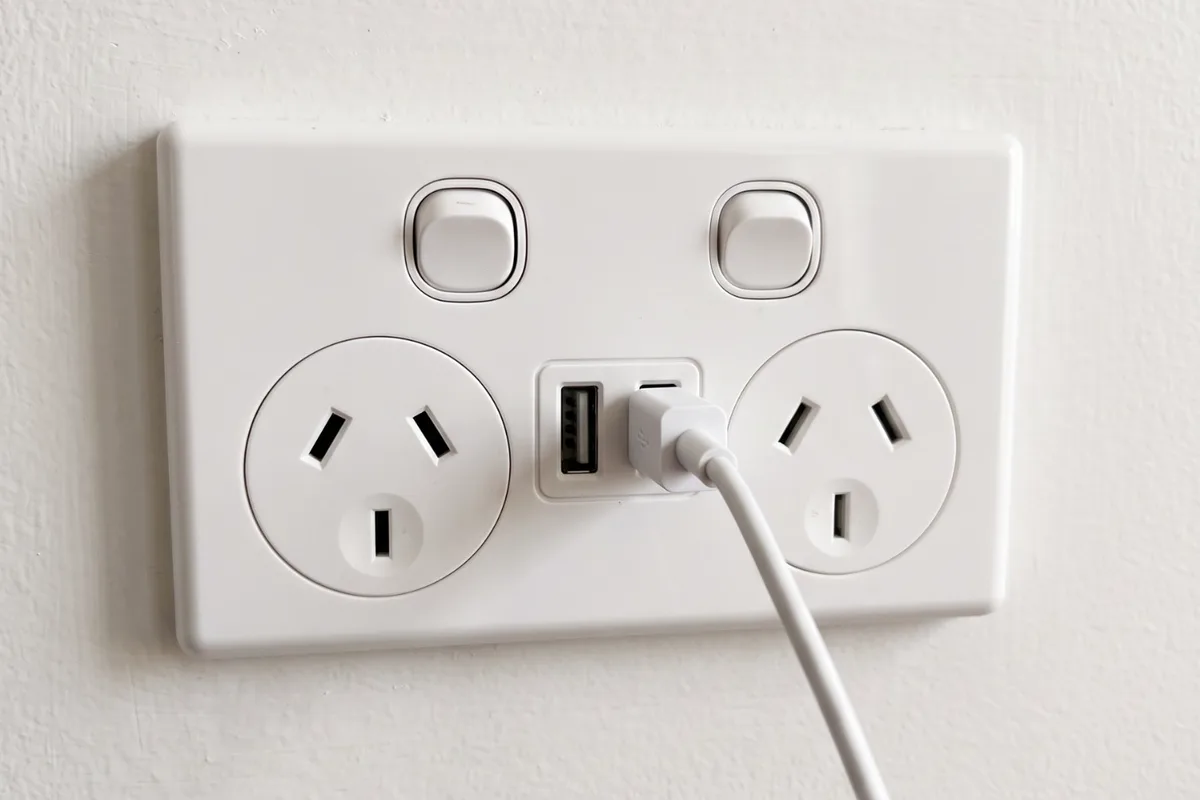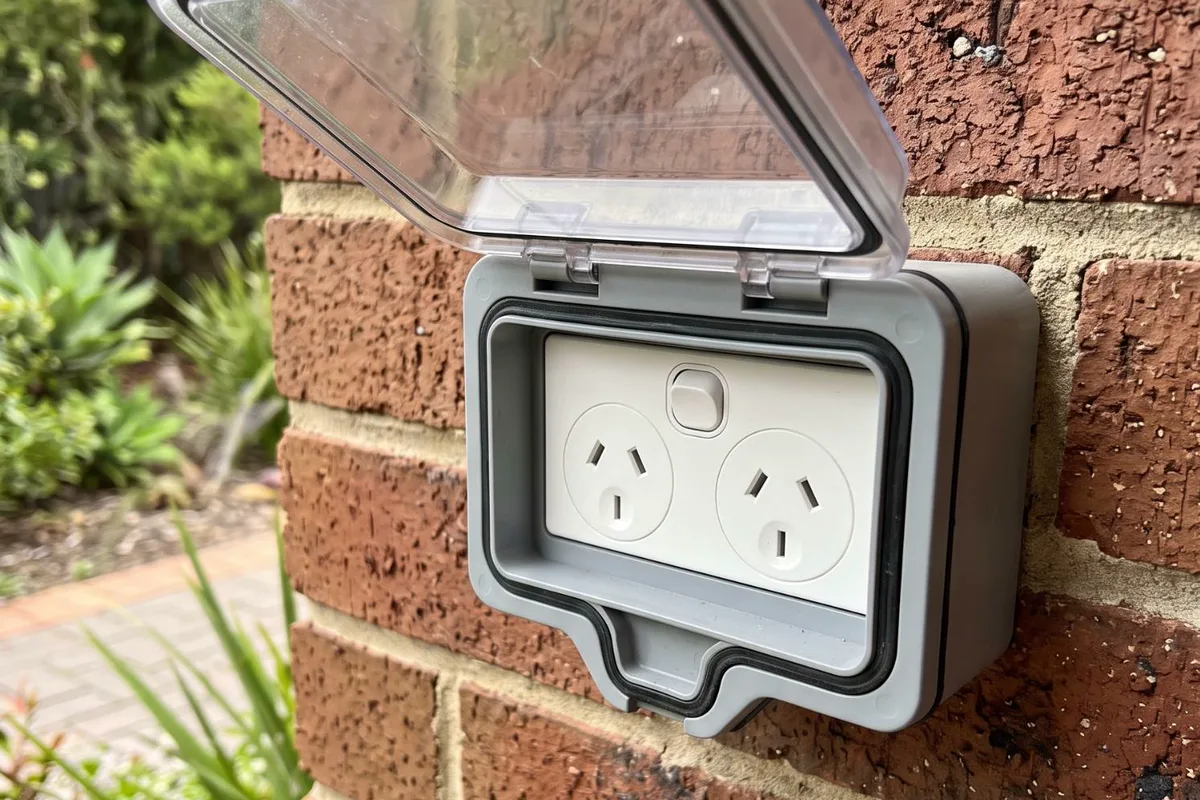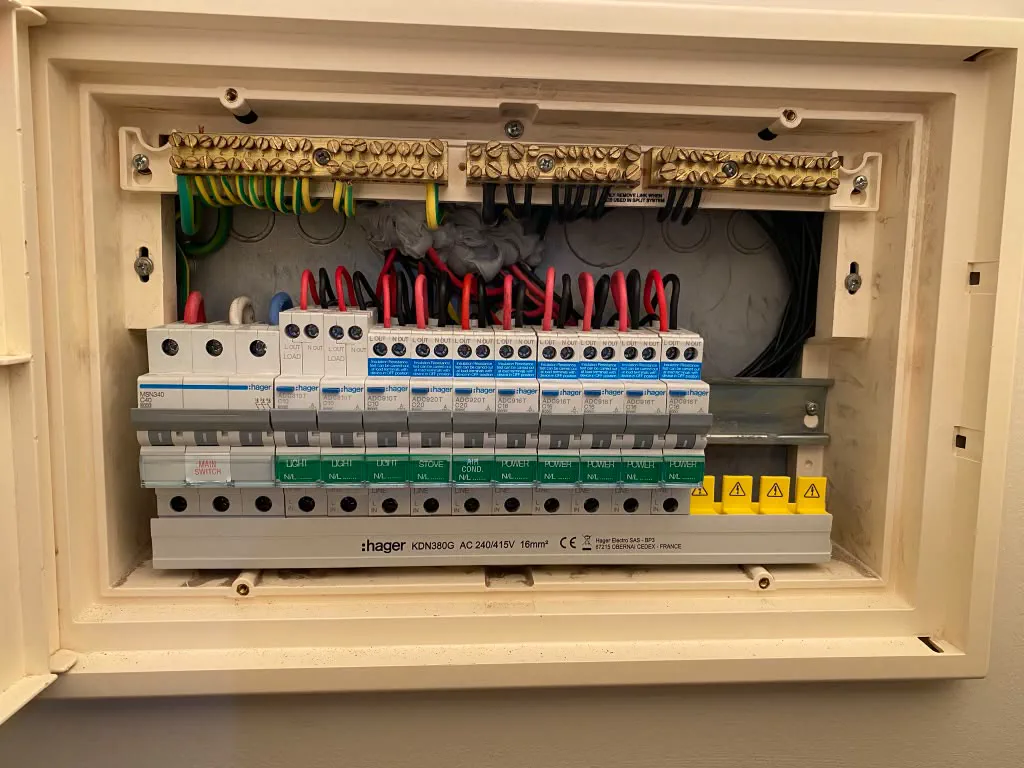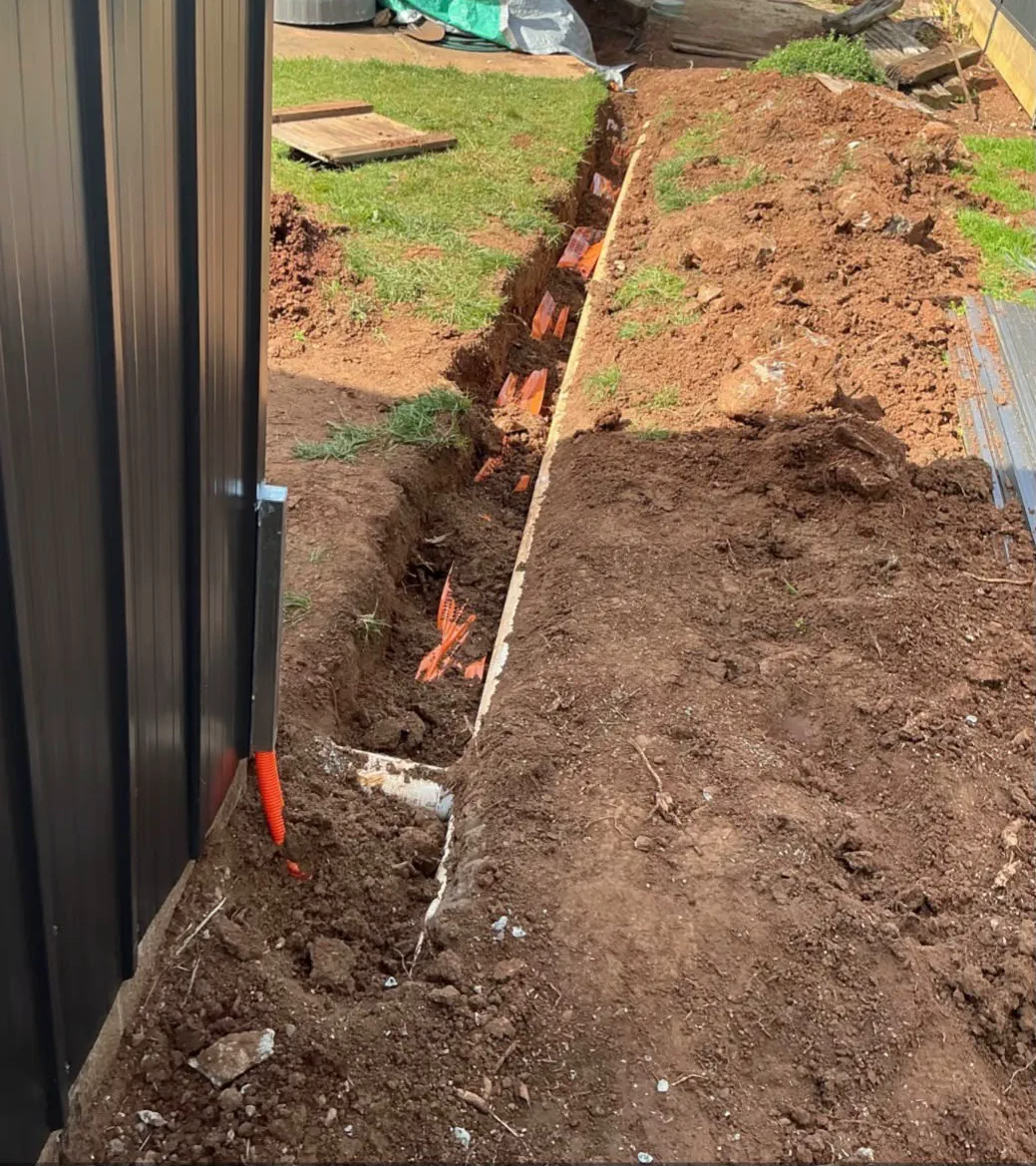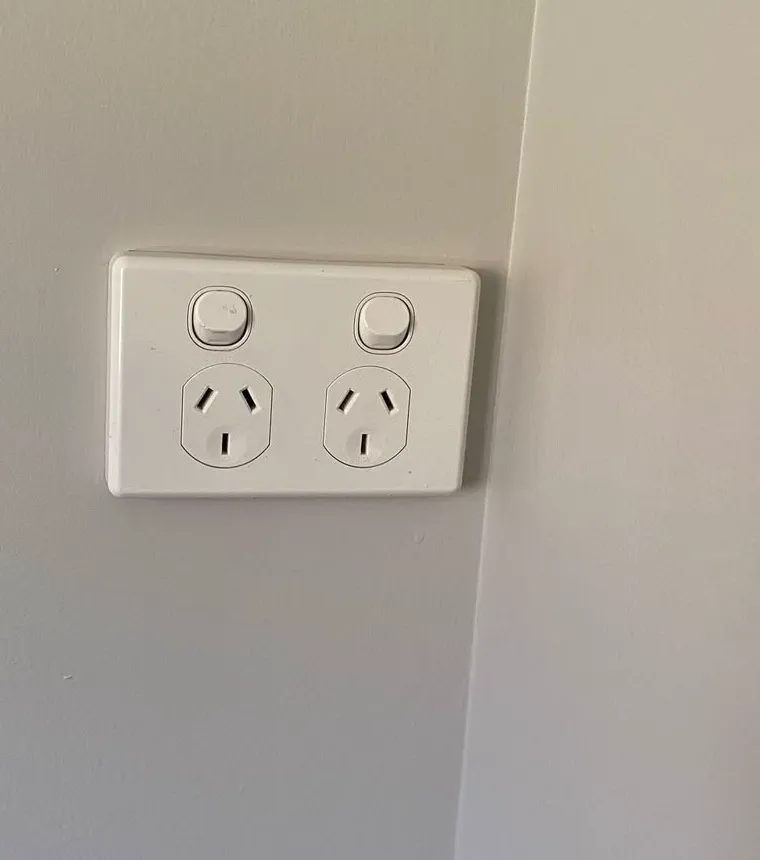
Most older homes were wired before home offices, charging cables and a TV on every wall. The result is power boards plugged into power boards, which can overheat. We add power points where you use them, swap singles for doubles, fit USB outlets and weatherproof outdoor points, and run dedicated circuits for things like a freezer or a split system. We check the load on each circuit first, so adding outlets doesn't just shift the problem.
When to get it checked
Power boards on power boards
A board plugged into another board, or a double adaptor pushed into one, means that wall ran out of outlets long ago. Every extra plug adds heat at the contacts.
Leads across floors and doorways
Extension leads run under rugs or across the hall to reach the only point in the room. They get trodden on and pinched, and a damaged lead is a shock risk.
Unplugging one thing to use another
You pull the toaster out to use the kettle, or swap the phone charger for the lamp every night. Kitchen benches and bedsides are where most homes come up short.
Points in the wrong place
The only outlet is behind the bed head, under a built-in or on the far wall from the desk. It's common once a room changes use.
Loose, cracked or discoloured outlets
Plugs that fall out, a cracked plate or brown marks around the pin holes mean worn contacts. Energy Safe Victoria says not to touch a loose, cracked or broken power point, but to cover it and have a licensed electrician replace it.
Why it happens
5 common causes
Wired for fewer appliances
Many houses were wired when a household ran a radio, a kettle and a heater. Chargers, screens, modems and bench-top appliances now all want a point of their own.
Rooms that changed jobs
A spare bedroom becomes an office, the garage becomes a workshop, the lounge gets a wall-mounted TV. The points stayed where the original floor plan put them.
Builders' standard layouts
In newer homes, outlets were placed to a plan drawn before anyone knew where the desk, bed or fridge would go. Some rooms end up with plenty and others with one.
Years of heavy use
Heaters, kettles and loaded power boards run outlets hot, and every plug in and out wears the contacts. An outlet that has lost its grip can arc and heat up.
Past additions done on the cheap
We sometimes find points tapped off whatever cable was closest, or joined in ways that work loose. We sort those before adding anything.
What the job covers
What we usually do on this job. Your quote confirms it for your place.
- Single power points upgraded to doubles
- New power points added where the circuit has capacity
- Dedicated circuits for ovens, air conditioners, freezers and workshops
- USB and USB-C power points
- Weatherproof outdoor power points
- TV power points moved to suit wall-mounted TVs
- Cracked, loose or scorched power points replaced
- Circuit load checked before outlets are added
- Every new outlet tested once fitted
Your options, explained
Single to double swap
Low disruption- Best for
- Rooms with points in the right spots, but only singles
- How it works
- The single comes off and a double goes on in the same position and on the same cable, then it's tested.
- Worth knowing
- More outlets, not more capacity. It won't stop a heater and kettle tripping the circuit together.
Extra point on an existing circuit
Low disruption- Best for
- Bedsides, desks, TV walls and benches that are one point short
- How it works
- Cable runs from a nearby point on the same circuit through the roof or floor and drops inside the wall to the new outlet.
- Worth knowing
- The circuit needs room for what you'll plug in, and safety switch protection once it's altered.
Relocate an existing point
Medium disruption- Best for
- Wall-mounted TVs, new kitchen layouts, a point trapped behind a built-in
- How it works
- The cable is extended or re-run to the new spot, and the old outlet comes out and is covered with a blank plate.
- Worth knowing
- If plaster or tiles need cutting, we tell you before any work starts.
New circuit from the switchboard
Medium disruption- Best for
- Home offices, workshops, a garage freezer, or a room where things keep tripping
- How it works
- A new cable runs from the board to the new points, with its own breaker and safety switch protection.
- Worth knowing
- Needs a spare spot on the board. Ovens, air conditioners and EV chargers are a dedicated circuit job.
The people behind the work
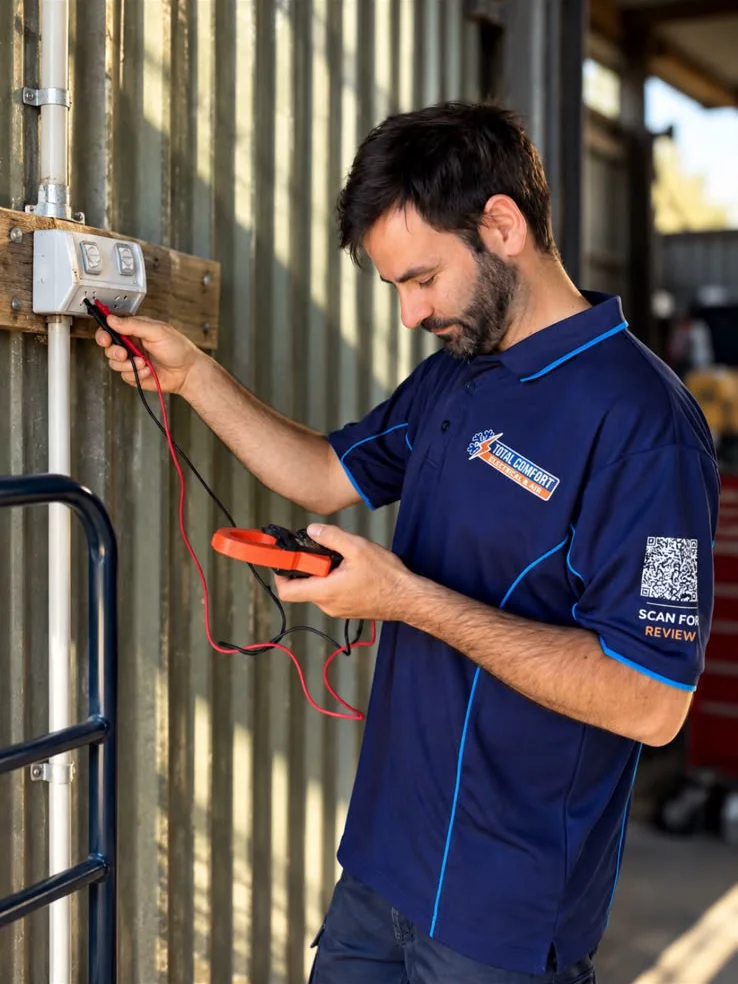
Our own photos from jobs like this one. Family-run, based in Altona Meadows, with 19 years in the industry.
Licensed electrical contractor (REC 38187)See more team photos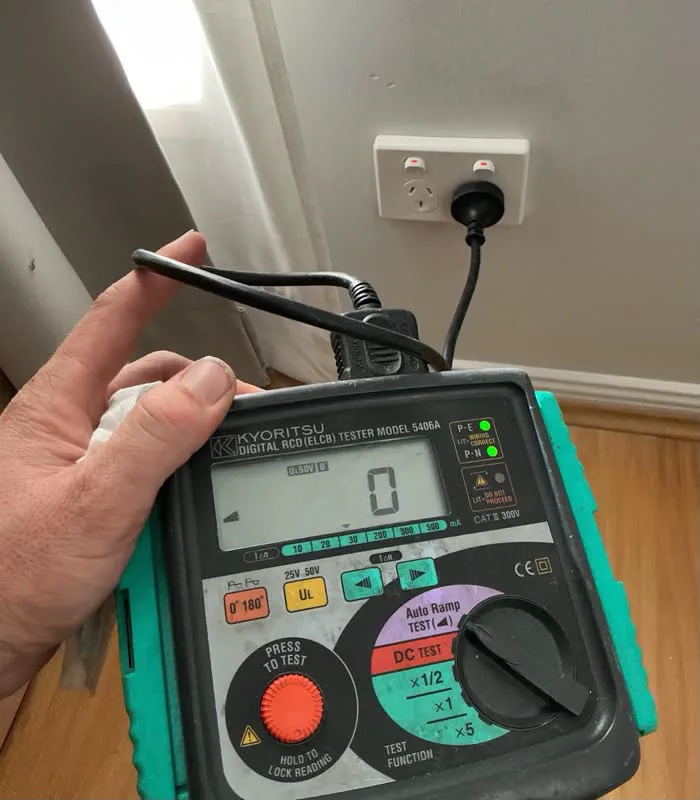
Worth knowing before you book
- Power boards aren't a long-term fix
- Stacking power boards on one outlet, especially with heaters, kettles or hair dryers, can overheat it. If you're running boards all over the house, you need more power points.
- Some appliances need their own circuit
- Ovens, cooktops, split systems and some large appliances need a dedicated circuit rather than a spare power point. We'll tell you which ones.
- Access affects the time
- Single-storey homes with roof space are usually quick. Double brick, concrete slabs and second storeys take more planning to get cable where it's needed.
What affects the price?
The right scope depends on your installation. These are the details we check so your quote is useful, with any additional work explained before it proceeds.
How many points, and where
Several points along one wall can share a cable run. The same number spread across different rooms means more runs and more time.
Wall and floor construction
Weatherboard or brick veneer with open roof space is the simplest. Double brick, concrete slabs, rooms under a second storey and tiled splashbacks take more care.
Circuit, board and safety switch
A busy circuit may mean the new points need one of their own, which needs space on the board. A circuit without safety switch protection has it added as part of the alteration.
The outlets you choose
Plain doubles, USB outlets, weatherproof outdoor points and different plate finishes vary in cost. We price the choices side by side.
What testing turns up
Damaged cable or a failing connection on the existing circuit has to be fixed before we add to it. We show you the readings and price the repair.
Before the visit
- Mark desired positions against furniture and cabinetry.
- List what will be plugged into each new point.
- Do not use cracked, scorched or hot outlets while awaiting assessment.
How it runs
- 1
Tell us where
List the rooms and spots where you want power, and what you'll plug in.
- 2
Check the circuits
We confirm the circuit can take the load, or plan a new one if it can't.
- 3
Install and test
Cable in, outlets fitted, each one tested before we go.
Step by step, in more detail
5 steps
Walk through the positions
We go room by room with you and mark each new point against the furniture, benches and TV height. Knowing what plugs into each one tells us which circuit it can go on.
Check the circuits and the board
We find the circuit feeding each area, see what else is on it and check its protection at the switchboard. If an old or busy circuit changes the plan, we show you why.
Price before we start
You get a fixed price for the agreed scope, including any safety switch or new circuit the job needs. Nothing extra goes in without your say-so.
Run the cable
Cable takes the least disruptive route we can find, usually through the roof space or under the floor. We agree the route with you before anything is cut.
Fit, test and certify
Each outlet is fitted and tested for polarity, earth continuity and insulation resistance, and the safety switch is trip-tested. You get a Certificate of Electrical Safety for the work.
What is safe to do, and what to leave to us
Safe for you to do
- Plug heaters, kettles and other heavy appliances straight into a wall point, not a power board.
- Stop using a loose, cracked or scorched point and cover it until it's replaced.
- Keep leads out of walkways and out from under rugs.
- Reset a tripped safety switch once. If it trips again, leave it off and call a licensed electrician.
- If there's smoke or fire, get everyone out and keep clear.
Leave these to us
- Adding, moving or swapping a power point yourself
- Plugging power boards into power boards, or double adaptors into boards
- Running a heater from an extension lead
- Taking the plate off an outlet to look behind it
When to get us in
- A point is loose, warm, cracked, marked or sparks when you plug in.
- Most rooms rely on power boards or extension leads.
- You're setting up a home office, mounting a TV or rearranging rooms.
- A kitchen, laundry or garage is about to change.
- A new freezer, air conditioner or workshop tool needs power.
More detail
Why power boards aren't a long-term answer
A power board lets you plug in more things, but all of it still comes through the one outlet behind it. Put a heater and a kettle on it and the plug, board and outlet contacts all run hot, and any weak spot starts to char. Energy Safe Victoria says fire brigades respond to more than 300 domestic electrical fires each year, many caused by old wiring that has degraded or can't cope with modern equipment.
How many points one circuit can carry
There's no single number of outlets per circuit that suits every house. What matters is the cable, the breaker protecting it and what runs at the same time: a bedroom full of chargers is a light load, while a kettle, toaster and microwave going at once on one bench is not. We look at how you'll use the new points before deciding whether they join an existing circuit or get a new one.
Planning where the points go
Stand where you'll use the power and picture what's plugged in: a double each side of the bed, outlets above the desktop rather than behind it, and a point behind a wall-mounted TV at the right height. In kitchens and laundries, count the appliances that live on the bench or floor, then add a spare double for the one you haven't bought yet. Moving a point after the room is painted is more work than getting it right first.
Brick walls, slabs and upstairs rooms
In a weatherboard or brick veneer house with roof space, cable usually drops straight down inside the wall frame. Double brick has no cavity, so the cable goes in a chase cut into the masonry or in slim conduit or skirting duct on the surface. Ground-floor rooms in two-storey homes and units on a slab take the most planning.
Local rules and conditions
Victorian requirements and local conditions that shape this job, with the sources listed at the foot of the page.
Altering a circuit brings in a safety switch
Energy Safe Victoria notes that clause 2.6.3.2.5 of the Wiring Rules requires additional safety switch (RCD) protection in an existing installation when alterations are made. If the circuit we extend has none, fitting one is part of the job and the price.
Outlets in rental homes
Since 29 March 2023, every power outlet and lighting circuit in a Victorian rental must connect to both a switchboard-type circuit breaker and a safety switch, and the rental provider is responsible for engaging the electrician to meet that standard. We check the circuit meets it before adding points.
Older homes in Altona and Yarraville
Hobsons Bay's planning scheme aims to preserve intact post-war brick and weatherboard homes in parts of Altona, and Yarraville's residential precinct is mostly small Victorian and Edwardian weatherboard houses. Energy Safe Victoria says wiring in a house built more than 30 years ago should be checked, and lists old or broken power points as a warning sign. We test an old circuit before adding to it.
Newer estates in Wyndham
New housing is planned in Wyndham's growth areas, including Truganina, Tarneit, Wyndham Vale and Manor Lakes. In a newer home the issue is usually position, not wiring condition: points sit where the plan put them rather than where the desk, bed or TV ended up.
Useful reading
Guides to read before you decide, with checklists and questions to bring to the quote.
- The electrical decisions to make before your renovation walls closePlan appliances, lighting, outlets and future upgrades while access and options are still available.
- What electrical work you can and can't do yourself in VictoriaWhere Victorian law draws the line on home electrical work, the short list of jobs that are yours, and what to do when a job goes past it.
- Certificates of Electrical Safety explainedWhat a Victorian COES records, how prescribed and non-prescribed work differ, when your copy should arrive and why it belongs in your house file.
- Planning a switchboard upgrade without surprisesWhat the electrician needs to check, how to compare the scope and what to organise before the power goes off.
Common questions
Questions people ask about this
- Why do plugs keep falling out of my power point?Plugs drop out when the contacts inside the outlet have lost their grip, or when the outlet itself has come loose from the wall.
- Why is my power point warm?A plug that feels slightly warm after a heater or kettle has run for a while can be normal.
- Can a power point be added to my kitchen island?Usually, yes.
- My power point cover is cracked. Is it safe to use?No.
- Do power point covers protect children?They help a little, but they're not the main protection.
From the blog
- Builder-grade electrical in a new estate home: what owners upgrade firstExtra points, outdoor power, better lighting, data and a garage ready for an EV: the upgrades owners in Melbourne's western estates make after handover.
- Why the laundry is a hotspot for electrical fire riskLint, heat, water and machines left running make the laundry a risky room. What goes wrong, and the simple fixes that cut the chance of a fire.
- Air fryers, kettles and toasters: is your kitchen circuit keeping up?Benchtop appliances draw a lot of power. How kitchen circuits share the load, the difference between a breaker trip and a hot power point, and when to add circuits.
Sources for the rules and local facts on this page
18 sources, with the date each was checked
- 1.Energy Safe Victoria: Clause 2.6.3.2.5 of the Wiring Rules states: Additional protection by RCDs shall be provided in existing electrical installations where alterations or a switchboard replacement is completed. Accessed 30 September 2026.
- 2.Consumer Affairs Victoria: From 29 March 2023 all power outlets and lighting circuits in a rental premises must connect to both a switchboard-type circuit breaker that complies with AS/NZS 3000 and a switchboard-type residual current device that… Accessed 30 September 2026.
- 3.Consumer Affairs Victoria: Rental providers are responsible for engaging an electrician to ensure their rental property complies with the electrical safety standard. Accessed 30 September 2026.
- 4.Victorian Government, Hobsons Bay Planning Scheme (PDF snapshot, last updated by VC292 on 11/09/2025): SPECIAL CHARACTER AREAS, ALTONA 1.0 24/02/2022 C131hbay Neighbourhood character objectives To preserve the characteristics of the neighbourhood, comprising intact post-war brick and weatherboard dwellings with… Accessed 30 September 2026.
- 5.Victorian Heritage Database (Heritage Council Victoria); entry maintained by Maribyrnong City Council: The general character of the Yarraville Residential Precinct is that of small Victorian & Edwardian single-storey detached housing with mainly weatherboard and some brick wall cladding, corrugated iron roofing, front… Accessed 30 September 2026.
- 6.Energy Safe Victoria: Old switchboards, particularly those without a safety switch Old power switches or power points, particularly broken ones Flickering lights Sparks from switchboards, switches or power points. If your house is over 30… Accessed 30 September 2026.
- 7.Victorian Electoral Commission (2023 electoral structure review fact sheet): New housing developments are planned in residential growth areas including Truganina, Tarneit, Wyndham Vale and Manor Lakes, as well as near activity centres and public transport. Accessed 30 September 2026.
- 8.Energy Safe Victoria: Do not touch or attempt to repair a loose, cracked or broken power point switch – cover it immediately and arrange for a licensed electrician to replace it. Accessed 30 September 2026.
- 9.Energy Safe Victoria: Electrical work isn’t a DIY job, even for small jobs such as changing power points or light switches. Accessed 30 September 2026.
- 10.Energy Safe Victoria: Gas and electricity are inherently dangerous and it’s illegal and potentially fatal for unlicensed and unqualified people to undertake any electrical or gasfitting work. Homeowners and consumers must always use… Accessed 30 September 2026.
- 11.Victorian Legislation (legislation.vic.gov.au) - Electricity Safety Act 1998, authorised version 089 (effective 8 Sep 2026): electrical installation work means installation, alteration, repair or maintenance of an electrical installation; Accessed 30 September 2026.
- 12.Energy Safe Victoria: Whenever a licensed electrician completes any electrical installation work, they must provide a Certificate of Electrical Safety (COES). Accessed 30 September 2026.
- 13.Energy Safe Victoria: For electrical installation work performed within your electrical installation including but not limited to lights, power points, air conditioning, hot water service etc. Accessed 30 September 2026.
- 14.Energy Safe Victoria: Locate your electricity box outside your home and check whether the safety switch has tripped. If it has tripped, reset the switch. If the switch won’t reset, call a licensed electrician. Accessed 30 September 2026.
- 15.Electrical Regulatory Authorities Council (ERAC): An existing final sub-circuit for socket outlets is extended and an additional socket outlet is installed. Only that circuit that is altered is required to have a RCD fitted. Accessed 30 September 2026.
- 16.Energy Safe Victoria: Clause 2.6.3.2.2 requires all final sub-circuits in a domestic installation be protected by a residual current device (RCD). A hot water service is included in this requirement Accessed 30 September 2026.
- 17.Energy Safe Victoria: This means that if the manufacturer’s specifications require an air conditioner to be installed on a dedicated circuit or protected by a residual current device then they must be adhered to. Accessed 30 September 2026.
- 18.Energy Safe Victoria: Fire brigades respond to more than 300 domestic electrical fires each year. Many of these fires are caused by old wiring that has degraded or is unable to cope with the demands of modern electrical equipment. Accessed 30 September 2026.