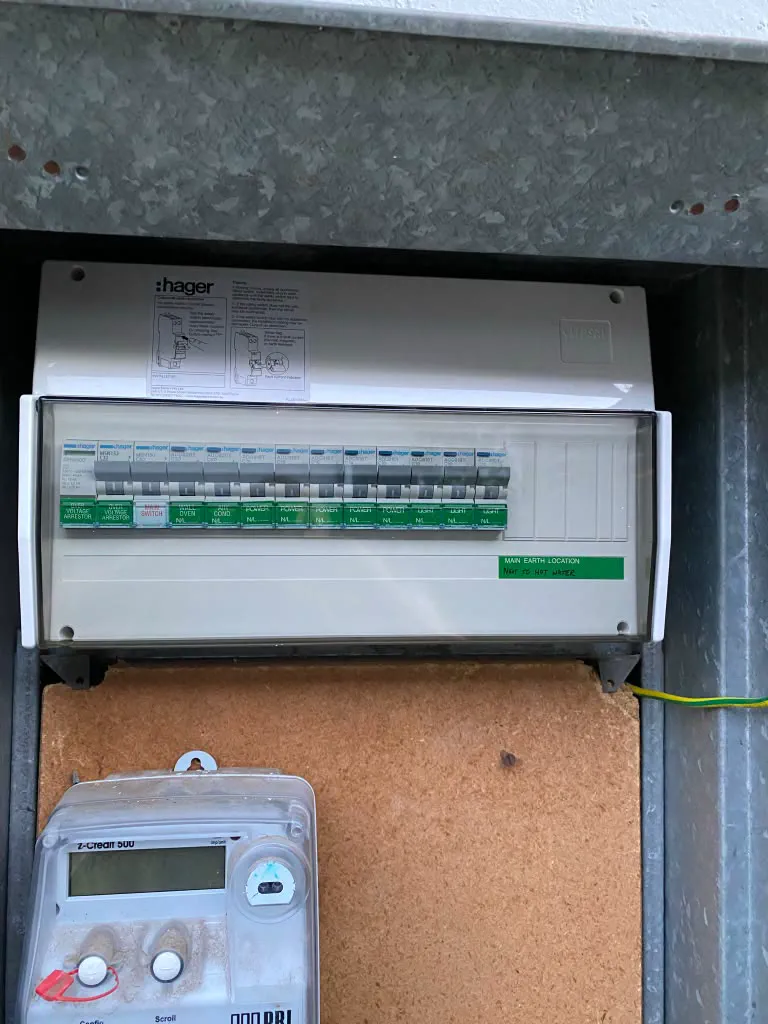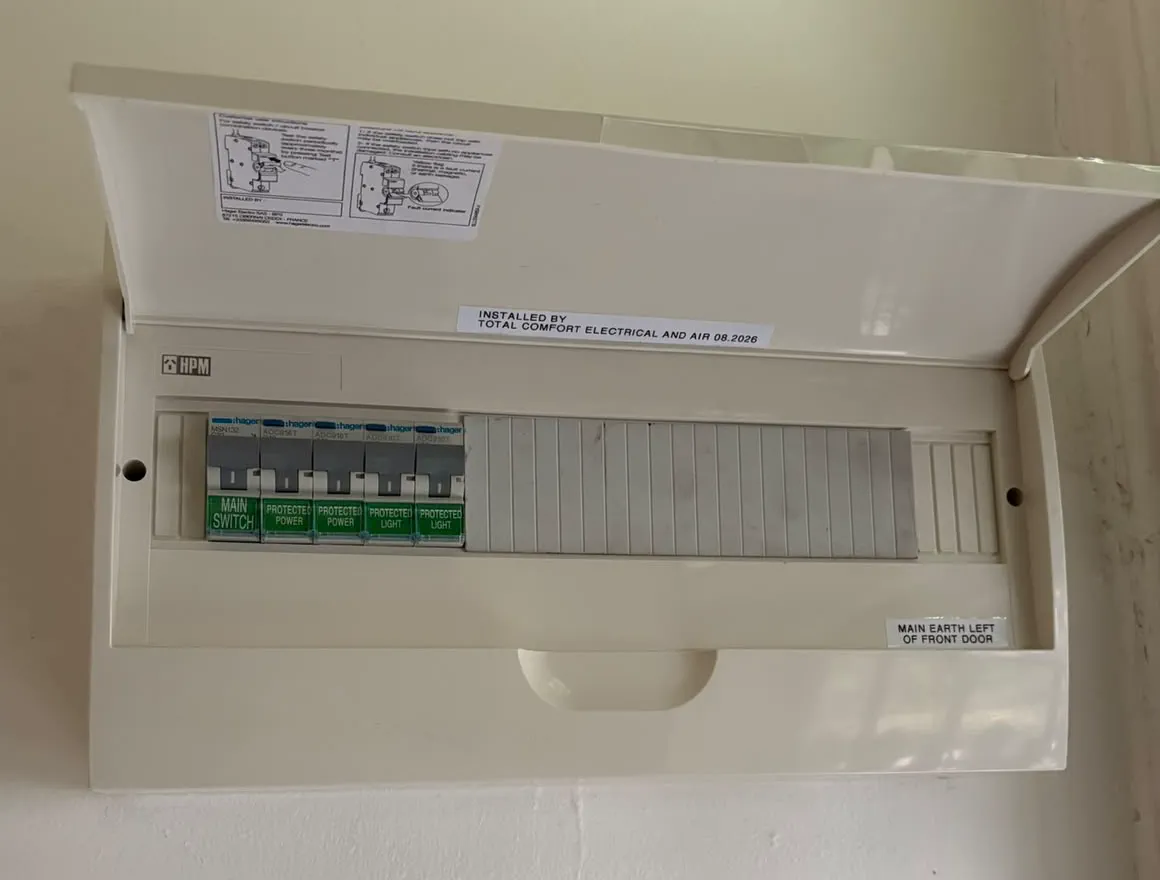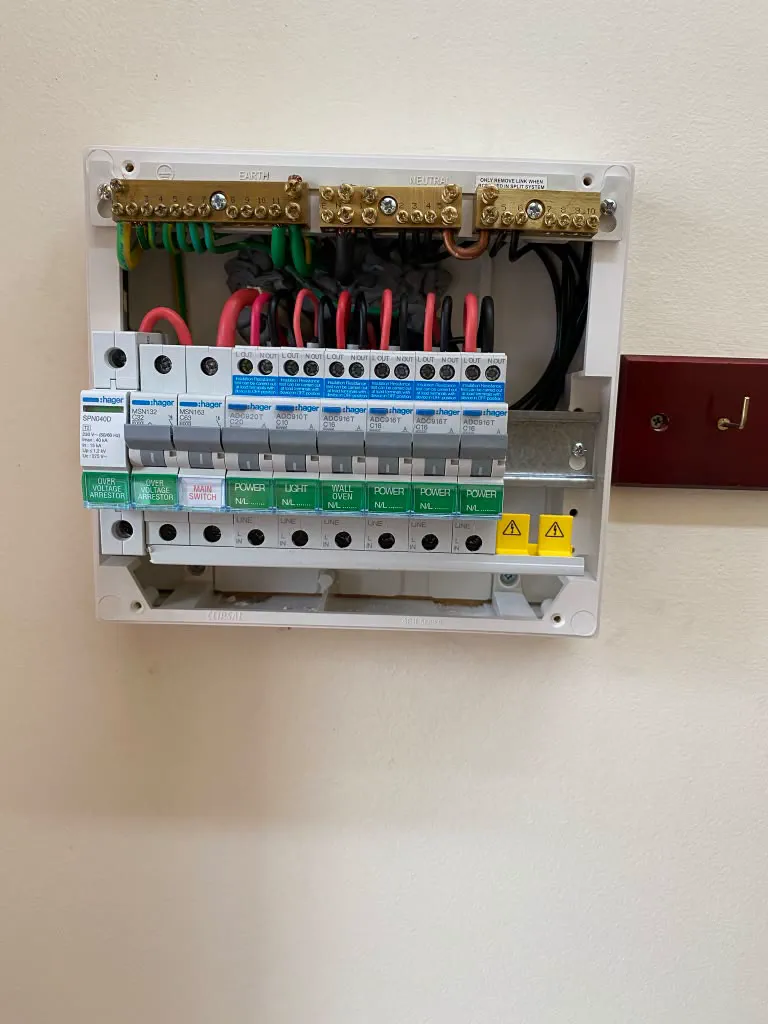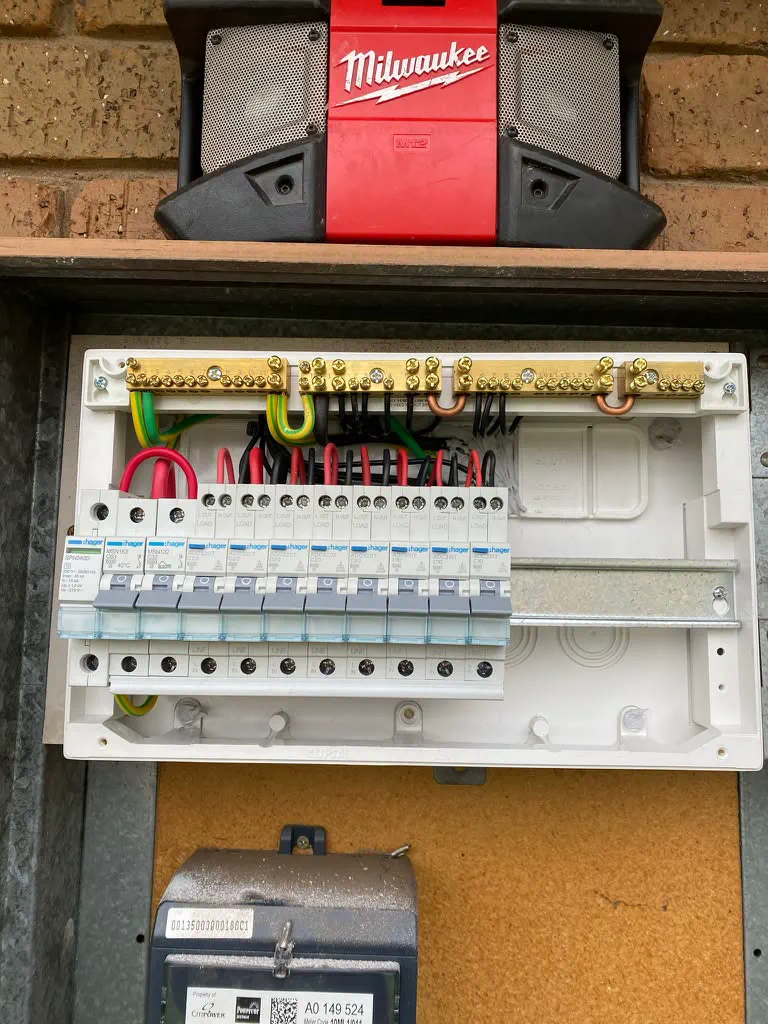
Three-phase power spreads a home's load across three supply lines, which suits large ducted systems, EV chargers, workshops and heavy all-electric homes. We check your loads first, confirm availability with your distributor, and manage the switchover from mains to switchboard.
When to get it checked
A big ducted system on the plan
Larger ducted reverse-cycle outdoor units often come in three-phase versions, and some capacities are only made that way.
Two EVs, or a fast charger
Two cars charging at once is a long, heavy load on one phase, and a 22 kW home charger needs a three-phase supply.
A workshop or shed with machinery
Welders, compressors, lathes or a kiln, some of which are made only for three-phase power.
Heavy loads that overlap
Ducted heating, an induction cooktop, a heat pump water heater and a car charger all running in the same evening.
Single phase has been stretched
The main switch still drops when big loads overlap, or an installer says a larger single-phase supply won't cover what you're adding.
Why it happens
4 common causes
All-electric homes
Moving heating, cooking and hot water off gas puts those loads on the wiring, often at the same times of day.
Bigger homes, bigger systems
Double-storey homes with ducted heating and cooling need large outdoor units, and those draw the most on the hottest and coldest days.
Two-car households going electric
Two cars plugged in each night is a steady, hours-long load on top of everything else the house runs.
Home workshops and businesses
Garages and sheds with three-phase tools, or a home business with equipment that needs more than one phase can give.
What the job covers
What we usually do on this job. Your quote confirms it for your place.
- Load assessment of current and planned appliances
- Single or three-phase advice
- Distributor request lodged
- Four-core consumer mains installed
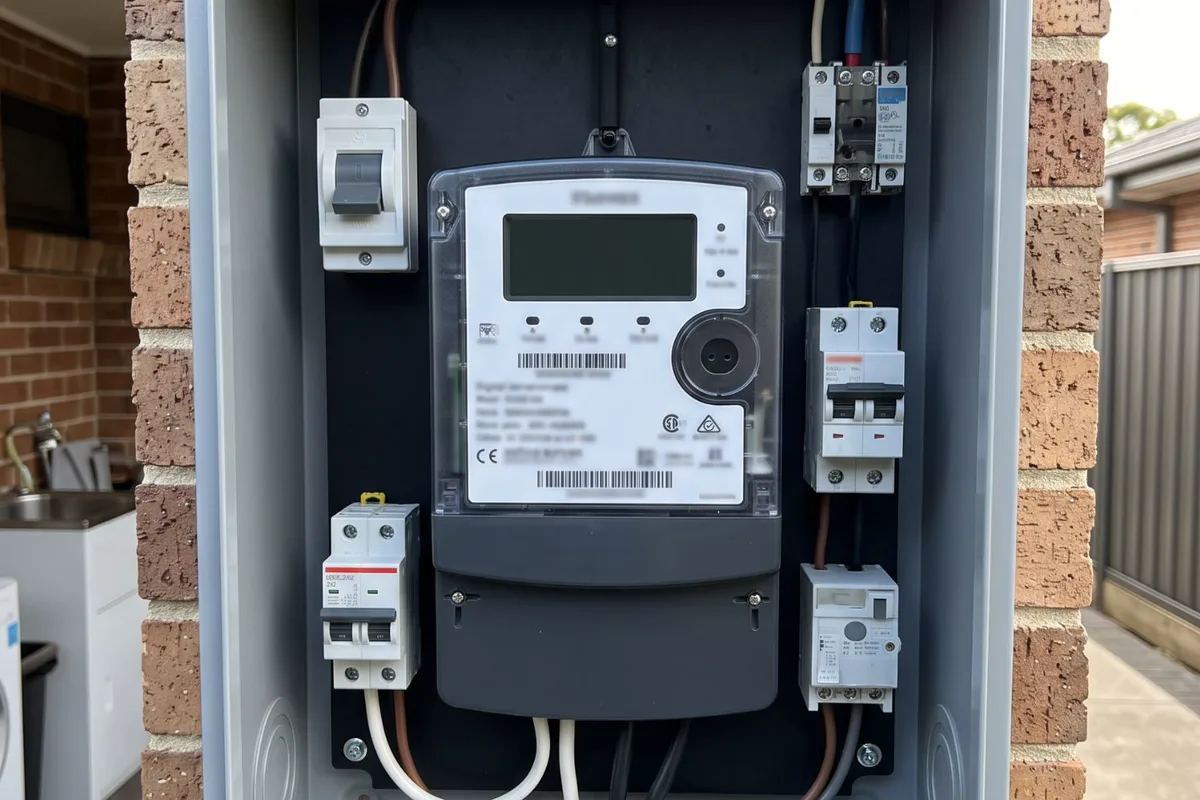
- Meter box set up for the three-phase meter
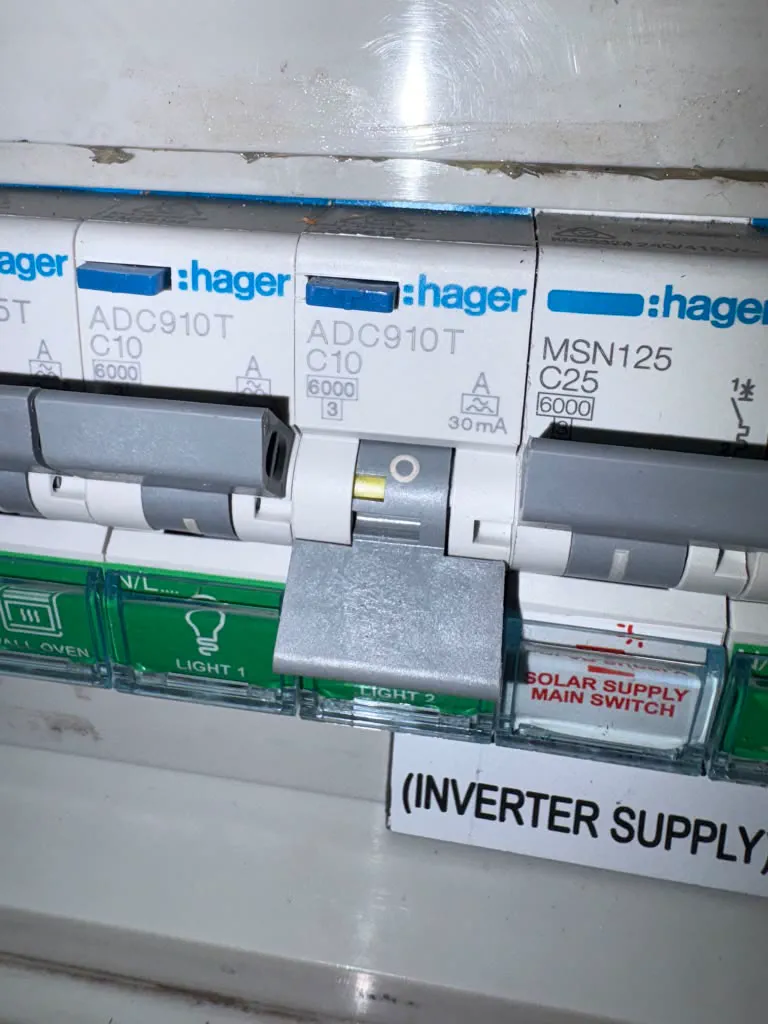
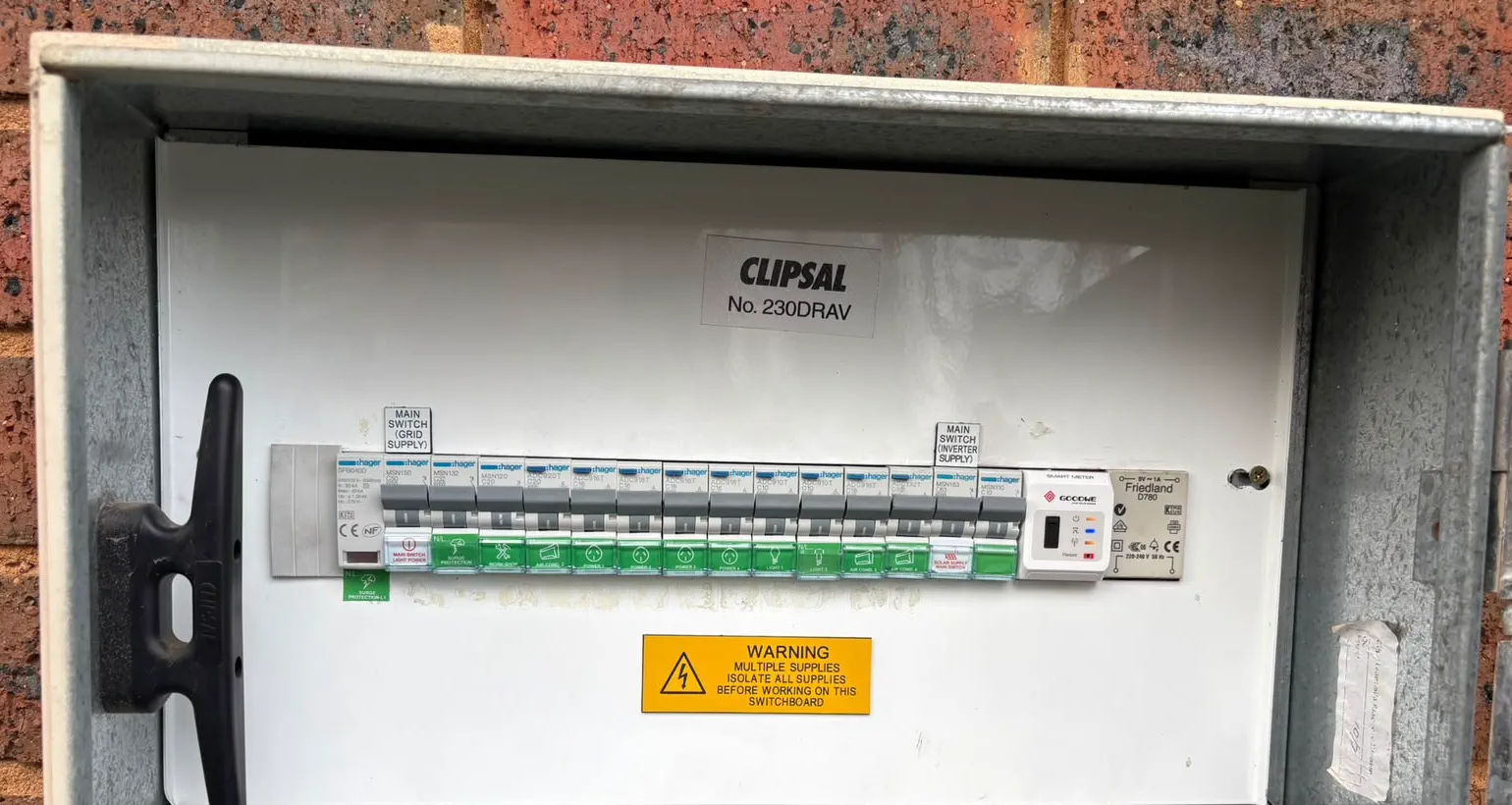
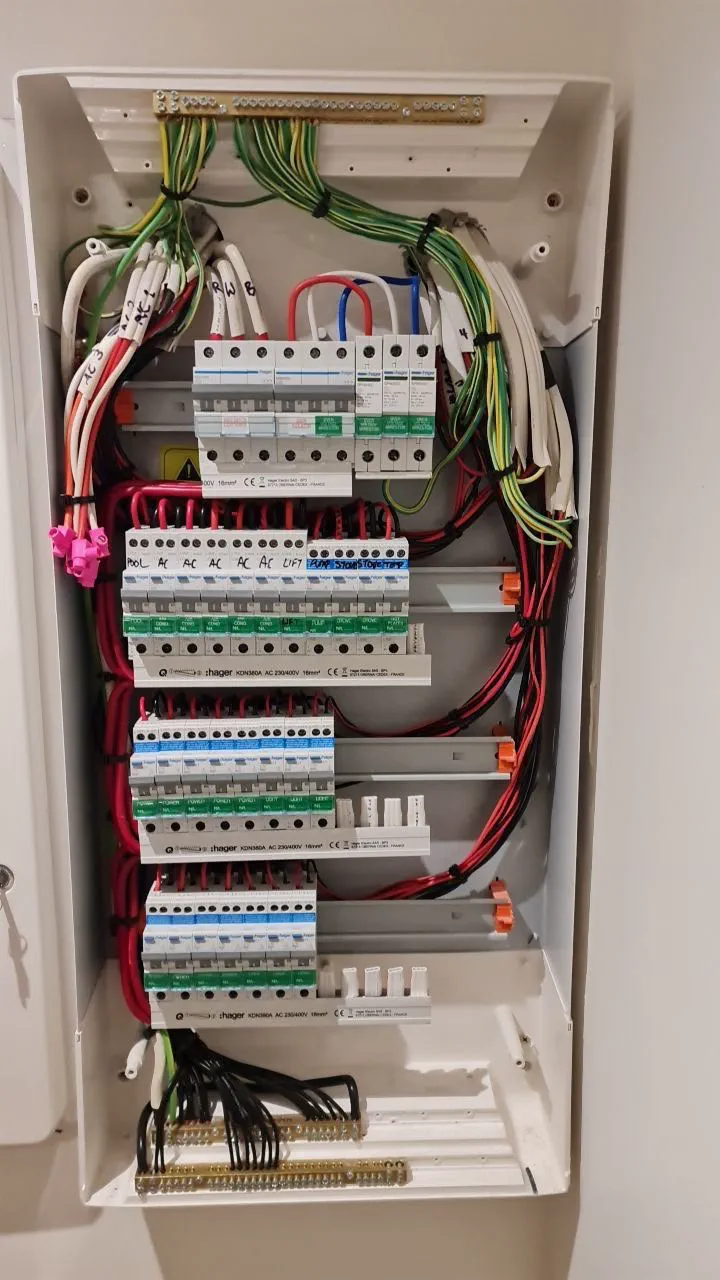
- Three-phase main switch and switchboard
- Circuits balanced across the phases
- Independent inspection arranged
- Certificate of Electrical Safety issued
Your options, explained
Larger single-phase supply
Medium disruption- Best for
- Homes whose loads fit on one phase with a bigger connection
- How it works
- Heavier mains and a bigger main switch on the existing single-phase connection, subject to distributor approval.
- Worth knowing
- We check this first. If it carries your loads, it's the simpler job.
Three-phase supply and new switchboard
High disruption- Best for
- Large ducted systems, several chargers, workshops or heavy all-electric homes
- How it works
- Four-core mains, a three-phase meter from the distributor, and a new board with a three-phase main switch and balanced circuits.
- Worth knowing
- The complete fix, with room left for what comes next.
Three-phase out to a shed or workshop
Medium disruption- Best for
- A workshop with three-phase machines
- How it works
- Once the house has three-phase, a three-phase submain runs to a sub-board in the shed or garage.
- Worth knowing
- The house connection has to be three-phase first.
Manage the load on single phase
Low disruption- Best for
- One big load causing the trouble
- How it works
- Charger load management, or a change to what runs together, keeps demand within the current supply.
- Worth knowing
- The least disruptive option when it works, but it can limit how you use your appliances.
The people behind the work
One local team for electrical, heating and cooling, based in Altona Meadows, with 19 years in the industry.
Licensed electrical contractor (REC 38187)See more team photos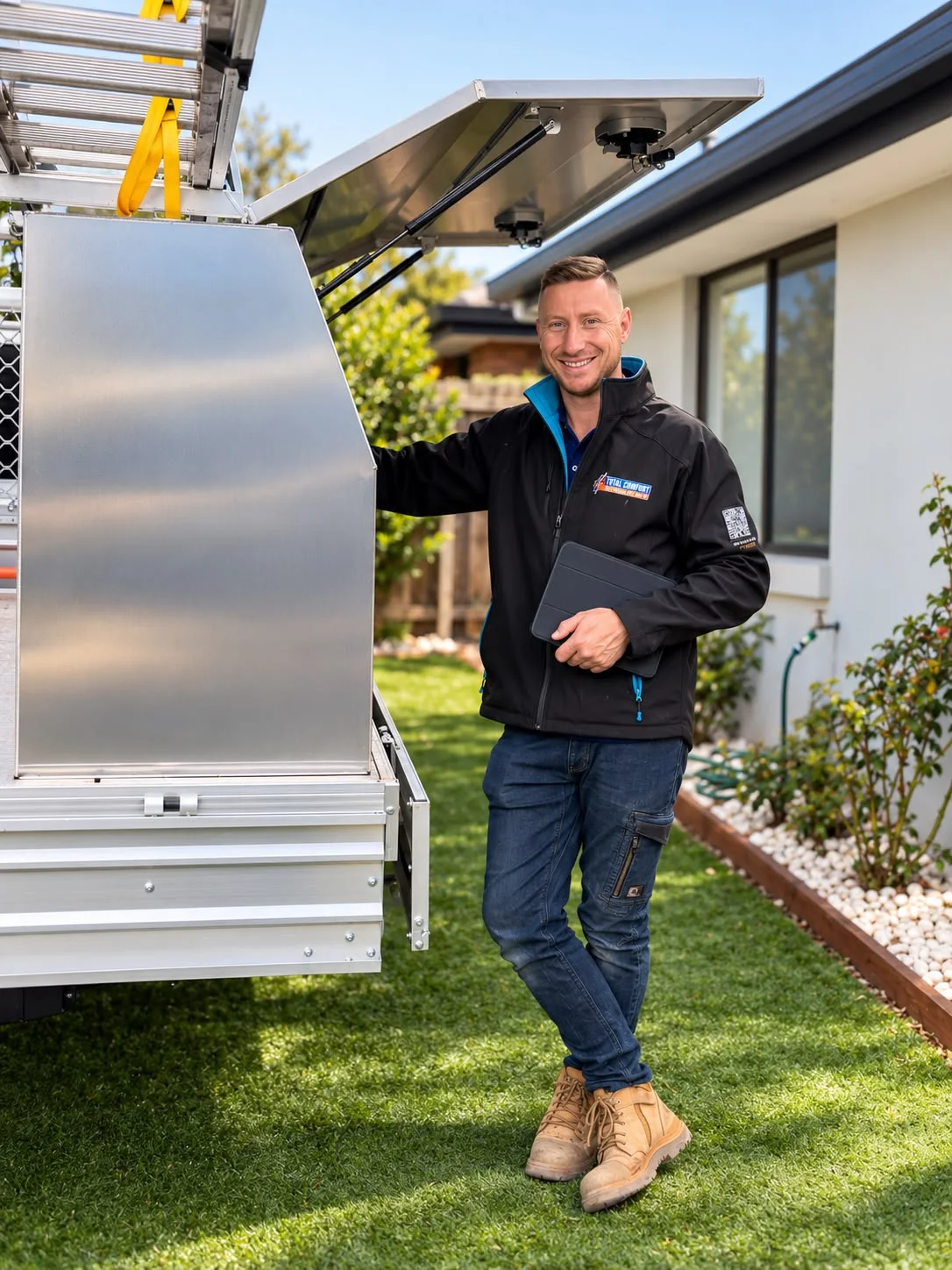
Worth knowing before you book
- We check single phase first
- If a larger single-phase supply does the job, we'll say so.
- The distributor decides availability
- We confirm it before you commit to anything.
- Plan big equipment with it
- Ducted, charger and workshop circuits fit the same shutdown.
What affects the price?
The right scope depends on your installation. These are the details we check so your quote is useful, with any additional work explained before it proceeds.
Distance and route
How far the meter box is from the pole or pit, and whether the new mains runs overhead or underground.
The switchboard
Most three-phase upgrades need a new main switchboard, and every circuit has to be tested and balanced across the phases.
The meter box
It needs room for the three-phase meter and the heavier mains. A small, damaged or old-panel meter box adds to the job.
What the distributor requires
The distributor sets the connection terms and may have its own charges for the network side, which it sets and bills.
Trenching and restoration
Underground mains may mean trenching or boring under paths and driveways, then making good.
Equipment going in at the same time
Running circuits for a ducted system, charger or workshop in the same project avoids a second shutdown later.
How it runs
- 1
Assess the loads
What runs now, what's coming, what overlaps.
- 2
Confirm with the distributor
Availability, terms and dates.
- 3
Install
Mains, meter box and three-phase board.
- 4
Inspect and connect
Inspected, connected and certified.
Step by step, in more detail
5 steps
Check the loads first
We list every big appliance you have and plan to add, work out what runs together, and check whether a larger single-phase supply would do the job instead.
Ask the distributor
If three-phase suits, we lodge the request with your distributor. They confirm whether three-phase is available at your property, and on what terms.
Plan the switchover
You get the scope and price, covering the mains route, meter box and switchboard, and we coordinate dates with the distributor and the inspector.
Install mains and board
Four-core consumer mains go in, the meter box is set up for the three-phase meter, and the switchboard gets a three-phase main switch with circuits balanced across the phases.
Inspect and switch on
A Licensed Electrical Inspector inspects the prescribed work, the distributor connects the new supply and meter, and you get your Certificate of Electrical Safety.
What is safe to do, and what to leave to us
Safe for you to do
- Get a load assessment before you buy three-phase equipment, so you know the supply can be arranged.
- Keep the meter box clear and accessible for the distributor's and inspector's visits.
- If the main switch trips, turn off the big appliances and reset it once. If it trips again, leave it off.
Leave these to us
- Buying three-phase equipment before the supply is confirmed.
- Running workshop machines off extension leads from the house.
- Opening the meter box or switchboard panel.
- Unlicensed work on mains or switchboards. Energy Safe Victoria says unlicensed electrical work is illegal and potentially fatal.
When to get us in
- You're planning a large ducted reverse-cycle system
- Two EV chargers, or a 22 kW charger, are on the list
- A workshop or shed needs three-phase machines
- Your main switch drops when big loads overlap
- An installer has asked whether you have three-phase power
More detail
When three-phase makes sense
Three-phase makes sense when the loads are large and overlap. A big ducted reverse-cycle system, two EV chargers or a 22 kW charger, a workshop with three-phase machines, or a fully electric home running heating, induction and a heat pump water heater in the same evening can all push past what one phase carries comfortably.
If your loads fit on a larger single-phase supply, that's the simpler job, and we'll tell you. If they don't, or you're planning several big electric appliances over the next few years, three-phase gives you the headroom.
What changes at your property
The distributor changes the network connection and fits a three-phase meter. On your side, four-core consumer mains (three actives and a neutral) replace the single-phase cable, the meter box is set up for the new meter, and the switchboard gets a three-phase main switch. Your existing circuits are spread across the three phases so the load is balanced.
Most household appliances keep running on single phase, each from one of the three. Equipment made for three-phase, such as some large air conditioners, chargers and workshop machines, connects to all three.
Planning the switchover
The order matters. We confirm availability with the distributor before you commit, have the new mains and board ready, book the Licensed Electrical Inspector, and line up the changeover with the distributor's crew. The power is off for the changeover, and the new work can't be switched on until it's inspected.
If a ducted system, charger or workshop circuit is going in too, doing it in the same project saves a second shutdown and gets the phase balance right from the start.
Local rules and conditions
Victorian requirements and local conditions that shape this job, with the sources listed at the foot of the page.
Three networks in the west
Powercor's Altona Terminal Station (West) supplies Laverton, Laverton North, Altona Meadows, Werribee, Wyndham Vale, Hoppers Crossing and Point Cook. Jemena's area reaches Williamstown and Footscray, and CitiPower supplies parts of Port Melbourne. Whichever one serves your street approves the change to three-phase.
Inspected before switch-on
Consumer mains, the main switchboard, the meter box and the main earthing system are prescribed work that a Licensed Electrical Inspector must inspect. Energy Safe Victoria says power can't go back on to a new main switchboard until that's done, and a replaced board needs safety switches on all final sub-circuits.
Hot summers, cold winters
Laverton averages 27.0 days a year at or above 30 °C and 9.4 days at or above 35 °C, mostly December to February, and July's mean minimum is 5.2 °C. A large ducted system working flat out on those days is one of the biggest loads a home carries.
Useful reading
Guides to read before you decide, with checklists and questions to bring to the quote.
- Planning a switchboard upgrade without surprisesWhat the electrician needs to check, how to compare the scope and what to organise before the power goes off.
- Home EV charging: a checklist before ordering a chargerMatch daily driving and parking to the supply, cable route and charger features that matter.
- Split system or ducted: choose around the rooms you useCompare layouts, zoning, installation work and quote details before choosing equipment for your home.
- Certificates of Electrical Safety explainedWhat a Victorian COES records, how prescribed and non-prescribed work differ, when your copy should arrive and why it belongs in your house file.
Common questions
From the blog
- What affects the cost of a three-phase upgrade?Distributor works, the mains route, trenching, the meter box and the switchboard decide what a three-phase upgrade involves. Here's how to read the quote.
- Can one house charge two electric cars?Most homes can charge two EVs, because few cars need a full charge every night. Sharing, scheduling, load management and, for some homes, three-phase make it work.
Sources for the rules and local facts on this page
9 sources, with the date each was checked
- 1.Powercor Australia, Project Assessment Draft Report: Altona Terminal Station (West) (June 2025): It supplies part of Melbourne’s western growth corridor. This includes the areas of Laverton, Laverton North, Altona Meadows, Werribee, Wyndham Vale, Mount Cottrell, Eynesbury, Tarneit, Hoppers Crossing and Point Cook… Accessed 30 September 2026.
- 2.Jemena Electricity Networks (Vic) Ltd, 2025 Distribution Annual Planning Report (2 December 2025): Figure 1-1 shows the JEN supply area, which ranges from Gisborne South, Clarkefield and Mickleham in the north to Williamstown and Footscray in the south, and from Hillside, Sydenham and Brooklyn in the west to… Accessed 30 September 2026.
- 3.CitiPower, Distribution Annual Planning Report December 2024 (hosted by the Australian Energy Regulator): The zone substation in Fisherman’s Bend (E) is served by two sub-transmission lines from Fisherman Bend Terminal station (FBTS). The zone substation supplies areas of Fisherman’s Bend and Port Melbourne. Accessed 30 September 2026.
- 4.Energy Safe Victoria: 'Prescribed' certificates are for electrical installation work that requires inspection by a Licensed Electrical inspector. This includes (but is not limited to): Consumer mains cables, main switchboard, meter box and… Accessed 30 September 2026.
- 5.Energy Safe Victoria: The electrician has eight business days after the work is completed to have that work inspected by a licensed electrical inspector (LEI). If an electrician replaces a main switchboard at a property, power cannot go back… Accessed 30 September 2026.
- 6.Energy Safe Victoria: If a switchboard is required to be replaced then as per clause 2.6.3.2.5 (Alterations to installations and replacement of switchboards) of AS/NZS 3000: RCD’s are required on all final sub-circuits. Accessed 30 September 2026.
- 7.Bureau of Meteorology: Mean number of days ≥ 30 °C 6.9 6.0 4.5 0.7 0.0 0.0 0.0 0.0 0.1 0.9 2.8 5.1 27.0 82 1943 2026 Mean number of days ≥ 35 °C 3.6 2.4 0.9 0.0 0.0 0.0 0.0 0.0 0.0 0.1 0.5 1.9 9.4 Accessed 30 September 2026.
- 8.Energy Safe Victoria: Copies of prescribed COES must be provided to the relevant parties within 16 calendar days from completion of the work. Accessed 30 September 2026.
- 9.Energy Safe Victoria: Gas and electricity are inherently dangerous and it’s illegal and potentially fatal for unlicensed and unqualified people to undertake any electrical or gasfitting work. Homeowners and consumers must always use… Accessed 30 September 2026.