
What affects the cost of upgrading from single-phase to three-phase power?
- An upgrade has a network side, set by your distributor, and a property side that's yours to fund.
- Mains length and whether the supply runs overhead or underground move the scope the most.
- Most upgrades need a new meter box arrangement and main switchboard, and every circuit gets tested.
- Add circuits for the new loads to the same project so it's one shutdown and one inspection.
A network side and a property side
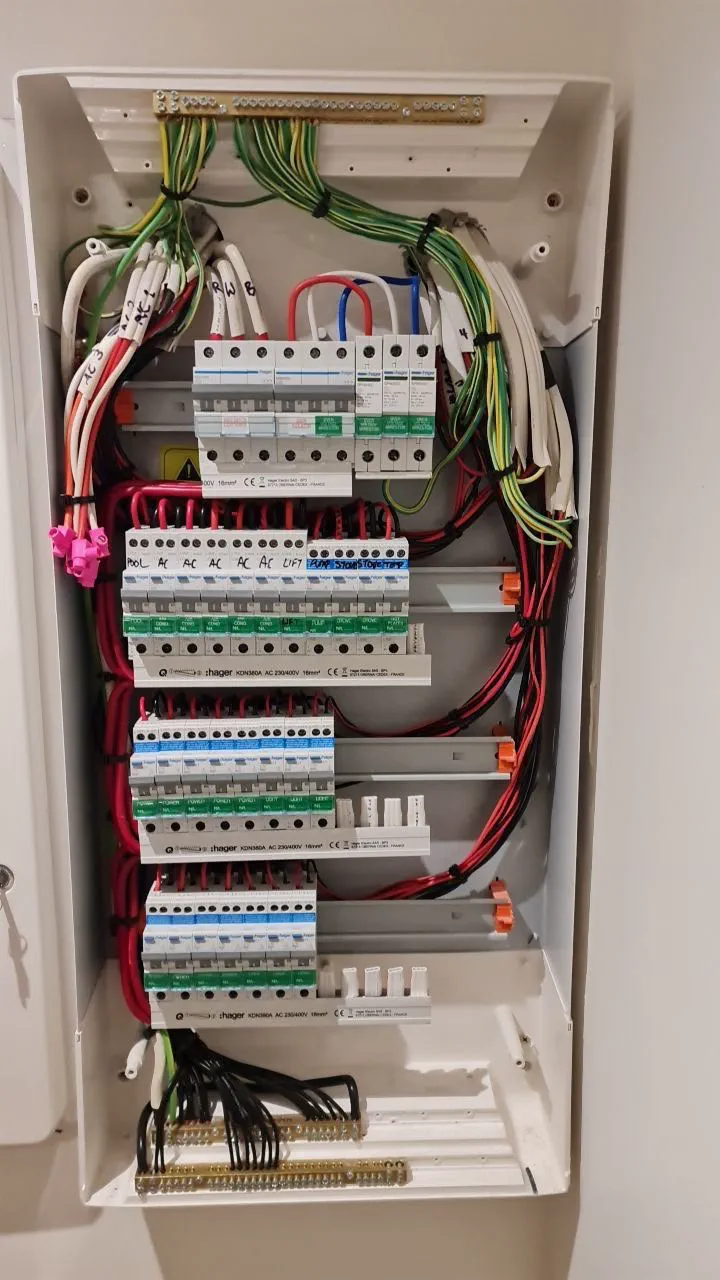
A three-phase upgrade has two halves. The distributor approves the new supply, changes the connection and fits a three-phase meter. On your side, new consumer mains run to the meter box, the meter box is set up for the new meter, and the switchboard gets a three-phase main switch with circuits spread across the phases.
From the point of supply, where the network meets your installation, the property owner is responsible for the electrical installation. So most of the cost is on your side of that line, and most of the difference between one home and the next comes from there too.
The distributor's part
Which network you're on depends on where you live. In the west, Powercor's Altona Terminal Station (West) supplies Laverton, Altona Meadows, Point Cook, Werribee, Hoppers Crossing and Wyndham Vale. Jemena's area reaches Williamstown and Footscray, and CitiPower supplies parts of Port Melbourne. Each distributor decides whether three-phase is available at your address and on what terms.
Where three-phase is already available at the pole or pit, the network side may be simple. Where it isn't, or the connection needs network work, the distributor sets its own requirements and any charges, and bills them itself. Ask for availability to be confirmed before you commit to anything else.
Mains length and route
The new consumer mains are heavier four-core cable: three actives and a neutral. The distance from the pole or pit to the meter box sets how much is needed. An overhead service to a house close to the street is the short end. An underground supply to a meter box at the back of a long block, or a route around an extension, is the long end.
Underground mains add trenching or boring under driveways, paths and garden beds, then reinstating them. Ask whether the quote covers the trench, conduit, backfill and the finished surface, or leaves the surface to you.
The meter box and the switchboard
The meter box needs room for a three-phase meter and the heavier mains, so a small, damaged or old box often gets replaced. Old panels can contain asbestos; WorkSafe Victoria's examples include ceramic fuses and pitch-based switchboards. Specialist removal, if needed, is a separate item.
Most upgrades also need a new main switchboard. Energy Safe Victoria's guidance for electricians says that when a switchboard is replaced, the Wiring Rules require safety switches on all final sub-circuits. Every existing circuit is tested, and any that leak to earth need fixing before the new board goes live, so test results can change the scope.
Inspection and the switchover
Consumer mains, the meter box and the main switchboard are prescribed work, which can't be switched on until a Licensed Electrical Inspector has inspected it. The distributor then fits the meter and reconnects. Lining those steps up is part of the job, and the more of it that lands on one day, the shorter the outage.
Fold in the circuits for whatever is driving the upgrade, such as a ducted system, an EV charger or a workshop sub-board. Doing them on the same shutdown and inspection takes less work than coming back.
When three-phase is the right call
Three-phase makes sense when large loads overlap: a big ducted reverse-cycle system, two EVs or a high-capacity charger, a workshop with three-phase machines, or an all-electric home running heating, induction cooking and hot water together. If those are in your plans for the next few years, it's worth pricing now, especially during a renovation.
If the pinch is a single charger on a modest supply, load management or heavier single-phase mains may solve it with less work. A good quote explains which option suits your loads and why, and clearly marks anything still awaiting the distributor.
Questions that come next
Sources for this article
7 sources, with the date each was checked
- 1.Energy Safe Victoria: The point of supply is the changeover point from the electricity distribution network to the electrical installation, where the property owner becomes responsible for the maintenance and repair of the electrical… Accessed 30 September 2026.
- 2.Powercor Australia, Project Assessment Draft Report: Altona Terminal Station (West) (June 2025): It supplies part of Melbourne’s western growth corridor. This includes the areas of Laverton, Laverton North, Altona Meadows, Werribee, Wyndham Vale, Mount Cottrell, Eynesbury, Tarneit, Hoppers Crossing and Point Cook… Accessed 30 September 2026.
- 3.Jemena Electricity Networks (Vic) Ltd, 2025 Distribution Annual Planning Report (2 December 2025): Figure 1-1 shows the JEN supply area, which ranges from Gisborne South, Clarkefield and Mickleham in the north to Williamstown and Footscray in the south, and from Hillside, Sydenham and Brooklyn in the west to… Accessed 30 September 2026.
- 4.CitiPower, Distribution Annual Planning Report December 2024 (hosted by the Australian Energy Regulator): The zone substation in Fisherman’s Bend (E) is served by two sub-transmission lines from Fisherman Bend Terminal station (FBTS). The zone substation supplies areas of Fisherman’s Bend and Port Melbourne. Accessed 30 September 2026.
- 5.WorkSafe Victoria: Fuse blankets and ceramic fuses in switchboards Pitch-based (eg Zelemite, Ausbestos, Lebah) electrical switchboards Accessed 30 September 2026.
- 6.Energy Safe Victoria: If a switchboard is required to be replaced then as per clause 2.6.3.2.5 (Alterations to installations and replacement of switchboards) of AS/NZS 3000: RCD’s are required on all final sub-circuits. Accessed 30 September 2026.
- 7.Energy Safe Victoria: 'Prescribed' certificates are for electrical installation work that requires inspection by a Licensed Electrical inspector. This includes (but is not limited to): Consumer mains cables, main switchboard, meter box and… Accessed 30 September 2026.