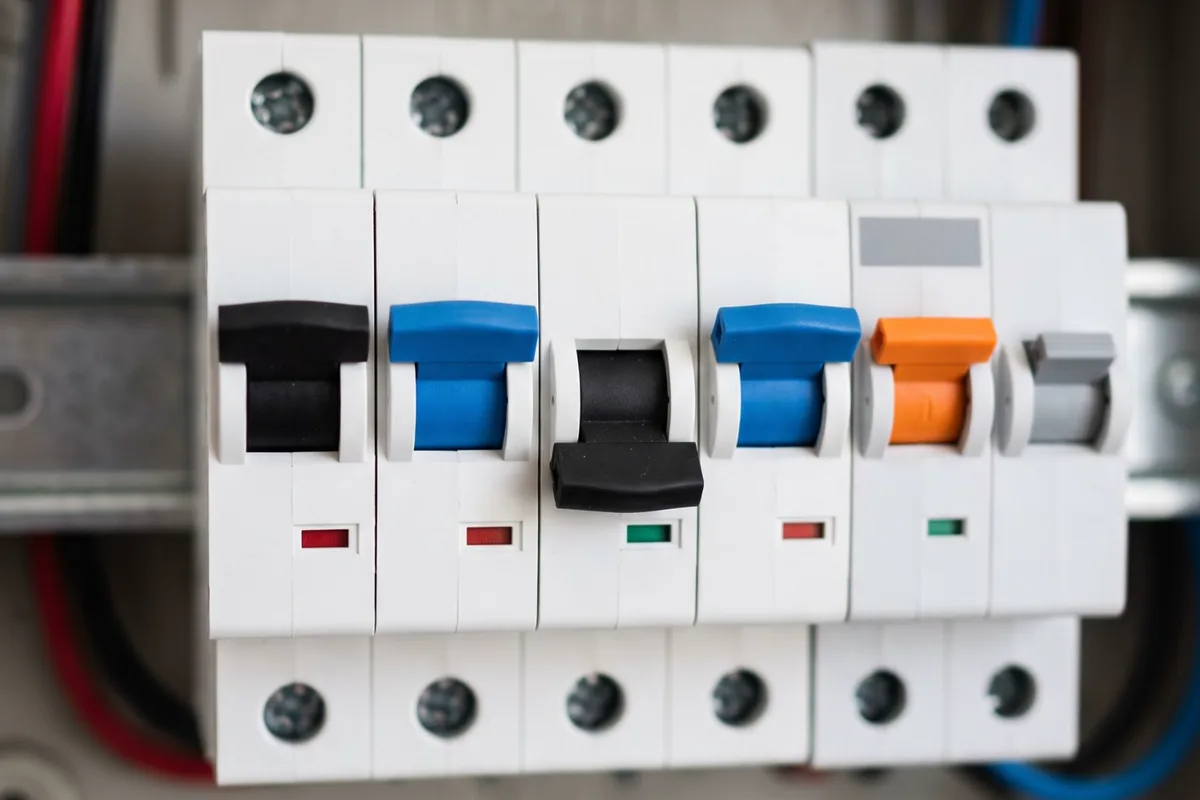
A breaker trips to stop cable overheating. One that keeps tripping means overload, a faulty appliance, damaged cable, a loose connection or a worn breaker. We test until we know which.
When to get it checked
It trips when one appliance goes on
The kettle, a fan heater or the vacuum knocks it out every time. That points to overload, or a fault inside that appliance.
It trips after things run a while
Everything works, then the power drops part way through dinner. A slow trip usually means heat building up.
It trips the moment you reset it
The switch won't stay up, even with everything unplugged. Think short circuit, damaged cable or a failed breaker.
It's down in the morning
Nothing was in use, yet the circuit is off. Suspect a fridge or pool pump switching on, or water in an outdoor fitting.
Heat, buzzing or a hot smell
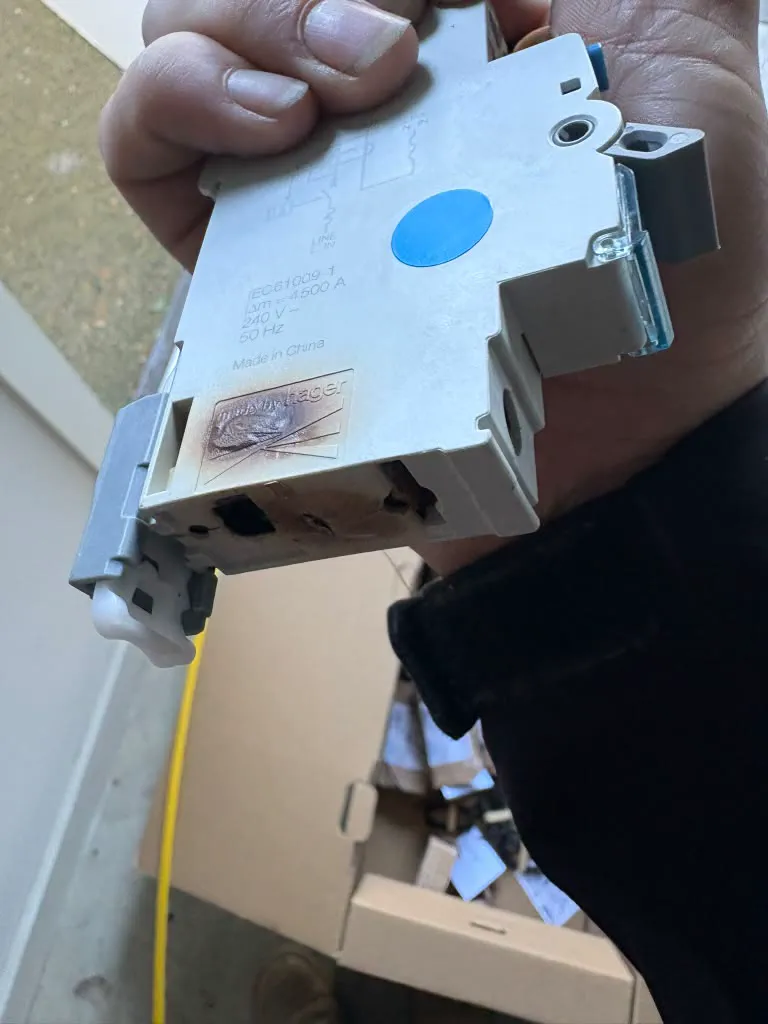
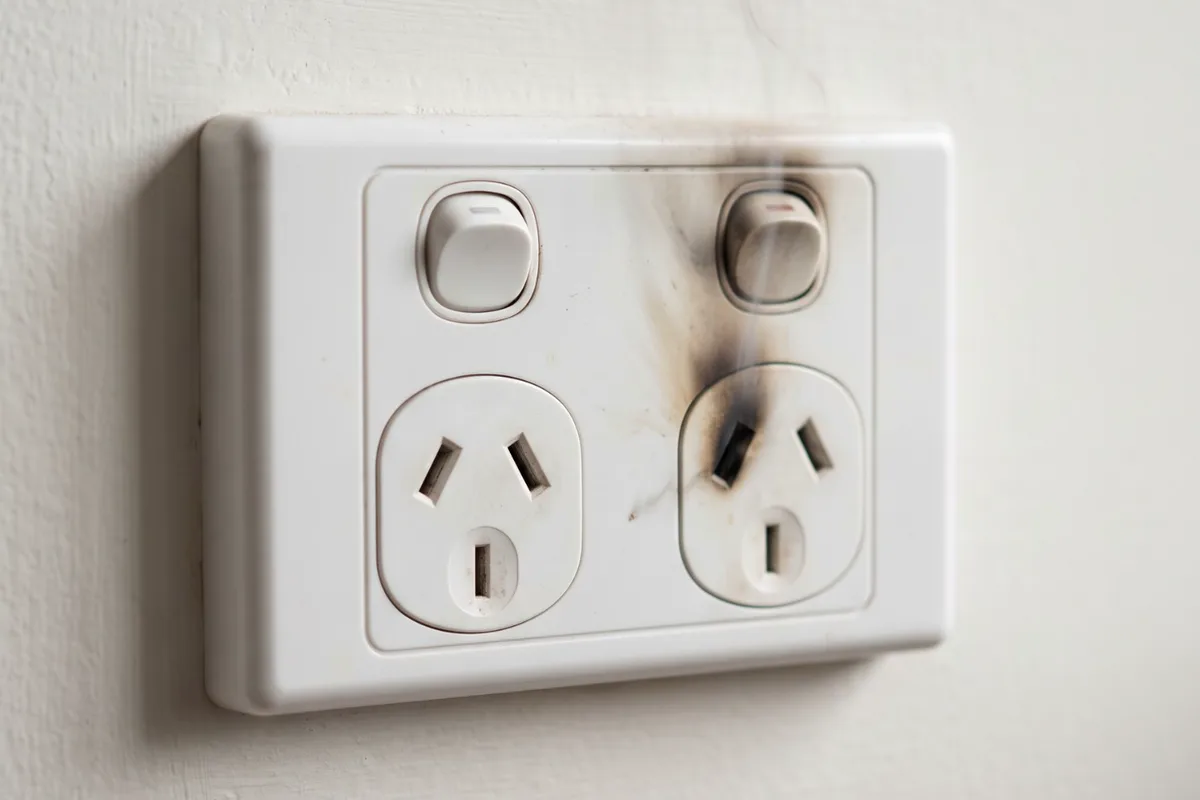
A warm breaker, a buzzing board or a scorched point on that circuit means a connection is overheating. That one is urgent.
Why it happens
6 common causes
Too much on one circuit
Anything that heats draws hard: kettles, toasters, fan heaters. Two or three on one power circuit can exceed what its breaker allows, and older homes have fewer circuits to share the load.
A faulty appliance
A worn element, damaged cord or failing motor can short internally, tripping whichever circuit it's plugged into.
Damaged cable
A screw through a wall cable, rodents in the roof or cable crushed during renovations can short. That trips instantly, every time.
Loose connections
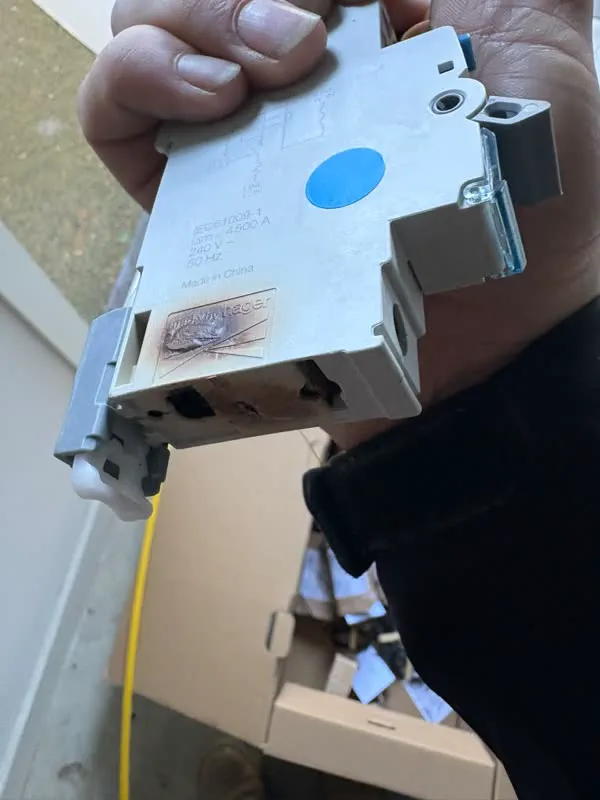
A loose terminal at the breaker, a point or a joint builds heat. That heat trips the breaker and, left alone, scorches the fitting.
A worn breaker
Age, heat and years of trips can leave a breaker tripping below its rating. We test it first, because good breakers often take the blame for faults elsewhere.
Leakage on a combined device
Many newer boards use combined breaker and safety switch devices (RCBOs). They also trip on current leaking to earth, such as from damp.
What the job covers
What we usually do on this job. Your quote confirms it for your place.
- Which switch tripped and what was running
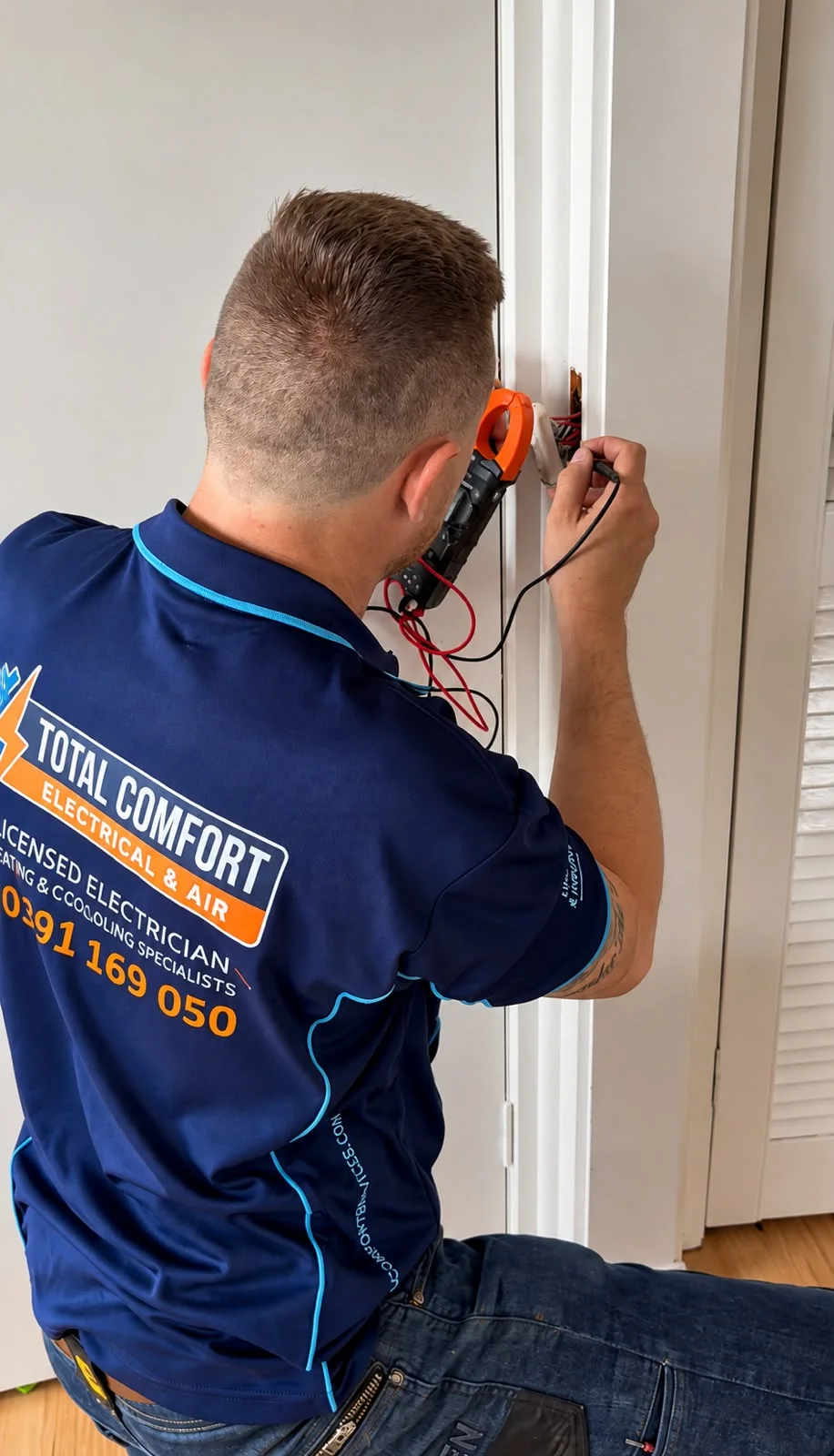
- Switchboard checked for heat marks and loose terminals
- Every point on the circuit identified
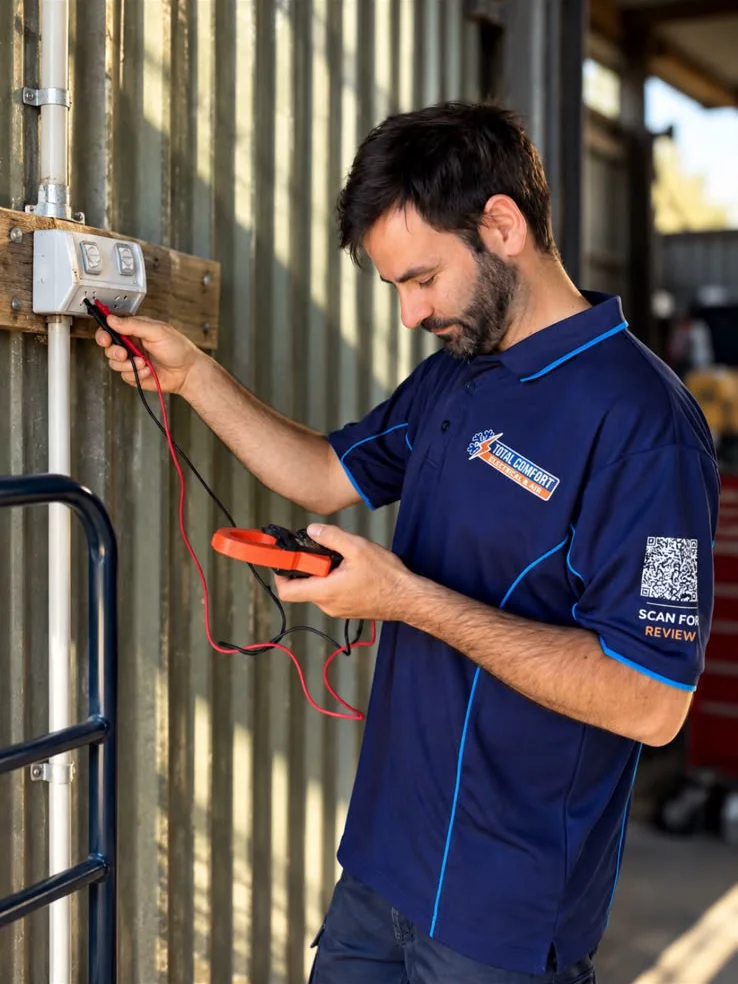
- Insulation resistance testing
- Appliances checked one at a time
- Loose or burnt connections remade
- Worn or heat-damaged breakers replaced
- Retest, with a Certificate of Electrical Safety for wiring or board repairs
Your options, explained
Targeted repair
Low disruption- Best for
- A loose connection, damaged cable, faulty point or worn breaker
- How it works
- We remake or replace the failed part, then retest the circuit.
- Worth knowing
- Fixes the cause, not the symptom.
Dedicated circuit
Medium disruption- Best for
- Kitchens, laundries and living areas that trip in normal use
- How it works
- A heater, dryer or air conditioner moves onto its own circuit.
- Worth knowing
- Needs spare room on the switchboard.
Switchboard upgrade
High disruption- Best for
- Old or full boards with no room for new circuits
- How it works
- The board is replaced, with protection on every circuit and room to grow.
- Worth knowing
- Planned and quoted as its own job.
The people behind the work
Our own photos from jobs like this one. Family-run, based in Altona Meadows, with 19 years in the industry.
Licensed electrical contractor (REC 38187)See more team photos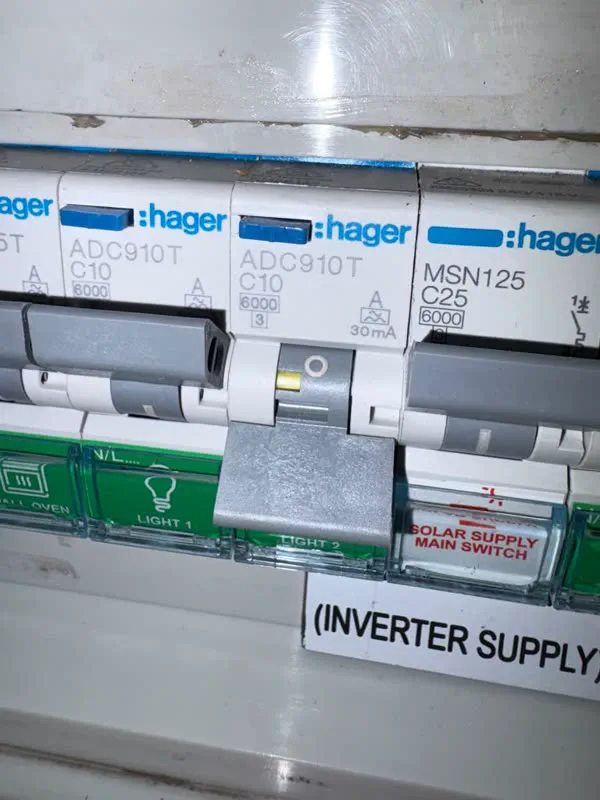
Worth knowing before you book
- One reset, then leave it
- If it trips again after one reset, leave it off. Each reset heats a bad connection again.
- Note the pattern
- Jot down what was running, the time and the weather. It narrows the search.
- Check which device dropped
- A test button and 30mA mean a safety switch or combined device.
What affects the price?
The right scope depends on your installation. These are the details we check so your quote is useful, with any additional work explained before it proceeds.
Whether it trips while we're there
A fault we can watch happen is quicker to trace. Your notes on when it trips cut the testing down.
How much is on the circuit
A few points test faster than a circuit feeding half the house and a shed.
Getting to the cable
Tight roof spaces, low subfloors and finished walls slow cable repairs.
What the fix turns out to be
Remaking a connection is small. A new circuit or board work is bigger, and some old boards take parts no longer made.
How it runs
- 1
Tell us the pattern
Which switch, what was on, how often.
- 2
Test and isolate
Circuit and appliances tested until the cause shows.
- 3
Repair the cause
Bigger fixes are quoted first.
- 4
Retest and explain
We show you what we found.
Step by step, in more detail
4 steps
Start with the pattern
Which switch dropped, what was running, how quickly it tripped and whether weather plays a part.
Check the board and circuit
We look for heat marks and loose terminals, then find every point on the tripping circuit.
Test cable and appliances
With appliances unplugged, we test the cable's insulation and connections, then each appliance, so you know where the fault sits.
Repair, retest and explain
We fix the cause, retest and show you what we found. Bigger fixes, like a new circuit, are priced first.
What is safe to do, and what to leave to us
Safe for you to do
- Unplug or switch off appliances in the affected rooms.
- Reset the tripped switch once, if the board is dry, cool and undamaged.
- If it trips again, leave it off and note what was running.
- If there's smoke or fire, get everyone out and keep clear.
Leave these to us
- Resetting it over and over, or taping a breaker on.
- Fitting a bigger breaker. Electrical work isn't a DIY job in Victoria.
- Moving the appliance to another room or onto a power board.
- Removing switchboard covers or touching a hot, wet or buzzing board.
When to get us in
- The same breaker has tripped more than once
- It trips straight after a reset, or won't reset
- A breaker, point or plug is warm, scorched or smells hot
- Tripping began after renovations, a storm or a new appliance
More detail
Which switch dropped on your board
Look at the switch that's down. Energy Safe Victoria says a safety switch always has a test button and 30mA printed on it, and that circuit breakers don't act as safety switches. No markings means a plain breaker: overload or a short. Both markings mean a safety switch or combined device, so leakage to earth is possible too.
Why a bigger breaker isn't the fix
A breaker's rating is set by the cable behind it. Fit a larger one and that cable can run hot inside a wall or ceiling where nobody sees it. If a circuit genuinely can't keep up, the fix is moving load onto a new circuit.
Tripping since something new went in
If trips started after a new air conditioner, heater or renovation, that's where we look first. Energy Safe Victoria says a manufacturer's requirement for an air conditioner to have a dedicated circuit must be followed. A new reverse cycle system is also a good reason to check the switchboard has room for it.
Local rules and conditions
Victorian requirements and local conditions that shape this job, with the sources listed at the foot of the page.
Cold nights, plug-in heaters
Laverton's weather station records a July mean minimum of 5.2 °C, with June at 5.9 °C and August at 5.7 °C. Portable heaters come out then, so a breaker that only trips in winter usually has a heater on it.
Older streets, newer estates
Hobsons Bay runs from historic Williamstown and Newport to newer Altona Meadows and Seabrook. Energy Safe Victoria says wiring in a house built more than 30 years ago should be checked, and that safety switches are now compulsory on new residential installations. In older houses we look first at load and tired connections; in newer ones, at the safety switch.
If you rent
From 29 March 2023, all power outlets and lighting circuits in a Victorian rental must connect to a switchboard-type circuit breaker and safety switch. The rental provider must organise and pay for repairs that aren't the renter's fault, so tell your agent or rental provider.
Useful reading
Guides to read before you decide, with checklists and questions to bring to the quote.
- A safety switch keeps tripping: what to record and when to callUnderstand the difference between a protective device doing its job and a fault that needs investigation.
- What electrical work you can and can't do yourself in VictoriaWhere Victorian law draws the line on home electrical work, the short list of jobs that are yours, and what to do when a job goes past it.
- Renting and the power or heating has failed: what to doNo power or a dead heater in a Victorian rental? What to check safely, what counts as urgent, how to report it, and what to do if nobody responds.
- Planning a switchboard upgrade without surprisesWhat the electrician needs to check, how to compare the scope and what to organise before the power goes off.
Common questions
Questions people ask about this
- Why does my oven trip the power when I turn it on?Most often an oven element has failed or taken in moisture, and current is leaking to earth, which trips the safety switch.
- Why does the kettle or toaster trip the safety switch?Usually the appliance has a fault that lets a little current leak to earth.
- How do I tell which switch has tripped on my switchboard?Open the switchboard door and look along the rows of switches.
- How do I describe an electrical fault in my enquiry?Tell us what stopped working, when it started, what was running at the time and what the switchboard shows.
From the blog
- Air fryers, kettles and toasters: is your kitchen circuit keeping up?Benchtop appliances draw a lot of power. How kitchen circuits share the load, the difference between a breaker trip and a hot power point, and when to add circuits.
- What affects the cost of electrical fault finding?Intermittent faults, access, wiring age and the number of circuits all change how long a fault takes to trace. Here's why, and how you can shorten the hunt.
Sources for the rules and local facts on this page
11 sources, with the date each was checked
- 1.Bureau of Meteorology: Mean minimum temperature (°C) 14.0 14.4 12.7 10.0 7.8 5.9 5.2 5.7 6.8 8.4 10.3 12.2 9.5 81 1943 2026 Accessed 30 September 2026.
- 2.Victorian Electoral Commission (2023 electoral structure review fact sheet): Its residential areas are diverse, ranging from historic Williamstown and Newport in the east to the newer Altona Meadows and Seabrook in the west. Accessed 30 September 2026.
- 3.Energy Safe Victoria: Old switchboards, particularly those without a safety switch Old power switches or power points, particularly broken ones Flickering lights Sparks from switchboards, switches or power points. If your house is over 30… Accessed 30 September 2026.
- 4.Energy Safe Victoria: Having a safety switch installed is now compulsory on new residential installations and a great step to electrical safety in your home, if you are unsure if a safety switch is installed at your property, contact a… Accessed 30 September 2026.
- 5.Consumer Affairs Victoria: From 29 March 2023 all power outlets and lighting circuits in a rental premises must connect to both a switchboard-type circuit breaker that complies with AS/NZS 3000 and a switchboard-type residual current device that… Accessed 30 September 2026.
- 6.Consumer Affairs Victoria: The rental provider must organise and pay for all repairs if they are not the renter’s fault. Accessed 30 September 2026.
- 7.Energy Safe Victoria: monitors the flow of electricity through a circuit detects a problem that may pose a risk to personal safety turns the power off within 0.03 of a second always has a test button and '30ma' printed on them. Accessed 30 September 2026.
- 8.Energy Safe Victoria: This means that if the manufacturer’s specifications require an air conditioner to be installed on a dedicated circuit or protected by a residual current device then they must be adhered to. Accessed 30 September 2026.
- 9.Victorian Legislation (legislation.vic.gov.au) - Electricity Safety Act 1998, authorised version 089 (effective 8 Sep 2026): electrical installation work means installation, alteration, repair or maintenance of an electrical installation; Accessed 30 September 2026.
- 10.Energy Safe Victoria: Whenever a licensed electrician completes any electrical installation work, they must provide a Certificate of Electrical Safety (COES). Accessed 30 September 2026.
- 11.Energy Safe Victoria: Electrical work isn’t a DIY job, even for small jobs such as changing power points or light switches. Accessed 30 September 2026.