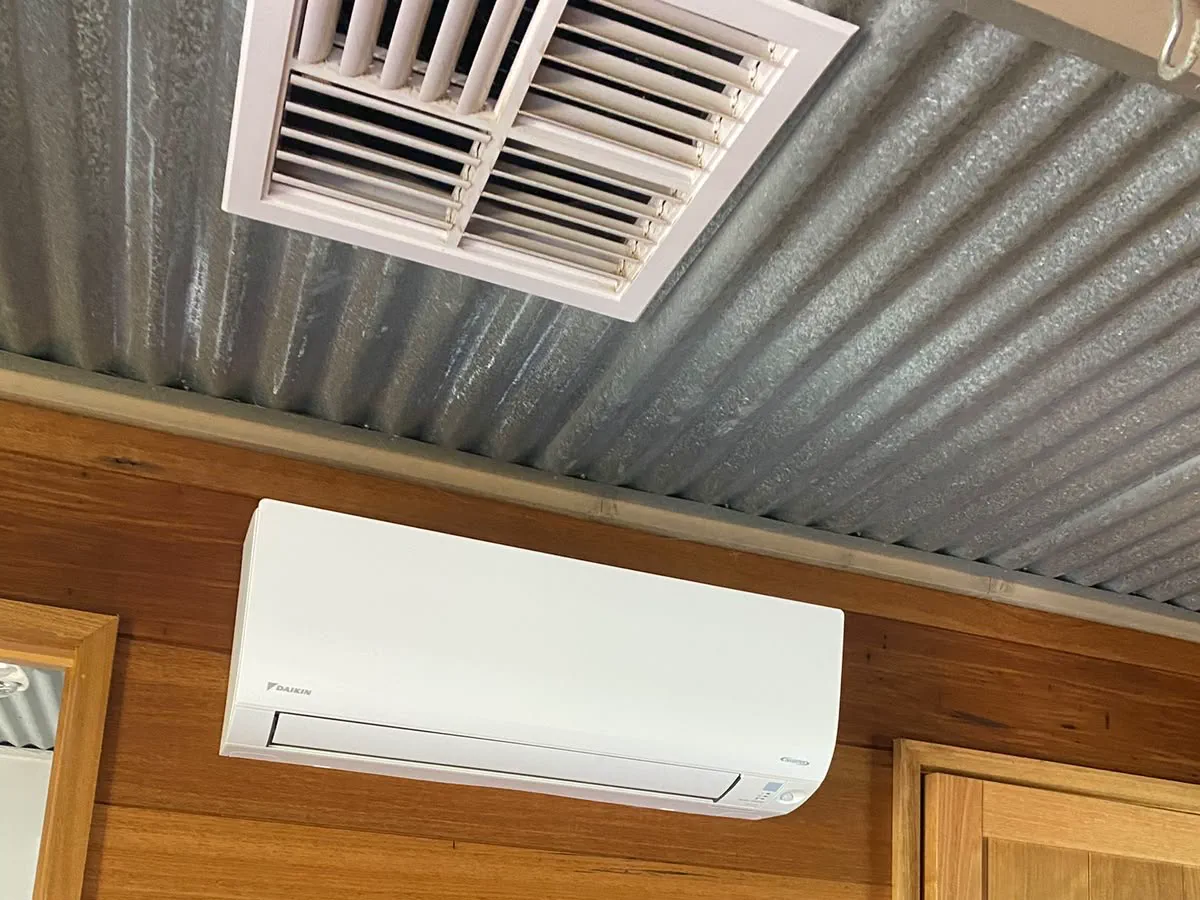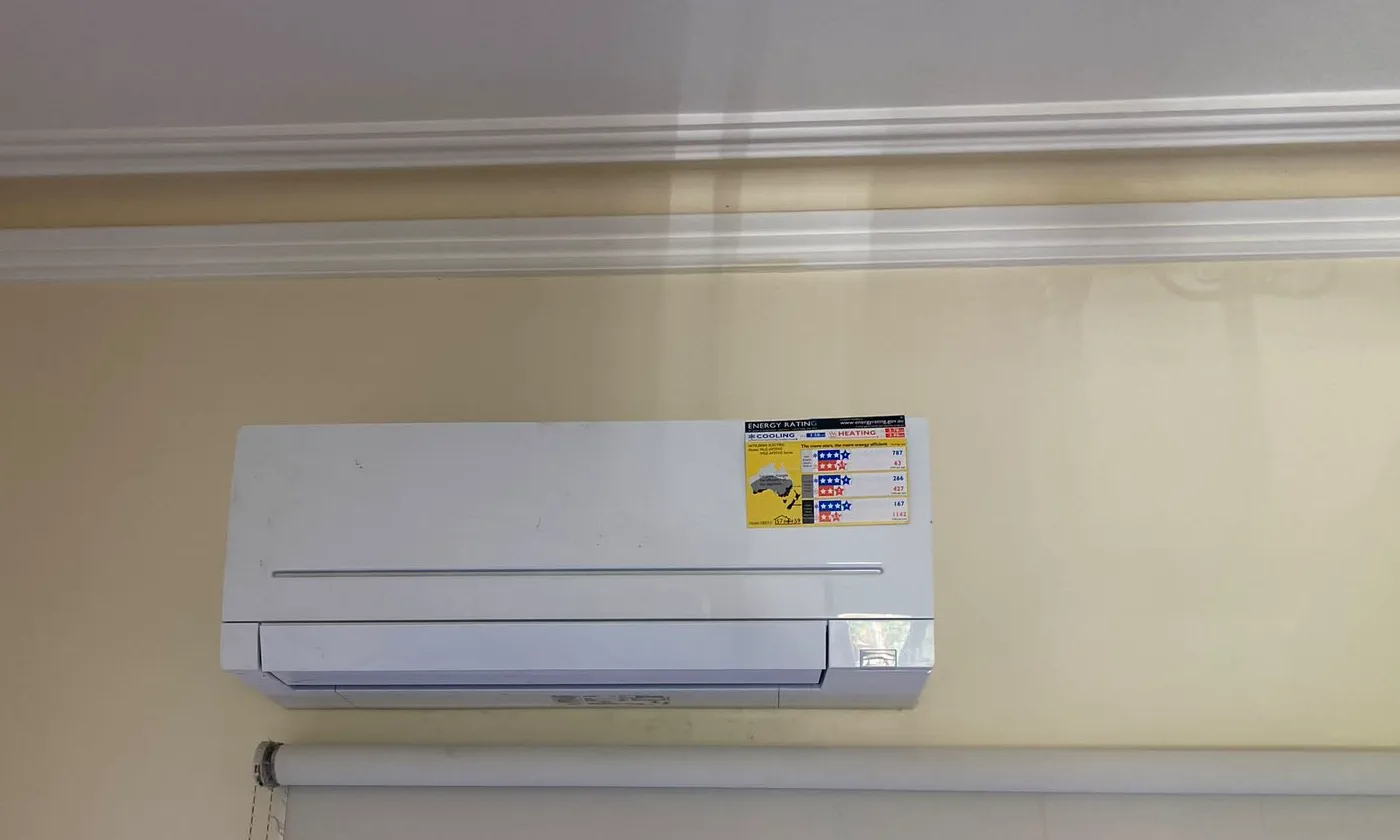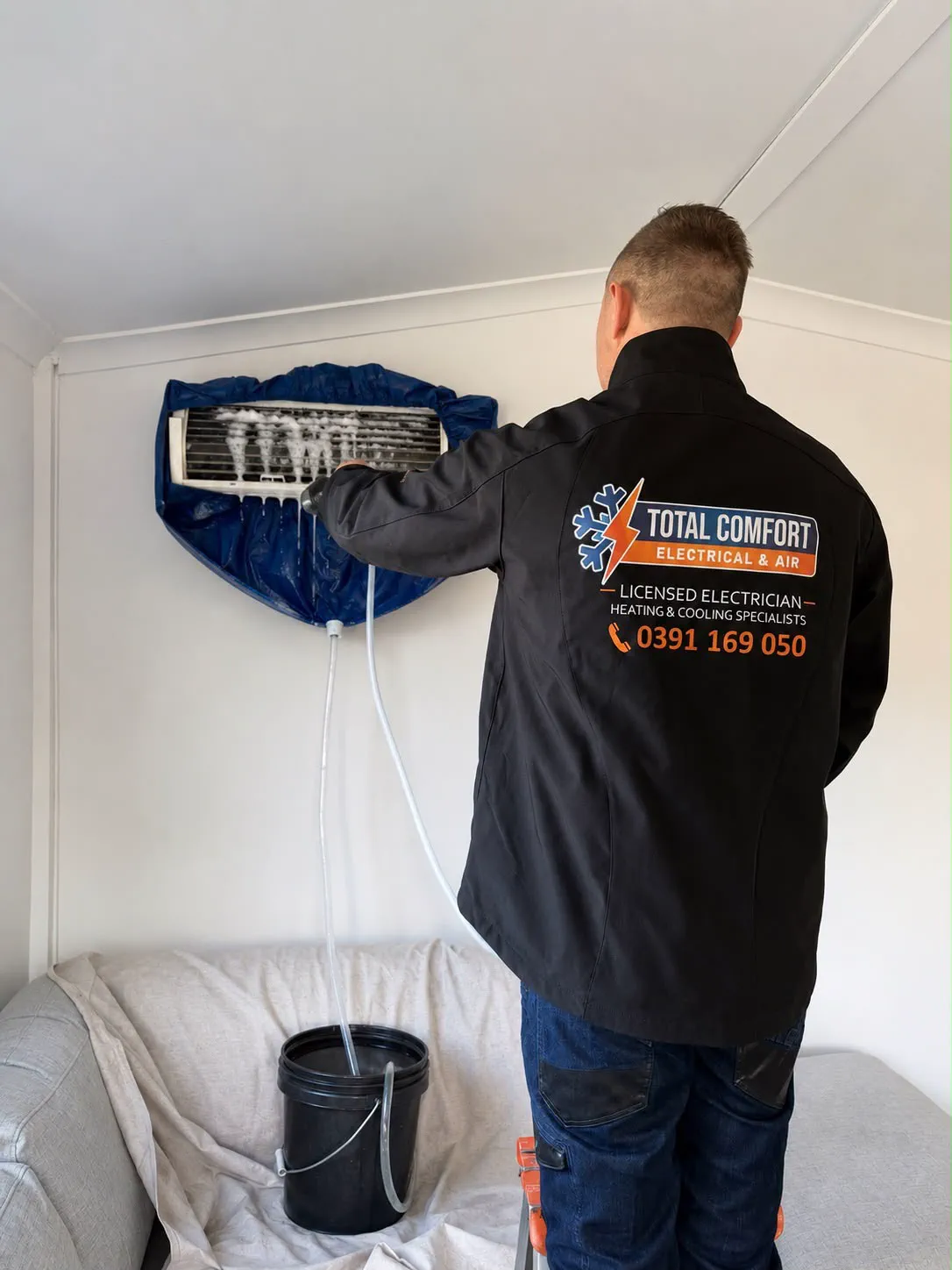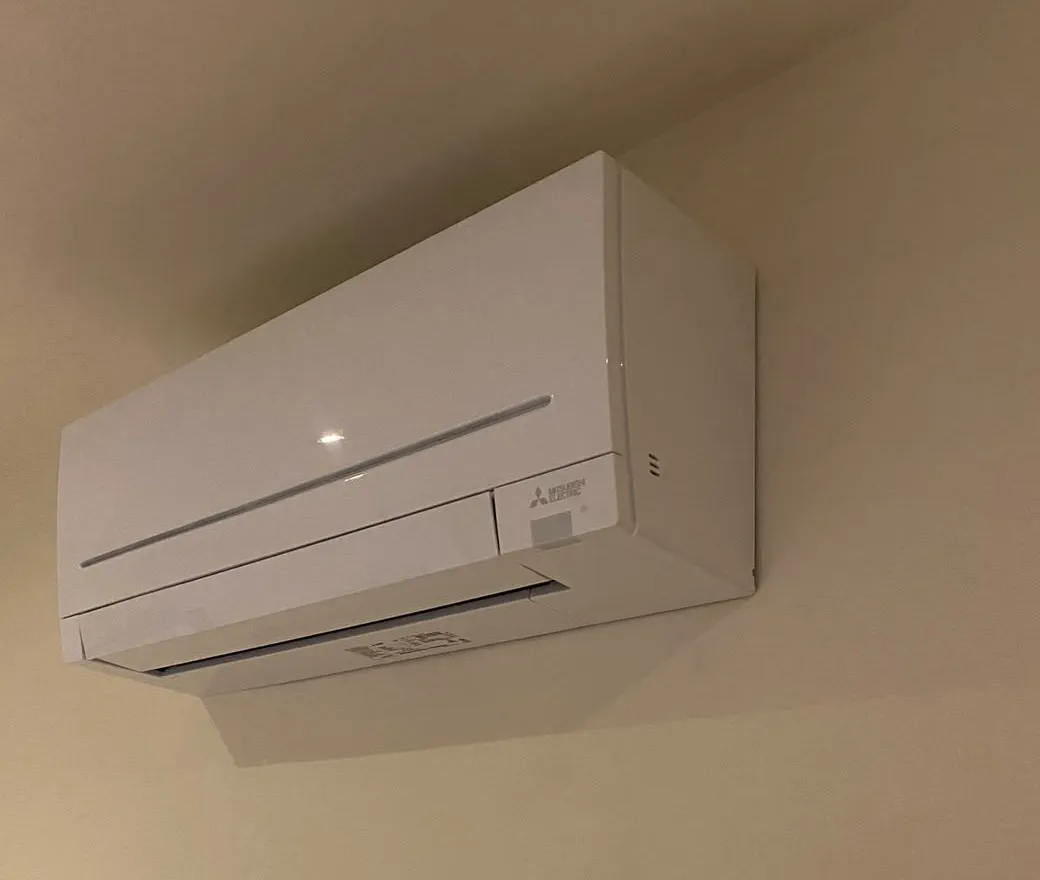
The same symptom can have several causes. A unit blowing room-temperature air might have a control setting issue, restricted airflow or a component fault; an indoor water leak needs a drain and airflow assessment. We check the system methodically instead of assuming it needs gas or a replacement. If an expensive component has failed on an older unit, we compare the repair with a replacement so you can make an informed choice.
When to get it checked
It won't start or respond
The remote shows a setting but nothing happens, or the louvre opens and the fan never starts. If every light on the unit is off, suspect the supply first.
Flashing lights or a code
A lamp on the indoor unit blinks in a pattern, or the controller shows a code. The system has shut itself down for protection.
It cuts out or trips the power
It runs briefly and stops, or a breaker or safety switch drops as the compressor starts. Either way there's a fault to find, not bad luck.
Noise, ice or a hot smell
Squealing, grinding or a new rattle, frost on the outdoor pipes, or a hot electrical smell. If you smell burning, switch it off at the remote.
Why it happens
5 common causes
The supply and isolator
Power runs from the switchboard to an isolator beside the outdoor unit, then by cable to the indoor head. Isolators that sit in sun and rain crack, take in water and burn at the terminals.
Sensors and the control board
Temperature sensors tell the board what the room, coils and outside air are doing. One bad reading stops the system with a code, and boards fail from age, moisture or insects.
Fan motors and capacitors
Indoor fan barrels clog with dust and mould, and outdoor fan bearings wear out in the weather. A weak start capacitor brings humming, clicking and stalled starts.
Starved airflow
Dirty filters significantly cut airflow and efficiency and can weaken heating. A clogged coil, or an outdoor unit boxed into a narrow side path, ices up or trips on protection codes.
A refrigerant leak
Refrigerant isn't used up, so a low charge means a leak, often at a flare joint or a corroded coil. Near the bay, salt speeds that corrosion: an industry guide based on AS 4312 classes Port Phillip Bay from Altona to Portsea beaches as exposed marine.
What the job covers
What we usually do on this job. Your quote confirms it for your place.
- Symptom history and error code reviewed
- Power supply and isolation assessed
- Indoor and outdoor units checked
- Drainage and airflow investigated where relevant
- Sensors, fans and controls tested as indicated
- Refrigerant investigation if symptoms justify it
- Repair cost and parts availability explained
- Operation verified after the approved repair
Your options, explained
Replace the failed part
Low disruption- Best for
- A dead sensor, fan motor, capacitor, isolator or board on a sound system
- How it works
- The part is tested, replaced with the right one for that model, and the system rechecked.
- Worth knowing
- Boards are model-specific, and older models may have limited parts.
Repair the leak and recharge
Medium disruption- Best for
- A low charge confirmed by testing
- How it works
- The refrigerant is recovered and the leak repaired, then the system is pressure-tested, evacuated and charged.
- Worth knowing
- Licensed refrigerant work. Recharging without a repair is illegal.
Replace the system
High disruption- Best for
- A failed compressor or coil on an older unit
- How it works
- The old unit is decommissioned and a correctly sized system installed, reusing the circuit where it's suitable.
- Worth knowing
- Priced alongside the repair so you can compare.
The people behind the work
One local team for electrical, heating and cooling. Family-run, based in Altona Meadows, with 19 years in the industry.
Licensed electrical contractor (REC 38187)See more team photos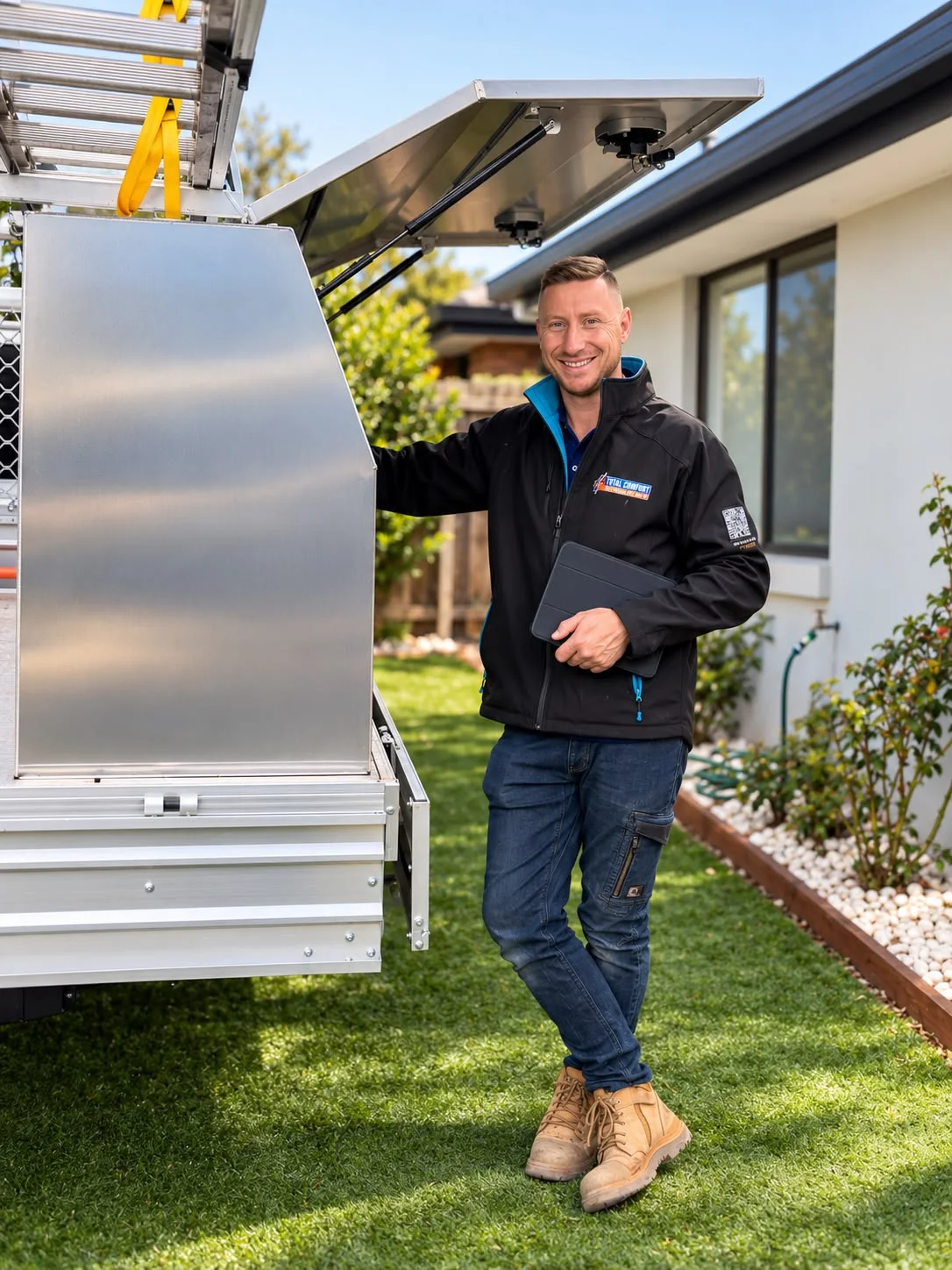
Worth knowing before you book
- Keep the error code
- A photo or short video of the controller can help even if the problem stops before we arrive.
- Stop repeated resets
- A system repeatedly tripping electrical protection needs investigation. Leave it off and call for advice.
- Model details help with parts
- Indoor and outdoor labels may have different model numbers. Photograph accessible labels without opening equipment.
What affects the price?
The right scope depends on your installation. These are the details we check so your quote is useful, with any additional work explained before it proceeds.
How readily the fault shows
A fault that's present on the day is quicker to find than one that only appears on hot afternoons or cold mornings.
The part
Sensors and isolators are common. Boards and fan motors are model-specific and sometimes hard to source.
Access
A second-storey or roof-mounted outdoor unit takes more setup than one at ground level.
Refrigerant or supply repairs
Leak repair and recharging, or a new isolator or cable with its certificate, adds parts and testing.
Before the visit
- Record the code without opening equipment.
- Keep photos of the leak or noise recording if safe.
- Have indoor and outdoor model numbers ready.
How it runs
- 1
Describe the fault
Tell us what changed, when it happens and whether any code appears.
- 2
Diagnose
We test the parts of the system connected to that symptom.
- 3
Compare options
You receive the fault explanation, repair proposal and any replacement alternative.
- 4
Repair and recheck
Fit approved parts and confirm operation, or arrange a return visit if parts are needed.
Step by step, in more detail
4 steps
Hear what happened
Which mode it was in, when it started and what changed, such as a storm or a recent service. A video of the code helps if the fault clears.
Test the supply first
As a licensed electrical contractor (REC 38187), we check the circuit, its protection, the isolator and the interconnecting cable before blaming the air conditioner.
Follow the symptom
We read the code against the manufacturer's service information, then test the sensors, fans, drain and airflow it points to, and the refrigerant only when the symptoms justify it.
Price, repair and prove it
You get the fault, the part and the price before we start, with a replacement comparison if a major part has failed. After the repair we run it in cooling and heating. If a part needs ordering, we leave it safe and come back.
What is safe to do, and what to leave to us
Safe for you to do
- Turn it off at the remote if it leaks, smells hot or keeps stopping.
- If a safety switch trips, reset it once. If it trips again or won't reset, leave it off and call a licensed electrician.
- Film the flashing lights and photograph model labels you can reach without climbing.
- With the unit off, clean the dust filters as the manual describes.
Leave these to us
- Resetting a breaker or safety switch again and again.
- Opening either unit or the isolator. Electrical work isn't a DIY job, even a small one.
- Buying a top-up kit, or letting anyone recharge the system before the leak is repaired.
When to get us in
- The unit is dead and nothing has tripped at the switchboard
- A code or flashing light comes back after switching off and on
- It trips a breaker or safety switch
- Heating stops for long spells, not short defrost pauses
More detail
Defrost or a fault in heating mode
On cold mornings the outdoor coil frosts over and the system pauses heating to melt it: the indoor fan stops and steam may rise outside. Melbourne sits in the energy label's cold zone, where performance in frosting conditions below 5.5 °C is critical to a unit's overall performance. Short pauses are normal. Long stops, or ice that never clears, are not.
The electrical side of a split
The Wiring Rules call for a lockable isolating switch next to the outdoor unit, not on it. That switch lives in the sun and rain, and a cracked or waterlogged isolator often explains a dead split or a tripping safety switch. Electrical work on air conditioning gets a Certificate of Electrical Safety, and the electrician must give you a copy within 30 days.
Refrigerant repairs, in the right order
Topping up before a system is fully tested and every identified leak repaired is illegal, and so is releasing refrigerant into the air. It's also an offence to charge a system with a refrigerant of higher global warming potential than it was designed for, so an R32 unit can't be charged with R410A.
Repair or replace an older split
A sensor or fan motor on a sound system is usually worth fixing, while a failed compressor on an ageing one is a closer call. The Victorian Government says a reverse-cycle system more than 15 years old typically uses more than three times the energy of a modern one. The HFC phase-down, though, doesn't mean consumers have to replace existing equipment.
Local rules and conditions
Victorian requirements and local conditions that shape this job, with the sources listed at the foot of the page.
Weak parts fail on the first hot run
Laverton's weather station averages 27.0 days a year at or above 30 °C, mostly December to February. A tired fan motor often gives out in the first long hot spell. Victoria's health department advises checking your air conditioner works before extreme heat.
Renting with a broken split
Consumer Affairs Victoria lists a cooling appliance supplied by the rental provider that isn't working as an urgent repair, and urgent repairs must be made immediately. The rental provider organises and pays unless the renter caused the fault.
When a rental heater can't be repaired
From 1 March 2027, a rental's fixed heating that fails and can't be repaired must be replaced with an energy-efficient fixed electric heating system with an outlet in the main living area. A working heater that meets the current standard can stay.
Useful reading
Guides to read before you decide, with checklists and questions to bring to the quote.
- Air conditioner maintenance: what to watch between servicesKeep useful records, follow model-specific filter care and recognise symptoms that need a repair visit.
- Split system or ducted: choose around the rooms you useCompare layouts, zoning, installation work and quote details before choosing equipment for your home.
- Getting your air conditioning ready for a heatwaveA spring test run, clean filters, a clear outdoor unit and a backup plan: how to find a tired air conditioner before the first hot northerly does.
- Landlords: heating, cooling and electrical obligations in VictoriaA rental provider's map of the heating, switchboard, safety check and repair duties on a Victorian rental, and what the 2027 energy standards change.
Common questions
Questions people ask about this
- My air conditioner won't respond to the remote. What can I check?Start with the remote: fresh batteries, a clear line to the indoor unit, and no lock symbol or odd mode on its display.
- My air conditioner won't restart after a power outage. What now?Give it a few minutes first.
- What is the switch next to my outdoor unit for?It's an isolating switch that cuts all power to the air conditioner, so a technician can work on the system safely without relying on the switchboard.
- Why does my air conditioner keep switching on and off?Frequent stopping and starting, called short cycling, usually means the unit reaches its set temperature too quickly or keeps tripping its own protection.
- Why does my air conditioner turn off by itself?Most often a setting is doing it: an off timer, sleep mode, an eco or quiet mode, or an app schedule someone else set up.
From the blog
- What affects the cost of an air conditioner repair?Diagnosis time, parts, refrigerant work, access and the system's type and age all shape a repair bill. Here's how they add up, and when replacement is the better spend.
- Should I repair or replace my air conditioner?Compare the diagnosed fault, the rest of the system and the complete replacement scope before deciding what to spend.
- Is a broken air conditioner an urgent repair in a Victorian rental?Understand the urgent-repair category, communicate the fault clearly and coordinate access and authorisation for the contractor.
Sources for the rules and local facts on this page
17 sources, with the date each was checked
- 1.Bureau of Meteorology: Mean number of days ≥ 30 °C 6.9 6.0 4.5 0.7 0.0 0.0 0.0 0.0 0.1 0.9 2.8 5.1 27.0 82 1943 2026 Mean number of days ≥ 35 °C 3.6 2.4 0.9 0.0 0.0 0.0 0.0 0.0 0.0 0.1 0.5 1.9 9.4 Accessed 30 September 2026.
- 2.Better Health Channel (Department of Health, Victoria): Check that your fan and air-conditioner works well. Have your air-conditioner serviced if needed. Ensure the filters, pads and air vents are clean. Accessed 30 September 2026.
- 3.Consumer Affairs Victoria: a cooling appliance or service provided by the rental provider is not working the property does not meet minimum standards a safety-related device, such as a smoke alarm or pool fence, is not working Accessed 30 September 2026.
- 4.Consumer Affairs Victoria: From 1 March 2027, when an existing fixed heating system fails and can't be repaired ,it must be replaced with an energy-efficient fixed electric heating system with an outlet in the main living area. You do not need to… Accessed 30 September 2026.
- 5.Energy Rating (GEMS Regulator / DCCEEW): Dirty filters significantly reduce the amount of airflow and the energy efficiency of the unit. It can also impact the effectiveness of its heating. Cleaning clogged filters, or replacing a worn one, can lower the… Accessed 30 September 2026.
- 6.BlueScope, Technical Bulletin TB-35 Australian salt marine classifications (March 2026, Revision 9): Exposed Port Phillip Bay (Altona to Portsea Beaches) Calm Port Phillip Bay (Williamstown), Yarra River (Docklands and Melbourne CBD), Maribyrnong River Accessed 30 September 2026.
- 7.Energy Safe Victoria: Locate your electricity box outside your home and check whether the safety switch has tripped. If it has tripped, reset the switch. If the switch won’t reset, call a licensed electrician. Accessed 30 September 2026.
- 8.Energy Safe Victoria: Electrical work isn’t a DIY job, even for small jobs such as changing power points or light switches. Accessed 30 September 2026.
- 9.Australian Refrigeration Council (ARC), Fact Sheet 13 (ARC5225, 11/22): ‘Topping-up’ a system before the system has been fully tested and all identified leaks repaired by any individual is illegal. Accessed 30 September 2026.
- 10.Australian Refrigeration Council (ARC): A Refrigerant Handling Licence must be held by any person who carries out work in relation to refrigeration and air conditioning (RAC) equipment. Carrying out work in relation to RAC equipment means to do anything with… Accessed 30 September 2026.
- 11.Department of Climate Change, Energy, the Environment and Water (DCCEEW): It's illegal to release regulated refrigerants into the air. This is because some refrigerants can stay in the atmosphere for decades or more and can be thousands of times worse for climate change than carbon dioxide… Accessed 30 September 2026.
- 12.Department of Climate Change, Energy, the Environment and Water (DCCEEW): You cannot charge refrigeration and air conditioning equipment with a higher global warming potential (GWP) refrigerant than the equipment was designed to use (the design refrigerant). To do so is an offence under the… Accessed 30 September 2026.
- 13.Commonwealth of Australia (2019), 'The new zoned energy rating label for air conditioners—What installers and retailers need to know', hosted on energyrating.gov.au: Melbourne is in a black ‘COLD’ area—read the black Cold ratings. Accessed 30 September 2026.
- 14.Access Canberra Electrical Inspections (ACT Government), Electrical Fact Sheet, updated September 2019: Air-conditioning and heat pump systems incorporating a compressor shall be provided with an isolating switch (lockable) in accordance with Clause 2.3.2.2, installed adjacent to but not on the unit, which isolates all… Accessed 30 September 2026.
- 15.Energy Safe Victoria: 'Prescribed' certificates are for electrical installation work that requires inspection by a Licensed Electrical inspector. This includes (but is not limited to): Consumer mains cables, main switchboard, meter box and… Accessed 30 September 2026.
- 16.Solar Victoria (updated 2 October 2025): A system that is more than 15 years old for example will typically use more than three times the amount of energy than a modern reverse-cycle air conditioner. Accessed 30 September 2026.
- 17.Department of Climate Change, Energy, the Environment and Water (DCCEEW): Australia’s HFC phase-down started on 1 January 2018. The HFC phase-down is a gradual reduction in the total amount of HFCs allowed into Australia. The amount will be reduced to 15% of baseline level by 1 January 2036… Accessed 30 September 2026.