
The key points
- Room use matters as much as the floor area of the whole house.
- Compare the installed system, including power, drainage and ducts.
- Sizing needs windows, insulation, sun exposure and ceiling height.
Make a room-use plan first
Draw a simple plan and mark the rooms occupied in the morning, afternoon and overnight. A household using a home office all day has different needs from one that mainly gathers in a single living area after work. Note doors that normally stay open and spaces where temperature must be controlled independently.
Write down what is wrong with the current arrangement. “The west-facing study becomes uncomfortable at 3 pm” is more useful than “we need a bigger system”. Photos of windows, shading and the proposed equipment locations make the first discussion more specific.
Compare how each arrangement serves the home
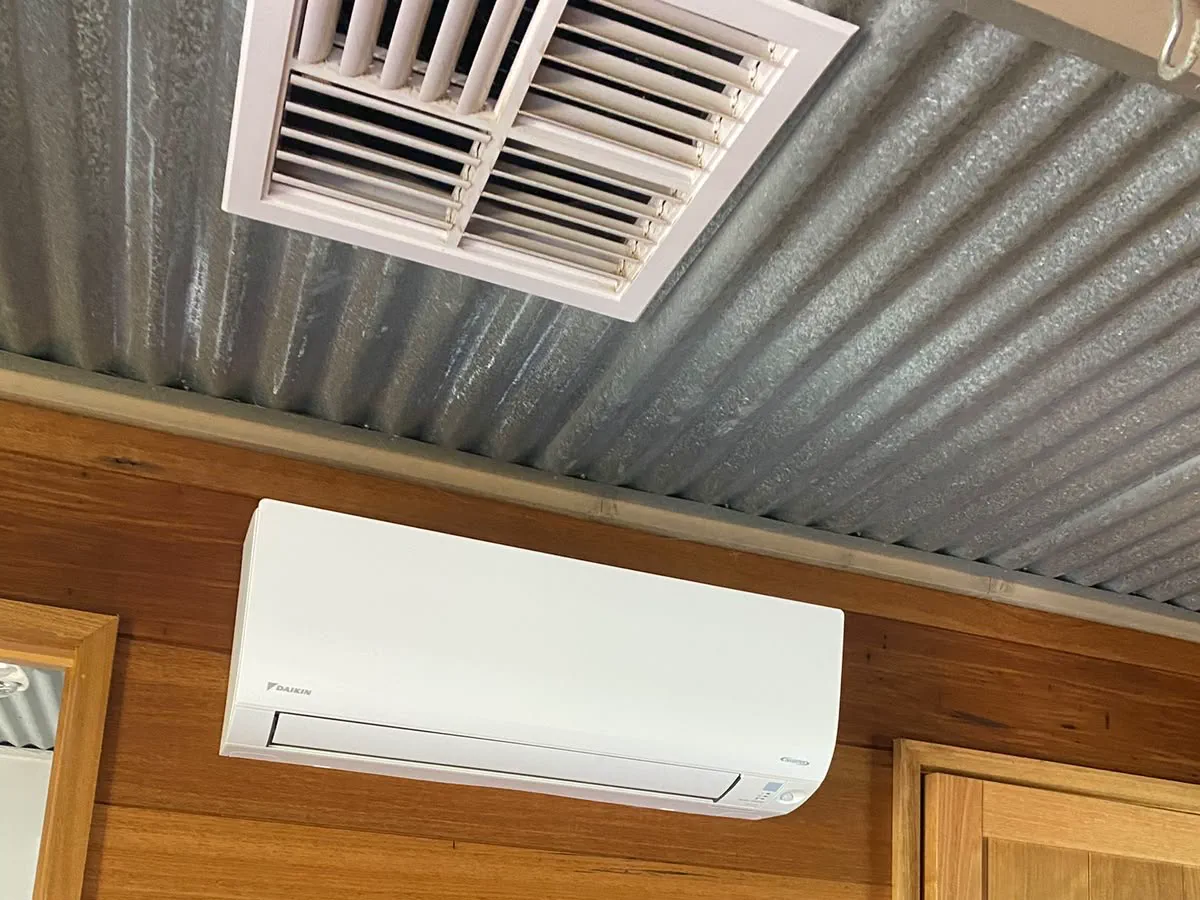
An individual split serves a room or connected area. A multi-head arrangement shares one outdoor unit between several indoor units. A ducted system distributes air through ceiling or floor outlets. Reverse-cycle equipment can provide both heating and cooling.
- Individual splits: consider visible heads and multiple outdoor locations.
- Multi-head: discuss simultaneous room use and compatible indoor units.
- Ducted: check duct access, return air, zones and service access.
- Evaporative: discuss humidity performance and the required air exit path.
Ask how the capacity was selected
A room’s area is useful, but it is not the whole sizing assessment. Large windows, afternoon sun, ceiling height, insulation and the adjoining spaces change what the system has to handle. Ask the installer to explain the assumptions, especially if two quotes recommend very different sizes.
Do not automatically repeat the old unit’s capacity. If the old installation never worked well, replacing it with the same size and position may reproduce the problem. A room that has become an office or a changed floor plan deserves a fresh look.
Check the installation details before buying
Ask where the outdoor equipment will sit, how pipework and cables will reach it and where condensate will drain. Consider noise near bedrooms, access for maintenance and the appearance of covered pipework. For a ducted system, ask how zones preserve the airflow the equipment requires.
A useful quote names the equipment and includes the electrical supply, isolation, mounting and commissioning. If old equipment is being removed, clarify what happens to old brackets, holes and paint marks. Identify any separate plastering, roofing or cabinetry work.
Choose a complete proposal
Compare the same rooms, control requirements and installation scope. A cheaper equipment package may not be cheaper once supply work and access are included. Ask what manufacturer warranty applies and what maintenance is expected.
Before the installer leaves, ask to be shown the controls, timers and filters, and what servicing the manufacturer recommends. A system that is easy to run and looked after properly is more likely to give you the comfort you paid for.
Quick answers
- Can one reverse-cycle air conditioner meet both rental heating and cooling standards?Yes.
- What is the switch next to my outdoor unit for?It's an isolating switch that cuts all power to the air conditioner, so a technician can work on the system safely without relying on the switchboard.
- My rental has no fixed heater in the living area. Is that allowed?No.
- What happens if the heater in my rental breaks after March 2027?If it can be repaired, it's repaired as an urgent repair, as it is now.
Planning advice for homeowners. Installation requirements depend on the property and equipment. Where this guide refers to Victorian safety or rental rules, use the linked official guidance for the current requirements.