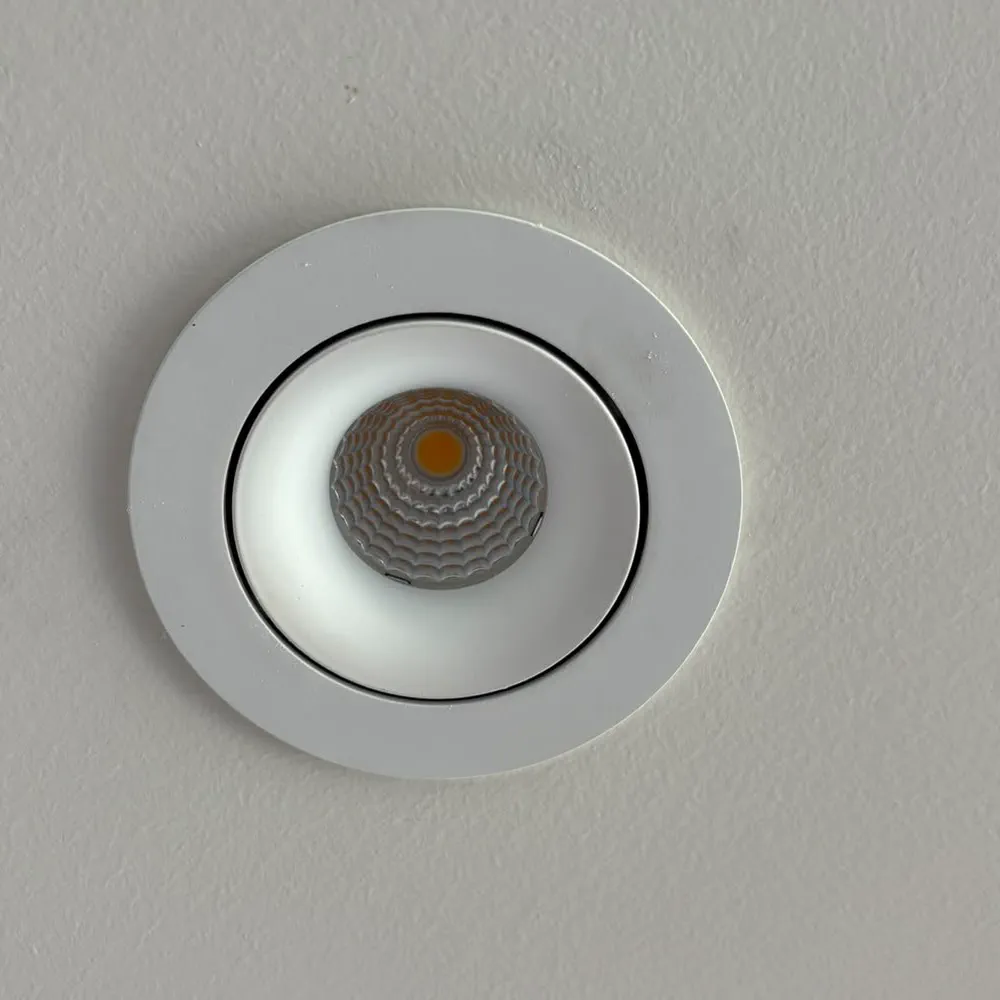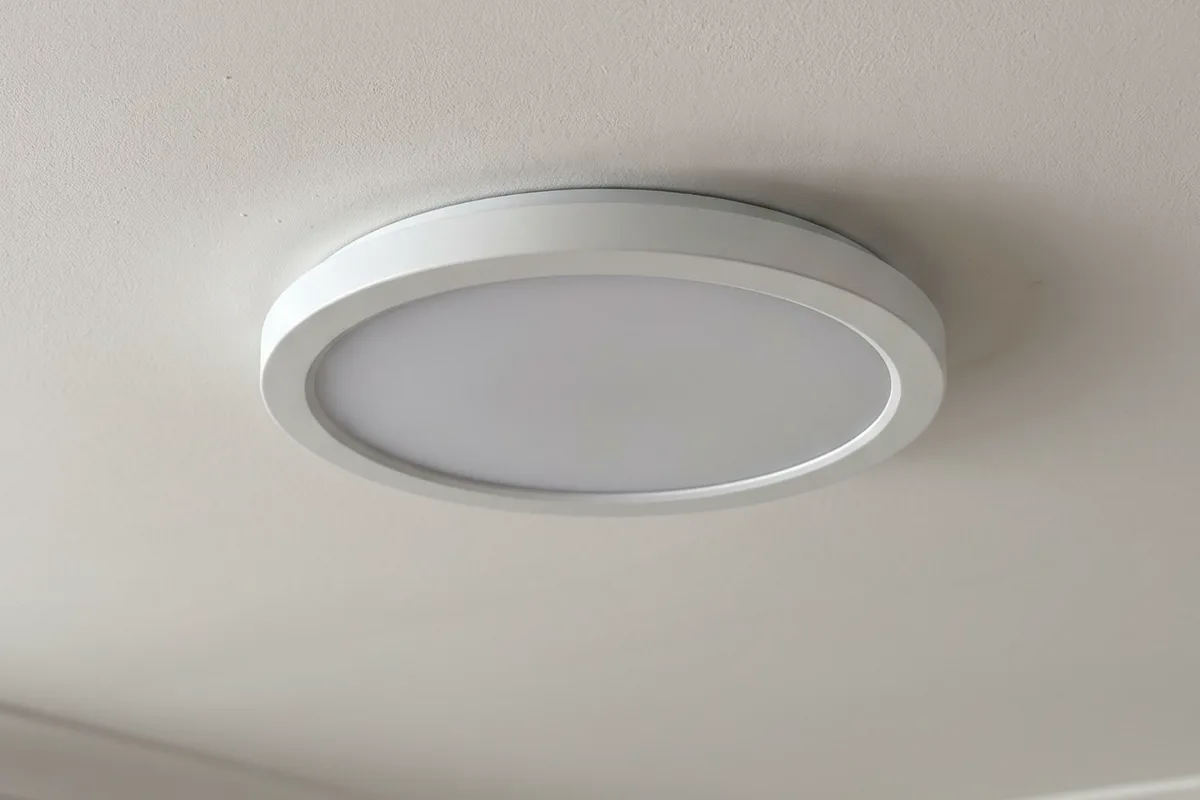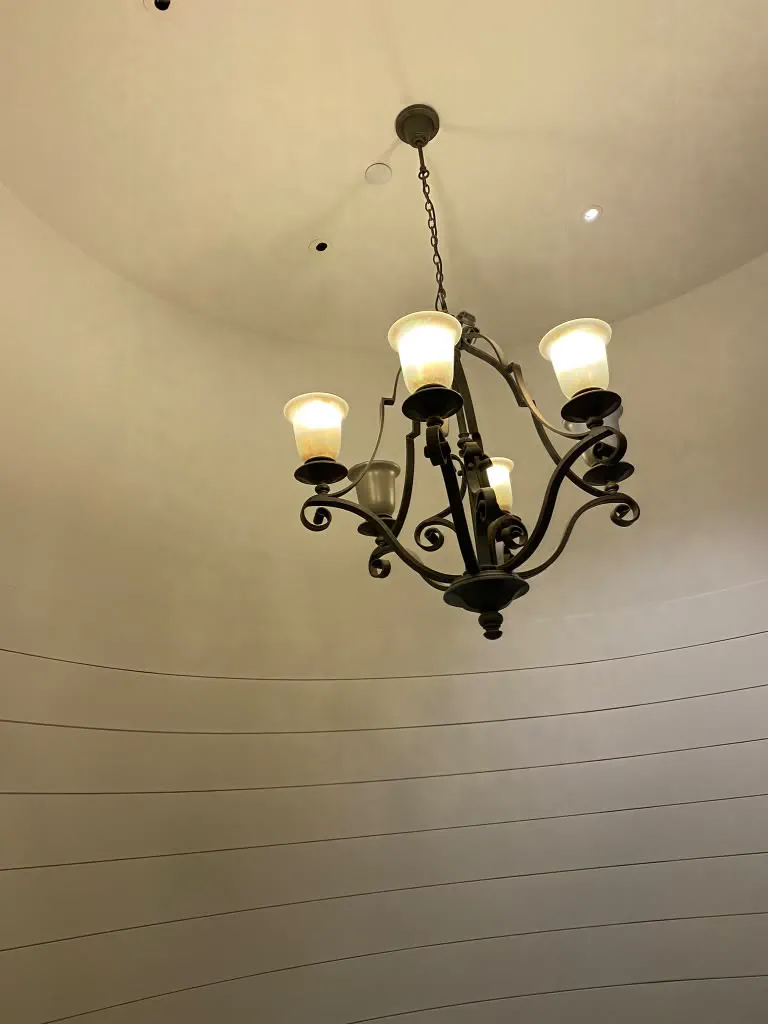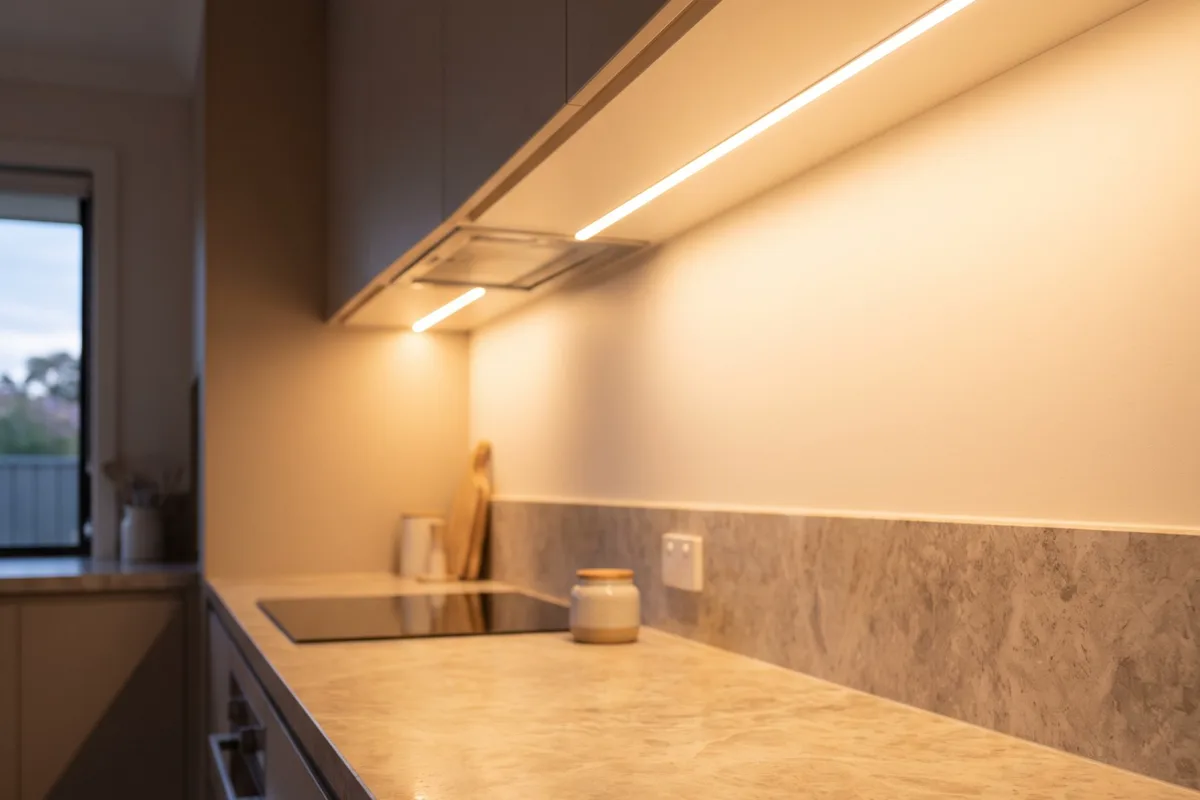
Old halogen downlights run hot and use far more power than an LED doing the same job. They also need clearance from ceiling insulation, which leaves gaps where heat escapes. We replace them with IC-rated LED downlights that can sit under insulation, match the dimmers so they don't flicker or hum, and help you choose warm or cool light for each room. We fit pendants, feature lighting and batten fittings too.
When to get it checked
Halogens that run hot and keep blowing
Halogen downlights turn much of their power into heat rather than light. Stand under a row of them after an evening on and you can feel it. If globes blow every few months, the transformer or a baked, brittle lampholder is often the real culprit.
Rings of missing insulation
A building inspection or an insulation quote often turns up batts cut back in a ring around every downlight. Each ring lets warmth out on cold, still winter nights and lets heat in on a hot north-wind afternoon.
A patchwork of whites
Yellowish halogens in the lounge, a stark blue-white LED in the hall and a fluoro in the laundry. Years of one-off replacements leave the house looking patchy, and it shows on paint and benchtops.
LED globes that flicker in old fittings
Someone has already put LED globes into a few halogen downlights, and now they flicker, hum or die early. It's a common half-finished upgrade.
Tired fluoros and oyster lights
Tubes that are slow to start, flicker at the ends or hum from the ballast are close to done. Old oyster lights and batten diffusers go yellow and brittle, and fill up with dead insects.
Why it happens
4 common causes
Gear from a different era
Halogen downlights run from transformers that age with heat, and fluoro fittings rely on ballasts and starters that wear out. Both were the efficient choice decades ago. Replacing one part at a time keeps old gear limping along.
One globe at a time
Most houses get their lights replaced as they fail, with whatever the shop had that week. Every brand's warm white is slightly different and beam spreads vary, so over the years the house drifts into a mix.
LED globes on old transformers
A retrofit LED globe draws far less than the halogen it replaces. Many older transformers need a minimum load to run properly, so they flicker, buzz or cut out, and the globe fails early.
Dimmers made for filament globes
Older dimmers were built for incandescent and halogen loads. LED drivers behave differently, so an old dimmer running a handful of LEDs can't control them smoothly.
What the job covers
What we usually do on this job. Your quote confirms it for your place.
- Old halogen downlights and transformers removed
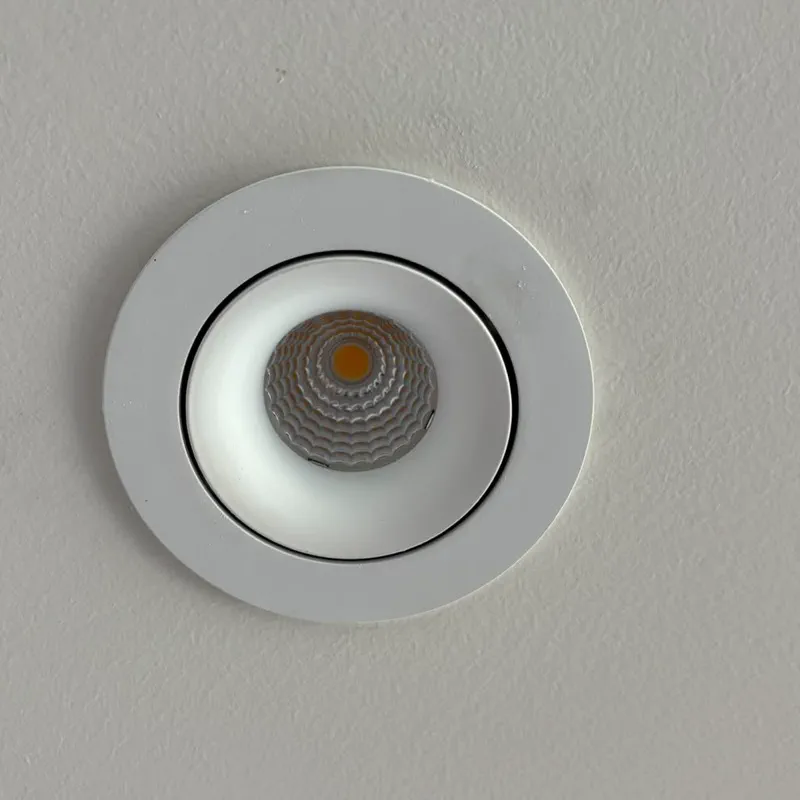
- IC-rated LED downlights fitted
- Fittings chosen to cover existing cut-outs where possible
- Colour temperature chosen room by room
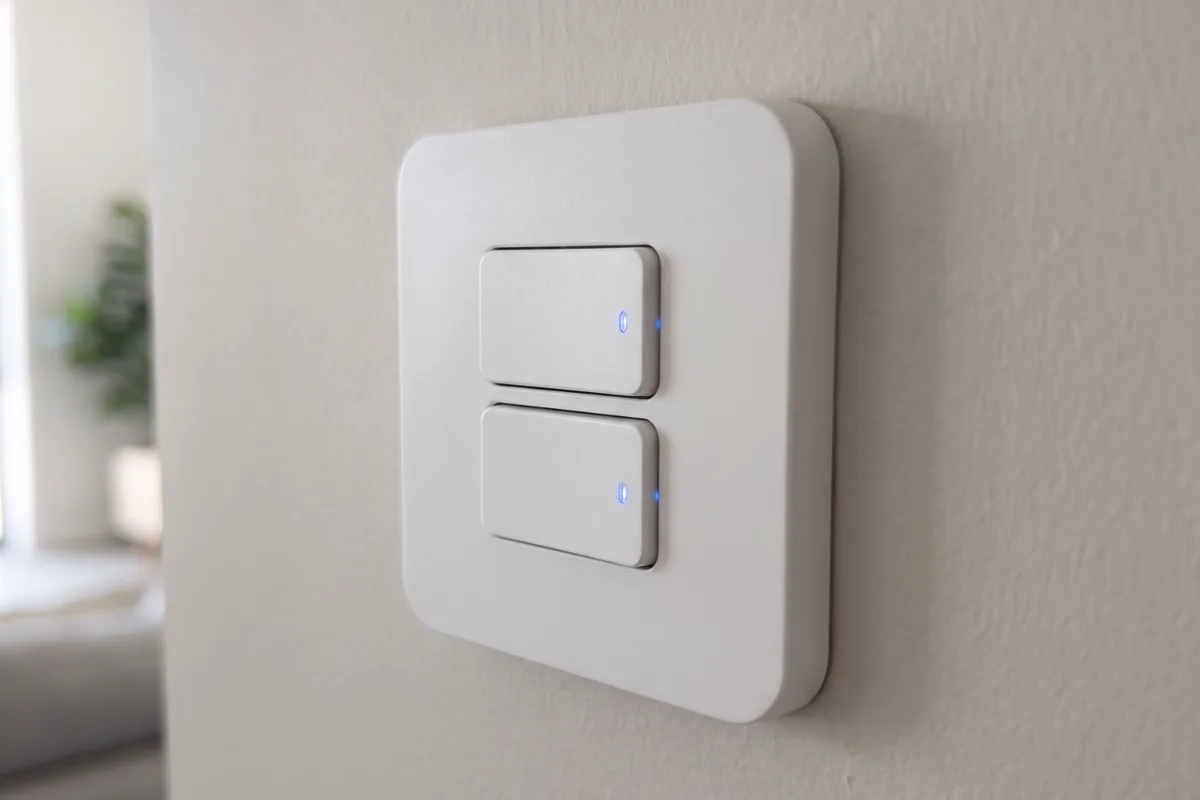
- LED-compatible dimmers fitted where you want dimming
- Old fluorescent battens replaced with LED fittings
- Pendants and feature lights installed
- Ceiling insulation laid back over IC-rated fittings
- Every light tested, including the dimming range
Your options, explained
LED globes in existing fittings
Low disruption- Best for
- Battens, oyster lights and pendants that take a standard mains globe
- How it works
- A mains-voltage LED globe goes into the existing lampholder. No wiring changes and nothing in the ceiling moves.
- Worth knowing
- Fine for simple lampholders in good condition. Not the answer for halogen downlights on transformers.
Like-for-like LED downlights
Low disruption- Best for
- Homes where the existing downlights are already in sensible places
- How it works
- Each old downlight and its transformer is replaced with a complete IC-rated LED fitting in the same hole, with matched dimmers.
- Worth knowing
- Cut-out sizes vary, so we measure first. A slightly larger fitting often covers an old hole without patching.
LED battens for fluoro fittings
Low disruption- Best for
- Garages, laundries, sheds and workshops
- How it works
- Old fluorescent battens, tubes and ballasts come out and a sealed LED batten goes in on the same point.
- Worth knowing
- Do the whole garage or laundry at once so the light is even. Damp areas need fittings rated for moisture.
Replan the lighting
Medium disruption- Best for
- Renovations, kitchens and open-plan living areas where the old layout never worked
- How it works
- We plan general, task and feature lighting around how the room is used, move or add points, and set up switching and dimming to suit.
- Worth knowing
- Easiest before painting or new plaster. Altering circuits in an older home can mean safety switch work at the board as well.
The people behind the work
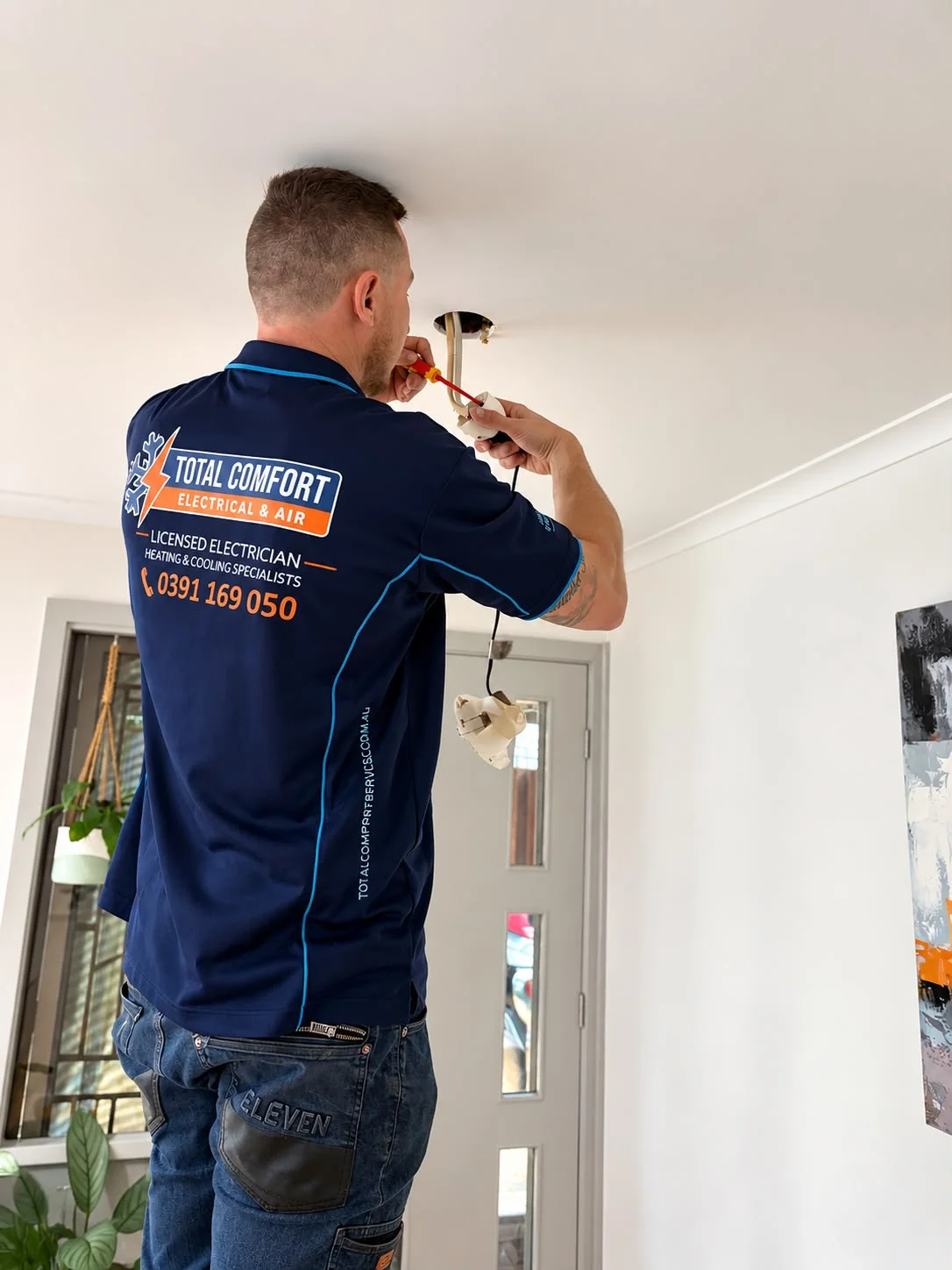
Our own photos from jobs like this one. Family-run, based in Altona Meadows, with 19 years in the industry.
Licensed electrical contractor (REC 38187)See more team photos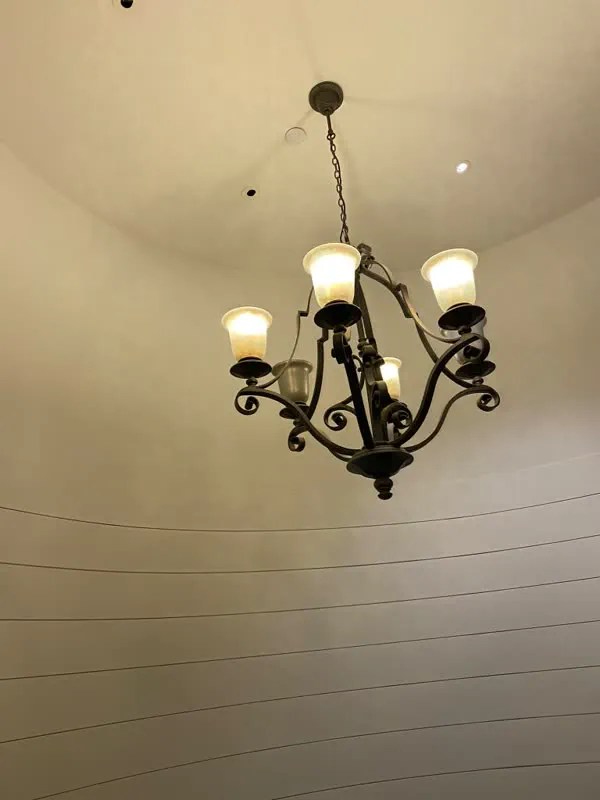
Worth knowing before you book
- Why IC-rated matters
- IC-rated downlights can be covered with insulation. Older fittings need a gap around them, which lets heat out of the house in winter and in during summer.
- Dimmers need to match
- An old dimmer with new LED globes often causes flicker, buzzing or lights that won't dim properly. Most of the time the dimmer needs replacing as well.
- Warm or cool light
- Warm white, around 3000K, suits living areas and bedrooms. Cooler white suits kitchens, laundries and garages. Some downlights let you switch between the two.
What affects the price?
The right scope depends on your installation. These are the details we check so your quote is useful, with any additional work explained before it proceeds.
How many lights, and what kind
The number of fittings drives most of the job, and most houses have a mix of downlights, battens, oyster lights and pendants.
What's in the ceiling now
Transformers, old cable, odd cut-out sizes and how the insulation was laid all change the time spent at each fitting.
Getting into the roof
A roomy tiled roof is quicker to work in than a low-pitched metal roof, the cavity between storeys, or a raked ceiling with no roof space above it.
Dimming and switching
Each dimmer or smart switch is extra hardware and set-up. Moving switches or splitting a room into separately switched groups adds cable work.
New positions and patching
Adding lights means new cable runs, and moving them leaves holes to patch. We tell you up front which holes need plaster repair and who looks after painting.
Before the visit
- Photograph the room in use and identify dark or glary areas.
- Choose whether fittings should dim and where switches should sit.
- Bring product details before purchasing lights yourself.
How it runs
- 1
Count and choose
Tell us how many lights and which rooms. We'll suggest fittings and colour temperatures.
- 2
Swap them over
Old fittings out, new LEDs in, dimmers replaced where needed.
- 3
Test
Every light and dimmer is checked before we pack up.
Step by step, in more detail
5 steps
Go through the house room by room
We list every fitting, not just the downlights: garage battens, bedroom oyster lights, the pendant over the table. We also ask what bothers you now, like glare over the couch or a hallway that's too bright at night.
Look in the roof and at the board
We check roof access, insulation, cut-out sizes, transformers and the cable at a sample of fittings. At the switchboard we look at how the lighting circuits are protected, because that can change the scope.
Settle the fittings, colours and price
We agree the fitting range, the white for each space and which lights dim. You get the price before we start, including anything we found that needs attention.
Change over one circuit at a time
Each lighting circuit is isolated before its old downlights, transformers and battens come out. New fittings go in, insulation is laid back over IC-rated ones, and dimmers are swapped for models that suit the new drivers.
Test, certify and tidy up
Every light is switched and dimmed through its range, and the work areas are cleaned up. You get a Certificate of Electrical Safety, and Energy Safe Victoria says your copy must be provided within 30 days.
What is safe to do, and what to leave to us
Safe for you to do
- Switch a light off at the wall and leave it off if it buzzes, smells hot or the fitting looks scorched.
- If a safety switch trips when a light comes on, reset it once. If it trips again, leave it off and call us.
- If a fitting is smoking or burning, keep clear and don't put water on it. If there's fire, get everyone out of the house.
- Tell us if insulation or stored boxes are sitting against old downlights, so we check those first.
- Photograph a few fittings from below and keep the product details of any lights you've already bought.
Leave these to us
- Swapping downlights, switches or dimmers yourself. Energy Safe Victoria says electrical work isn't a DIY job, even for small jobs like changing light switches.
- Pushing insulation back over old halogen downlights or their transformers.
- Climbing into the roof to check old fittings, transformers or cables yourself.
- Adding more LED globes to halogen transformers and old dimmers and hoping the flicker settles.
When to get us in
- Halogen globes keep blowing, or lampholders look brown and brittle
- New LEDs flicker, buzz or won't dim properly
- A fitting smells hot, looks scorched or a switch plate feels warm
- Insulation is going into the roof and there are old downlights in the ceiling
- You're renovating and want the lighting planned before the plaster goes up
- You manage a rental and a room has no working light at night
More detail
Why a new fitting usually beats a new globe
A halogen downlight is a lampholder, a transformer and a housing built around heat. Swapping in an LED globe keeps all three, including the parts most likely to fail. A complete LED fitting replaces the lot with a matched driver, runs cooler and can be rated to sit under insulation. For plain mains lampholders in battens and pendants, a good LED globe is often all you need.
Choosing the colour of light
Warm white suits living rooms and bedrooms, where the house should feel settled at night. Neutral or cool white suits kitchens, laundries and garages. Keep to one white in each space and buy it from one range, because two brands' warm whites rarely match side by side. Cheaper LEDs can also make food and skin look flat, so how true colours look matters as much as brightness.
Insulation, heat and the roof space
Older downlights need clear space around them, so the insulation was cut back or guarded at each one. IC-rated LED downlights are built to be covered, which means those gaps can finally be closed. If new insulation is planned, sort the old fittings, transformers and cables first, so nobody has to lift it again later.
What we find in older ceilings
Above old halogens we often find cable with baked, brittle insulation, transformers buried in batts, and joints wrapped in tape. When we come across something like that, we stop, show you and explain the options before going further. A lighting upgrade is a practical time to find these problems, because every fitting is already open.
Local rules and conditions
Victorian requirements and local conditions that shape this job, with the sources listed at the foot of the page.
Rental lighting rules and checks
Victoria's rental minimum standards say inside rooms, corridors and hallways must have access to light, with artificial light at night. Since 29 March 2023, rental lighting circuits must connect to a switchboard-type circuit breaker and safety switch. Rental providers who entered a new agreement after 29 March 2021 must also have all electrical installations and fittings checked by a licensed electrician at least once every 2 years.
Before rental ceiling insulation goes in
New rental energy efficiency standards come into effect in phases from 1 March 2027, and ceiling insulation is one of the areas covered. That standard requires a licensed electrician to complete an electrical safety checklist and address any electrical issues within 30 days before insulation is installed.
Post-war Altona and period Newport
The Hobsons Bay planning scheme aims to preserve intact post-war brick and weatherboard homes in Altona's Special Character Areas. Newport's Estate precinct is mostly single-storey Victorian, Federation and Interwar weatherboards with terracotta tile or corrugated iron roofs. Energy Safe Victoria says the wiring should be checked in any house built more than 30 years ago.
Useful reading
Guides to read before you decide, with checklists and questions to bring to the quote.
- A room-by-room lighting plan that goes beyond more downlightsPlan task lighting, comfortable evening light and outdoor coverage around how each space is used.
- Downlights, ceiling insulation and fire riskWhy old halogen downlights and their transformers need space in the roof, what IC-rated LED fittings change, and why the lights come before the insulation.
- The electrical decisions to make before your renovation walls closePlan appliances, lighting, outlets and future upgrades while access and options are still available.
- What electrical work you can and can't do yourself in VictoriaWhere Victorian law draws the line on home electrical work, the short list of jobs that are yours, and what to do when a job goes past it.
Common questions
Questions people ask about this
- Why do my LED lights buzz or hum?Most buzzing LEDs come from a mismatch rather than a fault: a dimmer built for old halogen globes, an LED driver that doesn't suit the dimmer, an old transformer left in…
- Why do my light globes keep blowing?Globes that fail early usually have help.
- Why has the ceiling around my light gone brown?A brown ring hugging the edge of a light is usually heat or dust.
- One downlight has stopped working. Is it the globe or the fitting?Check whether it has a removable globe.
- Why does my two-way light switch only work from one end?A light switched from two places relies on two switches joined by a pair of wires, so either switch can redirect the power.
From the blog
- Are cheap online chargers, power boards and lights safe?Online marketplaces sell chargers, power boards, smart plugs and lights that may not meet Australian standards. What to check before you buy, plug in or install.
- Oyster lights or downlights for bedrooms and hallways?One good oyster often beats a row of downlights in a bedroom or short hall: no glare, fewer holes and no roof crawl. Downlights still win in some rooms.
- Smart switches or smart globes: which is better?Smart globes are easy and renter-friendly, but go offline the moment someone flicks the wall switch. For whole rooms, smart switches are usually the better choice.
Sources for the rules and local facts on this page
14 sources, with the date each was checked
- 1.Consumer Affairs Victoria: Inside rooms, corridors and hallways must have access to light to make the areas functional. During the day, natural light can include light borrowed from an adjoining room. At night, renters should have access to… Accessed 30 September 2026.
- 2.Consumer Affairs Victoria: From 29 March 2023 all power outlets and lighting circuits in a rental premises must connect to both a switchboard-type circuit breaker that complies with AS/NZS 3000 and a switchboard-type residual current device that… Accessed 30 September 2026.
- 3.Consumer Affairs Victoria: New minimum energy efficiency standards for residential rental properties come into effect in phases from 1 March 2027. The new standards cover 6 areas: heating cooling hot water shower heads ceiling insulation… Accessed 30 September 2026.
- 4.Consumer Affairs Victoria: The standard also requires an electrical safety checklist to be completed and any electrical issues to be addressed by a licensed electrician within 30 days before the installation of insulation. If the insulation… Accessed 30 September 2026.
- 5.Victorian Government, Hobsons Bay Planning Scheme (PDF snapshot, last updated by VC292 on 11/09/2025): SPECIAL CHARACTER AREAS, ALTONA 1.0 24/02/2022 C131hbay Neighbourhood character objectives To preserve the characteristics of the neighbourhood, comprising intact post-war brick and weatherboard dwellings with… Accessed 30 September 2026.
- 6.Victorian Heritage Database (Heritage Council Victoria); entry maintained by Hobsons Bay City Council from the Hobsons Bay Heritage Study 2006: Aesthetically, it is significant for the groups of relatively intact examples of representative housing, from the Victorian, Federation and Interwar periods. They are notable for their consistent character, which is… Accessed 30 September 2026.
- 7.Energy Safe Victoria: Old switchboards, particularly those without a safety switch Old power switches or power points, particularly broken ones Flickering lights Sparks from switchboards, switches or power points. If your house is over 30… Accessed 30 September 2026.
- 8.Energy Safe Victoria: Gas and electricity are inherently dangerous and it’s illegal and potentially fatal for unlicensed and unqualified people to undertake any electrical or gasfitting work. Homeowners and consumers must always use… Accessed 30 September 2026.
- 9.Energy Safe Victoria: Electrical work isn’t a DIY job, even for small jobs such as changing power points or light switches. Accessed 30 September 2026.
- 10.Victorian Legislation (legislation.vic.gov.au) - Electricity Safety Act 1998, authorised version 089 (effective 8 Sep 2026): electrical installation work means installation, alteration, repair or maintenance of an electrical installation; Accessed 30 September 2026.
- 11.Energy Safe Victoria: Whenever a licensed electrician completes any electrical installation work, they must provide a Certificate of Electrical Safety (COES). Accessed 30 September 2026.
- 12.Energy Safe Victoria: For electrical installation work performed within your electrical installation including but not limited to lights, power points, air conditioning, hot water service etc. Accessed 30 September 2026.
- 13.Energy Safe Victoria: Locate your electricity box outside your home and check whether the safety switch has tripped. If it has tripped, reset the switch. If the switch won’t reset, call a licensed electrician. Accessed 30 September 2026.
- 14.Energy Safe Victoria: Clause 2.6.3.2.5 of the Wiring Rules states: Additional protection by RCDs shall be provided in existing electrical installations where alterations or a switchboard replacement is completed. Accessed 30 September 2026.