
The key points
- Place light around tasks and furniture before choosing fitting counts.
- Dimming depends on compatible fittings, drivers and controls.
- Outdoor light should be aimed where it is useful.
Start with a floor plan and three questions
For each room, ask what people do there, what they need to see and how the room should feel in the evening. Mark furniture and work surfaces before marking lights. This makes it easier to notice when a fitting would shine into someone’s eyes or leave their hands working in shadow.
Photograph the room during the day and after dark. Note which existing lights you actually use and which stay off because they are uncomfortable. That gives the electrician a concrete brief instead of a request for a larger number of fittings.
Kitchen and dining: follow the work surfaces
Plan preparation light where hands work, then consider pendants or a separate dining light for the social part of the room. A pendant should relate to the island or table, which may not sit in the centre of the ceiling. Confirm final cabinetry and furniture positions before new points are cut.
For a customer-supplied pendant, send the weight, dimensions and installation instructions. Support, drop height and dimmer compatibility can change the installation. Agree who patches any old light positions if a point is moved.
Living spaces and bedrooms: control matters
A room can need bright light for cleaning and softer light for relaxing. Separate switched groups or compatible dimming give more flexibility than a single all-on circuit. Consider whether lamps, reading lights or a ceiling fan with a light already cover part of the need.
Check light positions against television reflections, beds and sofas. In a bedroom, think about how lighting is switched when entering the room and when settling down. Plan power points for bedside lamps and charging at the same time rather than dealing with leads later.
Outside: light the route and manage the glare
Mark gates, steps, paths and locks that need visibility. Aiming a controlled light at the route can be more useful than flooding the whole garden. Sensor position should consider moving vegetation and passing traffic, and the fitting should suit the weather exposure.
For floodlight cameras, choose a view that serves the entry and check Wi-Fi at that location. A position that works for a light may be too high or badly angled for the camera. Plan buried cabling before completing paths or landscaping.
- Entry and side-path visibility.
- Glare toward bedroom windows or neighbours.
- Garden growth and maintenance access.
- Sensor range, manual control and camera connection.
Choose fittings as part of a complete system
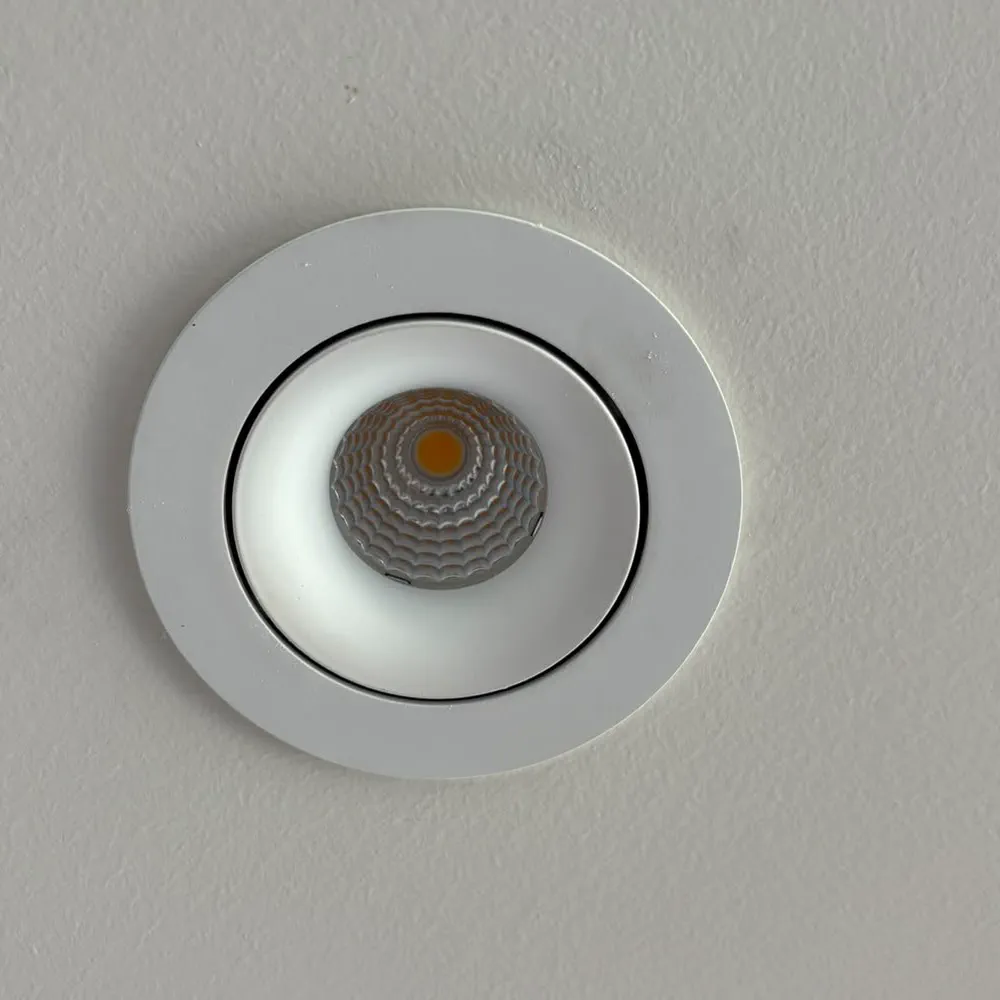
Confirm colour temperature, brightness, beam spread and how fittings will dim. An old dimmer is not automatically compatible with a new LED driver. Replacement downlights also need the correct cut-out and a rating appropriate to their installed conditions.
Ask the quote to identify fittings, control changes and making-good work. Keep fitting and driver models with the installation paperwork so future replacements can be matched. A photo of the packaging label is useful when the fitting itself is difficult to reach.
Quick answers
- Why does my two-way light switch only work from one end?A light switched from two places relies on two switches joined by a pair of wires, so either switch can redirect the power.
- One downlight has stopped working. Is it the globe or the fitting?Check whether it has a removable globe.
- Why do my LED lights buzz or hum?Most buzzing LEDs come from a mismatch rather than a fault: a dimmer built for old halogen globes, an LED driver that doesn't suit the dimmer, an old transformer left in…
- Why has the ceiling around my light gone brown?A brown ring hugging the edge of a light is usually heat or dust.
Planning advice for homeowners. Installation requirements depend on the property and equipment. Where this guide refers to Victorian safety or rental rules, use the linked official guidance for the current requirements.