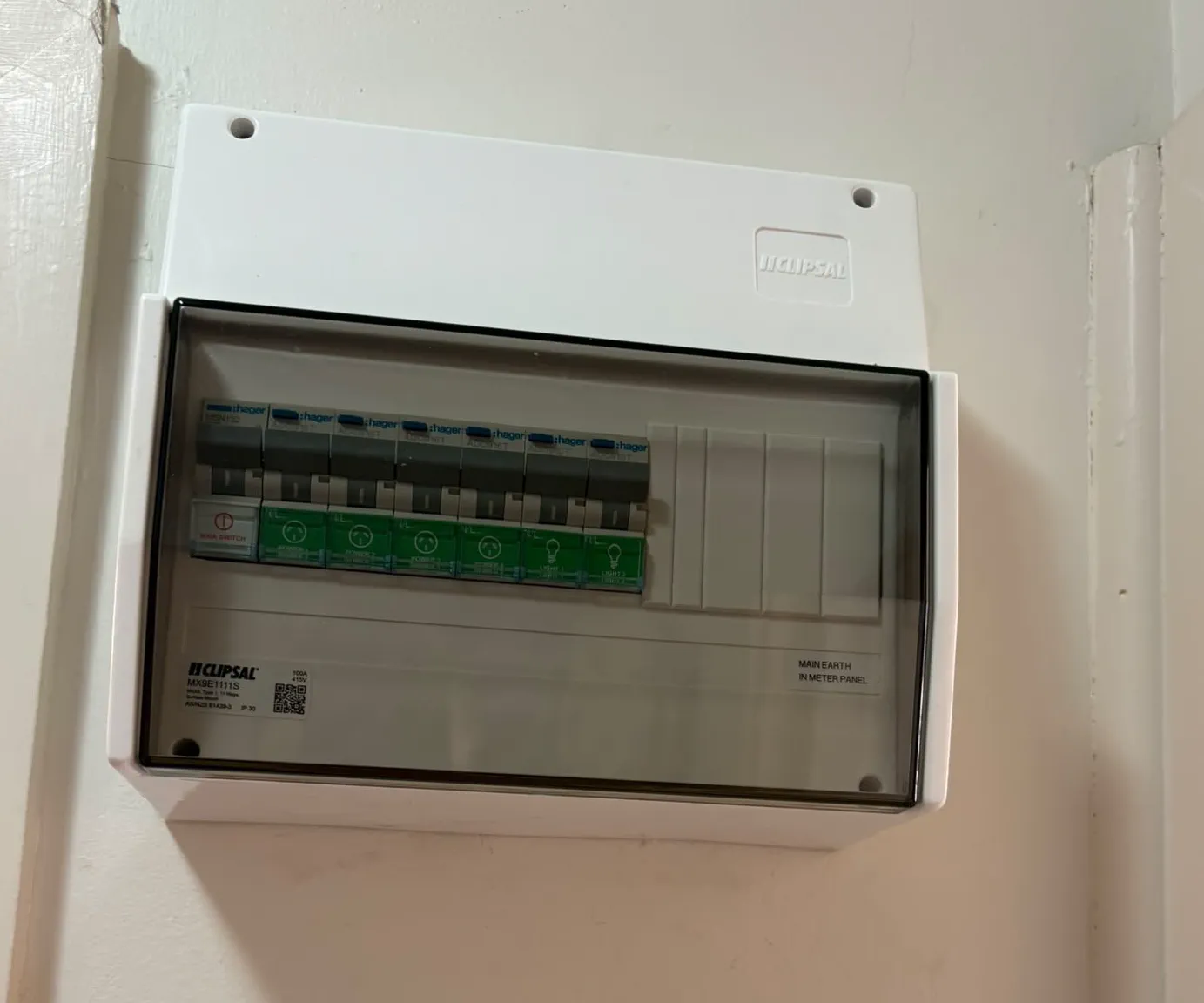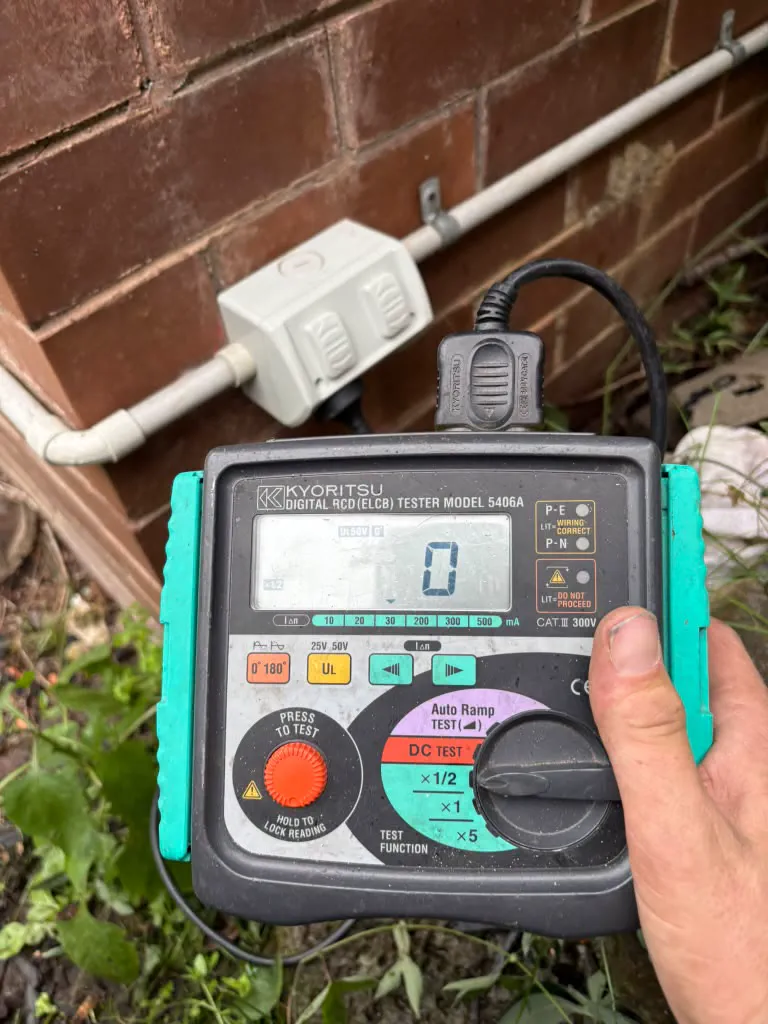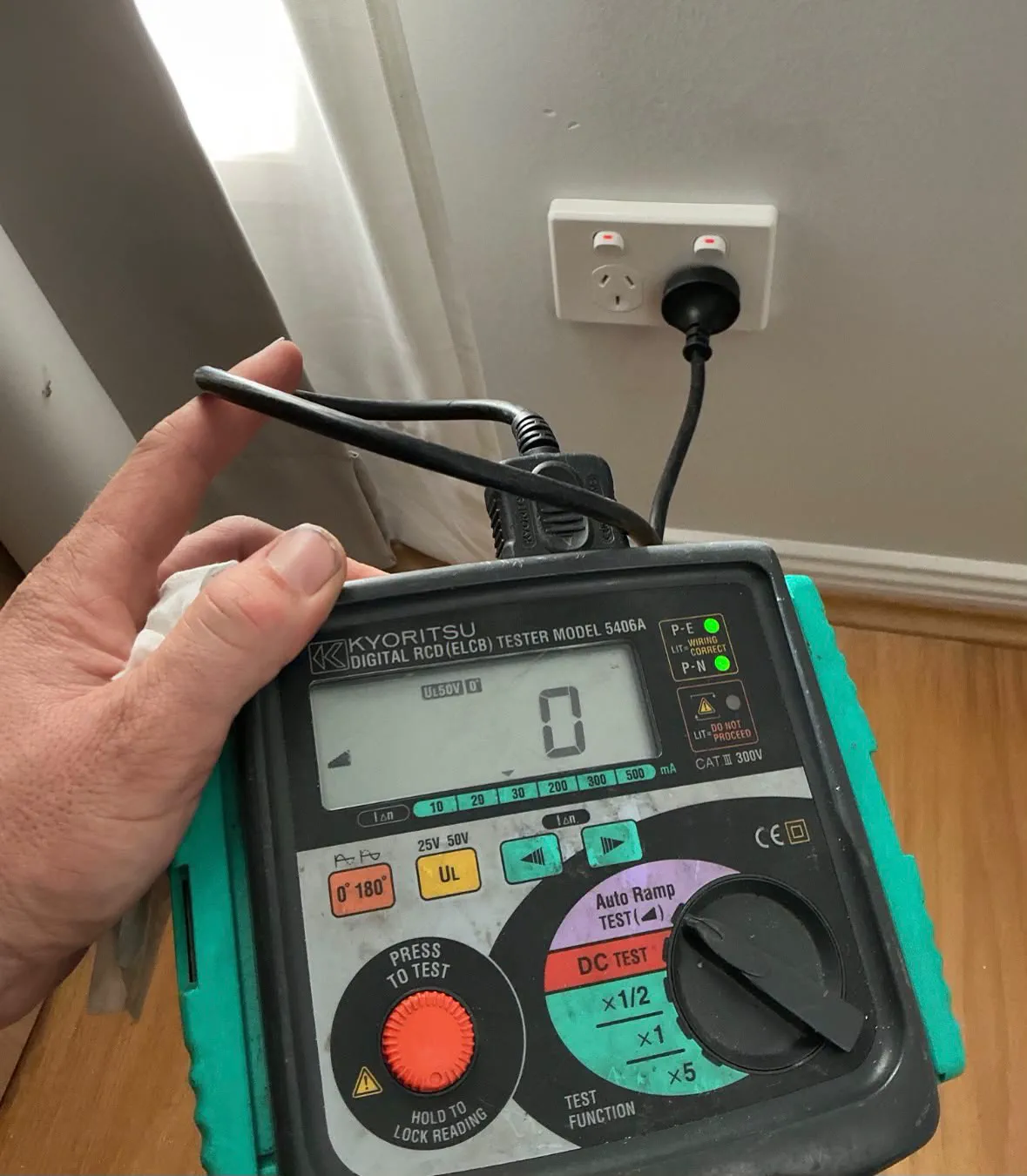
A safety switch that won’t stay on, or doesn’t cut the power when tested, needs a licensed electrician. It’s often reacting to a fault, so we test its circuits first. If the device has failed, we replace and trip-test it.
When to get it checked
The test button does nothing
You press test, there’s no clunk, and the lights on that switch stay on.
The lever won’t latch
It drops as you let go, even with that circuit’s appliances unplugged. That can be the device, or something hard-wired such as an oven.
Cracked, stuck or scorched
A cracked case, a test button stuck in, brown marks, buzzing or a burnt-plastic smell. Keep clear and don’t try to reset it.
Too slow on the tester
An RCD tester showed it trips too slowly, or not at all, even though the button seems to work.
Why it happens
4 common causes
Wear in the trip mechanism
The spring-loaded latch inside can stick after years without a test, or let go too slowly.
Loose or overheated terminals
A loose terminal runs hot, damaging the device and sometimes the busbar or neutral link beside it.
Neutrals crossed between switches
On altered boards, a circuit’s neutral can land on a different safety switch from its active. It trips under load, and a new device won’t cure it.
It’s really a circuit fault
Water in an outdoor point, a failing oven element, a nicked cable or several slightly leaky appliances will trip a healthy switch.
What the job covers
What we usually do on this job. Your quote confirms it for your place.
- Suspect switch checked with an RCD tester
- Insulation tests on the circuits it protects
- Neutrals checked between safety switches
- Faulty switch replaced with a type allowed today
- Terminals and busbar checked for heat damage
- New switch trip-tested
- Switchboard labels updated
- Certificate of Electrical Safety issued
Your options, explained
Fix the circuit, keep the switch
Low disruption- Best for
- A healthy switch tripping on a real fault
- How it works
- We repair the leak to earth, such as a wet outdoor point.
- Worth knowing
- A new switch here would trip the same way.
Replace the faulty switch
Low disruption- Best for
- A sound board with a failed or slow device
- How it works
- A new device of a type allowed today takes over the same circuits.
- Worth knowing
- Simplest, but one fault still cuts that whole group.
Move its circuits onto RCBOs
Medium disruption- Best for
- One switch covering half the house
- How it works
- Each circuit gets its own combined breaker and safety switch.
- Worth knowing
- A fault cuts only its own circuit, but it needs board space.
Replace the switchboard
High disruption- Best for
- Old boards with no room, or no parts that fit
- How it works
- A new board gets safety switches on all final sub-circuits.
- Worth knowing
- A new main switchboard stays off until a Licensed Electrical Inspector has checked it.
The people behind the work
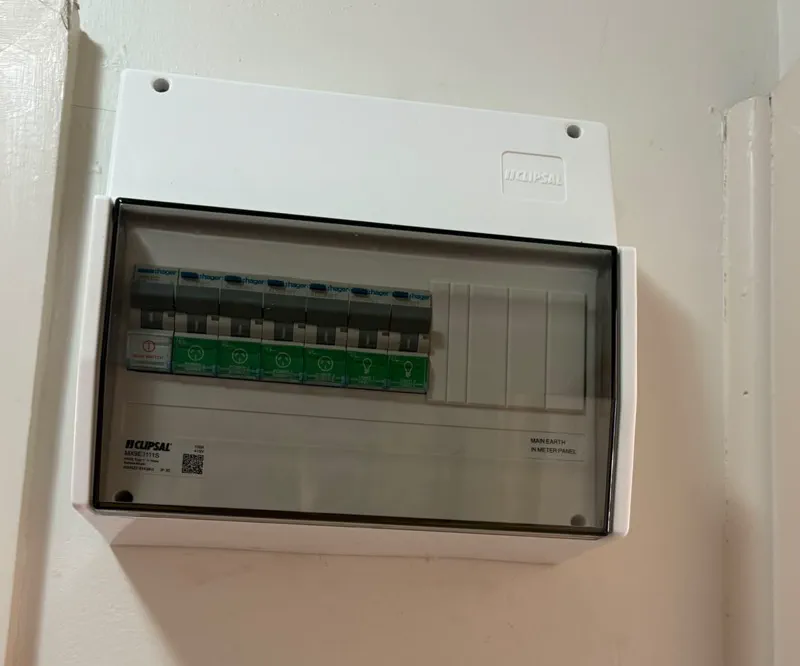
Our own photos from jobs like this one. Family-run, based in Altona Meadows, with 19 years in the industry.
Licensed electrical contractor (REC 38187)See more team photos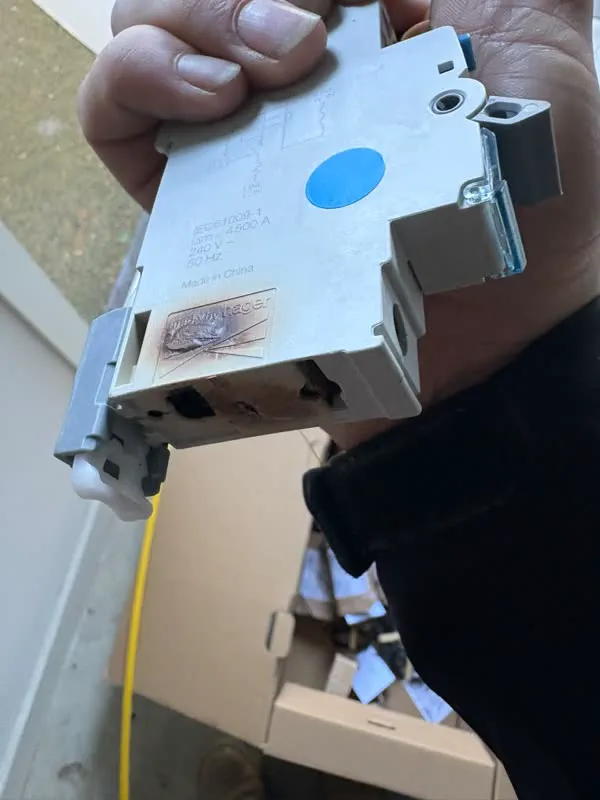
Worth knowing before you book
- Tripping isn’t failing
- A switch that won’t reset is usually reacting to a fault. We test first.
- Tell us what’s on it
- Fridges or medical equipment on the dead circuits help us plan.
- The new one may differ
- Type AC switches can’t be installed any more, even like for like.
What affects the price?
The right scope depends on your installation. These are the details we check so your quote is useful, with any additional work explained before it proceeds.
What testing finds
Clean circuits mean a straight swap. A fault on one adds a repair, priced once it’s found.
One switch or several RCBOs
RCBOs mean more devices, wiring and testing than one replacement switch.
Space and heat damage
Older rails may not suit current devices, and a cooked terminal can take the busbar or neutral link with it.
What the board is made of
WorkSafe Victoria lists switchboards and their backing boards among typical places for asbestos, particularly in buildings built or renovated before the late 1980s, so we check before disturbing anything.
How it runs
- 1
Tell us what happened
What tripped, and does the test button work?
- 2
Test circuits and switch
Is it the switch or a circuit?
- 3
Replace and retest
A compliant switch goes in, trip-tested.
- 4
Label and certify
Labels updated, certificate issued.
Step by step, in more detail
5 steps
Hear what happened
What tripped, when, and does the test button work? A photo of the board, door open and covers on, helps if it’s safe to take.
Test the circuits
With the supply isolated, we insulation-test each circuit behind the switch and check where every neutral lands.
Test the switch
An RCD tester shows whether it trips at its rated leakage current, and how fast. Then you get the price before we start.
Swap the device
With the supply off, a type allowed today goes in, terminals tightened and each neutral on the right device.
Retest and certify
The new switch is trip-tested, labels are updated and you get a Certificate of Electrical Safety.
What is safe to do, and what to leave to us
Safe for you to do
- Unplug what was on the dead circuit, then reset the safety switch once. Energy Safe Victoria says to call a licensed electrician if it won’t reset.
- Press each test button every three months, as Energy Safe Victoria advises.
- Keep clear of a hot, buzzing or scorched board, and if there's smoke or fire, get everyone out.
Leave these to us
- Taping, wedging or holding the lever up.
- Taking the board cover off, or bridging the switch.
- Running extension leads from a working circuit to the dead one.
- Fitting a replacement yourself. Energy Safe Victoria says electrical work by unlicensed people is illegal and potentially fatal.
When to get us in
- The test button doesn’t cut the power
- It won’t stay on after one reset
- Heat, scorching or a burning smell at the board
- A tingle or shock from a tap or appliance
More detail
How we tell a faulty switch from a faulty circuit
We disconnect the circuits behind the safety switch, see whether it holds with nothing connected, then trip-test it. If it holds and passes, we reconnect the circuits one at a time until it drops, then insulation-test that circuit. A new switch only makes sense when the old one fails on its own.
Why the new switch may not match the old one
If your old switch is a Type AC, the new one won’t be. Energy Safe Victoria says Type AC safety switches must not be installed in Australia, even like for like, and AS/NZS 3000 bars them from 30 April 2023. A newer type may also differ in width or neutral connection, so we check the board before quoting.
Your certificate, and whether an inspection applies
Replacing a safety switch is repair work on an electrical installation, so you get a Certificate of Electrical Safety. Energy Safe Victoria lists the main switchboard as prescribed work, needing a Licensed Electrical Inspector, but says regulation 249(4) lets replacing a single component part of prescribed work be excluded from the prescribed certificate and inspection.
Local rules and conditions
Victorian requirements and local conditions that shape this job, with the sources listed at the foot of the page.
If you rent and a safety switch fails
Since 29 March 2023, every power outlet and lighting circuit in a Victorian rental must connect to a switchboard-type circuit breaker and safety switch. Consumer Affairs Victoria’s legal list of urgent repairs, which rental providers must make immediately, includes a dangerous electrical fault and a safety-related device, such as a smoke alarm or pool fence, that isn’t working.
A Victoria-only rule on RCBOs
After 3 July 2019, supplying a consumer in Victoria with a prohibited RCBO became an offence, and the ban applies only here. One bought interstate or online isn’t automatically suitable, so we supply the parts we fit.
Older boards in Altona, Laverton and Sunshine
Post-war expansion transformed Altona and Laverton, and pre- and post-war homes characterise Sunshine. Energy Safe Victoria says wiring in a house built more than 30 years ago should be checked, so when one switch fails on a board that age, we look over the rest.
Useful reading
Guides to read before you decide, with checklists and questions to bring to the quote.
- A safety switch keeps tripping: what to record and when to callUnderstand the difference between a protective device doing its job and a fault that needs investigation.
- How and when to test your safety switchesHow to run the push-button test at home, what an electrician’s trip-time test measures that the button can’t, and what to do when a switch fails.
- Certificates of Electrical Safety explainedWhat a Victorian COES records, how prescribed and non-prescribed work differ, when your copy should arrive and why it belongs in your house file.
- Renting and the power or heating has failed: what to doNo power or a dead heater in a Victorian rental? What to check safely, what counts as urgent, how to report it, and what to do if nobody responds.
Common questions
Questions people ask about this
More in the Help centreSources for the rules and local facts on this page
16 sources, with the date each was checked
- 1.Consumer Affairs Victoria: From 29 March 2023 all power outlets and lighting circuits in a rental premises must connect to both a switchboard-type circuit breaker that complies with AS/NZS 3000 and a switchboard-type residual current device that… Accessed 30 September 2026.
- 2.Consumer Affairs Victoria: Anything on this list is legally defined as an urgent repair: burst water service blocked or broken toilet system serious roof leak gas leak dangerous electrical fault flooding or serious flood damage serious… Accessed 30 September 2026.
- 3.Energy Safe Victoria: After 3 July 2019, it is an offence for any person to supply a consumer in Victoria with a prohibited RCBO. No, the prohibition is only applicable in Victoria. Accessed 30 September 2026.
- 4.Victorian Government, Hobsons Bay Planning Scheme (PDF snapshot, last updated by VC292 on 11/09/2025): The heritage places of Hobsons Bay reflect the key themes that have shaped the development of the city since the establishment of Williamstown in the 1840s as the first port of Melbourne, through the development of… Accessed 30 September 2026.
- 5.Victorian Electoral Commission (2023 electoral structure review fact sheet): Pre- and post-war homes characterise the established suburbs of Sunshine, St Albans and Deer Park. The more recently developed suburbs of Cairnlea, Sydenham, Hillside, and Derrimut feature more contemporary housing. Accessed 30 September 2026.
- 6.Energy Safe Victoria: Old switchboards, particularly those without a safety switch Old power switches or power points, particularly broken ones Flickering lights Sparks from switchboards, switches or power points. If your house is over 30… Accessed 30 September 2026.
- 7.Energy Safe Victoria: Locate your electricity box outside your home and check whether the safety switch has tripped. If it has tripped, reset the switch. If the switch won’t reset, call a licensed electrician. Accessed 30 September 2026.
- 8.Energy Safe Victoria: Gas and electricity are inherently dangerous and it’s illegal and potentially fatal for unlicensed and unqualified people to undertake any electrical or gasfitting work. Homeowners and consumers must always use… Accessed 30 September 2026.
- 9.Energy Safe Victoria: Type AC RCDs must not be installed in Australia. This includes like for like replacement. We recommend that electrical contractors advise customers of the new requirements. However, it is not mandatory to replace… Accessed 30 September 2026.
- 10.WorkSafe Victoria: A person who has management or control of a workplace, and employers or self-employed persons and employees should be aware of the typical uses and applications of ACMs, particularly in buildings constructed or… Accessed 30 September 2026.
- 11.Victorian Legislation (legislation.vic.gov.au) - Electricity Safety Act 1998, authorised version 089 (effective 8 Sep 2026): electrical installation work means installation, alteration, repair or maintenance of an electrical installation; Accessed 30 September 2026.
- 12.Energy Safe Victoria: Whenever a licensed electrician completes any electrical installation work, they must provide a Certificate of Electrical Safety (COES). Accessed 30 September 2026.
- 13.Energy Safe Victoria: 'Prescribed' certificates are for electrical installation work that requires inspection by a Licensed Electrical inspector. This includes (but is not limited to): Consumer mains cables, main switchboard, meter box and… Accessed 30 September 2026.
- 14.Energy Safe Victoria: In effect, Regulation 249(4) allows the repair or maintenance (including replacement) of a single component part of an electrical installation that is classified as prescribed electrical installation work to be excluded… Accessed 30 September 2026.
- 15.Energy Safe Victoria: The electrician has eight business days after the work is completed to have that work inspected by a licensed electrical inspector (LEI). If an electrician replaces a main switchboard at a property, power cannot go back… Accessed 30 September 2026.
- 16.Energy Safe Victoria: If a switchboard is required to be replaced then as per clause 2.6.3.2.5 (Alterations to installations and replacement of switchboards) of AS/NZS 3000: RCD’s are required on all final sub-circuits. Accessed 30 September 2026.