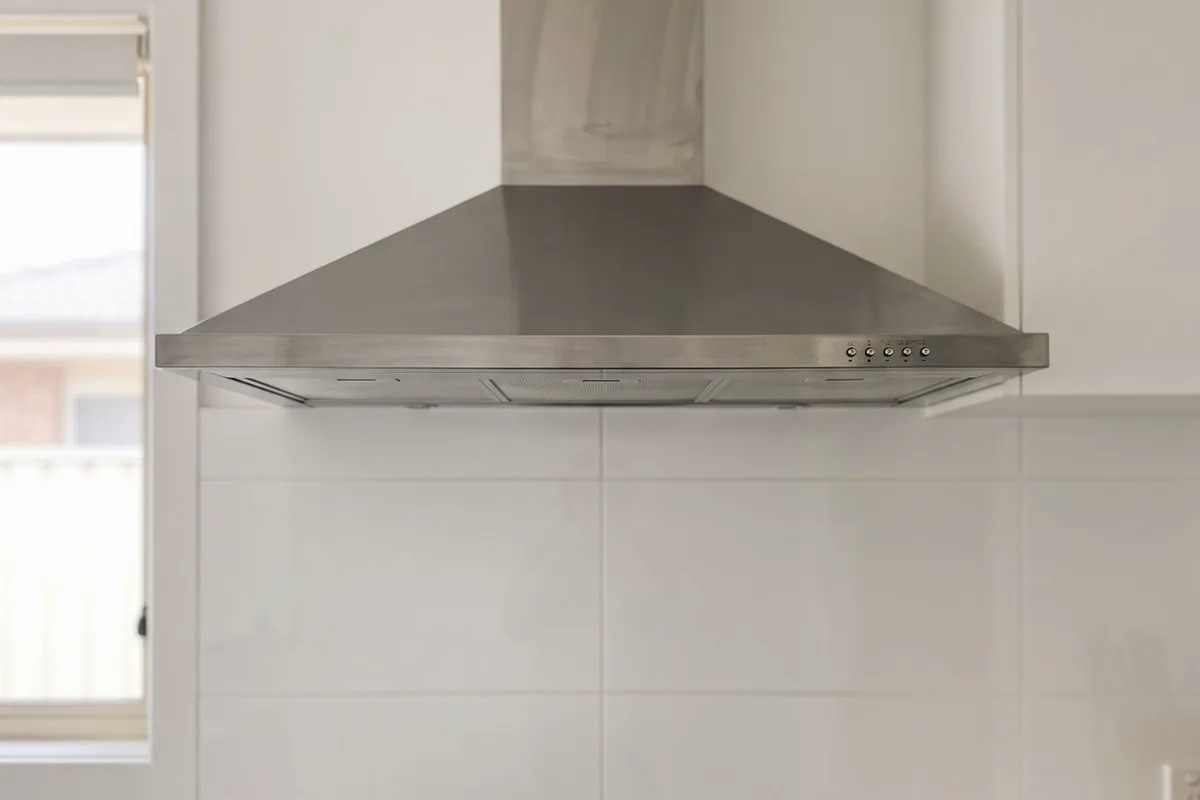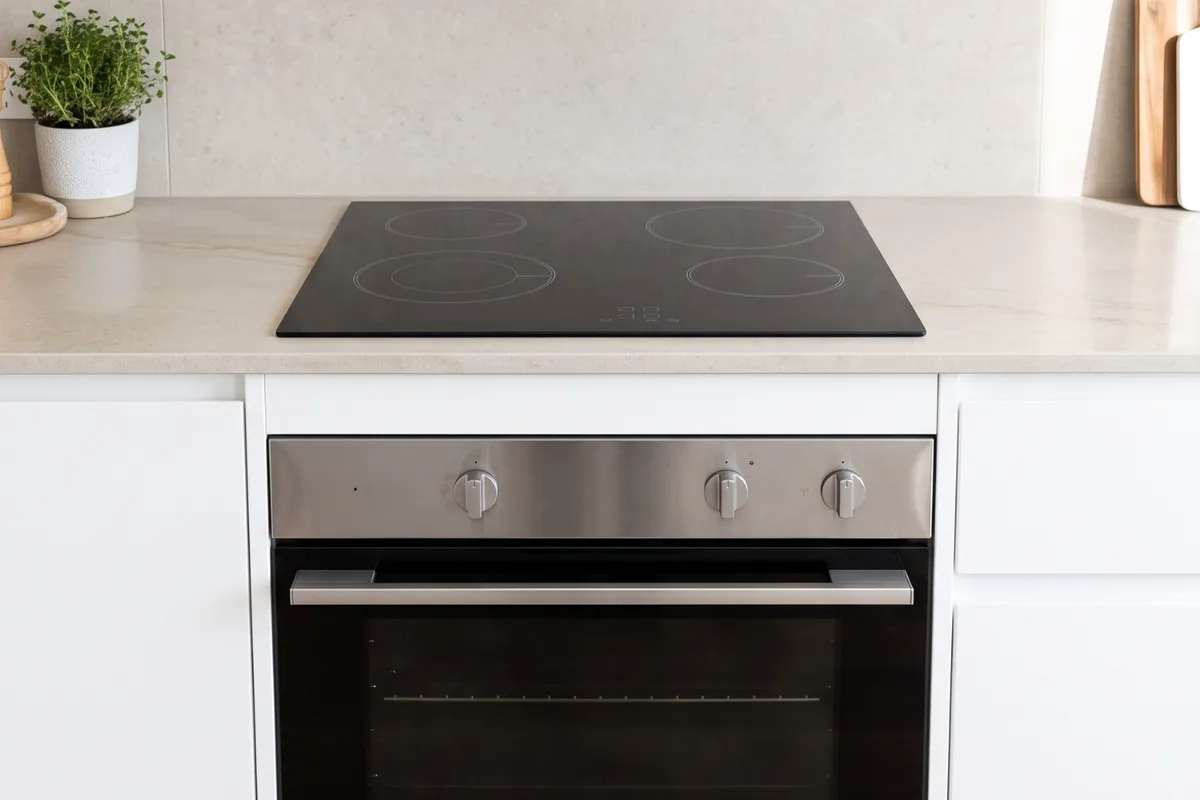
Swapping an old oven for a new one is often simple. Moving from gas or an old coil cooktop to induction can be a different story. Many induction cooktops draw more current than an older kitchen circuit was built for, which can mean new cable and a new breaker at the switchboard. We check before the appliance arrives so there are no surprises on the day. We connect wall ovens, freestanding cookers, cooktops and rangehoods.
When to get it checked
The new model is rated higher
The rating plate or installation manual shows more current than the old appliance, or a different kind of connection. Induction cooktops, pyrolytic ovens and double ovens are where this usually shows up.
One circuit feeds the lot
Plenty of older kitchens run the oven and hotplates off a single circuit with one breaker or fuse. Put a modern oven and cooktop on it together and the numbers often don't add up.
The oven or cooktop trips the power
A breaker or safety switch drops when the oven heats up or several zones are on. It could be a failing element or an overloaded circuit. Either way, it needs finding before a new appliance goes on that wiring.
A warm or marked isolating switch
The switch that turns the oven or cooktop off is warm, discoloured, crackling or smells of hot plastic. That points to a loose or overheating connection. Switch the circuit off at the switchboard if it's safe to reach, then call us.
The kitchen is changing
A renovation moves the oven into a tower, puts the cooktop on an island or changes the bench cut-out. The cable has to reach the new spot and stay accessible, which is easiest to sort before the cabinets go in.
Why it happens
4 common causes
Appliances have grown
An old coil or solid-element cooktop drew far less than many induction models do now, and a pyrolytic clean runs an oven very hot for a long stretch. The circuit that suited the old pair may not suit the new one.
Circuits sized for the first kitchen
The cable and breaker were chosen for whatever went in when the house was built or last renovated. A breaker is there to protect the cable behind it, so fitting a bigger one to stop the trips just moves the risk into the wall.
Heat and age at the terminals
The connection behind an oven sits in a warm, cramped space. Years of heating and cooling loosen terminals and harden old insulation, and loose connections run hot, so a scorched terminal block or isolating switch is a common find on a changeover.
Moving off gas
A gas cooktop needed little power, often just an outlet for the igniter. An electric or induction cooktop needs a full circuit of its own back to the switchboard, and sometimes room made on the board for it.
What the job covers
What we usually do on this job. Your quote confirms it for your place.
- Appliance requirements checked against the existing circuit
- New dedicated circuit and cable where needed
- Breaker at the switchboard sized to suit
- Isolating switch fitted or checked
- Old oven or cooktop disconnected and taken out of the cabinetry
- New wall oven, cooktop or freestanding cooker connected
- Rangehood power point installed
- Every element and function tested
- Work area cleaned before we leave
Your options, explained
Like-for-like changeover
Low disruption- Best for
- The same type of appliance at a similar rating
- How it works
- The old unit is disconnected and the new one goes onto the existing circuit, cable and isolating switch.
- Worth knowing
- We still check the rating plate and the old connection, as tired terminals and switches are often due for replacement.
New dedicated circuit
Medium disruption- Best for
- Induction, double or pyrolytic ovens, or a pair that has outgrown a shared circuit
- How it works
- New cable runs from the switchboard to the kitchen with its own breaker, safety switch protection and isolating switch.
- Worth knowing
- The cable route sets the work. An open roof space is the easy case; a second storey or a slab with no clear path takes more.
Relocation in a renovation
High disruption- Best for
- Kitchens being rebuilt or rearranged
- How it works
- Cables go to the new appliance positions at rough-in, before plaster and cabinets, and the appliances are connected once the benches are in.
- Worth knowing
- Lock in the appliance models before rough-in so the cable, outlet and switch positions suit them.
Gas to electric changeover
Medium disruption- Best for
- Replacing a gas cooktop with induction or electric
- How it works
- A licensed gasfitter disconnects and caps the gas, and we provide the new circuit and connect the cooktop.
- Worth knowing
- Book the gasfitter and our visit close together and the kitchen is only without a cooktop for a short time.
The people behind the work
Our own photos from jobs like this one. Family-run, based in Altona Meadows, with 19 years in the industry.
Licensed electrical contractor (REC 38187)See more team photos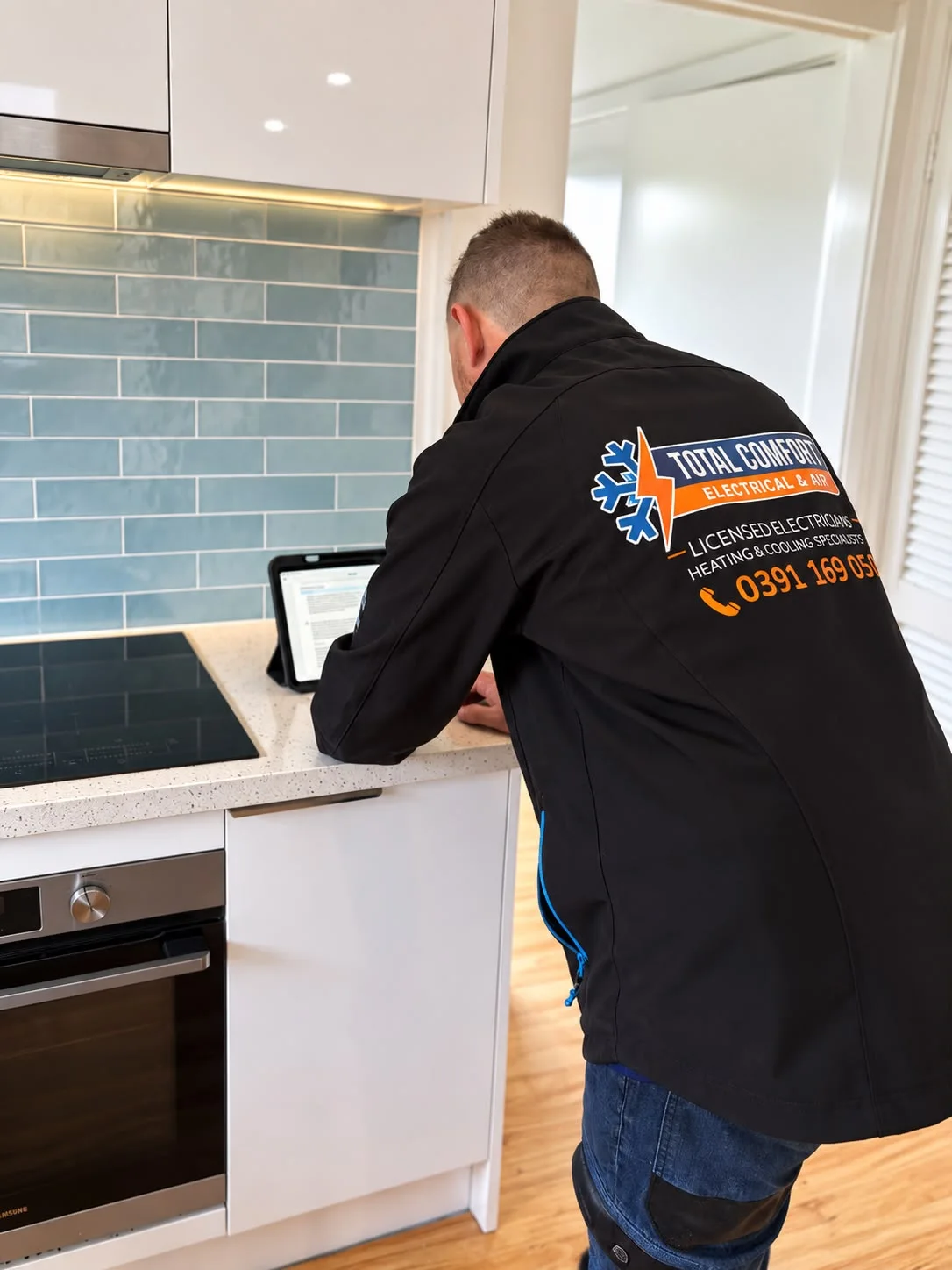
Worth knowing before you book
- Send the model number early
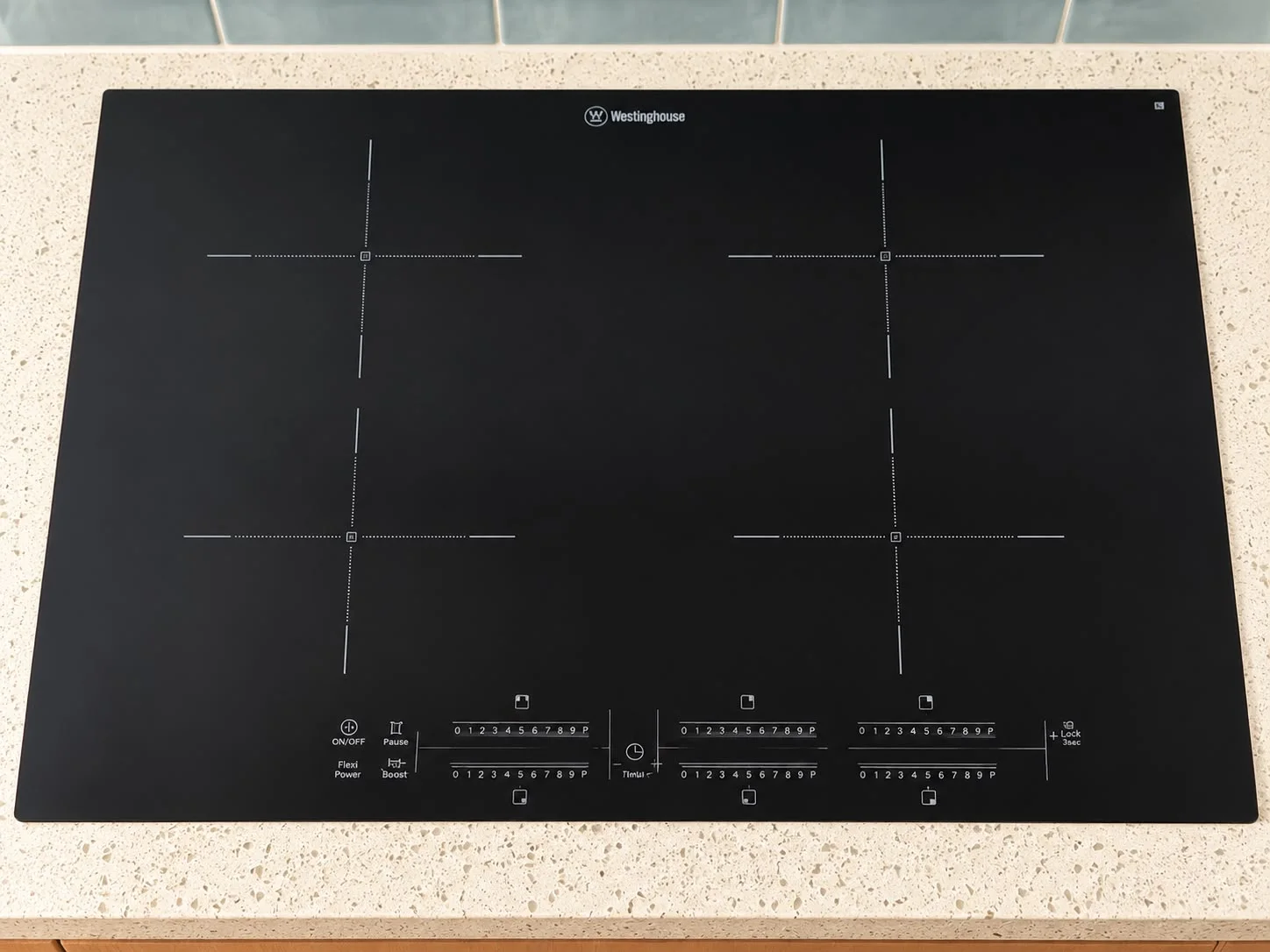
- The installation manual lists what the appliance needs. Send it before you buy, or at least before delivery, and we'll tell you if the circuit is up to it.
- Going from gas to induction
- The new cooktop needs an electrical circuit sized for it, and the old gas supply has to be capped off by a licensed gasfitter.
- Check the benchtop cut-out
- New cooktops don't always match the old cut-out. Measure before buying, or have the cabinet maker adjust it before we connect.
What affects the price?
The right scope depends on your installation. These are the details we check so your quote is useful, with any additional work explained before it proceeds.
The appliance you've chosen
Its rating and connection type decide whether the existing circuit will do. A plug-in wall oven into an existing outlet is a very different job from a large induction cooktop that needs new cable.
The cable run
When a new circuit is needed, the distance and path from the switchboard matter most. A single-storey roof space is straightforward; slabs, upper floors and apartments take more planning.
The switchboard
A board with spare room and modern protection takes a new circuit readily. Old fuses, a full board or safety switches that must be added for the alteration all widen the scope.
Cabinetry and cut-outs
If the new cooktop doesn't match the old cut-out, or the oven cavity needs changing, that's cabinet or stone work. It's usually done by that trade before we connect.
Extras on the day
Moving the isolating switch, a power point for the rangehood or disconnecting a second appliance. Tell us up front and it's part of a fixed price for the agreed scope.
Before the visit
- Send the installation manual and exact model numbers.
- Confirm that the cavity or cut-out is ready and ventilation clearances are available.
- Arrange gas disconnection by the appropriate trade if changing from gas.
How it runs
- 1
Send the details
Model numbers for the new appliances and a photo of the switchboard.
- 2
Check the circuit
We confirm whether the existing circuit will do or a new one is needed, and give you an upfront price.
- 3
Connect and test
Old unit out, new one connected, every function tested.
Step by step, in more detail
5 steps
Start with the model
Send the model number, the installation manual if you have it, a photo of your switchboard and one of the old appliance's rating plate. That answers most of our questions before anyone visits.
Check the existing circuit
We look at the cable size, the breaker, safety switch protection, spare room on the board and the route to the kitchen. Then you get the price before we start, with any circuit work set out in the quote.
Get the circuit ready
If the appliance needs more, we run new cable from the switchboard, fit a breaker sized to the cable and appliance, add the safety switch protection the alteration calls for and fit an isolating switch you can reach.
Swap the appliance
The circuit is isolated, and the old unit is disconnected and lifted out of the cabinetry. The new one is connected to its manual and secured in the cavity or cut-out. Freestanding cookers get their stability bracket fitted.
Test, certify and tidy up
We test the circuit, then run each element or zone, every oven mode, the fan and the light. You get a Certificate of Electrical Safety, a clean kitchen and our lifetime workmanship guarantee on the work.
What is safe to do, and what to leave to us
Safe for you to do
- Switch the oven off at its isolating switch, or the circuit off at the switchboard, if it sparks or smells hot and it's safe to reach.
- Reset a tripped safety switch once. If it trips again, leave it off and call us.
- Never use water on an electrical fire. For a small one, turn off the power to it if it's safe and use a fire blanket or dry chemical extinguisher. For anything larger, get everyone out.
- Photograph the rating plate, the switchboard and the old connection area to help with your quote.
Leave these to us
- Connecting or disconnecting an oven or cooktop yourself, even like for like. Energy Safe Victoria says unlicensed electrical work is illegal and potentially fatal.
- Fitting a plug to a cooktop or oven that's meant to be hardwired.
- Running a plug-in oven from a power board or extension lead.
- Disconnecting, moving or capping a gas cooktop. That's work for a licensed gasfitter.
- Fitting a bigger breaker, or holding one on, to stop it tripping.
When to get us in
- Before you buy, so we can check the circuit suits the model
- When you're swapping gas cooking for induction or electric
- When the kitchen layout or bench cut-out is changing
- When the oven or cooktop trips a breaker or safety switch
- Straight away if the isolating switch is warm, marked or smells hot
More detail
Plug-in or hardwired
Many single wall ovens come with a plug and only need a suitable outlet in the cavity, but the plug type matters: some have a larger earth pin that won't fit a standard outlet. Most cooktops, freestanding cookers and double ovens are hardwired to a circuit of their own. The installation manual says which, and it's the first thing we ask for.
Safety switches on the cooking circuit
Energy Safe Victoria notes that the Wiring Rules call for additional RCD protection when an existing installation is altered, so a new or reworked cooking circuit usually brings a safety switch with it. Type AC safety switches can't be installed any more, even as like-for-like replacements. On an older board, that can decide whether the new circuit simply fits or the board needs work first.
Gas to induction: who does what
Energy Safe Victoria lists cookers among Type A gas appliances, and disconnecting and capping the old cooktop is gasfitting work for a licensed gasfitter. We run the new circuit and connect the cooktop, and we can line our visit up with theirs. Most induction cooktops run on single-phase power, so the usual job is a dedicated circuit sized to the cooktop. Three-phase only comes into it when other big loads are planned too.
Your Certificate of Electrical Safety
Energy Safe Victoria says a licensed electrician must provide a Certificate of Electrical Safety whenever they complete electrical installation work. For work inside your installation like this, the copy is due within 30 days. Keep it with the appliance manual and warranty papers.
Local rules and conditions
Victorian requirements and local conditions that shape this job, with the sources listed at the foot of the page.
Older kitchens across Hobsons Bay
Hobsons Bay housing runs from historic Williamstown and Newport to the newer Altona Meadows and Seabrook, and Altona still has intact post-war brick and weatherboard homes. Energy Safe Victoria says a house built more than 30 years ago should have its wiring checked, which is worth doing before a bigger oven or cooktop goes on an old kitchen circuit.
Gas cooking and new builds
Existing homes don't have to give up gas cooking, though the Victorian Government encourages the change. New homes that need a planning permit have had to be all-electric since 1 January 2024, and finalised regulations will require all new homes to be built all-electric from 1 January 2027. New housing is planned in Truganina, Tarneit, Wyndham Vale and Manor Lakes, so if you're building there, settle the cooking circuits with your builder early.
Rentals: a dead oven is urgent
Consumer Affairs Victoria lists an essential cooking appliance that isn't working as an urgent repair, and the rental provider must organise and pay for repairs that aren't the renter's fault. Where an old fuse board has to be replaced to meet the rental electrical standard, every circuit at the board needs circuit breaker protection, fixed cooking equipment included.
Useful reading
Guides to read before you decide, with checklists and questions to bring to the quote.
- Moving to induction: the checks to make before you buyA practical order for checking the supply, bench opening, gas disconnection and installation day.
- The electrical decisions to make before your renovation walls closePlan appliances, lighting, outlets and future upgrades while access and options are still available.
- Going all-electric in a Melbourne homeHot water, heating and cooking don't have to go electric at once. How to stage the move off gas, check the switchboard once and time each step.
- What electrical work you can and can't do yourself in VictoriaWhere Victorian law draws the line on home electrical work, the short list of jobs that are yours, and what to do when a job goes past it.
Common questions
Questions people ask about this
More in the Help centreFrom the blog
- Induction or ceramic electric cooktop: which is worth it?Induction responds faster, cleans more easily and keeps the glass cooler. Ceramic still suits some cookware and kitchens. Here is how the two compare day to day.
- What should I check before buying an induction cooktop?Coordinate the appliance specification, benchtop opening, electrical assessment and gas removal before the old cooktop comes out.
Sources for the rules and local facts on this page
17 sources, with the date each was checked
- 1.Victorian Electoral Commission (2023 electoral structure review fact sheet): Its residential areas are diverse, ranging from historic Williamstown and Newport in the east to the newer Altona Meadows and Seabrook in the west. Accessed 30 September 2026.
- 2.Victorian Government, Hobsons Bay Planning Scheme (PDF snapshot, last updated by VC292 on 11/09/2025): SPECIAL CHARACTER AREAS, ALTONA 1.0 24/02/2022 C131hbay Neighbourhood character objectives To preserve the characteristics of the neighbourhood, comprising intact post-war brick and weatherboard dwellings with… Accessed 30 September 2026.
- 3.Energy Safe Victoria: Old switchboards, particularly those without a safety switch Old power switches or power points, particularly broken ones Flickering lights Sparks from switchboards, switches or power points. If your house is over 30… Accessed 30 September 2026.
- 4.Department of Energy, Environment and Climate Action (Victoria): From 1 March 2027, if a gas hot water appliance breaks and cannot be repaired, it must be replaced with an electric alternative. No requirement to upgrade gas space heating or stovetop gas cooking to electric, however… Accessed 30 September 2026.
- 5.Department of Energy, Environment and Climate Action (Victoria): from 1 January 2024, new homes requiring a planning permit are required to be all-electric Accessed 30 September 2026.
- 6.Department of Transport and Planning (Victoria): Victoria’s new Building and Plumbing Amendment Regulations 2025 have been finalised, advancing Victoria’s shift toward all-electric buildings. From 1 January 2027, all new homes and most new commercial buildings will be… Accessed 30 September 2026.
- 7.Victorian Electoral Commission (2023 electoral structure review fact sheet): New housing developments are planned in residential growth areas including Truganina, Tarneit, Wyndham Vale and Manor Lakes, as well as near activity centres and public transport. Accessed 30 September 2026.
- 8.Consumer Affairs Victoria: Anything on this list is legally defined as an urgent repair: burst water service blocked or broken toilet system serious roof leak gas leak dangerous electrical fault flooding or serious flood damage serious… Accessed 30 September 2026.
- 9.Consumer Affairs Victoria: Some properties do not have circuit breaker type switchboards, such as older properties that have a panel and fuse board or a federal fuse board. With these older fuse boards, an electrician may not have the option of… Accessed 30 September 2026.
- 10.Energy Safe Victoria: Gas and electricity are inherently dangerous and it’s illegal and potentially fatal for unlicensed and unqualified people to undertake any electrical or gasfitting work. Homeowners and consumers must always use… Accessed 30 September 2026.
- 11.Energy Safe Victoria: Gas and electricity are inherently dangerous and it’s illegal and potentially fatal for unlicensed and unqualified people to undertake any gasfitting or electrical work. Accessed 30 September 2026.
- 12.Energy Safe Victoria: Type A appliances include domestic and light commercial type appliances such cookers, space heaters, central heaters, water heaters, catering equipment and leisure appliances. So, when looking to service and repair your… Accessed 30 September 2026.
- 13.Energy Safe Victoria: Locate your electricity box outside your home and check whether the safety switch has tripped. If it has tripped, reset the switch. If the switch won’t reset, call a licensed electrician. Accessed 30 September 2026.
- 14.Energy Safe Victoria: Clause 2.6.3.2.5 of the Wiring Rules states: Additional protection by RCDs shall be provided in existing electrical installations where alterations or a switchboard replacement is completed. Accessed 30 September 2026.
- 15.Energy Safe Victoria: Type AC RCDs must not be installed in Australia. This includes like for like replacement. We recommend that electrical contractors advise customers of the new requirements. However, it is not mandatory to replace… Accessed 30 September 2026.
- 16.Energy Safe Victoria: Whenever a licensed electrician completes any electrical installation work, they must provide a Certificate of Electrical Safety (COES). Accessed 30 September 2026.
- 17.Energy Safe Victoria: The Registered Electrical Contractor or Licensed Electrical Worker will complete the COES and is required to provide you with a copy within 30 days. Accessed 30 September 2026.