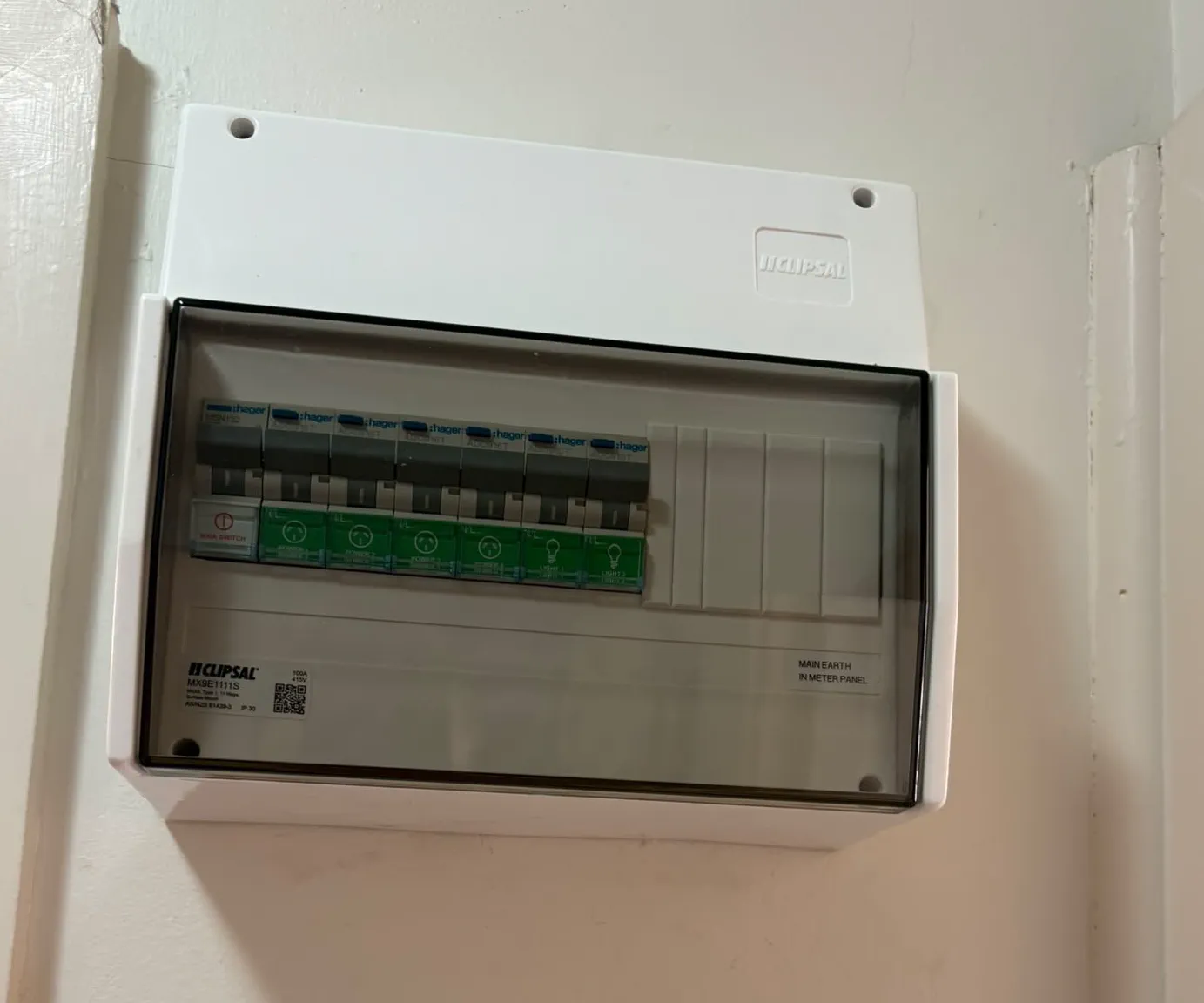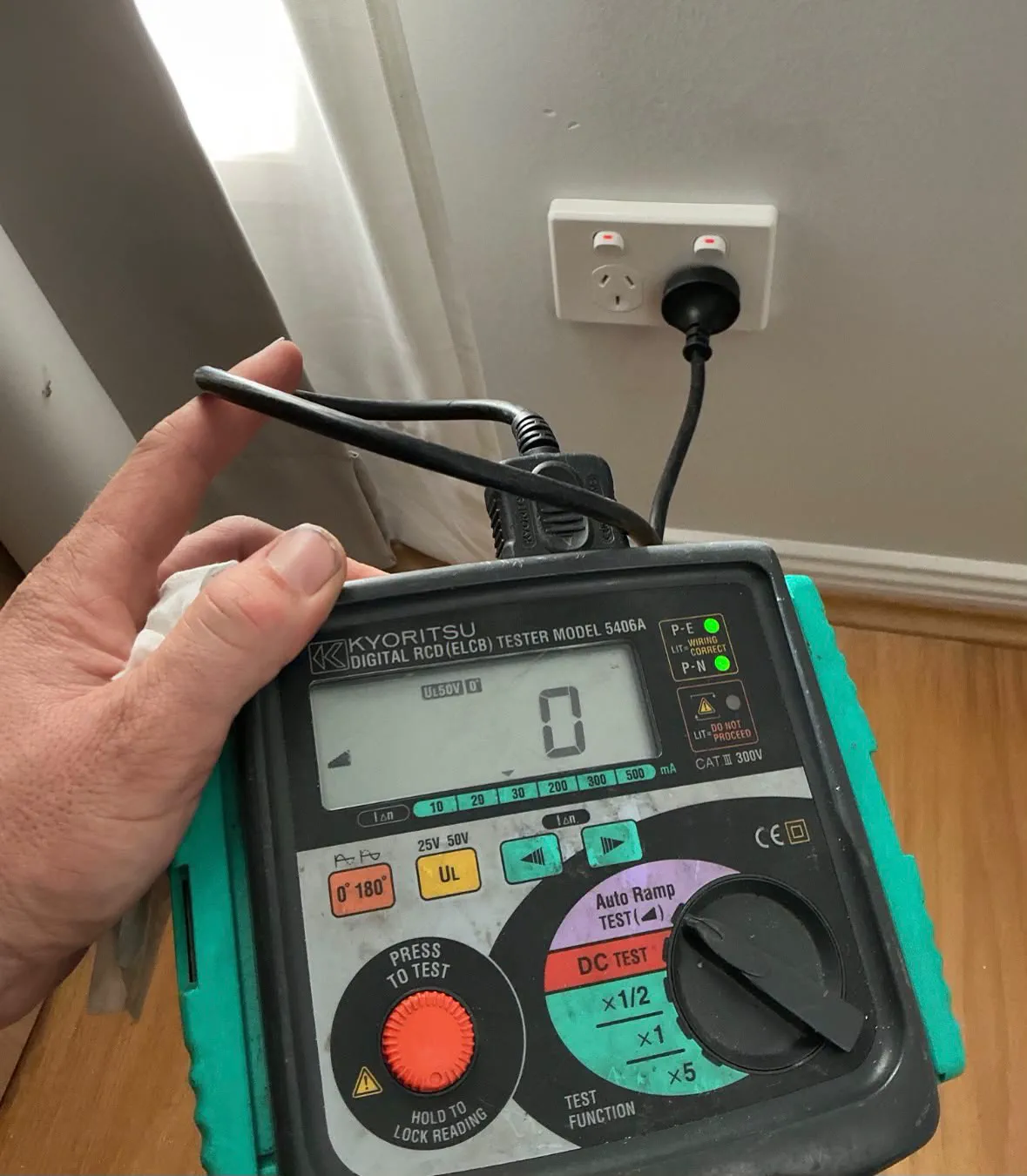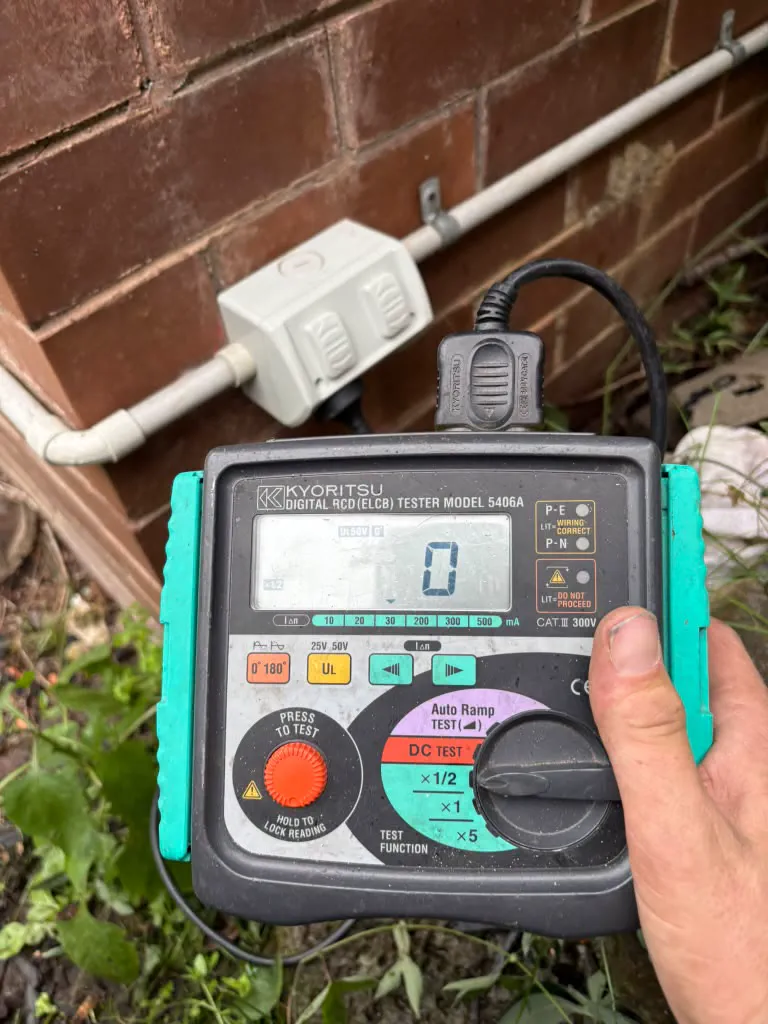
A safety switch can sit for years without tripping, so nobody knows whether it still works. We find every safety switch and RCBO, check what each one covers and time each trip with an RCD tester.
When to get it checked
Nobody remembers the last test
Nobody can recall pressing the test button, or which switches are the safety switches.
Some rooms stay on during a test
With every safety switch tripped, some lights or power points still work. Those circuits may have no safety switch at all.
A stiff or sluggish switch
The button needs a hard push, or the switch drifts down instead of snapping off.
After water or a serious fault
Water in the meter box or a heavy fault can damage a device inside while the case looks fine.
Leasing, selling or just bought
A good time to get every device's performance in writing.
Why it happens
4 common causes
Years without moving
Nothing inside a safety switch moves until it trips. Leave it for years and the latch can bind, so it lets go late or only on a second press.
Outdoor meter boxes
Boards on an outside wall take dust, summer heat and damp winters, which age devices faster than an indoor board.
Sensing parts drift
The part that senses leakage wears too, and over the years can become slower or less sensitive.
Circuits added around the switch
Sheds, extensions and new appliances were often wired in beside the safety switch, not through it. The switch tests fine but doesn't cover them.
What the job covers
What we usually do on this job. Your quote confirms it for your place.
- Every safety switch and RCBO located, including on sub-boards
- Circuits traced to the switch that protects them
- Circuits with no safety switch listed
- Test button operated on every device
- Trip time measured on each circuit with an RCD tester
- Device type noted, including older Type AC devices
- Wrong switchboard labels corrected
- Written record of every result, pass or fail
Your options, explained
Your own button test
Low disruption- Best for
- Every three months, between timed tests
- How it works
- Press each test button. The circuits that switch protects should lose power, then you switch it back on.
- Worth knowing
- Catches a dead switch, but gives no trip time and no map of what's covered.
Timed test with a record
Low disruption- Best for
- Devices never timed, buyers and landlords
- How it works
- An RCD tester times the trip for every device, circuit by circuit.
- Worth knowing
- Power drops on one safety switch's circuits at a time.
Test, then fill the gaps
Medium disruption- Best for
- Boards with circuits that have no safety switch
- How it works
- Safety switches or RCBOs are added to unprotected circuits if the board has room.
- Worth knowing
- Quoted separately once testing shows what's needed.
The people behind the work
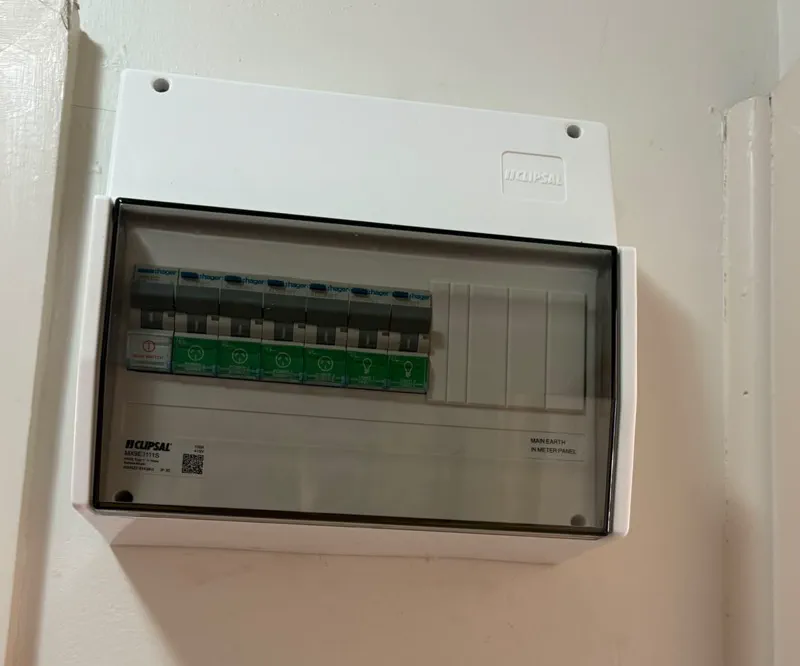
Our own photos from jobs like this one. Family-run, based in Altona Meadows, with 19 years in the industry.
Licensed electrical contractor (REC 38187)See more team photos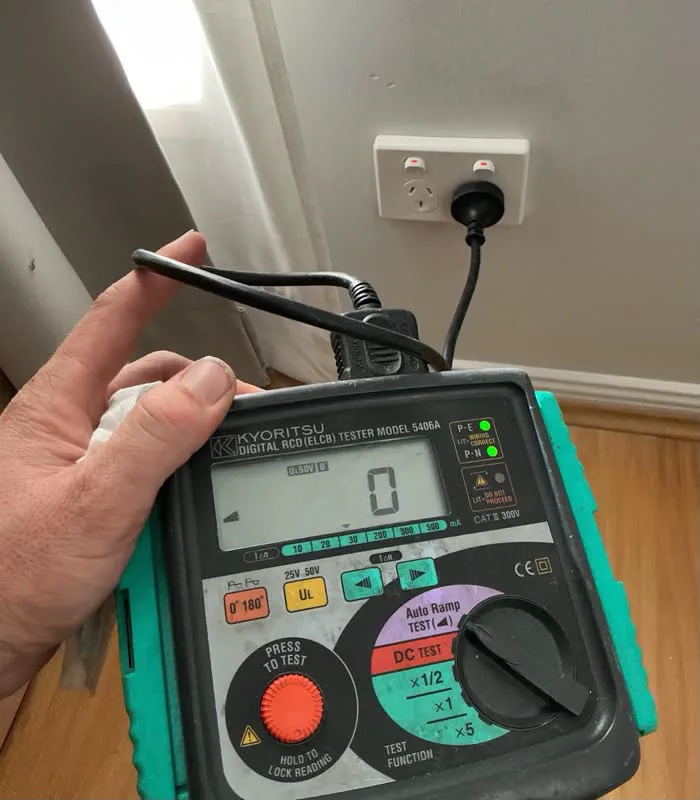
Worth knowing before you book
- The button test is yours
- Energy Safe Victoria asks householders to press each test button every three months. If the power doesn't cut, call a licensed electrician.
- Power drops in short bursts
- Circuits go off one safety switch at a time during testing. Tell us about medical equipment or alarms before we start.
- Not a rental safety check
- The two-yearly rental electrical safety check covers the whole installation and is booked as its own job.
What affects the price?
The right scope depends on your installation. These are the details we check so your quote is useful, with any additional work explained before it proceeds.
Number of devices
Each safety switch or RCBO gets its own test and its own line in the record.
Sub-boards
A second board in a garage, shed or granny flat adds devices to find and test.
Labels
Unlabelled boards take longer, because every circuit is traced back to its switch.
Failed devices
Replacing a failed device is priced separately, and you approve it first.
How it runs
- 1
Find and map
Every device found, and every circuit traced to its switch.
- 2
Button test
Each device operated with its own test button.
- 3
Time the trip
An RCD tester measures how fast each device cuts the power.
- 4
Record and explain
Results in writing, with any failures priced first.
Step by step, in more detail
4 steps
Find and map every device
We find each safety switch and RCBO, including on sub-boards, then switch each one off to see which lights and points it covers. Circuits with no safety switch go on a list.
Press the test button
Each device's own button is pressed to confirm it moves freely and resets cleanly.
Time the trip
An RCD tester on each circuit applies a measured leak and times how fast the device cuts the power. We also check it holds at a smaller leak, so it isn't oversensitive.
Record and explain
Every result goes in writing, device by device, and we go through it with you. Wrong labels are corrected, and anything that failed is priced before it's replaced.
What is safe to do, and what to leave to us
Safe for you to do
- Press each test button every three months, as Energy Safe Victoria advises.
- Warn the household and save computer work first.
- If a switch won't stay on after the test, leave it off and call a licensed electrician.
Leave these to us
- Removing switchboard covers.
- Forcing, holding or taping a safety switch on.
- Swapping a device yourself. Electrical work isn't a DIY job in Victoria.
When to get us in
- The test button doesn't cut the power
- A safety switch won't reset after a test
- You can't tell which circuits are protected
- You need a written record of trip times
More detail
What the test button proves
The button sends a small leak through the device itself. If the switch drops, the latch and sensing part work, but that says nothing about speed. Energy Safe Victoria describes a safety switch as turning the power off within 0.03 of a second, and only an instrument test puts a number on yours. Our tester works through each circuit's own wiring, so it also shows which switch that circuit is really on.
Older Type AC devices on your board
The record notes each device's type, because Type AC devices can't be fitted any more. Energy Safe Victoria says they must not be installed, even like for like, and AS/NZS 3000 has barred new ones since 30 April 2023. Ones installed, tested and certified before 1 May 2023 don't have to be replaced, so a Type AC that passes can stay. One that fails is replaced with a type allowed now.
What the written record shows
Each safety switch or RCBO gets a line: where it sits, what it covers, its trip time and pass or fail. Unprotected circuits are listed separately. Keep it with the house papers for the next electrician, a buyer or a property manager.
Local rules and conditions
Victorian requirements and local conditions that shape this job, with the sources listed at the foot of the page.
Period homes in Yarraville and Seddon
Small Victorian and Edwardian houses, mostly weatherboard, characterise the Yarraville and Seddon residential precincts. Energy Safe Victoria lists old switchboards, particularly those without a safety switch, among the signs of faulty wiring. On boards like these, testing starts by finding which circuits reach a safety switch.
Newer suburbs still need testing
Altona Meadows and Seabrook are the newer end of Hobsons Bay, and Cairnlea and Derrimut are among Brimbank's more recently developed suburbs. Energy Safe Victoria says a safety switch is now compulsory on new residential installations. Having one isn't proof it still works.
Rentals and safety switch coverage
Consumer Affairs Victoria says that from 29 March 2023, all power outlets and lighting circuits in a rental must connect to a switchboard-type circuit breaker and safety switch. Mapping each safety switch during a test shows whether they do, and puts the answer in writing.
Useful reading
Guides to read before you decide, with checklists and questions to bring to the quote.
- How and when to test your safety switchesHow to run the push-button test at home, what an electrician’s trip-time test measures that the button can’t, and what to do when a switch fails.
- A safety switch keeps tripping: what to record and when to callUnderstand the difference between a protective device doing its job and a fault that needs investigation.
- Rental electrical and smoke alarm checks in VictoriaKnow which records to gather, how to arrange access and where to verify the current Victorian requirements.
- What electrical work you can and can't do yourself in VictoriaWhere Victorian law draws the line on home electrical work, the short list of jobs that are yours, and what to do when a job goes past it.
Common questions
From the blog
Sources for the rules and local facts on this page
15 sources, with the date each was checked
- 1.Victorian Heritage Database (Heritage Council Victoria); entry maintained by Maribyrnong City Council: The general character of the Yarraville Residential Precinct is that of small Victorian & Edwardian single-storey detached housing with mainly weatherboard and some brick wall cladding, corrugated iron roofing, front… Accessed 30 September 2026.
- 2.Victorian Heritage Database (Heritage Council Victoria); entry maintained by Maribyrnong City Council: The general character of the Seddon Residential and Commercial Precinct is of small Edwardian and Victorian period single-storey detached and some attached housing, with a dominance of weatherboard walling and… Accessed 30 September 2026.
- 3.Energy Safe Victoria: Old switchboards, particularly those without a safety switch Old power switches or power points, particularly broken ones Flickering lights Sparks from switchboards, switches or power points. If your house is over 30… Accessed 30 September 2026.
- 4.Victorian Electoral Commission (2023 electoral structure review fact sheet): Its residential areas are diverse, ranging from historic Williamstown and Newport in the east to the newer Altona Meadows and Seabrook in the west. Accessed 30 September 2026.
- 5.Victorian Electoral Commission (2023 electoral structure review fact sheet): Pre- and post-war homes characterise the established suburbs of Sunshine, St Albans and Deer Park. The more recently developed suburbs of Cairnlea, Sydenham, Hillside, and Derrimut feature more contemporary housing. Accessed 30 September 2026.
- 6.Energy Safe Victoria: Having a safety switch installed is now compulsory on new residential installations and a great step to electrical safety in your home, if you are unsure if a safety switch is installed at your property, contact a… Accessed 30 September 2026.
- 7.Consumer Affairs Victoria: From 29 March 2023 all power outlets and lighting circuits in a rental premises must connect to both a switchboard-type circuit breaker that complies with AS/NZS 3000 and a switchboard-type residual current device that… Accessed 30 September 2026.
- 8.Energy Safe Victoria: monitors the flow of electricity through a circuit detects a problem that may pose a risk to personal safety turns the power off within 0.03 of a second always has a test button and '30ma' printed on them. Accessed 30 September 2026.
- 9.Energy Safe Victoria: Type AC RCDs must not be installed in Australia. This includes like for like replacement. We recommend that electrical contractors advise customers of the new requirements. However, it is not mandatory to replace… Accessed 30 September 2026.
- 10.Energy Safe Victoria: Locate your electricity box outside your home and check whether the safety switch has tripped. If it has tripped, reset the switch. If the switch won’t reset, call a licensed electrician. Accessed 30 September 2026.
- 11.Energy Safe Victoria: Electrical work isn’t a DIY job, even for small jobs such as changing power points or light switches. Accessed 30 September 2026.
- 12.Victorian Legislation (legislation.vic.gov.au) - Electricity Safety Act 1998, authorised version 089 (effective 8 Sep 2026): electrical installation work means installation, alteration, repair or maintenance of an electrical installation; Accessed 30 September 2026.
- 13.Energy Safe Victoria: Whenever a licensed electrician completes any electrical installation work, they must provide a Certificate of Electrical Safety (COES). Accessed 30 September 2026.
- 14.Energy Safe Victoria: Rental providers must ensure an electrical safety check of all electrical switchboards, wiring and fittings in the premises is conducted every two years by a licensed electrician. The safety check must be conducted in… Accessed 30 September 2026.
- 15.Consumer Affairs Victoria: The rental provider must organise and pay for all repairs if they are not the renter’s fault. Accessed 30 September 2026.