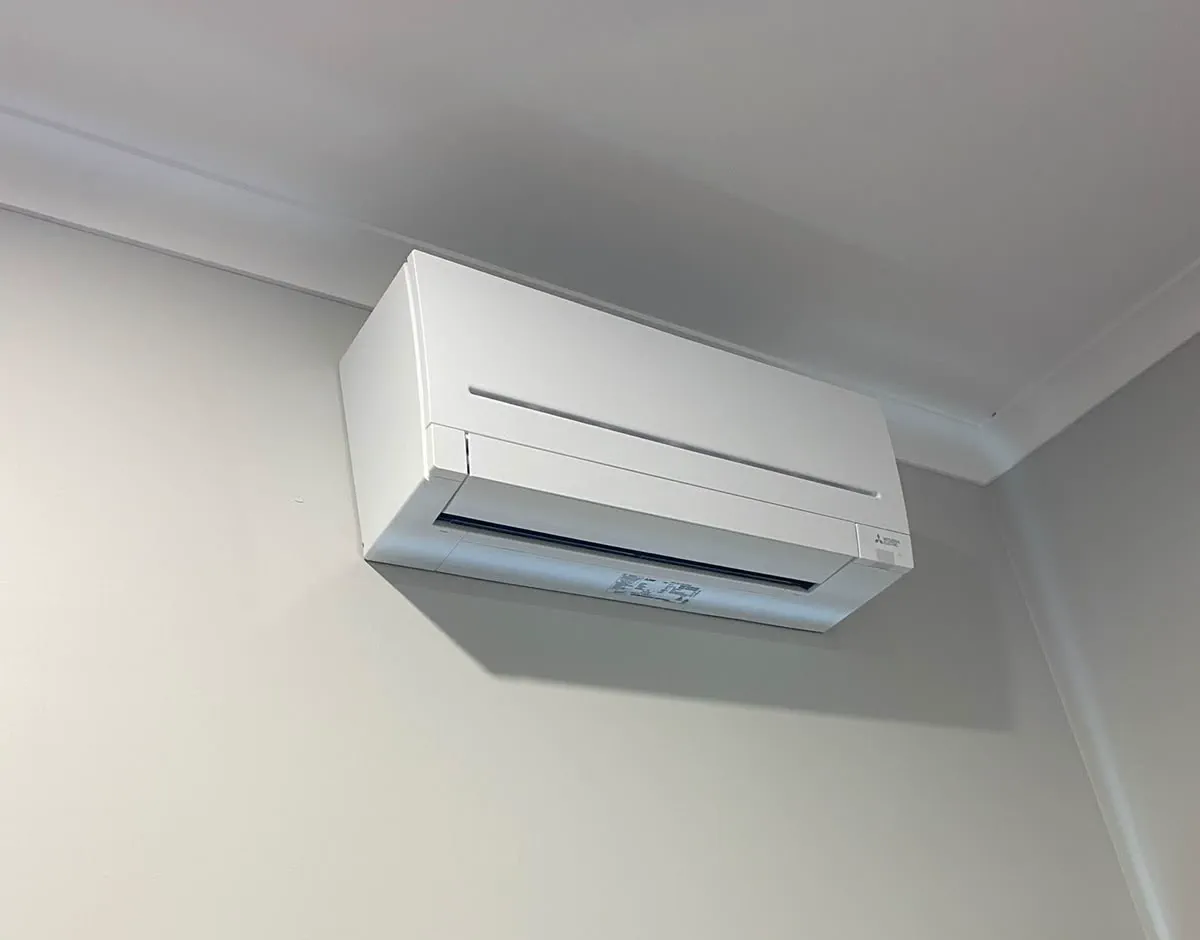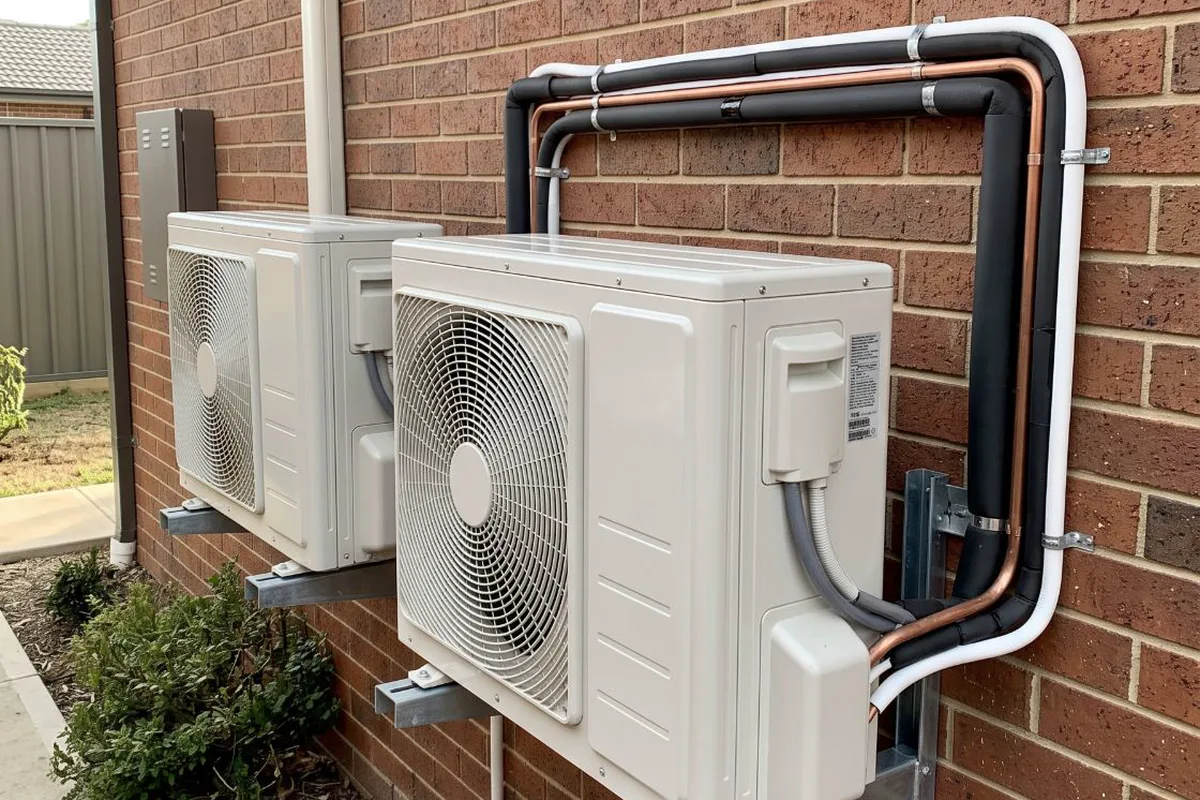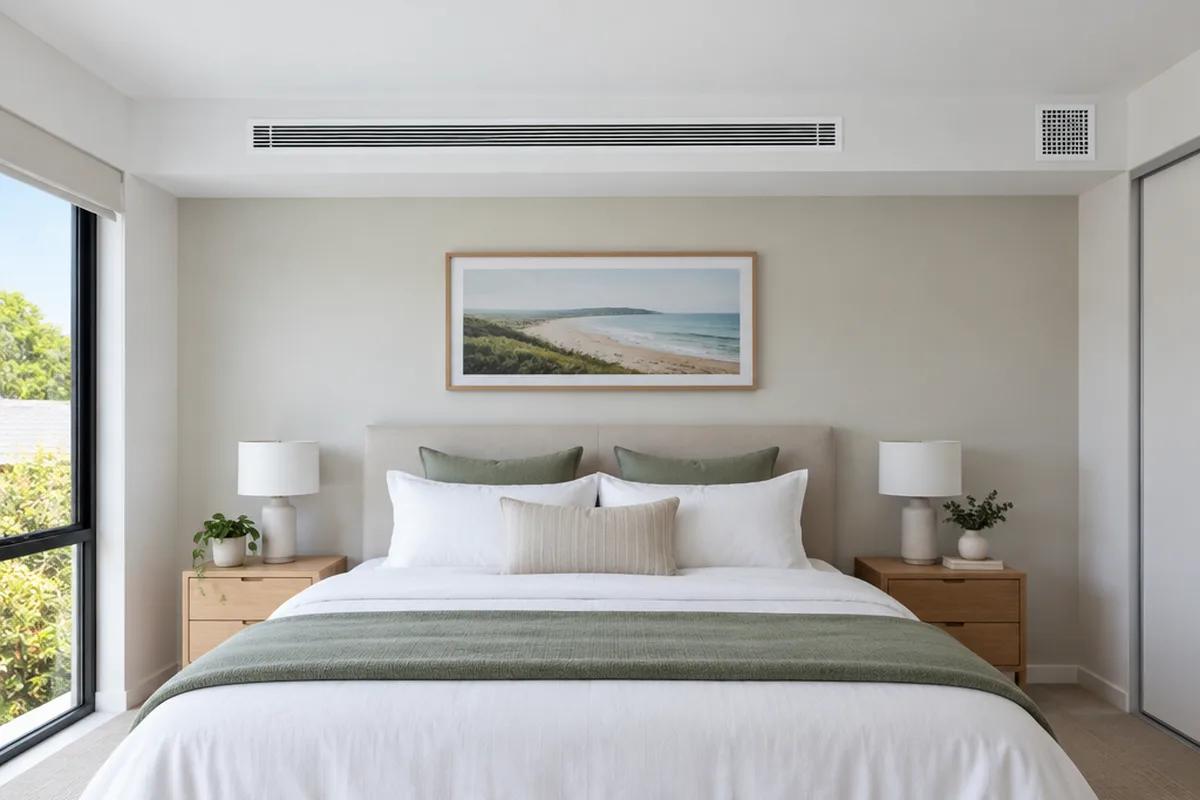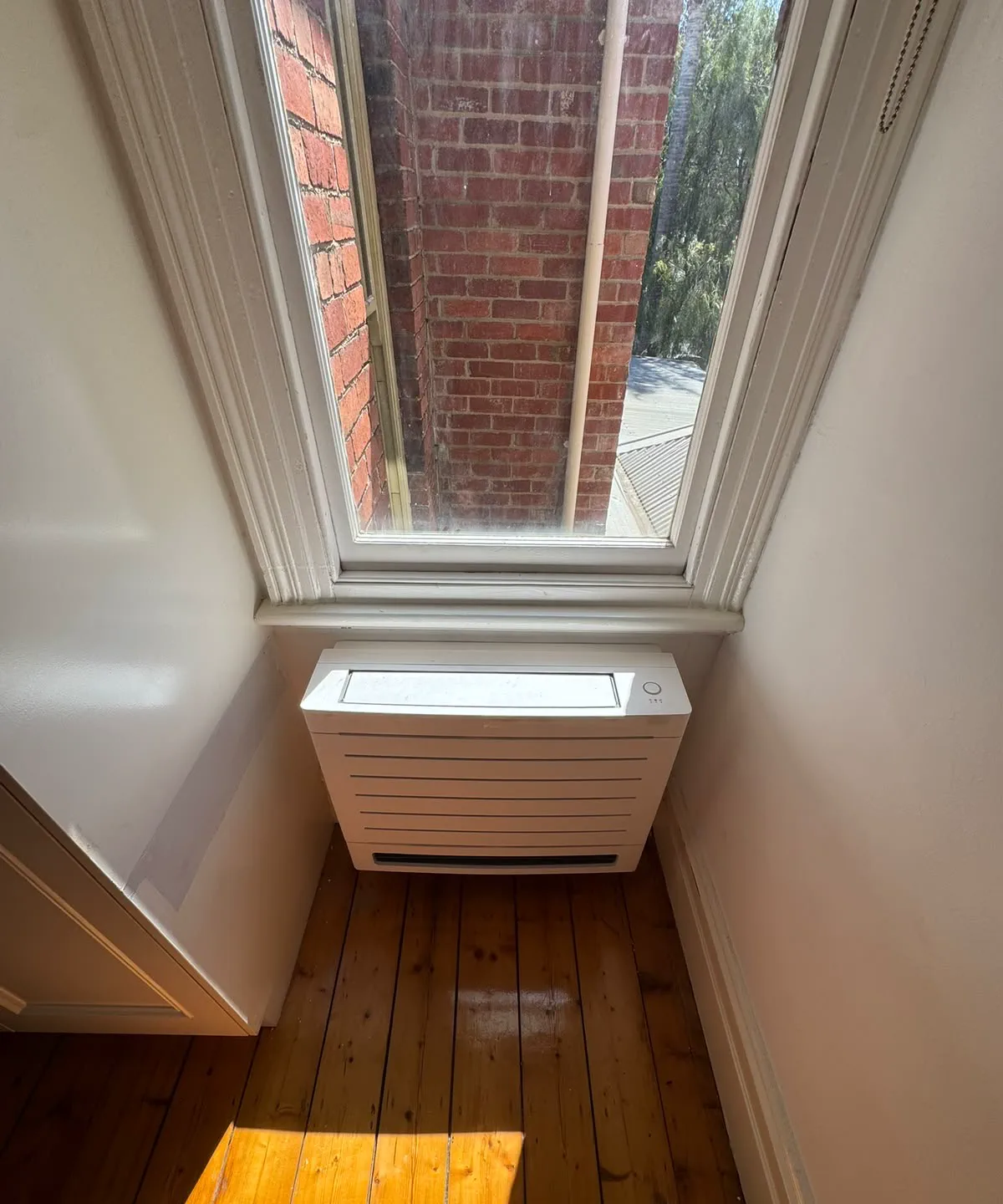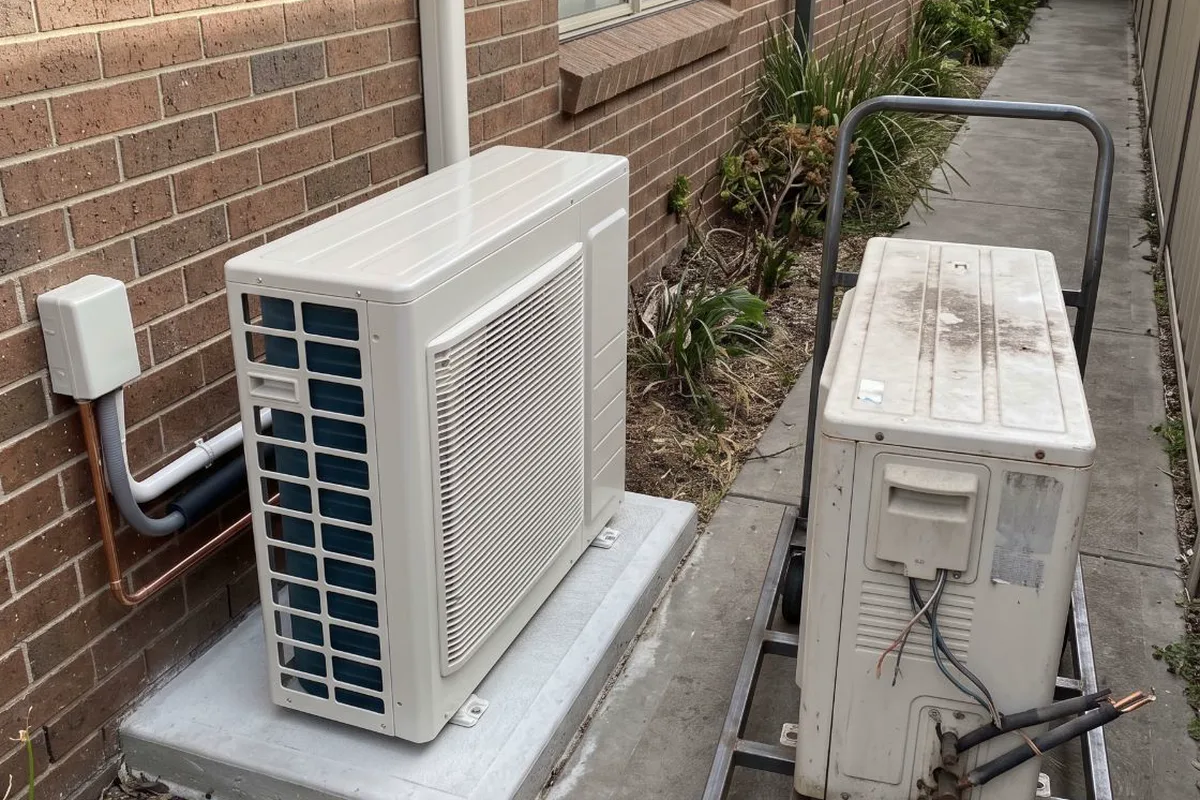
When the shared outdoor unit on a multi-head fails, every room on it stops. We look at the whole system and how you use the rooms now, then replace it like for like or with a better layout. The refrigerant is recovered properly, reused pipework is tested, and the electrical work is done on the same job.
When to get it checked
A major outdoor unit fault on an older system
A failed compressor or main board can cost a large share of a new system, and every room on that outdoor unit is off until it's sorted.
Heads failing one after another
A fan motor in one room, a board in another. When the faults keep coming on an ageing system, the next one is rarely far away.
It can't keep up once two rooms run
The system copes with one head but falls behind when the lounge and bedrooms run together. It may be undersized for how the house is used now.
A tired, rusting outdoor unit
Rust on the casing, corroded coil fins or a rattling fan. Outdoor units close to the bay tend to show it sooner.
Why it happens
4 common causes
One outdoor unit does all the work
Every head relies on the same compressor and fan. The outdoor unit runs whenever any room is on, so it clocks up more hours than a single split serving one room.
Heads and outdoor unit are a matched set
The heads take their control signals and refrigerant from the outdoor unit. A new outdoor unit usually can't run the old heads unless the manufacturer lists them as compatible.
The house has changed
An extension, a converted garage or a study that's now used every day can leave the original combination short in the rooms that matter.
Age and running costs
The Victorian Government says a reverse-cycle system more than 15 years old typically uses more than three times the energy of a modern one.
What the job covers
What we usually do on this job. Your quote confirms it for your place.
- Existing heads, outdoor unit and pipe runs assessed
- Head sizes checked against how each room is used
- Refrigerant recovered before disconnection
- Old heads and outdoor unit removed
- Reused pipework pressure tested and vacuumed
- New heads and outdoor unit installed
- Circuit and lockable isolator checked or replaced
- Every head tested in heating and cooling
- Certificate of Electrical Safety issued
Your options, explained
Like-for-like multi-head
Medium disruption- Best for
- A layout that still suits rooms that haven't changed
- How it works
- A new outdoor unit and new heads in the same positions, reusing pipe runs where they pass testing and suit the new system.
- Worth knowing
- Usually the least wall work. Worth re-checking head sizes against how each room is used now.
Resized or reconfigured multi-head
Medium disruption- Best for
- An extension, a new room, or a head that never coped
- How it works
- Heads are added, removed or resized, and the outdoor unit is matched to the new combination.
- Worth knowing
- New head positions mean new pipe runs and wall penetrations, and the old ones made good.
Separate single splits
Medium disruption- Best for
- Rooms that need opposite modes, or one room that must never go without
- How it works
- Each room gets its own indoor and outdoor pair in place of the shared system.
- Worth knowing
- More outdoor units to place, but a fault only takes out one room.
Repair instead
Low disruption- Best for
- A younger system with one diagnosed fault
- How it works
- The failed part is replaced and the system retested, leaving everything else as it is.
- Worth knowing
- If a repair makes more sense, we tell you. See our multi-head split system repairs page.
The people behind the work
One local team for electrical, heating and cooling, based in Altona Meadows, with 19 years in the industry.
Licensed electrical contractor (REC 38187)See more team photos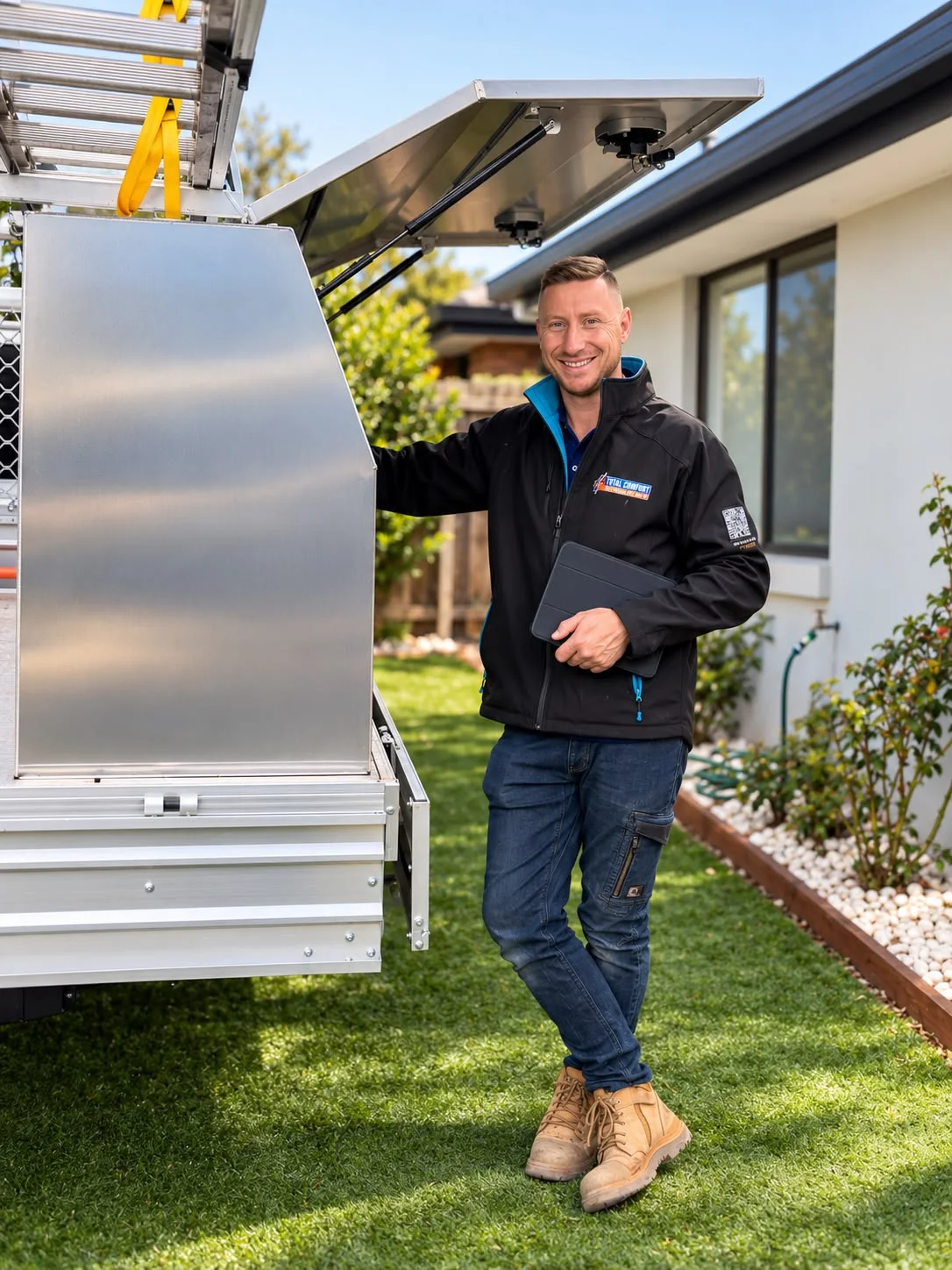
Worth knowing before you book
- The heads usually go too
- A new outdoor unit rarely runs old heads unless the maker lists them as compatible.
- Rethink the layout
- Replacement is the time to add, drop or resize heads.
- Repair first?
- If one fault on a younger system is worth fixing, we say so.
What affects the price?
The right scope depends on your installation. These are the details we check so your quote is useful, with any additional work explained before it proceeds.
How many heads, and which kinds
Wall heads, floor consoles and ceiling units carry different equipment and install time, and the outdoor unit is sized for the whole combination.
What can be reused
Sound, correctly sized pipework and existing wall penetrations save labour. Runs that are damaged, undersized or kinked are replaced.
Taking the old system out
Recovering the refrigerant, removing each head and the outdoor unit, and making good the old brackets and holes.
Pipe routes and access
Double-storey walls, low roof spaces, slab floors and tight side paths for carrying the outdoor unit all add time.
The electrical supply
A larger outdoor unit may need a different circuit, a new isolator or room on the switchboard. Any board work is priced as its own line.
How it runs
- 1
Send photos
Each head, the outdoor unit's label and the switchboard.
- 2
Inspect and quote
Layout, pipework and supply checked, priced before we start.
- 3
Recover and replace
Refrigerant recovered, old system out, new system in.
- 4
Test and certify
Every head run in both modes, certificate issued.
Step by step, in more detail
5 steps
Look at the whole system
We note each head, the outdoor unit, the pipe routes, drains and switchboard, and ask which rooms you use, when, and what hasn't worked well.
Decide the new layout
Like for like, fewer heads, more heads, or a separate split for the room that pulls the other way. You get the reasons behind what we recommend.
Check what can stay
Pipe runs, wall penetrations, drains and cable are reused only where they're the right size, in good condition and suit the new unit. Then you get the price before we start.
Recover, remove and install
Refrigerant is recovered from the old system before anything is disconnected. The new heads and outdoor unit go in, and every pipe run is pressure tested and vacuumed before refrigerant is released into it.
Wire, commission and certify
The circuit and isolator are checked or replaced to suit the new outdoor unit. Every head runs in heating and cooling, alone and together, and you receive your Certificate of Electrical Safety.
What is safe to do, and what to leave to us
Safe for you to do
- If the outdoor unit has stopped and every head shows a fault, switch the system off at the controllers and note the code on each one.
- If a safety switch trips when the system starts, reset it once. If it trips again, leave it off and call a licensed electrician.
- Keep the outdoor unit clear of plants, bins and stored gear while you wait.
Leave these to us
- Disconnecting or moving any unit yourself. Releasing refrigerant into the air is illegal, and only licensed technicians can handle it.
- Reusing the old isolator or cable for a new unit without it being checked. Electrical work isn't a DIY job, even small ones.
- Buying heads and an outdoor unit separately before checking they're a compatible set.
When to get us in
- The outdoor unit has failed and every room is off
- A major repair has been quoted on an older multi-head
- Heads keep failing one after another
- You're adding rooms or renovating and the old system won't cover them
- You're a rental provider whose multi-head can't be repaired
More detail
Why the heads usually go too
On a multi-head, the indoor heads and the outdoor unit work as one system. They share control signals, the outdoor unit meters refrigerant to each head, and the manufacturer sets which heads each outdoor unit supports. A new outdoor unit usually can't drive the old heads, even from the same brand, unless the manufacturer lists them as compatible.
Keeping old heads also means keeping their worn fans, boards and sensors. Replacing the set gives every room matched parts of the same age, with no old head left to be the next thing that fails.
Reusing pipework, or not
Existing pipe runs can save a lot of wall and ceiling work. We reuse them only if they're the right diameter for the new heads, properly insulated and undamaged, within the new system's length limits, and they hold pressure when tested.
A system that failed with a burnt-out compressor can leave contamination in the lines, and pipes squashed behind a cupboard or kinked in the roof space restrict flow to that room. In those cases a new run is the safer choice, and we tell you why before we quote it.
The electrical side of a changeover
A new outdoor unit may draw a different current from the old one, so the circuit, breaker and isolator are checked against its specifications. If those call for a dedicated circuit or RCD protection, Energy Safe Victoria says they must be followed, and the Wiring Rules require additional RCD protection when an existing installation is altered.
The Wiring Rules also call for a lockable isolating switch next to the outdoor unit, not on it. On a multi-head, that one switch isolates every room. A refrigeration mechanic's restricted electrical licence covers only like-for-like disconnection and reconnection, so new wiring needs a licensed electrician. Our electricians do that part on the same job.
Local rules and conditions
Victorian requirements and local conditions that shape this job, with the sources listed at the foot of the page.
Rentals: when it can't be repaired
From 1 March 2027, when a rental's fixed heating fails and can't be repaired, it must be replaced with energy-efficient fixed electric heating with an outlet in the main living area. Consumer Affairs Victoria notes one reverse-cycle system can meet both the heating and cooling standards.
Salt air on the outdoor unit
Hobsons Bay has more than 20 kilometres of bay frontage, and a marine-environment guide based on AS 4312 classes the bay from Altona to Portsea as 'exposed' marine. When the old outdoor unit has corroded early, we look at where the new one sits and how well it's protected.
Sized for cold evenings too
July at Laverton averages a minimum of 5.2 °C, and Victorians typically use more energy heating than cooling. When every head calls for heat on a cold evening, the new outdoor unit needs enough heating capacity to share between them.
Useful reading
Guides to read before you decide, with checklists and questions to bring to the quote.
- What size split system do you need?What a split system's kW rating measures, why floor area alone gets it wrong, and how glass, ceilings and afternoon sun change the size a room needs.
- Split system or ducted: choose around the rooms you useCompare layouts, zoning, installation work and quote details before choosing equipment for your home.
- Reading the Zoned Energy Rating LabelWhich zone to read in Melbourne, why the red heating stars matter most, what the kWh and noise figures mean, and how to compare two units fairly.
- Landlords: heating, cooling and electrical obligations in VictoriaA rental provider's map of the heating, switchboard, safety check and repair duties on a Victorian rental, and what the 2027 energy standards change.
Common questions
From the blog
- Multi-head split or ducted: which suits a single-storey home?In a single-storey home with workable roof space, zoned ducted usually wins for whole-house comfort. A multi-head wins when only a few rooms matter or the roof is tight.
- When is the best time of year to install air conditioning?Spring and autumn give you time to choose well, sort the switchboard and test the system before it's needed. Here's why, and what to do if one fails mid-season.
Sources for the rules and local facts on this page
16 sources, with the date each was checked
- 1.Consumer Affairs Victoria: From 1 March 2027, when an existing fixed heating system fails and can't be repaired ,it must be replaced with an energy-efficient fixed electric heating system with an outlet in the main living area. You do not need to… Accessed 30 September 2026.
- 2.Consumer Affairs Victoria: Tip: A reverse-cycle air conditioner can satisfy both the heating and cooling standards. Accessed 30 September 2026.
- 3.Hobsons Bay City Council: Hobsons Bay has more than 20 kilometres of bay frontage, quality residential areas, a huge expanse of environmentally significant open space and a range of major industrial complexes, which contribute significantly to… Accessed 30 September 2026.
- 4.BlueScope, Technical Bulletin TB-35 Australian salt marine classifications (March 2026, Revision 9): Exposed Port Phillip Bay (Altona to Portsea Beaches) Calm Port Phillip Bay (Williamstown), Yarra River (Docklands and Melbourne CBD), Maribyrnong River Accessed 30 September 2026.
- 5.Bureau of Meteorology: Mean minimum temperature (°C) 14.0 14.4 12.7 10.0 7.8 5.9 5.2 5.7 6.8 8.4 10.3 12.2 9.5 81 1943 2026 Accessed 30 September 2026.
- 6.Department of Energy, Environment and Climate Action (energy.vic.gov.au), page last updated 14/04/25: Victorians typically use more energy for heating than cooling, so look for a unit with a higher heating efficiency. Accessed 30 September 2026.
- 7.Solar Victoria (updated 2 October 2025): A system that is more than 15 years old for example will typically use more than three times the amount of energy than a modern reverse-cycle air conditioner. Accessed 30 September 2026.
- 8.Department of Climate Change, Energy, the Environment and Water (DCCEEW): Australia’s HFC phase-down started on 1 January 2018. The HFC phase-down is a gradual reduction in the total amount of HFCs allowed into Australia. The amount will be reduced to 15% of baseline level by 1 January 2036… Accessed 30 September 2026.
- 9.Department of Climate Change, Energy, the Environment and Water (DCCEEW): It's illegal to release regulated refrigerants into the air. This is because some refrigerants can stay in the atmosphere for decades or more and can be thousands of times worse for climate change than carbon dioxide… Accessed 30 September 2026.
- 10.Energy Safe Victoria: This means that if the manufacturer’s specifications require an air conditioner to be installed on a dedicated circuit or protected by a residual current device then they must be adhered to. Accessed 30 September 2026.
- 11.Energy Safe Victoria: Clause 2.6.3.2.5 of the Wiring Rules states: Additional protection by RCDs shall be provided in existing electrical installations where alterations or a switchboard replacement is completed. Accessed 30 September 2026.
- 12.Access Canberra Electrical Inspections (ACT Government), Electrical Fact Sheet, updated September 2019: Air-conditioning and heat pump systems incorporating a compressor shall be provided with an isolating switch (lockable) in accordance with Clause 2.3.2.2, installed adjacent to but not on the unit, which isolates all… Accessed 30 September 2026.
- 13.Energy Safe Victoria: This licence type only allows the disconnection and reconnection of ‘like for like’ equipment, for the purposes of repair, replacement or maintenance. The Restricted Electrical Worker’s licence does not allow a person… Accessed 30 September 2026.
- 14.Energy Safe Victoria: 'Prescribed' certificates are for electrical installation work that requires inspection by a Licensed Electrical inspector. This includes (but is not limited to): Consumer mains cables, main switchboard, meter box and… Accessed 30 September 2026.
- 15.Energy Safe Victoria: Locate your electricity box outside your home and check whether the safety switch has tripped. If it has tripped, reset the switch. If the switch won’t reset, call a licensed electrician. Accessed 30 September 2026.
- 16.Energy Safe Victoria: Electrical work isn’t a DIY job, even for small jobs such as changing power points or light switches. Accessed 30 September 2026.