
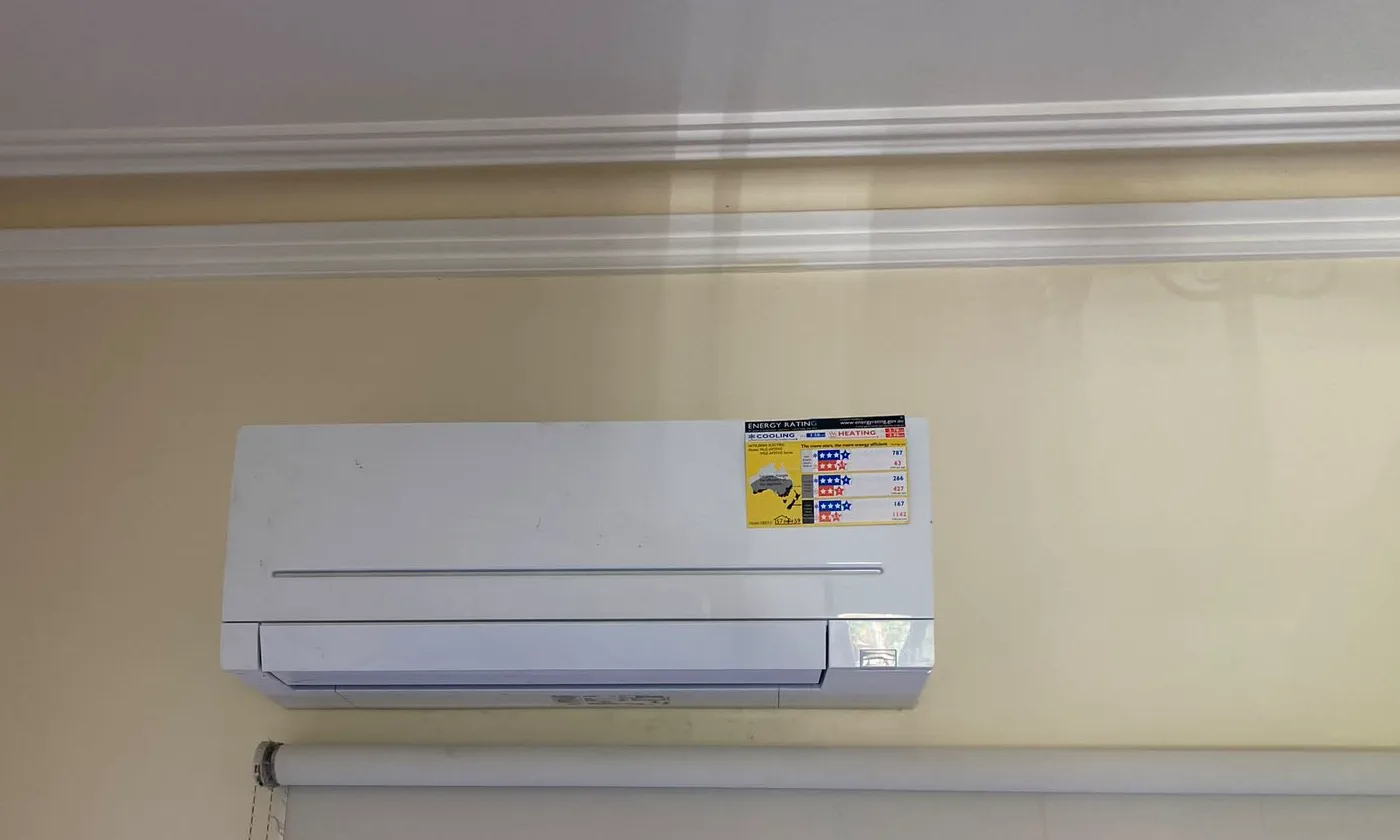
What's the best time of year to install or replace air conditioning?
- Plan installs and replacements for spring or autumn, when you can choose the system rather than take what's available.
- The first hot northerly and the first cold snap are when everyone else's system fails too.
- Mild weather suits the work itself, and leaves time to test heating and cooling before you rely on them.
- If a system fails mid-season, get a diagnosis before deciding, and don't let a hot week rush you into the wrong size.
Why the season changes the job
Summer in Melbourne's west arrives in bursts. Laverton averages 27 days a year at or above 30 °C and 9.4 days at or above 35 °C, mostly between December and February, and they often arrive on hot northerly winds. The first of those days is when systems that sat idle for months get switched on, and when the ones that won't start are found.
Winter does the same in reverse. July is Laverton's coldest month, with a mean minimum of 5.2 °C, and Victorians use more energy for heating than cooling. A reverse-cycle system that quits on the first cold night leaves the household without its main heating, right when every installer's phone is ringing.
What you gain in spring and autumn
With no deadline, you can get a proper look at the rooms, compare a like-for-like replacement with something better suited to how you now use the house, and choose a model by its capacity and Cold-zone heating rating rather than by what's in stock. If the switchboard needs work or a new circuit, there's time to do it properly.
The work itself is easier too. A ducted install means hours in the roof space, which on a summer afternoon can be far hotter than outside. In September or April it's comfortable enough to seal joints and insulate ducts carefully. Even a wall split goes in more smoothly when nobody is waiting on it to cool a baking house.
Spring installs can be tested on cooling before summer, and autumn installs on heating before winter. A drain that needs adjusting or a zone that needs balancing gets sorted while it's an inconvenience, not a crisis.
Replacing an old system before it fails
If your system is getting on, plan its replacement rather than letting it choose the date. The Victorian Government says a reverse-cycle system more than 15 years old will typically use more than three times the energy of a modern one, so an old unit that still runs may already be costing you more than you think.
None of the signs below mean a system must go tomorrow. Each is a reason to get a replacement scope ready in the shoulder season, so the decision is made on your timing.
- Repeat repairs over the last few seasons
- Struggling on the hottest or coldest days
- Rooms it has never kept comfortable
- New noises, smells or error codes
If it fails in the middle of summer or winter
Start with the simple checks: mode, set temperature, timer and remote batteries. If a safety switch has tripped, Energy Safe Victoria says to reset it and call a licensed electrician if it won't reset. Reset it once only, and leave the isolator and covers alone.
Then ask for a diagnosis before deciding anything. Many mid-season faults are repairable, and a repair can carry you through to spring or autumn, when a replacement can be planned properly. If the system can't be repaired, a like-for-like swap may be quickest, but check the old size actually suited the rooms before repeating it.
Meanwhile, keep the household safe. Victoria's health department advises using air conditioning or a fan in extreme heat, and people without a way to keep cool are among those most at risk. Keep a working fan, close the blinds on the sunny side, and if someone vulnerable lives with you, decide where they could go on the worst days.
Timing for rentals
For rental providers, the calendar matters even more. A cooling appliance you supplied that isn't working is on Consumer Affairs Victoria's urgent repairs list, as is a heating appliance that has stopped. Replacing a tired system during a vacancy or in the shoulder seasons avoids an urgent job in the worst week of the year.
From 1 March 2027, energy-efficient fixed cooling with an outlet in the main living area is required when a new rental agreement starts. Lining that work up with a spring or autumn vacancy is far easier than squeezing it in between tenants in January.
Questions that come next
Sources for this article
9 sources, with the date each was checked
- 1.Bureau of Meteorology: Mean number of days ≥ 30 °C 6.9 6.0 4.5 0.7 0.0 0.0 0.0 0.0 0.1 0.9 2.8 5.1 27.0 82 1943 2026 Mean number of days ≥ 35 °C 3.6 2.4 0.9 0.0 0.0 0.0 0.0 0.0 0.0 0.1 0.5 1.9 9.4 Accessed 30 September 2026.
- 2.Bureau of Meteorology (article issued 3 August 2026): To the north lies Australia's hot, dry interior, while to the south stretches the cold Southern Ocean. ... Warm northerly winds arrive first, bringing higher temperatures and clear skies. Then, as a cold front moves in… Accessed 30 September 2026.
- 3.Department of Energy, Environment and Climate Action (energy.vic.gov.au), page last updated 14/04/25: Victorians typically use more energy for heating than cooling, so look for a unit with a higher heating efficiency. Accessed 30 September 2026.
- 4.Commonwealth of Australia (2019), 'The new zoned energy rating label for air conditioners—What installers and retailers need to know', hosted on energyrating.gov.au: Melbourne is in a black ‘COLD’ area—read the black Cold ratings. Accessed 30 September 2026.
- 5.Solar Victoria (updated 2 October 2025): A system that is more than 15 years old for example will typically use more than three times the amount of energy than a modern reverse-cycle air conditioner. Accessed 30 September 2026.
- 6.Energy Safe Victoria: Locate your electricity box outside your home and check whether the safety switch has tripped. If it has tripped, reset the switch. If the switch won’t reset, call a licensed electrician. Accessed 30 September 2026.
- 7.Department of Health, Victoria (updated 3 February 2026): Use air conditioning or a fan, wear light and loose-fitting clothing, keep your skin wet (for example, with a spray bottle or damp sponge), and take cool showers or foot baths. ... People most at risk include those over… Accessed 30 September 2026.
- 8.Consumer Affairs Victoria: a cooling appliance or service provided by the rental provider is not working the property does not meet minimum standards a safety-related device, such as a smoke alarm or pool fence, is not working Accessed 30 September 2026.
- 9.Consumer Affairs Victoria: From 1 March 2027, rental providers must install an energy-efficient, fixed cooling system with an outlet in the main living area. This applies at the start of a new rental agreement. All rental properties must have… Accessed 30 September 2026.