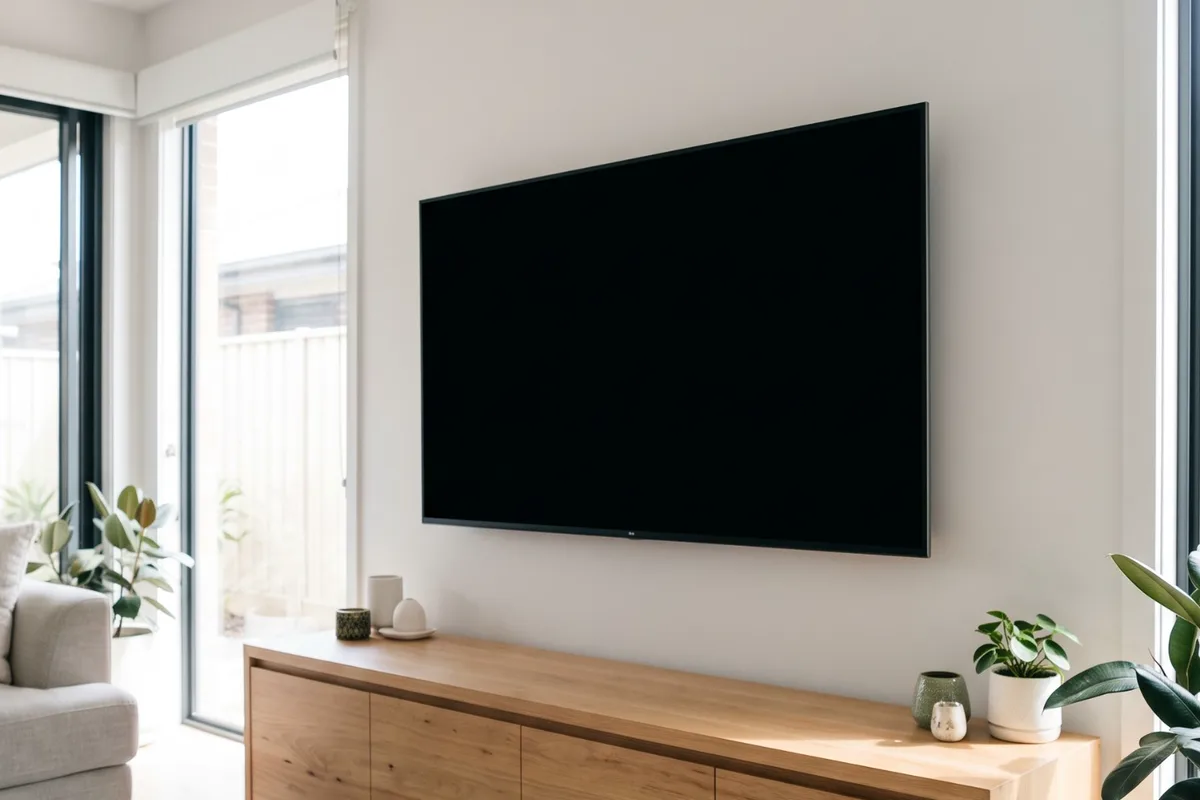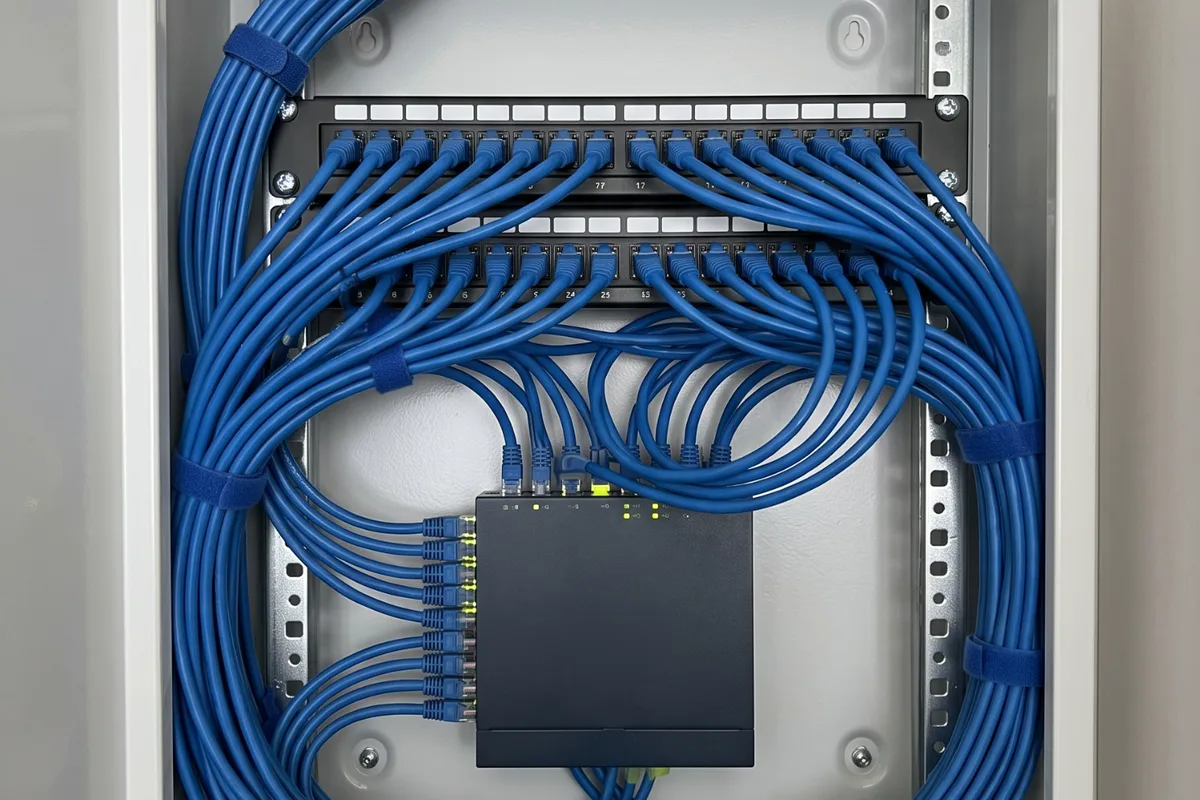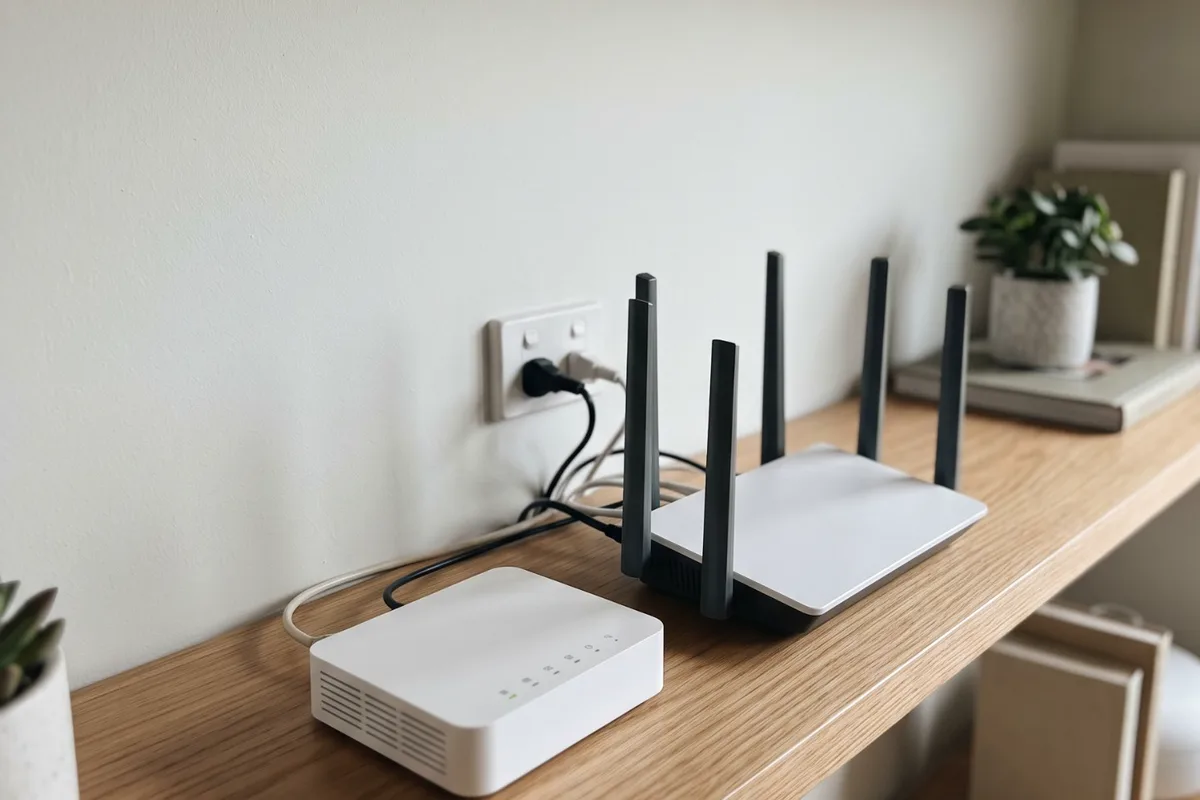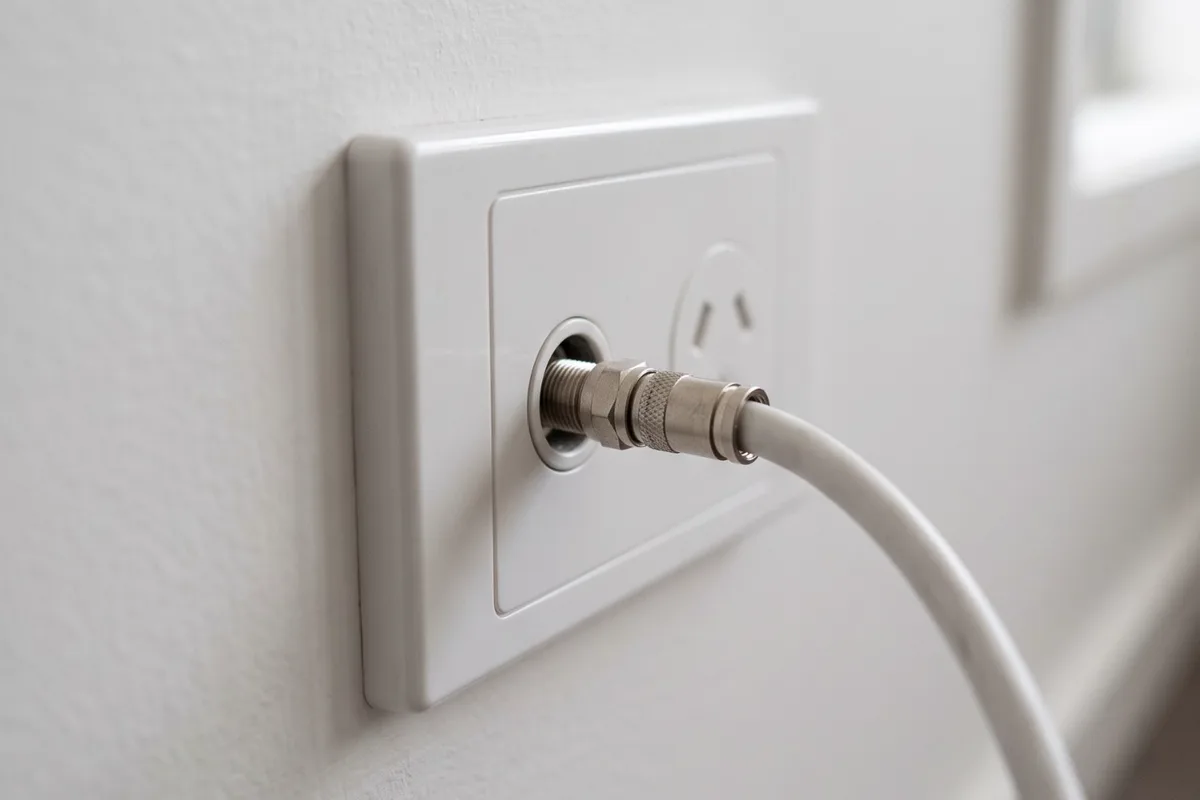
The TV rarely ends up where the antenna point is. We run quad-shield cable from the existing feed to the new spot, fit a quality wall plate and check the splitters and amplifier so the signal holds up. For wall-mounted screens, we add a recessed power point and conduit to hide the leads.
When to get it checked
The TV can't go where you want it
The only antenna point is on the wrong wall, so the TV sits in the corner or a cable runs across the floor.
Mounting a TV on the wall
You want a clean wall with no dangling leads, which means the points need to sit behind the screen.
Pixelating or missing channels
The picture breaks up or freezes, or some channels disappear, especially after extra points were added.
Old or loose wall plates
Cracked plates, push-on connectors that fall out and cable taped up the wall all make for a weak, unreliable signal.
A new room with no TV point
The bedroom, rumpus room or extension has nowhere to connect a TV at all.
Why it happens
4 common causes
One point, many screens
Many homes were built with one antenna point in the lounge. Every TV added since has relied on long leads or cheap splitters.
Signal split too many ways
Each split shares the signal between more outlets. Add enough points without planning and the weakest ones start to drop out.
Old cable and connectors
Older, thinner coaxial cable and push-on connectors let in interference and lose signal over long runs. Quad-shield cable and compression connectors hold up much better.
Antenna or amplifier problems
Sometimes the point isn't the issue at all. A misaligned or damaged antenna, or a failed amplifier, weakens every outlet in the house.
What the job covers
What we usually do on this job. Your quote confirms it for your place.
- Existing antenna feed, splitters and outlets checked
- Quad-shield coaxial cable run to the new spot
- Quality wall plate with compression connectors
- Old plate blanked off when a point is moved
- Splitters replaced or added to suit
- Recessed power point behind wall-mounted TVs
- Conduit to the cabinet for HDMI and other leads
- Picture checked at new and existing outlets
- Certificate of Electrical Safety for new power points
Your options, explained
Move an existing TV point
Low disruption- Best for
- A TV moving to another wall in the same room
- How it works
- The cable is extended or rerouted to the new position, and the old plate is blanked off.
- Worth knowing
- Usually the simplest job. A blank plate is neater than a patched hole.
Add a TV point to another room
Low disruption- Best for
- Bedrooms, rumpus rooms and extensions
- How it works
- A new cable runs from the splitter in the roof to a new wall plate in the room.
- Worth knowing
- Each extra outlet shares the signal, so we check the setup can carry it.
Points behind a wall-mounted TV
Medium disruption- Best for
- Wall-mounted TVs in living rooms and bedrooms
- How it works
- TV, power and data points are set behind the screen, with conduit down to the cabinet for HDMI and other leads.
- Worth knowing
- Settle the bracket and TV height first so the plates sit hidden behind the screen.
Several points with an amplifier
Medium disruption- Best for
- Homes with many TVs or long cable runs
- How it works
- A distribution amplifier in the roof lifts the signal before it's split to each outlet.
- Worth knowing
- Only needed when the signal is weak or split many ways. Too much amplification causes problems of its own.
The people behind the work
One local team for electrical, heating and cooling, based in Altona Meadows, with 19 years in the industry.
Licensed electrical contractor (REC 38187)See more team photos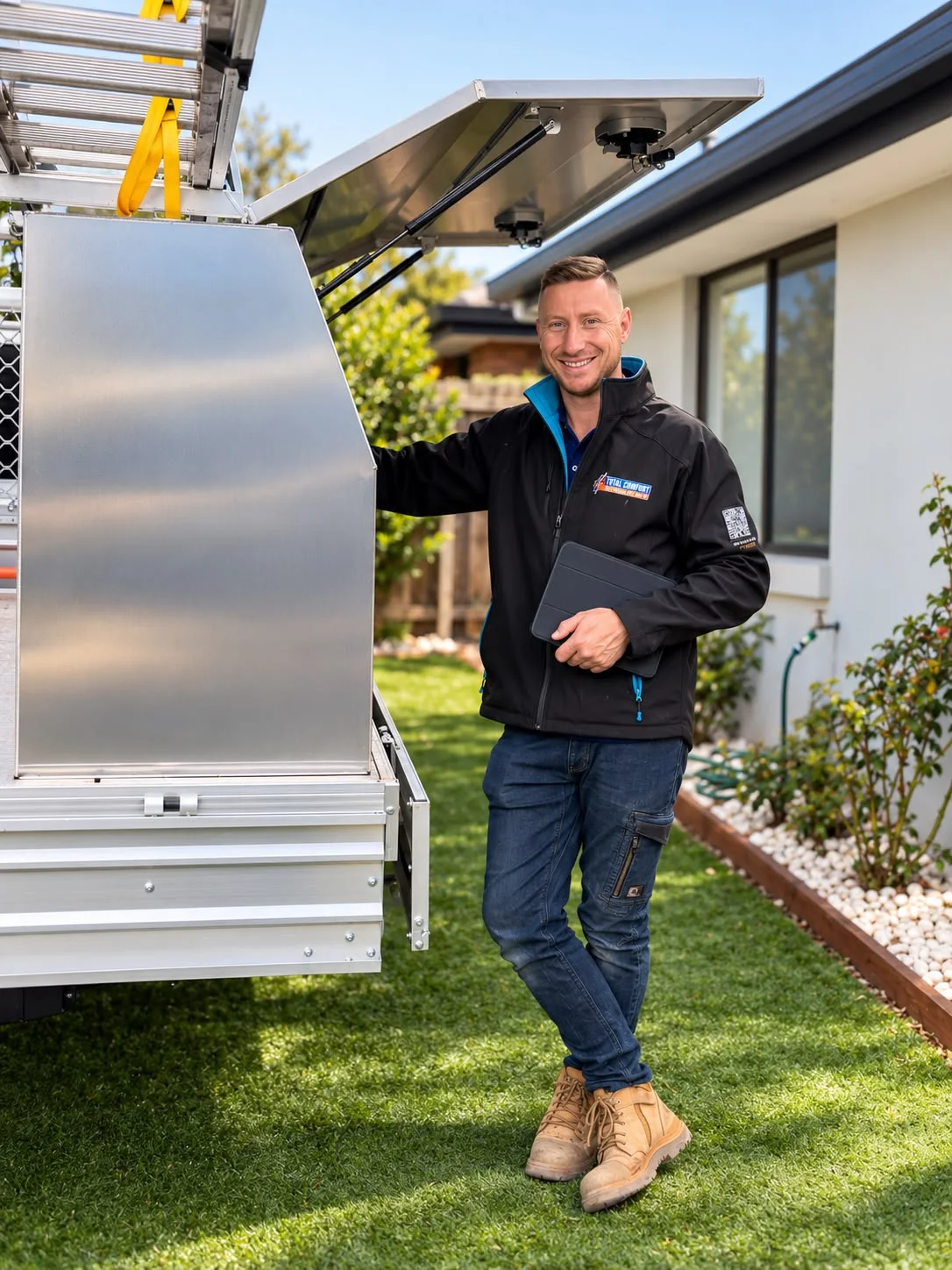
Worth knowing before you book
- Settle the height first
- The bracket and TV height decide where the plates go.
- Every split shares the signal
- More outlets can mean an amplifier, so we check first.
- Pixelating everywhere?
- If every TV breaks up, the antenna or amplifier is the likely cause.
What affects the price?
The right scope depends on your installation. These are the details we check so your quote is useful, with any additional work explained before it proceeds.
How many points
Several points in one visit share the roof work and set-up, so each costs less than doing them separately.
The route from the roof
A single-storey home with a roomy roof is quick. Ground floors in double-storey homes, slabs and raked ceilings take more.
Wall type
Plaster on timber or steel frames is simple to drop cable down. Brick and stone walls take longer or need surface conduit.
Splitters and amplifiers
Replacing old splitters, or adding an amplifier where the signal is split many ways, adds parts.
Power and conduit behind the TV
A recessed power point and conduit for HDMI add parts and time, and the power point is certified electrical work.
How it runs
- 1
Show us the spot
Where the screen goes, and photos of the current TV point.
- 2
Trace and quote
Feed and splitters checked, with the price before we start.
- 3
Run and fit
Cable, wall plate, power and conduit installed.
- 4
Check the picture
Channels checked at every outlet.
Step by step, in more detail
5 steps
Show us the spot
Tell us where the screen will go, its size, and the height if it's going on the wall. Photos of the existing TV point and the wall help.
Trace the existing feed
We find where the antenna cable comes in, what splitters or amplifiers are in the roof and how many outlets already share the signal.
Price before we start
You get the price for the agreed points, power and conduit, with any patching set out.
Run, fit and connect
New coaxial cable runs from the feed to the new spot, a wall plate is fitted and splitters are replaced or added to suit. Power cables are kept apart from it in the wall.
Check the picture
We tune the TV and check the channels at the new point and the existing ones. New power points come with a Certificate of Electrical Safety, and Energy Safe Victoria says your copy must reach you within 30 days.
What is safe to do, and what to leave to us
Safe for you to do
- During a power failure, turn off and unplug the TV and other electronics, as Energy Safe Victoria advises, to help protect them if there's a surge.
- Use a TV bracket rated for the screen's weight and fixed into studs or solid wall.
- Check for cables in the wall before drilling to mount a bracket.
Leave these to us
- Running a TV power lead inside the wall. Leads aren't made to be built in.
- Fixing a heavy TV to plasterboard alone.
- Climbing into the roof to adjust splitters or amplifiers yourself.
- Installing or moving a power point yourself. Energy Safe Victoria says electrical work isn't a DIY job, even small jobs like changing power points.
When to get us in
- You're mounting a TV on the wall
- The TV needs to move to a wall or room with no antenna point
- Channels pixelate or drop out at some outlets
- Wall plates are loose or cracked, or cable is taped up the wall
- You're adding a bedroom, rumpus room or extension
More detail
What makes a good TV point
A reliable TV point starts with quad-shield coaxial cable, compression connectors and a quality wall plate. Older push-on connectors and thin cable let interference in and lose signal on long runs, which shows up as pixelation on some channels.
When we add a point, we look at the whole path from the antenna: the cable, any splitters and any amplifier. A new outlet is only as good as the weakest part of that path.
Wall-mounted TVs without the dangling leads
For a wall-mounted TV, the TV point, a power point and a data point sit behind the screen, placed so the bracket doesn't cover them. A conduit runs inside the wall from behind the TV down to the cabinet, so HDMI and other leads can be pulled through.
Power leads shouldn't be built into the wall, so a recessed power point behind the TV is the safe way to hide the plug. Bring the TV size, the bracket and the height you want, and we'll set the points to suit.
When the problem is upstream
If every TV in the house pixelates, the cause is often upstream: an antenna knocked out of alignment, a corroded connection on the roof or a failed amplifier. A new wall plate won't fix that.
We check the signal path when we add or move a point and tell you if the antenna or amplifier needs attention, so you're not paying for points that can't perform.
Local rules and conditions
Victorian requirements and local conditions that shape this job, with the sources listed at the foot of the page.
Units and townhouses
In 2021, 56.2% of Williamstown's occupied dwellings were separate houses, well below the Victorian figure of 73.4%. In units and townhouses the antenna is often shared, so a new point may need the owners corporation's agreement before anything on common property is touched.
Planning screens in a new build
Wyndham has new housing planned in growth areas including Wyndham Vale. If you're building, decide where the TVs go, and at what height, before plaster. Then the points end up behind the screens rather than beside them.
Useful reading
Guides to read before you decide, with checklists and questions to bring to the quote.
- The electrical decisions to make before your renovation walls closePlan appliances, lighting, outlets and future upgrades while access and options are still available.
- Planning the electrical in a new build or extensionMark up the power and lighting plan, decide the dedicated circuits, pre-wire air conditioning and EV charging, then walk the frame before plaster.
- Surge protection explained: what it does and doesn't doHow a switchboard surge diverter differs from a surge power board, what each one protects, where both stop, and which homes in Melbourne's west gain most.
- Planning a wall-mounted TV: power, antenna and data behind the screenMounting height, recessed power, conduit for HDMI and soundbar cables, and where the antenna and data feeds come from, all planned before the bracket goes up.
Common questions
Sources for the rules and local facts on this page
6 sources, with the date each was checked
- 1.Australian Bureau of Statistics, 2021 Census QuickStats: Separate house 3,070 56.2 1,755,423 73.4 Accessed 30 September 2026.
- 2.Victorian Electoral Commission (2023 electoral structure review fact sheet): New housing developments are planned in residential growth areas including Truganina, Tarneit, Wyndham Vale and Manor Lakes, as well as near activity centres and public transport. Accessed 30 September 2026.
- 3.Energy Safe Victoria: Electrical work isn’t a DIY job, even for small jobs such as changing power points or light switches. Accessed 30 September 2026.
- 4.Energy Safe Victoria: Whenever a licensed electrician completes any electrical installation work, they must provide a Certificate of Electrical Safety (COES). Accessed 30 September 2026.
- 5.Energy Safe Victoria: For electrical installation work performed within your electrical installation including but not limited to lights, power points, air conditioning, hot water service etc. Accessed 30 September 2026.
- 6.Energy Safe Victoria: In the event of a power failure turn off and unplug all electrical appliances at the powerpoint. This will help to prevent equipment damage in the event of a power surge. Accessed 30 September 2026.