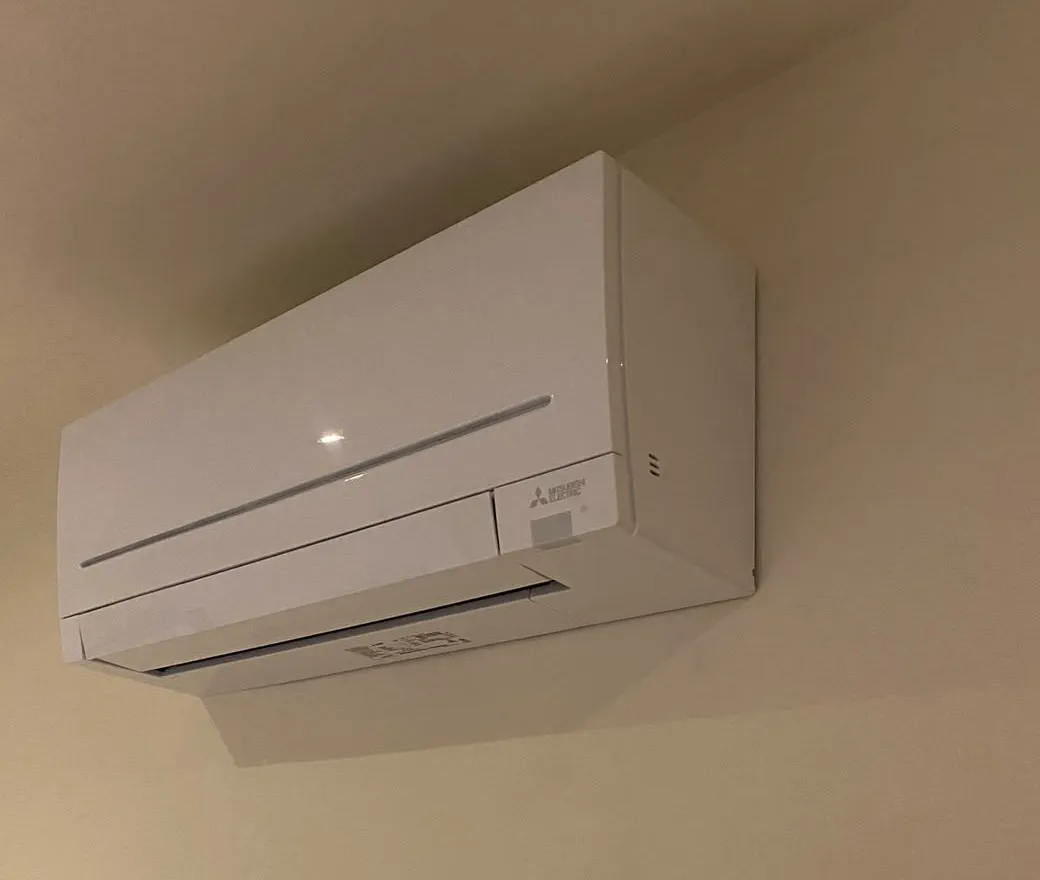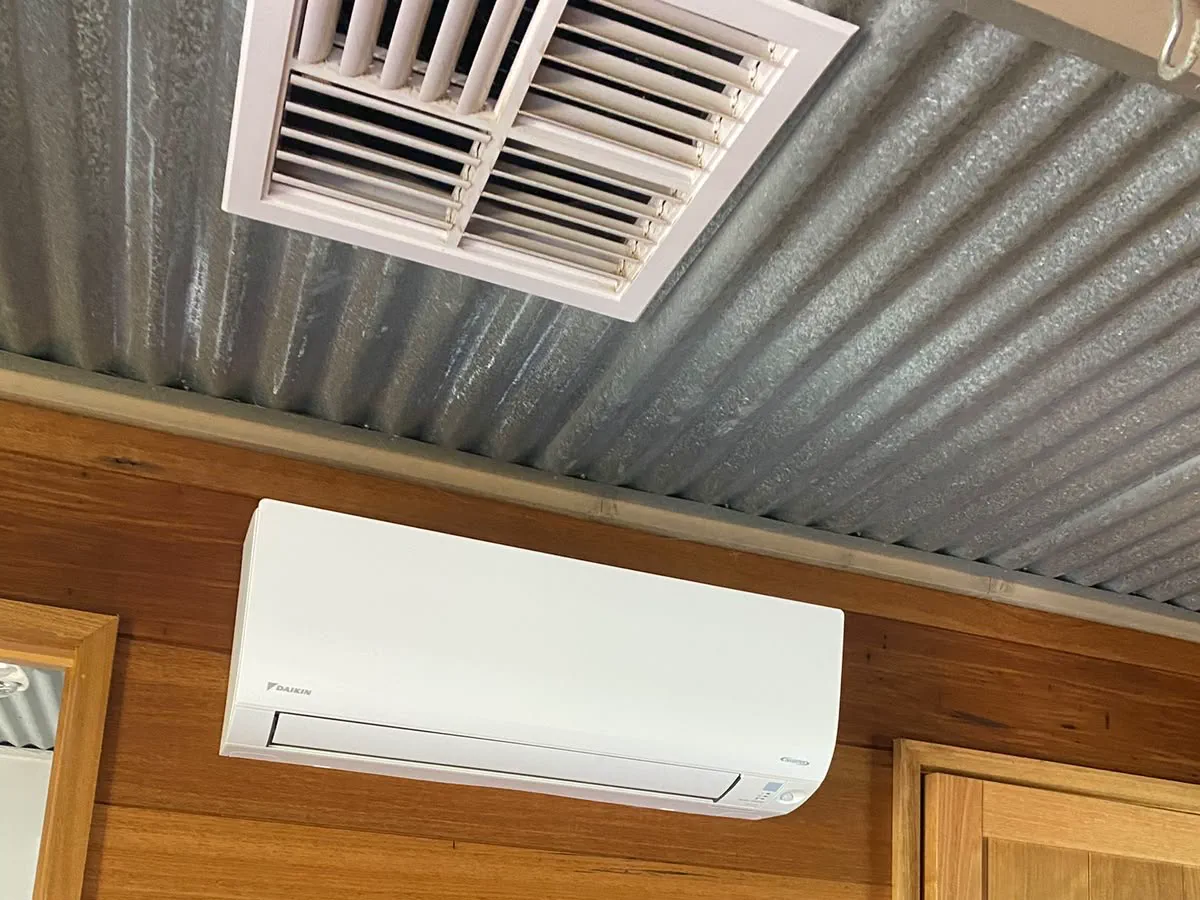
A split system has two halves: the indoor head on the wall and the outdoor unit outside, joined by refrigerant pipe, a drain and a cable. Most installs we see go wrong at the edges, with a unit too small for the room, a drain that runs back toward the wall, or a power supply borrowed from a shared circuit. We do the air conditioning and the electrical on the same visit, so the circuit, the isolator and the switchboard get checked by the person fitting the unit. We work with Mitsubishi Electric and Fujitsu, and we're happy to replace an old unit or install into a room that has never had one.
When to get it checked
One room never gets comfortable
The west-facing lounge bakes after lunch, the back bedroom stays cold all winter, or the old unit there can't keep up. A split puts heating and cooling where the problem is.
Portable heaters and fans are doing the work
A column heater and pedestal fans running for hours means the room needs something fixed. Portables leave cold corners, crowd the power points and each do only one job.
An old gas space heater is near the end
An old or unreliable wall furnace in the living area is a natural point to change. A reverse-cycle split heats that room in winter and cools it in summer.
A renovation has added a room
A new bedroom, studio or converted garage often sits beyond the reach of the existing heating. Planning the unit before plastering keeps the pipe and cable runs hidden.
Hot nights are wrecking sleep
Upstairs bedrooms hold the day's heat long after a hot northerly has passed. A bedroom split with a low indoor noise rating makes those nights easier.
Why it happens
5 common causes
Afternoon sun on glass
West- and north-facing windows and big sliding doors load a room with heat far beyond what its floor area suggests. On a hot afternoon, the glass decides the unit size more than the square metres.
Heat trapped under the roof
Upstairs rooms sit under the roof space, which keeps radiating heat into the evening. They need more capacity than a ground-floor room of the same size.
Older homes that leak warmth
Post-war weatherboards and brick veneers often have little wall insulation and plenty of draughts. On cold, still nights the room sheds heat quickly and the unit works harder to hold it.
A unit sized by guesswork
Too small, and it runs flat out on the worst days without getting there. Too big, and it cools fast, switches off, leaves the room clammy and costs more to buy.
Shortcuts at the edges
A drain that runs back toward the wall, an outdoor unit jammed into a corner, or power borrowed from a shared circuit. These are what turn a new install into a repair call.
What the job covers
What we usually do on this job. Your quote confirms it for your place.
- Room measured and unit sized for the space and its sun exposure
- Indoor head mounted level with a clear path for airflow
- Outdoor unit on a wall bracket or ground pad, away from bedroom windows where possible
- Refrigerant pipe, drain and cable run in covered ducting
- Pipework pressure tested and vacuumed before the system is opened up
- Dedicated circuit run from the switchboard
- Outdoor isolator fitted next to the unit
- Switchboard checked for spare capacity and a free circuit
- Old unit removed and taken away when it's a replacement
- System run in heating and cooling mode and remote set up with you
Your options, explained
Wall split, back-to-back
Low disruption- Best for
- A room on an outside wall with space for the outdoor unit directly behind
- How it works
- Pipe, drain and cable pass straight through the wall to the outdoor unit on a bracket or pad.
- Worth knowing
- The simplest install, usually about half a day. A neighbour's bedroom window or a narrow side path can rule the spot out.
Wall split, longer pipe run
Medium disruption- Best for
- Internal walls, upstairs rooms, or an outdoor unit that belongs around the side
- How it works
- Pipework runs in covered ducting along the wall, or through the roof space or subfloor, to an outdoor unit placed for airflow and quiet.
- Worth knowing
- Up to a full day. Where the drain can't fall to a suitable point, a small condensate pump does the job.
Separate splits in two or three rooms
Medium disruption- Best for
- Homes where a few rooms are used at different times
- How it works
- Each room gets its own head, outdoor unit and controls, so you only run the rooms that are occupied.
- Worth knowing
- One breakdown never leaves the whole house without heating. Each unit needs its own circuit, so we check the board can carry them.
Multi-head or ducted instead
High disruption- Best for
- Whole-home plans, or no outside space for several units
- How it works
- A multi-head runs several heads from one outdoor unit. Ducted serves the house from one concealed system with zones.
- Worth knowing
- Compare the complete installation, not the equipment price. We'll lay the choices side by side at the quote.
The people behind the work
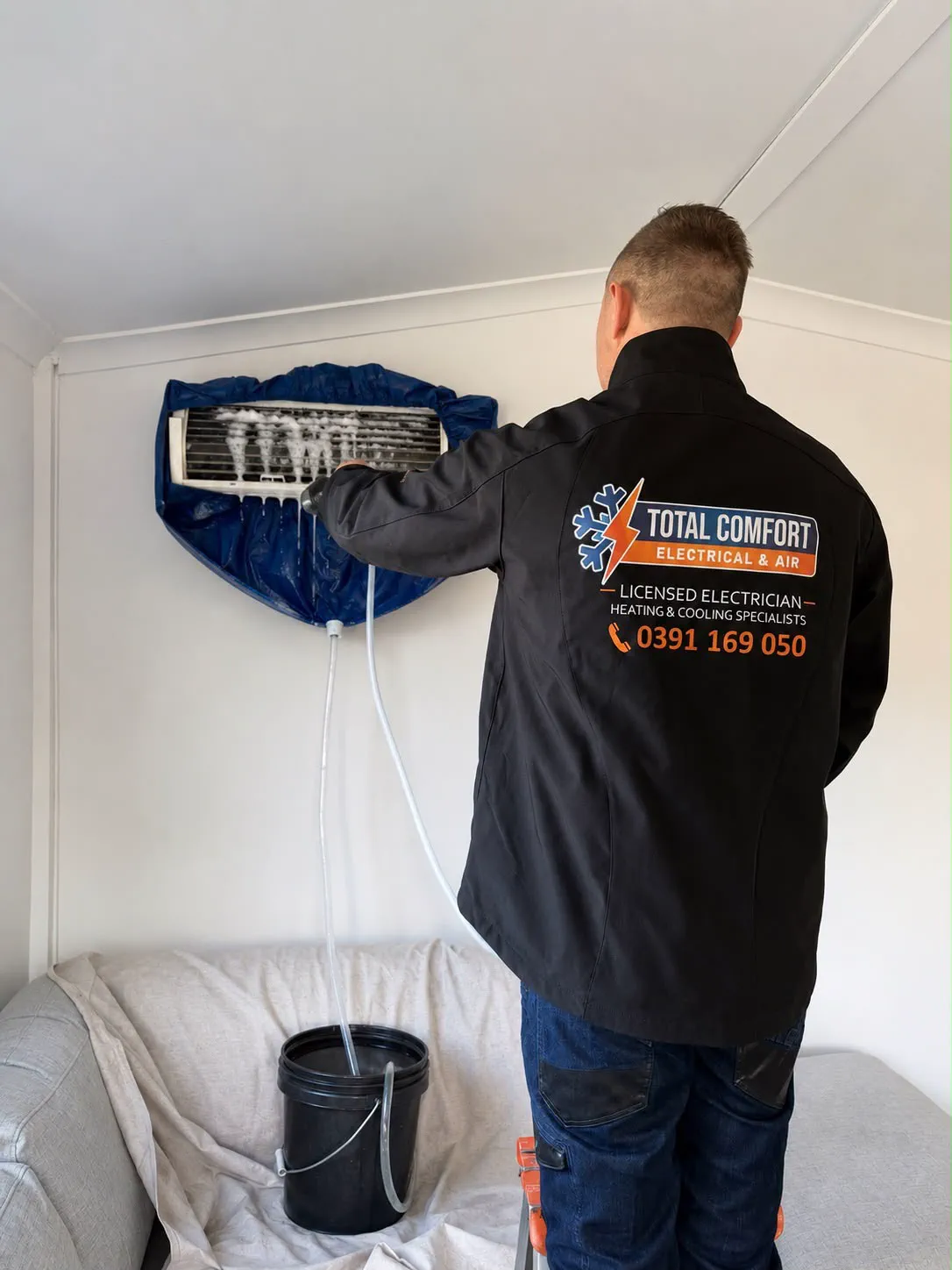
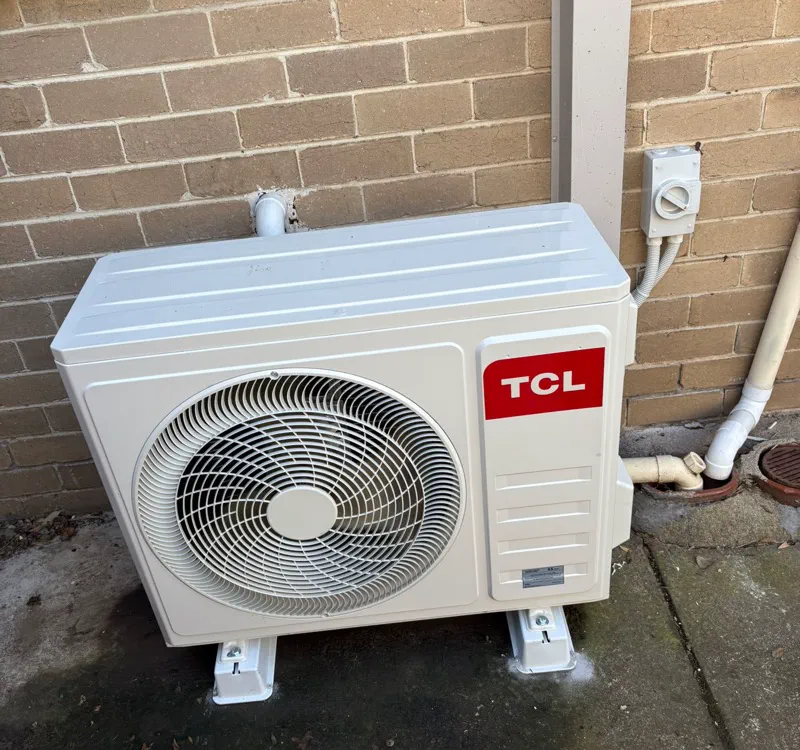
Our own photos from jobs like this one. Family-run, based in Altona Meadows, with 19 years in the industry.
Licensed electrical contractor (REC 38187)See more team photos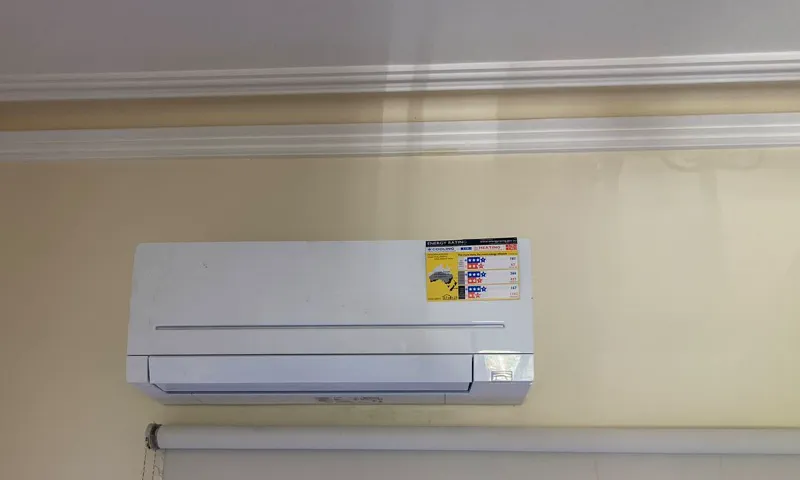
Worth knowing before you book
- Bigger is not always better
- An oversized unit cools the room fast, switches off, and leaves it clammy. We work out the size from the room, the windows and which way it faces.
- Back-to-back is the quickest install
- When the outdoor unit can sit directly behind the indoor head, the pipe run is short and the job is simpler. Longer runs are fine, they just take longer.
- Your switchboard might need work
- Older boards sometimes have no room for another circuit. If yours needs an upgrade, you'll hear it at the quote stage, not on the day.
What affects the price?
The right scope depends on your installation. These are the details we check so your quote is useful, with any additional work explained before it proceeds.
Capacity and model
A larger unit costs more, and so do higher star ratings, app control and quieter outdoor units. We quote on what the room needs.
Where the units go
Back-to-back is simplest. Every extra metre of pipe, corner of ducting or run through the roof or subfloor adds time and material.
Getting the water away
A drain that falls by gravity to a garden bed or drainage point is straightforward. Upstairs heads and internal walls may need a condensate pump.
The electrical supply
Distance from the switchboard, the cable route and a spare spot on the board all count. We check the switchboard is suitable before a new reverse-cycle system goes in.
Height, walls and access
Second-storey outdoor units, double-brick or rendered walls and tight side paths can need extra equipment or a second person. Removing an old unit or heater adds to the job.
Before the visit
- Send room dimensions, ceiling height and photos of windows and walls.
- Identify a possible outdoor location and access path.
- Tell us how the room is used in winter and summer.
How it runs
- 1
Tell us about the room
Send the room size, a photo of the wall and where you'd like the outdoor unit. Photos of your switchboard help too.
- 2
Quote with options
We suggest a unit size and model and explain the difference between options, with fixed pricing before any work starts.
- 3
Install and wire in
Indoor head, outdoor unit, pipework and the electrical are done on the same visit.
- 4
Run it and hand over
We test it in both modes, show you the remote and the filters, and clean up before we go.
Step by step, in more detail
5 steps
Tell us about the room
Send the room size, ceiling height and photos of the windows, the wall you have in mind and a possible outdoor unit spot. A switchboard photo helps, as does knowing how you use the room in winter and summer.
Size it and plan the run
We weigh orientation, glazing, insulation and open doorways, then settle on a capacity. We plan the head position, the pipe and drain route, the outdoor unit spot and the cable path, and check the board has room for a new circuit.
Quote with options
You get a fixed price for the agreed scope, with any choice of sizes or models explained plainly. If the switchboard needs work, you hear it now, not on install day.
Install and wire in
The bracket goes up level, the wall penetration is sealed, and pipe, drain and cable run in covered ducting to the outdoor unit. The dedicated circuit and isolator go in on the same visit.
Test, commission and hand over
The pipework is pressure tested and vacuumed before refrigerant is let in. We run the system in heating and cooling, pour water through the drain to prove its fall, show you the remote and filters, and clean up.
What is safe to do, and what to leave to us
Safe for you to do
- Measure the room and photograph the wall, the windows and possible outdoor unit spots.
- Keep the outdoor unit clear of plants, bins and stored gear so air can move through it.
- If a safety switch trips when the unit starts, reset it once. If it trips again or won't reset, leave it off and call a licensed electrician.
- Turn the unit off at the remote if water drips near a power point or it smells hot.
Leave these to us
- Installing a split yourself or through an unlicensed installer. It needs a refrigerant handling licence, and Energy Safe Victoria says unlicensed electrical work is illegal and potentially fatal.
- Moving a unit or undoing pipe connections. Releasing refrigerant into the air is illegal.
- Running a new unit off an existing power point circuit or an extension lead.
- Opening the indoor unit, outdoor unit, isolator or switchboard.
When to get us in
- You want a room heated and cooled and need it sized and priced
- A gas space heater or an old unit is due for replacement
- A renovation or extension is adding a room
- You've bought a unit and need it installed and wired in
- A rental needs heating or cooling that meets the minimum standards
More detail
Reading the energy label for Melbourne
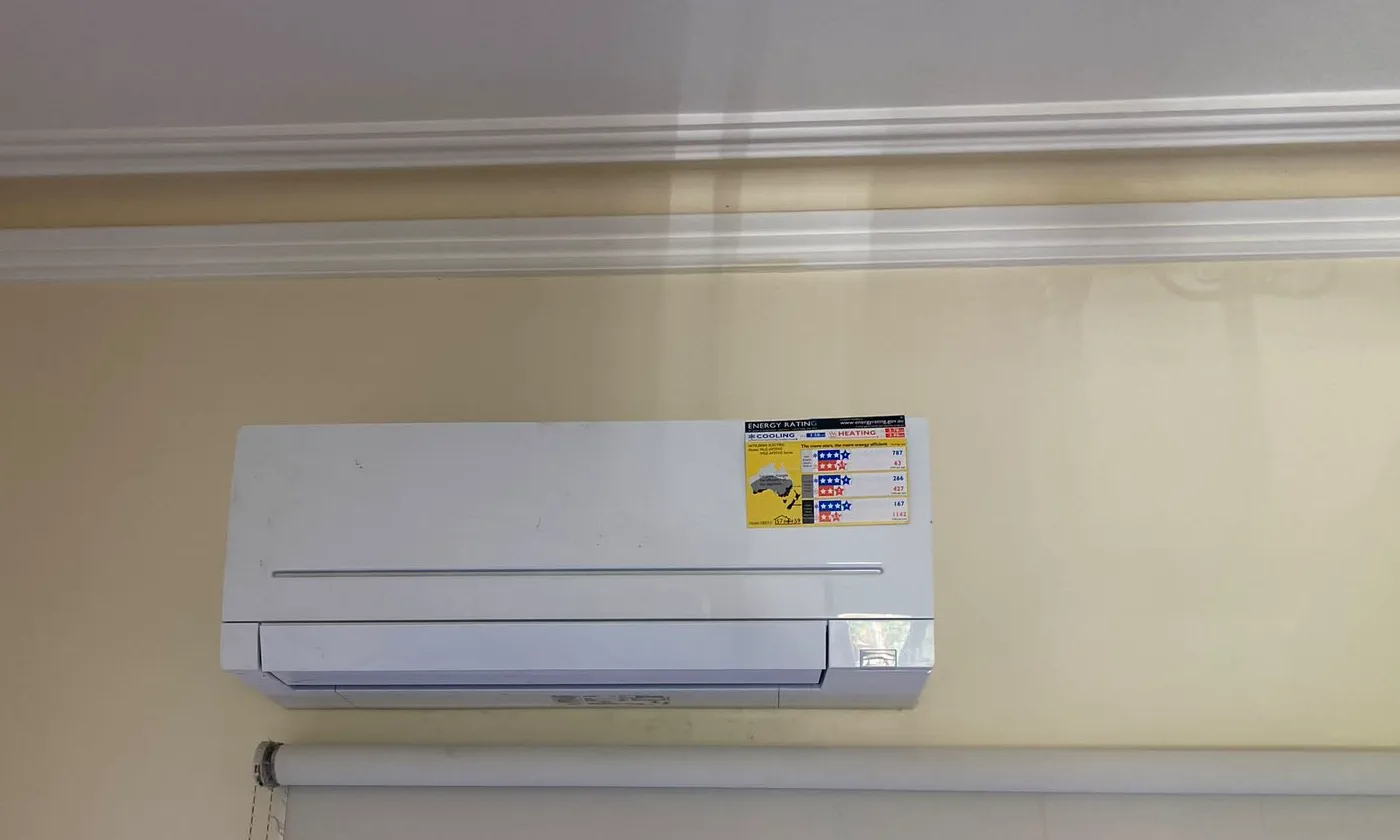
The Zoned Energy Rating Label gives a 1 to 10 star rating for three climate zones, with estimated yearly energy use for cooling in blue and heating in red. A Commonwealth guide for installers puts Melbourne in the Cold zone, where heating is used much more than cooling and performance in frosting conditions below 5.5 °C is critical. Split systems also carry separate indoor and outdoor noise ratings. Stores must show the label on single-phase, single-split units up to 30 kW, but online listings needn't, so ask for it.
Why the electrician comes on the same visit
In Victoria, all fixed electrical installation work needs a licensed electrician; the restricted licence some air conditioning mechanics hold covers only like-for-like disconnection and reconnection. Total Comfort is a licensed electrical contractor (REC 38187), so the circuit, the lockable isolator beside the outdoor unit and any switchboard work are done by the people fitting the unit. Air conditioning is non-prescribed work, and the electrician must give you a copy of the Certificate of Electrical Safety within 30 days.
The refrigerant side is licensed too
Selling a pre-charged split system doesn't need a refrigerant trading authorisation, but installing one needs a refrigerant handling licence. In Victoria, refrigerated air-conditioning work, including any part of a single-head split system, is also a class of plumbing work regulated by the Building and Plumbing Commission. Releasing refrigerant into the air is illegal, which is why the pipework is pressure tested and vacuumed before the valves are opened.
How a split heats in winter
A reverse-cycle split is a heat pump: in heating mode it absorbs heat from the outside air and releases it indoors, and in cooling mode it does the reverse. For every unit of electricity it uses, it can move three to five units of heat into the room, where a bar, convection or radiant heater produces about one. The Victorian Government suggests 18 to 20 °C for heating and 24 to 26 °C for cooling living areas, with each degree beyond that adding around 10% to running costs.
Local rules and conditions
Victorian requirements and local conditions that shape this job, with the sources listed at the foot of the page.
Heating does more of the work
Victorians typically use more energy for heating than cooling, and the Victorian Government suggests a unit with higher heating efficiency. July's mean minimum at the Laverton weather station is 5.2 °C, so we size for winter mornings as much as summer afternoons.
Summer heat from the north
Laverton averages 27 days a year at or above 30 °C and 9.4 at or above 35 °C, mostly from December to February. Its record is 47.5 °C, set on 7 February 2009. West-facing rooms take the worst of it, so they get extra attention when we size a unit.
Rentals and the minimum standards
Every Victorian rental needs a working fixed heater in the main living area. For agreements from 29 March 2023 it must be energy efficient, and a non-ducted air conditioner rated 2 stars or above qualifies. From 1 March 2027, rental providers must also install energy-efficient fixed cooling there when a new agreement starts, and Consumer Affairs Victoria notes a reverse-cycle unit can satisfy both.
Useful reading
Guides to read before you decide, with checklists and questions to bring to the quote.
- Split system or ducted: choose around the rooms you useCompare layouts, zoning, installation work and quote details before choosing equipment for your home.
- What size split system do you need?What a split system's kW rating measures, why floor area alone gets it wrong, and how glass, ceilings and afternoon sun change the size a room needs.
- Reading the Zoned Energy Rating LabelWhich zone to read in Melbourne, why the red heating stars matter most, what the kWh and noise figures mean, and how to compare two units fairly.
- Air conditioner maintenance: what to watch between servicesKeep useful records, follow model-specific filter care and recognise symptoms that need a repair visit.
Common questions
Questions people ask about this
- Can one reverse-cycle air conditioner meet both rental heating and cooling standards?Yes.
- What is the switch next to my outdoor unit for?It's an isolating switch that cuts all power to the air conditioner, so a technician can work on the system safely without relying on the switchboard.
- My rental has no fixed heater in the living area. Is that allowed?No.
- What happens if the heater in my rental breaks after March 2027?If it can be repaired, it's repaired as an urgent repair, as it is now.
- How do I prepare for an air conditioning service or installation?Clear a working space around the indoor unit and the outdoor unit, make sure the roof manhole is easy to reach if you have a ducted system, and secure pets.
From the blog
- Installing a split system upstairs: pipe runs, drains and outdoor unitsBack-to-back or a long pipe run, a drain that needs fall, an outdoor unit on the ground or a bracket, and safe access: what decides how an upstairs split goes in.
- Installing air conditioning in a heritage weatherboard homeOutdoor unit visibility, pipe routes through old walls, tight roof spaces and overlay checks: how to air condition a period home without spoiling it.
- Is a split system too noisy for a bedroom?A well-sized, well-placed split is quiet enough for most bedrooms. Noise ratings, sizing, airflow direction and the outdoor unit decide whether light sleepers agree.
Sources for the rules and local facts on this page
18 sources, with the date each was checked
- 1.Department of Energy, Environment and Climate Action (energy.vic.gov.au), page last updated 14/04/25: Victorians typically use more energy for heating than cooling, so look for a unit with a higher heating efficiency. Accessed 30 September 2026.
- 2.Bureau of Meteorology: Mean minimum temperature (°C) 14.0 14.4 12.7 10.0 7.8 5.9 5.2 5.7 6.8 8.4 10.3 12.2 9.5 81 1943 2026 Accessed 30 September 2026.
- 3.Consumer Affairs Victoria: All rental properties must have a fixed heater (not portable) in good working order in the main living area. For rental agreements entered into from 29 March 2023, this must be an energy efficient fixed heater in the… Accessed 30 September 2026.
- 4.Consumer Affairs Victoria: From 1 March 2027, rental providers must install an energy-efficient, fixed cooling system with an outlet in the main living area. This applies at the start of a new rental agreement. All rental properties must have… Accessed 30 September 2026.
- 5.Consumer Affairs Victoria: Tip: A reverse-cycle air conditioner can satisfy both the heating and cooling standards. Accessed 30 September 2026.
- 6.Energy Rating (GEMS Regulator / DCCEEW): The Zoned Energy Rating Label provides a seasonal efficiency rating for three distinct climate zones across Australia and New Zealand (hot, average and cold). Accessed 30 September 2026.
- 7.Commonwealth of Australia (2019), 'The new zoned energy rating label for air conditioners—What installers and retailers need to know', hosted on energyrating.gov.au: Melbourne is in a black ‘COLD’ area—read the black Cold ratings. Accessed 30 September 2026.
- 8.Energy Safe Victoria: This licence type only allows the disconnection and reconnection of ‘like for like’ equipment, for the purposes of repair, replacement or maintenance. The Restricted Electrical Worker’s licence does not allow a person… Accessed 30 September 2026.
- 9.Access Canberra Electrical Inspections (ACT Government), Electrical Fact Sheet, updated September 2019: Air-conditioning and heat pump systems incorporating a compressor shall be provided with an isolating switch (lockable) in accordance with Clause 2.3.2.2, installed adjacent to but not on the unit, which isolates all… Accessed 30 September 2026.
- 10.Energy Safe Victoria: 'Prescribed' certificates are for electrical installation work that requires inspection by a Licensed Electrical inspector. This includes (but is not limited to): Consumer mains cables, main switchboard, meter box and… Accessed 30 September 2026.
- 11.Australian Refrigeration Council (ARC): NO. If the refrigerant is contained in equipment, such as a split system air conditioner, a Refrigerant Trading Authorisation is not required. However a refrigerant handling licence is required to install this type of… Accessed 30 September 2026.
- 12.Building and Plumbing Commission (Victorian Building Authority, trading as the Building and Plumbing Commission): Under Part 4 of the Plumbing Regulations 2018, Refrigerated Air-conditioning work is: The construction, installation, replacement, repair, alteration, maintenance, testing or commissioning of refrigerated… Accessed 30 September 2026.
- 13.Department of Climate Change, Energy, the Environment and Water (DCCEEW): It's illegal to release regulated refrigerants into the air. This is because some refrigerants can stay in the atmosphere for decades or more and can be thousands of times worse for climate change than carbon dioxide… Accessed 30 September 2026.
- 14.YourHome (Australian Government): A reverse cycle air-conditioner is a type of heat pump that uses electricity to warm your home in winter and cool it in summer (refer to Heat pumps below). In heating mode, the system absorbs heat from the outside air… Accessed 30 September 2026.
- 15.Energy Rating (GEMS Regulator / DCCEEW): Reverse cycle air conditioners are much more efficient at heating than standard electric heaters (bar heaters, convection, or radiant heaters). ... During the normal operating range in Australia for every unit of… Accessed 30 September 2026.
- 16.Solar Victoria (updated 20 November 2025): To heat a room, try setting the temperature between 18°C to 20°C. Every 1°C higher will add around 10% to your heating bill. Set your air conditioner thermostat for cooling between 24°C and 26°C for living areas – every… Accessed 30 September 2026.
- 17.Energy Safe Victoria: Locate your electricity box outside your home and check whether the safety switch has tripped. If it has tripped, reset the switch. If the switch won’t reset, call a licensed electrician. Accessed 30 September 2026.
- 18.Energy Safe Victoria: Gas and electricity are inherently dangerous and it’s illegal and potentially fatal for unlicensed and unqualified people to undertake any electrical or gasfitting work. Homeowners and consumers must always use… Accessed 30 September 2026.