When an air conditioner or heater stops, the cause can be mechanical, refrigerant or electrical. We're licensed electricians and heating and cooling technicians, so we can trace a fault from the switchboard to the outdoor unit without calling in another trade. Common problems include error codes, units that trip the power, water leaking from the indoor head, and systems that run but don't heat or cool. We give you the honest answer on whether it's worth repairing.
When to get it checked
An error code or flashing lights
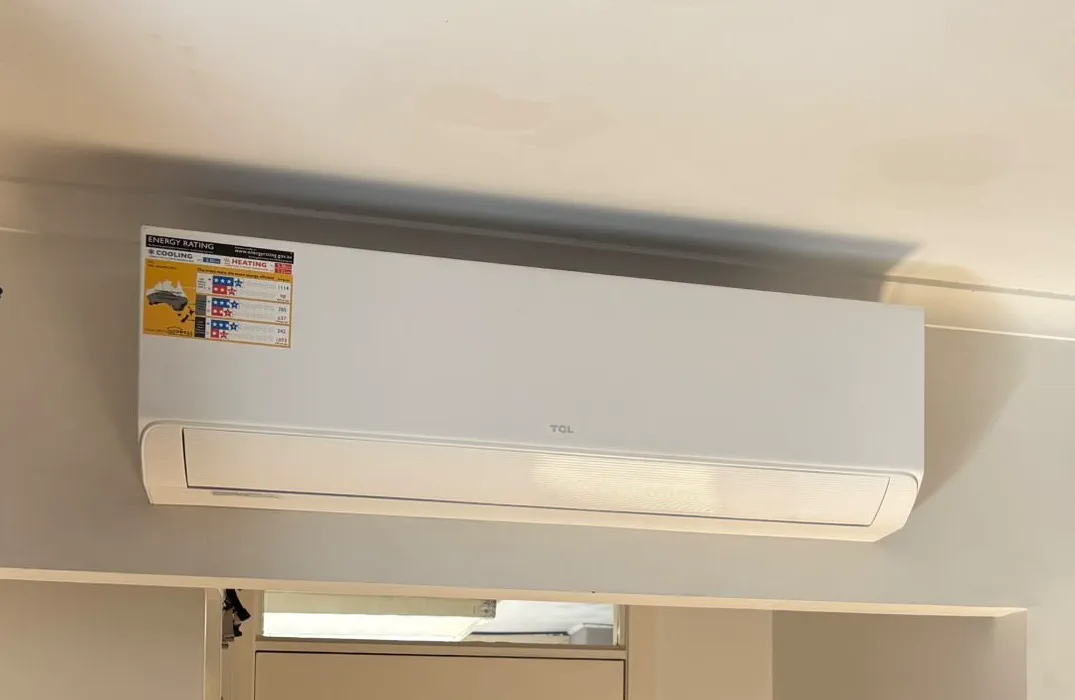
The controller shows a code, or the indoor unit's lights blink in a pattern. A code says which protection tripped or which sensor complained, not always why, and codes differ between models.
It trips the power
The safety switch or circuit breaker drops when the unit starts, or partway through a cycle. Something is leaking current or drawing too much, and that needs testing, not another reset.
It runs but won't heat or cool
Air moves but at the wrong temperature, or the system can't keep up on a hot afternoon or a cold night. On a ducted or multi-head system, note whether it's one room or the whole house.
Water, ice or frost
Drips from the indoor head or a ceiling under a ducted unit, ice on the copper pipes, or frost on the outdoor unit that builds up and never clears.
New noises or smells
Grinding, screeching, rattling or hard clicking, or a burning smell at start-up. A burning smell means switch it off and leave it off.
Nothing happens at all
The controller does nothing, or the indoor fan runs while the outdoor unit stays silent. On gas ducted heating, the fan may start but the burner never lights.
Why it happens
5 common causes
Power supply and protection
A loose or burnt terminal, a corroded outdoor isolator, a tired circuit breaker or damaged cable between the units. Isolators sit in the weather for years, and moisture inside one is a common cause of tripping.
Worn electrical parts
Capacitors, fan motors, relays, contactors and evaporative cooler pumps wear out, and summer heat is hard on them. A weak capacitor can stop a fan or compressor starting while everything else looks normal.
Sensors and control boards
Sensors drift or fail, and boards are damaged by surges, moisture or insects nesting in the outdoor unit. The system then shuts itself down or runs out of step.
Poor airflow
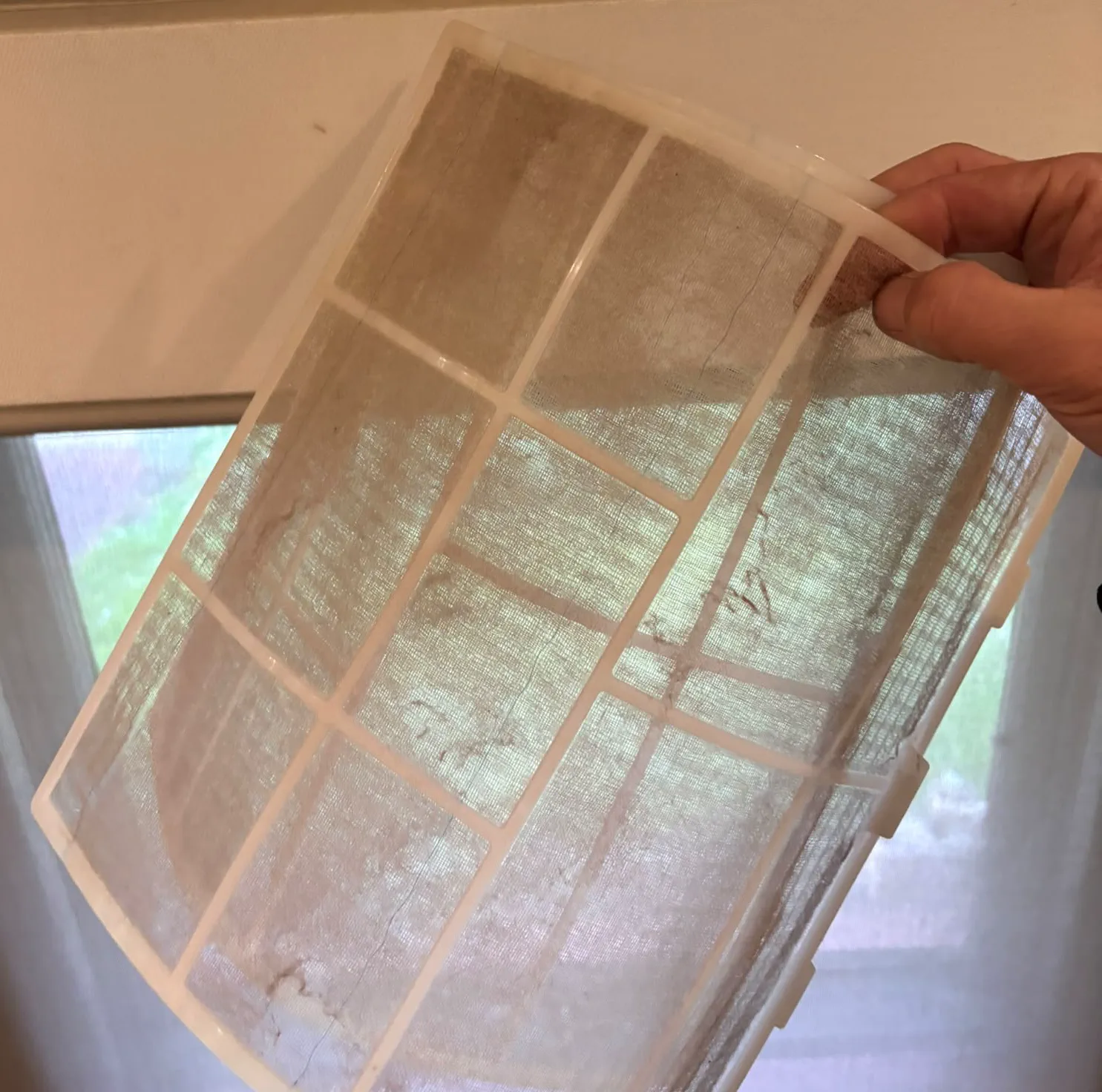
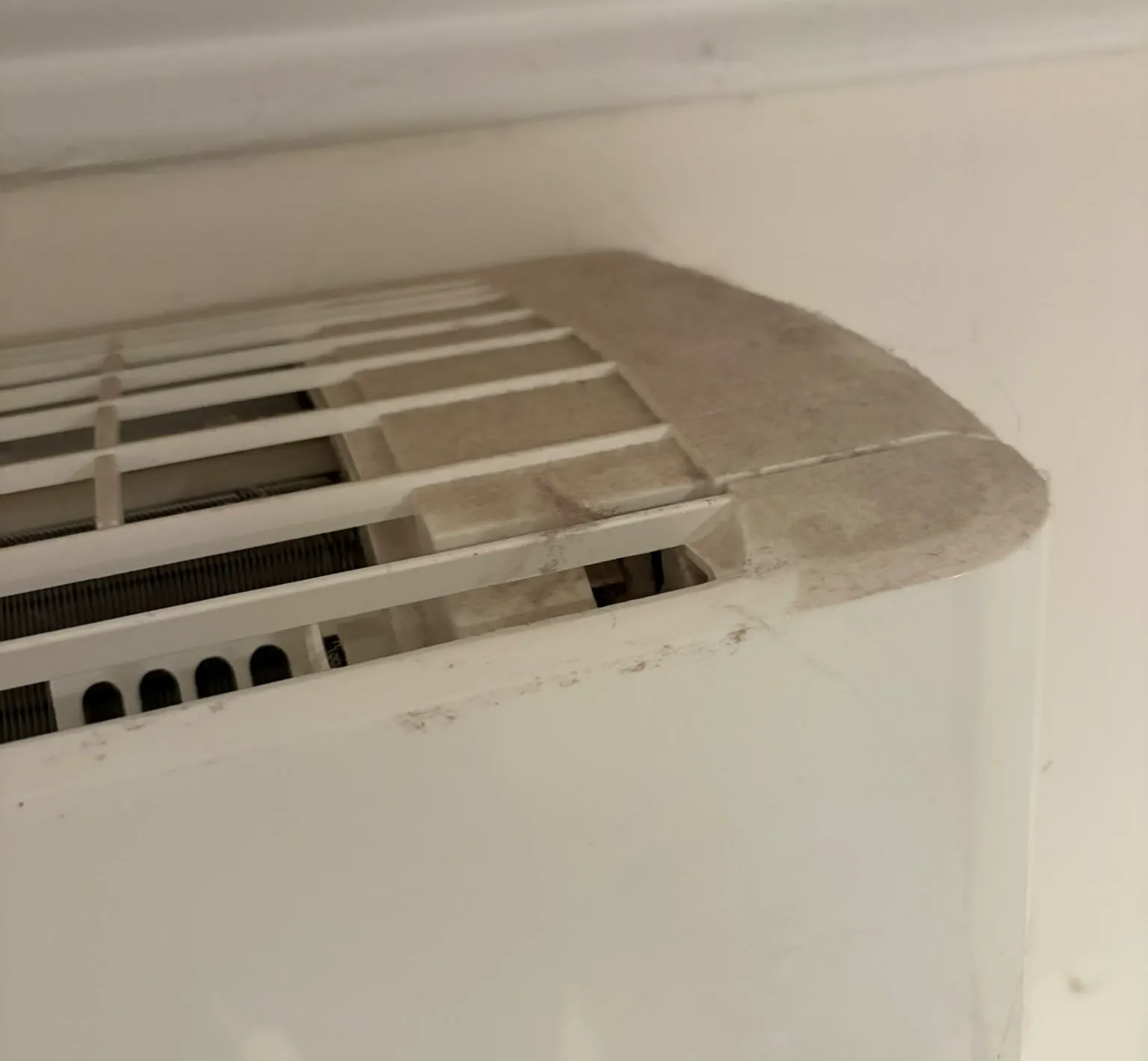
Dirty filters significantly reduce airflow and efficiency, and can weaken heating too. In a ducted system, a blocked return air filter or a crushed duct does the same, and the coil can ice up or the unit shuts down on protection.
Refrigerant leaks
Refrigerant runs in a sealed loop and isn't consumed, so a system that's short has a leak somewhere. Flare joints at the indoor unit, pipes that rub against a bracket and corroded coils are the usual places.
What the job covers
What we usually do on this job. Your quote confirms it for your place.
- Error codes read and checked against the manufacturer's guide
- Power supply, circuit breaker and isolator tested
- Wiring and connections at both units checked
- Compressor, fans and motors tested
- Sensors and control boards checked
- Refrigerant pressures checked for leaks or low charge
- Drains checked for blockages and leaks
- Clear explanation of the fault and repair options
- Repair done on the spot where parts are on hand
Your options, explained
Repair the failed part
Low disruption- Best for
- A system in reasonable condition with one clear fault
- How it works
- The failed component, connection or cable is replaced, then the system is run in heating and cooling.
- Worth knowing
- The quote names the part and whether it has to be ordered. On older models, parts supply can decide the timing.
Find the leak, repair it and recharge
Medium disruption- Best for
- Weak heating or cooling traced to a low refrigerant charge
- How it works
- The leak is found and repaired, the system is pressure tested and vacuumed, then recharged to specification.
- Worth knowing
- Topping up before the system is fully tested and every identified leak repaired is illegal, so a quick re-gas isn't an option.
Make safe now, repair later
Low disruption- Best for
- Faults where a part has to be ordered
- How it works
- Any electrical hazard is fixed and the unit is left isolated until the part arrives.
- Worth knowing
- The rest of the house keeps its power and any other heating or cooling.
Replace the system
High disruption- Best for
- An older system facing a compressor or coil failure, or one fault after another
- How it works
- We quote a replacement sized for the space and check the circuit and switchboard at the same time.
- Worth knowing
- The Victorian Government puts a reverse-cycle system over 15 years old at typically more than three times the energy use of a modern one.
The people behind the work
One local team for electrical, heating and cooling. Family-run, based in Altona Meadows, with 19 years in the industry.
Licensed electrical contractor (REC 38187)See more team photos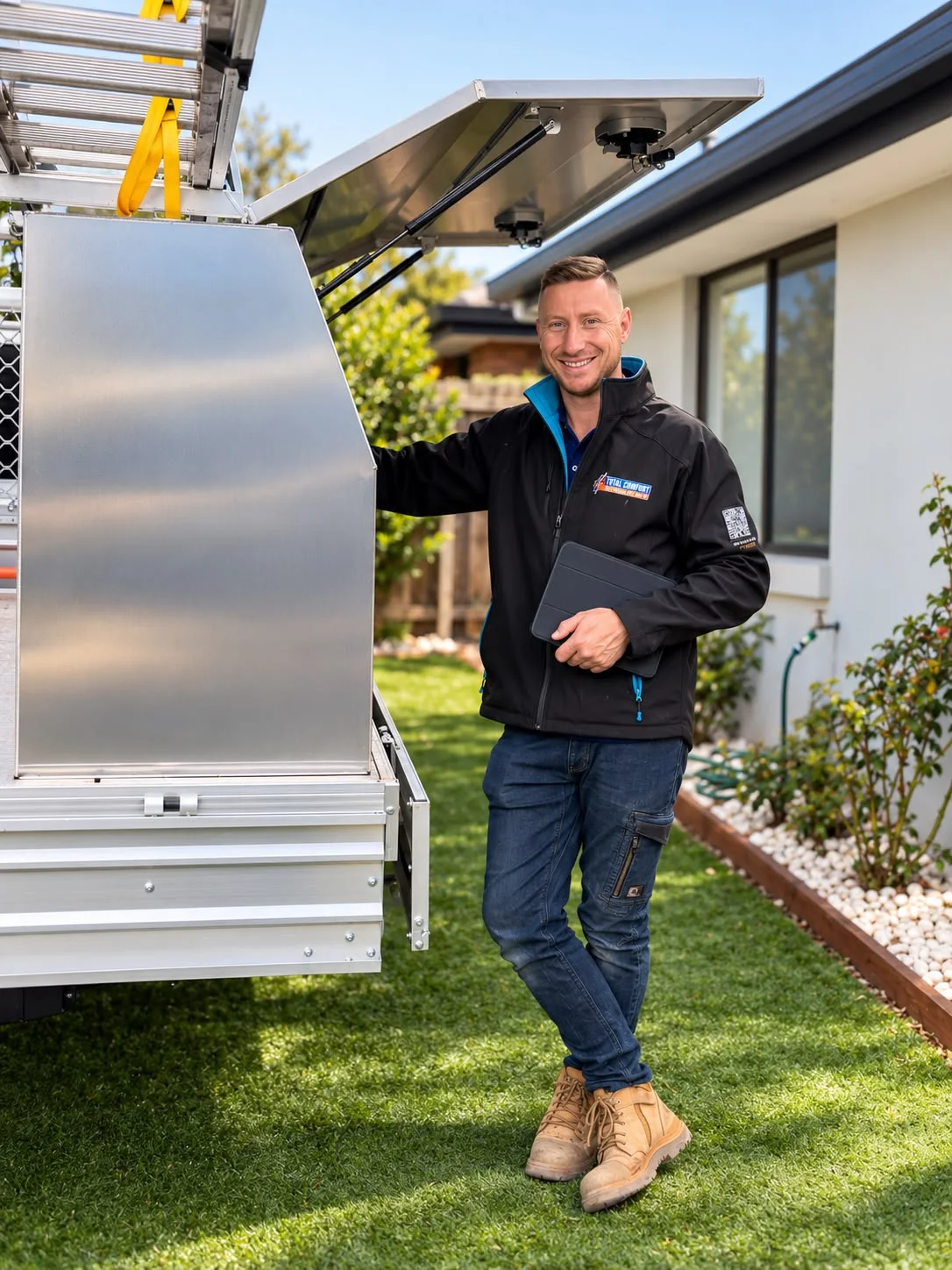
Worth knowing before you book
- Write down the error code
- If the controller or the indoor unit shows a code or flashing lights, note it or take a photo. It speeds up the diagnosis.
- If it keeps tripping, leave it off
- A unit that trips the safety switch or circuit breaker has a fault. Don't keep resetting it. Contact our team.
- Switch it off if something seems wrong
- If the unit smells of burning, makes a grinding noise or is leaking near electrical parts, switch it off at the isolator if it's safe to reach, and tell us when you book.
What affects the price?
The right scope depends on your installation. These are the details we check so your quote is useful, with any additional work explained before it proceeds.
How hard the fault is to find
A fault that only shows on hot afternoons or cold mornings takes longer to pin down than a dead capacitor.
Getting to the equipment
Second-storey outdoor units, roof-mounted plant, tight ceiling spaces and high wall brackets can need extra gear or a second person.
The part itself
A sensor or capacitor is a small part. A fan motor, control board or compressor is a much larger one, and some have to be ordered, which means a second visit.
Supply or refrigerant work
A corroded isolator or damaged circuit is priced separately from the unit repair. So is a leak repair, with its pressure test, vacuum and recharge.
Before the visit
- Photograph error codes and accessible model labels.
- Describe when the fault occurs and what still works.
- Stop using equipment that leaks onto electrics or repeatedly trips protection.
How it runs
- 1
Send the details
Brand, model, any error code, and what it's doing.
- 2
Diagnose
We test the electrical, mechanical and refrigerant sides until we find the cause.
- 3
Explain and price
You hear what's wrong and what it will cost before we go ahead.
- 4
Repair and test
We fix it and run the system to confirm it's working.
Step by step, in more detail
5 steps
Start with what you've seen
We ask for the make, model, any error code and when the fault shows up: at start-up, after an hour, only in heating mode, only on very hot days. That pattern often narrows the search before a cover comes off.
Check the power first
We test the circuit at the switchboard, the isolator and the connections at both units. Plenty of breakdowns end here, and as licensed electricians we can repair what we find.
Test the system running
Fans, motors, capacitors, sensors and boards are tested under load. Refrigerant pressures are measured only when the evidence points there, and under the national scheme that work needs a Refrigerant Handling Licence.
Explain and price
You hear what failed, why, and what the repair involves, with a fixed price for the agreed scope. If a repair doesn't make sense for the system's age, we say so.
Repair, run and record
We repair it on the spot where the part is on hand, or order it and book the return. The system is run through its modes, and electrical installation work comes with a Certificate of Electrical Safety.
What is safe to do, and what to leave to us
Safe for you to do
- Switch the unit off at the controller if it's leaking, smells hot or keeps stopping.
- If water is reaching a light fitting or power point, switch that circuit off at the switchboard if you can do it safely.
- Reset a tripped safety switch once. If it trips again or won't reset, leave it off and book a licensed electrician.
- Photograph the error code, any water or ice, and model labels you can reach without climbing.
- Clean the washable dust filters as the owner's manual describes, with the unit off.
Leave these to us
- Resetting a breaker or safety switch again and again, or holding it on.
- Opening the indoor unit, the outdoor unit or the isolator. That's electrical work, and it isn't a DIY job.
- Buying a refrigerant top-up kit or adding gas yourself. Handling refrigerant needs a licence.
- Relighting, adjusting or taking the covers off a gas heater. Gas appliance work belongs to a licensed Type A gasfitter.
When to get us in
- The unit trips the safety switch or a circuit breaker
- There's a burning smell, smoke or scorching at the unit or isolator (get everyone out if there's fire)
- An error code keeps coming back
- It can't heat or cool a room it used to handle
- Water, ice or frost keeps building up
- A gas ducted heater won't start, or its controller has gone blank
More detail
Why we start at the switchboard
A tripped breaker, a corroded isolator or a loose terminal can look exactly like a failed air conditioner. In Victoria, the restricted electrical licence a refrigeration mechanic can apply for only covers like-for-like disconnection and reconnection, and all fixed electrical installation work needs a licensed electrician. Total Comfort is a licensed electrical contractor (REC 38187) with one local team for electrical, heating and cooling, so the supply and the unit are checked by the same people.
Ducted, multi-head and evaporative faults
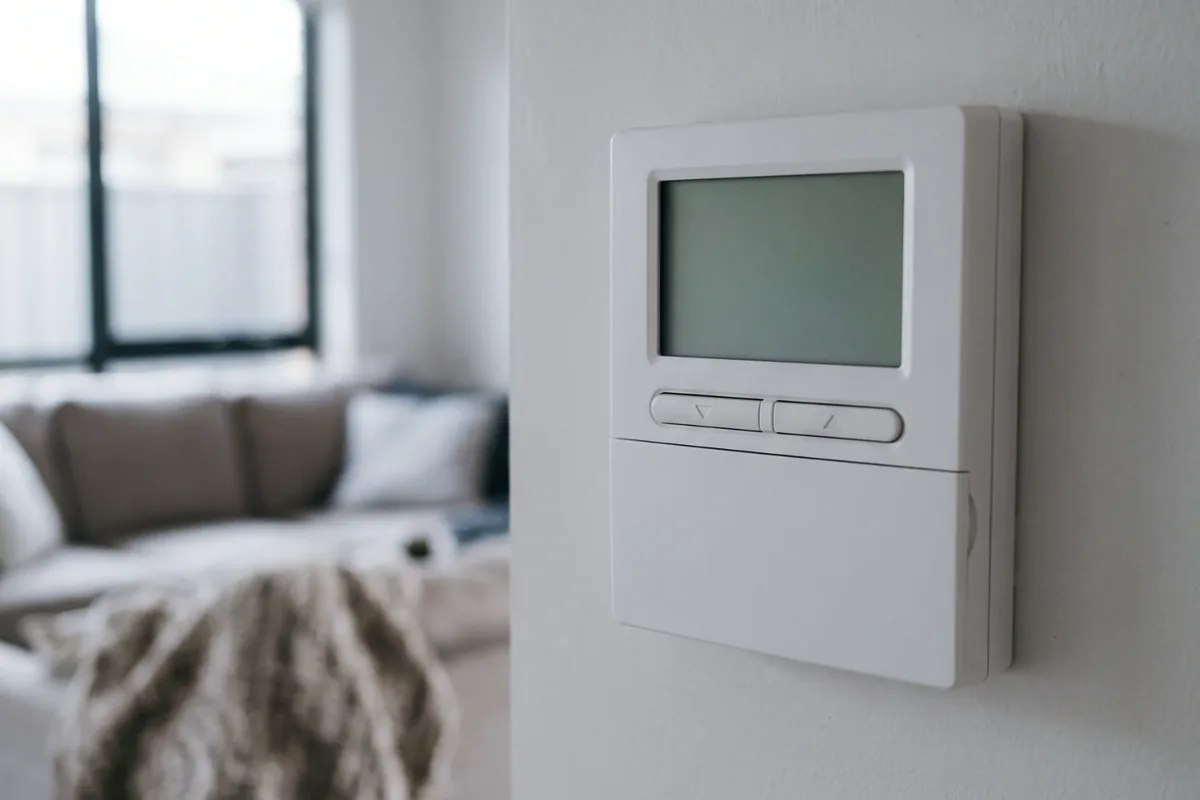
A ducted system adds a wall controller wired to the unit in the roof, zone motors, a return air filter and long runs of flexible duct. One hot or cold room while the rest are fine usually means a stuck zone motor or a duct that has come apart. A multi-head runs several heads off one outdoor unit, so if every room stops at once we look outside first. On evaporative coolers, the pump, pads, float valve and fan motor are the usual suspects.
Gas heating: who does what
We handle the electrical side of a gas ducted heater, including its supply and thermostat wiring. Energy Safe Victoria says gas heater servicing and repair should be done by a licensed Type A gasfitter, so anything on the gas appliance itself goes to one. ESV also says a change in how a heater runs, such as a different flame colour, means a qualified gasfitter should inspect it and check for carbon monoxide leakage. You can't see or smell carbon monoxide.
Tell us who's at home
Victoria's health department lists people over 65, babies and young children, pregnant women, people with health problems and anyone with limited ways to keep cool among those most at risk in extreme heat, so let us know when you book. Water reaching a light fitting, or a unit that trips the power every time it starts, is a safety problem: switch the unit off at the switchboard if it's safe to reach and leave it off. Until the repair is done, the department's heat advice still applies: use a fan, wear light, loose clothing and take cool showers.
Local rules and conditions
Victorian requirements and local conditions that shape this job, with the sources listed at the foot of the page.
Test cooling before the hot months
The Laverton weather station averages 27 days a year at or above 30 °C and 9.4 at or above 35 °C, most of them from December to February. Victoria's health department advises checking that your air conditioner works before extreme heat and having it serviced if needed. A test run in spring leaves time to fix a fault.
Heating does the heavy lifting
Victorians typically use more energy for heating than cooling, and July at Laverton averages a minimum of 5.2 °C. A reverse-cycle system that only misbehaves in heating mode is worth diagnosing in autumn, before winter.
Renting in Victoria
Failed heating, and failed cooling that the rental provider supplied, are both on the legal list of urgent repairs, which rental providers must make immediately. From 1 March 2027, a rental heating appliance that breaks and can't be repaired must be replaced with an efficient electric reverse-cycle air conditioner in the main living area. We tell you plainly whether a repair is possible.
Useful reading
Guides to read before you decide, with checklists and questions to bring to the quote.
- Air conditioner maintenance: what to watch between servicesKeep useful records, follow model-specific filter care and recognise symptoms that need a repair visit.
- Getting your air conditioning ready for a heatwaveA spring test run, clean filters, a clear outdoor unit and a backup plan: how to find a tired air conditioner before the first hot northerly does.
- Gas ducted heater: repair or replace?How to weigh a ducted gas heater fault against the heater's condition, the ducts and the electric option, once the safety checks are done.
- Renting and the power or heating has failed: what to doNo power or a dead heater in a Victorian rental? What to check safely, what counts as urgent, how to report it, and what to do if nobody responds.
Common questions
Questions people ask about this
- My air conditioner won't restart after a power outage. What now?Give it a few minutes first.
- Why does my air conditioner keep switching on and off?Frequent stopping and starting, called short cycling, usually means the unit reaches its set temperature too quickly or keeps tripping its own protection.
- Why does my air conditioner turn off by itself?Most often a setting is doing it: an off timer, sleep mode, an eco or quiet mode, or an app schedule someone else set up.
- Why isn't the fan on my outdoor unit spinning?A still outdoor fan isn't always a fault.
- Who is responsible for servicing the air conditioner in a rental?The rental provider, for an air conditioner they supplied.
From the blog
- What affects the cost of an air conditioner repair?Diagnosis time, parts, refrigerant work, access and the system's type and age all shape a repair bill. Here's how they add up, and when replacement is the better spend.
- Should I repair or replace my air conditioner?Compare the diagnosed fault, the rest of the system and the complete replacement scope before deciding what to spend.
- Why does evaporative cooling struggle on humid Melbourne days?Understand the difference between a weather-related limit and a change in performance that deserves a service inspection.
Sources for the rules and local facts on this page
17 sources, with the date each was checked
- 1.Bureau of Meteorology: Mean number of days ≥ 30 °C 6.9 6.0 4.5 0.7 0.0 0.0 0.0 0.0 0.1 0.9 2.8 5.1 27.0 82 1943 2026 Mean number of days ≥ 35 °C 3.6 2.4 0.9 0.0 0.0 0.0 0.0 0.0 0.0 0.1 0.5 1.9 9.4 Accessed 30 September 2026.
- 2.Better Health Channel (Department of Health, Victoria): Check that your fan and air-conditioner works well. Have your air-conditioner serviced if needed. Ensure the filters, pads and air vents are clean. Accessed 30 September 2026.
- 3.Department of Energy, Environment and Climate Action (energy.vic.gov.au), page last updated 14/04/25: Victorians typically use more energy for heating than cooling, so look for a unit with a higher heating efficiency. Accessed 30 September 2026.
- 4.Consumer Affairs Victoria: Anything on this list is legally defined as an urgent repair: burst water service blocked or broken toilet system serious roof leak gas leak dangerous electrical fault flooding or serious flood damage serious… Accessed 30 September 2026.
- 5.Department of Energy, Environment and Climate Action (energy.vic.gov.au), page last updated 05/08/26: From 1 March 2027, when a hot water or heating appliance breaks and cannot be repaired, it must be replaced with a heat pump water heater or an efficient electric reverse cycle air-conditioner (RCAC) in the main living… Accessed 30 September 2026.
- 6.Department of Health, Victoria (updated 3 February 2026): Use air conditioning or a fan, wear light and loose-fitting clothing, keep your skin wet (for example, with a spray bottle or damp sponge), and take cool showers or foot baths. ... People most at risk include those over… Accessed 30 September 2026.
- 7.Energy Rating (GEMS Regulator / DCCEEW): Dirty filters significantly reduce the amount of airflow and the energy efficiency of the unit. It can also impact the effectiveness of its heating. Cleaning clogged filters, or replacing a worn one, can lower the… Accessed 30 September 2026.
- 8.Solar Victoria (updated 20 November 2025): Check the manufacturer’s instructions or manual and have the air conditioner serviced regularly at the recommended frequency to ensure it continues to operate efficiently. Cleaning the filters regularly helps the system… Accessed 30 September 2026.
- 9.Australian Refrigeration Council (ARC): A Refrigerant Handling Licence must be held by any person who carries out work in relation to refrigeration and air conditioning (RAC) equipment. Carrying out work in relation to RAC equipment means to do anything with… Accessed 30 September 2026.
- 10.Australian Refrigeration Council (ARC), Fact Sheet 13 (ARC5225, 11/22): ‘Topping-up’ a system before the system has been fully tested and all identified leaks repaired by any individual is illegal. Accessed 30 September 2026.
- 11.Solar Victoria (updated 2 October 2025): A system that is more than 15 years old for example will typically use more than three times the amount of energy than a modern reverse-cycle air conditioner. Accessed 30 September 2026.
- 12.Energy Safe Victoria: This licence type only allows the disconnection and reconnection of ‘like for like’ equipment, for the purposes of repair, replacement or maintenance. The Restricted Electrical Worker’s licence does not allow a person… Accessed 30 September 2026.
- 13.Energy Safe Victoria: Whenever a licensed electrician completes any electrical installation work, they must provide a Certificate of Electrical Safety (COES). Accessed 30 September 2026.
- 14.Energy Safe Victoria: Locate your electricity box outside your home and check whether the safety switch has tripped. If it has tripped, reset the switch. If the switch won’t reset, call a licensed electrician. Accessed 30 September 2026.
- 15.Energy Safe Victoria: Electrical work isn’t a DIY job, even for small jobs such as changing power points or light switches. Accessed 30 September 2026.
- 16.Energy Safe Victoria: Type A appliances include domestic and light commercial type appliances such cookers, space heaters, central heaters, water heaters, catering equipment and leisure appliances. So, when looking to service and repair your… Accessed 30 September 2026.
- 17.Energy Safe Victoria: All gas heaters can spill carbon monoxide (CO) – a gas you can’t see or smell that can make you seriously unwell or kill you. Accessed 30 September 2026.