
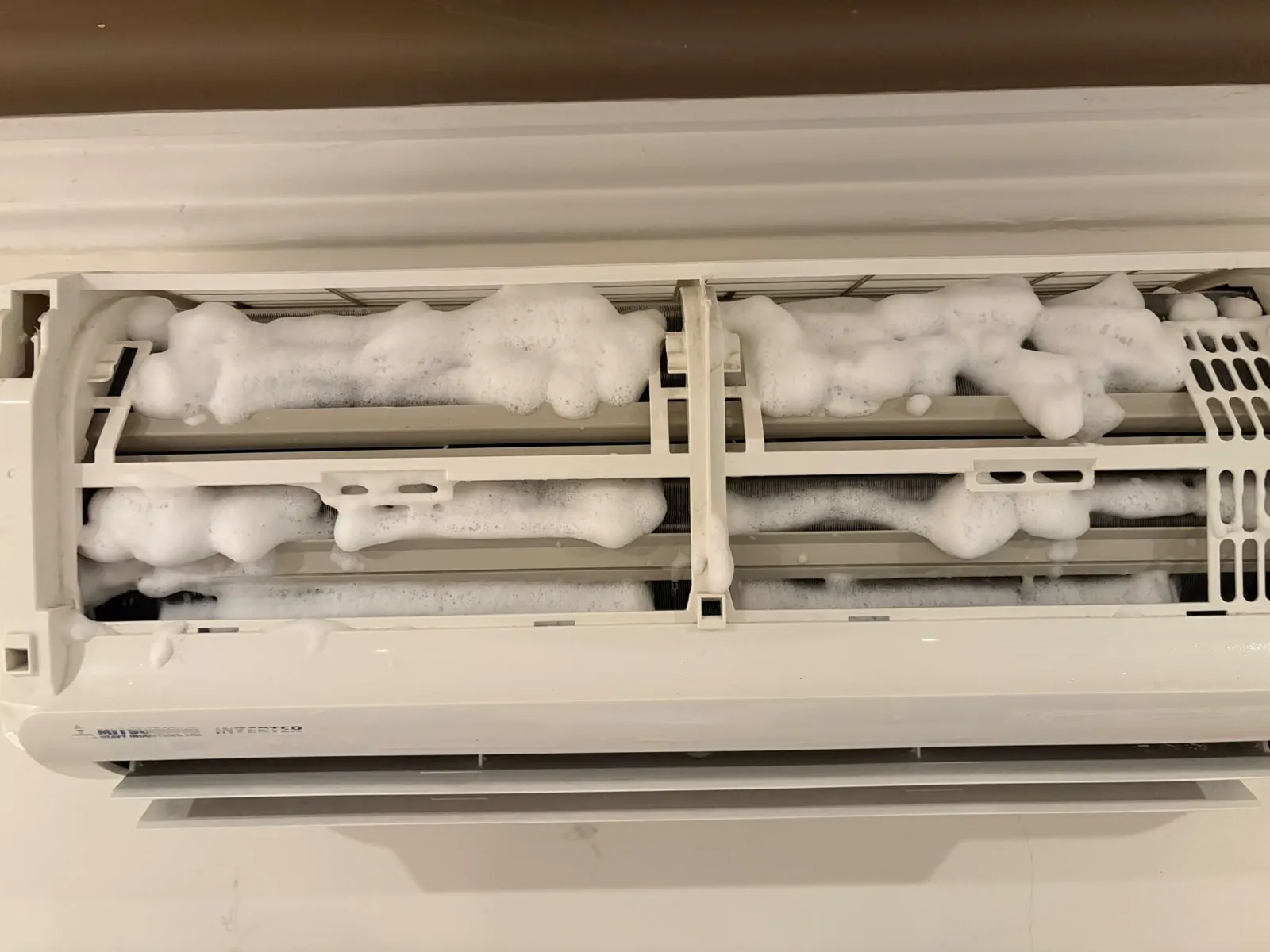
Most breakdowns start as something small: a clogged filter, a blocked drain, a worn belt or a loose connection. A regular service catches those while they're cheap to fix and keeps the system running efficiently. We service split systems, ducted reverse cycle, evaporative coolers and gas ducted heaters. Because we're electricians as well, we check the isolator, the circuit and the connections, which a cooling-only service can skip.
When to get it checked
Nobody remembers the last service
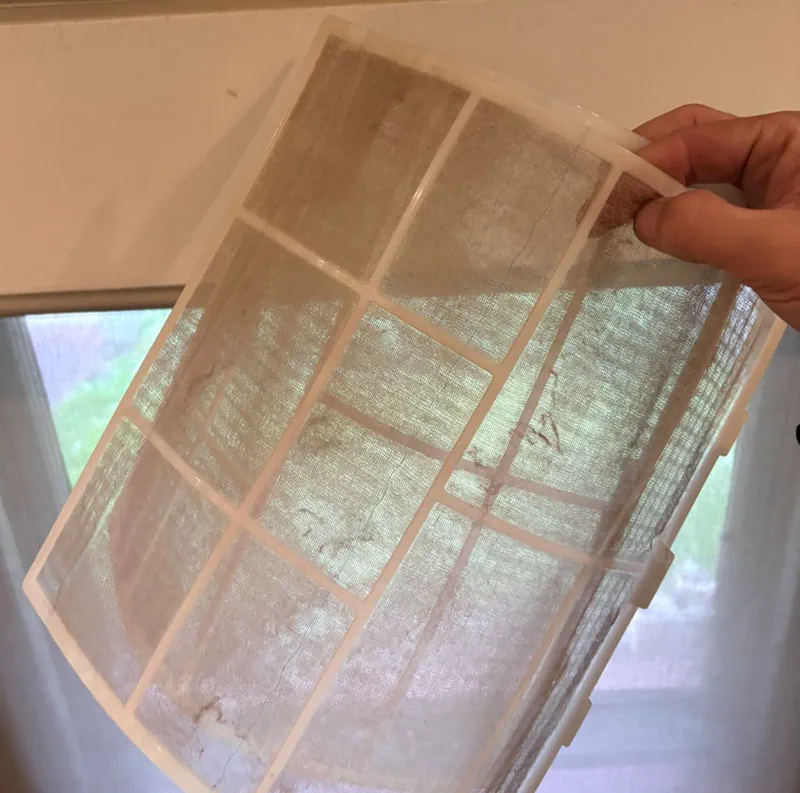
If no one knows when the system was last opened up, it's due. A filter wash doesn't reach the drain, coil, fan or connections.
Airflow has slowly dropped off
The fan sounds the same but less air reaches the room. A gradual change usually means dust on a filter, coil or fan wheel, not a sudden failure.
It runs longer for the same result
The lounge takes longer to warm on a cold night or cool on a hot afternoon. Energy Rating says dirty filters significantly reduce airflow and efficiency and can also weaken heating.
A smell when it starts up
A musty smell on the first cooling day points to growth in the coil, fan or drain tray. A brief dusty smell when heating starts is common; a lingering or hot one isn't.
New noises, drips or ice
Rattles, squeals, stray water or ice on the pipes mean a service has become a repair. Tell us the symptom when you book.
Why it happens
5 common causes
Dust gets past the filter
Fine dust gets past filters and settles on coils and fan wheels. Pets and nearby building work add to it, and a coated coil can't move heat as well as a clean one.
Water with nowhere to go
Reverse-cycle systems make condensate when cooling, and evaporative coolers run water over their pads all summer. Trays and drain lines collect slime and scale until a slow drain overflows.
Outdoor units take the weather
Leaves, grass clippings and cobwebs choke coils and fan guards. Hobsons Bay has more than 20 kilometres of bay frontage, and units near the water collect salt on their fins and fixings, so we look harder for corrosion there.
Parts wear with every start
Fan bearings, pumps, float valves and belts on older units all wear. Caught early, a worn part is a planned replacement, not a breakdown in a hot spell.
Connections work loose
Terminals heat and cool every time the system cycles, and outdoor isolators sit in sun and rain for years. Loose or corroded connections run hot, and a cooling-only service can miss them.
What the job covers
What we usually do on this job. Your quote confirms it for your place.
- Filters removed, cleaned or replaced
- Indoor coil and fan checked and cleaned
- Condensate drain flushed and checked for blockages
- Outdoor unit coil and fan cleared of debris
- System pressures and temperatures checked
- Electrical connections, isolator and circuit tested
- Controller and thermostat checked
- Return air and vents checked on ducted systems
- Pads, pump and water supply checked on evaporative systems
- Written note of anything we found
Your options, explained
Single-system service
Low disruption- Best for
- One split, ducted or evaporative system that hasn't been looked at for a while
- How it works
- The system is cleaned, checked and run within the agreed scope, and its power supply is tested.
- Worth knowing
- Our split system, ducted and evaporative servicing pages cover each one in detail.
Whole-home seasonal visit
Low disruption- Best for
- Homes with more than one system, such as gas ducted heating plus split systems
- How it works
- Every electric system is serviced in one visit, and the gas heater's power supply and thermostat wiring are checked.
- Worth knowing
- The gas appliance itself needs a gasfitter registered or licensed for Type A appliance servicing, so mention it when you book.
Service with fault diagnosis
Medium disruption- Best for
- A system that leaks, trips, shows an error code or has lost performance
- How it works
- Time is allowed to find the cause as well as clean.
- Worth knowing
- Describe the symptom at booking. Any repair is priced separately before it starts.
Rental servicing schedule
Low disruption- Best for
- Rental providers and agents looking after a tenanted home
- How it works
- Systems are serviced on a set rhythm, with a written note of what we found for your records.
- Worth knowing
- Routine servicing doesn't replace the two-yearly gas and electrical safety checks, which are separate jobs.
The people behind the work
Our own photos from jobs like this one. Family-run, based in Altona Meadows, with 19 years in the industry.
Licensed electrical contractor (REC 38187)See more team photos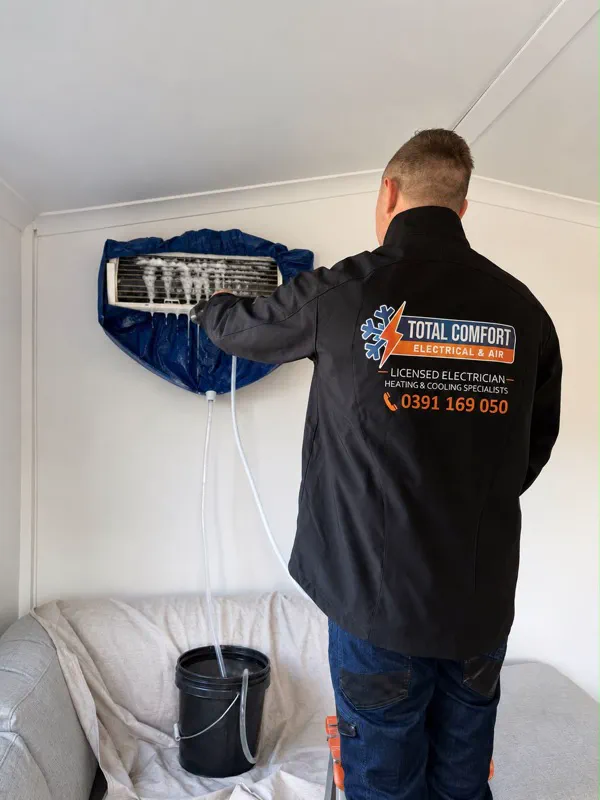
Worth knowing before you book
- Service before the season
- Book cooling in spring and heating in autumn. You'll find problems before the first heatwave or cold snap, when everyone else is calling.
- Clean your own filters in between
- Follow the manufacturer's instructions for your filter type and cleaning interval. We can show you which user-maintenance tasks are suitable and safely accessible on your system.
- Gas heaters need regular checks
- Energy Safe Victoria recommends gas heaters are serviced at least every two years.
What affects the price?
The right scope depends on your installation. These are the details we check so your quote is useful, with any additional work explained before it proceeds.
How many systems and heads
Each indoor head, ducted unit and roof cooler is its own service. A multi-head system also needs its shared outdoor unit checked.
The type of system
A wall split is reached from a stepladder. A ducted unit means the roof space, and an evaporative cooler means getting onto the roof itself.
Access at your place
Outdoor units on high brackets or balconies, locked side gates, tight manholes and two-storey rooflines all add time.
Time since the last service
A system serviced last year is usually a routine clean. One left for years may need a deeper clean of the coil or fan wheel, agreed once we've seen it.
Faults and parts
Diagnosis, parts and repairs sit outside routine servicing. Each is priced before we start, as a fixed price for the agreed scope.
Before the visit
- List every unit, including indoor heads on a shared outdoor system.
- Tell us about roof access, high walls and restricted outdoor areas.
- Keep past service reports and manufacturer manuals available.
How it runs
- 1
Book in
Tell us what systems you have and roughly how old they are.
- 2
Service
We clean, test and check each system and its electrical supply.
- 3
Report back
You get a plain explanation of what we found and anything that needs attention.
Step by step, in more detail
5 steps
List every system
When you book, tell us about each indoor head, the ducted unit and its zones, any roof cooler and the gas heater, with rough ages.
Isolate and check the supply
Each system is switched off at its isolator before any cover comes off. We note the isolator's condition, the visible cabling and the circuit protection at the switchboard.
Clean the air and water paths
Filters, coils, fans and grilles are cleaned within the agreed scope, with drop sheets down. Drains are flow-tested, and on a roof cooler we check the pads, tank, pump and float valve.
Run each system under load
Reverse-cycle systems run in heating and cooling while we check airflow, temperatures, noise and drainage. Controllers, thermostats and zone controls are tested from the wall.
Report back and price
You get a plain account of each system: what we did, what's wearing and what can wait. Anything beyond routine care is priced first, and nothing goes ahead without your approval.
What is safe to do, and what to leave to us
Safe for you to do
- Wash the dust filters as the manual shows, with the unit off. The Victorian Government suggests about twice a year, or more with heavy use.
- Keep outdoor units clear of plants, bins and stored gear.
- If a system smells hot or drips onto anything electrical, turn it off at the controller, and at the switchboard if that's safe.
- If a safety switch trips, reset it once. If it won't reset, call a licensed electrician.
- Don't run the rangehood or bathroom exhaust fans while a gas heater is on. Energy Safe Victoria says it can draw carbon monoxide into living spaces.
Leave these to us
- Taking covers off to reach coils, fan wheels or drain trays.
- Opening an isolator or touching wiring. Electrical work isn't a DIY job, even small jobs.
- Using a refrigerant top-up kit. Topping up before a system is fully tested and every identified leak repaired is illegal.
- Adjusting, relighting or taking panels off a gas heater.
- Climbing onto the roof to reach a cooler or a high outdoor unit.
When to get us in
- Spring for cooling and autumn for heating
- It's been over a year since the last service, or two for a gas heater
- Airflow, comfort or running costs have changed
- A system trips a safety switch or circuit breaker
- A gas heater's flame looks different, which Energy Safe Victoria says needs a qualified gasfitter to inspect
- You've bought or taken on a home with no service history
More detail
Planning servicing for a home with several systems
Plenty of homes in Melbourne's west run a mix: gas ducted heating from the original build, a split system or two added later, maybe a cooler on the roof. The Victorian Government says to service reverse-cycle systems at the frequency the manufacturer recommends, gas heaters need a gasfitter at least every two years, and a roof cooler wants attention before summer. Grouping the electric systems into one visit gives you one report for the house.
What a service covers on every system
Systems differ in detail, but the checklist has the same shape. The air path is the filters, coil or pads, fan and grilles, and the water path is the drain or the cooler's tank, pump and float valve. Then come the power supply and connections, and the controls and zone motors. Finally the system runs under load so we can see it actually heats or cools.
Gas heating: which parts we look after
We check the electrical side of a gas ducted heater: its power supply, thermostat and wiring. The gas appliance itself is serviced by a gasfitter registered or licensed for Type A appliance servicing. Energy Safe Victoria says that service should include a visual inspection of the appliance and flue, a negative pressure and CO spillage test, internal cleaning, any parts repairs and a test run. A carbon monoxide alarm helps, but it should never be a substitute for regular servicing.
Why the electrical side belongs in the service
Every system here runs on electricity, even a gas ducted heater's fan. Maintaining an electrical installation is electrical installation work under the Electricity Safety Act, and the restricted licence a refrigeration mechanic can hold only covers like-for-like disconnection and reconnection. Total Comfort is a licensed electrical contractor (REC 38187), so a cracked isolator found on a service is fixed by the same team. Air conditioning electrical work comes with a Certificate of Electrical Safety, your copy within 30 days.
Reading the service report
Findings land in three piles: done on the day, needs attention with its own price, and worth planning for. The last is usually an ageing system. The Victorian Government says a reverse-cycle system more than 15 years old typically uses more than three times the energy of a modern one. On an old unit, you get honest advice on whether another service is still money well spent.
Local rules and conditions
Victorian requirements and local conditions that shape this job, with the sources listed at the foot of the page.
Two seasons, two service windows
The Laverton weather station averages 27 days a year at or above 30 °C, mostly December to February, and a July mean minimum of 5.2 °C. Victorians typically use more energy for heating than cooling, so the autumn visit matters as much as the spring one.
Ready before a heat health warning
Victoria's Department of Health advises checking that your air conditioner works before extreme heat, having it serviced if needed, and keeping filters, pads and vents clean. Hobsons Bay, Wyndham, Brimbank, Maribyrnong and Port Phillip sit in its Central district for heat health warnings.
Gas heaters every two years
Energy Safe Victoria recommends a qualified gasfitter services every gas heater at least every two years, including a test for carbon monoxide leakage. For ducted gas heaters, it recommends a CO test at the heating vents in every room.
Rentals have their own checks
On rental agreements made after 29 March 2021, rental providers need a gas safety check by a licensed or registered gasfitter and an electrical check by a licensed electrician every 2 years. From 13 October 2026, Consumer Affairs Victoria says both apply to all rental agreements, whenever they started.
Useful reading
Guides to read before you decide, with checklists and questions to bring to the quote.
- Air conditioner maintenance: what to watch between servicesKeep useful records, follow model-specific filter care and recognise symptoms that need a repair visit.
- Getting your air conditioning ready for a heatwaveA spring test run, clean filters, a clear outdoor unit and a backup plan: how to find a tired air conditioner before the first hot northerly does.
- An ageing gas heater: service, repair or plan an electric replacement?Separate immediate safety needs from a considered comparison of repair and reverse-cycle heating.
- Landlords: heating, cooling and electrical obligations in VictoriaA rental provider's map of the heating, switchboard, safety check and repair duties on a Victorian rental, and what the 2027 energy standards change.
Common questions
Questions people ask about this
- Can I book a Saturday appointment?Yes.
- Why does my heater smell when I turn it on for the first time in winter?A dusty, slightly burnt smell on the first run of the season is usually dust burning off the heat exchanger, coil or element, and it fades.
- Who is responsible for servicing the air conditioner in a rental?The rental provider, for an air conditioner they supplied.
- Do I need to be home for the visit?Not always, but someone needs to give us access to everything the job involves.
- What happens after I send an enquiry?Once you send it, you'll see a reference on screen.
From the blog
- Split system or ducted for an investment property?Splits, multi-heads and ducted compared for rentals on durability, servicing, how renters use them, the 2027 cooling standard and what happens when one fails.
- Why did my power bill jump this winter?Heating habits, plug-in heaters, a failing hot water element, an ageing system or a tariff change can all push winter bills up. Here's what to check first.
Sources for the rules and local facts on this page
20 sources, with the date each was checked
- 1.Bureau of Meteorology: Mean number of days ≥ 30 °C 6.9 6.0 4.5 0.7 0.0 0.0 0.0 0.0 0.1 0.9 2.8 5.1 27.0 82 1943 2026 Mean number of days ≥ 35 °C 3.6 2.4 0.9 0.0 0.0 0.0 0.0 0.0 0.0 0.1 0.5 1.9 9.4 Accessed 30 September 2026.
- 2.Department of Energy, Environment and Climate Action (energy.vic.gov.au), page last updated 14/04/25: Victorians typically use more energy for heating than cooling, so look for a unit with a higher heating efficiency. Accessed 30 September 2026.
- 3.Better Health Channel (Department of Health, Victoria): Check that your fan and air-conditioner works well. Have your air-conditioner serviced if needed. Ensure the filters, pads and air vents are clean. Accessed 30 September 2026.
- 4.Department of Health, Victoria: In response to a new Bureau severe or extreme heatwave warning, we will issue a heat health warning. ... The following list shows all the local government areas in Victoria and what forecast district they belong to… Accessed 30 September 2026.
- 5.Energy Safe Victoria: To avoid the risk, we recommend that all gas heaters are serviced at least every two years by a qualified gasfitter. A qualified gasfitter will inspect your heater and check its installation, including testing for CO… Accessed 30 September 2026.
- 6.Energy Safe Victoria: It is recommended that ducted heaters are serviced every two years and during this service a CO test should be conducted at the heating vent outlets in all rooms. Accessed 30 September 2026.
- 7.Consumer Affairs Victoria: Rental providers who enter into a new agreement after 29 March 2021, must have gas safety checks conducted every 2 years by a licensed or registered gasfitter. Accessed 30 September 2026.
- 8.Consumer Affairs Victoria: Mandatory gas and electrical safety checks every 2 years for all rental properties Rental providers and their agents must arrange gas and electrical safety checks by a qualified tradesperson every 2 years for all… Accessed 30 September 2026.
- 9.Energy Rating (GEMS Regulator / DCCEEW): Dirty filters significantly reduce the amount of airflow and the energy efficiency of the unit. It can also impact the effectiveness of its heating. Cleaning clogged filters, or replacing a worn one, can lower the… Accessed 30 September 2026.
- 10.Hobsons Bay City Council: Hobsons Bay has more than 20 kilometres of bay frontage, quality residential areas, a huge expanse of environmentally significant open space and a range of major industrial complexes, which contribute significantly to… Accessed 30 September 2026.
- 11.Building and Plumbing Commission: The gasfitter doing the servicing work must be registered or licensed in the specialised class of Type A appliance servicing. Accessed 30 September 2026.
- 12.Solar Victoria (updated 20 November 2025): Check the manufacturer’s instructions or manual and have the air conditioner serviced regularly at the recommended frequency to ensure it continues to operate efficiently. Cleaning the filters regularly helps the system… Accessed 30 September 2026.
- 13.Energy Safe Victoria: Locate your electricity box outside your home and check whether the safety switch has tripped. If it has tripped, reset the switch. If the switch won’t reset, call a licensed electrician. Accessed 30 September 2026.
- 14.Energy Safe Victoria: Electrical work isn’t a DIY job, even for small jobs such as changing power points or light switches. Accessed 30 September 2026.
- 15.Australian Refrigeration Council (ARC), Fact Sheet 13 (ARC5225, 11/22): ‘Topping-up’ a system before the system has been fully tested and all identified leaks repaired by any individual is illegal. Accessed 30 September 2026.
- 16.Victorian Legislation (legislation.vic.gov.au) - Electricity Safety Act 1998, authorised version 089 (effective 8 Sep 2026): electrical installation work means installation, alteration, repair or maintenance of an electrical installation; Accessed 30 September 2026.
- 17.Energy Safe Victoria: This licence type only allows the disconnection and reconnection of ‘like for like’ equipment, for the purposes of repair, replacement or maintenance. The Restricted Electrical Worker’s licence does not allow a person… Accessed 30 September 2026.
- 18.Energy Safe Victoria: 'Prescribed' certificates are for electrical installation work that requires inspection by a Licensed Electrical inspector. This includes (but is not limited to): Consumer mains cables, main switchboard, meter box and… Accessed 30 September 2026.
- 19.Solar Victoria (updated 2 October 2025): A system that is more than 15 years old for example will typically use more than three times the amount of energy than a modern reverse-cycle air conditioner. Accessed 30 September 2026.
- 20.energy.gov.au (Australian Government, DCCEEW): The findings indicated that on average there were energy losses between 14% and 20% across most tests. When several faults co-existed, energy use increased substantially, with a high likelihood of system failure if… Accessed 30 September 2026.