A heater that clicks and gives up, lights then drops out, or cycles warm and cool has one failed step in its start-up. Our electricians test power and controls; a licensed Type A gasfitter handles the burner side. You get the price before any repair.
When to get it checked
Tries to light, then gives up
It clicks or glows two or three times, then stops with a fault on the controller. That’s a lockout: no flame was proven, so the gas stays off.
Lights, then drops out
The burner catches, then goes out seconds later, again and again. A coated or worn flame sensor is the usual cause.
Warm, then cool, then warm again
The burner stops while the fan keeps running, then it all restarts. That usually means the heater is overheating and its limit switch is cutting the burner.
Noise, soot, smell or a changed flame
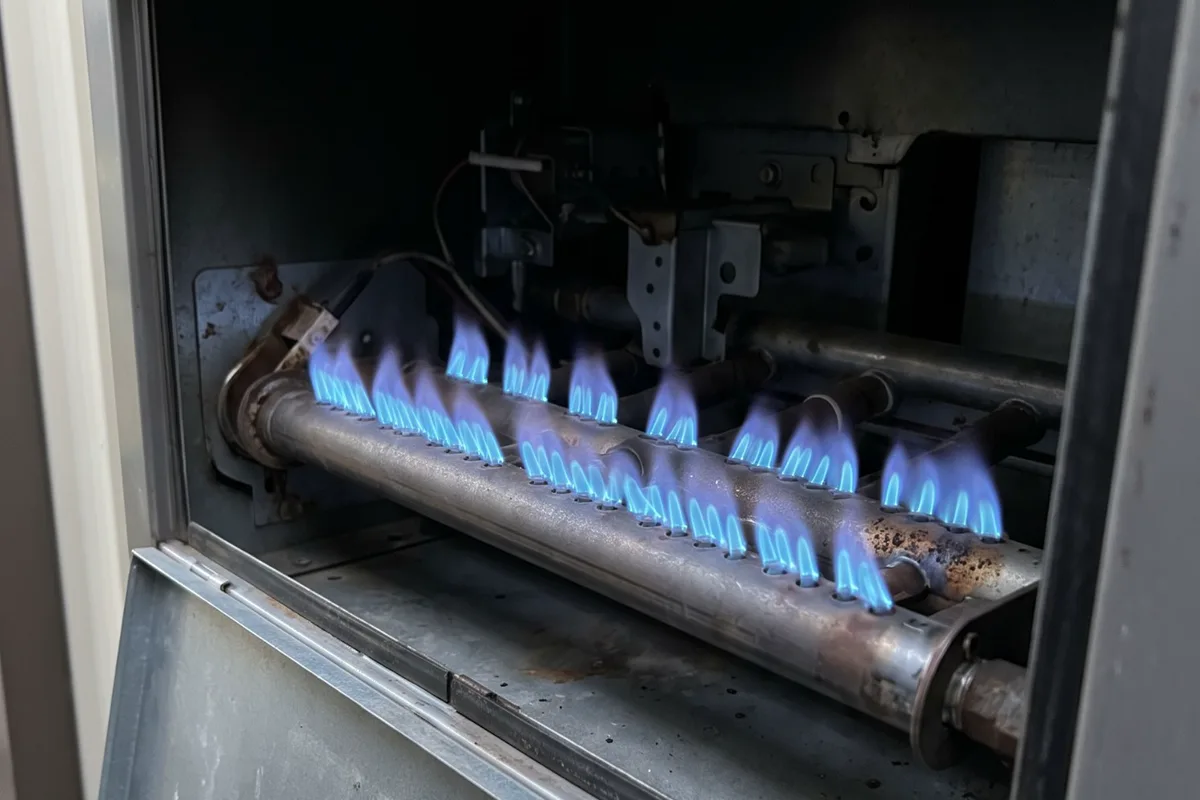
A squealing fan, a bang on lighting, soot near the outlets or a different-looking flame. Energy Safe Victoria says any change in how a gas heater runs needs a qualified gasfitter to inspect it and check for carbon monoxide leakage.
Why it happens
5 common causes
A worn igniter
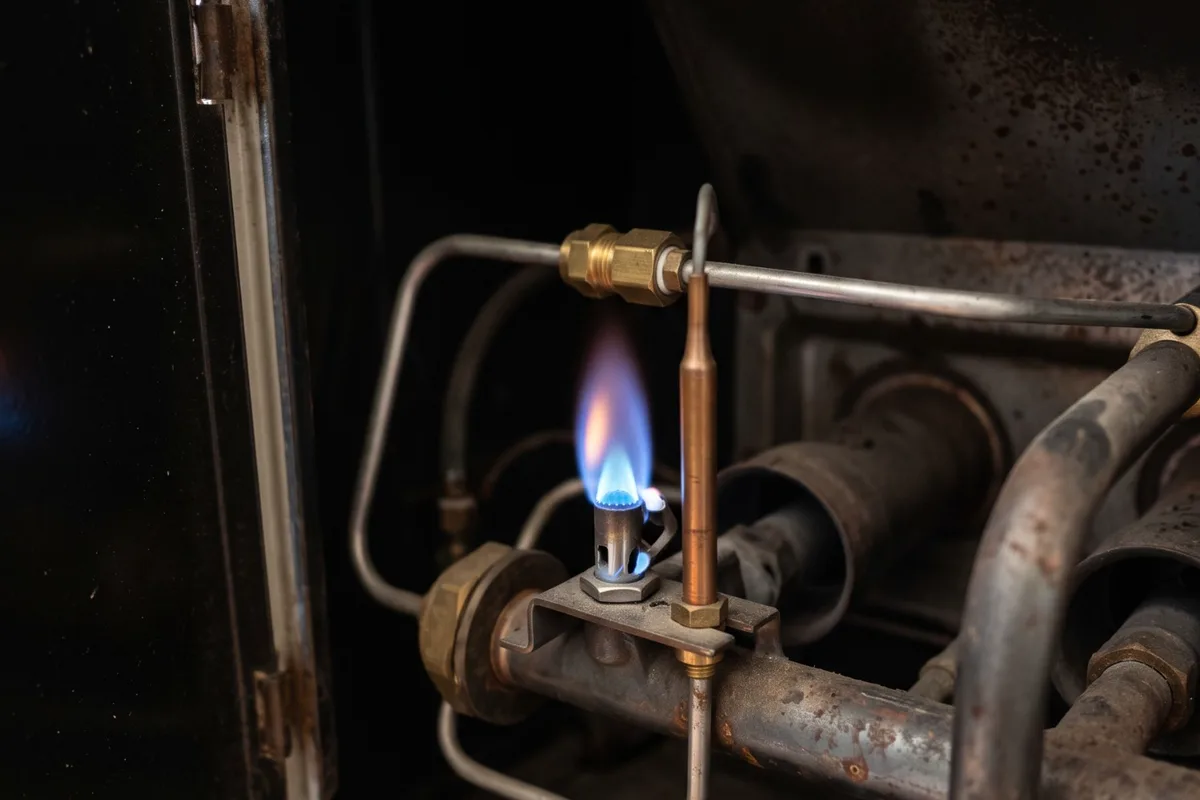
Hot surface igniters glow like a filament and crack with age. A cracked one works on some starts and fails on others.
Flame sensing
The sensor passes a tiny current through the flame to prove it’s alight. Oxide build-up or a poor earth weakens that signal, so the board shuts the gas off.
Draught and flue proving
A combustion fan clears the flue and a pressure switch confirms it’s drawing. A failed fan, a split hose, a blocked flue or a blocked condensate drain stops the start here.
Poor airflow
A clogged filter, a covered return grille, most outlets shut, a loose duct or a slowing house fan traps heat. The limit switch then cuts the burner.
Fan, board and power
A failed fan capacitor, a water-damaged board, a dead controller or a tripped circuit stops the heater before any gas flows. That’s where our electricians start.
What the job covers
What we usually do on this job. Your quote confirms it for your place.
- Controller, zones and fault codes checked
- Circuit, outlet, safety switch and controller tested
- Start-up sequence watched step by step
- Igniter, flame sensor and pressure switch tested
- Filter, return grille and house fan checked
- Gas-side work by a licensed Type A gasfitter
- Full heating cycles run after the repair
Your options, explained
Replace the failed part
Low disruption- Best for
- One clear fault on a sound heater
- How it works
- The igniter, sensor, pressure switch, capacitor, motor or board is replaced to suit the model, then tested.
- Worth knowing
- Discontinued models can mean a wait for parts.
Fix the airflow
Low disruption- Best for
- Heaters that keep cycling on the limit switch
- How it works
- The filter, grille, outlets, house fan and duct joints are checked and the restriction cleared.
- Worth knowing
- A new limit switch alone won’t stop the fault.
Replace the heater
High disruption- Best for
- A cracked heat exchanger or repeated breakdowns
- How it works
- A new gas ducted heater or reverse-cycle system is quoted, checking the ducts and flue for reuse.
- Worth knowing
- Priced beside the repair so you can compare.
The people behind the work
One local team for electrical, heating and cooling. Family-run, based in Altona Meadows, with 19 years in the industry.
Licensed electrical contractor (REC 38187)See more team photos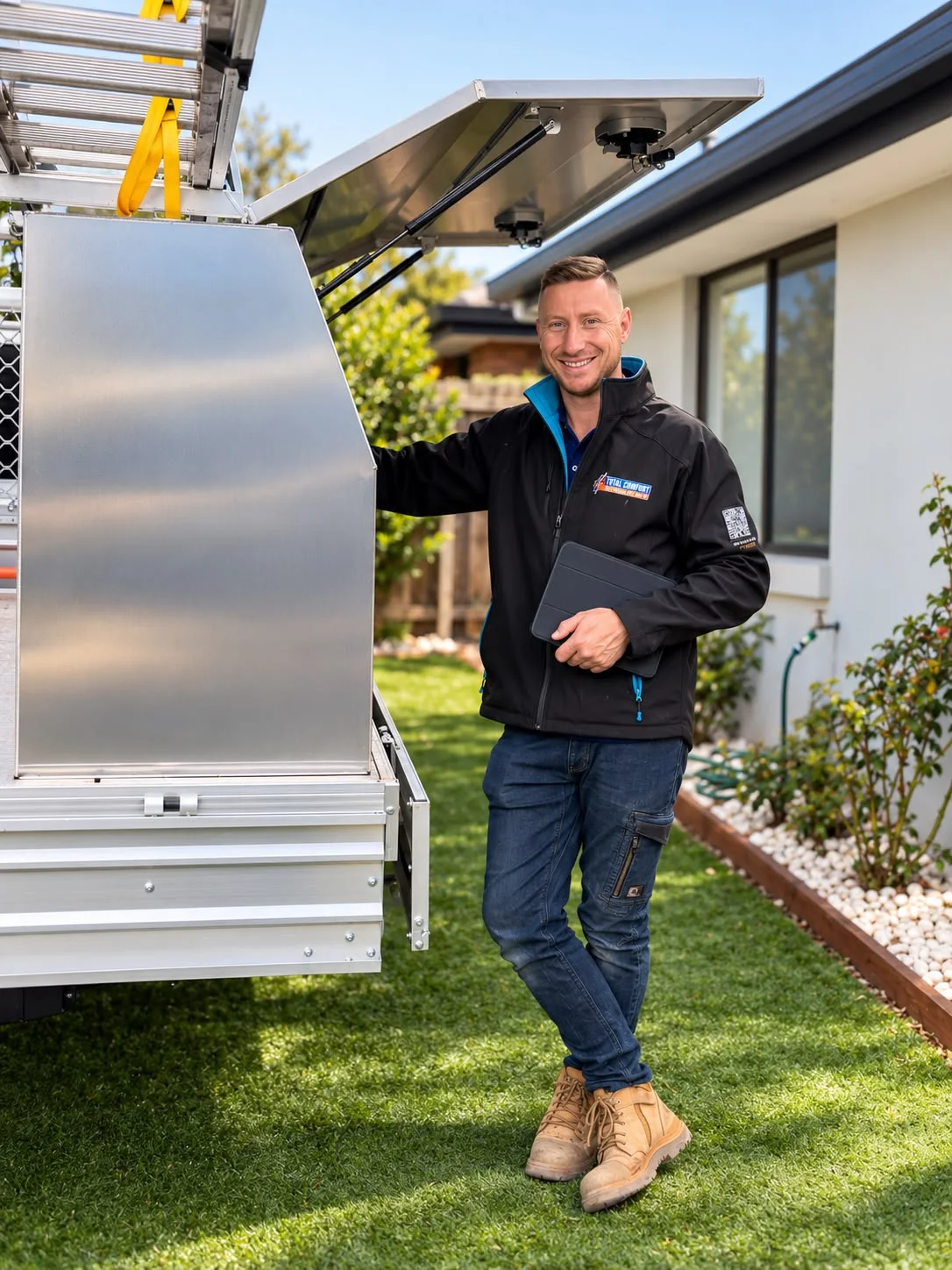
Worth knowing before you book
- A lockout protects you
- It shuts the gas off when no flame is proven. Forcing restarts won’t fix it.
- Photograph the code
- Codes can clear when the power goes off.
- Not every fault is gas
- A blocked grille or closed outlets can make a sound heater overheat.
What affects the price?
The right scope depends on your installation. These are the details we check so your quote is useful, with any additional work explained before it proceeds.
Where the heater sits
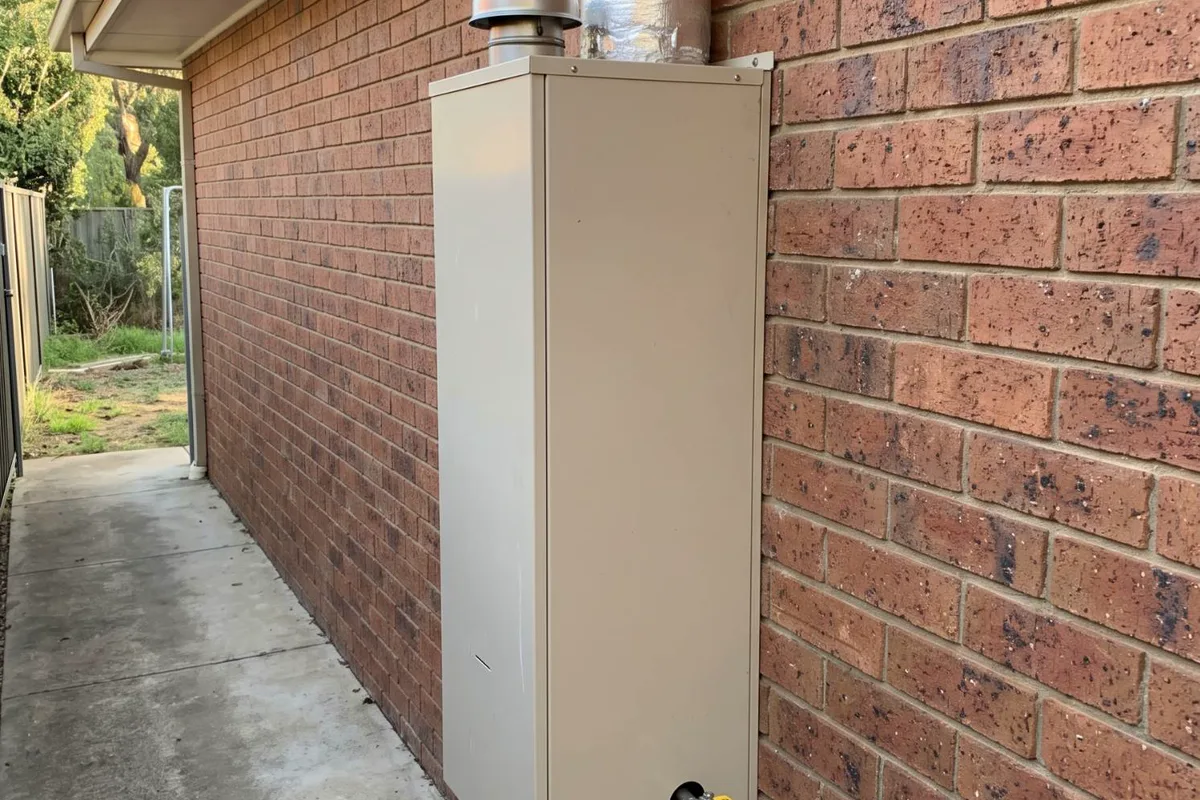
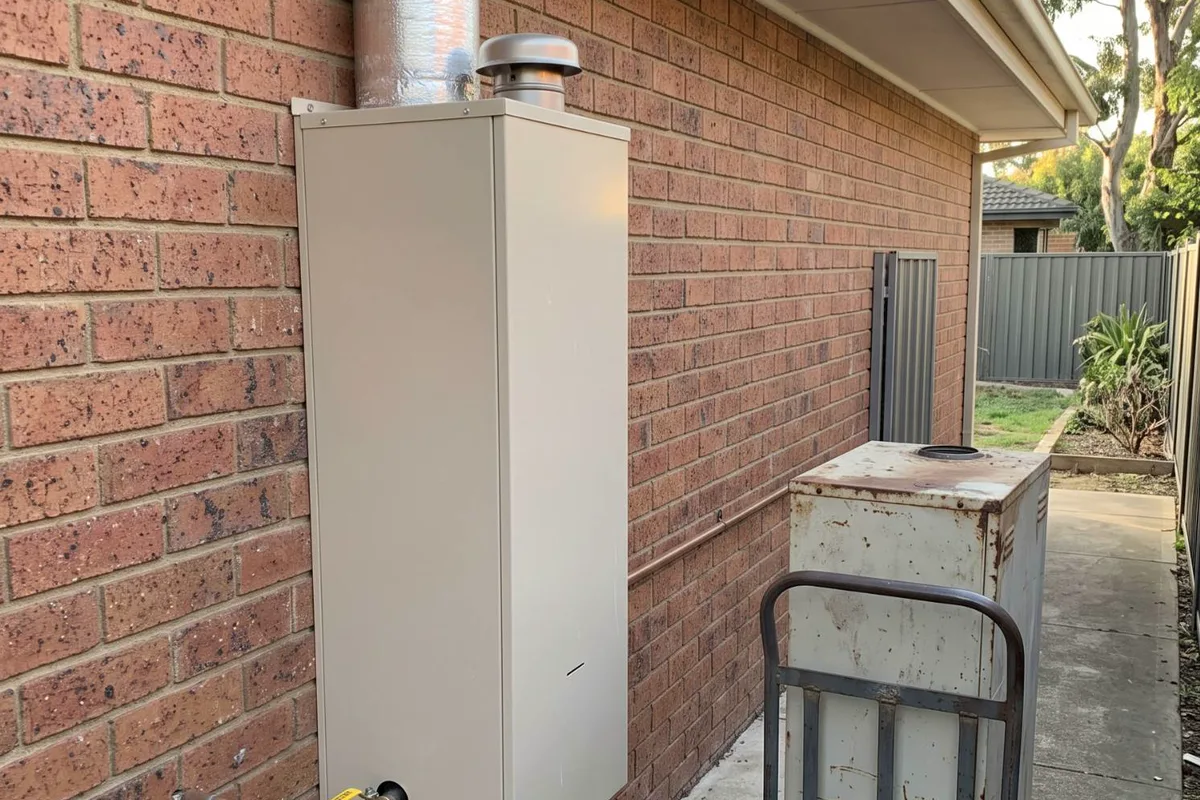
An outside-wall unit is quicker to reach than one in a low brick-veneer roof or under an older weatherboard.
Which part failed
Igniters and sensors are common. Fan motors, gas valves and boards cost more, and some suit one model only.
How often it fails
A fault that shows on every start is quicker to find than one that appears only on the coldest mornings.
Licences and findings
Some faults need only an electrician; others need a gasfitter too. A cracked heat exchanger or damaged flue changes the job.
How it runs
- 1
Tell us what it does
Brand, age, location and what happens at start-up.
- 2
Find the failed step
Power and controls first, then gas-side checks by a licensed gasfitter.
- 3
Price, repair, prove
The price before we start, then full cycles to confirm the fix.
Step by step, in more detail
4 steps
Details first
Brand, model, rough age, where the heater sits and its last service. Photograph any code on the controller.
Power and controls
We test the circuit and outlet feeding the heater, then the wall controller and its cable. Plenty of faults end here.
Watch a start-up
We follow the sequence from combustion fan to flame proving to house fan. Gas valve, burner, heat exchanger and flue work goes to a licensed Type A gasfitter.
Price, repair, prove
You get the fault and the price before we start. Afterwards the heater runs full cycles so an intermittent fault can show itself.
What is safe to do, and what to leave to us
Safe for you to do
- Check the controller is on heat, above room temperature, with the right zones on.
- Keep the return-air grille clear.
- Reset a tripped safety switch once. If it trips again, leave it off.
- If you smell gas, or anyone gets a headache, dizziness or nausea, turn the heater off, get everyone into fresh air and seek medical help if anyone is unwell.
Leave these to us
- Removing panels, relighting the burner or adjusting the gas side. Energy Safe Victoria says unlicensed gasfitting is illegal and potentially fatal.
- Repeatedly power-cycling a locked-out heater to force a retry.
- Running the rangehood or exhaust fans with the heater on. Energy Safe Victoria says it can draw carbon monoxide into living spaces.
When to get us in
- It locks out again after one restart
- The burner keeps lighting and dropping out
- It cycles warm and cool, or trips a safety switch
- A new noise, smell, soot or bang on lighting
More detail
Why the start-up order matters
A gas ducted heater won’t move to the next step of its start-up until the last one is proven. That’s why most faults end in a lockout rather than an unsafe flame, and why finding where it stops usually leads straight to the failed part.
The electrical side and the gas side
Power supply, controller and control wiring are electrical work; if we alter the heater’s power circuit or outlet, you get a Certificate of Electrical Safety. The burner, gas valve, heat exchanger and flue are for a licensed Type A gasfitter, who must issue a compliance certificate after servicing work in some cases, such as when gas piping is modified.
When a repair stops making sense
An igniter on a well-kept heater is a simple fix. A cracked heat exchanger usually isn’t: it separates the flame from the air you breathe, and carbon monoxide can’t be seen or smelt. Energy Safe Victoria suggests considering replacement if a heater is old or hasn’t been serviced for several years.
Local rules and conditions
Victorian requirements and local conditions that shape this job, with the sources listed at the foot of the page.
Still, cold nights
At the Laverton weather station, July’s mean minimum is 5.2 °C, with June and August close behind. A fault that crept in last winter is worth fixing before the cold returns.
Renting with failed heating
Heating that isn’t working is a legally defined urgent repair. Rental providers must make urgent repairs immediately, and pay unless the renter caused the problem.
Rental heaters beyond repair
From 1 March 2027, a rental's fixed heating that fails and can't be repaired must be replaced with an energy-efficient fixed electric system with an outlet in the main living area. Owner-occupiers aren't required to switch gas heating to electric.
Useful reading
Guides to read before you decide, with checklists and questions to bring to the quote.
- Gas ducted heater: repair or replace?How to weigh a ducted gas heater fault against the heater's condition, the ducts and the electric option, once the safety checks are done.
- An ageing gas heater: service, repair or plan an electric replacement?Separate immediate safety needs from a considered comparison of repair and reverse-cycle heating.
- Renting and the power or heating has failed: what to doNo power or a dead heater in a Victorian rental? What to check safely, what counts as urgent, how to report it, and what to do if nobody responds.
- Reverse-cycle air conditioning or gas heating?How each one makes heat, how it feels on a cold night in Melbourne's west, what Victoria's gas rules mean for you and what switching really involves.
Common questions
Questions people ask about this
- My gas heater flame looks different. Is that a problem?Yes, treat it as one.
- What should I do if my carbon monoxide alarm goes off?Treat it as real.
Sources for the rules and local facts on this page
12 sources, with the date each was checked
- 1.Bureau of Meteorology: Mean minimum temperature (°C) 14.0 14.4 12.7 10.0 7.8 5.9 5.2 5.7 6.8 8.4 10.3 12.2 9.5 81 1943 2026 Accessed 30 September 2026.
- 2.Consumer Affairs Victoria: Anything on this list is legally defined as an urgent repair: burst water service blocked or broken toilet system serious roof leak gas leak dangerous electrical fault flooding or serious flood damage serious… Accessed 30 September 2026.
- 3.Consumer Affairs Victoria: From 1 March 2027, when an existing fixed heating system fails and can't be repaired ,it must be replaced with an energy-efficient fixed electric heating system with an outlet in the main living area. You do not need to… Accessed 30 September 2026.
- 4.Department of Energy, Environment and Climate Action (Victoria): From 1 March 2027, if a gas hot water appliance breaks and cannot be repaired, it must be replaced with an electric alternative. No requirement to upgrade gas space heating or stovetop gas cooking to electric, however… Accessed 30 September 2026.
- 5.Energy Safe Victoria: Type A appliances include domestic and light commercial type appliances such cookers, space heaters, central heaters, water heaters, catering equipment and leisure appliances. So, when looking to service and repair your… Accessed 30 September 2026.
- 6.Energy Safe Victoria: Gas and electricity are inherently dangerous and it’s illegal and potentially fatal for unlicensed and unqualified people to undertake any gasfitting or electrical work. Accessed 30 September 2026.
- 7.Department of Health (Victoria): When carbon monoxide is inhaled, it replaces oxygen in the blood, which may cause symptoms including tiredness, shortness of breath, headaches, dizziness, nausea, weakness, confusion or chest pain. Accessed 30 September 2026.
- 8.Energy Safe Victoria: All gas heaters can spill carbon monoxide (CO) – a gas you can’t see or smell that can make you seriously unwell or kill you. Accessed 30 September 2026.
- 9.Energy Safe Victoria: It is recommended that ducted heaters are serviced every two years and during this service a CO test should be conducted at the heating vent outlets in all rooms. Accessed 30 September 2026.
- 10.Building and Plumbing Commission: After they have done the servicing work, the gasfitter must provide you with a compliance certificate if the total value of the work is $750 or more or involves removing the appliance from its fixed location, or if they… Accessed 30 September 2026.
- 11.Energy Safe Victoria: Locate your electricity box outside your home and check whether the safety switch has tripped. If it has tripped, reset the switch. If the switch won’t reset, call a licensed electrician. Accessed 30 September 2026.
- 12.Energy Safe Victoria: Whenever a licensed electrician completes any electrical installation work, they must provide a Certificate of Electrical Safety (COES). Accessed 30 September 2026.