Replacing a split system is an opportunity to fix more than a tired compressor. The room may have changed, a bedroom may now be a home office, or the old outdoor unit may be in an awkward position. We review capacity, noise priorities and location before recommending options. Old pipework, mounting hardware and electrical supplies are checked against the new equipment rather than automatically carried over.
When to get it checked
A big repair quoted on an old unit
A compressor, outdoor board or leak repair has been quoted, and you doubt the unit is worth it. That's the moment to price both paths.
It never really kept up
The room is still warm late on a hot afternoon, or the heater runs flat out on winter evenings without taking the chill off. No repair fixes a size mismatch.
The room has changed
A wall came out, an extension went on, or the spare bedroom is now a home office. The old unit was chosen for a room that no longer exists.
Noise and airflow in the wrong places
The outdoor unit hums under a bedroom window, or the head blows straight onto the couch. A changeover lets you move them.
Why it happens
4 common causes
Wear on the moving parts
Compressors, fan bearings and control boards wear out, and outdoor coils corrode, faster near the bay. Once one major part fails, others are often close behind.
Chosen by floor area alone
Many units were picked from a chart, with no allowance for west-facing glass, high ceilings, thin insulation or an open stairwell.
Refrigerant rules have moved on
It's an offence to charge a system with a refrigerant of higher global warming potential than it was designed for. An R32 unit can't be charged with R410A, for example, so refrigerant type shapes the repair options.
A tired installation
Crushed pipe, perished insulation, a drain with no fall or a rusting bracket shorten the life of whatever is attached. Parts for older models also get harder to find.
What the job covers
What we usually do on this job. Your quote confirms it for your place.
- Existing indoor and outdoor units assessed
- Current room use and capacity requirements reviewed
- New equipment options and dimensions compared
- Existing pipework, brackets and cable assessed for suitability
- Old refrigerant and equipment handled appropriately
- New unit installed with any quoted supply changes
- Drainage and heating/cooling operation checked
- Controls and maintenance explained
Your options, explained
Same-position swap
Low disruption- Best for
- A well-placed unit that has simply worn out
- How it works
- The new units go where the old ones were, using the existing wall penetration and any pipework, bracket or cable that suits the new system.
- Worth knowing
- Indoor heads vary in size, so old paint lines or fixing holes may show.
Resize or relocate
Medium disruption- Best for
- A unit that never kept up, a changed room or a noise problem
- How it works
- A different capacity or position, which can mean new pipe sizes, a new penetration, a longer run or a heavier circuit.
- Worth knowing
- Bigger isn't automatically better. An oversized unit cycles on and off and handles humidity poorly.
Repair instead
Low disruption- Best for
- A younger unit with a single diagnosed fault
- How it works
- Testing confirms the faulty part, it's replaced, and the system is measured again.
- Worth knowing
- If both are reasonable, we price them side by side.
The people behind the work
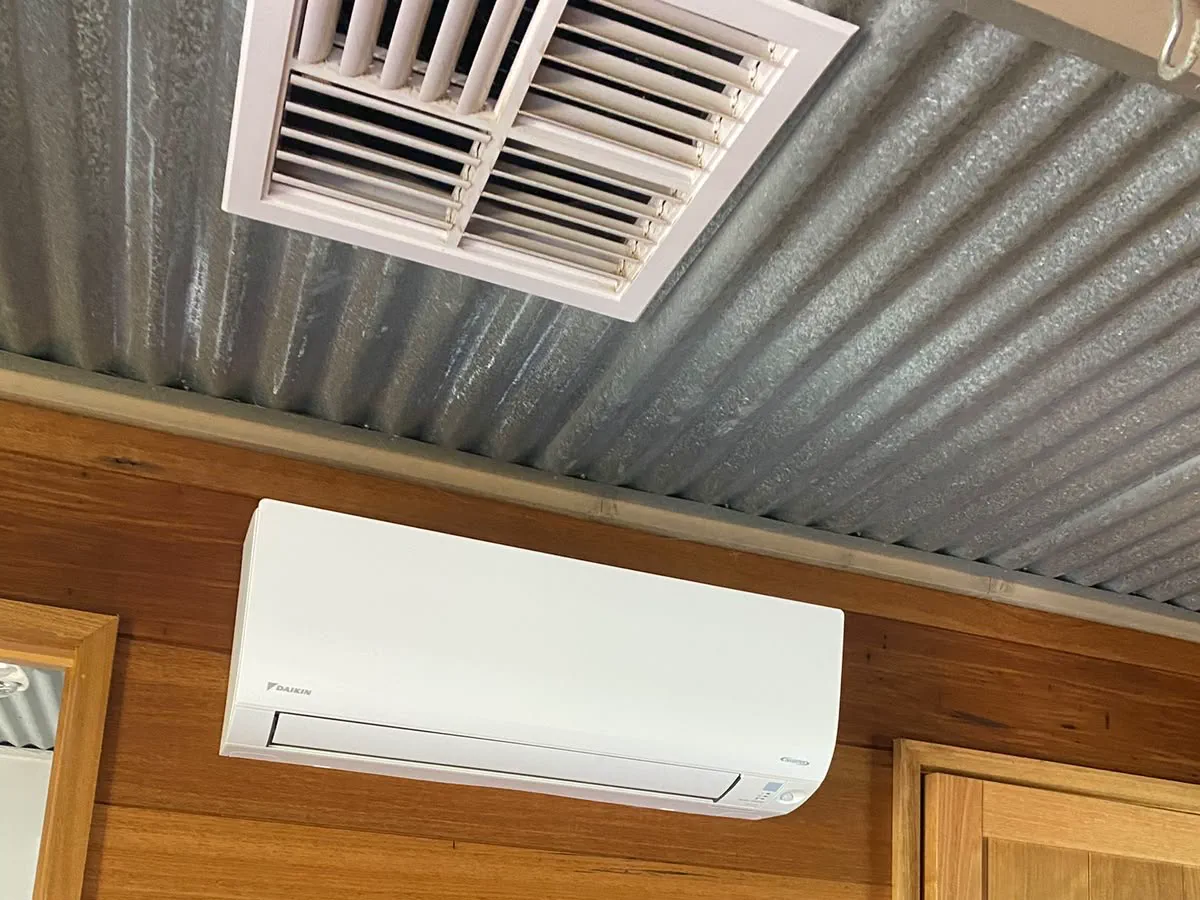
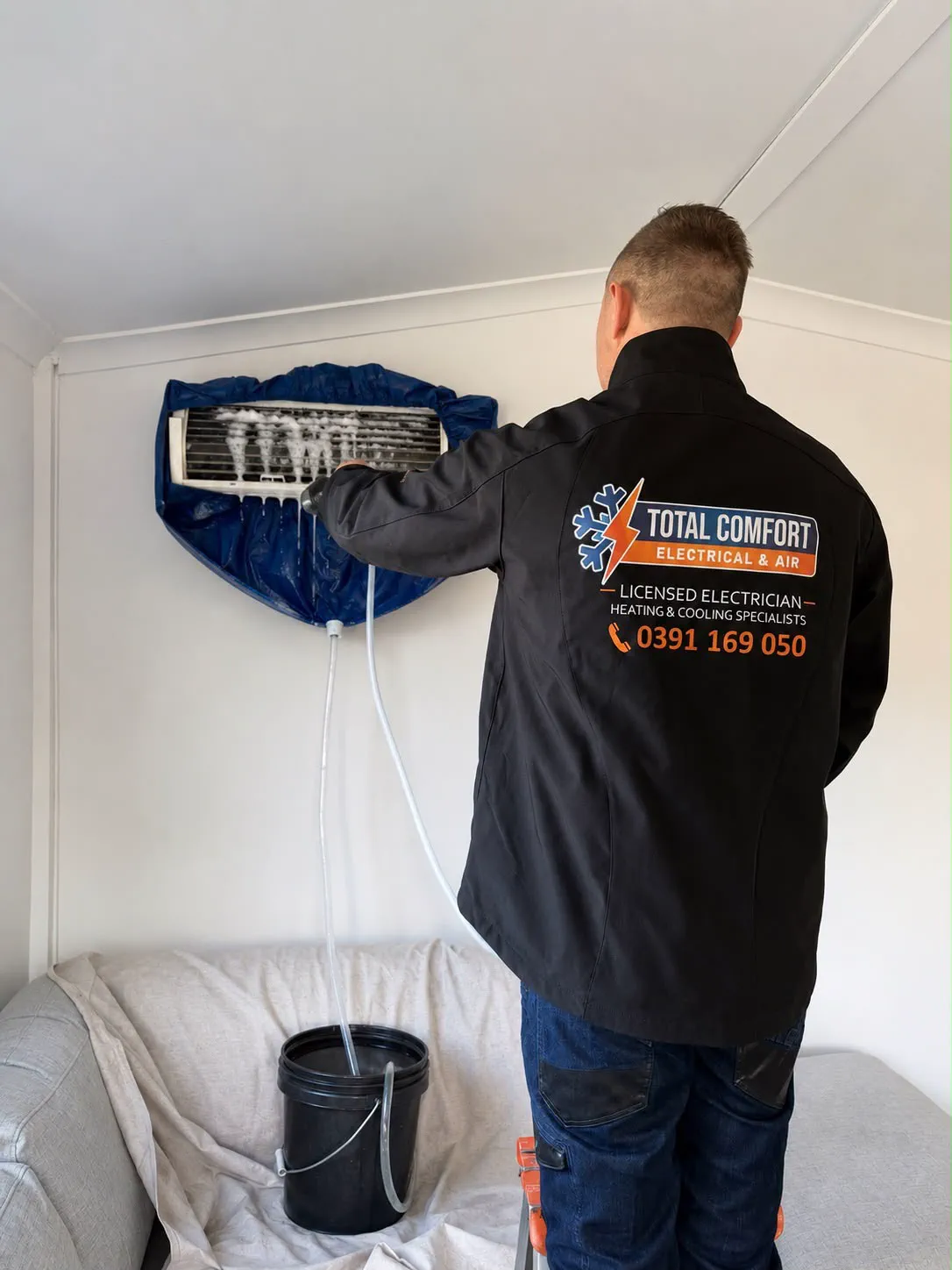
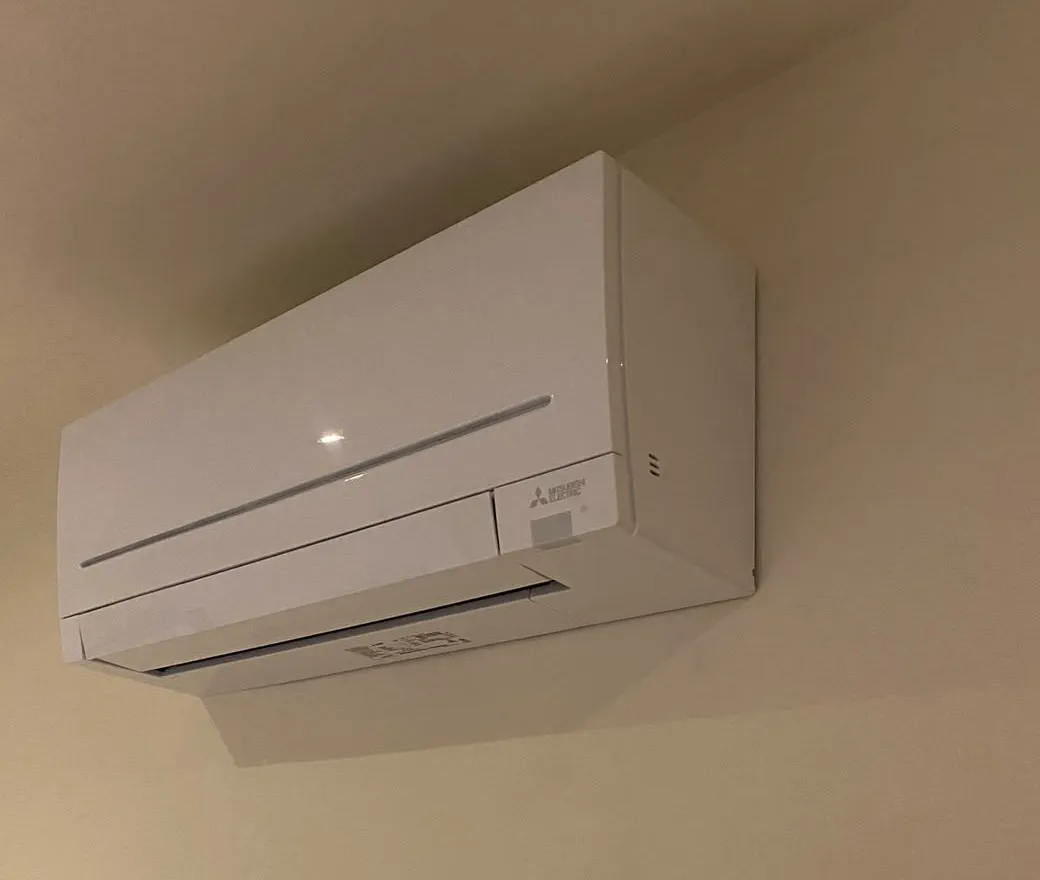
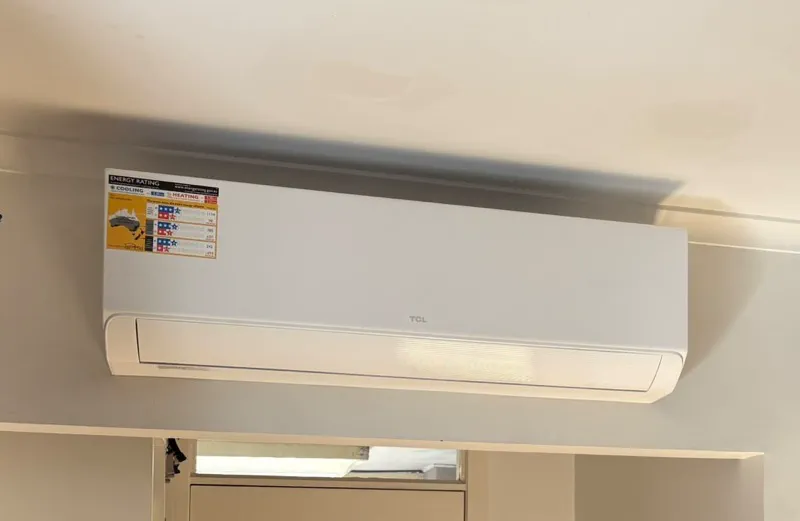
Our own photos from jobs like this one. Family-run, based in Altona Meadows, with 19 years in the industry.
Licensed electrical contractor (REC 38187)See more team photos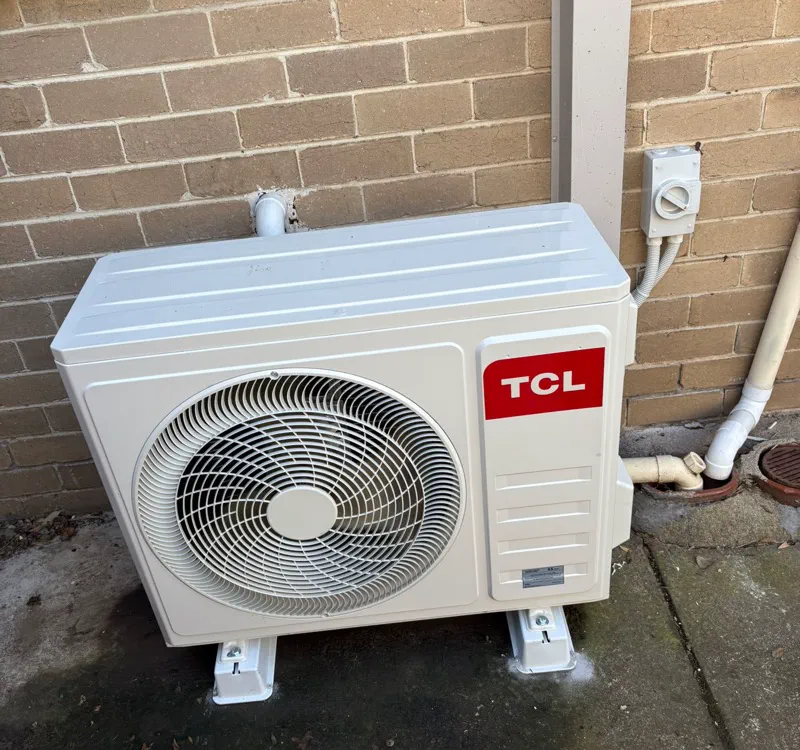
Worth knowing before you book
- A new head may have a different footprint
- Paint lines or old fixing holes can be exposed. We discuss dimensions and any making-good work before installation.
- Repair is still an option
- If you have not had the fault diagnosed, ask whether repair should be considered before replacing the whole system.
- Noise and location matter
- Compare the proposed outdoor location with bedrooms, neighbours and access for future maintenance.
What affects the price?
The right scope depends on your installation. These are the details we check so your quote is useful, with any additional work explained before it proceeds.
Capacity and model
Output, efficiency, noise ratings and features such as wi-fi control all change the equipment price.
What can be reused
Reusable pipe, a sound bracket and a suitable circuit keep the job smaller. New pipe or a new penetration adds to it.
Where the units sit
Outdoor units on second-storey brackets, roofs, narrow side passages or apartment balconies take more time and equipment to swap safely.
Electrical changes
A new circuit, larger cable, new isolator, extra RCD protection or room on the switchboard for the new load.
Removal and making good
Recovering the refrigerant, taking away the old equipment, and any painting, cover strips or patching around the old head.
Before the visit
- Keep the old diagnosis or repair quote for comparison.
- Send wide photos and both equipment labels.
- Describe comfort problems with the old location or capacity.
How it runs
- 1
Share the existing setup
Send both unit labels and wide photos of their locations.
- 2
Compare replacements
Discuss room use, controls and the complete installed price.
- 3
Change over
Remove the old equipment and install the new system with agreed upgrades.
- 4
Commission and explain
Test operation, demonstrate controls and confirm any remaining cosmetic work.
Step by step, in more detail
5 steps
Look at what's there
Photos of both labels and wide shots of each unit tell us the age, capacity and refrigerant. On site we check the pipe run, drain, bracket, isolator and circuit.
Size for the room as it is now
Floor area, ceiling height, glazing, orientation, insulation and how the room is used. Heating on a cold night gets as much attention as cooling.
Decide what stays
Pipework, brackets, cable and the circuit stay only if they meet the new unit's requirements. The quote lists what is reused, and the price is fixed for the agreed scope.
Recover, remove, install
The old refrigerant is recovered before anything is disconnected. The new units go in, and every pipe run is pressure tested and evacuated before the system is opened.
Commission and hand over
We run it in heating and cooling, check the drain and electrical connections, then show you the controls and filters.
What is safe to do, and what to leave to us
Safe for you to do
- Photograph both units' labels and take wide shots of where they sit, from the ground.
- Keep any earlier diagnosis or repair quote so the options can be compared.
- Clean the indoor dust filters as the manual describes, to rule out a clogged filter first.
- If the unit smells hot or keeps tripping, switch it off at the switchboard if that's safe.
Leave these to us
- Disconnecting the old units yourself. The refrigerant has to be recovered by a licensed technician.
- Paying for a top-up to buy one more season. Topping up before leaks are found and repaired is illegal.
- Moving the isolator or extending the circuit. Electrical work isn't DIY.
- Buying the new unit before the capacity, pipe run and circuit have been checked.
When to get us in
- A major repair has been quoted on an ageing unit
- The room is never comfortable in summer or winter
- You're renovating or changing how the room is used
- The outdoor unit is noisy, badly placed or rusting
- You rent the home out and are planning for 2027
More detail
Repair or replace: how we weigh it
A single diagnosed fault on a younger unit is usually worth repairing, and we'll tell you so. The case for replacement grows with age, repeat faults and parts that are hard to find. Running cost counts too: the Victorian Government says a system more than 15 years old typically uses more than three times the energy of a modern reverse-cycle air conditioner.
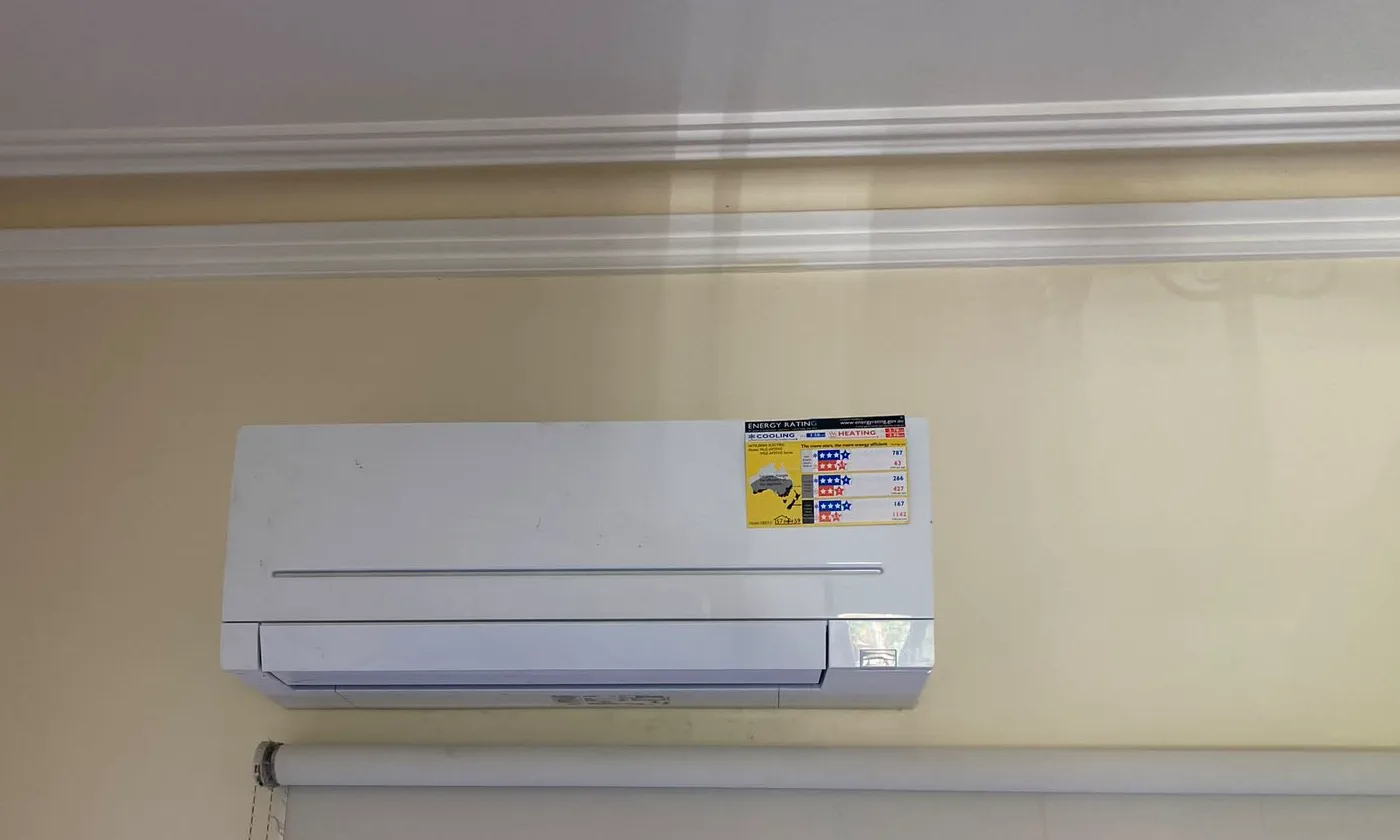
Reading the energy label
The Zoned Energy Rating Label rates a unit from 1 to 10 stars for hot, average and cold zones, with cooling in blue and heating in red. A 2019 Commonwealth guide places Melbourne in the cold zone, so read those ratings. Split systems also carry separate indoor and outdoor noise ratings. Shops must display the label on single-split units, but online listings don't have to.
The electrical side of a changeover
A new unit may need a different circuit from the old one. If the manufacturer's specifications call for a dedicated circuit or RCD protection, Energy Safe Victoria says they must be followed, and the Wiring Rules require additional RCD protection when an existing installation is altered. A restricted electrical licence only covers like-for-like disconnection and reconnection, so new wiring needs a licensed electrician. Our electricians do that part.
Local rules and conditions
Victorian requirements and local conditions that shape this job, with the sources listed at the foot of the page.
Sized for July nights as well as January afternoons
Laverton averages 9.4 days a year at or above 35 °C, but its mean July minimum is 5.2 °C. The Victorian Government notes that Victorians usually use more energy for heating than cooling and suggests choosing a unit with higher heating efficiency.
Rental replacements and the 2027 standards
From 1 March 2027, a new rental agreement needs energy-efficient fixed cooling in the main living area. For a wall split, that means a GEMS cooling rating of 3 stars or more for the property's climate area. Consumer Affairs Victoria notes that one reverse-cycle unit can meet both the heating and cooling standards.
Refrigerant work is regulated twice
In Victoria, work on any part of a single-head split system is a class of plumbing work regulated by the Building and Plumbing Commission. Separately, anyone installing or decommissioning the equipment needs a national Refrigerant Handling Licence from the Australian Refrigeration Council.
Useful reading
Guides to read before you decide, with checklists and questions to bring to the quote.
- What size split system do you need?What a split system's kW rating measures, why floor area alone gets it wrong, and how glass, ceilings and afternoon sun change the size a room needs.
- Reading the Zoned Energy Rating LabelWhich zone to read in Melbourne, why the red heating stars matter most, what the kWh and noise figures mean, and how to compare two units fairly.
- Split system or ducted: choose around the rooms you useCompare layouts, zoning, installation work and quote details before choosing equipment for your home.
- Landlords: heating, cooling and electrical obligations in VictoriaA rental provider's map of the heating, switchboard, safety check and repair duties on a Victorian rental, and what the 2027 energy standards change.
Common questions
From the blog
- When is the best time of year to install air conditioning?Spring and autumn give you time to choose well, sort the switchboard and test the system before it's needed. Here's why, and what to do if one fails mid-season.
- What should I prepare for an air-conditioner replacement quote?A useful photo set, a short room brief and clear access information help turn a rough enquiry into a defined installation scope.
- What happens on split system installation day?A walk through split system installation day, from mounting and pipe runs to the electrical connection, vacuum, commissioning and handover, and what to prepare.
Sources for the rules and local facts on this page
21 sources, with the date each was checked
- 1.Bureau of Meteorology: Mean number of days ≥ 30 °C 6.9 6.0 4.5 0.7 0.0 0.0 0.0 0.0 0.1 0.9 2.8 5.1 27.0 82 1943 2026 Mean number of days ≥ 35 °C 3.6 2.4 0.9 0.0 0.0 0.0 0.0 0.0 0.0 0.1 0.5 1.9 9.4 Accessed 30 September 2026.
- 2.Department of Energy, Environment and Climate Action (energy.vic.gov.au), page last updated 14/04/25: Victorians typically use more energy for heating than cooling, so look for a unit with a higher heating efficiency. Accessed 30 September 2026.
- 3.Consumer Affairs Victoria: From 1 March 2027, rental providers must install an energy-efficient, fixed cooling system with an outlet in the main living area. This applies at the start of a new rental agreement. All rental properties must have… Accessed 30 September 2026.
- 4.Consumer Affairs Victoria: Definition: From 1 March 2027, energy efficient fixed cooling means: (a) a non-portable, non-ducted electric air conditioner or heat pump capable of cooling, with a GEMS 3-star or above cooling rating (for the climate… Accessed 30 September 2026.
- 5.Consumer Affairs Victoria: Tip: A reverse-cycle air conditioner can satisfy both the heating and cooling standards. Accessed 30 September 2026.
- 6.Building and Plumbing Commission (Victorian Building Authority, trading as the Building and Plumbing Commission): Under Part 4 of the Plumbing Regulations 2018, Refrigerated Air-conditioning work is: The construction, installation, replacement, repair, alteration, maintenance, testing or commissioning of refrigerated… Accessed 30 September 2026.
- 7.Australian Refrigeration Council (ARC): A Refrigerant Handling Licence must be held by any person who carries out work in relation to refrigeration and air conditioning (RAC) equipment. Carrying out work in relation to RAC equipment means to do anything with… Accessed 30 September 2026.
- 8.Australian Refrigeration Council (ARC): However, state authorities no longer issue licences for refrigerant purchase or handling. To legally undertake either of these activities you must hold the national licence / authorisation, issued by ARC. Accessed 30 September 2026.
- 9.Department of Climate Change, Energy, the Environment and Water (DCCEEW): You cannot charge refrigeration and air conditioning equipment with a higher global warming potential (GWP) refrigerant than the equipment was designed to use (the design refrigerant). To do so is an offence under the… Accessed 30 September 2026.
- 10.Australian Refrigeration Council (ARC), Fact Sheet 13 (ARC5225, 11/22): ‘Topping-up’ a system before the system has been fully tested and all identified leaks repaired by any individual is illegal. Accessed 30 September 2026.
- 11.Solar Victoria (updated 20 November 2025): Check the manufacturer’s instructions or manual and have the air conditioner serviced regularly at the recommended frequency to ensure it continues to operate efficiently. Cleaning the filters regularly helps the system… Accessed 30 September 2026.
- 12.Solar Victoria (updated 2 October 2025): A system that is more than 15 years old for example will typically use more than three times the amount of energy than a modern reverse-cycle air conditioner. Accessed 30 September 2026.
- 13.Energy Rating (GEMS Regulator / DCCEEW): The Zoned Energy Rating Label provides a seasonal efficiency rating for three distinct climate zones across Australia and New Zealand (hot, average and cold). Accessed 30 September 2026.
- 14.Commonwealth of Australia (2019), 'The new zoned energy rating label for air conditioners—What installers and retailers need to know', hosted on energyrating.gov.au: Melbourne is in a black ‘COLD’ area—read the black Cold ratings. Accessed 30 September 2026.
- 15.Energy Safe Victoria: This means that if the manufacturer’s specifications require an air conditioner to be installed on a dedicated circuit or protected by a residual current device then they must be adhered to. Accessed 30 September 2026.
- 16.Energy Safe Victoria: Clause 2.6.3.2.5 of the Wiring Rules states: Additional protection by RCDs shall be provided in existing electrical installations where alterations or a switchboard replacement is completed. Accessed 30 September 2026.
- 17.Energy Safe Victoria: This licence type only allows the disconnection and reconnection of ‘like for like’ equipment, for the purposes of repair, replacement or maintenance. The Restricted Electrical Worker’s licence does not allow a person… Accessed 30 September 2026.
- 18.Department of Climate Change, Energy, the Environment and Water (DCCEEW): Australia’s HFC phase-down started on 1 January 2018. The HFC phase-down is a gradual reduction in the total amount of HFCs allowed into Australia. The amount will be reduced to 15% of baseline level by 1 January 2036… Accessed 30 September 2026.
- 19.Department of Climate Change, Energy, the Environment and Water (DCCEEW): It's illegal to release regulated refrigerants into the air. This is because some refrigerants can stay in the atmosphere for decades or more and can be thousands of times worse for climate change than carbon dioxide… Accessed 30 September 2026.
- 20.Energy Safe Victoria: 'Prescribed' certificates are for electrical installation work that requires inspection by a Licensed Electrical inspector. This includes (but is not limited to): Consumer mains cables, main switchboard, meter box and… Accessed 30 September 2026.
- 21.Energy Safe Victoria: Gas and electricity are inherently dangerous and it’s illegal and potentially fatal for unlicensed and unqualified people to undertake any electrical or gasfitting work. Homeowners and consumers must always use… Accessed 30 September 2026.